Biological
Classification
neharohtagi1
Class - 11th
neharohtagi1
Introduction
Identification of differences among organisms and
placing them into groups that reflect their most
significant features and relationship is called Biological
Classification.
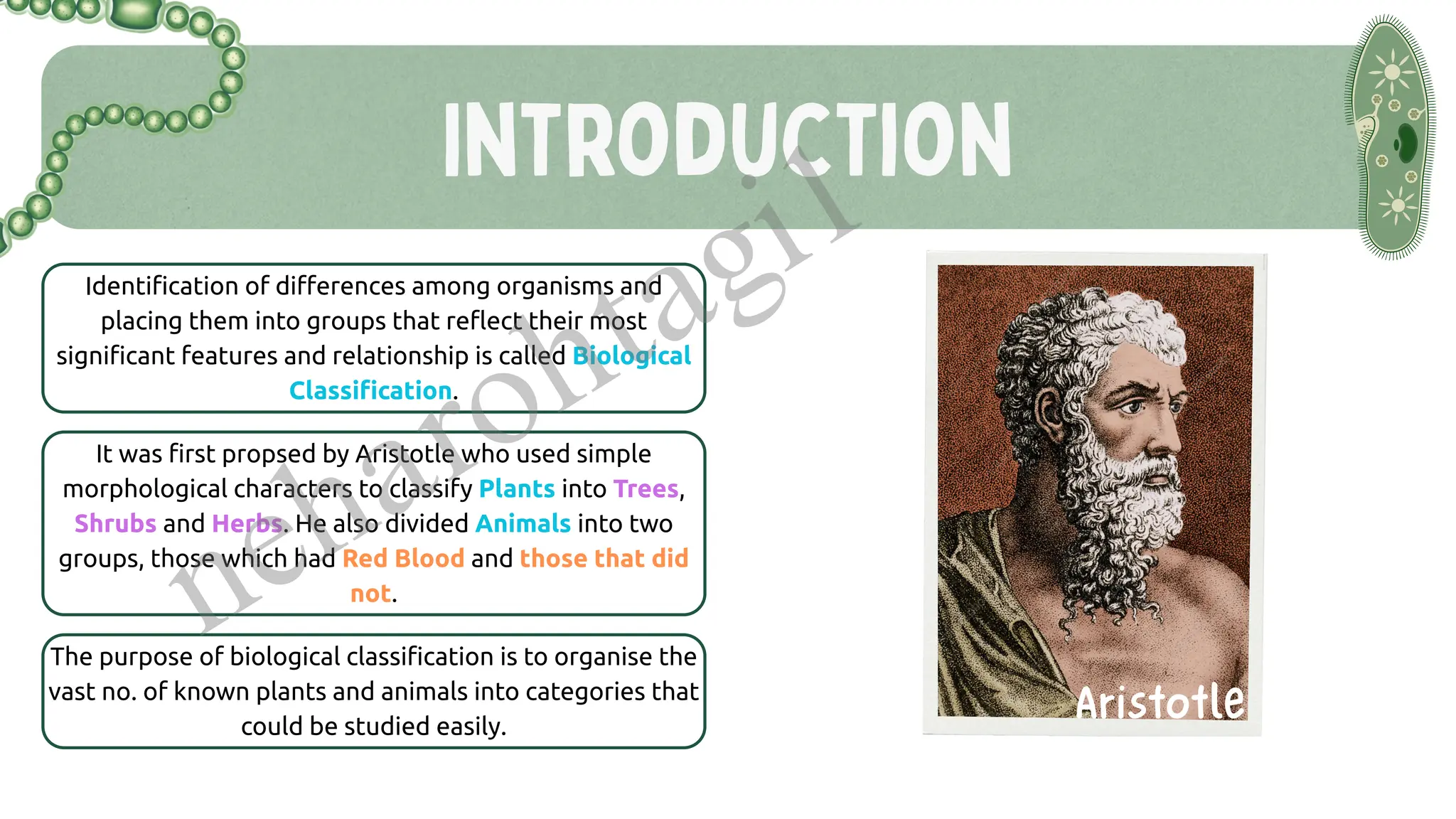
It was first propsed by Aristotle who used simple
morphological characters to classify Plants into Trees,
Shrubs and Herbs. He also divided Animals into two
groups, those which had Red Blood and those that did
not.
The purpose of biological classification is to organise the
vast no. of known plants and animals into categories that
could be studied easily.
Aristotle
neharohtagi1
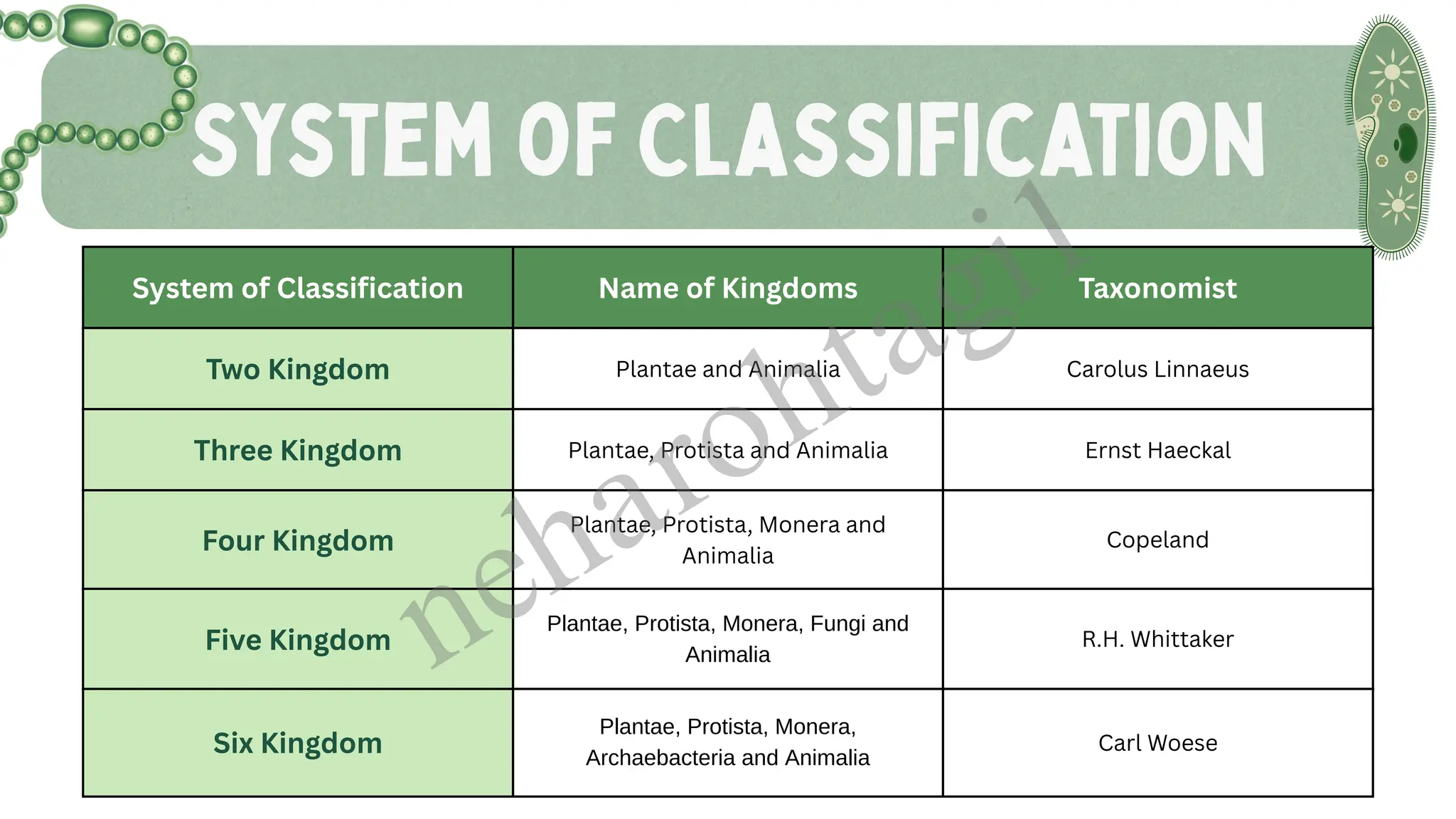
System of Classification
System of Classification Name of Kingdoms Taxonomist
Two Kingdom Plantae and Animalia Carolus Linnaeus
Three Kingdom Plantae, Protista and Animalia Ernst Haeckal
Four Kingdom
Plantae, Protista, Monera and
Animalia
Copeland
Five Kingdom
Plantae, Protista, Monera, Fungi and
Animalia
R.H. Whittaker
Six Kingdom
Plantae, Protista, Monera,
Archaebacteria and Animalia
Carl Woese
neharohtagi1
Two Kingdom System
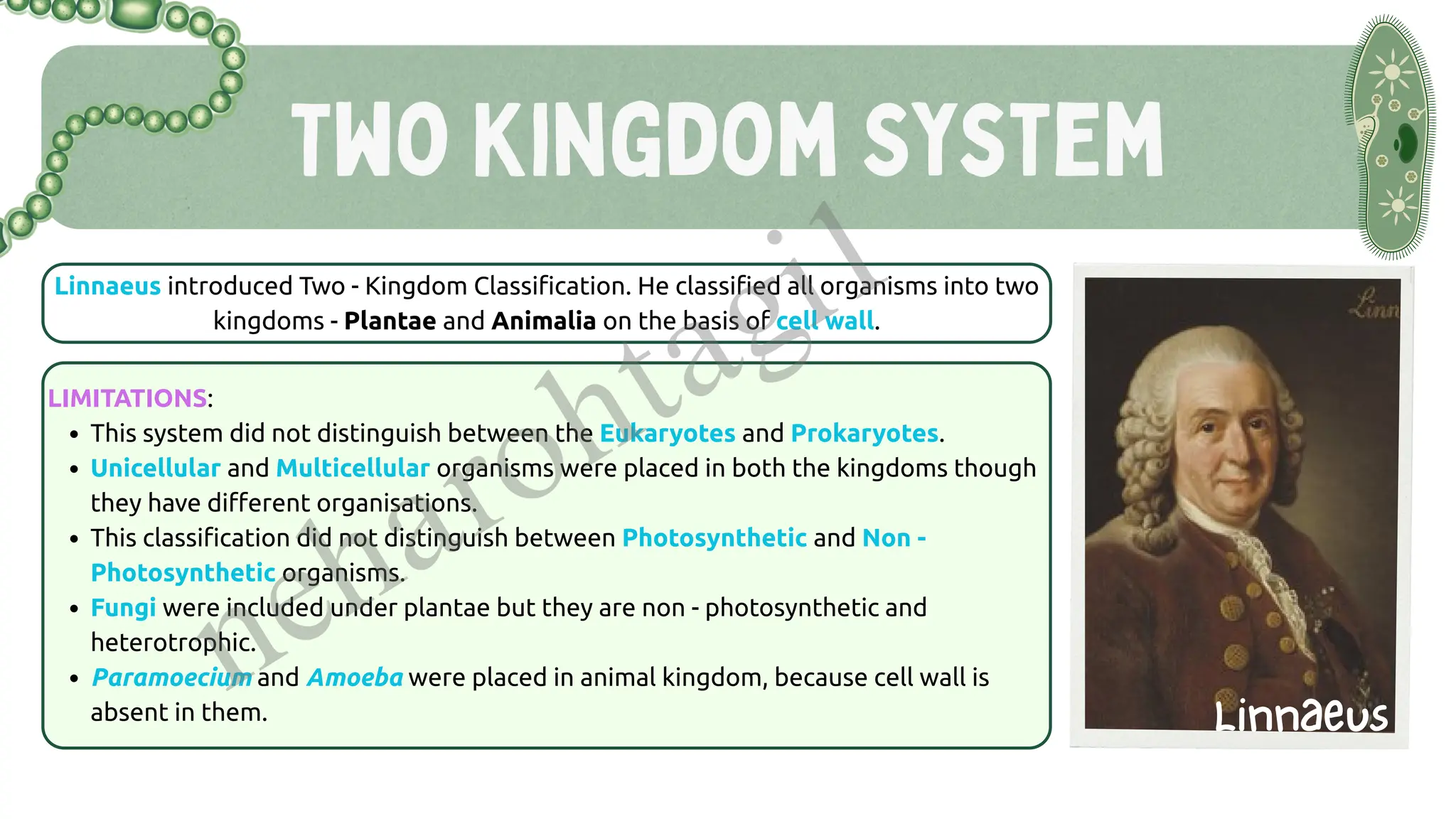
Linnaeus introduced Two - Kingdom Classification. He classified all organisms into two
kingdoms - Plantae and Animalia on the basis of cell wall.
LIMITATIONS:
This system did not distinguish between the Eukaryotes and Prokaryotes.
Unicellular and Multicellular organisms were placed in both the kingdoms though
they have different organisations.
This classification did not distinguish between Photosynthetic and Non -
Photosynthetic organisms.
Fungi were included under plantae but they are non - photosynthetic and
heterotrophic.
Paramoecium and Amoeba were placed in animal kingdom, because cell wall is
absent in them. Linnaeus
neharohtagi1
Merits Of Five Kingdom System
The earlier classifications did not differentiates between the heterotrophic group -
fungi and the autotrophic plants, though they show a characteristic difference in
their cell walls composition - the fungi had Chitin in their walls while the green
plants had a Cellulosic wall. When such characteristics were considered, fungi were
placed in a sepereate Kingdom - Fungi.
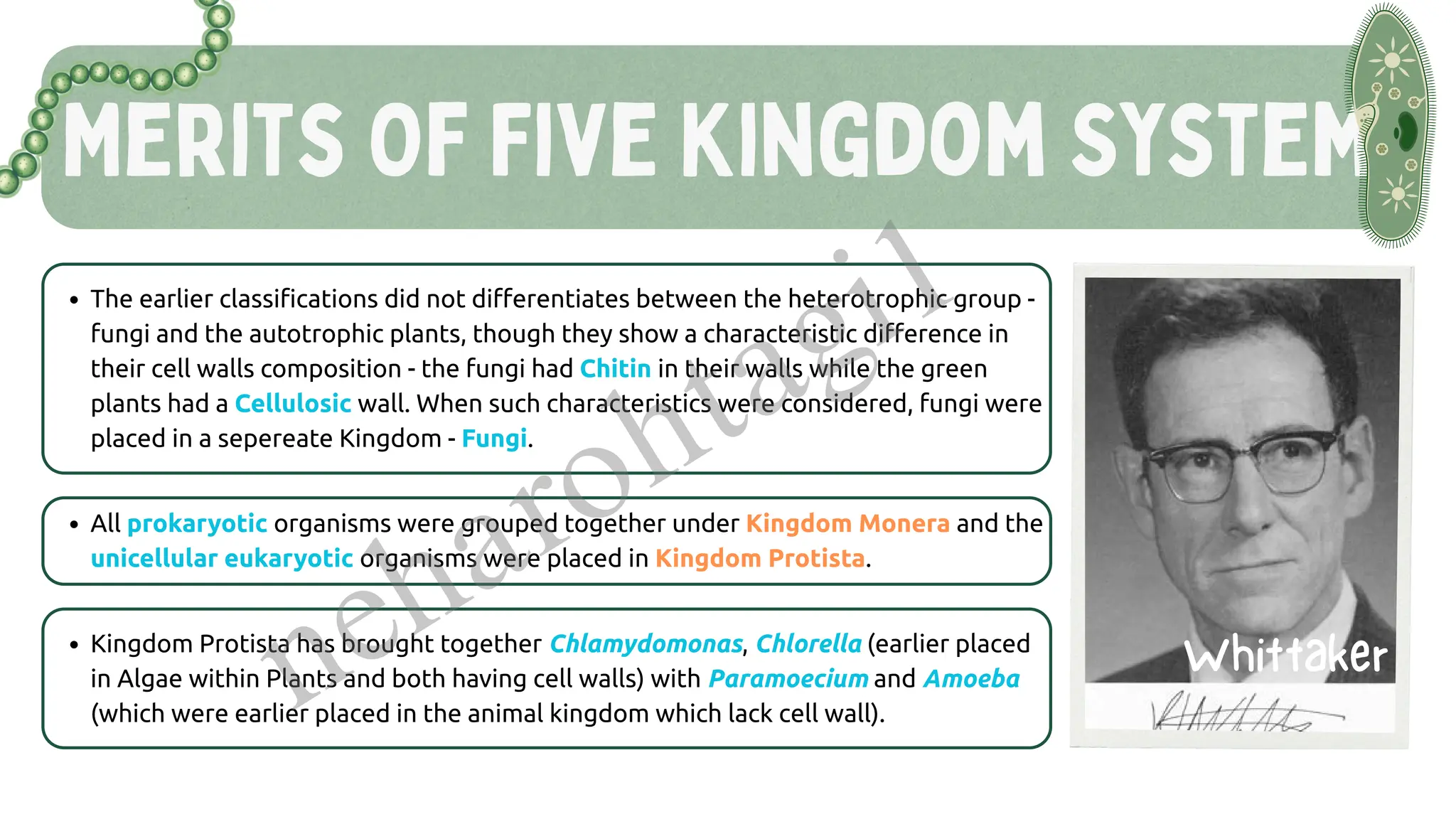
Whittaker
All prokaryotic organisms were grouped together under Kingdom Monera and the
unicellular eukaryotic organisms were placed in Kingdom Protista.
Kingdom Protista has brought together Chlamydomonas, Chlorella (earlier placed
in Algae within Plants and both having cell walls) with Paramoecium and Amoeba
(which were earlier placed in the animal kingdom which lack cell wall).
neharohtagi1
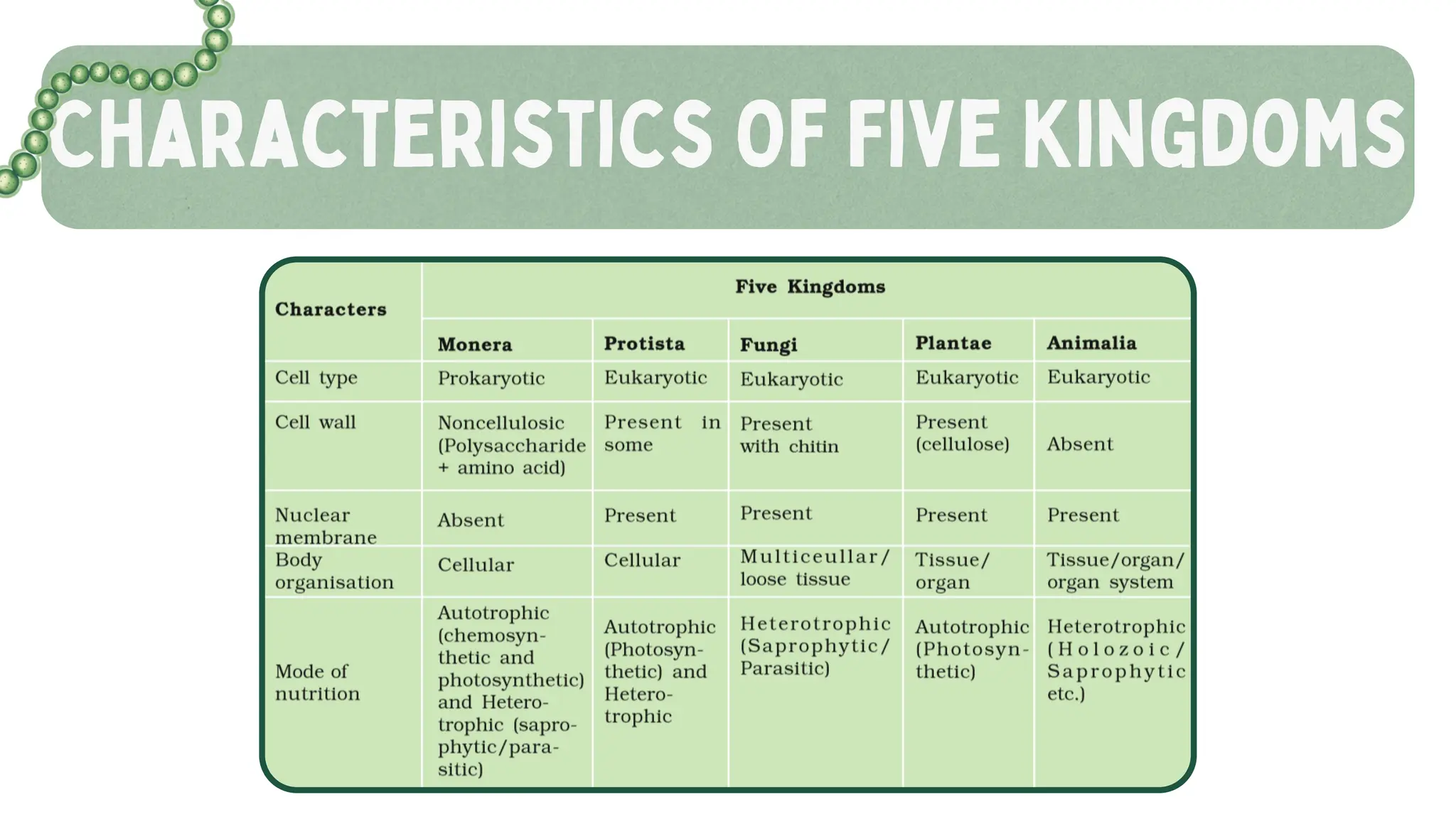
Characteristics Of Five Kingdoms
THREE DOMAIN SYSTEM
Proposed by Carl Woese.
The three-domain system has also been proposed that divides the Kingdom Monera
into two domains, leaving the remaining eukaryotic kingdoms in the third domain and
thereby a six kingdom classification
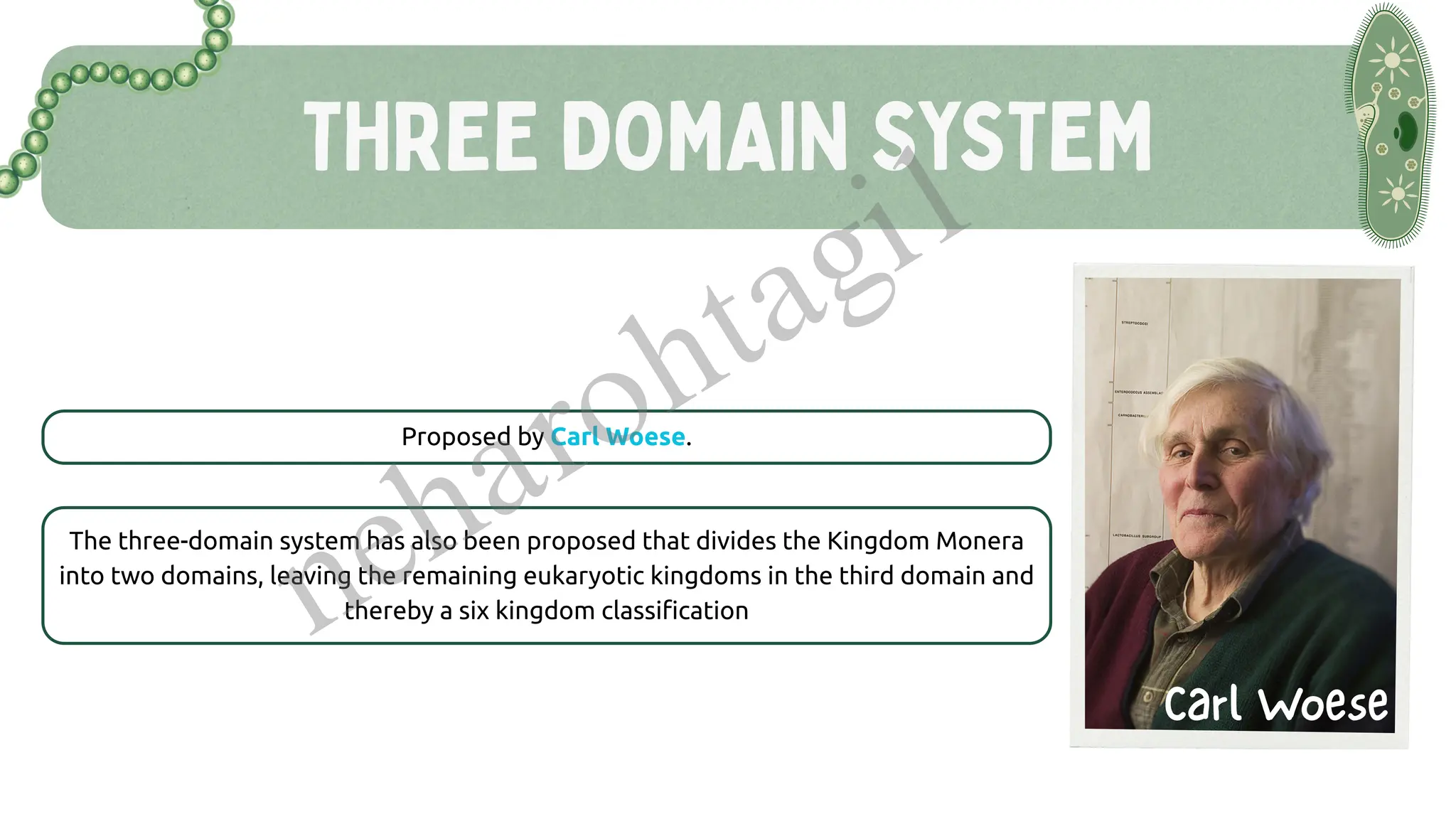
Carl Woese
neharohtagi1
Kingdom Monera
All prokaryotic organisms were placed under Kingdom Monera.
Bacteria are the sole members of the Kingdom Monera. They are the most abundant micro-organisms.
Bacteria occur almost everywhere. Hundreds of bacteria are present in a handful of soil. They also live in extreme
habitats such as hot springs, deserts, snow and deep oceans where very few other life forms can survive. Many of them
live in or on other organisms as parasites.
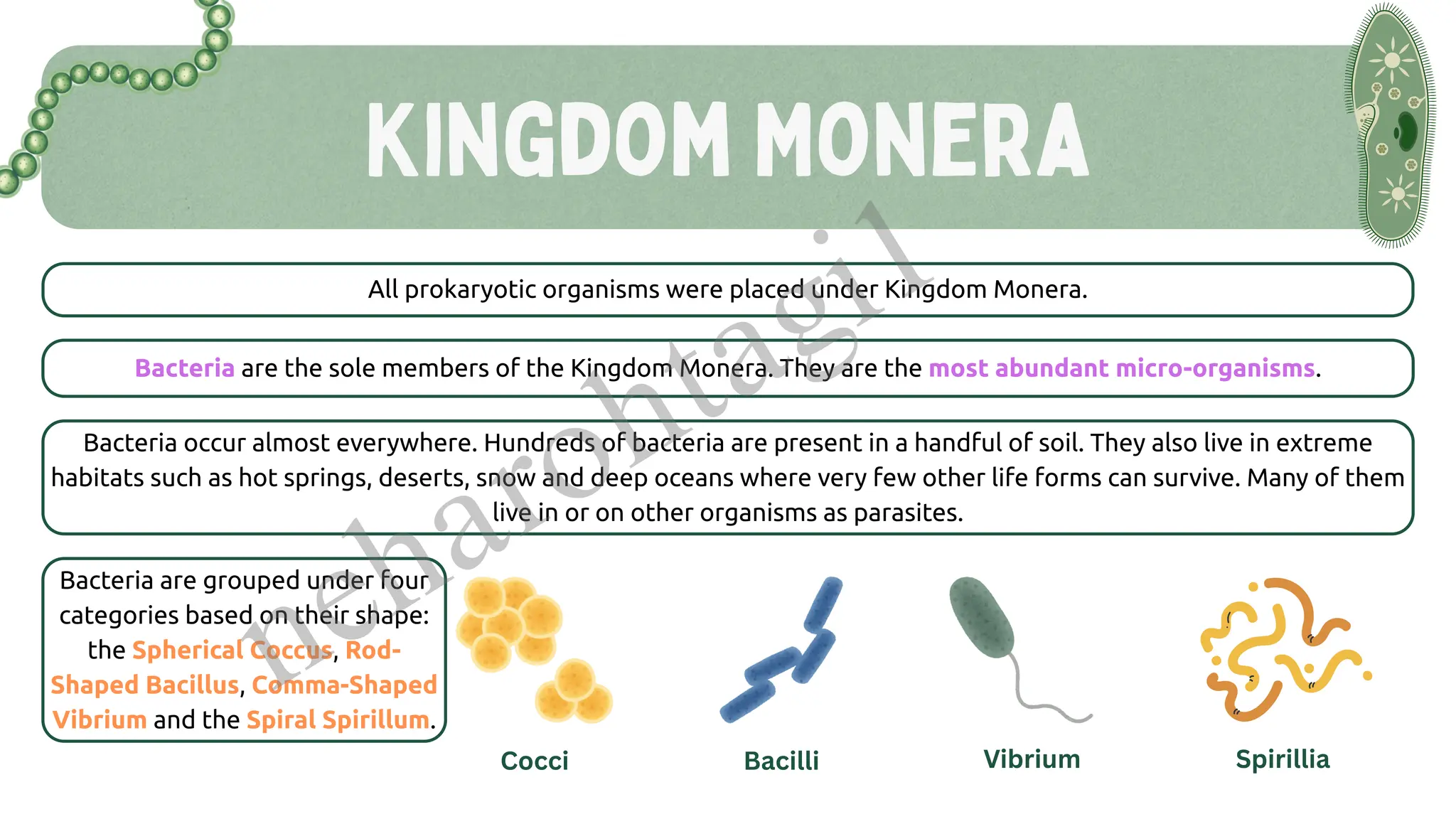
Bacteria are grouped under four
categories based on their shape:
the Spherical Coccus, Rod-
Shaped Bacillus, Comma-Shaped
Vibrium and the Spiral Spirillum.
Cocci Bacilli Vibrium Spirillia
neharohtagi1
General Characterstics
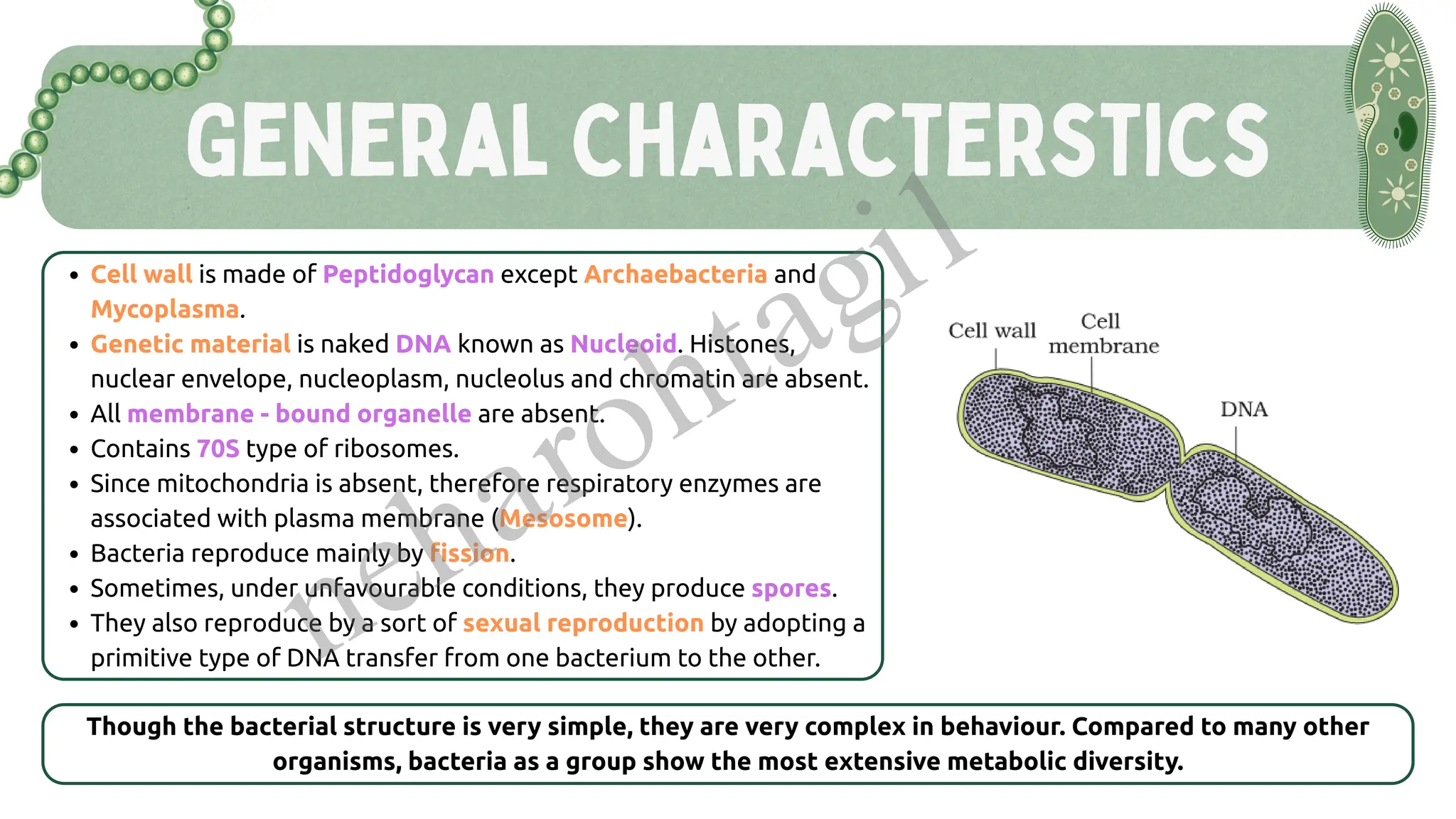
Cell wall is made of Peptidoglycan except Archaebacteria and
Mycoplasma.
Genetic material is naked DNA known as Nucleoid. Histones,
nuclear envelope, nucleoplasm, nucleolus and chromatin are absent.
All membrane - bound organelle are absent.
Contains 70S type of ribosomes.
Since mitochondria is absent, therefore respiratory enzymes are
associated with plasma membrane (Mesosome).
Bacteria reproduce mainly by fission.
Sometimes, under unfavourable conditions, they produce spores.
They also reproduce by a sort of sexual reproduction by adopting a
primitive type of DNA transfer from one bacterium to the other.
Though the bacterial structure is very simple, they are very complex in behaviour. Compared to many other
organisms, bacteria as a group show the most extensive metabolic diversity.
neharohtagi1
Nutrition In BACTERIA
These bacteria use light or chemical energy to produce
their own food.
Autotrophs Heterotrophs
On the basis of source of energy autotrophs are of
following types:
Photosynthetic Autotrophs
Chemosynthetic Autotrophs
Most of the bacteria are heterotrophic i.e., they can not
manufacture their own food.
There are three types of Heterotrophic Bacteria:
Parasitic
Saprophytic
Symbiotic
neharohtagi1
Archaebacteria
They are the most primitive form of life.
These bacteria are special since they live in some of the
most harsh habitats such as extreme salty areas
(halophiles), hot springs (thermoacidophiles) and
marshy areas (methanogens).
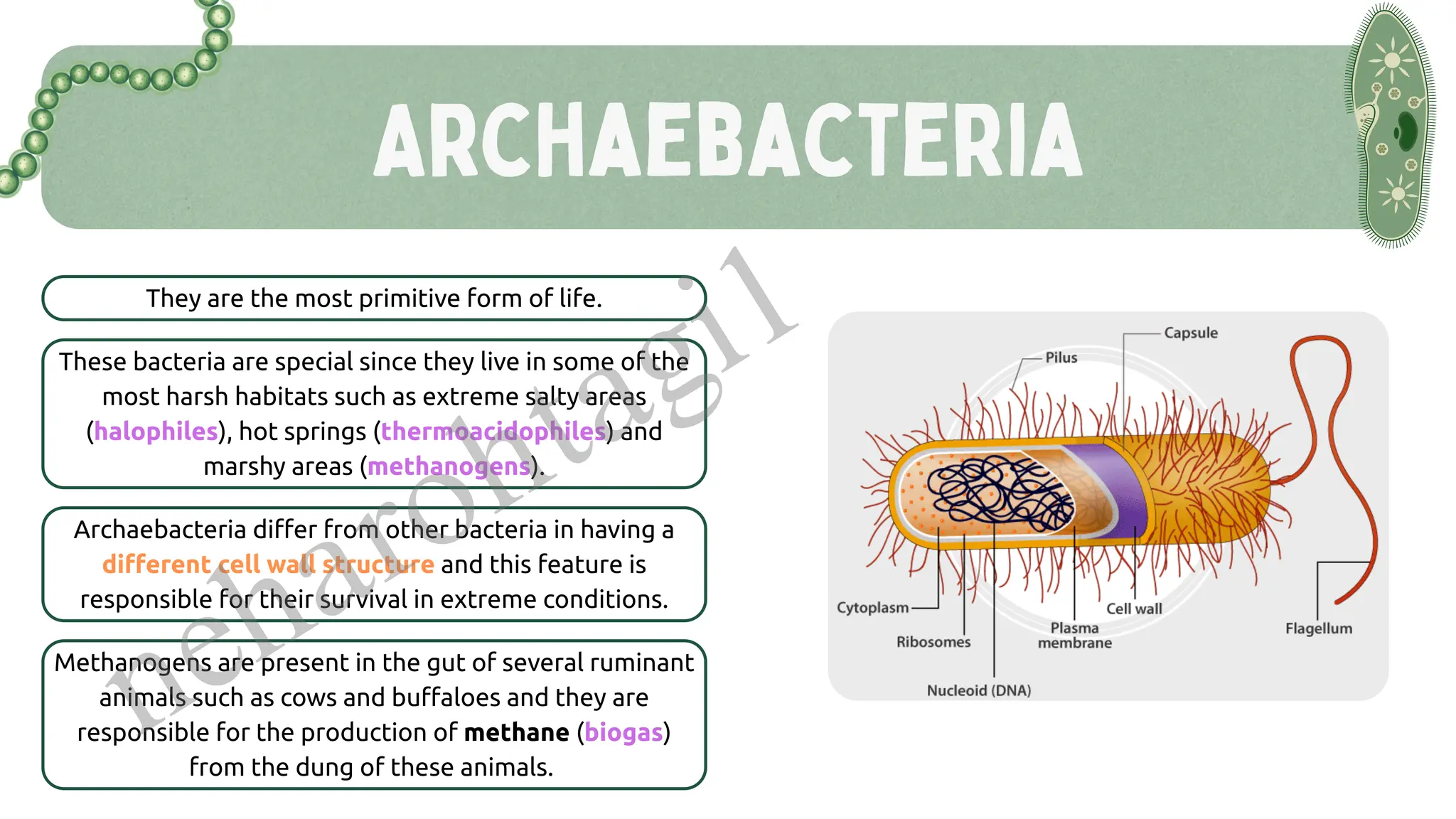
Archaebacteria differ from other bacteria in having a
different cell wall structure and this feature is
responsible for their survival in extreme conditions.
Methanogens are present in the gut of several ruminant
animals such as cows and buffaloes and they are
responsible for the production of methane (biogas)
from the dung of these animals.
neharohtagi1
eubacteria
There are thousands of different eubacteria or ‘true bacteria’. They are characterised by the presence of a rigid cell
wall, and if motile, a flagellum.
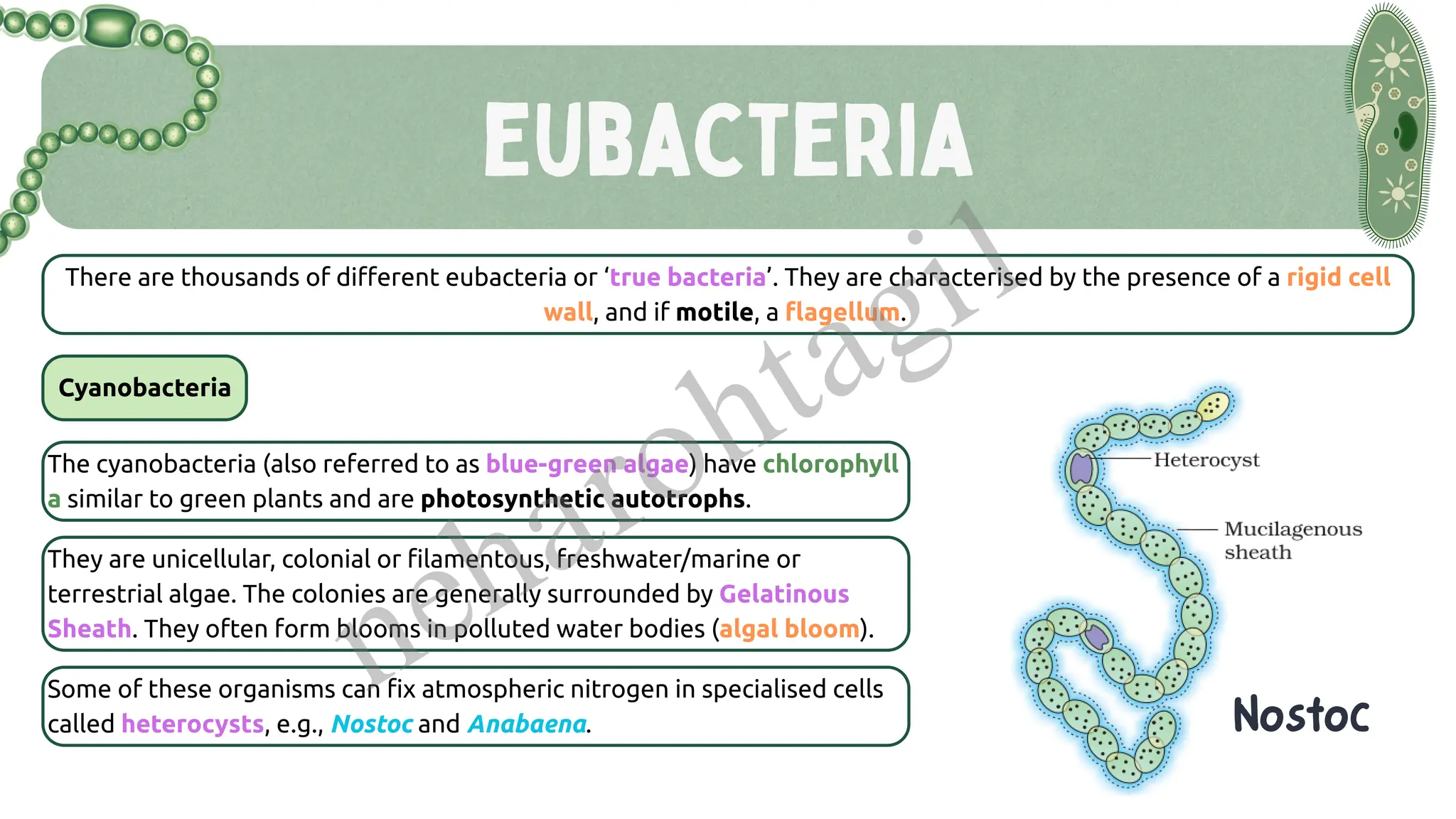
The cyanobacteria (also referred to as blue-green algae) have chlorophyll
a similar to green plants and are photosynthetic autotrophs.
Cyanobacteria
They are unicellular, colonial or filamentous, freshwater/marine or
terrestrial algae. The colonies are generally surrounded by Gelatinous
Sheath. They often form blooms in polluted water bodies (algal bloom).
Some of these organisms can fix atmospheric nitrogen in specialised cells
called heterocysts, e.g., Nostoc and Anabaena. Nostoc
neharohtagi1
ChemoTrophic and HETEROTRophs
Chemosynthetic autotrophic bacteria oxidise various inorganic substances such as nitrates, nitrites and ammonia and
use the released energy for their ATP production.

They play a great role in recycling nutrients like nitrogen, phosphorous, iron and sulphur.
Heterotrophic Bacteria
Heterotrophic bacteria are most abundant in nature. The majority are important decomposers.
Many of them have a significant impact on human affairs. They are helpful in making curd from milk, production of
antibiotics, fixing nitrogen in legume roots, etc.
Some are pathogens causing damage to human beings, crops, farm animals and pets. Cholera, typhoid, tetanus, citrus
canker are well known diseases caused by different bacteria.
neharohtagi1
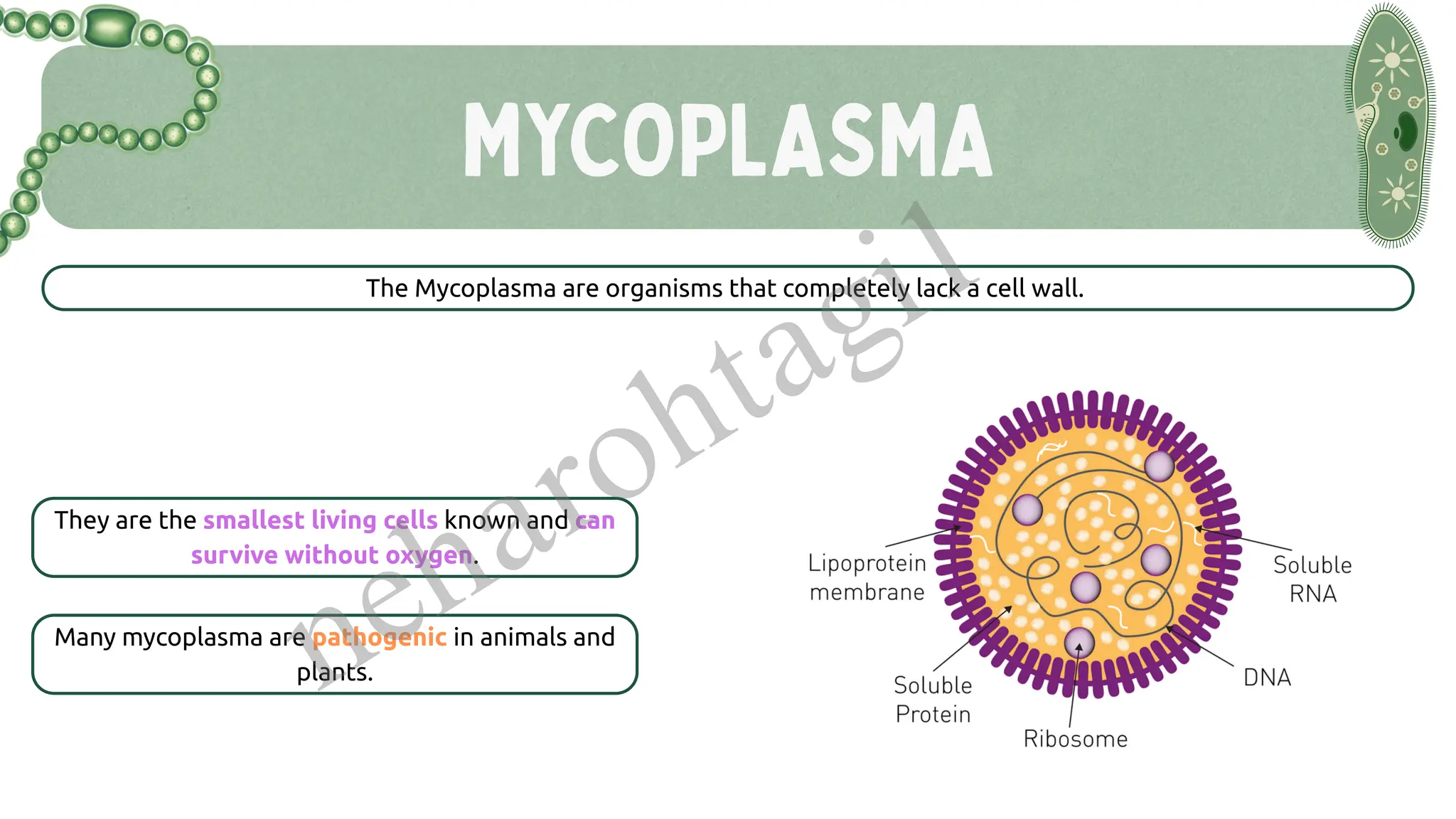
MYCOPLASMA
The Mycoplasma are organisms that completely lack a cell wall.
They are the smallest living cells known and can
survive without oxygen.
Many mycoplasma are pathogenic in animals and
plants.
neharohtagi1
Kingdom Protista
All single-celled eukaryotes are placed under Protista, but the boundaries of this kingdom are not well defined.
Members of Protista are primarily aquatic. This kingdom forms a link with the others dealing with plants, animals and
fungi.
Being eukaryotes, the protistan cell body contains a well defined nucleus and other membrane-bound organelles.
Some have flagella or cilia.
Protists reproduce asexually and sexually by a process involving cell fusion and zygote formation.
Chrysophytes Dinoflagellates Euglenoids Slime Moulds Protozoans
neharohtagi1
ChrysoPHYTES
This group includes diatoms and golden algae (desmids). They are found in fresh water as well as in marine
environments.
They are microscopic and float passively in water currents (plankton). Most of them are photosynthetic.
In diatoms the cell walls form two thin overlapping shells, which fit together as in a soap box. The walls are embedded
with silica and thus the walls are indestructible.
Thus, diatoms have left behind large amount of cell wall deposits in their habitat; this accumulation over billions of
years is referred to as ‘diatomaceous earth’.
Being gritty this soil is used in polishing, filtration of oils and syrups. Diatoms are the chief ‘producers’ in the oceans.
neharohtagi1
Dinoflagellates
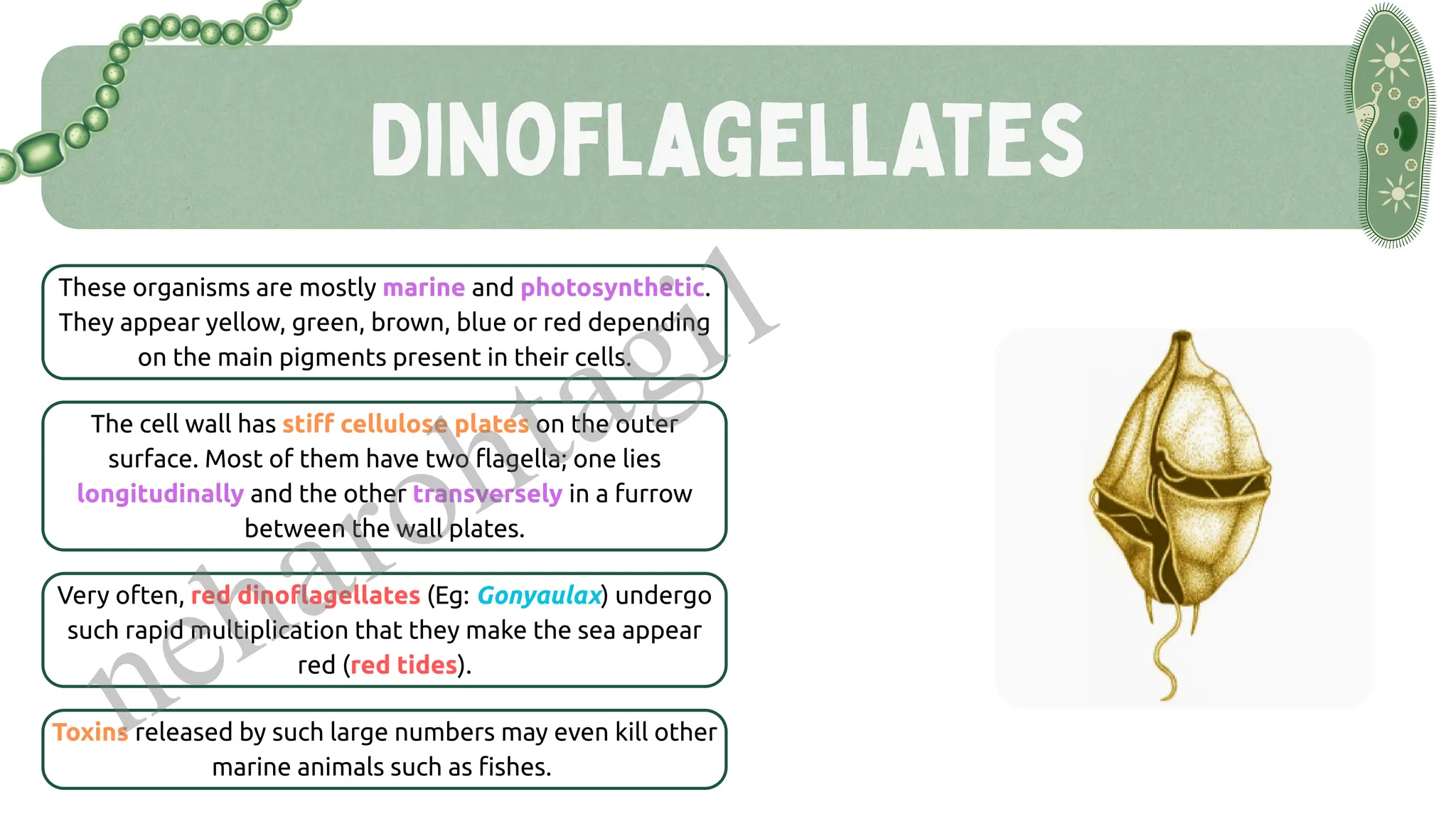
These organisms are mostly marine and photosynthetic.
They appear yellow, green, brown, blue or red depending
on the main pigments present in their cells.
The cell wall has stiff cellulose plates on the outer
surface. Most of them have two flagella; one lies
longitudinally and the other transversely in a furrow
between the wall plates.
Very often, red dinoflagellates (Eg: Gonyaulax) undergo
such rapid multiplication that they make the sea appear
red (red tides).
Toxins released by such large numbers may even kill other
marine animals such as fishes.
neharohtagi1
Euglenoids
Majority of them are fresh water organisms found in
stagnant water.
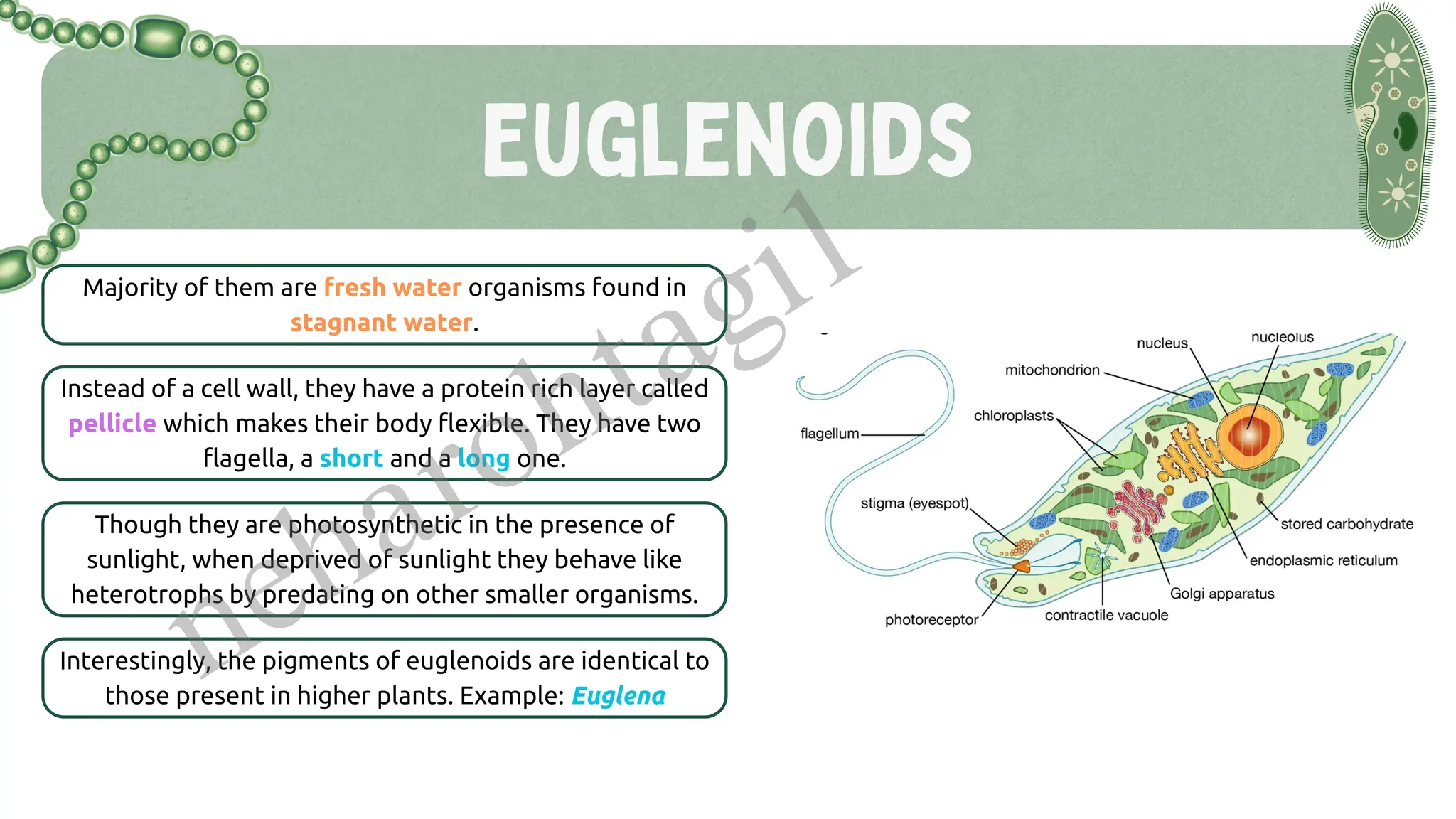
Instead of a cell wall, they have a protein rich layer called
pellicle which makes their body flexible. They have two
flagella, a short and a long one.
Though they are photosynthetic in the presence of
sunlight, when deprived of sunlight they behave like
heterotrophs by predating on other smaller organisms.
Interestingly, the pigments of euglenoids are identical to
those present in higher plants. Example: Euglena
neharohtagi1
SLIME MOULDS
Slime moulds are saprophytic protists. The body moves
along decaying twigs and leaves engulfing organic
material.
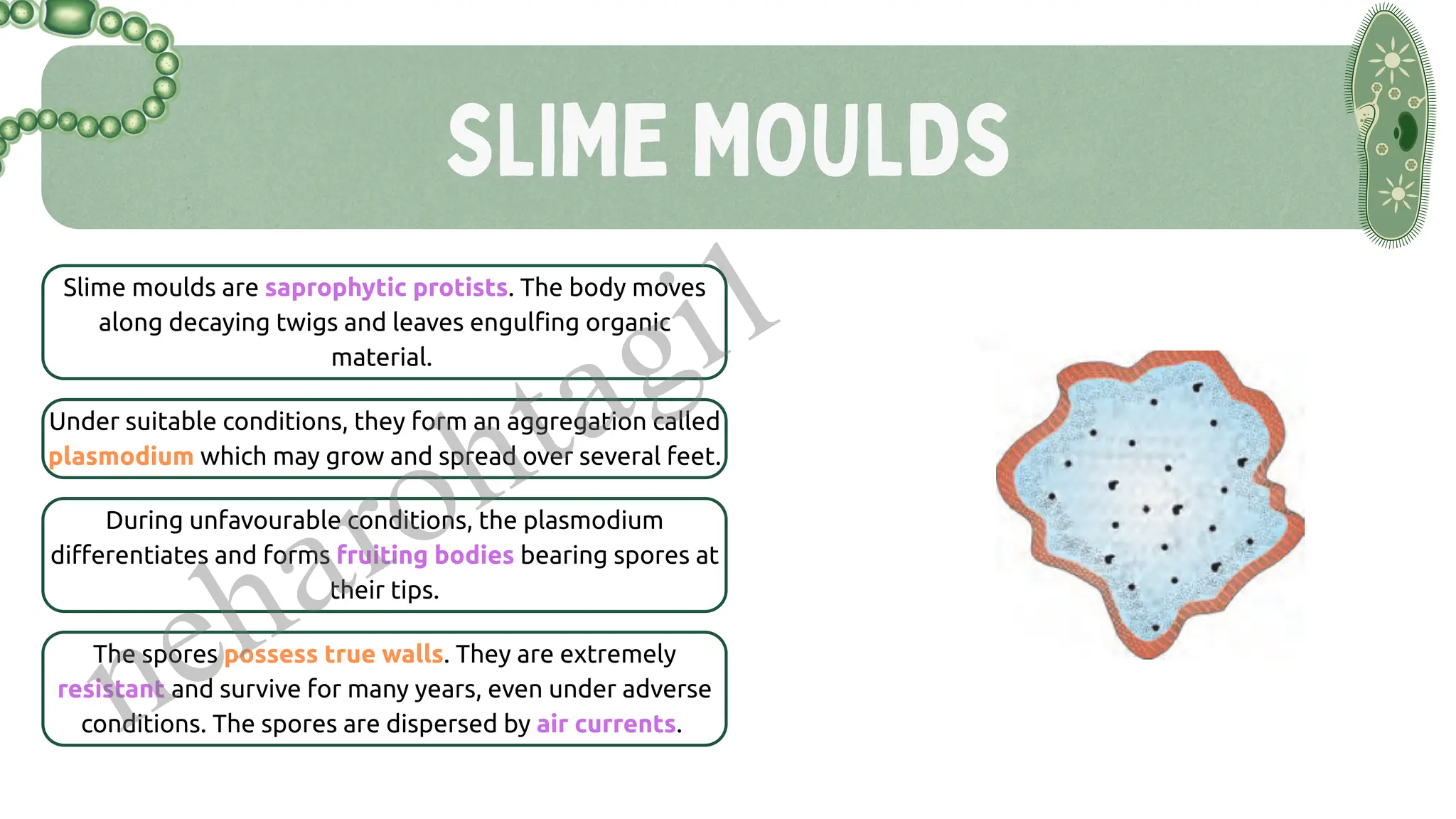
Under suitable conditions, they form an aggregation called
plasmodium which may grow and spread over several feet.
The spores possess true walls. They are extremely
resistant and survive for many years, even under adverse
conditions. The spores are dispersed by air currents.
During unfavourable conditions, the plasmodium
differentiates and forms fruiting bodies bearing spores at
their tips.
neharohtagi1
Protozoans
All protozoans are heterotrophs and live as predators or parasites. They are believed to be primitive relatives of
animals. There are four major groups of protozoans:
Amoeboid Protozoan: These organisms live in fresh, sea water or moist soil. They capture their prey by
pseudopodia as in Amoeba. Marine forms have silica shells on their surface. eg: Entamoeba are parasites.
Flagellated Protozoan: The members of this group are either free-living or parasitic. They have flagella. The
parasitic forms cause diseases such as sleeping sickness. Eg: Trypanosoma.
Ciliated Protozoan: These are aquatic, actively moving organisms because of the presence of thousands of cilia.
They have a cavity (gullet) that opens to the outside of the cell surface. Eg: Paramoecium
Sporozoans: This includes diverse organisms that have an infectious spore-like stage in their life cycle. The most
notorious is Plasmodium (malarial parasite) which causes malaria, a disease which has a staggering effect on
human population. neharohtagi1
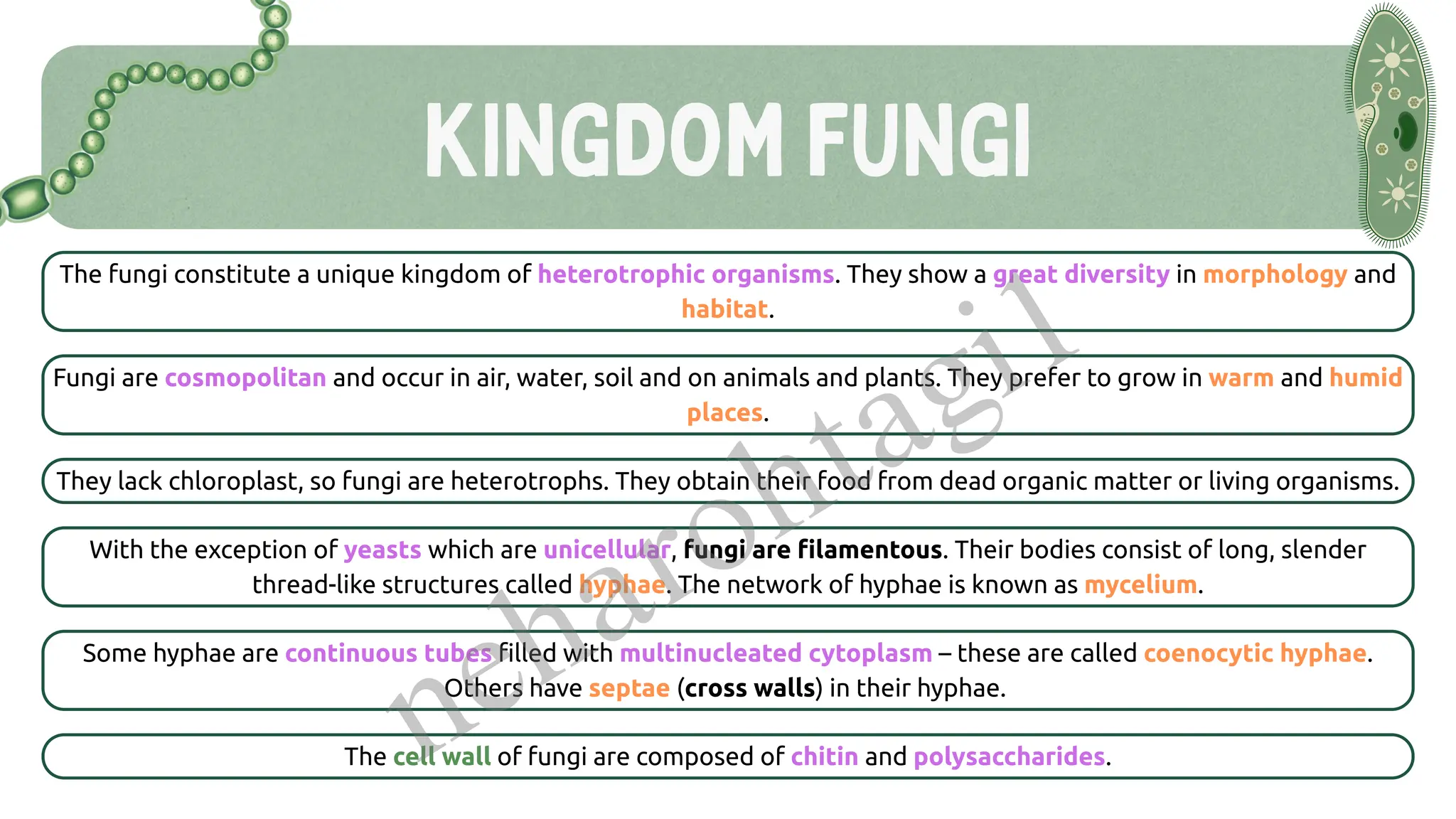
KINGDOM FUNGI
The fungi constitute a unique kingdom of heterotrophic organisms. They show a great diversity in morphology and
habitat.
Fungi are cosmopolitan and occur in air, water, soil and on animals and plants. They prefer to grow in warm and humid
places.
They lack chloroplast, so fungi are heterotrophs. They obtain their food from dead organic matter or living organisms.
With the exception of yeasts which are unicellular, fungi are filamentous. Their bodies consist of long, slender
thread-like structures called hyphae. The network of hyphae is known as mycelium.
Some hyphae are continuous tubes filled with multinucleated cytoplasm – these are called coenocytic hyphae.
Others have septae (cross walls) in their hyphae.
The cell wall of fungi are composed of chitin and polysaccharides.
neharohtagi1
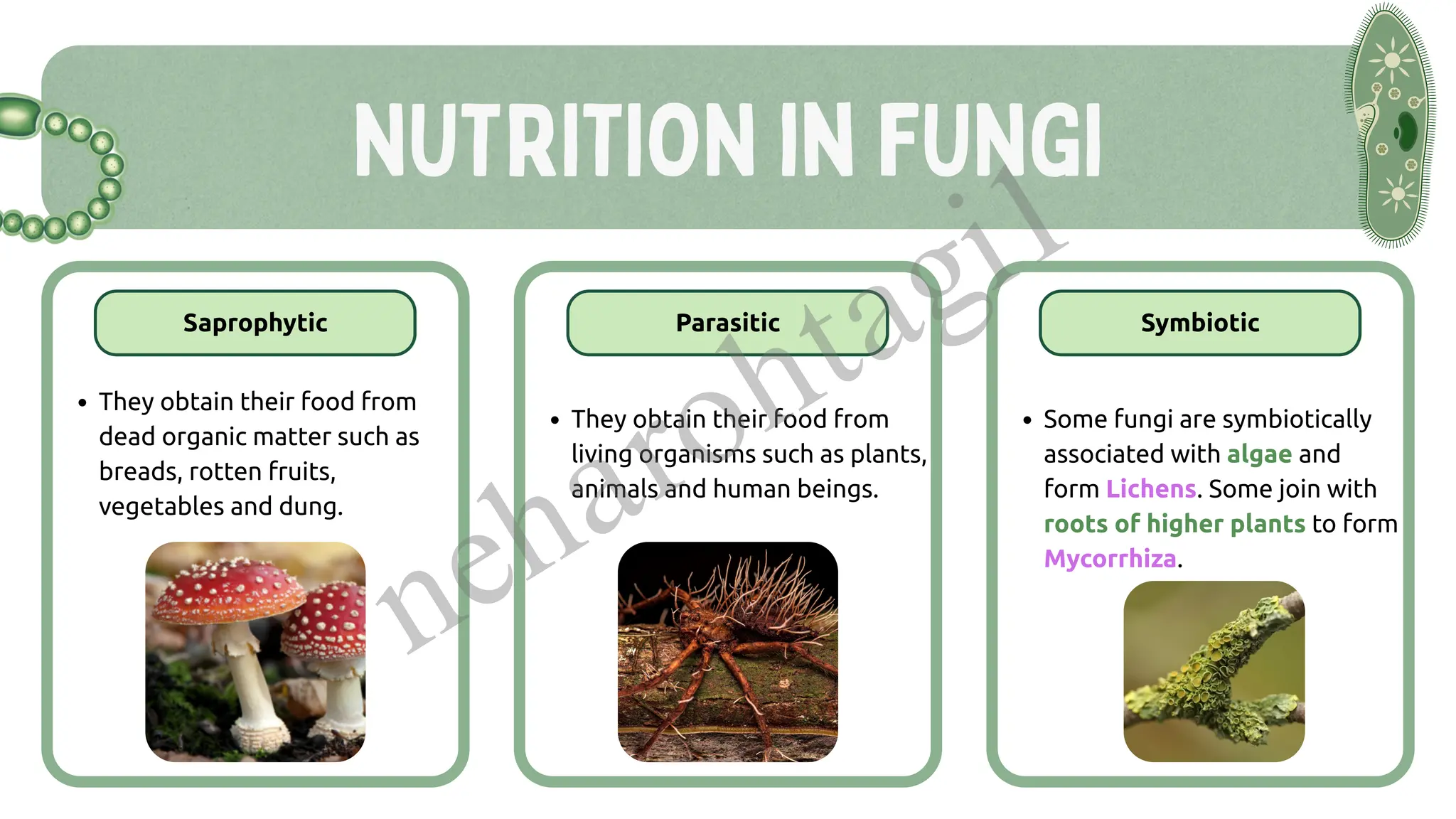
NUTRITION in FUNGI
They obtain their food from
dead organic matter such as
breads, rotten fruits,
vegetables and dung.
They obtain their food from
living organisms such as plants,
animals and human beings.
Some fungi are symbiotically
associated with algae and
form Lichens. Some join with
roots of higher plants to form
Mycorrhiza.
Saprophytic Parasitic Symbiotic
neharohtagi1
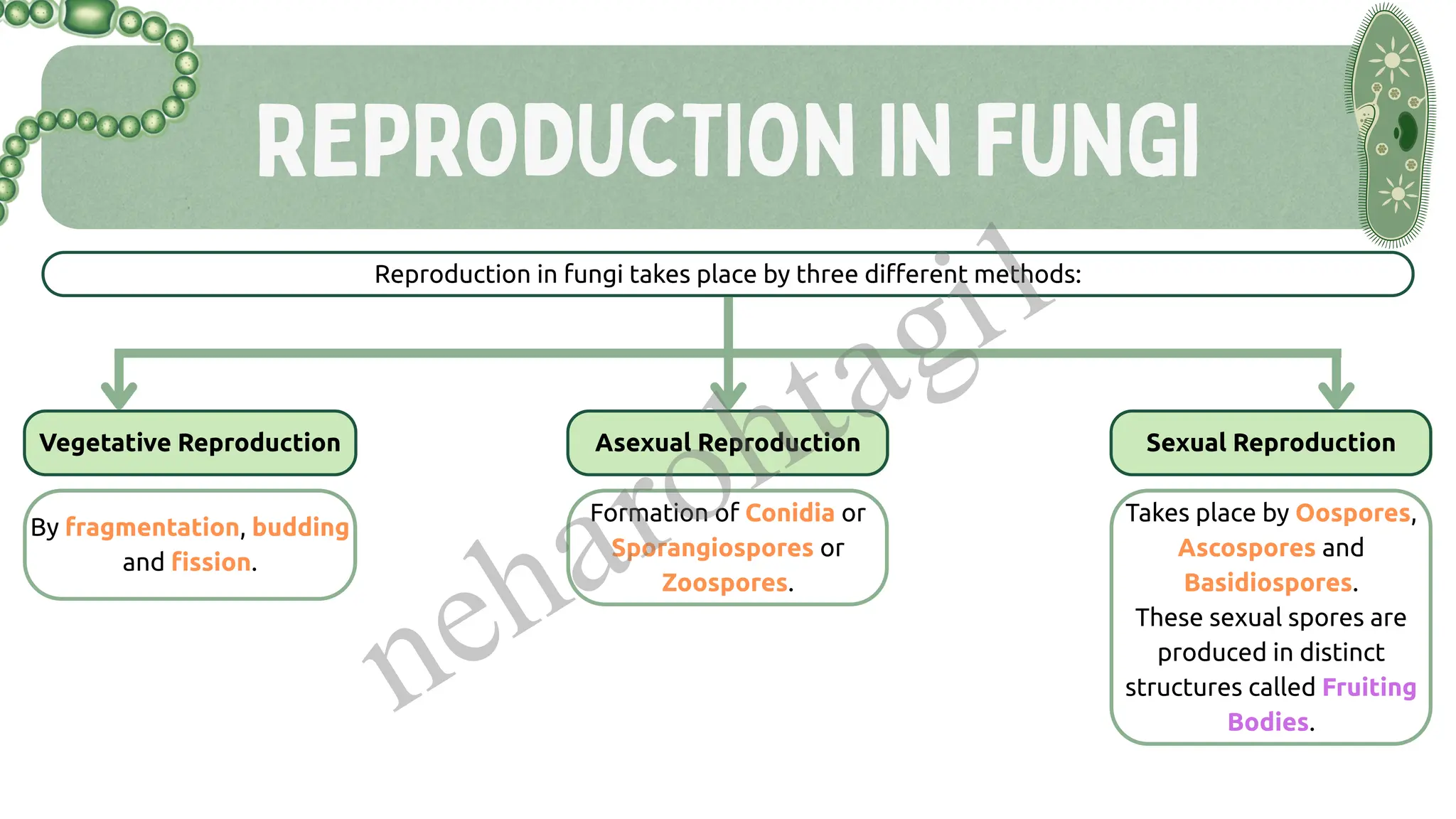
REPRODUCTION IN FUNGI
Reproduction in fungi takes place by three different methods:
Vegetative Reproduction Asexual Reproduction Sexual Reproduction
By fragmentation, budding
and fission.
Formation of Conidia or
Sporangiospores or
Zoospores.
Takes place by Oospores,
Ascospores and
Basidiospores.
These sexual spores are
produced in distinct
structures called Fruiting
Bodies.
neharohtagi1
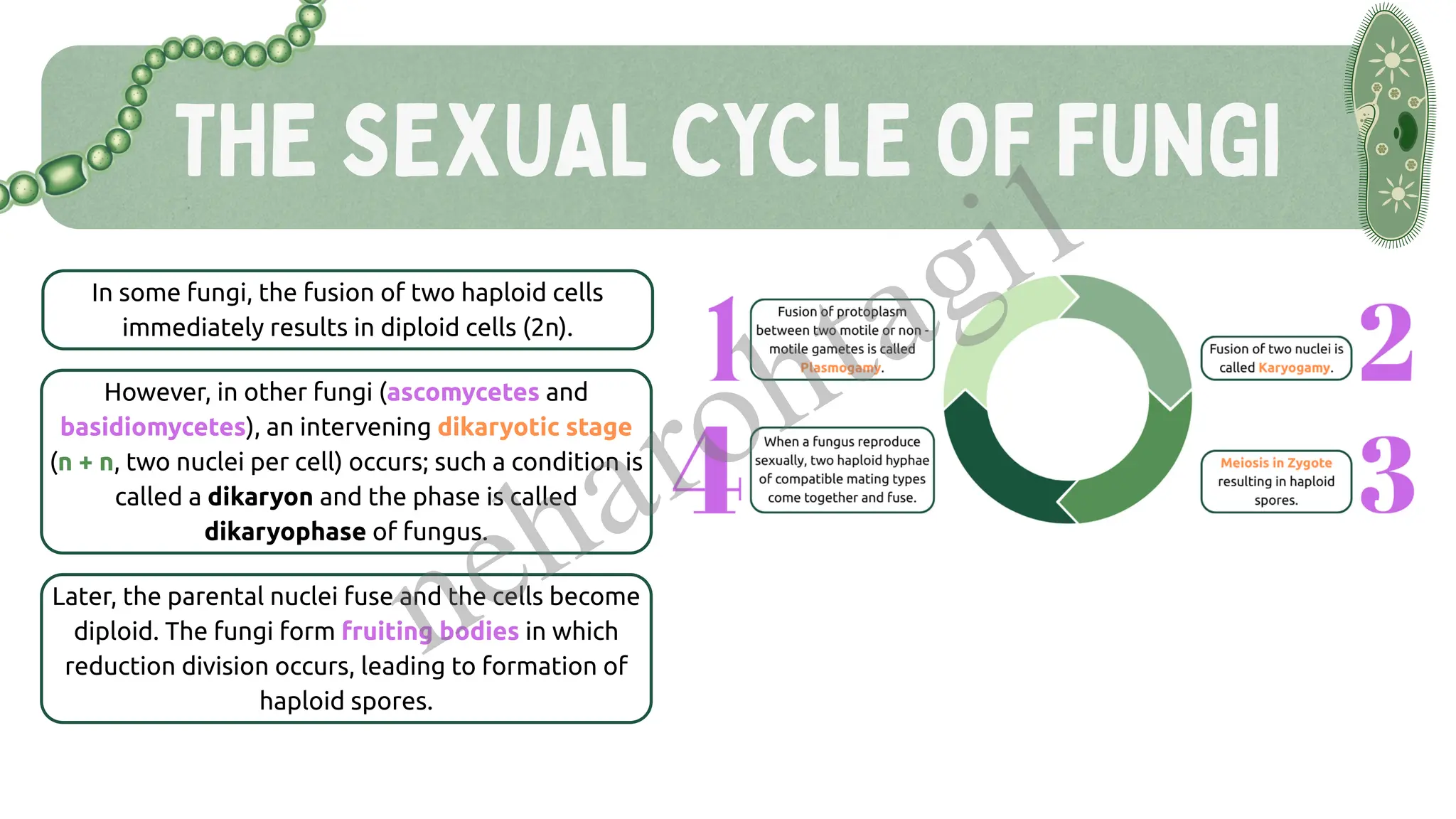
THE SEXUAL CYCLE OF FUNGI
In some fungi, the fusion of two haploid cells
immediately results in diploid cells (2n).
However, in other fungi (ascomycetes and
basidiomycetes), an intervening dikaryotic stage
(n + n, two nuclei per cell) occurs; such a condition is
called a dikaryon and the phase is called
dikaryophase of fungus.
Later, the parental nuclei fuse and the cells become
diploid. The fungi form fruiting bodies in which
reduction division occurs, leading to formation of
haploid spores.
neharohtagi1
Classification OF FUNGI
Fungi are divided into the following classes on the basis of the morphology of the mycelium, mode of spore
formation and fruiting bodies.
Phycomycetes Ascomycetes Basidiomycetes Deutromycetes
neharohtagi1
PHYCOMYCETES
Members of phycomycetes are found in aquatic habitats
and on decaying wood in moist and damp places or as
obligate parasites on plants.
The mycelium is aseptate and coenocytic.
Asexual reproduction takes place by zoospores (motile)
or by aplanospores (non-motile). These spores are
endogenously produced in sporangium.
A zygospore is formed by fusion of two gametes
These gametes are similar in morphology (isogamous) or
dissimilar (anisogamous or oogamous).
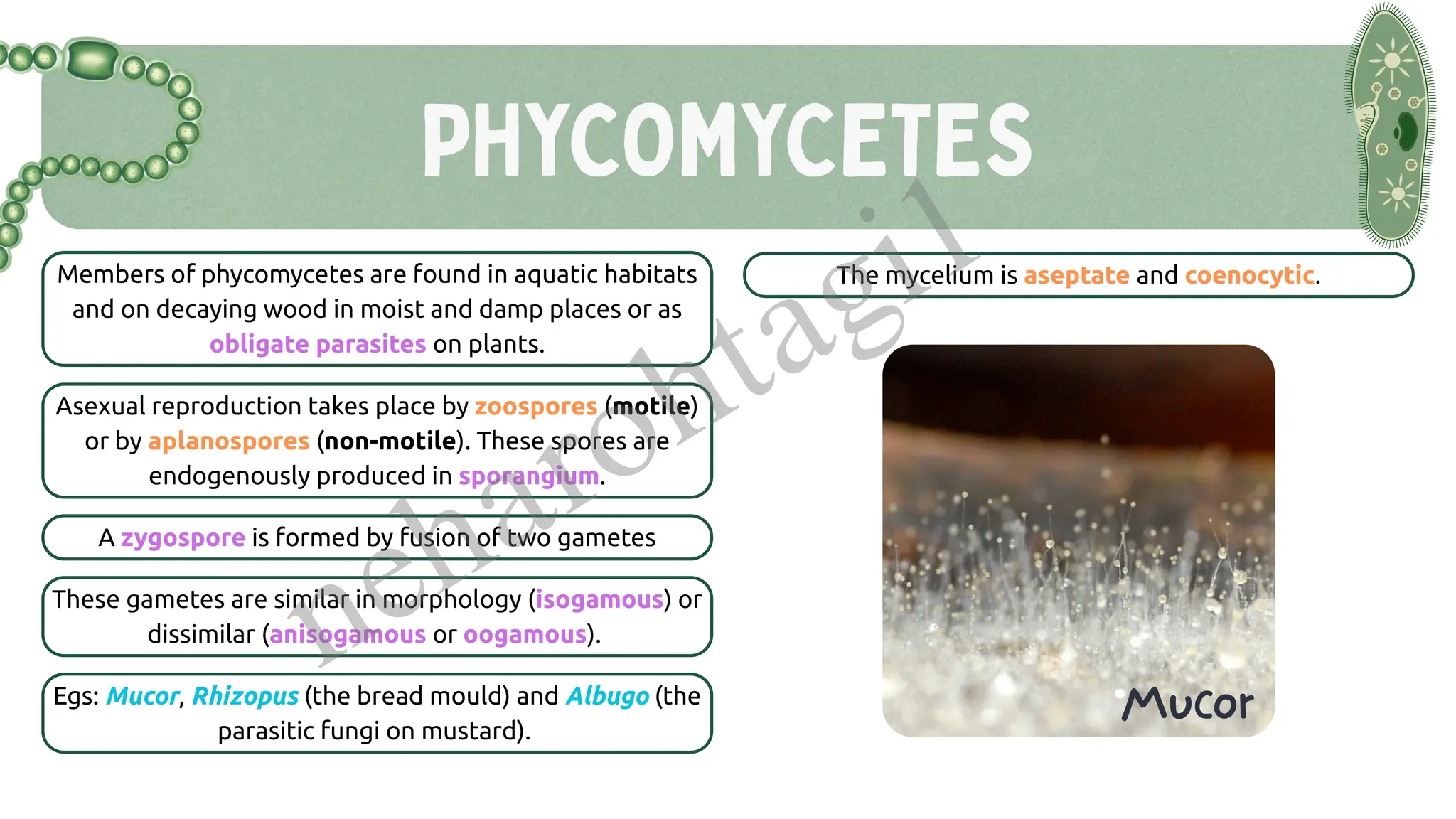
Egs: Mucor, Rhizopus (the bread mould) and Albugo (the
parasitic fungi on mustard).
Mucor
neharohtagi1
Ascomycetes
They are saprophytic, decomposers, parasitic or
coprophilous (growing on dung).
The mycelium is septate and branched.
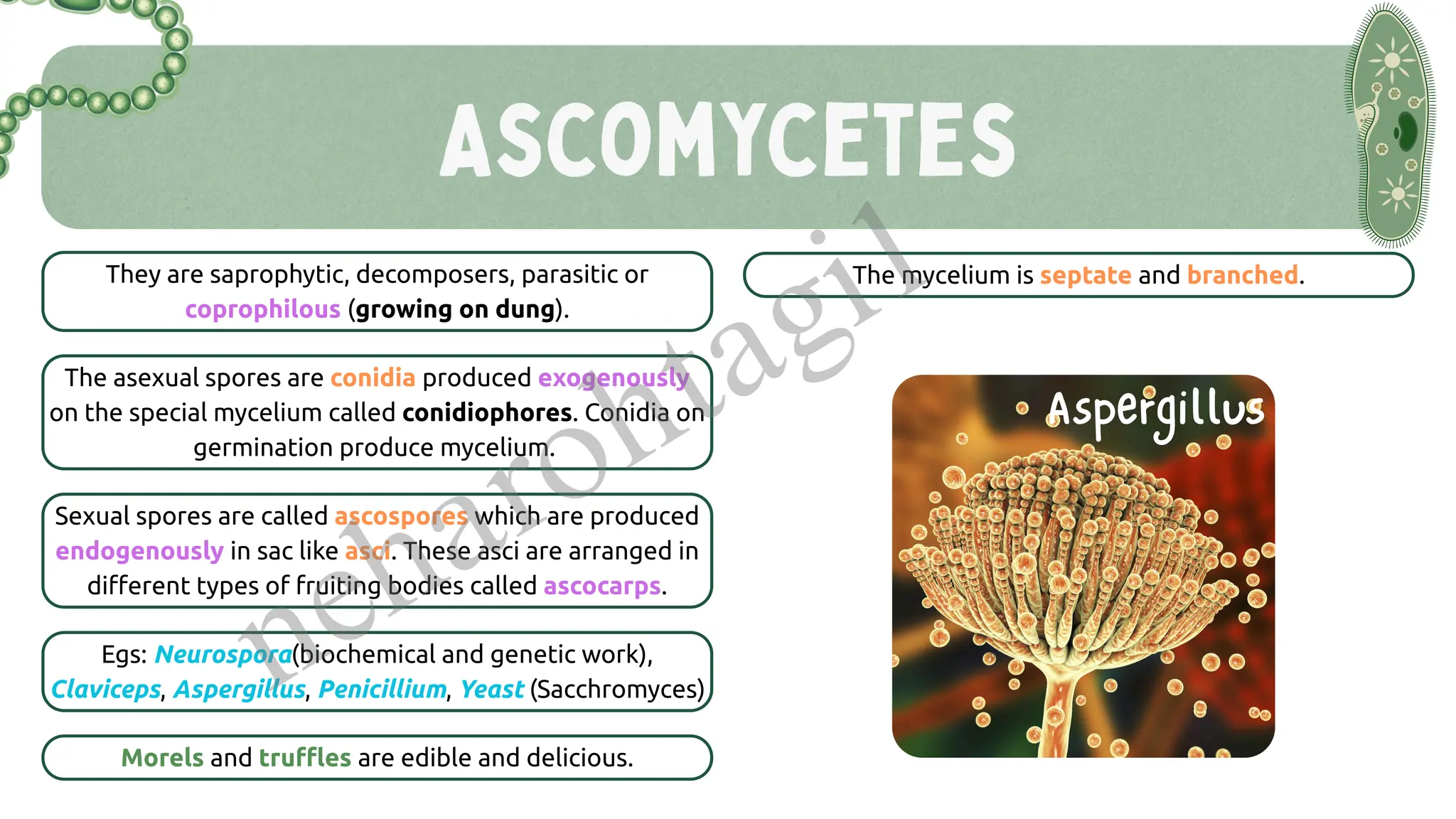
The asexual spores are conidia produced exogenously
on the special mycelium called conidiophores. Conidia on
germination produce mycelium.
Sexual spores are called ascospores which are produced
endogenously in sac like asci. These asci are arranged in
different types of fruiting bodies called ascocarps.
Egs: Neurospora(biochemical and genetic work),
Claviceps, Aspergillus, Penicillium, Yeast (Sacchromyces)
Morels and truffles are edible and delicious.
Aspergillus
neharohtagi1
BASIDIOMYCETES
Commonly known forms are bracket fungi or puffballs.
They grow in soil, logs and plant bodies as parasites.
The mycelium is septate and branched.
The asexual spores are generally not found, but
vegetative reproduction by fragmentation is common.
The sex organs are absent, but plasmogamy is brought
about by fusion of two somatic cells of different strains.
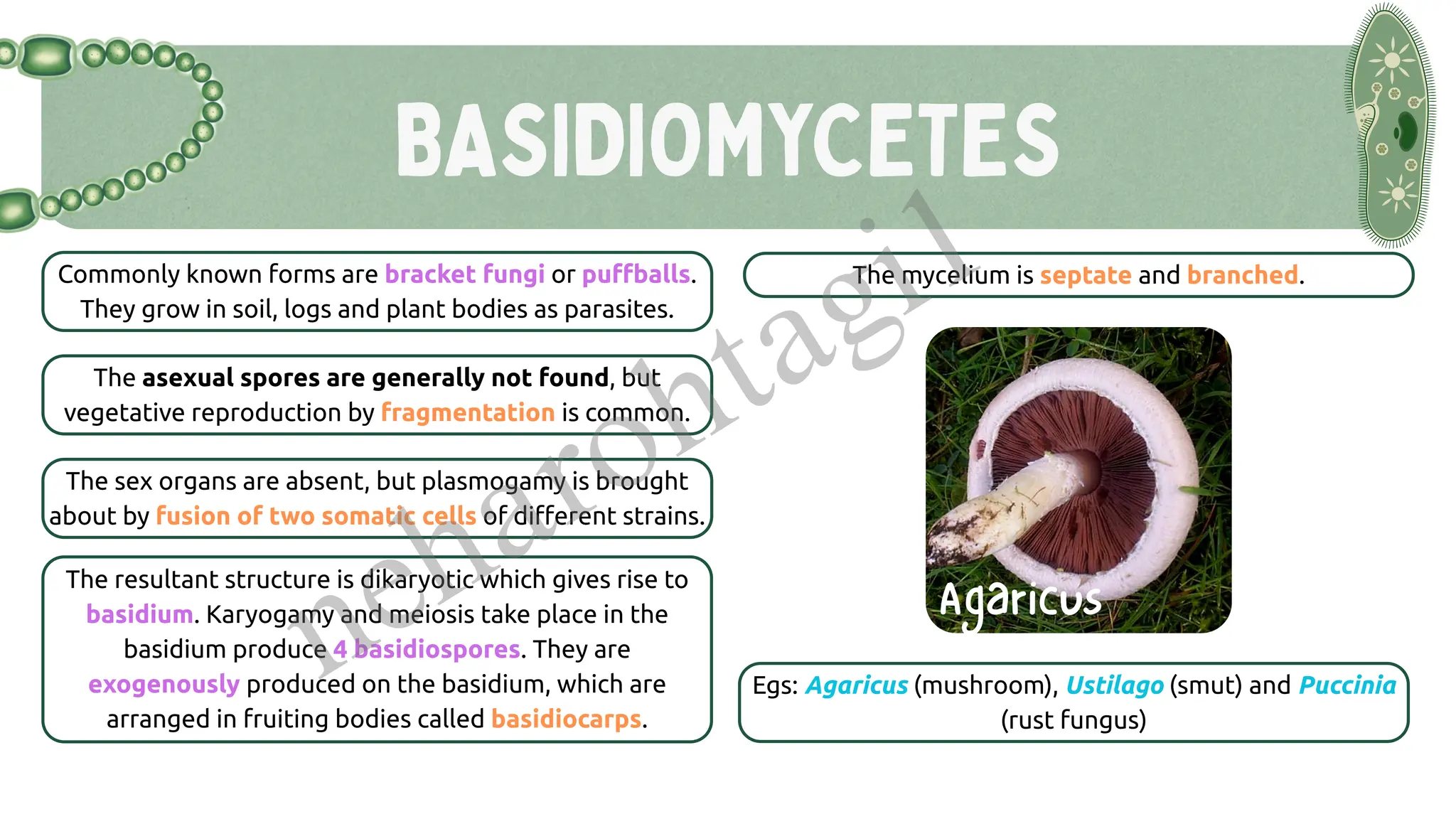
Egs: Agaricus (mushroom), Ustilago (smut) and Puccinia
(rust fungus)
The resultant structure is dikaryotic which gives rise to
basidium. Karyogamy and meiosis take place in the
basidium produce 4 basidiospores. They are
exogenously produced on the basidium, which are
arranged in fruiting bodies called basidiocarps.
Agaricus
neharohtagi1
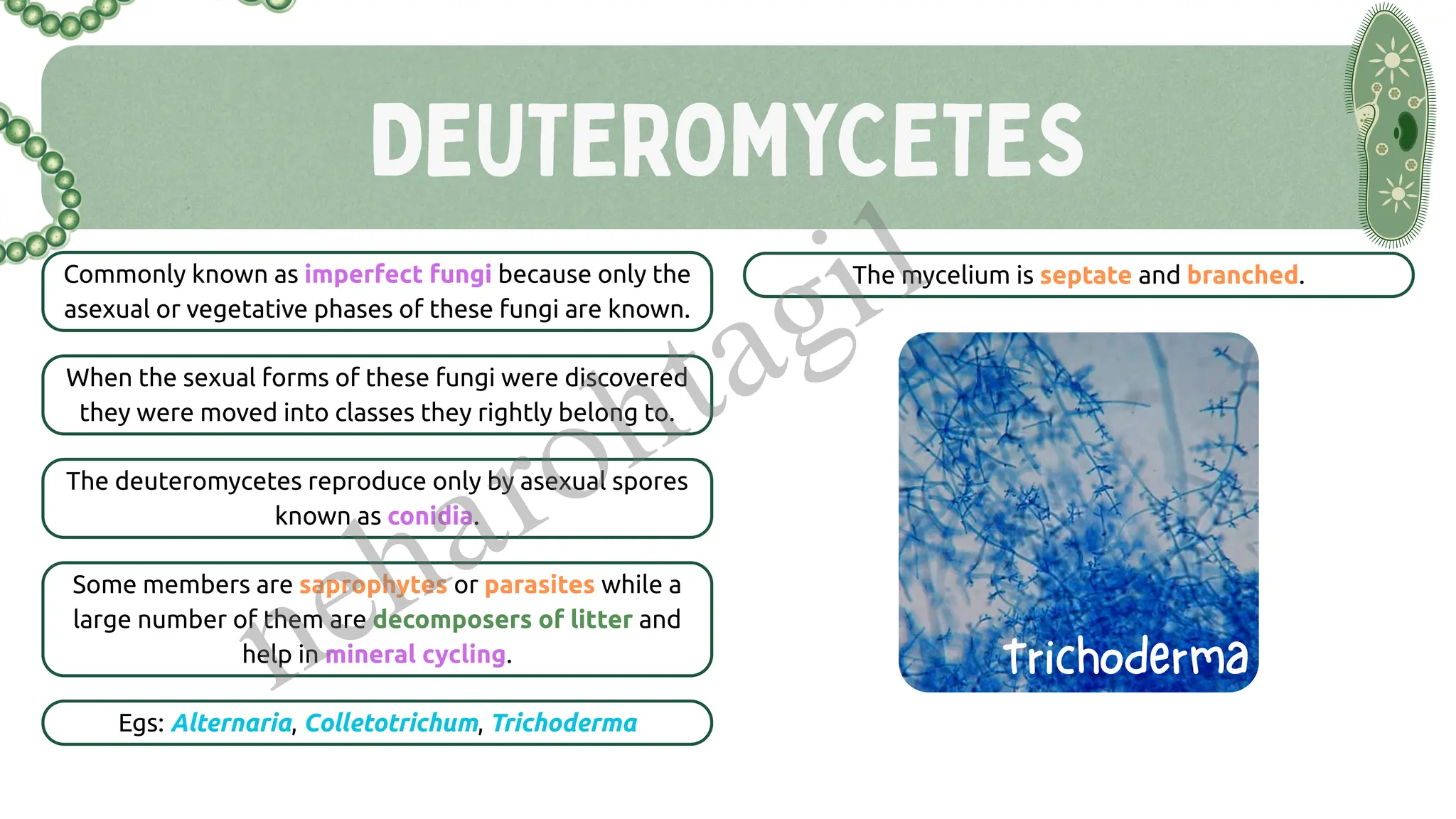
DEUTEROMYCETES
Commonly known as imperfect fungi because only the
asexual or vegetative phases of these fungi are known.
The mycelium is septate and branched.
When the sexual forms of these fungi were discovered
they were moved into classes they rightly belong to.
The deuteromycetes reproduce only by asexual spores
known as conidia.
Egs: Alternaria, Colletotrichum, Trichoderma
Some members are saprophytes or parasites while a
large number of them are decomposers of litter and
help in mineral cycling. Trichoderma
neharohtagi1
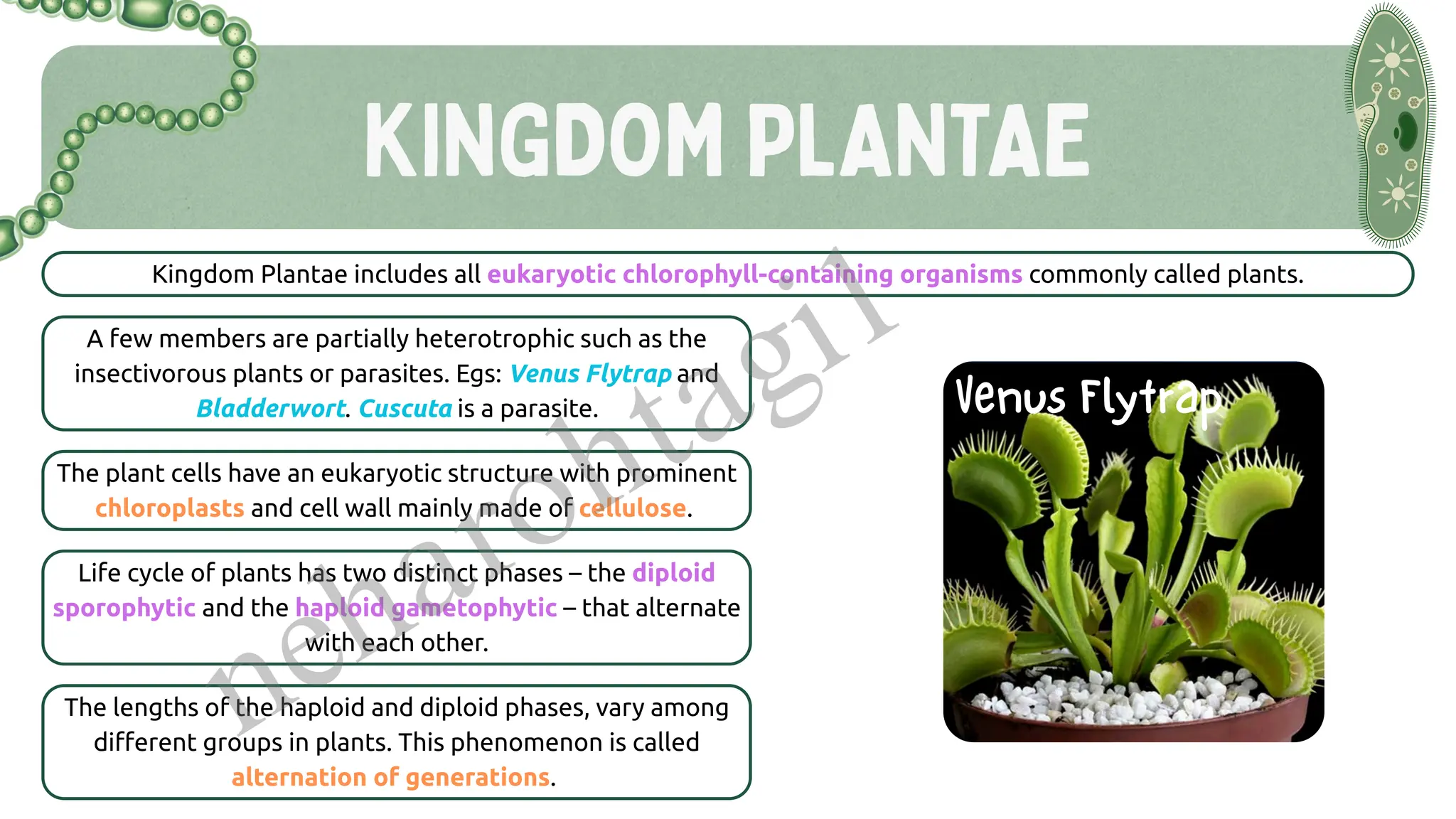
KINGDOM PLANTAE
Kingdom Plantae includes all eukaryotic chlorophyll-containing organisms commonly called plants.
A few members are partially heterotrophic such as the
insectivorous plants or parasites. Egs: Venus Flytrap and
Bladderwort. Cuscuta is a parasite.
The plant cells have an eukaryotic structure with prominent
chloroplasts and cell wall mainly made of cellulose.
Life cycle of plants has two distinct phases – the diploid
sporophytic and the haploid gametophytic – that alternate
with each other.
The lengths of the haploid and diploid phases, vary among
different groups in plants. This phenomenon is called
alternation of generations.
Venus Flytrap
neharohtagi1
KINGDOM Animalia
This kingdom is characterised by heterotrophic eukaryotic organisms that are multicellular and cells lack cell walls.
They directly or indirectly depend on plants for food. They digest their food in an internal cavity and store food
reserves as glycogen or fat.
Their mode of nutrition is holozoic – by ingestion of food. They follow a definite growth pattern and grow into adults
that have a definite shape and size.
Higher forms show elaborate sensory and neuromotor mechanism. Most of them are capable of locomotion.
The sexual reproduction is by copulation of male and female followed by embryological development.
neharohtagi1
Virus
Viruses did not find a place in classification since they are not considered truly ‘living’.
The viruses are non-cellular organisms that are characterised by having an inert crystalline structure outside the living
cell. Once they infect a cell, they take over the machinery of the host cell to replicate themselves, killing the host.
Dmitri Ivanowsky (1892) recognised certain microbes as causal organism of the mosaic disease of tobacco. These were
found to be smaller than bacteria because they passed through bacteria-proof filters.
M.W. Beijerinck (1898) demonstrated that the extract of the infected plants of tobacco could cause infection in healthy
plants and named the new pathogen “virus” and called the fluid as Contagium vivum fluidum (infectious living fluid).
W.M. Stanley (1935) showed that viruses could be crystallised and crystals consist largely of proteins. They are inert
outside their specific host cell. Viruses are obligate parasites.
neharohtagi1
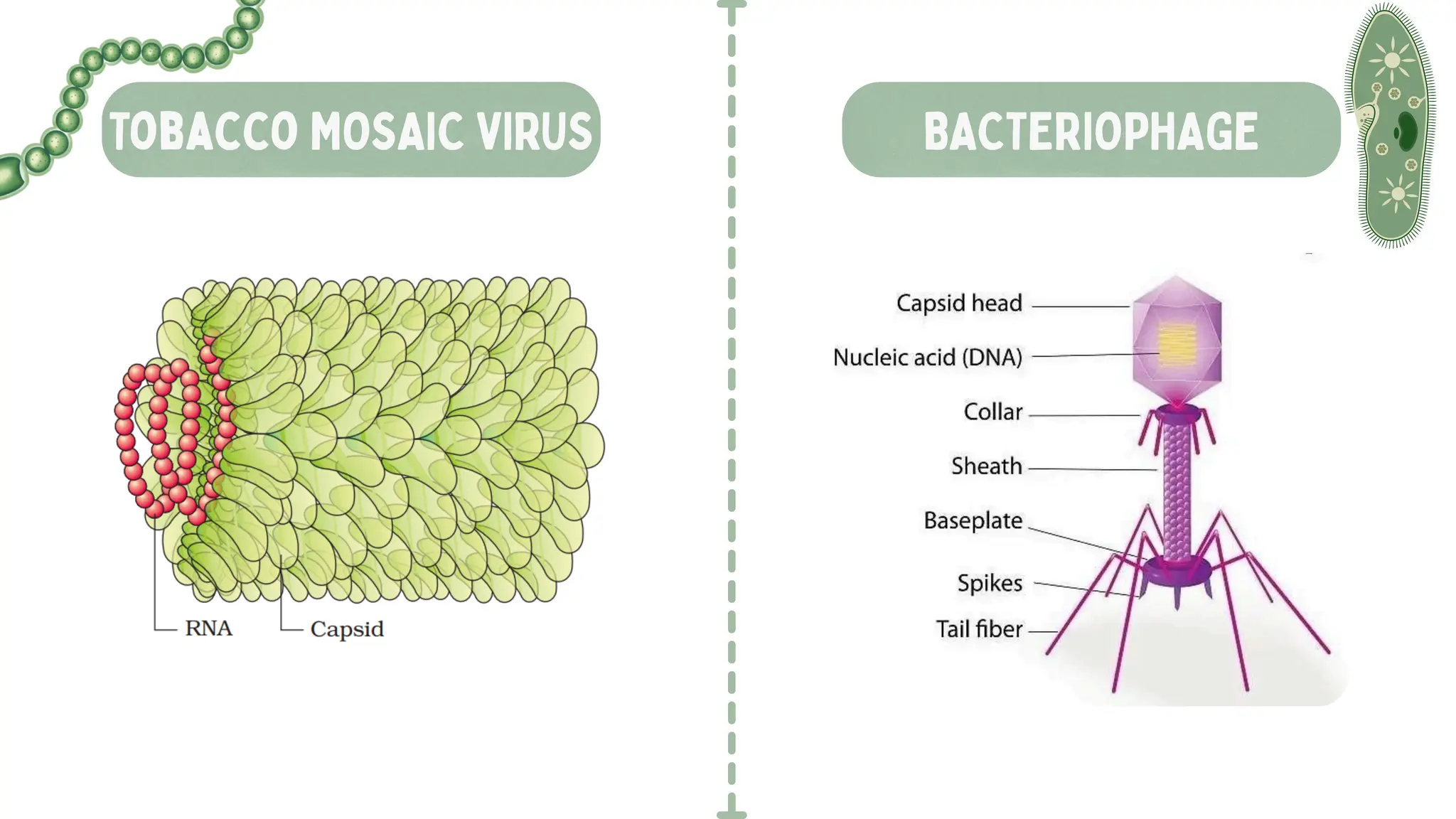
Tobacco MOSAIC VIRUS BACTERIOPHAGE
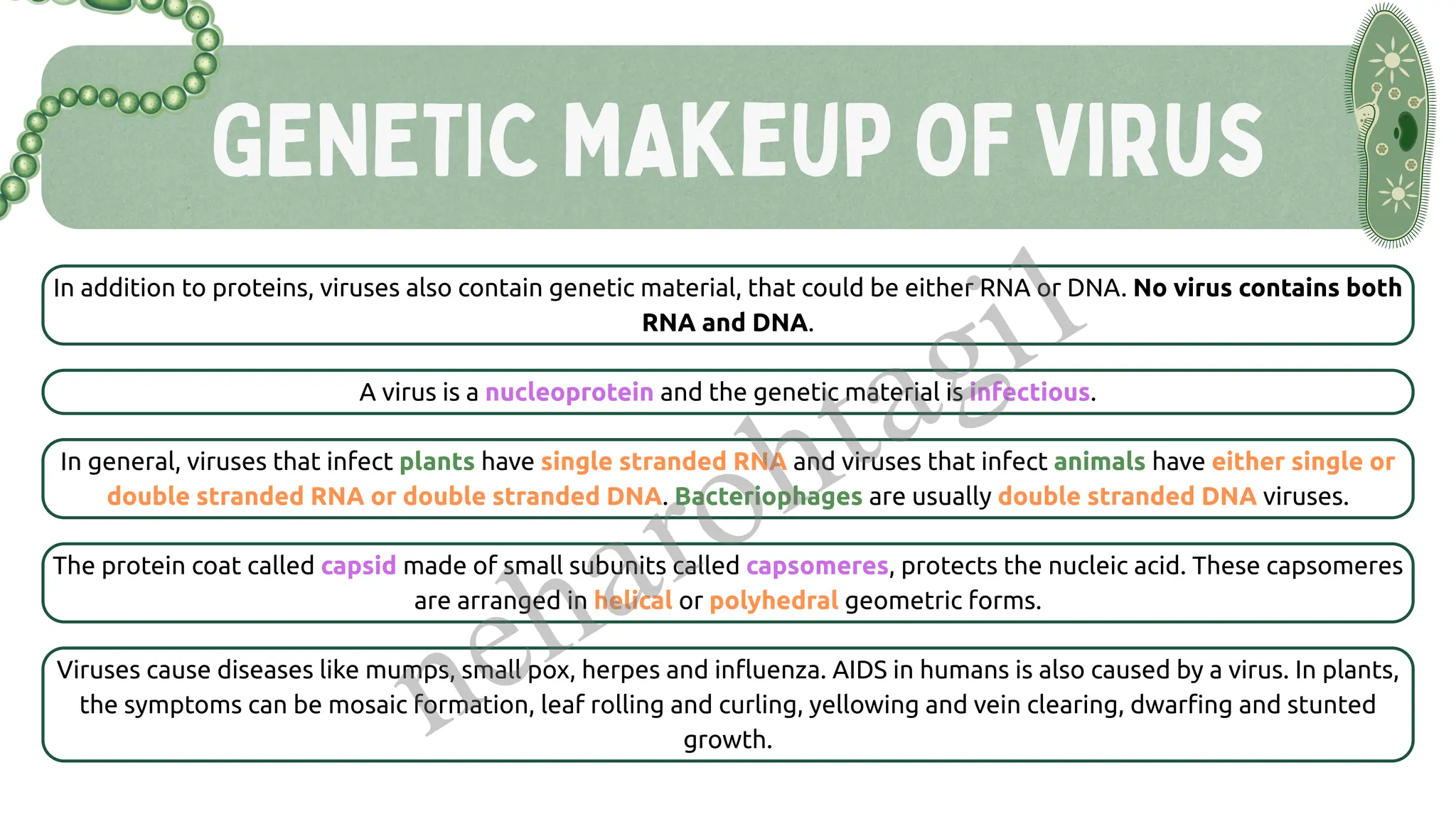
GENETIC MAkeup OF Virus
In addition to proteins, viruses also contain genetic material, that could be either RNA or DNA. No virus contains both
RNA and DNA.
A virus is a nucleoprotein and the genetic material is infectious.
In general, viruses that infect plants have single stranded RNA and viruses that infect animals have either single or
double stranded RNA or double stranded DNA. Bacteriophages are usually double stranded DNA viruses.
The protein coat called capsid made of small subunits called capsomeres, protects the nucleic acid. These capsomeres
are arranged in helical or polyhedral geometric forms.
Viruses cause diseases like mumps, small pox, herpes and influenza. AIDS in humans is also caused by a virus. In plants,
the symptoms can be mosaic formation, leaf rolling and curling, yellowing and vein clearing, dwarfing and stunted
growth.
neharohtagi1
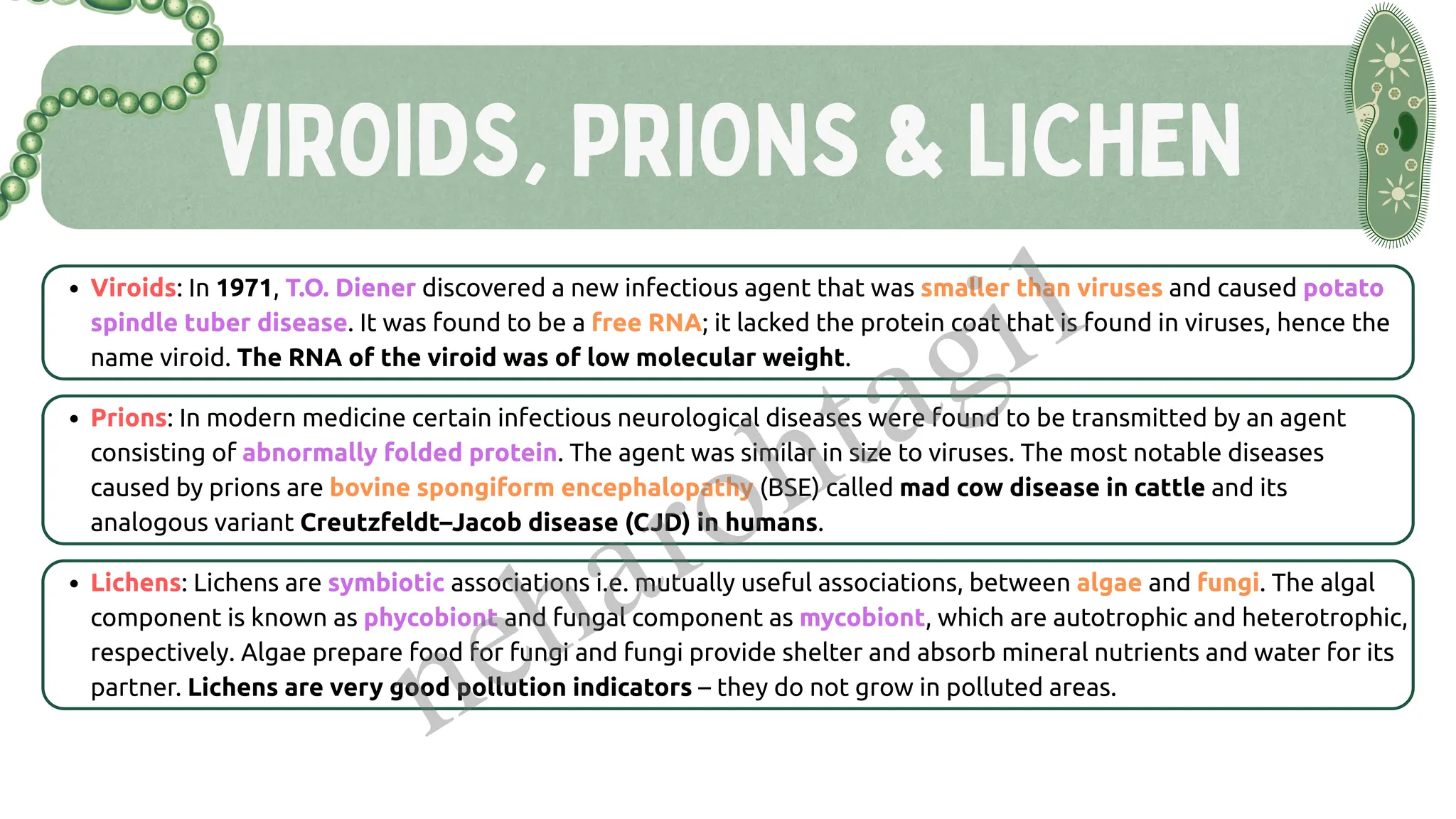
VIROIDS, PRIONS & LICHEN
Viroids: In 1971, T.O. Diener discovered a new infectious agent that was smaller than viruses and caused potato
spindle tuber disease. It was found to be a free RNA; it lacked the protein coat that is found in viruses, hence the
name viroid. The RNA of the viroid was of low molecular weight.
Prions: In modern medicine certain infectious neurological diseases were found to be transmitted by an agent
consisting of abnormally folded protein. The agent was similar in size to viruses. The most notable diseases
caused by prions are bovine spongiform encephalopathy (BSE) called mad cow disease in cattle and its
analogous variant Creutzfeldt–Jacob disease (CJD) in humans.
Lichens: Lichens are symbiotic associations i.e. mutually useful associations, between algae and fungi. The algal
component is known as phycobiont and fungal component as mycobiont, which are autotrophic and heterotrophic,
respectively. Algae prepare food for fungi and fungi provide shelter and absorb mineral nutrients and water for its
partner. Lichens are very good pollution indicators – they do not grow in polluted areas.
neharohtagi1
Biological Classification Class 11th NCERT CBSE NEET.pdf

Biological Classification Class 11th NCERT CBSE NEET.pdf

  • 1.
  • 2.
    Introduction Identification of differencesamong organisms and placing them into groups that reflect their most significant features and relationship is called Biological Classification. It was first propsed by Aristotle who used simple morphological characters to classify Plants into Trees, Shrubs and Herbs. He also divided Animals into two groups, those which had Red Blood and those that did not. The purpose of biological classification is to organise the vast no. of known plants and animals into categories that could be studied easily. Aristotle neharohtagi1
  • 3.
    System of Classification Systemof Classification Name of Kingdoms Taxonomist Two Kingdom Plantae and Animalia Carolus Linnaeus Three Kingdom Plantae, Protista and Animalia Ernst Haeckal Four Kingdom Plantae, Protista, Monera and Animalia Copeland Five Kingdom Plantae, Protista, Monera, Fungi and Animalia R.H. Whittaker Six Kingdom Plantae, Protista, Monera, Archaebacteria and Animalia Carl Woese neharohtagi1
  • 4.
    Two Kingdom System Linnaeusintroduced Two - Kingdom Classification. He classified all organisms into two kingdoms - Plantae and Animalia on the basis of cell wall. LIMITATIONS: This system did not distinguish between the Eukaryotes and Prokaryotes. Unicellular and Multicellular organisms were placed in both the kingdoms though they have different organisations. This classification did not distinguish between Photosynthetic and Non - Photosynthetic organisms. Fungi were included under plantae but they are non - photosynthetic and heterotrophic. Paramoecium and Amoeba were placed in animal kingdom, because cell wall is absent in them. Linnaeus neharohtagi1
  • 5.
    Merits Of FiveKingdom System The earlier classifications did not differentiates between the heterotrophic group - fungi and the autotrophic plants, though they show a characteristic difference in their cell walls composition - the fungi had Chitin in their walls while the green plants had a Cellulosic wall. When such characteristics were considered, fungi were placed in a sepereate Kingdom - Fungi. Whittaker All prokaryotic organisms were grouped together under Kingdom Monera and the unicellular eukaryotic organisms were placed in Kingdom Protista. Kingdom Protista has brought together Chlamydomonas, Chlorella (earlier placed in Algae within Plants and both having cell walls) with Paramoecium and Amoeba (which were earlier placed in the animal kingdom which lack cell wall). neharohtagi1
  • 6.
  • 7.
    THREE DOMAIN SYSTEM Proposedby Carl Woese. The three-domain system has also been proposed that divides the Kingdom Monera into two domains, leaving the remaining eukaryotic kingdoms in the third domain and thereby a six kingdom classification Carl Woese neharohtagi1
  • 8.
    Kingdom Monera All prokaryoticorganisms were placed under Kingdom Monera. Bacteria are the sole members of the Kingdom Monera. They are the most abundant micro-organisms. Bacteria occur almost everywhere. Hundreds of bacteria are present in a handful of soil. They also live in extreme habitats such as hot springs, deserts, snow and deep oceans where very few other life forms can survive. Many of them live in or on other organisms as parasites. Bacteria are grouped under four categories based on their shape: the Spherical Coccus, Rod- Shaped Bacillus, Comma-Shaped Vibrium and the Spiral Spirillum. Cocci Bacilli Vibrium Spirillia neharohtagi1
  • 9.
    General Characterstics Cell wallis made of Peptidoglycan except Archaebacteria and Mycoplasma. Genetic material is naked DNA known as Nucleoid. Histones, nuclear envelope, nucleoplasm, nucleolus and chromatin are absent. All membrane - bound organelle are absent. Contains 70S type of ribosomes. Since mitochondria is absent, therefore respiratory enzymes are associated with plasma membrane (Mesosome). Bacteria reproduce mainly by fission. Sometimes, under unfavourable conditions, they produce spores. They also reproduce by a sort of sexual reproduction by adopting a primitive type of DNA transfer from one bacterium to the other. Though the bacterial structure is very simple, they are very complex in behaviour. Compared to many other organisms, bacteria as a group show the most extensive metabolic diversity. neharohtagi1
  • 10.
    Nutrition In BACTERIA Thesebacteria use light or chemical energy to produce their own food. Autotrophs Heterotrophs On the basis of source of energy autotrophs are of following types: Photosynthetic Autotrophs Chemosynthetic Autotrophs Most of the bacteria are heterotrophic i.e., they can not manufacture their own food. There are three types of Heterotrophic Bacteria: Parasitic Saprophytic Symbiotic neharohtagi1
  • 11.
    Archaebacteria They are themost primitive form of life. These bacteria are special since they live in some of the most harsh habitats such as extreme salty areas (halophiles), hot springs (thermoacidophiles) and marshy areas (methanogens). Archaebacteria differ from other bacteria in having a different cell wall structure and this feature is responsible for their survival in extreme conditions. Methanogens are present in the gut of several ruminant animals such as cows and buffaloes and they are responsible for the production of methane (biogas) from the dung of these animals. neharohtagi1
  • 12.
    eubacteria There are thousandsof different eubacteria or ‘true bacteria’. They are characterised by the presence of a rigid cell wall, and if motile, a flagellum. The cyanobacteria (also referred to as blue-green algae) have chlorophyll a similar to green plants and are photosynthetic autotrophs. Cyanobacteria They are unicellular, colonial or filamentous, freshwater/marine or terrestrial algae. The colonies are generally surrounded by Gelatinous Sheath. They often form blooms in polluted water bodies (algal bloom). Some of these organisms can fix atmospheric nitrogen in specialised cells called heterocysts, e.g., Nostoc and Anabaena. Nostoc neharohtagi1
  • 13.
    ChemoTrophic and HETEROTRophs Chemosyntheticautotrophic bacteria oxidise various inorganic substances such as nitrates, nitrites and ammonia and use the released energy for their ATP production. They play a great role in recycling nutrients like nitrogen, phosphorous, iron and sulphur. Heterotrophic Bacteria Heterotrophic bacteria are most abundant in nature. The majority are important decomposers. Many of them have a significant impact on human affairs. They are helpful in making curd from milk, production of antibiotics, fixing nitrogen in legume roots, etc. Some are pathogens causing damage to human beings, crops, farm animals and pets. Cholera, typhoid, tetanus, citrus canker are well known diseases caused by different bacteria. neharohtagi1
  • 14.
    MYCOPLASMA The Mycoplasma areorganisms that completely lack a cell wall. They are the smallest living cells known and can survive without oxygen. Many mycoplasma are pathogenic in animals and plants. neharohtagi1
  • 15.
    Kingdom Protista All single-celledeukaryotes are placed under Protista, but the boundaries of this kingdom are not well defined. Members of Protista are primarily aquatic. This kingdom forms a link with the others dealing with plants, animals and fungi. Being eukaryotes, the protistan cell body contains a well defined nucleus and other membrane-bound organelles. Some have flagella or cilia. Protists reproduce asexually and sexually by a process involving cell fusion and zygote formation. Chrysophytes Dinoflagellates Euglenoids Slime Moulds Protozoans neharohtagi1
  • 16.
    ChrysoPHYTES This group includesdiatoms and golden algae (desmids). They are found in fresh water as well as in marine environments. They are microscopic and float passively in water currents (plankton). Most of them are photosynthetic. In diatoms the cell walls form two thin overlapping shells, which fit together as in a soap box. The walls are embedded with silica and thus the walls are indestructible. Thus, diatoms have left behind large amount of cell wall deposits in their habitat; this accumulation over billions of years is referred to as ‘diatomaceous earth’. Being gritty this soil is used in polishing, filtration of oils and syrups. Diatoms are the chief ‘producers’ in the oceans. neharohtagi1
  • 17.
    Dinoflagellates These organisms aremostly marine and photosynthetic. They appear yellow, green, brown, blue or red depending on the main pigments present in their cells. The cell wall has stiff cellulose plates on the outer surface. Most of them have two flagella; one lies longitudinally and the other transversely in a furrow between the wall plates. Very often, red dinoflagellates (Eg: Gonyaulax) undergo such rapid multiplication that they make the sea appear red (red tides). Toxins released by such large numbers may even kill other marine animals such as fishes. neharohtagi1
  • 18.
    Euglenoids Majority of themare fresh water organisms found in stagnant water. Instead of a cell wall, they have a protein rich layer called pellicle which makes their body flexible. They have two flagella, a short and a long one. Though they are photosynthetic in the presence of sunlight, when deprived of sunlight they behave like heterotrophs by predating on other smaller organisms. Interestingly, the pigments of euglenoids are identical to those present in higher plants. Example: Euglena neharohtagi1
  • 19.
    SLIME MOULDS Slime mouldsare saprophytic protists. The body moves along decaying twigs and leaves engulfing organic material. Under suitable conditions, they form an aggregation called plasmodium which may grow and spread over several feet. The spores possess true walls. They are extremely resistant and survive for many years, even under adverse conditions. The spores are dispersed by air currents. During unfavourable conditions, the plasmodium differentiates and forms fruiting bodies bearing spores at their tips. neharohtagi1
  • 20.
    Protozoans All protozoans areheterotrophs and live as predators or parasites. They are believed to be primitive relatives of animals. There are four major groups of protozoans: Amoeboid Protozoan: These organisms live in fresh, sea water or moist soil. They capture their prey by pseudopodia as in Amoeba. Marine forms have silica shells on their surface. eg: Entamoeba are parasites. Flagellated Protozoan: The members of this group are either free-living or parasitic. They have flagella. The parasitic forms cause diseases such as sleeping sickness. Eg: Trypanosoma. Ciliated Protozoan: These are aquatic, actively moving organisms because of the presence of thousands of cilia. They have a cavity (gullet) that opens to the outside of the cell surface. Eg: Paramoecium Sporozoans: This includes diverse organisms that have an infectious spore-like stage in their life cycle. The most notorious is Plasmodium (malarial parasite) which causes malaria, a disease which has a staggering effect on human population. neharohtagi1
  • 21.
    KINGDOM FUNGI The fungiconstitute a unique kingdom of heterotrophic organisms. They show a great diversity in morphology and habitat. Fungi are cosmopolitan and occur in air, water, soil and on animals and plants. They prefer to grow in warm and humid places. They lack chloroplast, so fungi are heterotrophs. They obtain their food from dead organic matter or living organisms. With the exception of yeasts which are unicellular, fungi are filamentous. Their bodies consist of long, slender thread-like structures called hyphae. The network of hyphae is known as mycelium. Some hyphae are continuous tubes filled with multinucleated cytoplasm – these are called coenocytic hyphae. Others have septae (cross walls) in their hyphae. The cell wall of fungi are composed of chitin and polysaccharides. neharohtagi1
  • 22.
    NUTRITION in FUNGI Theyobtain their food from dead organic matter such as breads, rotten fruits, vegetables and dung. They obtain their food from living organisms such as plants, animals and human beings. Some fungi are symbiotically associated with algae and form Lichens. Some join with roots of higher plants to form Mycorrhiza. Saprophytic Parasitic Symbiotic neharohtagi1
  • 23.
    REPRODUCTION IN FUNGI Reproductionin fungi takes place by three different methods: Vegetative Reproduction Asexual Reproduction Sexual Reproduction By fragmentation, budding and fission. Formation of Conidia or Sporangiospores or Zoospores. Takes place by Oospores, Ascospores and Basidiospores. These sexual spores are produced in distinct structures called Fruiting Bodies. neharohtagi1
  • 24.
    THE SEXUAL CYCLEOF FUNGI In some fungi, the fusion of two haploid cells immediately results in diploid cells (2n). However, in other fungi (ascomycetes and basidiomycetes), an intervening dikaryotic stage (n + n, two nuclei per cell) occurs; such a condition is called a dikaryon and the phase is called dikaryophase of fungus. Later, the parental nuclei fuse and the cells become diploid. The fungi form fruiting bodies in which reduction division occurs, leading to formation of haploid spores. neharohtagi1
  • 25.
    Classification OF FUNGI Fungiare divided into the following classes on the basis of the morphology of the mycelium, mode of spore formation and fruiting bodies. Phycomycetes Ascomycetes Basidiomycetes Deutromycetes neharohtagi1
  • 26.
    PHYCOMYCETES Members of phycomycetesare found in aquatic habitats and on decaying wood in moist and damp places or as obligate parasites on plants. The mycelium is aseptate and coenocytic. Asexual reproduction takes place by zoospores (motile) or by aplanospores (non-motile). These spores are endogenously produced in sporangium. A zygospore is formed by fusion of two gametes These gametes are similar in morphology (isogamous) or dissimilar (anisogamous or oogamous). Egs: Mucor, Rhizopus (the bread mould) and Albugo (the parasitic fungi on mustard). Mucor neharohtagi1
  • 27.
    Ascomycetes They are saprophytic,decomposers, parasitic or coprophilous (growing on dung). The mycelium is septate and branched. The asexual spores are conidia produced exogenously on the special mycelium called conidiophores. Conidia on germination produce mycelium. Sexual spores are called ascospores which are produced endogenously in sac like asci. These asci are arranged in different types of fruiting bodies called ascocarps. Egs: Neurospora(biochemical and genetic work), Claviceps, Aspergillus, Penicillium, Yeast (Sacchromyces) Morels and truffles are edible and delicious. Aspergillus neharohtagi1
  • 28.
    BASIDIOMYCETES Commonly known formsare bracket fungi or puffballs. They grow in soil, logs and plant bodies as parasites. The mycelium is septate and branched. The asexual spores are generally not found, but vegetative reproduction by fragmentation is common. The sex organs are absent, but plasmogamy is brought about by fusion of two somatic cells of different strains. Egs: Agaricus (mushroom), Ustilago (smut) and Puccinia (rust fungus) The resultant structure is dikaryotic which gives rise to basidium. Karyogamy and meiosis take place in the basidium produce 4 basidiospores. They are exogenously produced on the basidium, which are arranged in fruiting bodies called basidiocarps. Agaricus neharohtagi1
  • 29.
    DEUTEROMYCETES Commonly known asimperfect fungi because only the asexual or vegetative phases of these fungi are known. The mycelium is septate and branched. When the sexual forms of these fungi were discovered they were moved into classes they rightly belong to. The deuteromycetes reproduce only by asexual spores known as conidia. Egs: Alternaria, Colletotrichum, Trichoderma Some members are saprophytes or parasites while a large number of them are decomposers of litter and help in mineral cycling. Trichoderma neharohtagi1
  • 30.
    KINGDOM PLANTAE Kingdom Plantaeincludes all eukaryotic chlorophyll-containing organisms commonly called plants. A few members are partially heterotrophic such as the insectivorous plants or parasites. Egs: Venus Flytrap and Bladderwort. Cuscuta is a parasite. The plant cells have an eukaryotic structure with prominent chloroplasts and cell wall mainly made of cellulose. Life cycle of plants has two distinct phases – the diploid sporophytic and the haploid gametophytic – that alternate with each other. The lengths of the haploid and diploid phases, vary among different groups in plants. This phenomenon is called alternation of generations. Venus Flytrap neharohtagi1
  • 31.
    KINGDOM Animalia This kingdomis characterised by heterotrophic eukaryotic organisms that are multicellular and cells lack cell walls. They directly or indirectly depend on plants for food. They digest their food in an internal cavity and store food reserves as glycogen or fat. Their mode of nutrition is holozoic – by ingestion of food. They follow a definite growth pattern and grow into adults that have a definite shape and size. Higher forms show elaborate sensory and neuromotor mechanism. Most of them are capable of locomotion. The sexual reproduction is by copulation of male and female followed by embryological development. neharohtagi1
  • 32.
    Virus Viruses did notfind a place in classification since they are not considered truly ‘living’. The viruses are non-cellular organisms that are characterised by having an inert crystalline structure outside the living cell. Once they infect a cell, they take over the machinery of the host cell to replicate themselves, killing the host. Dmitri Ivanowsky (1892) recognised certain microbes as causal organism of the mosaic disease of tobacco. These were found to be smaller than bacteria because they passed through bacteria-proof filters. M.W. Beijerinck (1898) demonstrated that the extract of the infected plants of tobacco could cause infection in healthy plants and named the new pathogen “virus” and called the fluid as Contagium vivum fluidum (infectious living fluid). W.M. Stanley (1935) showed that viruses could be crystallised and crystals consist largely of proteins. They are inert outside their specific host cell. Viruses are obligate parasites. neharohtagi1
  • 33.
    Tobacco MOSAIC VIRUSBACTERIOPHAGE
  • 34.
    GENETIC MAkeup OFVirus In addition to proteins, viruses also contain genetic material, that could be either RNA or DNA. No virus contains both RNA and DNA. A virus is a nucleoprotein and the genetic material is infectious. In general, viruses that infect plants have single stranded RNA and viruses that infect animals have either single or double stranded RNA or double stranded DNA. Bacteriophages are usually double stranded DNA viruses. The protein coat called capsid made of small subunits called capsomeres, protects the nucleic acid. These capsomeres are arranged in helical or polyhedral geometric forms. Viruses cause diseases like mumps, small pox, herpes and influenza. AIDS in humans is also caused by a virus. In plants, the symptoms can be mosaic formation, leaf rolling and curling, yellowing and vein clearing, dwarfing and stunted growth. neharohtagi1
  • 35.
    VIROIDS, PRIONS &LICHEN Viroids: In 1971, T.O. Diener discovered a new infectious agent that was smaller than viruses and caused potato spindle tuber disease. It was found to be a free RNA; it lacked the protein coat that is found in viruses, hence the name viroid. The RNA of the viroid was of low molecular weight. Prions: In modern medicine certain infectious neurological diseases were found to be transmitted by an agent consisting of abnormally folded protein. The agent was similar in size to viruses. The most notable diseases caused by prions are bovine spongiform encephalopathy (BSE) called mad cow disease in cattle and its analogous variant Creutzfeldt–Jacob disease (CJD) in humans. Lichens: Lichens are symbiotic associations i.e. mutually useful associations, between algae and fungi. The algal component is known as phycobiont and fungal component as mycobiont, which are autotrophic and heterotrophic, respectively. Algae prepare food for fungi and fungi provide shelter and absorb mineral nutrients and water for its partner. Lichens are very good pollution indicators – they do not grow in polluted areas. neharohtagi1