Reference literature: G S KULKARNI
Osteoporosis
Neha Sherin,2020 Batch
Types of metabolic bone diseases
• OSTEOPENIC DISEASES - decrease in bone matrix.(eg:osteoporosis)
• OSTEOSCLEROTIC DISEASES- increase in bone mass.(eg:fluorosis)
• OSTEOMALACIC DISEASES-diseases characterised by increase in ratio of organic
fraction to mineralised fraction.(eg:osteomalacia)
• MIXED DISEASES-diseases that are a combination of osteopenia and
osteomalacia.(eg:hyperparathyroidism)
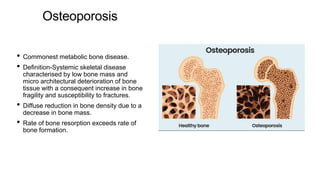
Osteoporosis
• Commonest metabolic bone disease.
• Definition-Systemic skeletal disease
characterised by low bone mass and
micro architectural deterioration of bone
tissue with a consequent increase in bone
fragility and susceptibility to fractures.
• Diffuse reduction in bone density due to a
decrease in bone mass.
• Rate of bone resorption exceeds rate of
bone formation.
Causes
• PRIMARY OSTEOPOROSIS
• SENILITY-commonest cause in males.
• IDIOPATHIC-rare
• POST-MENOPAUSAL
• SECONDARY OSTEOPOROSIS
• PROTEIN DEFICIENCY-old age,illness,malnutrition,protein loss,burns etc.
• ENDOCRINAL-Cushings disease,Cushings syndrome,Hyperthyroid state
• DRUG INDUCED-long term steroid therapy, phenobarbitone therapy
• CHRONIC DISEASES-renal impairment,cirrhosis,rheumatoid arthritis
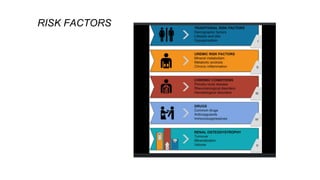
RISK FACTORS
Clinical features
• Frequent fractures-DORSOLUMBAR SPINE-most common site
• Increased kyphosis
• Slight loss of height
• Mostly asymptomatic until complications appear.
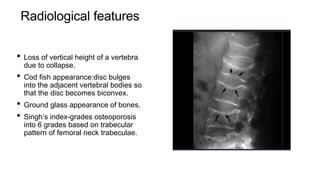
Radiological features
• Loss of vertical height of a vertebra
due to collapse.
• Cod fish appearance:disc bulges
into the adjacent vertebral bodies so
that the disc becomes biconvex.
• Ground glass appearance of bones.
• Singh’s index-grades osteoporosis
into 6 grades based on trabecular
pattern of femoral neck trabeculae.
Investigations
• Initial investigations-full blood count,Erythrocyte sedimentation rate,serum
calcium,phosphate,albumin.
• Alkaline phosphatase
• Renal function
• Plain X-rays
• PTH
• Specific investigation-plane radiography,DXA,Quantitative ultrasound,quantitative
computed tomography,MRI,BTM(bone turnover markers)
Prevention of osteoporosis
• Exercise
• Nutrition during adolescence
• Drugs at menopause
• Yearly BMD measurement
• Excessive alcohol
• No smoking
• Balanced nutrition -total calcium intake should be increased
Pharmacological treatment of osteoporosis
• Bisphosphonates-first line drugs,fracture reduction seen after one year of treatment
• Examples-alendronate(70 mg weekly), Risedronate(35 mg once weekly), Ibandronate(2.5
mg daily)Zoledronic acid(5 mg by IVinfusion over at least 15 min once yearly)
• SERMs- Raloxifene-60 mg daily
• Hormone replacement therapy
• Calcitonin-intranasal dose of 200 IU
• Denosumab
• Strontium ranelate
• Teriparatide
Non pharmacological treatment
• Healthy diet,exercise
• Surgical treatment
• Internal fixation
• Total hip replacement
• Percutaneous vertebroplasty and kyphoplasty

Osteoporosis presentation orthopaedic ss

  • 1.
    Reference literature: GS KULKARNI Osteoporosis Neha Sherin,2020 Batch
  • 2.
    Types of metabolicbone diseases • OSTEOPENIC DISEASES - decrease in bone matrix.(eg:osteoporosis) • OSTEOSCLEROTIC DISEASES- increase in bone mass.(eg:fluorosis) • OSTEOMALACIC DISEASES-diseases characterised by increase in ratio of organic fraction to mineralised fraction.(eg:osteomalacia) • MIXED DISEASES-diseases that are a combination of osteopenia and osteomalacia.(eg:hyperparathyroidism)
  • 3.
    Osteoporosis • Commonest metabolicbone disease. • Definition-Systemic skeletal disease characterised by low bone mass and micro architectural deterioration of bone tissue with a consequent increase in bone fragility and susceptibility to fractures. • Diffuse reduction in bone density due to a decrease in bone mass. • Rate of bone resorption exceeds rate of bone formation.
  • 4.
    Causes • PRIMARY OSTEOPOROSIS •SENILITY-commonest cause in males. • IDIOPATHIC-rare • POST-MENOPAUSAL • SECONDARY OSTEOPOROSIS • PROTEIN DEFICIENCY-old age,illness,malnutrition,protein loss,burns etc. • ENDOCRINAL-Cushings disease,Cushings syndrome,Hyperthyroid state • DRUG INDUCED-long term steroid therapy, phenobarbitone therapy • CHRONIC DISEASES-renal impairment,cirrhosis,rheumatoid arthritis
  • 5.
  • 6.
    Clinical features • Frequentfractures-DORSOLUMBAR SPINE-most common site • Increased kyphosis • Slight loss of height • Mostly asymptomatic until complications appear.
  • 7.
    Radiological features • Lossof vertical height of a vertebra due to collapse. • Cod fish appearance:disc bulges into the adjacent vertebral bodies so that the disc becomes biconvex. • Ground glass appearance of bones. • Singh’s index-grades osteoporosis into 6 grades based on trabecular pattern of femoral neck trabeculae.
  • 8.
    Investigations • Initial investigations-fullblood count,Erythrocyte sedimentation rate,serum calcium,phosphate,albumin. • Alkaline phosphatase • Renal function • Plain X-rays • PTH • Specific investigation-plane radiography,DXA,Quantitative ultrasound,quantitative computed tomography,MRI,BTM(bone turnover markers)
  • 9.
    Prevention of osteoporosis •Exercise • Nutrition during adolescence • Drugs at menopause • Yearly BMD measurement • Excessive alcohol • No smoking • Balanced nutrition -total calcium intake should be increased
  • 10.
    Pharmacological treatment ofosteoporosis • Bisphosphonates-first line drugs,fracture reduction seen after one year of treatment • Examples-alendronate(70 mg weekly), Risedronate(35 mg once weekly), Ibandronate(2.5 mg daily)Zoledronic acid(5 mg by IVinfusion over at least 15 min once yearly) • SERMs- Raloxifene-60 mg daily • Hormone replacement therapy • Calcitonin-intranasal dose of 200 IU • Denosumab • Strontium ranelate • Teriparatide
  • 11.
    Non pharmacological treatment •Healthy diet,exercise • Surgical treatment • Internal fixation • Total hip replacement • Percutaneous vertebroplasty and kyphoplasty