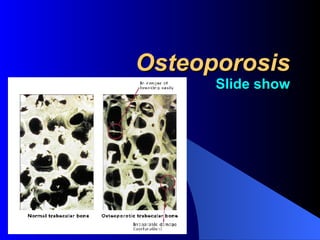
Osteoporosis Slide show
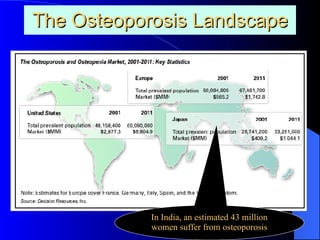
The Osteoporosis Landscape In India, an estimated 43 million women suffer from osteoporosis
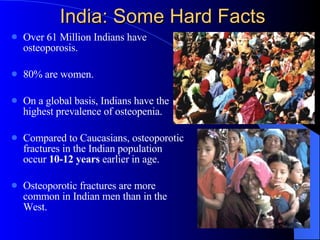
India: Some Hard Facts  Over 61 Million Indians have osteoporosis. 80% are women. On a global basis, Indians have the highest prevalence of osteopenia. Compared to Caucasians, osteoporotic fractures in the Indian population occur  10-12 years  earlier in age. Osteoporotic fractures are more common in Indian men than in the West.
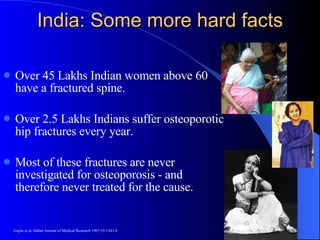
India: Some more hard facts Over 45 Lakhs Indian women above 60 have a fractured spine. Over 2.5 Lakhs Indians suffer osteoporotic hip fractures every year.  Most of these fractures are never investigated for osteoporosis - and therefore never treated for the cause. Gupta et al, Indian Journal of Medical Research 1967:55:1341-8
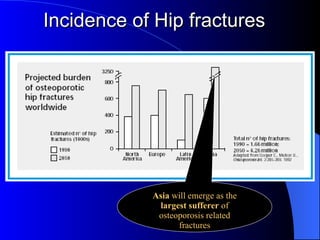
Incidence of Hip fractures Asia  will emerge as the  largest sufferer  of osteoporosis related fractures
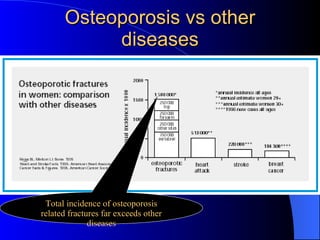
Osteoporosis vs other diseases Total incidence of osteoporosis related fractures far exceeds other diseases
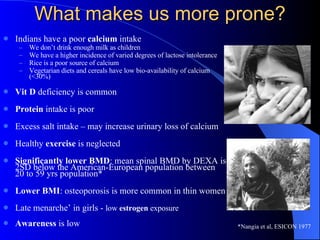
What makes us more prone? Indians have a poor  calcium  intake  We don’t drink enough milk as children We have a higher incidence of varied degrees of lactose intolerance Rice is a poor source of calcium Vegetarian diets and cereals have low bio-availability of calcium (<30%) Vit D  deficiency is common Protein  intake is poor Excess salt intake – may increase urinary loss of calcium Healthy  exercise  is neglected Significantly lower BMD : mean spinal BMD by DEXA is 2SD below the American-European population between  20 to 59 yrs population* Lower BMI : osteoporosis is more common in thin women Late menarche’ in girls -  low  estrogen  exposure Awareness  is low *Nangia et al, ESICON 1977
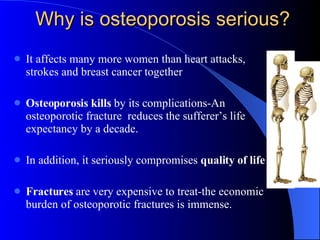
Why is osteoporosis serious? It affects many more women than heart attacks, strokes and breast cancer together Osteoporosis kills  by its complications-An osteoporotic fracture  reduces the sufferer’s life expectancy by a decade. In addition, it seriously compromises  quality of life Fractures  are very expensive to treat-the economic burden of osteoporotic fractures is immense.
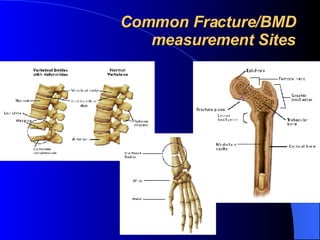
Common Fracture/BMD measurement Sites
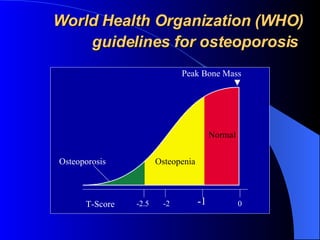
World Health Organization (WHO) guidelines for osteoporosis   Osteoporosis Osteopenia Normal Peak Bone Mass T-Score -1 -2.5 -2 0
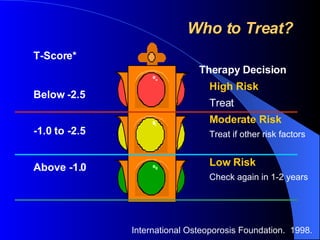
Who to Treat? Therapy Decision High Risk Treat Moderate Risk Treat if other risk factors Low Risk Check again in 1-2 years T-Score* Below -2.5 -1.0 to -2.5 Above -1.0 International Osteoporosis Foundation.  1998.
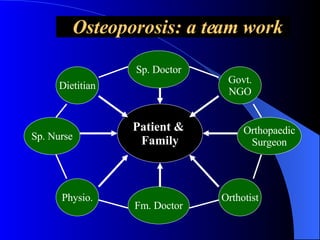
Osteoporosis: a team work Patient &  Family Dietitian Physio. Govt. NGO Sp. Doctor Orthotist Fm. Doctor Sp. Nurse Orthopaedic Surgeon

Osteoporosis

  • 1.
  • 2.
    The Osteoporosis LandscapeIn India, an estimated 43 million women suffer from osteoporosis
  • 3.
    India: Some HardFacts Over 61 Million Indians have osteoporosis. 80% are women. On a global basis, Indians have the highest prevalence of osteopenia. Compared to Caucasians, osteoporotic fractures in the Indian population occur 10-12 years earlier in age. Osteoporotic fractures are more common in Indian men than in the West.
  • 4.
    India: Some morehard facts Over 45 Lakhs Indian women above 60 have a fractured spine. Over 2.5 Lakhs Indians suffer osteoporotic hip fractures every year. Most of these fractures are never investigated for osteoporosis - and therefore never treated for the cause. Gupta et al, Indian Journal of Medical Research 1967:55:1341-8
  • 5.
    Incidence of Hipfractures Asia will emerge as the largest sufferer of osteoporosis related fractures
  • 6.
    Osteoporosis vs otherdiseases Total incidence of osteoporosis related fractures far exceeds other diseases
  • 7.
    What makes usmore prone? Indians have a poor calcium intake We don’t drink enough milk as children We have a higher incidence of varied degrees of lactose intolerance Rice is a poor source of calcium Vegetarian diets and cereals have low bio-availability of calcium (<30%) Vit D deficiency is common Protein intake is poor Excess salt intake – may increase urinary loss of calcium Healthy exercise is neglected Significantly lower BMD : mean spinal BMD by DEXA is 2SD below the American-European population between 20 to 59 yrs population* Lower BMI : osteoporosis is more common in thin women Late menarche’ in girls - low estrogen exposure Awareness is low *Nangia et al, ESICON 1977
  • 8.
    Why is osteoporosisserious? It affects many more women than heart attacks, strokes and breast cancer together Osteoporosis kills by its complications-An osteoporotic fracture reduces the sufferer’s life expectancy by a decade. In addition, it seriously compromises quality of life Fractures are very expensive to treat-the economic burden of osteoporotic fractures is immense.
  • 9.
  • 10.
    World Health Organization(WHO) guidelines for osteoporosis Osteoporosis Osteopenia Normal Peak Bone Mass T-Score -1 -2.5 -2 0
  • 11.
    Who to Treat?Therapy Decision High Risk Treat Moderate Risk Treat if other risk factors Low Risk Check again in 1-2 years T-Score* Below -2.5 -1.0 to -2.5 Above -1.0 International Osteoporosis Foundation. 1998.
  • 12.
    Osteoporosis: a teamwork Patient & Family Dietitian Physio. Govt. NGO Sp. Doctor Orthotist Fm. Doctor Sp. Nurse Orthopaedic Surgeon