
By Yograj Banteria
• Osteoporosis is the most common bone disease.
• Meaning of Osteoporosis is “bone pores”.
• Osteoporosis is defined as “ A bone disease characterised by low bone mass
and leading to fracture of bone fragile, and finaly bone break
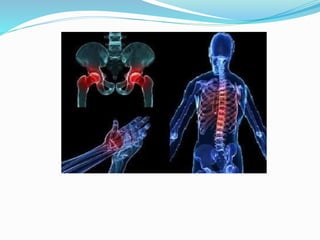
• Typical fragility fractures occur in thevertebral column, rib, hip and wrist.
• Osteoporosis itself has no symptoms; its main consequence is the increased
risk of bone fractures.
•Bone is living tissue.
•Existing bone is constantly being replaced
by new bone
•Because of osteoporosis about half of all women over the age of 50 will
have a fracture of the hip, wrist, or vertebra (bone of the spine) during
their lifetime.
•Osteoporosis occurs when the body fails to form enough new bone,
when too much existing bone is reabsorbed by the body, or both.
• If you do not get enough calcium and vitamin D, or your body does not
absorb enough calcium from your diet, your bones may become brittle
and more likely to fracture.
•Sometimes bone loss occurs without any cause. Sometimes the
tendency to have bone loss and thin bones is passed down through
families.
Exams and tests
X ray of bones
•Diagnose bone loss and osteoporosis
•Predict your risk of future bone fractures
•See how well osteoporosis medicine is working
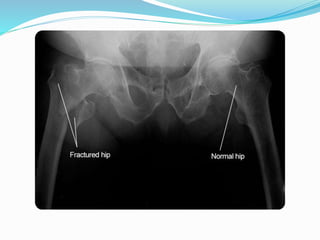
A spine or hip x-ray may show fracture or collapse of the
spinal bones. However, simple x-rays of other bones are not very
accurate in predicting whether you are likely to have
osteoporosis.
You may need other blood and urine tests if your osteoporosis is
thought to be due to a medical condition, rather than simply
the usual bone loss seen
Treatment
Treatment for osteoporosis may involve:
•Lifestyle changes, such as diet and exercise.
•Taking calcium and vitamin D
•Using medicines.
Medicines are used to strengthen bones when:
•Osteoporosis has been diagnosed by a bone density study,
whether or not you have a fracture.
•A bone fracture has occurred and a bone density test shows
that you have thin bones, but not osteoporosis.
treat osteoporosis include:
•Exercise plays a key role in preserving bone density in older
adults. Some of the exercises recommended to reduce your
chance of a fracture include:
•Weight-bearing exercises -- walking, jogging, playing tennis,
dancing
Free weights, weight machines, stretch bands
•Balance exercises -- tai chi, yoga
Prevention :
•Calcium is important for building and maintaining healthy bone.
• Following a healthy, well-balanced diet can help you get these and other
important nutrients.
•Vitamin D is also needed because it helps your body absorb calcium.
Other tips for prevention:
•Do not drink large amounts of alcohol.
•Do not smoke.
•Get regular exercise.
•Medicines can prevent osteoporosis.
•Control on body weight
THANK YOU

Osteoporosis

  • 1.
  • 2.
    • Osteoporosis isthe most common bone disease. • Meaning of Osteoporosis is “bone pores”. • Osteoporosis is defined as “ A bone disease characterised by low bone mass and leading to fracture of bone fragile, and finaly bone break • Typical fragility fractures occur in thevertebral column, rib, hip and wrist. • Osteoporosis itself has no symptoms; its main consequence is the increased risk of bone fractures. •Bone is living tissue. •Existing bone is constantly being replaced by new bone
  • 4.
    •Because of osteoporosisabout half of all women over the age of 50 will have a fracture of the hip, wrist, or vertebra (bone of the spine) during their lifetime. •Osteoporosis occurs when the body fails to form enough new bone, when too much existing bone is reabsorbed by the body, or both. • If you do not get enough calcium and vitamin D, or your body does not absorb enough calcium from your diet, your bones may become brittle and more likely to fracture. •Sometimes bone loss occurs without any cause. Sometimes the tendency to have bone loss and thin bones is passed down through families.
  • 6.
    Exams and tests Xray of bones •Diagnose bone loss and osteoporosis •Predict your risk of future bone fractures •See how well osteoporosis medicine is working A spine or hip x-ray may show fracture or collapse of the spinal bones. However, simple x-rays of other bones are not very accurate in predicting whether you are likely to have osteoporosis. You may need other blood and urine tests if your osteoporosis is thought to be due to a medical condition, rather than simply the usual bone loss seen
  • 8.
    Treatment Treatment for osteoporosismay involve: •Lifestyle changes, such as diet and exercise. •Taking calcium and vitamin D •Using medicines. Medicines are used to strengthen bones when: •Osteoporosis has been diagnosed by a bone density study, whether or not you have a fracture. •A bone fracture has occurred and a bone density test shows that you have thin bones, but not osteoporosis.
  • 9.
    treat osteoporosis include: •Exerciseplays a key role in preserving bone density in older adults. Some of the exercises recommended to reduce your chance of a fracture include: •Weight-bearing exercises -- walking, jogging, playing tennis, dancing Free weights, weight machines, stretch bands •Balance exercises -- tai chi, yoga
  • 10.
    Prevention : •Calcium isimportant for building and maintaining healthy bone. • Following a healthy, well-balanced diet can help you get these and other important nutrients. •Vitamin D is also needed because it helps your body absorb calcium. Other tips for prevention: •Do not drink large amounts of alcohol. •Do not smoke. •Get regular exercise. •Medicines can prevent osteoporosis. •Control on body weight
  • 11.