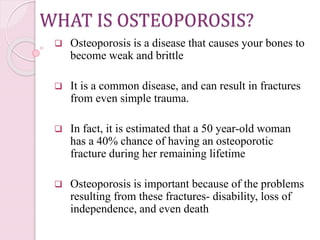
OSTEOPOROSIS
WHAT IS OSTEOPOROSIS?
 Osteoporosis is a disease that causes your bones to
become weak and brittle
 It is a common disease, and can result in fractures
from even simple trauma.
 In fact, it is estimated that a 50 year-old woman
has a 40% chance of having an osteoporotic
fracture during her remaining lifetime
 Osteoporosis is important because of the problems
resulting from these fractures- disability, loss of
independence, and even death
 Osteoporosis is silent because there are
no symptoms (what you feel).
 When you have this condition, a fracture can occur
even after a minor injury, such as a fall.
 The most common are fractures of the spine, hip,
and wrist.
 Osteoporosis is not a part of aging, but can be
prevented and treated, if it is detected early.
 The main goal of treating osteoporosis is to
prevent such fractures in the first place.
WHAT CAUSES OSTEOPOROSIS?
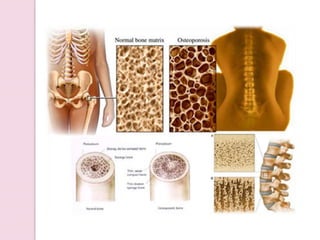
 Osteoporosis results from a loss of bone mass
(measured as bone density) and from a change in
bone structure.
 Many factors will raise your risk of developing
osteoporosis and breaking a bone.
 Recognizing your risk factors is important so you
can take steps to prevent this condition or treat it
before it becomes worse.
SYMPTOMS
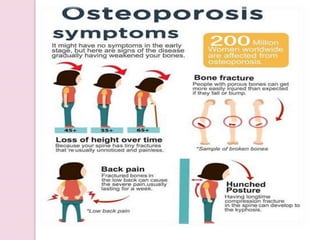
 Fragility-related fractures. These occur when even
mild impact causes a fracture of the wrist, back,
hip or other bones.
 Height loss. More than two inches in height can be
lost over time.
 Receding gums.
 A curved, stooped shape to the spine.
 Lower back pain.
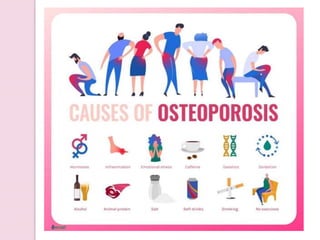
CAUSES OF OSTEOPOROSIS
 Postmenopausal in female
 Family history of osteoporosis
 Lack of exercise
 Low calcium intake
 Vitamin D deficiency
 Smoking
 Age (starting in the mid-30s but more likely with
advancing age)
TREATMENT
If you have osteoporosis, your health care
provider will advise the following:
Calcium
Make sure you are getting enough calcium in your
diet or you might need to consider taking
supplements.
Vitamin D
Get adequate amounts of vitamin D, which is
important to help your body absorb calcium from
foods you eat.
Physical activity
Get exercise most days, especially weight-bearing
exercise, such as walking
PREVENTION
 Lifestyle changes may be the best way in
preventing osteoporosis.
 Make sure you get enough calcium in your
diet or through supplements.
 Get enough vitamin D.
 Stop smoking.
 Avoid excess alcohol intake.
 Engage in weight-bearing exercise.
 You also should get treatment of any underlying
medical problem that can cause osteoporosis.
 If you are on a medication that can cause
osteoporosis, ask your doctor if you can lower the
dose or take another type of medicine.
 Never change the dose or stop taking any
medicine without speaking to your doctor first.

OSTEOPOROSIS.pptx

  • 1.
  • 2.
    WHAT IS OSTEOPOROSIS? Osteoporosis is a disease that causes your bones to become weak and brittle  It is a common disease, and can result in fractures from even simple trauma.  In fact, it is estimated that a 50 year-old woman has a 40% chance of having an osteoporotic fracture during her remaining lifetime  Osteoporosis is important because of the problems resulting from these fractures- disability, loss of independence, and even death
  • 3.
     Osteoporosis issilent because there are no symptoms (what you feel).  When you have this condition, a fracture can occur even after a minor injury, such as a fall.  The most common are fractures of the spine, hip, and wrist.  Osteoporosis is not a part of aging, but can be prevented and treated, if it is detected early.  The main goal of treating osteoporosis is to prevent such fractures in the first place.
  • 4.
    WHAT CAUSES OSTEOPOROSIS? Osteoporosis results from a loss of bone mass (measured as bone density) and from a change in bone structure.  Many factors will raise your risk of developing osteoporosis and breaking a bone.  Recognizing your risk factors is important so you can take steps to prevent this condition or treat it before it becomes worse.
  • 6.
    SYMPTOMS  Fragility-related fractures.These occur when even mild impact causes a fracture of the wrist, back, hip or other bones.  Height loss. More than two inches in height can be lost over time.  Receding gums.  A curved, stooped shape to the spine.  Lower back pain.
  • 8.
    CAUSES OF OSTEOPOROSIS Postmenopausal in female  Family history of osteoporosis  Lack of exercise  Low calcium intake  Vitamin D deficiency  Smoking  Age (starting in the mid-30s but more likely with advancing age)
  • 10.
    TREATMENT If you haveosteoporosis, your health care provider will advise the following: Calcium Make sure you are getting enough calcium in your diet or you might need to consider taking supplements. Vitamin D Get adequate amounts of vitamin D, which is important to help your body absorb calcium from foods you eat. Physical activity Get exercise most days, especially weight-bearing exercise, such as walking
  • 11.
    PREVENTION  Lifestyle changesmay be the best way in preventing osteoporosis.  Make sure you get enough calcium in your diet or through supplements.  Get enough vitamin D.  Stop smoking.  Avoid excess alcohol intake.
  • 12.
     Engage inweight-bearing exercise.  You also should get treatment of any underlying medical problem that can cause osteoporosis.  If you are on a medication that can cause osteoporosis, ask your doctor if you can lower the dose or take another type of medicine.  Never change the dose or stop taking any medicine without speaking to your doctor first.