Osteoporosis
What is Osteoporosis? 
 Osteoporosis is a bone disease where parts of the 
bone become weak and prone to fracture. This 
condition is more common in seniors, but can affect 
men and women of all ages. Because women have 
30% less bone mass than men, women are 
particularly prone to osteoporosis as they age. 
visit www.healthheal.in
Causes 
The biggest risk factor for 
osteoporosis is age. As people grow 
older, the body goes through the 
process of breaking down old bone 
and growing new bone in its place. 
 drop in estrogen after menopause 
 family history and body type 
 lifestyle factors and health 
conditions 
 lack of exercise 
 lack of calcium 
visit www.healthheal.in
What Are the Symptoms of 
Osteoporosis? 
A person is often not aware that 
he or she has osteoporosis until 
a fracture occurs. But there are 
occasionally symptoms of the 
disorder. They could include: 
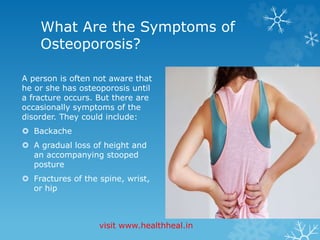
 Backache 
 A gradual loss of height and 
an accompanying stooped 
posture 
 Fractures of the spine, wrist, 
or hip 
visit www.healthheal.in
Types of Osteoporosis 
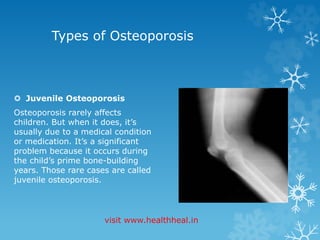
 Juvenile Osteoporosis 
Osteoporosis rarely affects 
children. But when it does, it’s 
usually due to a medical condition 
or medication. It’s a significant 
problem because it occurs during 
the child’s prime bone-building 
years. Those rare cases are called 
juvenile osteoporosis. 
visit www.healthheal.in
Diagnosis 
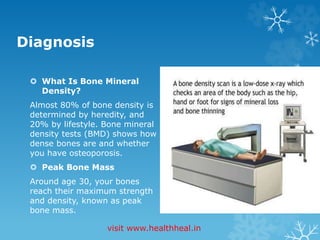
 What Is Bone Mineral 
Density? 
Almost 80% of bone density is 
determined by heredity, and 
20% by lifestyle. Bone mineral 
density tests (BMD) shows how 
dense bones are and whether 
you have osteoporosis. 
 Peak Bone Mass 
Around age 30, your bones 
reach their maximum strength 
and density, known as peak 
bone mass. 
visit www.healthheal.in
Tests 
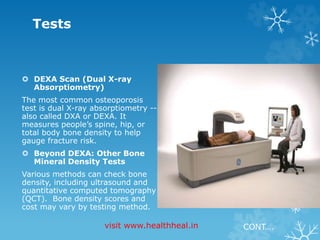
 DEXA Scan (Dual X-ray 
Absorptiometry) 
The most common osteoporosis 
test is dual X-ray absorptiometry -- 
also called DXA or DEXA. It 
measures people’s spine, hip, or 
total body bone density to help 
gauge fracture risk. 
 Beyond DEXA: Other Bone 
Mineral Density Tests 
Various methods can check bone 
density, including ultrasound and 
quantitative computed tomography 
(QCT). Bone density scores and 
cost may vary by testing method. 
visit www.healthheal.in CONT….
Tests 
 Who Should Get Bone 
Density Testing? 
Bone density normally drops with 
age. 
 Blood Test Markers 
Whether you're being screened or 
treated for osteoporosis, your 
doctor may order a blood or urine 
test to see the metabolism of 
bone. This provides clues to the 
progression of your disease. 
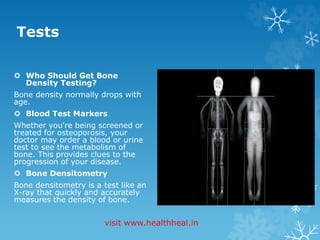
 Bone Densitometry 
Bone densitometry is a test like an 
X-ray that quickly and accurately 
measures the density of bone. 
visit www.healthheal.in
Treatment 
 Osteoporosis Medications 
Osteoporosis treatments come in 
several forms. Many should be started 
during childhood; others include 
prescription drugs to treat 
osteoporosis. 
 Osteopenia Lifestyle 
Treatments 
Osteopenia is a term used to describe 
bone density that is somewhat lower 
than normal but not low enough to be 
diagnosed as osteoporosis. 
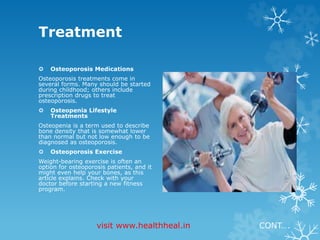
 Osteoporosis Exercise 
Weight-bearing exercise is often an 
option for osteoporosis patients, and it 
might even help your bones, as this 
article explains. Check with your 
doctor before starting a new fitness 
program. 
visit www.healthheal.in CONT….
Treatment 
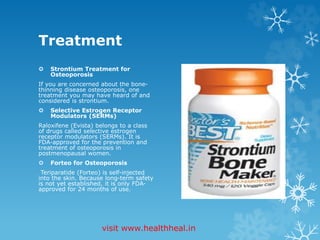
 Strontium Treatment for 
Osteoporosis 
If you are concerned about the bone-thinning 
disease osteoporosis, one 
treatment you may have heard of and 
considered is strontium. 
 Selective Estrogen Receptor 
Modulators (SERMs) 
Raloxifene (Evista) belongs to a class 
of drugs called selective estrogen 
receptor modulators (SERMs). It is 
FDA-approved for the prevention and 
treatment of osteoporosis in 
postmenopausal women. 
 Forteo for Osteoporosis 
Teriparatide (Forteo) is self-injected 
into the skin. Because long-term safety 
is not yet established, it is only FDA-approved 
for 24 months of use. 
visit www.healthheal.in

Osteoporosis

  • 1.
  • 2.
    What is Osteoporosis?  Osteoporosis is a bone disease where parts of the bone become weak and prone to fracture. This condition is more common in seniors, but can affect men and women of all ages. Because women have 30% less bone mass than men, women are particularly prone to osteoporosis as they age. visit www.healthheal.in
  • 3.
    Causes The biggestrisk factor for osteoporosis is age. As people grow older, the body goes through the process of breaking down old bone and growing new bone in its place.  drop in estrogen after menopause  family history and body type  lifestyle factors and health conditions  lack of exercise  lack of calcium visit www.healthheal.in
  • 4.
    What Are theSymptoms of Osteoporosis? A person is often not aware that he or she has osteoporosis until a fracture occurs. But there are occasionally symptoms of the disorder. They could include:  Backache  A gradual loss of height and an accompanying stooped posture  Fractures of the spine, wrist, or hip visit www.healthheal.in
  • 5.
    Types of Osteoporosis  Juvenile Osteoporosis Osteoporosis rarely affects children. But when it does, it’s usually due to a medical condition or medication. It’s a significant problem because it occurs during the child’s prime bone-building years. Those rare cases are called juvenile osteoporosis. visit www.healthheal.in
  • 6.
    Diagnosis  WhatIs Bone Mineral Density? Almost 80% of bone density is determined by heredity, and 20% by lifestyle. Bone mineral density tests (BMD) shows how dense bones are and whether you have osteoporosis.  Peak Bone Mass Around age 30, your bones reach their maximum strength and density, known as peak bone mass. visit www.healthheal.in
  • 7.
    Tests  DEXAScan (Dual X-ray Absorptiometry) The most common osteoporosis test is dual X-ray absorptiometry -- also called DXA or DEXA. It measures people’s spine, hip, or total body bone density to help gauge fracture risk.  Beyond DEXA: Other Bone Mineral Density Tests Various methods can check bone density, including ultrasound and quantitative computed tomography (QCT). Bone density scores and cost may vary by testing method. visit www.healthheal.in CONT….
  • 8.
    Tests  WhoShould Get Bone Density Testing? Bone density normally drops with age.  Blood Test Markers Whether you're being screened or treated for osteoporosis, your doctor may order a blood or urine test to see the metabolism of bone. This provides clues to the progression of your disease.  Bone Densitometry Bone densitometry is a test like an X-ray that quickly and accurately measures the density of bone. visit www.healthheal.in
  • 9.
    Treatment  OsteoporosisMedications Osteoporosis treatments come in several forms. Many should be started during childhood; others include prescription drugs to treat osteoporosis.  Osteopenia Lifestyle Treatments Osteopenia is a term used to describe bone density that is somewhat lower than normal but not low enough to be diagnosed as osteoporosis.  Osteoporosis Exercise Weight-bearing exercise is often an option for osteoporosis patients, and it might even help your bones, as this article explains. Check with your doctor before starting a new fitness program. visit www.healthheal.in CONT….
  • 10.
    Treatment  StrontiumTreatment for Osteoporosis If you are concerned about the bone-thinning disease osteoporosis, one treatment you may have heard of and considered is strontium.  Selective Estrogen Receptor Modulators (SERMs) Raloxifene (Evista) belongs to a class of drugs called selective estrogen receptor modulators (SERMs). It is FDA-approved for the prevention and treatment of osteoporosis in postmenopausal women.  Forteo for Osteoporosis Teriparatide (Forteo) is self-injected into the skin. Because long-term safety is not yet established, it is only FDA-approved for 24 months of use. visit www.healthheal.in
  • 11.