Prof.Neeraj Bhargava
Abhishek Kumar
Department of Computer Science
School of Engineering & System Sciences,
MDS, University Ajmer, Rajasthan, India
 Introduction of OSI
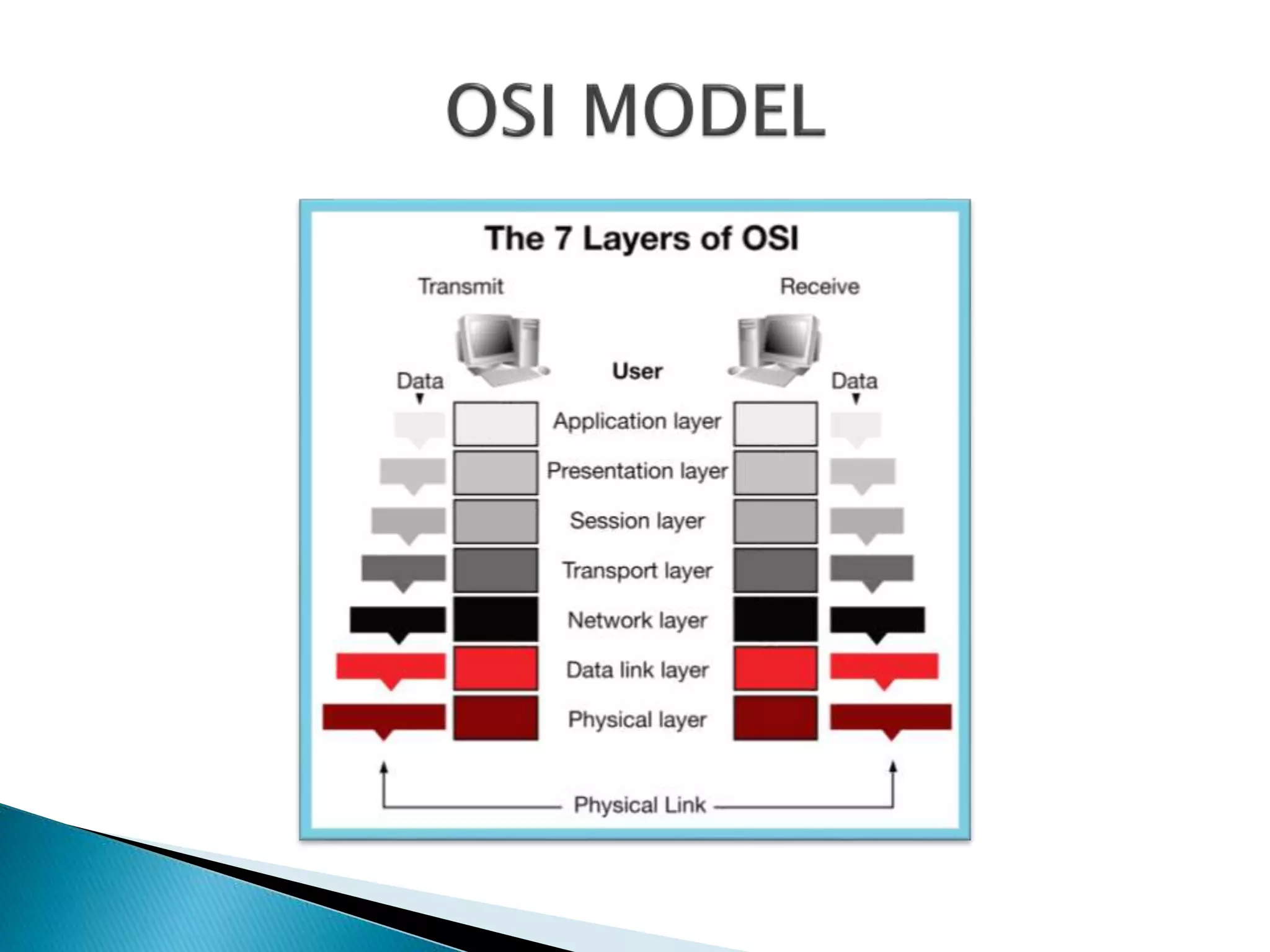
 OSI Model
 Types of OSI Model
 Physical layer
 Data link layer
 Network layer
 Transport layer
 Session layer
 Presentation layer
 Application layer
 It is stands for Open System Interconnection.
 The International Standard Organization has a
well-defined model for Communication Systems
known as Open System Interconnection, or the OSI
Model.
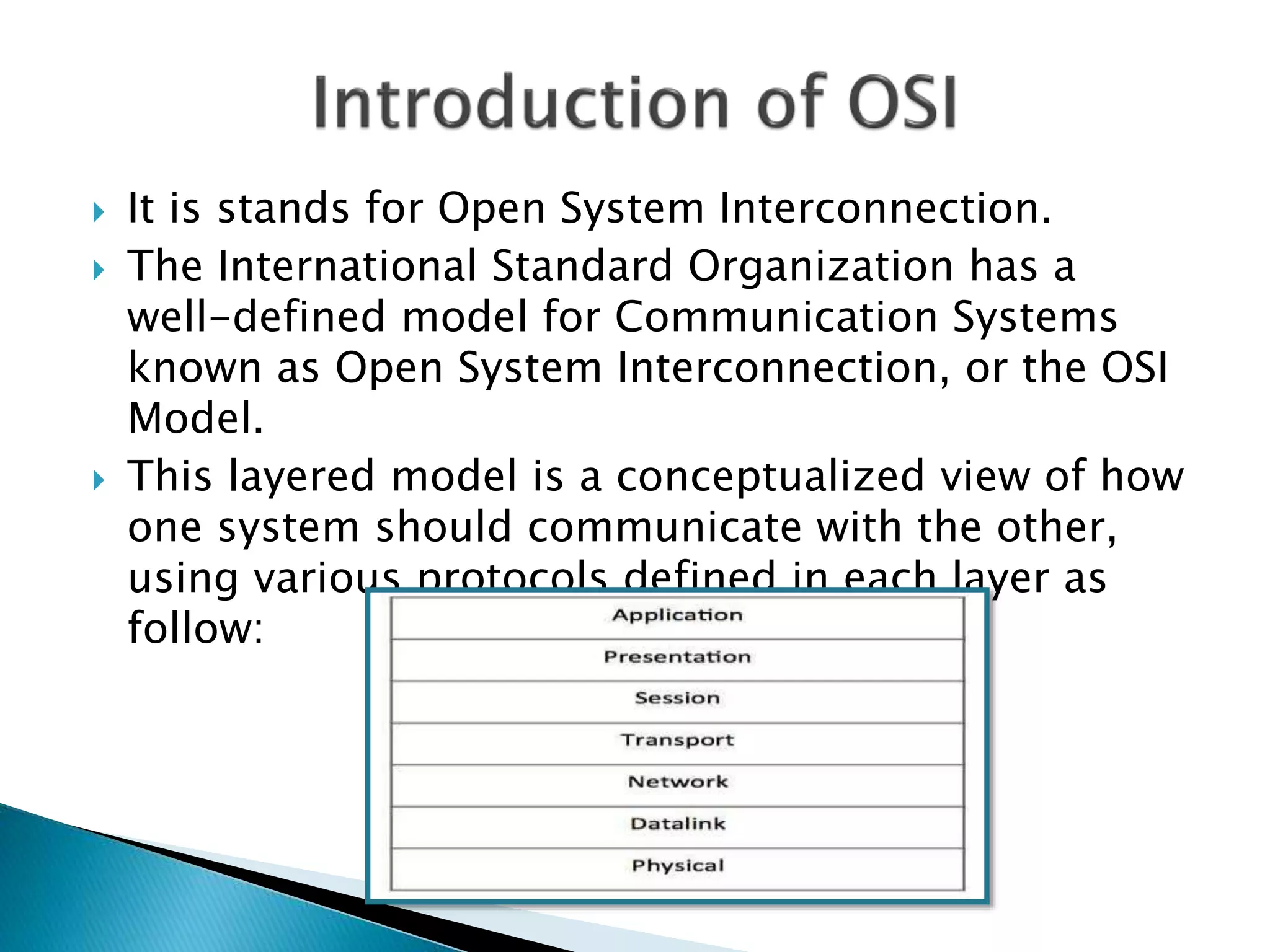
 This layered model is a conceptualized view of how
one system should communicate with the other,
using various protocols defined in each layer as
follow:
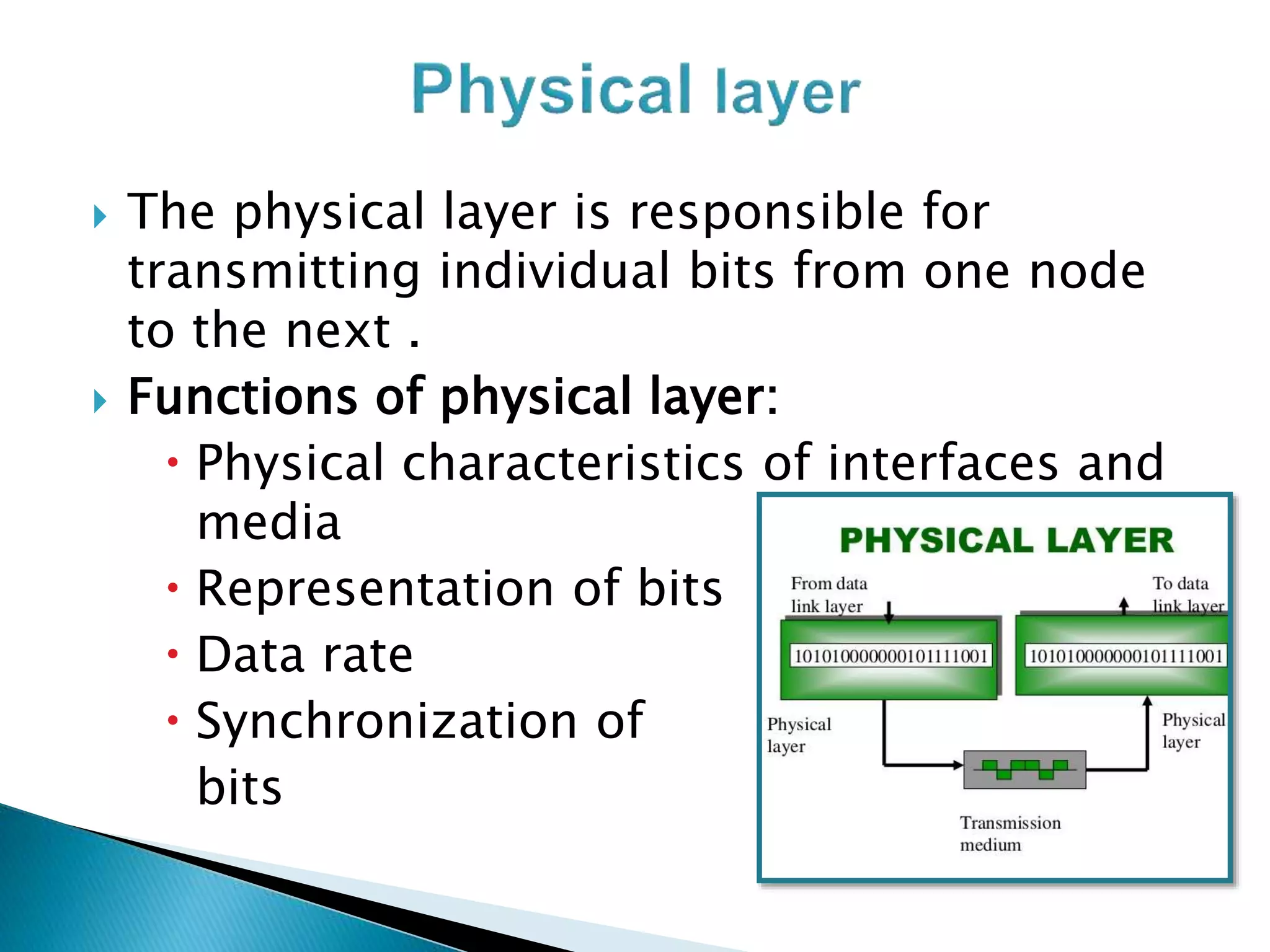
 The physical layer is responsible for
transmitting individual bits from one node
to the next .
 Functions of physical layer:
 Physical characteristics of interfaces and
media
 Representation of bits
 Data rate
 Synchronization of
bits
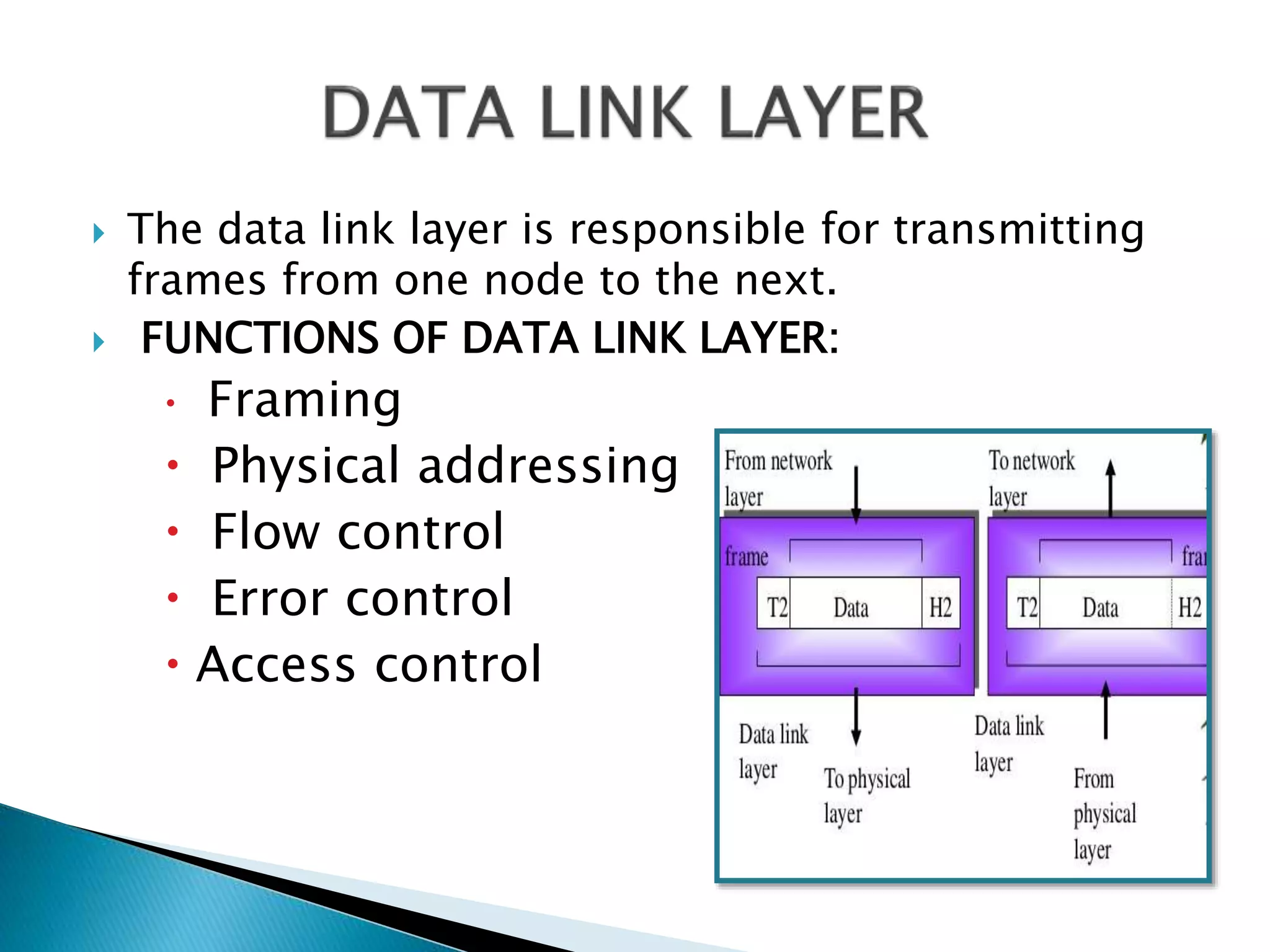
 The data link layer is responsible for transmitting
frames from one node to the next.
 FUNCTIONS OF DATA LINK LAYER:
 Framing
 Physical addressing
 Flow control
 Error control
 Access control
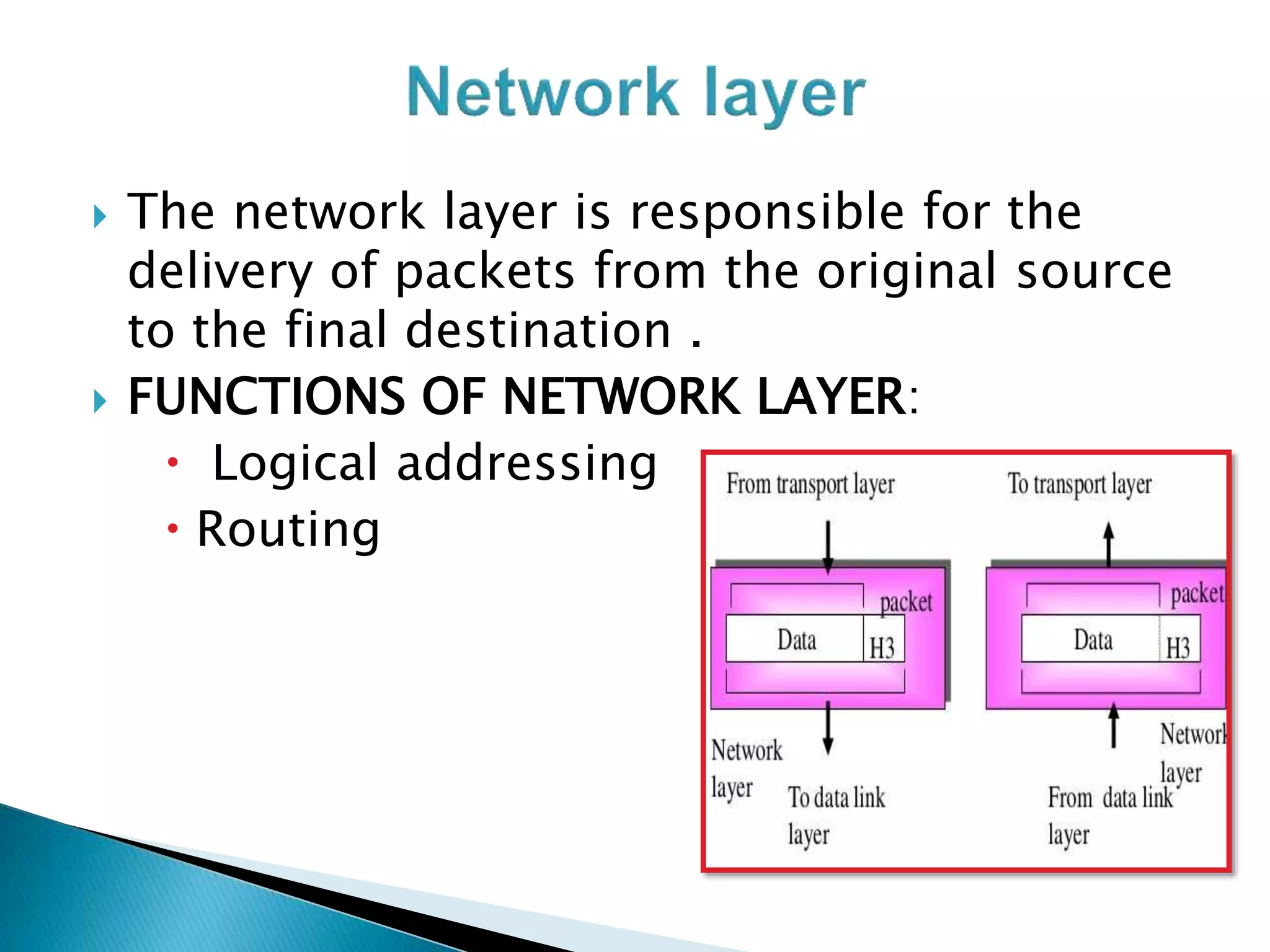
 The network layer is responsible for the
delivery of packets from the original source
to the final destination .
 FUNCTIONS OF NETWORK LAYER:
 Logical addressing
 Routing
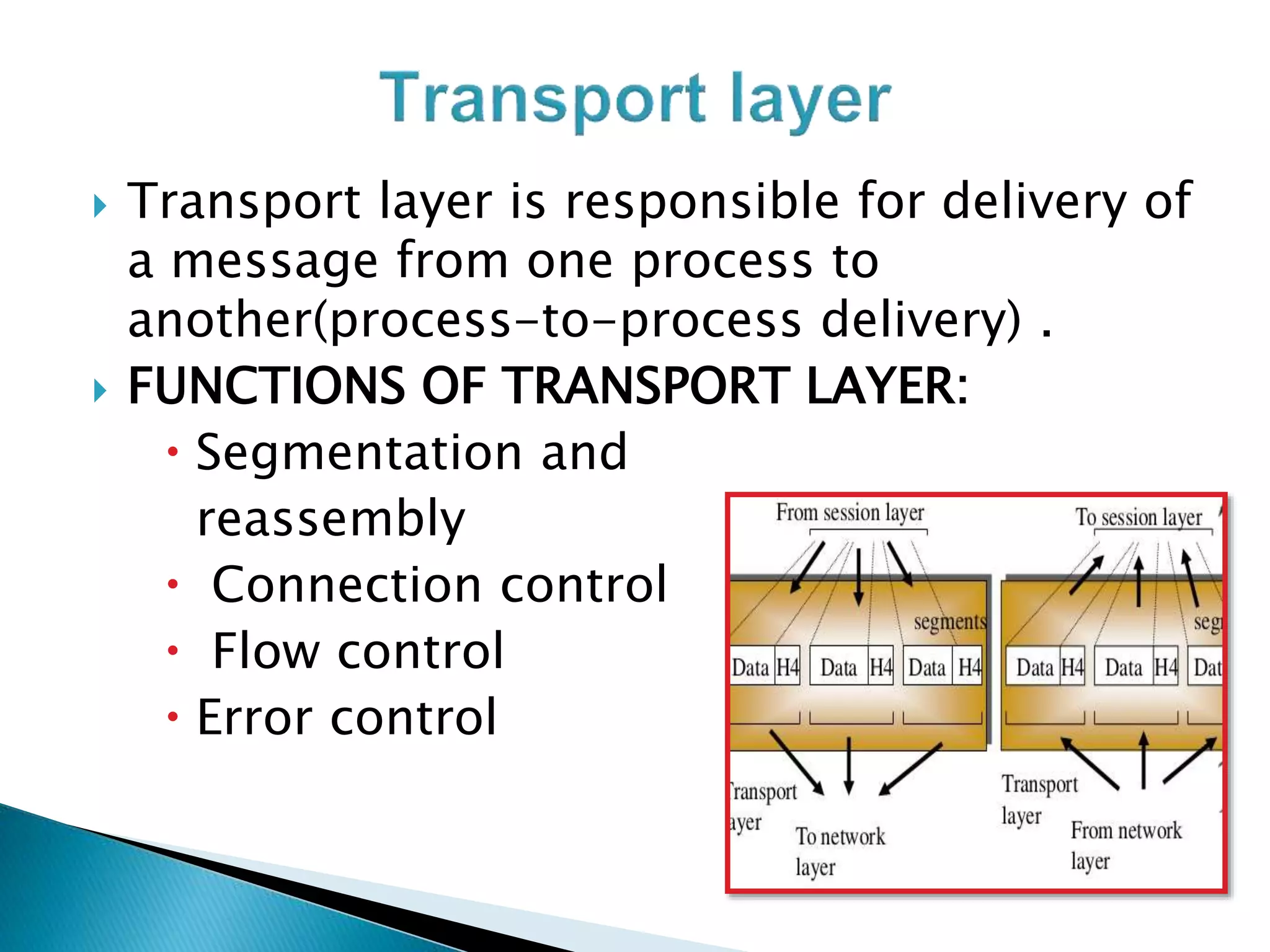
 Transport layer is responsible for delivery of
a message from one process to
another(process-to-process delivery) .
 FUNCTIONS OF TRANSPORT LAYER:
 Segmentation and
reassembly
 Connection control
 Flow control
 Error control
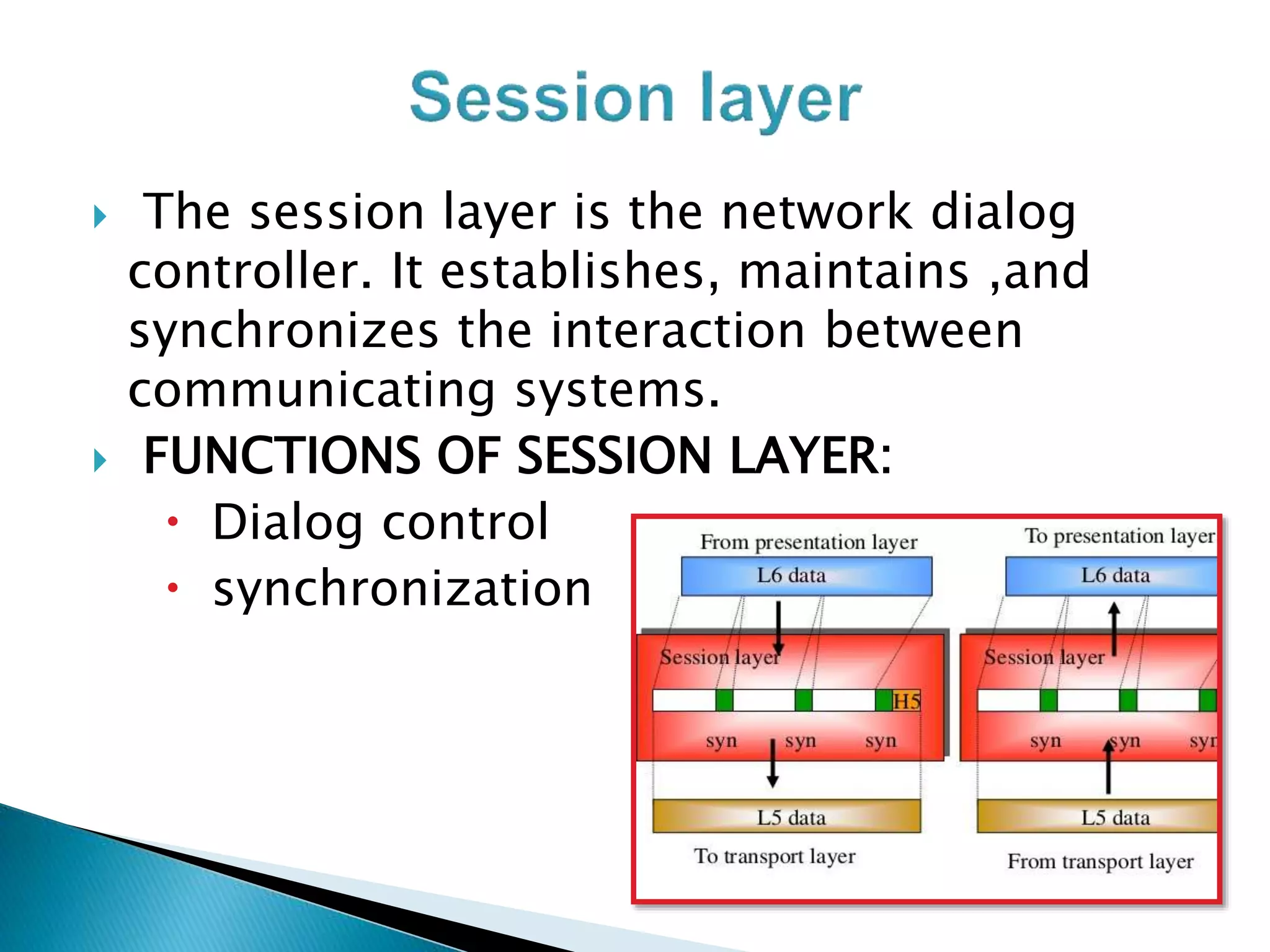
 The session layer is the network dialog
controller. It establishes, maintains ,and
synchronizes the interaction between
communicating systems.
 FUNCTIONS OF SESSION LAYER:
 Dialog control
 synchronization
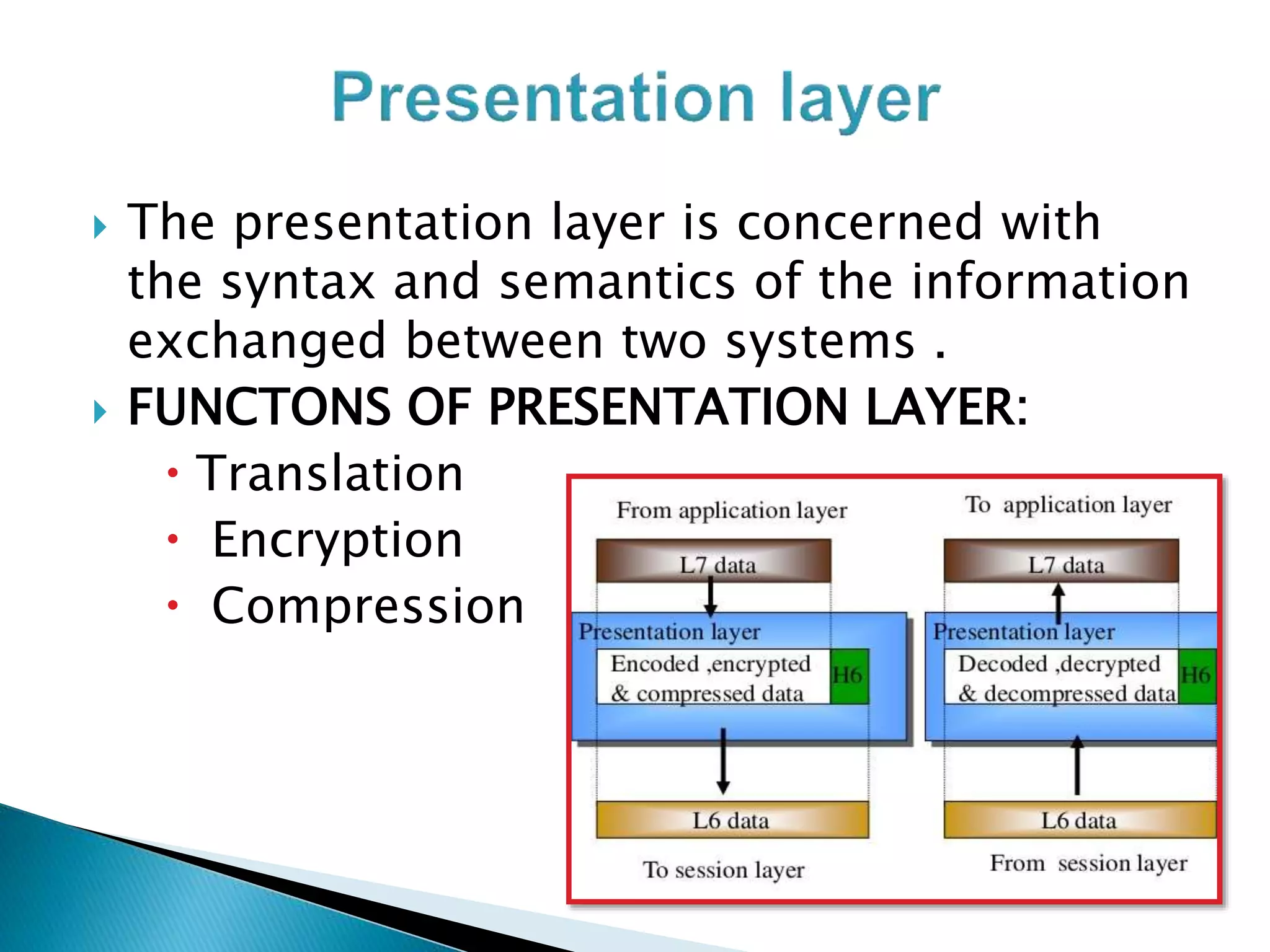
 The presentation layer is concerned with
the syntax and semantics of the information
exchanged between two systems .
 FUNCTONS OF PRESENTATION LAYER:
 Translation
 Encryption
 Compression
 It provides user interfaces and support for
services.
 FUNCTIONS OF APPLICATION LAYER:
 Network virtual terminal
 File transfer, access, and
management(FTAM)
 Mail services
 Directory services
Osi modal

Osi modal

  • 1.
    Prof.Neeraj Bhargava Abhishek Kumar Departmentof Computer Science School of Engineering & System Sciences, MDS, University Ajmer, Rajasthan, India
  • 2.
     Introduction ofOSI  OSI Model  Types of OSI Model  Physical layer  Data link layer  Network layer  Transport layer  Session layer  Presentation layer  Application layer
  • 3.
     It isstands for Open System Interconnection.  The International Standard Organization has a well-defined model for Communication Systems known as Open System Interconnection, or the OSI Model.  This layered model is a conceptualized view of how one system should communicate with the other, using various protocols defined in each layer as follow:
  • 5.
     The physicallayer is responsible for transmitting individual bits from one node to the next .  Functions of physical layer:  Physical characteristics of interfaces and media  Representation of bits  Data rate  Synchronization of bits
  • 6.
     The datalink layer is responsible for transmitting frames from one node to the next.  FUNCTIONS OF DATA LINK LAYER:  Framing  Physical addressing  Flow control  Error control  Access control
  • 7.
     The networklayer is responsible for the delivery of packets from the original source to the final destination .  FUNCTIONS OF NETWORK LAYER:  Logical addressing  Routing
  • 8.
     Transport layeris responsible for delivery of a message from one process to another(process-to-process delivery) .  FUNCTIONS OF TRANSPORT LAYER:  Segmentation and reassembly  Connection control  Flow control  Error control
  • 9.
     The sessionlayer is the network dialog controller. It establishes, maintains ,and synchronizes the interaction between communicating systems.  FUNCTIONS OF SESSION LAYER:  Dialog control  synchronization
  • 10.
     The presentationlayer is concerned with the syntax and semantics of the information exchanged between two systems .  FUNCTONS OF PRESENTATION LAYER:  Translation  Encryption  Compression
  • 11.
     It providesuser interfaces and support for services.  FUNCTIONS OF APPLICATION LAYER:  Network virtual terminal  File transfer, access, and management(FTAM)  Mail services  Directory services