Presentation on:
OSI Model
By: Afsha Maniyar
OSI ?
 OSI: Open System Interconnection.
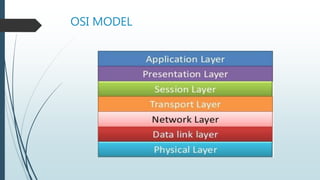
 An open system is a set of protocol that allows any two different systems to communicate
regardless of their underlying architectures.

 It was designed by ISO-International Organization for Standardization in late1970s.
 It is a seven-layer model.
 It is a theoretical model designed to show how a protocol stack should be implemented.
OSI MODEL
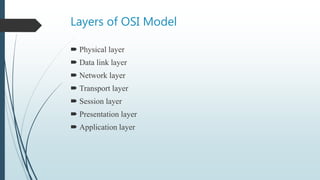
Layers of OSI Model
 Physical layer
 Data link layer
 Network layer
 Transport layer
 Session layer
 Presentation layer
 Application layer
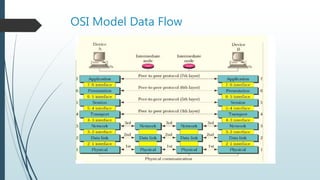
OSI Model Data Flow
Physical Layer
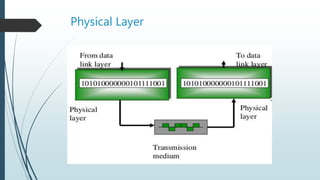
 The physical layer is responsible for transmitting individual bits from one node to
the next.
 Functions of physical layer:
 Physical characteristics of interfaces and media.
 Representation of bits.
 Data rate.
 Synchronization of bits.
Physical Layer
Data Link Layer
 The data link layer is responsible for transmitting frames from one node to the
next
 Functions of Data Link Layer are:
 Framing.
 Physical addressing.
 Flow control.
 Error control.
 Access control.
Data Link Layer
Network Layer
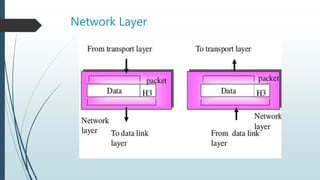
 The network layer is responsible for the delivery of packets from the original
source to the final destination
 Functions of network layer:
 Logical addressing.
 Routing.
Network Layer
Transport Layer
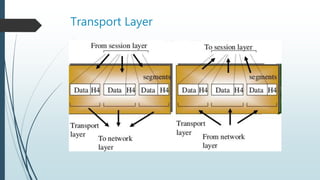
 The transport layer is responsible for delivery of a message from one process to
another(process-to-process delivery)
 Functions of transport layer:
 Port addressing.
 Segmentation and reassembly.
 Connection control.
 Flow control.
 Error control
Transport Layer
Session Layer
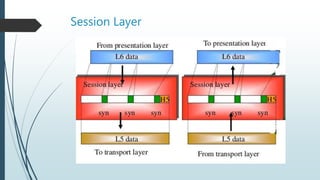
 The session layer is the network dialog controller.
 It establishes, maintains and synchronizes the interaction between communicating
systems.
 Functions of session layer:
 Dialog control.
 Synchronization.
Session Layer
Presentation Layer
 The presentation layer is concerned with the syntax and semantics of the
information exchanged between two systems.
 Functions of presentation layer:
 Translation.
 Encryption.
 Compression.
Application Layer
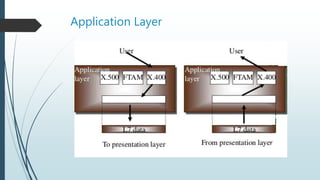
 The application layer enables the user whether human or software, to access the
network.
 It provides user interfaces and support for services.
 Functions of application layer:
 Network virtual terminal.
 File transfer, access and management(FTAM).
 Mail services.
 Directory services.
Application Layer

osi model.pptx

  • 1.
  • 2.
    OSI ?  OSI:Open System Interconnection.  An open system is a set of protocol that allows any two different systems to communicate regardless of their underlying architectures.  It was designed by ISO-International Organization for Standardization in late1970s.  It is a seven-layer model.  It is a theoretical model designed to show how a protocol stack should be implemented.
  • 3.
  • 4.
    Layers of OSIModel  Physical layer  Data link layer  Network layer  Transport layer  Session layer  Presentation layer  Application layer
  • 5.
  • 6.
    Physical Layer  Thephysical layer is responsible for transmitting individual bits from one node to the next.  Functions of physical layer:  Physical characteristics of interfaces and media.  Representation of bits.  Data rate.  Synchronization of bits.
  • 7.
  • 8.
    Data Link Layer The data link layer is responsible for transmitting frames from one node to the next  Functions of Data Link Layer are:  Framing.  Physical addressing.  Flow control.  Error control.  Access control.
  • 9.
  • 10.
    Network Layer  Thenetwork layer is responsible for the delivery of packets from the original source to the final destination  Functions of network layer:  Logical addressing.  Routing.
  • 11.
  • 12.
    Transport Layer  Thetransport layer is responsible for delivery of a message from one process to another(process-to-process delivery)  Functions of transport layer:  Port addressing.  Segmentation and reassembly.  Connection control.  Flow control.  Error control
  • 13.
  • 14.
    Session Layer  Thesession layer is the network dialog controller.  It establishes, maintains and synchronizes the interaction between communicating systems.  Functions of session layer:  Dialog control.  Synchronization.
  • 15.
  • 16.
    Presentation Layer  Thepresentation layer is concerned with the syntax and semantics of the information exchanged between two systems.  Functions of presentation layer:  Translation.  Encryption.  Compression.
  • 17.
    Application Layer  Theapplication layer enables the user whether human or software, to access the network.  It provides user interfaces and support for services.  Functions of application layer:  Network virtual terminal.  File transfer, access and management(FTAM).  Mail services.  Directory services.
  • 18.