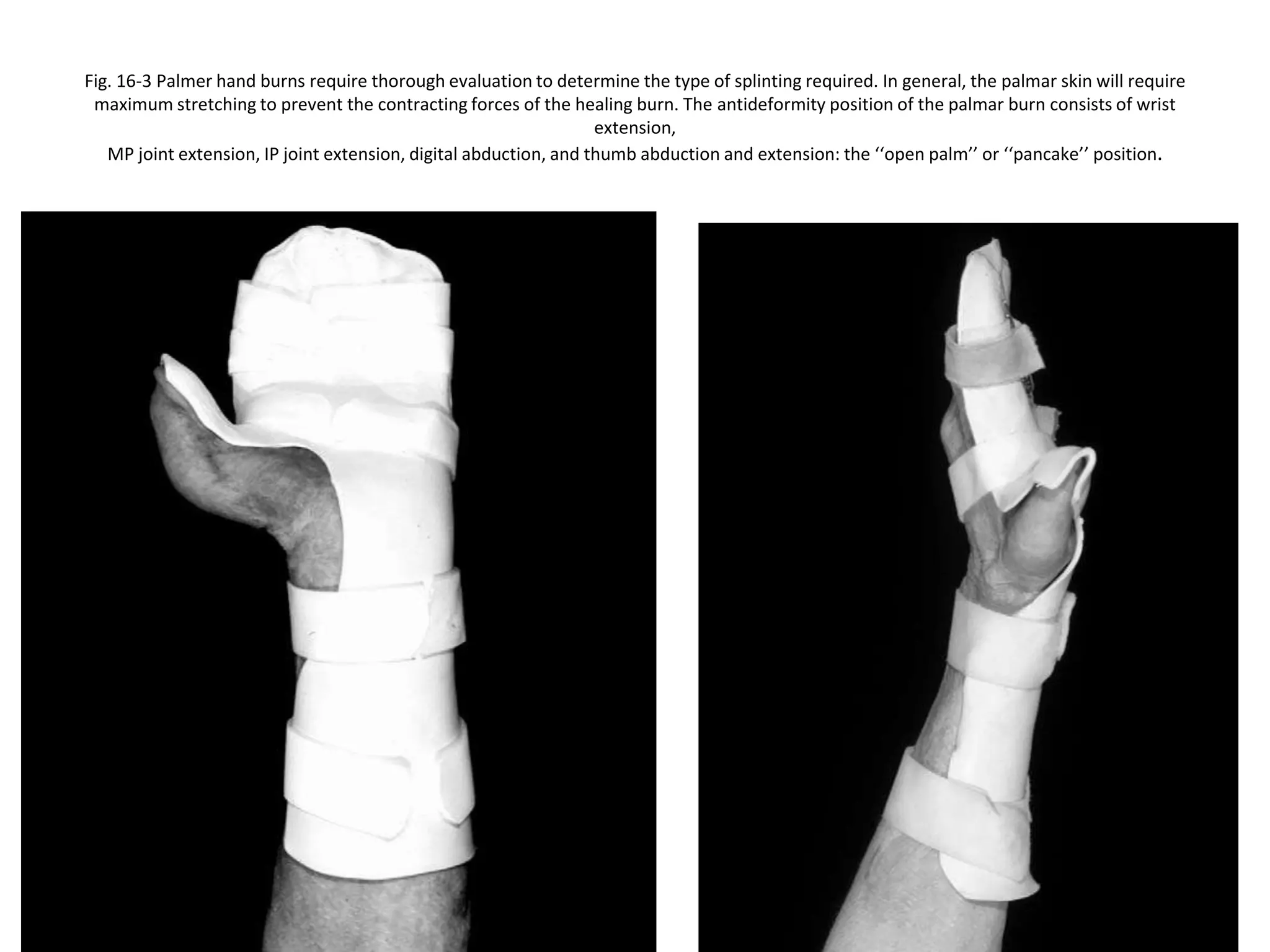
This document discusses orthosis and splinting for hand burns management. It outlines general indications for splinting including prevention and correction of contractures and maintenance of range of motion. Splint design should be simple, conform to the body, and avoid pressure points. Splints are intended to serve as adjuncts to therapy and be worn at night, during rest, or after skin grafting until full range of motion is achieved. Common hand burn deformities include clawhand and the splinting aims to establish correct hand and wrist positioning through static and dynamic splints to optimize rehabilitation.