Organized Crime - 1930’s Jesse Boyland Jake Bucarelli Andrew Schonberg Greg Villafane
History In 1920, Congress passed a law that made it illegal to buy or sell alcoholic beverages, called the Prohibition. This created many bootleggers who transported alcohol illegally Gangs were created to aid the process in bootlegging. These gangs soon got to be very rich because of the high demand of alcohol. Gang leaders were very well know in the public. Gangs had people working for the law, like police officers, which helped in the bootlegging process. This makes an integrated society shielded by corrupted law officers. Gang leaders included: Al Capone Charles Luciano
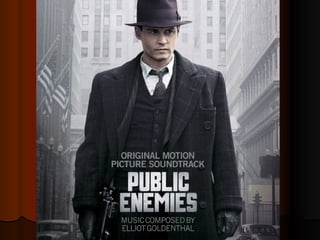
Representations of Organized Crime Movie-Scarface (Al Capone) Movie-Bonnie and Clyde (Bonnie and Clyde) Movie- Public enemies (John Dillenger)
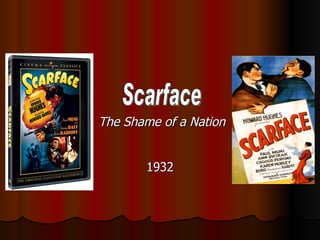
The Shame of a Nation 1932 Scarface
Time Period This film was produced during the era of Pre-Code Hollywood which was a time where violence and crime were uncommon in movies, but still permitted. “Although the Hays office had specifically recommended removing profanity, the drug trade, and prostitution from pictures, it had never officially recommended against depictions of violence in any form in the 1920s.” The line between appropriate and inappropriate content, would lie with state censor boards, and differ depending on the state.
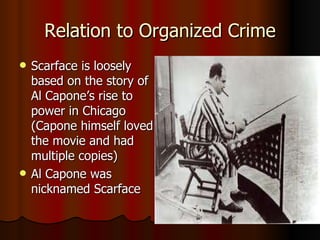
Relation to Organized Crime Scarface is loosely based on the story of Al Capone’s rise to power in Chicago (Capone himself loved the movie and had multiple copies) Al Capone was nicknamed Scarface
Plot 1 Tony Camonte was supposedly paid by Johnny Lovo to kill his former boss, the leading crime boss of the South Side, Big Louis Costillo. After he’s taken out, Lovo takes control of the South Side with Camonte as right-hand man, selling tons of illegal alcohol to speakeasies (clubs that illegally distributed alcohol during prohibition) and “muscling in” on other gangs operations.  Lovo forbids Camonte from getting involved in the, Irish run, North Side led by O'Hara. Camonte ignored, and started violently gaining a reputation amongst enemy gangsters and the police. Lovo was angered by Camonte defying his orders and believed Camonte wanted to take over the operation. (He’s also having an affair with Lovo’s girlfriend, Poppy.)
Plot 2 Camonte essentially takes over and declares war on the North Side. He sent one of his best men Guino Rinaldo to assassinate O'Hara in the florists he uses as his base. His death brought heavy retaliation from the North Side gangs who are under new command and now have Tommy guns. Camonte leads his own forces to destroy the North Side gangs and take over the city. Lovo, who was basically kicked out of his seat of power arranges for Camonte to be assassinated. Camonte escapes the attack, and kills Lovo in revenge “leaving Camonte as the undisputed boss of the city.”
Plot 3 The police quickly start ripping Camonte's criminal empire apart. After discovering his sister Cesca and Guiro Rinaldo got married, Camonte kills his friend, Rinaldo. This murder gave the police the opportunity to arrest Camonte. Camonte holes up in his house and when his sister comes in, planning to kill him, she decides to help him fight the police. She is shot and Camonte breaks down. He tries to make a final break for it, but is demolished by a hail of gunfire
Impact on the Public This was one of the first films to ever show this level of violence Many people were shocked at the violence allowed to be shown in the film
Bonnie and Clyde This notorious couple formed as a result of the Great Depression.  -  Banks had been failing without compensation to the investors. -  Government seemed unresponsive and unwilling to help. Normal people sought ways of making money. A life of crime was pursued by many individuals, such as Bonnie Parker and Clyde Barrow.
Bonnie and Clyde With Dust Bowl of the Midwest, 38% of farms failing, and the closing of breadlines and soup kitchens, Bonnie and Clyde had more support form the public than the Police and government did. General public felt Bonnie and Clyde were not willingly committing crimes for their benefits, but striking back against corruption in big businesses and government officials from the failing capitalistic society.
Bonnie and Clyde Since the police were not successful in capturing Bonnie and Clyde previously, they planned on trapping the duo in Bienville Parish, Louisiana, and gunning them down. On May 23, 1934 Bonnie Parker and Clyde Barrow where ambushed, and shot to death. They instantly became legends, and to this day are celebrated in annual ‘Bonnie and Clyde Festivals’.
 
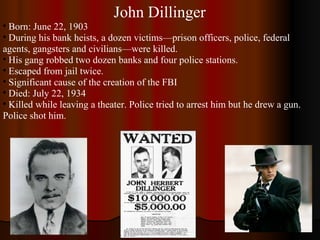
John Dillinger Born: June 22, 1903 During his bank heists, a dozen victims—prison officers, police, federal agents, gangsters and civilians—were killed. His gang robbed two dozen banks and four police stations. Escaped from jail twice. Significant cause of the creation of the FBI Died: July 22, 1934 Killed while leaving a theater. Police tried to arrest him but he drew a gun. Police shot him.
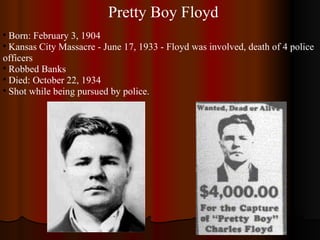
Pretty Boy Floyd Born: February 3, 1904 Kansas City Massacre - June 17, 1933 - Floyd was involved, death of 4 police officers Robbed Banks Died: October 22, 1934 Shot while being pursued by police.
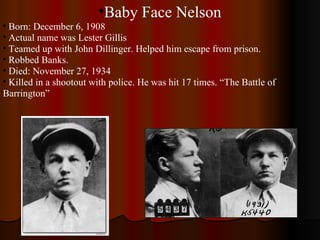
Baby Face Nelson Born: December 6, 1908 Actual name was Lester Gillis Teamed up with John Dillinger. Helped him escape from prison. Robbed Banks. Died: November 27, 1934  Killed in a shootout with police. He was hit 17 times. “The Battle of Barrington”

Organized crime

  • 1.
    Organized Crime -1930’s Jesse Boyland Jake Bucarelli Andrew Schonberg Greg Villafane
  • 2.
    History In 1920,Congress passed a law that made it illegal to buy or sell alcoholic beverages, called the Prohibition. This created many bootleggers who transported alcohol illegally Gangs were created to aid the process in bootlegging. These gangs soon got to be very rich because of the high demand of alcohol. Gang leaders were very well know in the public. Gangs had people working for the law, like police officers, which helped in the bootlegging process. This makes an integrated society shielded by corrupted law officers. Gang leaders included: Al Capone Charles Luciano
  • 3.
    Representations of OrganizedCrime Movie-Scarface (Al Capone) Movie-Bonnie and Clyde (Bonnie and Clyde) Movie- Public enemies (John Dillenger)
  • 4.
    The Shame ofa Nation 1932 Scarface
  • 5.
    Time Period Thisfilm was produced during the era of Pre-Code Hollywood which was a time where violence and crime were uncommon in movies, but still permitted. “Although the Hays office had specifically recommended removing profanity, the drug trade, and prostitution from pictures, it had never officially recommended against depictions of violence in any form in the 1920s.” The line between appropriate and inappropriate content, would lie with state censor boards, and differ depending on the state.
  • 6.
    Relation to OrganizedCrime Scarface is loosely based on the story of Al Capone’s rise to power in Chicago (Capone himself loved the movie and had multiple copies) Al Capone was nicknamed Scarface
  • 7.
    Plot 1 TonyCamonte was supposedly paid by Johnny Lovo to kill his former boss, the leading crime boss of the South Side, Big Louis Costillo. After he’s taken out, Lovo takes control of the South Side with Camonte as right-hand man, selling tons of illegal alcohol to speakeasies (clubs that illegally distributed alcohol during prohibition) and “muscling in” on other gangs operations. Lovo forbids Camonte from getting involved in the, Irish run, North Side led by O'Hara. Camonte ignored, and started violently gaining a reputation amongst enemy gangsters and the police. Lovo was angered by Camonte defying his orders and believed Camonte wanted to take over the operation. (He’s also having an affair with Lovo’s girlfriend, Poppy.)
  • 8.
    Plot 2 Camonteessentially takes over and declares war on the North Side. He sent one of his best men Guino Rinaldo to assassinate O'Hara in the florists he uses as his base. His death brought heavy retaliation from the North Side gangs who are under new command and now have Tommy guns. Camonte leads his own forces to destroy the North Side gangs and take over the city. Lovo, who was basically kicked out of his seat of power arranges for Camonte to be assassinated. Camonte escapes the attack, and kills Lovo in revenge “leaving Camonte as the undisputed boss of the city.”
  • 9.
    Plot 3 Thepolice quickly start ripping Camonte's criminal empire apart. After discovering his sister Cesca and Guiro Rinaldo got married, Camonte kills his friend, Rinaldo. This murder gave the police the opportunity to arrest Camonte. Camonte holes up in his house and when his sister comes in, planning to kill him, she decides to help him fight the police. She is shot and Camonte breaks down. He tries to make a final break for it, but is demolished by a hail of gunfire
  • 10.
    Impact on thePublic This was one of the first films to ever show this level of violence Many people were shocked at the violence allowed to be shown in the film
  • 11.
    Bonnie and ClydeThis notorious couple formed as a result of the Great Depression. - Banks had been failing without compensation to the investors. - Government seemed unresponsive and unwilling to help. Normal people sought ways of making money. A life of crime was pursued by many individuals, such as Bonnie Parker and Clyde Barrow.
  • 12.
    Bonnie and ClydeWith Dust Bowl of the Midwest, 38% of farms failing, and the closing of breadlines and soup kitchens, Bonnie and Clyde had more support form the public than the Police and government did. General public felt Bonnie and Clyde were not willingly committing crimes for their benefits, but striking back against corruption in big businesses and government officials from the failing capitalistic society.
  • 13.
    Bonnie and ClydeSince the police were not successful in capturing Bonnie and Clyde previously, they planned on trapping the duo in Bienville Parish, Louisiana, and gunning them down. On May 23, 1934 Bonnie Parker and Clyde Barrow where ambushed, and shot to death. They instantly became legends, and to this day are celebrated in annual ‘Bonnie and Clyde Festivals’.
  • 14.
  • 15.
    John Dillinger Born:June 22, 1903 During his bank heists, a dozen victims—prison officers, police, federal agents, gangsters and civilians—were killed. His gang robbed two dozen banks and four police stations. Escaped from jail twice. Significant cause of the creation of the FBI Died: July 22, 1934 Killed while leaving a theater. Police tried to arrest him but he drew a gun. Police shot him.
  • 16.
    Pretty Boy FloydBorn: February 3, 1904 Kansas City Massacre - June 17, 1933 - Floyd was involved, death of 4 police officers Robbed Banks Died: October 22, 1934 Shot while being pursued by police.
  • 17.
    Baby Face NelsonBorn: December 6, 1908 Actual name was Lester Gillis Teamed up with John Dillinger. Helped him escape from prison. Robbed Banks. Died: November 27, 1934 Killed in a shootout with police. He was hit 17 times. “The Battle of Barrington”