ORGANIZATIONAL
STRUCTURES
Any operating organization should have its own structure in order to
operate efficiently. For an organization, the organizational structure is
a hierarchy of people and its functions.
The organizational structure of an organization tells you the
character of an organization and the values it believes in.
Depending on the organizational values and the nature of the
business, organizations tend to adopt one of the following structures
for management purposes.
Introduction
1. Bureaucratic Structures
2. Functional Structure
3. Divisional Structure
4. Matrix Structure
Organizational Structure Types
Bureaucratic structures maintain strict hierarchies when it comes to
people management. There are three types of bureaucratic structures:
1 - Pre-bureaucratic structures
This type of organizations lacks the standards.
small scale, start-up companies
the structure is centralized and there is only one key decision maker.
Bureaucratic Structures
2 - Bureaucratic structures
have a certain degree of standardization.
When the organizations grow complex and large, bureaucratic
structures are required for management.
Bureaucratic Structures
3 - Post-bureaucratic Structures
inherit the strict hierarchies, but open to more modern ideas and
methodologies.
follow techniques such as total quality management TQM, culture
management, etc.
Bureaucratic Structures
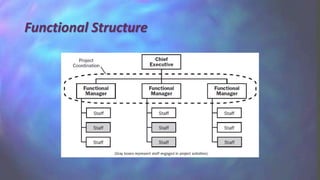
The organization is divided into segments based on the functions
when managing. This allows the organization to enhance the
efficiencies of these functional groups. As an example, take a
software company.
Functional structures appear to be successful in large organization
Functional Structure
• Divide the functional areas of the organization to divisions.
• Each division is equipped with its own resources in order to function
independently.
• Divisions can be defined based on the geographical basis,
products/services basis, or any other measurement.
Divisional Structure
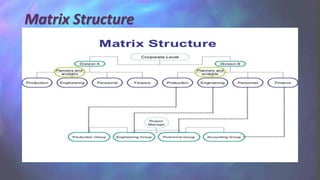
• the organization places the employees based on the function and the
product.
• Gives the best of the both worlds of functional and divisional
structures.
Matrix Structure
Matrix Structure
Every organization needs a structure in order to operate
systematically. The organizational structures can be used by
any organization if the structure fits into the nature and the
maturity of the organization.
Conclusion

Organizational structures

  • 1.
  • 2.
    Any operating organizationshould have its own structure in order to operate efficiently. For an organization, the organizational structure is a hierarchy of people and its functions. The organizational structure of an organization tells you the character of an organization and the values it believes in. Depending on the organizational values and the nature of the business, organizations tend to adopt one of the following structures for management purposes. Introduction
  • 3.
    1. Bureaucratic Structures 2.Functional Structure 3. Divisional Structure 4. Matrix Structure Organizational Structure Types
  • 4.
    Bureaucratic structures maintainstrict hierarchies when it comes to people management. There are three types of bureaucratic structures: 1 - Pre-bureaucratic structures This type of organizations lacks the standards. small scale, start-up companies the structure is centralized and there is only one key decision maker. Bureaucratic Structures
  • 5.
    2 - Bureaucraticstructures have a certain degree of standardization. When the organizations grow complex and large, bureaucratic structures are required for management. Bureaucratic Structures
  • 6.
    3 - Post-bureaucraticStructures inherit the strict hierarchies, but open to more modern ideas and methodologies. follow techniques such as total quality management TQM, culture management, etc. Bureaucratic Structures
  • 7.
    The organization isdivided into segments based on the functions when managing. This allows the organization to enhance the efficiencies of these functional groups. As an example, take a software company. Functional structures appear to be successful in large organization Functional Structure
  • 8.
  • 9.
    • Divide thefunctional areas of the organization to divisions. • Each division is equipped with its own resources in order to function independently. • Divisions can be defined based on the geographical basis, products/services basis, or any other measurement. Divisional Structure
  • 11.
    • the organizationplaces the employees based on the function and the product. • Gives the best of the both worlds of functional and divisional structures. Matrix Structure
  • 12.
  • 13.
    Every organization needsa structure in order to operate systematically. The organizational structures can be used by any organization if the structure fits into the nature and the maturity of the organization. Conclusion