
ORGANIZATIONAL STRESS
Presented by:
Meghna Jain
 Introduction :What is Stress?
 Nature of Stress
 Effects of Stress
 Extreme effects of Stress
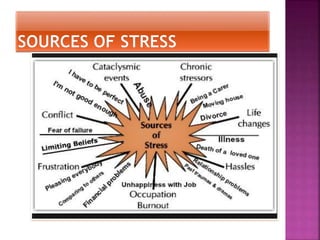
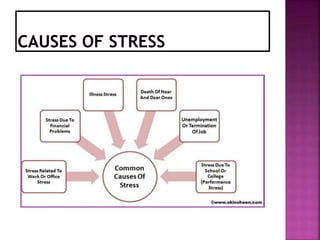
 Sources/Causes of Stress
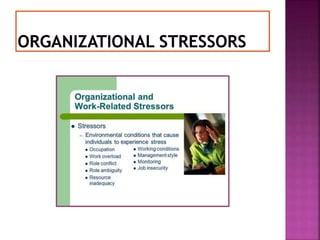
 Stressors inside the organization
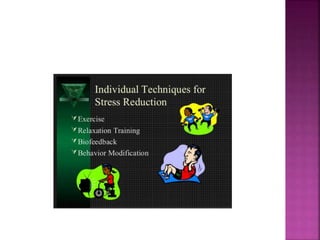
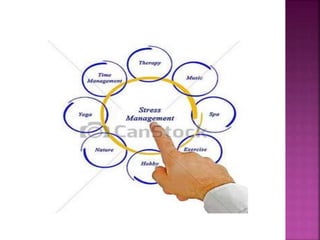
 Stress Management
Stress may be defined as a state of psychological
and/or physiological imbalance resulting from the
disparity between situational demand and the
individuals ability and/or motivation to meet those
demands.
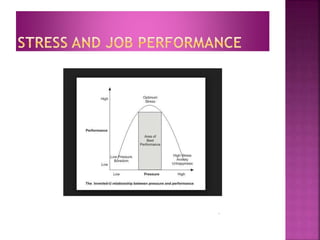
 Stress and job performance
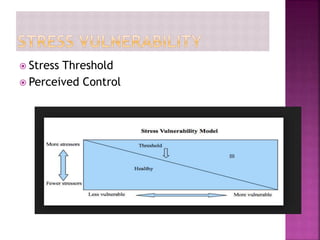
 Stress vulnerability
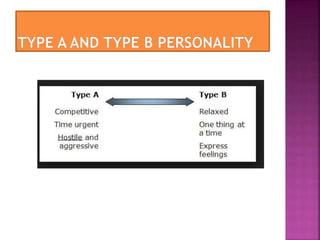
 Type A and Type B personality
 Stress Threshold
 Perceived Control
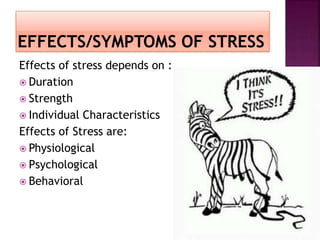
Effects of stress depends on :
 Duration
 Strength
 Individual Characteristics
Effects of Stress are:
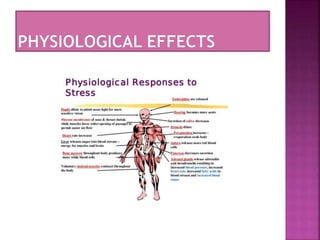
 Physiological
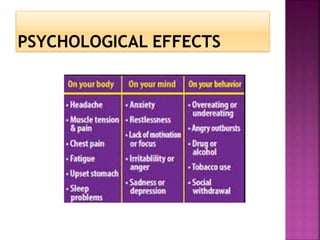
 Psychological
 Behavioral
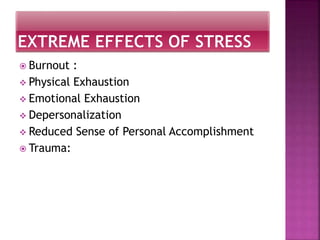
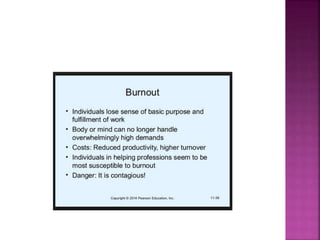
 Burnout :
 Physical Exhaustion
 Emotional Exhaustion
 Depersonalization
 Reduced Sense of Personal Accomplishment
 Trauma:
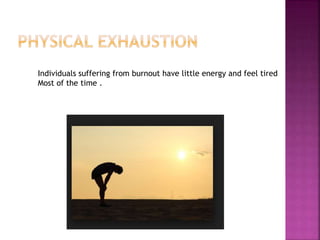
Individuals suffering from burnout have little energy and feel tired
Most of the time .
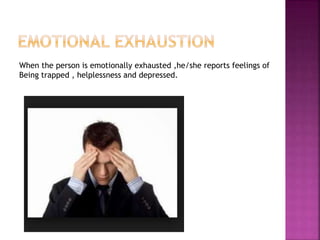
When the person is emotionally exhausted ,he/she reports feelings of
Being trapped , helplessness and depressed.
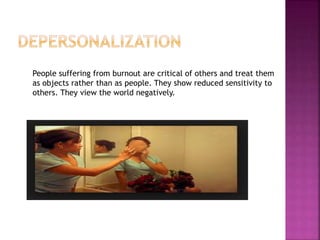
People suffering from burnout are critical of others and treat them
as objects rather than as people. They show reduced sensitivity to
others. They view the world negatively.
 They look at themselves as failures.
 Feel all their efforts are worthless.
 They feel they are totally hopeless and can’t
have a better future.
Stress management refers to the wide
spectrum of techniques and psychotherapies
aimed at controlling a person's levels
of stress, especially chronic stress, usually
for the purpose of improving everyday
functioning.
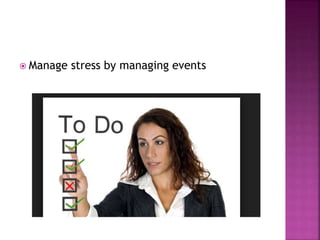
 Manage stress by managing events
Thank you!

Organizational Stress

  • 1.
  • 2.
  • 3.
     Introduction :Whatis Stress?  Nature of Stress  Effects of Stress  Extreme effects of Stress  Sources/Causes of Stress  Stressors inside the organization  Stress Management
  • 4.
    Stress may bedefined as a state of psychological and/or physiological imbalance resulting from the disparity between situational demand and the individuals ability and/or motivation to meet those demands.
  • 5.
     Stress andjob performance  Stress vulnerability  Type A and Type B personality
  • 7.
     Stress Threshold Perceived Control
  • 9.
    Effects of stressdepends on :  Duration  Strength  Individual Characteristics Effects of Stress are:  Physiological  Psychological  Behavioral
  • 13.
     Burnout : Physical Exhaustion  Emotional Exhaustion  Depersonalization  Reduced Sense of Personal Accomplishment  Trauma:
  • 15.
    Individuals suffering fromburnout have little energy and feel tired Most of the time .
  • 16.
    When the personis emotionally exhausted ,he/she reports feelings of Being trapped , helplessness and depressed.
  • 17.
    People suffering fromburnout are critical of others and treat them as objects rather than as people. They show reduced sensitivity to others. They view the world negatively.
  • 18.
     They lookat themselves as failures.  Feel all their efforts are worthless.  They feel they are totally hopeless and can’t have a better future.
  • 24.
    Stress management refersto the wide spectrum of techniques and psychotherapies aimed at controlling a person's levels of stress, especially chronic stress, usually for the purpose of improving everyday functioning.
  • 26.
     Manage stressby managing events
  • 28.