1) Organizational culture refers to the shared assumptions, values, and beliefs that guide behavior and provide meaning within an organization. It is communicated through stories, language, rituals and other symbolic elements.
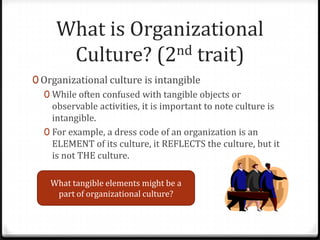
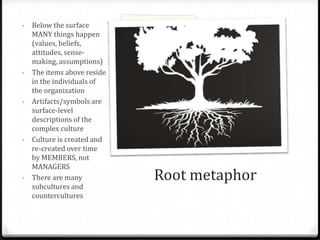
2) Organizational culture is intangible but is reflected in tangible elements like dress code. It affects human behavior by providing frameworks for how members interpret events.
3) An organization's culture involves values, symbolic elements, interactive elements like rituals, contextual elements from its history/location, and role elements like heroes and outlaws. Culture shapes behavior more than managers can change it.