Emerging Trend to Alternate the Drug Delivery System
• What is Drug ?
• Routes OF Administration..!!
• Different dosage forms…!!!
• Condition ..?
• ODF…!!!!
• Products..!!!
What Is Drugs
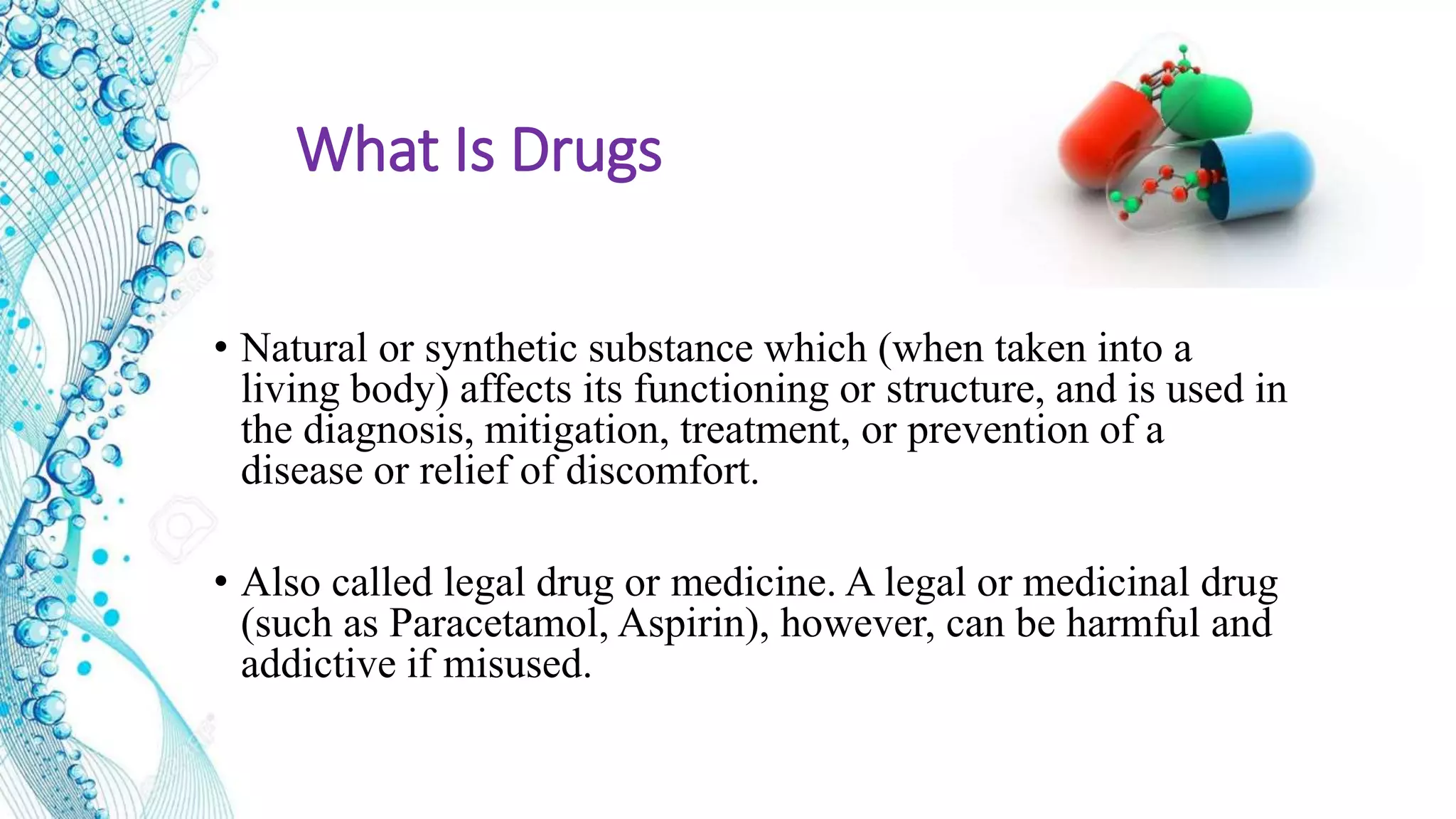
• Natural or synthetic substance which (when taken into a
living body) affects its functioning or structure, and is used in
the diagnosis, mitigation, treatment, or prevention of a
disease or relief of discomfort.
• Also called legal drug or medicine. A legal or medicinal drug
(such as Paracetamol, Aspirin), however, can be harmful and
addictive if misused.
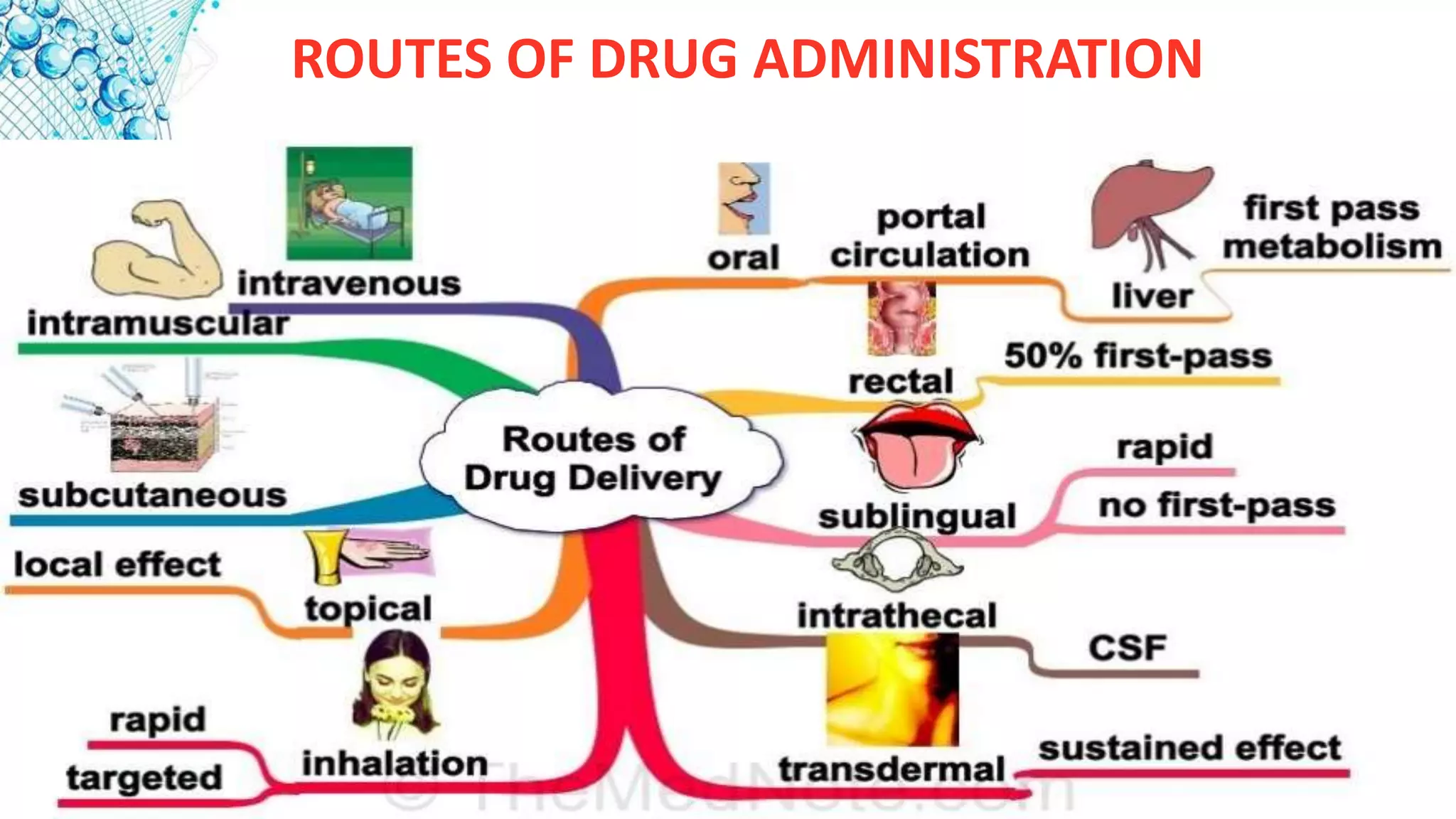
ROUTES OF DRUG ADMINISTRATION
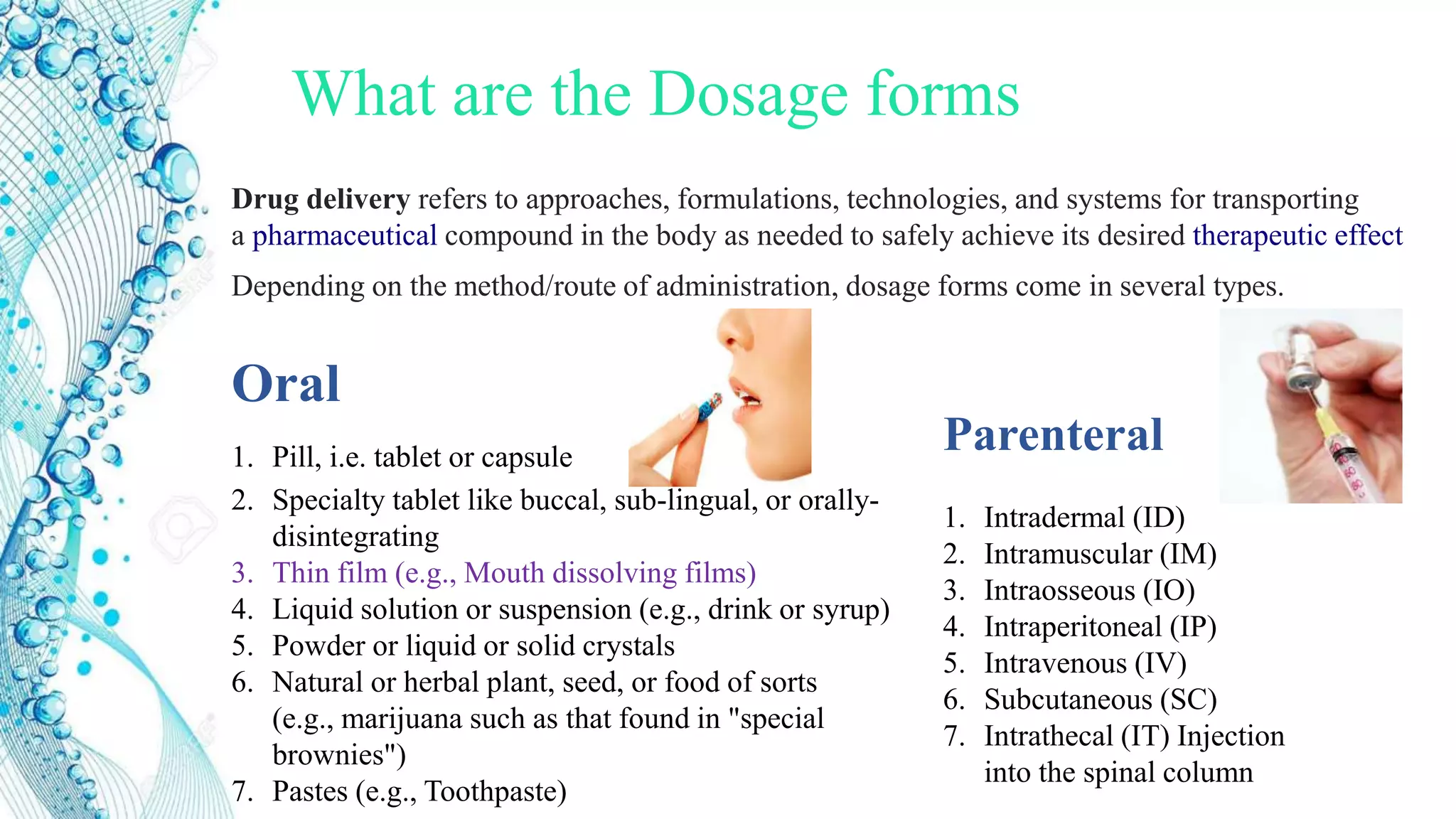
What are the Dosage forms
Depending on the method/route of administration, dosage forms come in several types.
Oral
1. Pill, i.e. tablet or capsule
2. Specialty tablet like buccal, sub-lingual, or orally-
disintegrating
3. Thin film (e.g., Mouth dissolving films)
4. Liquid solution or suspension (e.g., drink or syrup)
5. Powder or liquid or solid crystals
6. Natural or herbal plant, seed, or food of sorts
(e.g., marijuana such as that found in "special
brownies")
7. Pastes (e.g., Toothpaste)
Parenteral
1. Intradermal (ID)
2. Intramuscular (IM)
3. Intraosseous (IO)
4. Intraperitoneal (IP)
5. Intravenous (IV)
6. Subcutaneous (SC)
7. Intrathecal (IT) Injection
into the spinal column
Drug delivery refers to approaches, formulations, technologies, and systems for transporting
a pharmaceutical compound in the body as needed to safely achieve its desired therapeutic effect
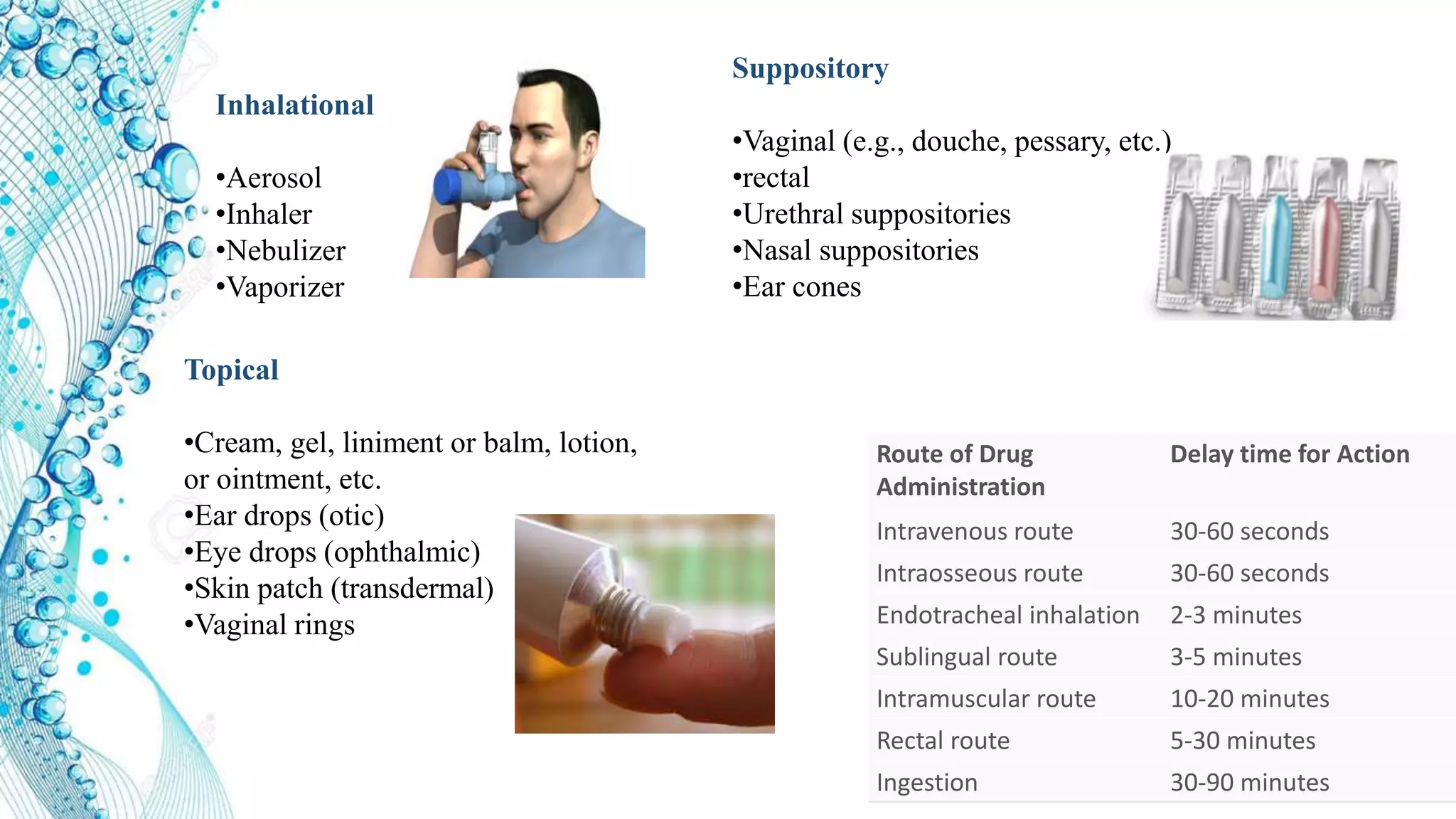
Suppository
•Vaginal (e.g., douche, pessary, etc.)
•rectal
•Urethral suppositories
•Nasal suppositories
•Ear cones
Inhalational
•Aerosol
•Inhaler
•Nebulizer
•Vaporizer
Topical
•Cream, gel, liniment or balm, lotion,
or ointment, etc.
•Ear drops (otic)
•Eye drops (ophthalmic)
•Skin patch (transdermal)
•Vaginal rings
Route of Drug
Administration
Delay time for Action
Intravenous route 30-60 seconds
Intraosseous route 30-60 seconds
Endotracheal inhalation 2-3 minutes
Sublingual route 3-5 minutes
Intramuscular route 10-20 minutes
Rectal route 5-30 minutes
Ingestion 30-90 minutes
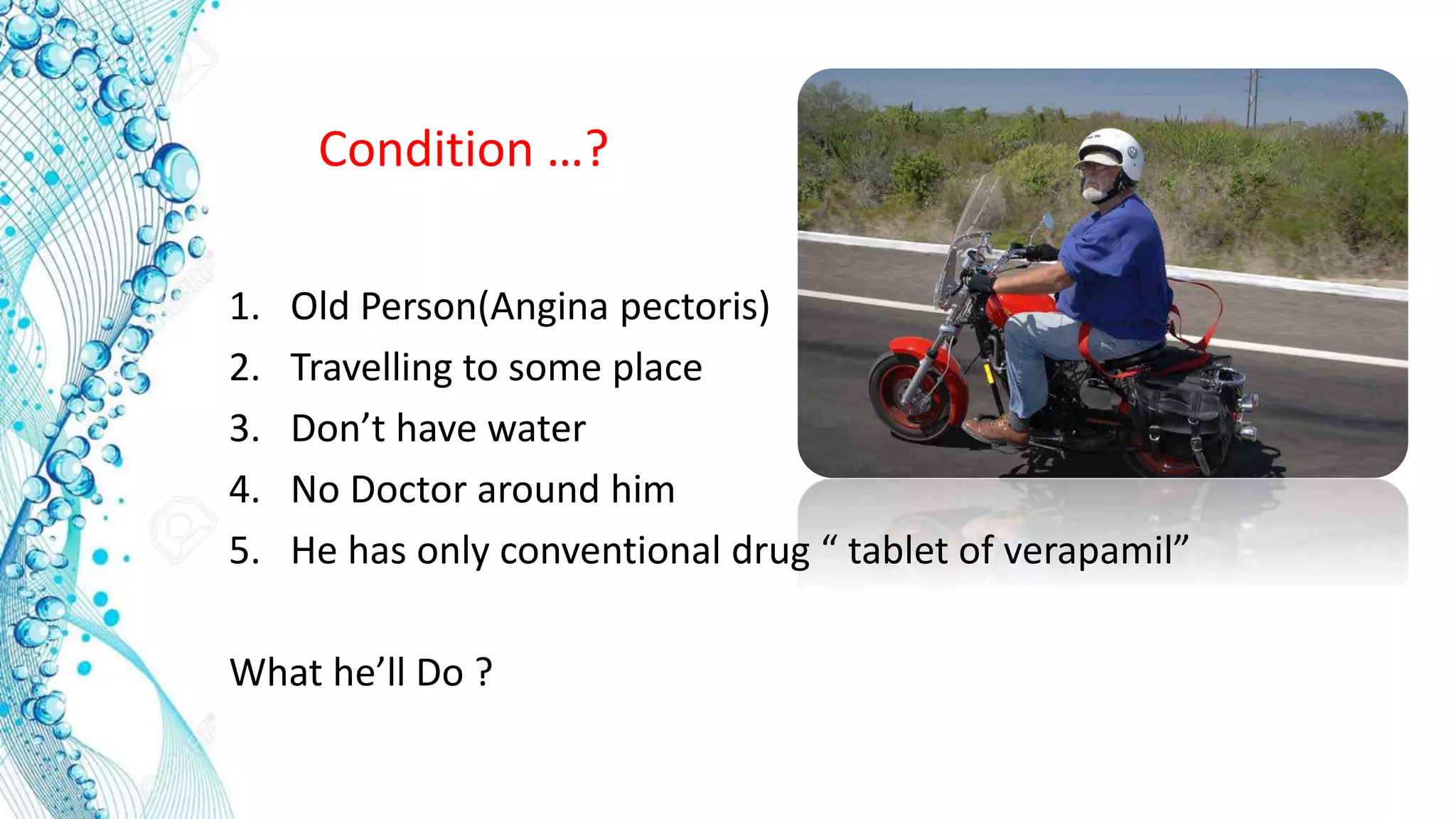
1. Old Person(Angina pectoris)
2. Travelling to some place
3. Don’t have water
4. No Doctor around him
5. He has only conventional drug “ tablet of verapamil”
What he’ll Do ?
Condition …?
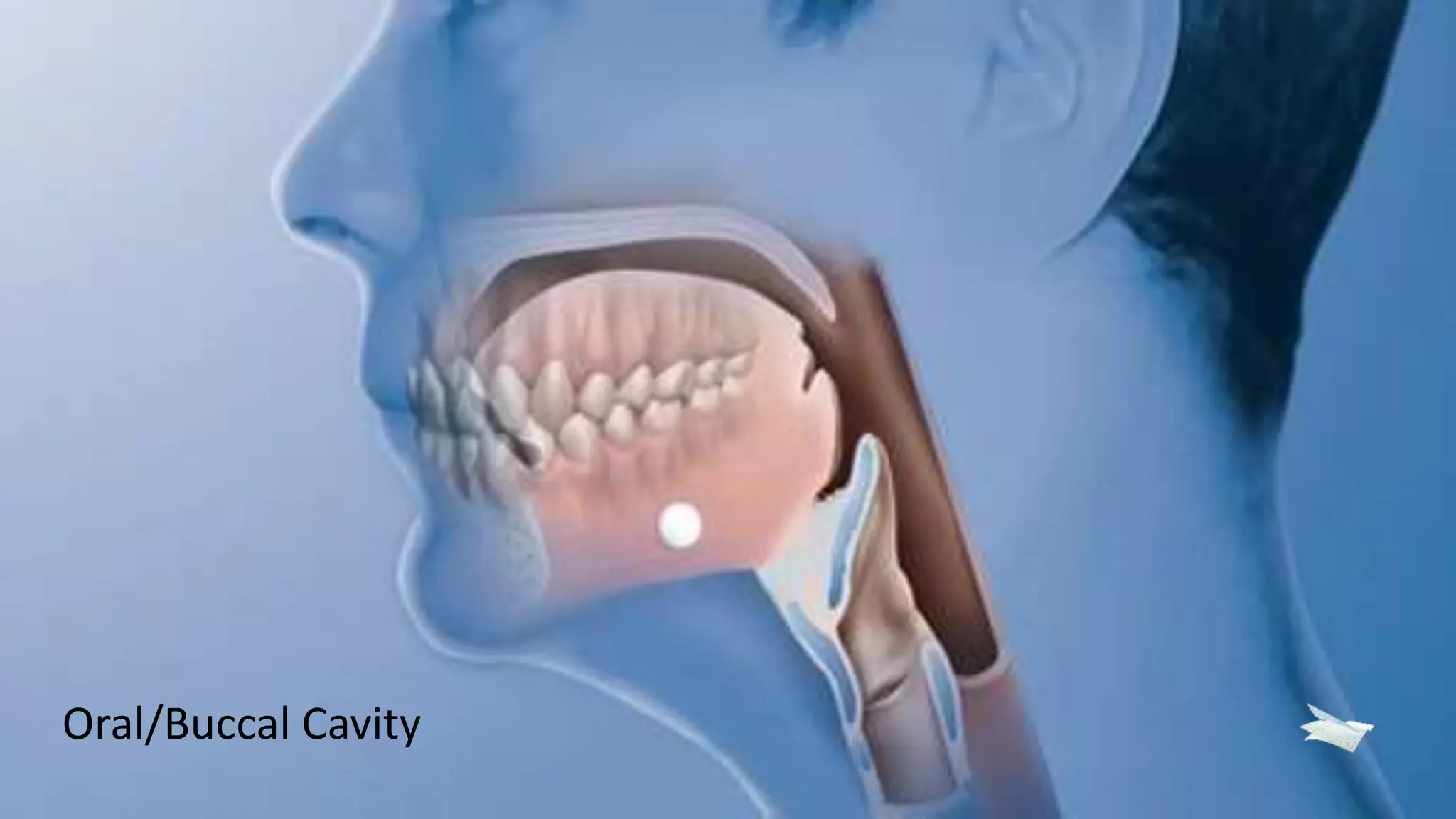
Oral/Buccal Cavity
Oral Route Of Administration and
Development of Oral Disintegrating Film Technology
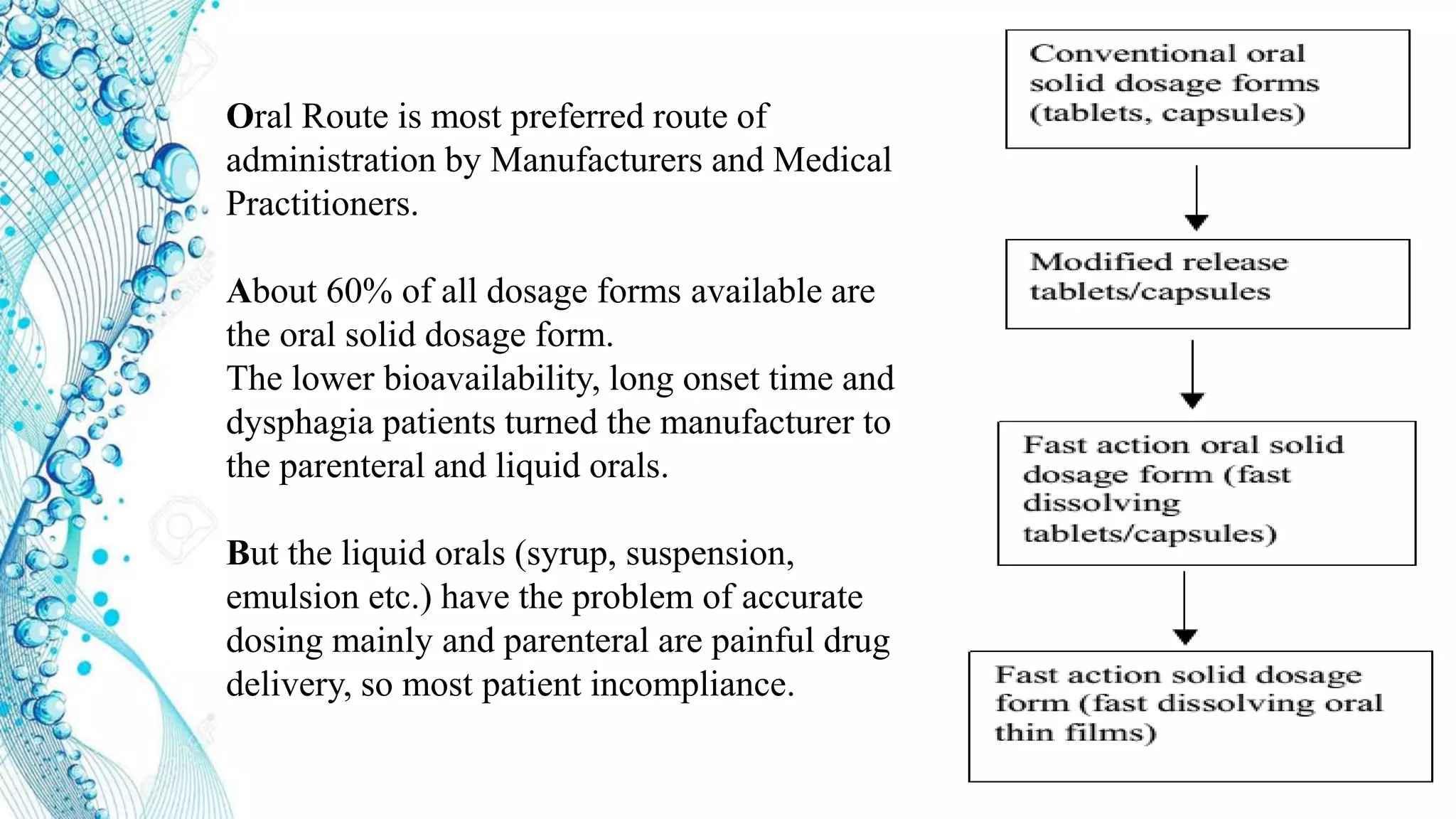
Oral Route is most preferred route of
administration by Manufacturers and Medical
Practitioners.
About 60% of all dosage forms available are
the oral solid dosage form.
The lower bioavailability, long onset time and
dysphagia patients turned the manufacturer to
the parenteral and liquid orals.
But the liquid orals (syrup, suspension,
emulsion etc.) have the problem of accurate
dosing mainly and parenteral are painful drug
delivery, so most patient incompliance.
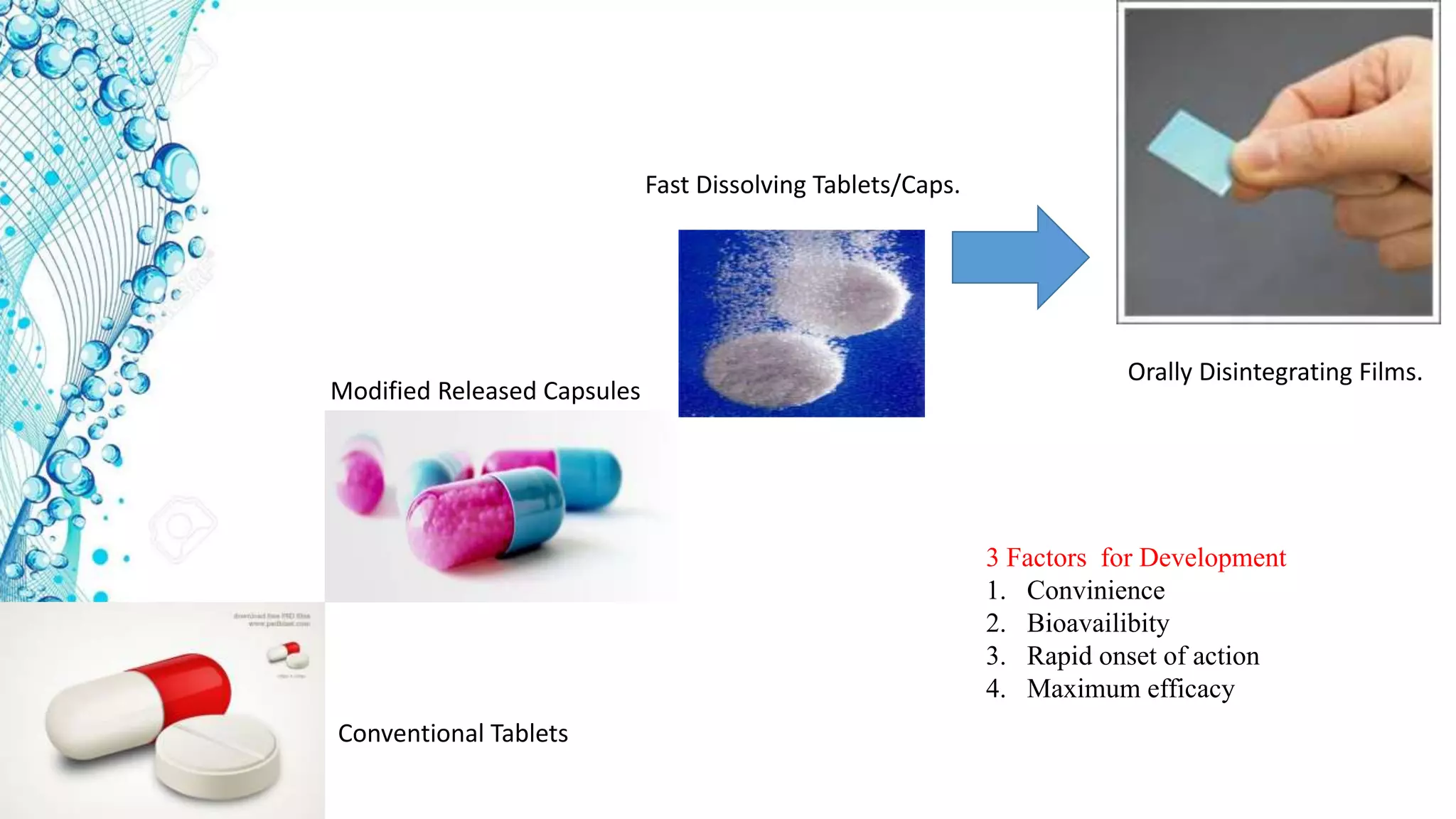
Conventional Tablets
Modified Released Capsules
Fast Dissolving Tablets/Caps.
Orally Disintegrating Films.
3 Factors for Development
1. Convinience
2. Bioavailibity
3. Rapid onset of action
4. Maximum efficacy
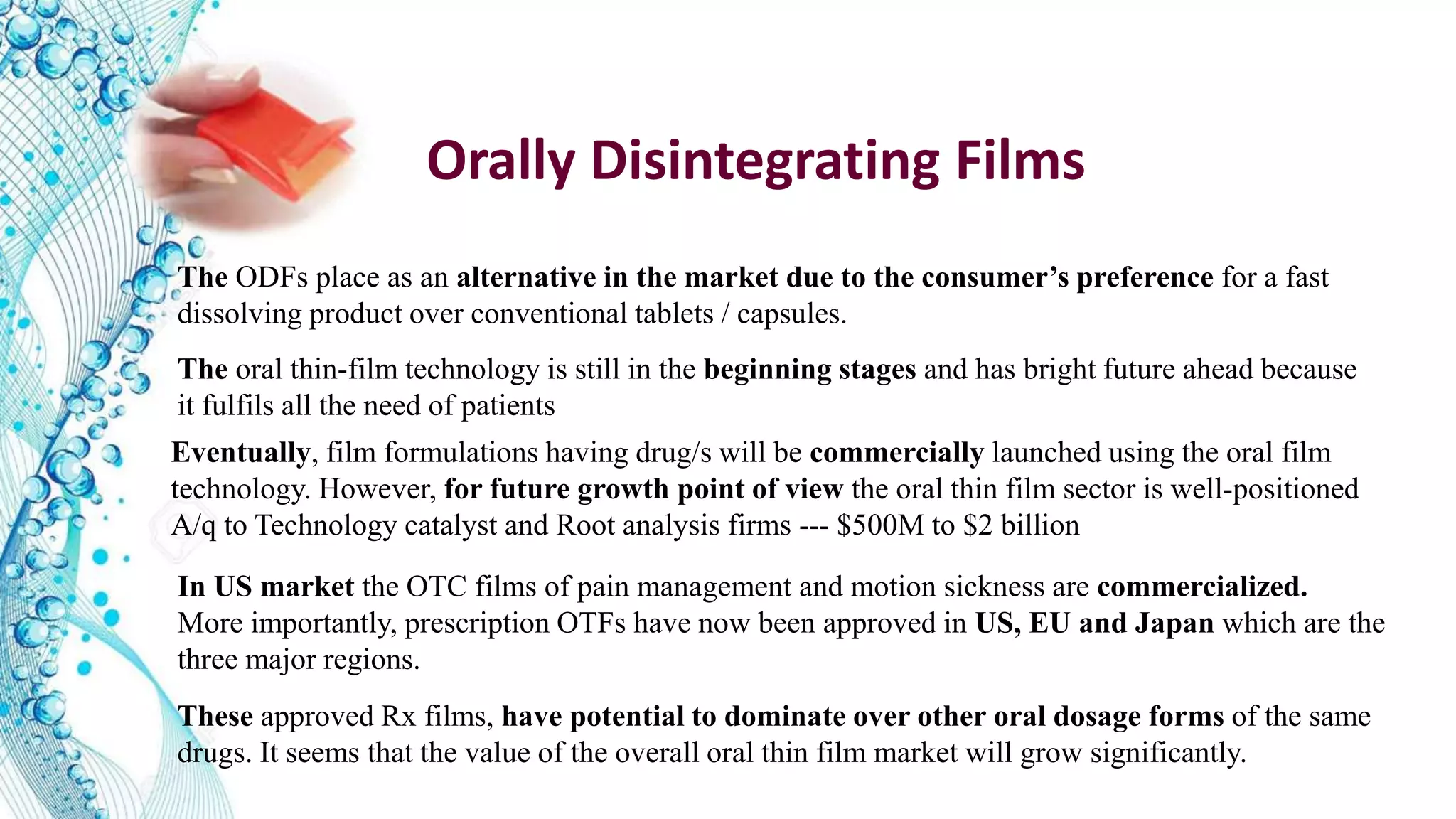
The ODFs place as an alternative in the market due to the consumer’s preference for a fast
dissolving product over conventional tablets / capsules.
The oral thin-film technology is still in the beginning stages and has bright future ahead because
it fulfils all the need of patients
Eventually, film formulations having drug/s will be commercially launched using the oral film
technology. However, for future growth point of view the oral thin film sector is well-positioned
A/q to Technology catalyst and Root analysis firms --- $500M to $2 billion
Orally Disintegrating Films
These approved Rx films, have potential to dominate over other oral dosage forms of the same
drugs. It seems that the value of the overall oral thin film market will grow significantly.
In US market the OTC films of pain management and motion sickness are commercialized.
More importantly, prescription OTFs have now been approved in US, EU and Japan which are the
three major regions.
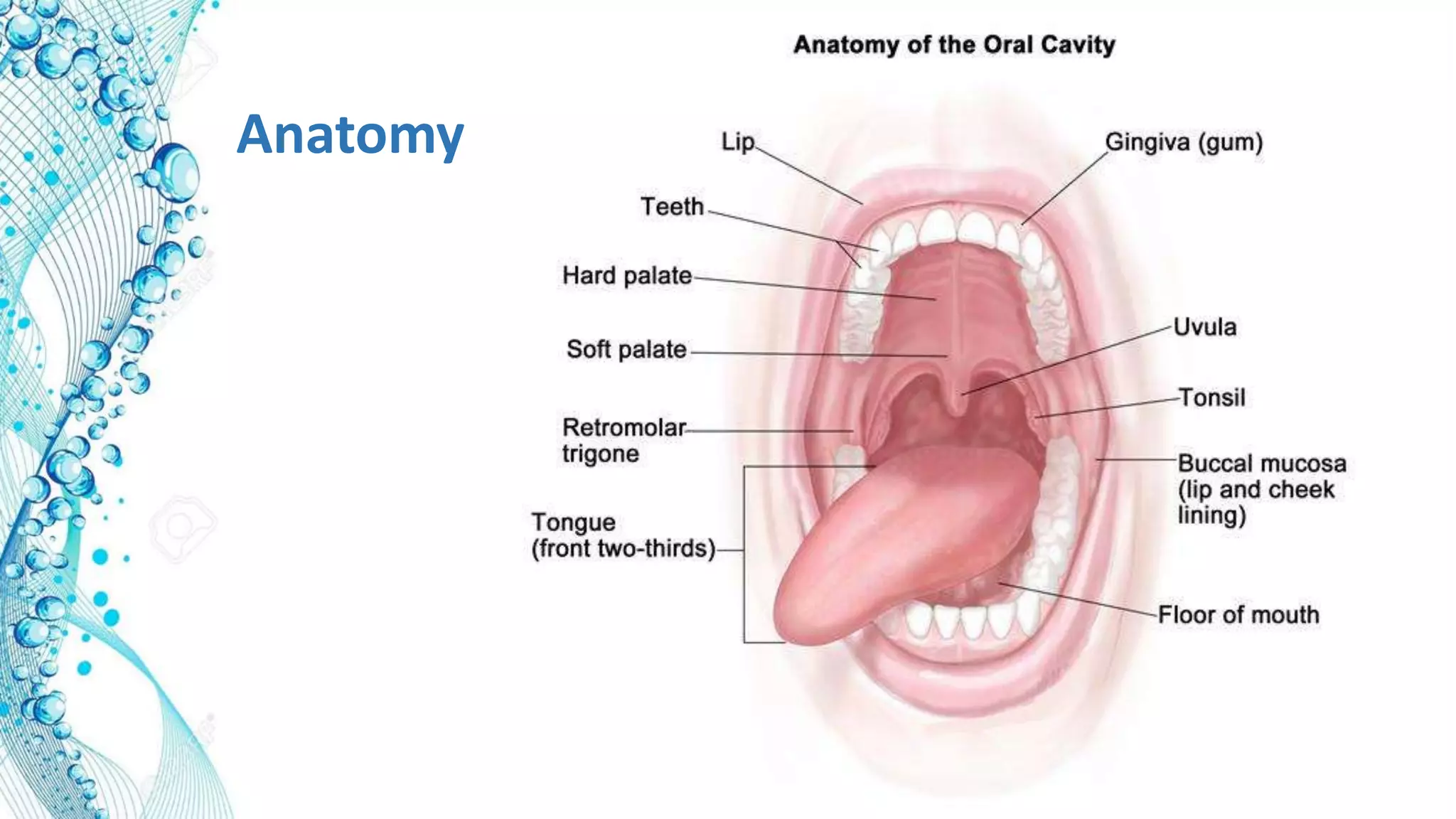
Anatomy
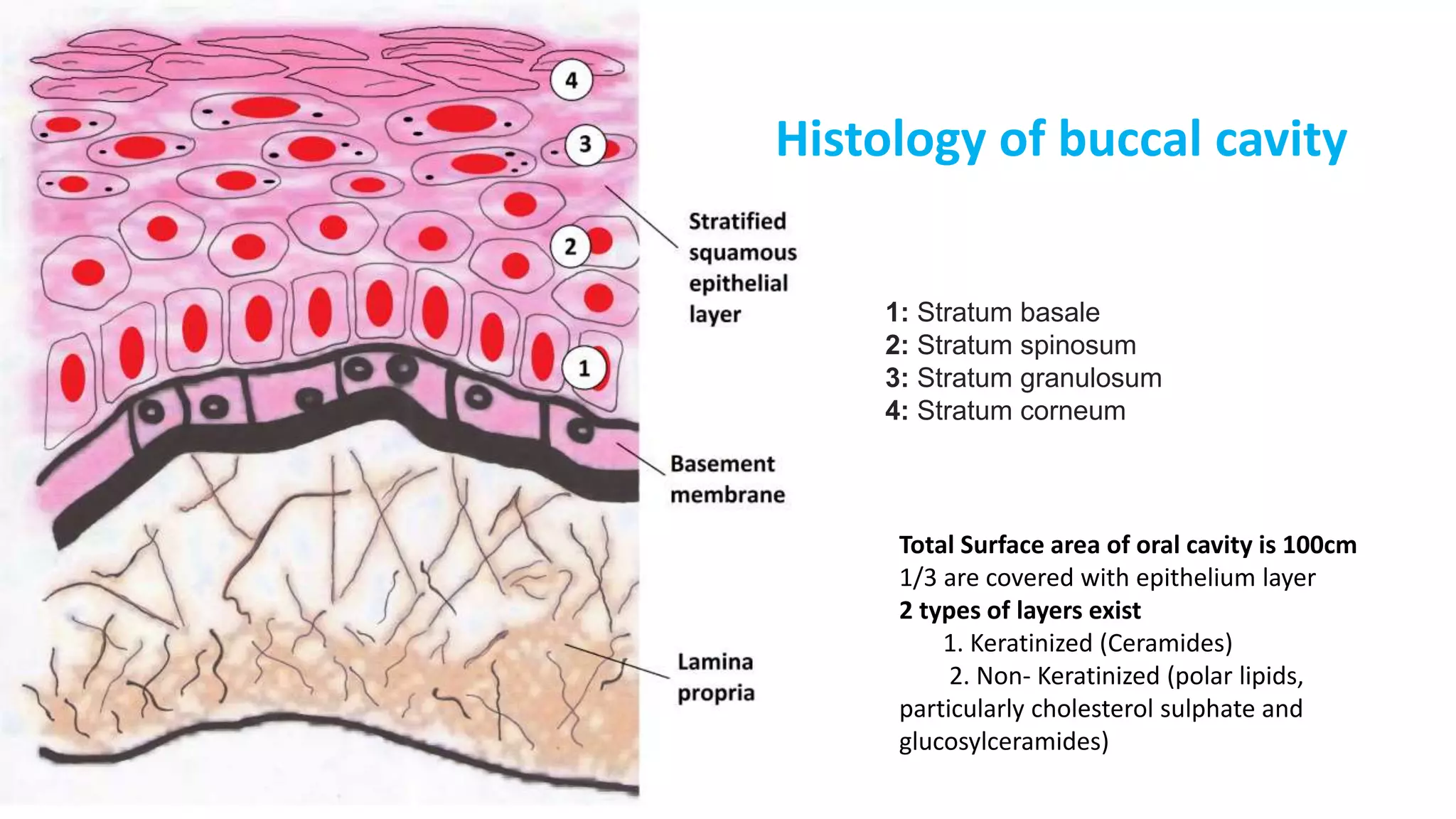
1: Stratum basale
2: Stratum spinosum
3: Stratum granulosum
4: Stratum corneum
Histology of buccal cavity
Total Surface area of oral cavity is 100cm
1/3 are covered with epithelium layer
2 types of layers exist
1. Keratinized (Ceramides)
2. Non- Keratinized (polar lipids,
particularly cholesterol sulphate and
glucosylceramides)
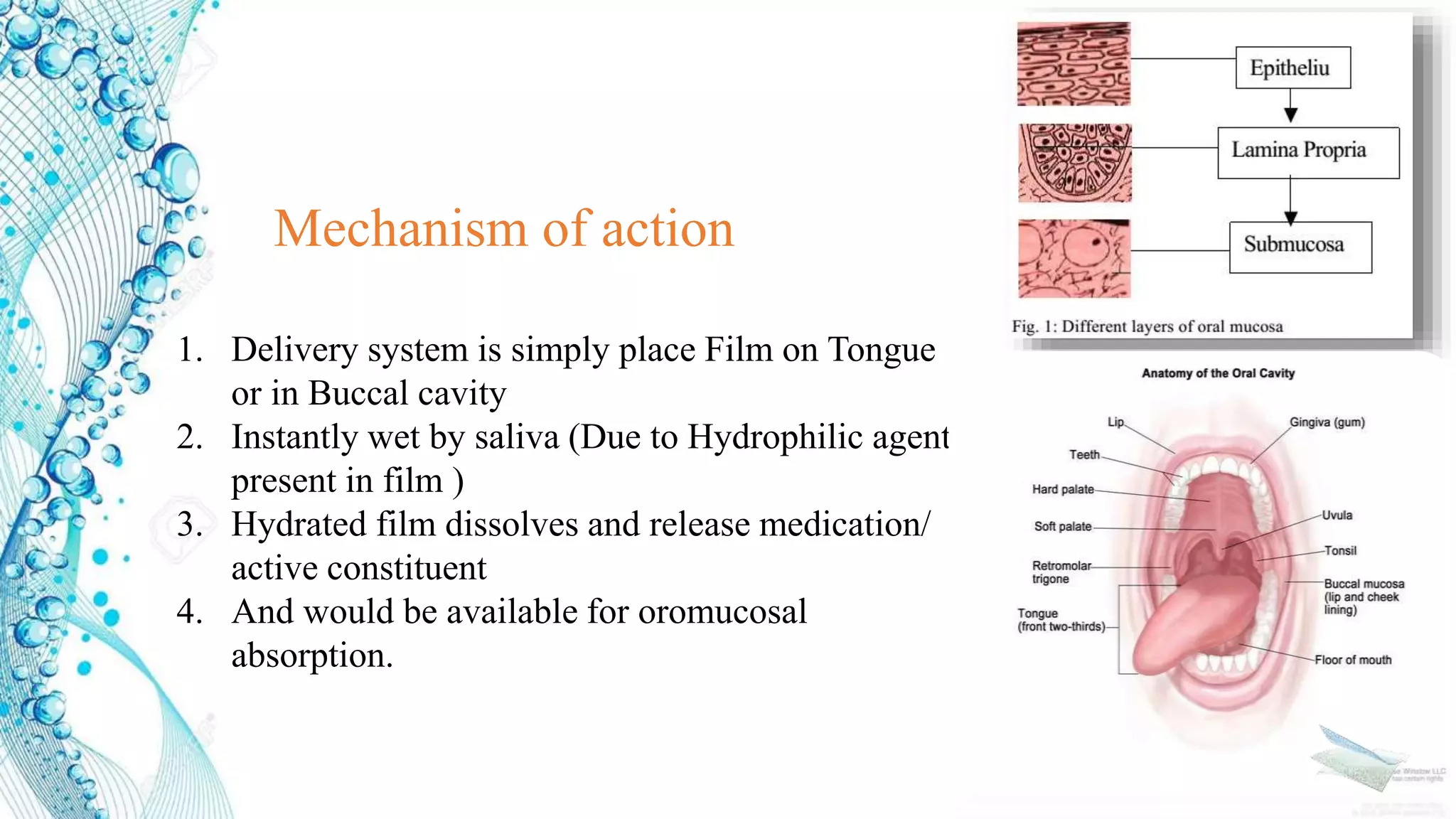
1. Delivery system is simply place Film on Tongue
or in Buccal cavity
2. Instantly wet by saliva (Due to Hydrophilic agent
present in film )
3. Hydrated film dissolves and release medication/
active constituent
4. And would be available for oromucosal
absorption.
Mechanism of action
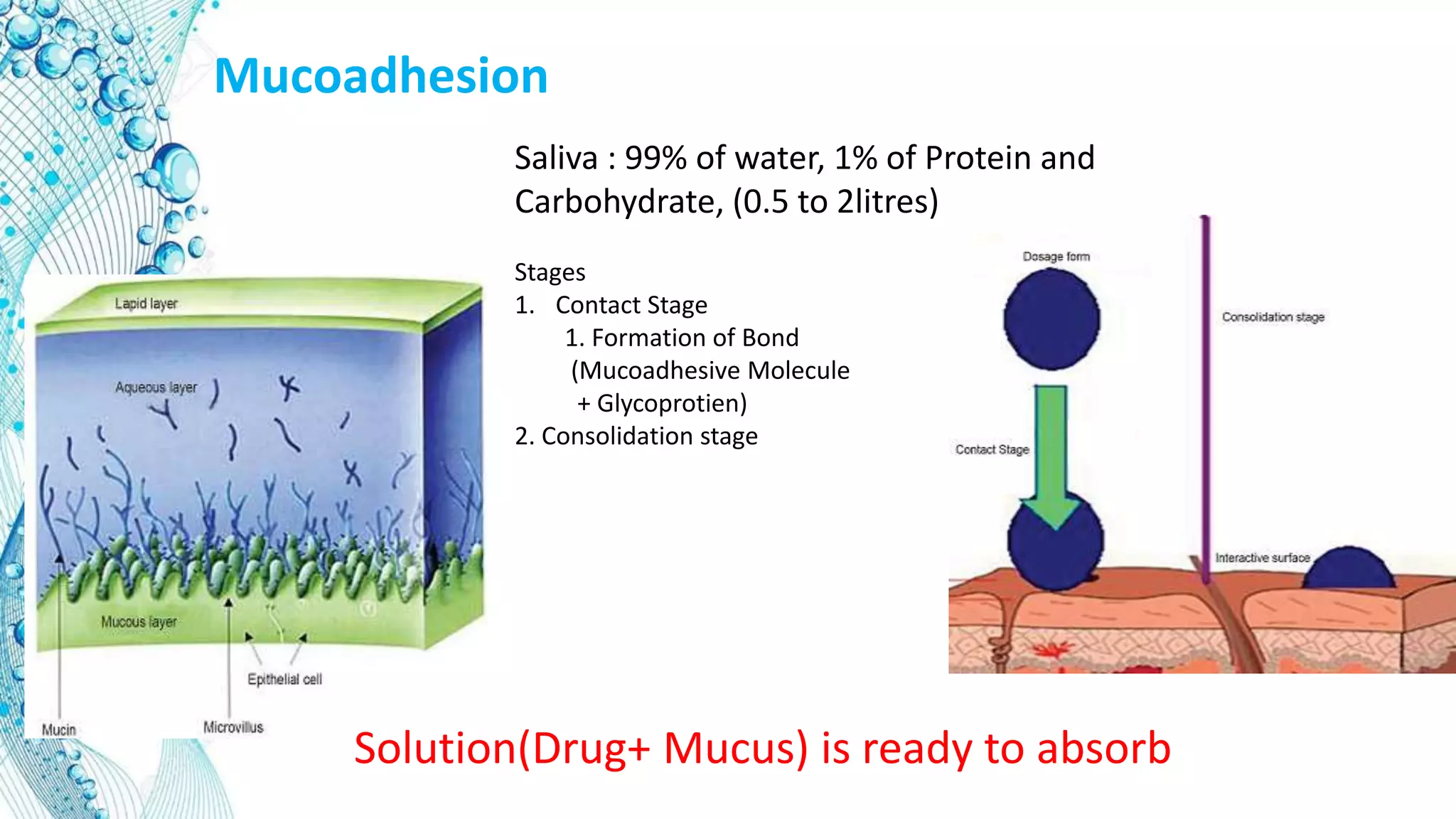
Mucoadhesion
Saliva : 99% of water, 1% of Protein and
Carbohydrate, (0.5 to 2litres)
Stages
1. Contact Stage
1. Formation of Bond
(Mucoadhesive Molecule
+ Glycoprotien)
2. Consolidation stage
Solution(Drug+ Mucus) is ready to absorb
The absorption potential of oral mucosa is influenced by
The lipid solubility and therefore the permeability of the solution (osmosis);
The ionization (pH);
The molecular weight of the substances.
For example, absorption of some drugs via oral mucosa is shown to incr-
ease when carrier pH is lowering (more acidic) and decrease with a lowering of pH (more alkaline)
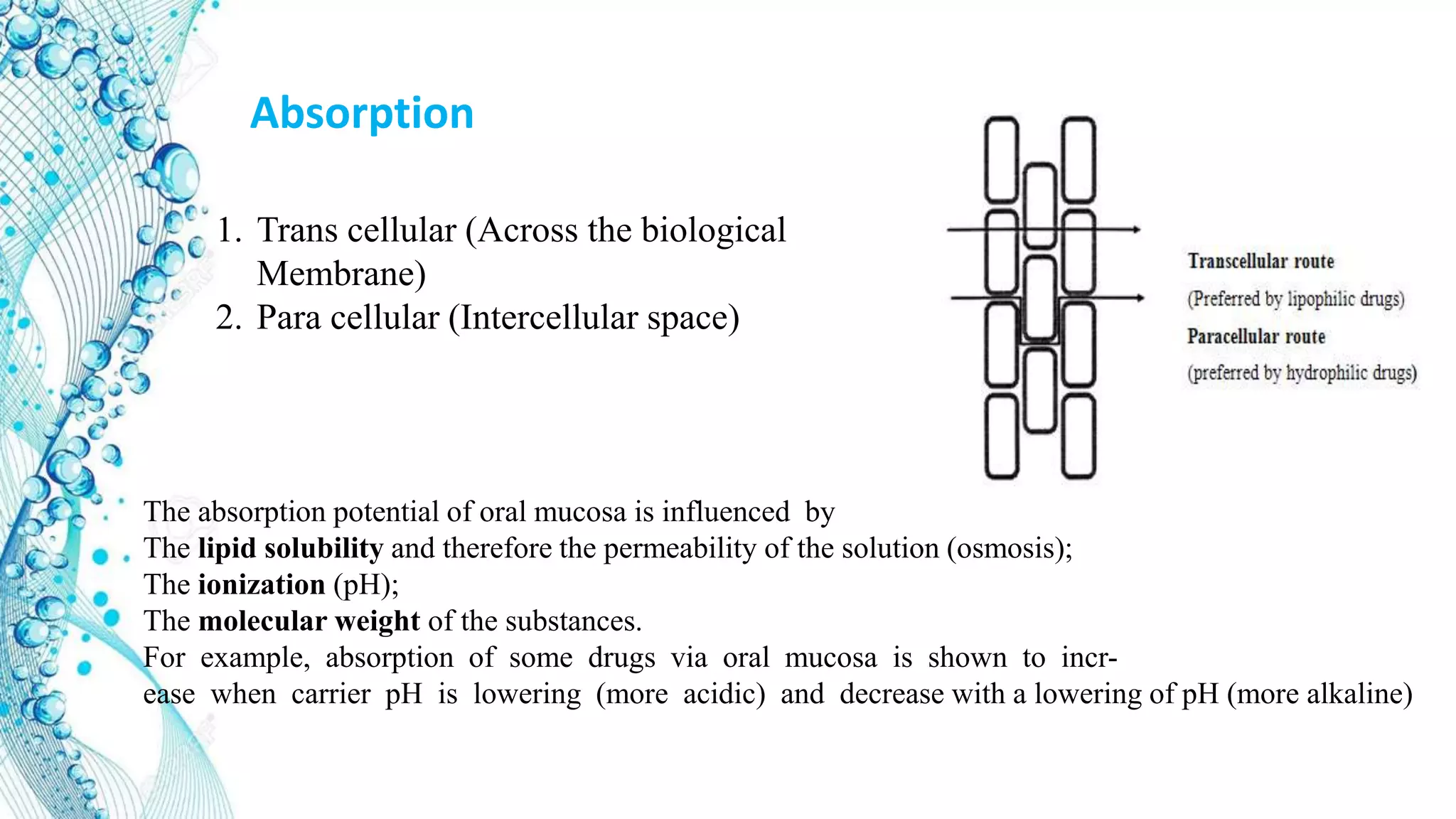
Absorption
1. Trans cellular (Across the biological
Membrane)
2. Para cellular (Intercellular space)
Bioavailability
The administration via
ODF was found to provide rapid relief of
symptoms, with first‐pass metabolism.
The extent of first-
pass metabolism decreased to 48% through
buccal delivery system.
Hence Increases the bioavailability by 50%.
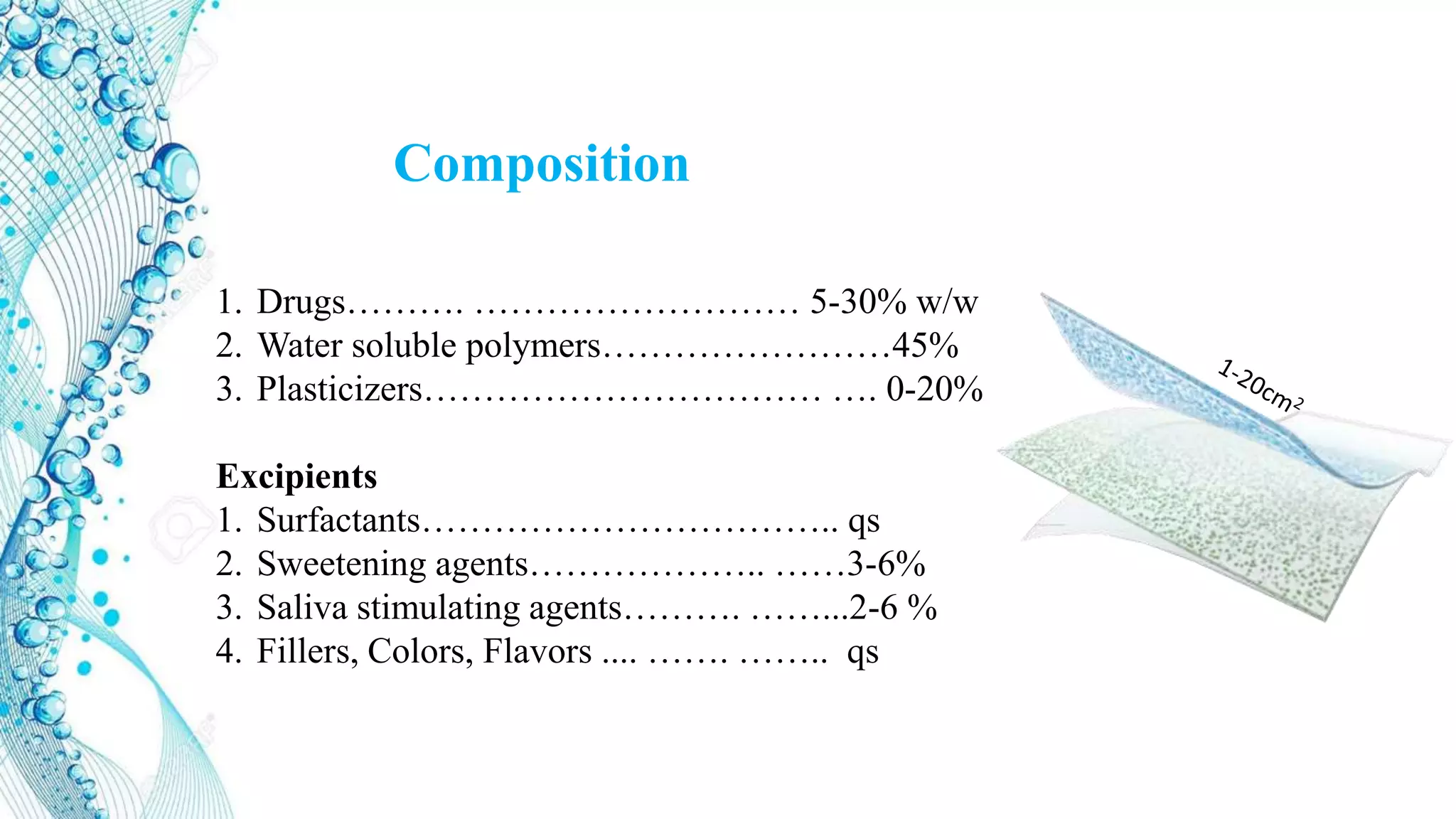
1. Drugs………. ……………………… 5-30% w/w
2. Water soluble polymers……………………45%
3. Plasticizers…………………………… …. 0-20%
Excipients
1. Surfactants…………………………….. qs
2. Sweetening agents……………….. ……3-6%
3. Saliva stimulating agents………. ……...2-6 %
4. Fillers, Colors, Flavors .... ……. …….. qs
Composition
Water soluble Polymers : Pullulan, gelatin and hypromellose are most commonly
used for preparation of ODF.
Plasticizers: Glycerol, Propylene glycol, low molecular weight polyethylene glycols,
phthalate derivatives like dimethyl, diethyl and dibutyl phthalate, Citrate
derivatives such as tributyl, triethyl, acetyl citrate, triacetin and castor
oil are some of the commonly used plasticizer excipients
Sweeteners: Dextrose, fructose, glucose, liquid glucose and maltose.
Surfactants: Sodium lauryl sulfate, benzalkonium chloride, tweens
Saliva stimulating agents: Citric acid, malic acid, lactic acid, ascorbic acid and
tartaric acid
Flavors: Any flavor (US-FDA approved) can be added, such as intense mints, sour
fruit flavors or sweet confectionery flavors15
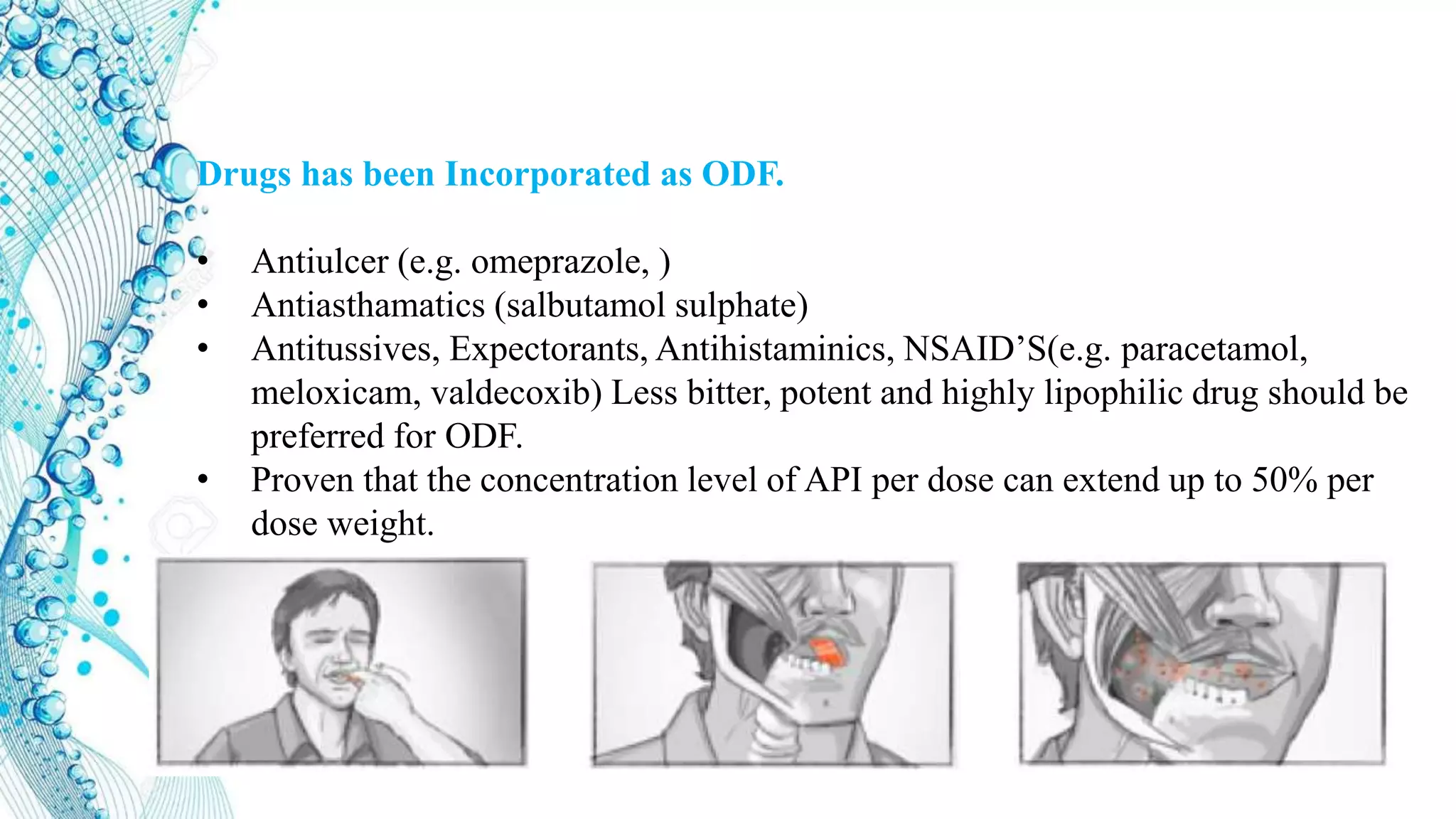
Drugs has been Incorporated as ODF.
• Antiulcer (e.g. omeprazole, )
• Antiasthamatics (salbutamol sulphate)
• Antitussives, Expectorants, Antihistaminics, NSAID’S(e.g. paracetamol,
meloxicam, valdecoxib) Less bitter, potent and highly lipophilic drug should be
preferred for ODF.
• Proven that the concentration level of API per dose can extend up to 50% per
dose weight.
Advantage Disadvantage
• No special Set up is required for Pharma Industry
• Rapid disintegration and dissolution in oral cavity and
promote systemic absorption of API’s (Large surface area).
• No need of water or spoon for administration or chewing.
• Dose accuracy in comparison with liquid dosage forms.
• Rapid onset of action.
• Bypass FPM (First Pass Metabolism).
• Lower Doses
• Minimal Side effects .
• Destructive acidic environment of stomach can be avoided.
• Delivery can also be terminated easily.
• Site specific action and Local action
• Noninvasive
• Patent Life Extension
• High doses cannot be incorporated
into the strip. (Hence researchers have
proven that the level of active can be
improved upto 50% per dose weight.)
Ex. Gas-X Thin strips has loading of
62.5 mg/strips
• Expensive Packaging of oral film.
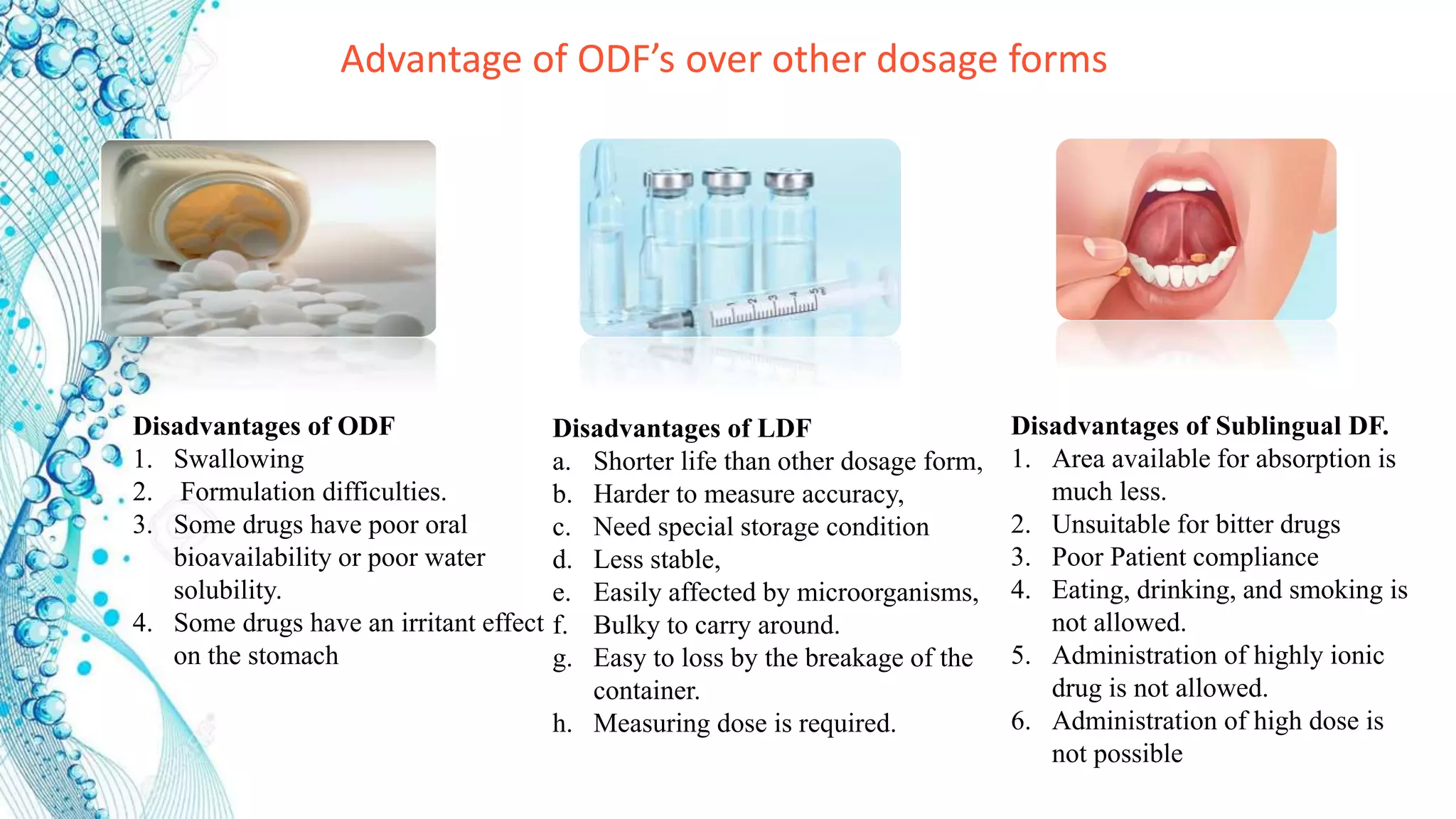
Disadvantages of LDF
a. Shorter life than other dosage form,
b. Harder to measure accuracy,
c. Need special storage condition
d. Less stable,
e. Easily affected by microorganisms,
f. Bulky to carry around.
g. Easy to loss by the breakage of the
container.
h. Measuring dose is required.
Disadvantages of ODF
1. Swallowing
2. Formulation difficulties.
3. Some drugs have poor oral
bioavailability or poor water
solubility.
4. Some drugs have an irritant effect
on the stomach
Disadvantages of Sublingual DF.
1. Area available for absorption is
much less.
2. Unsuitable for bitter drugs
3. Poor Patient compliance
4. Eating, drinking, and smoking is
not allowed.
5. Administration of highly ionic
drug is not allowed.
6. Administration of high dose is
not possible
Advantage of ODF’s over other dosage forms
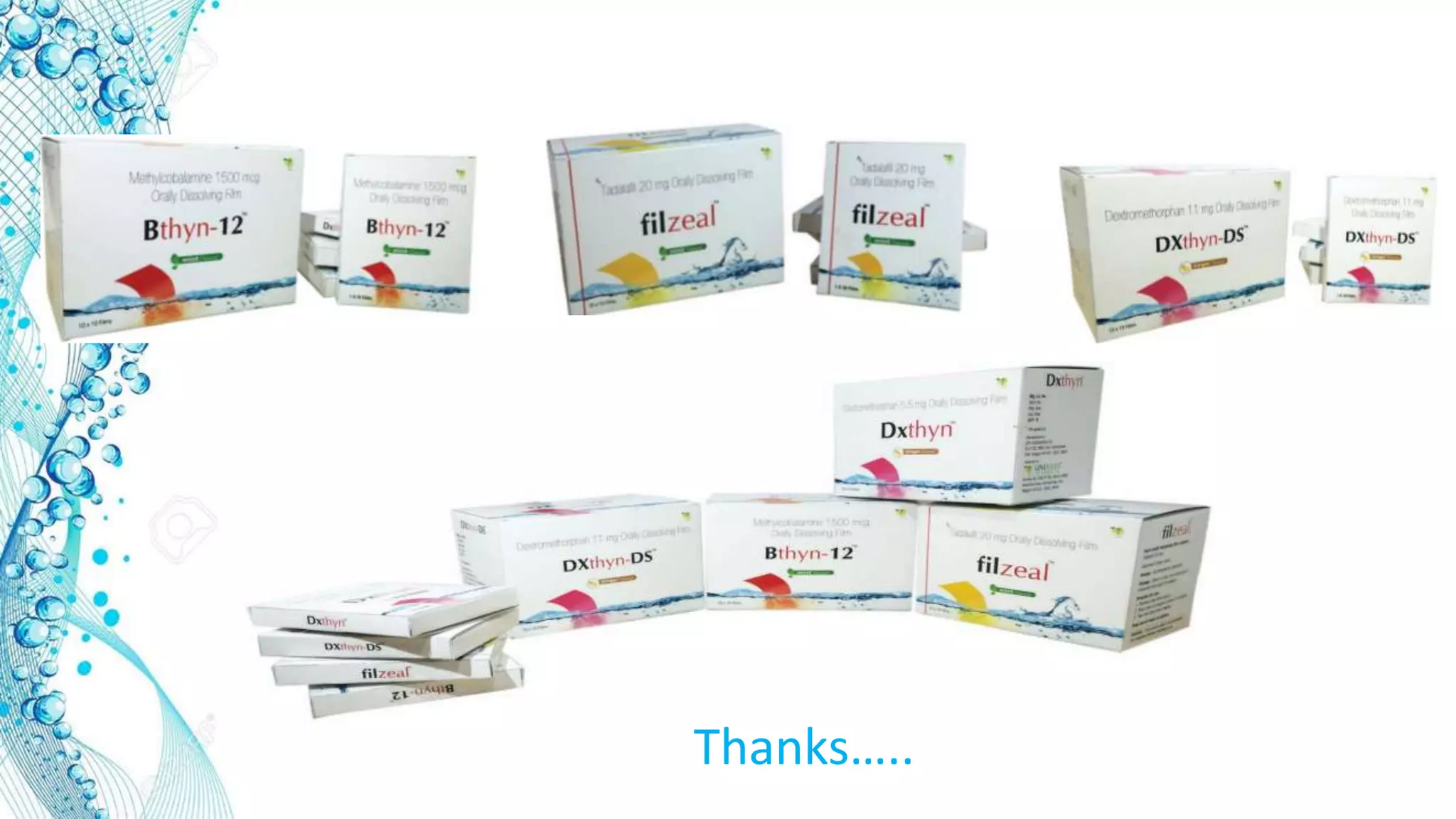
Products
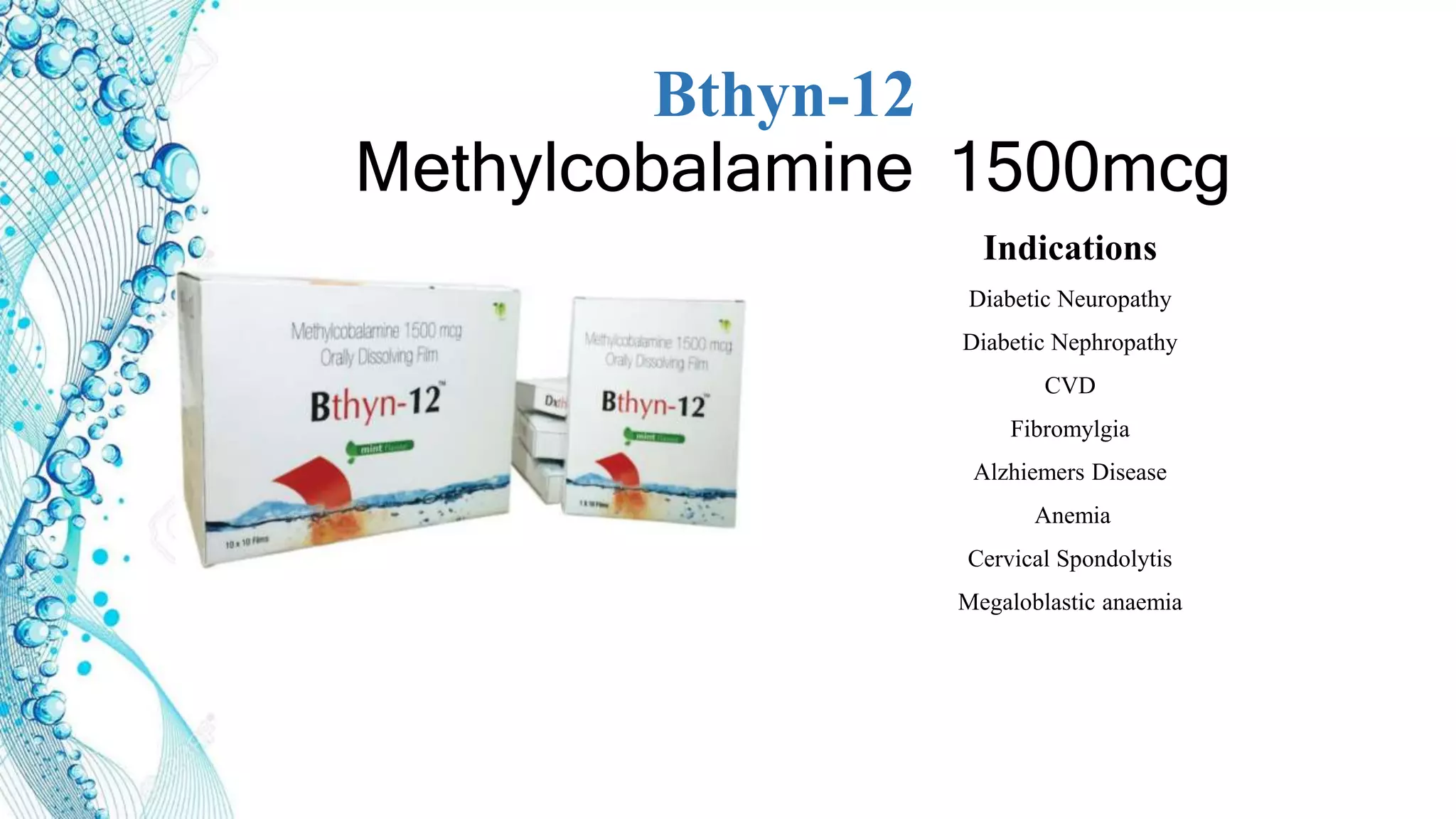
Bthyn-12
Methylcobalamine 1500mcg
Indications
Diabetic Neuropathy
Diabetic Nephropathy
CVD
Fibromylgia
Alzhiemers Disease
Anemia
Cervical Spondolytis
Megaloblastic anaemia
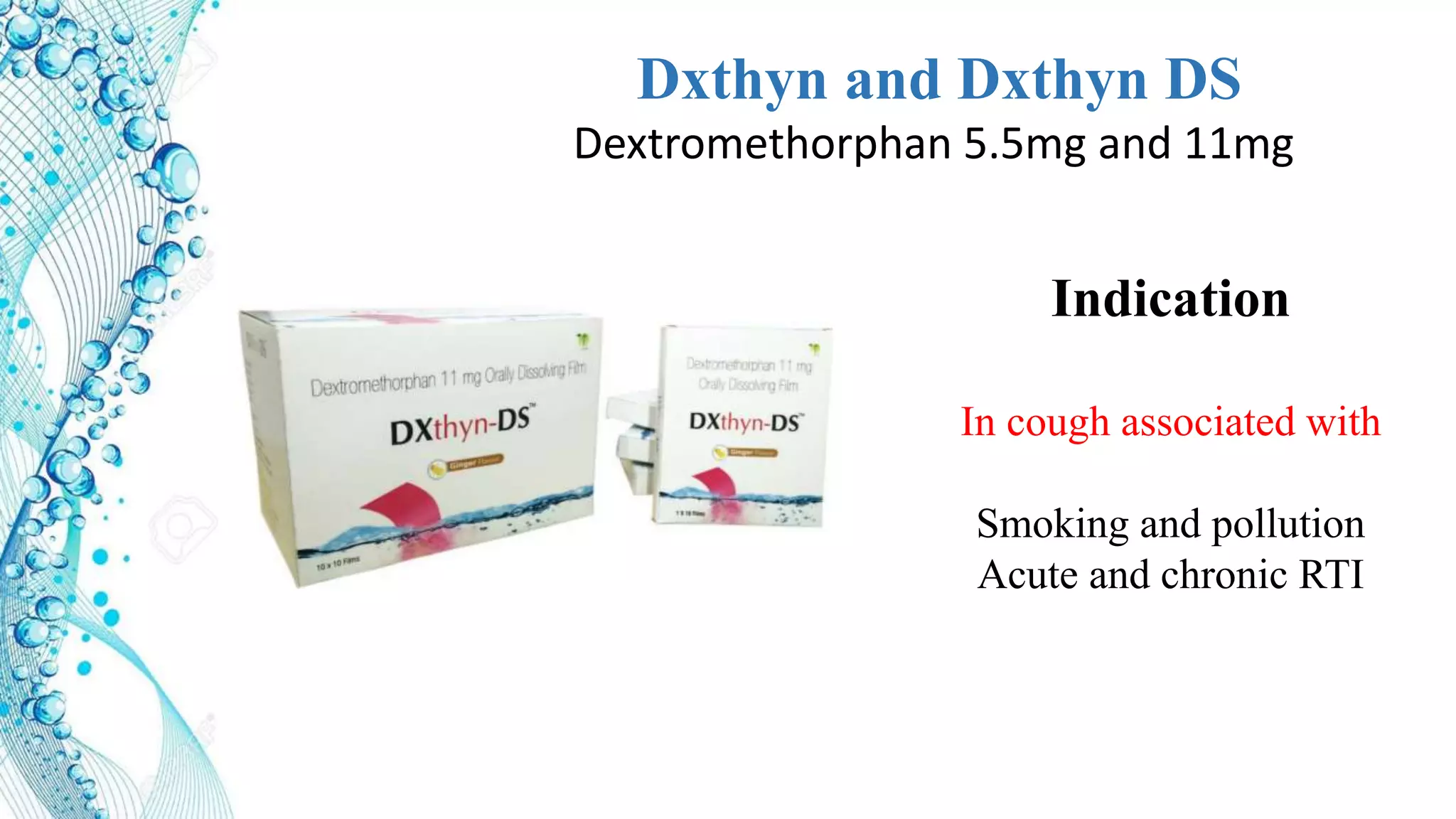
Dxthyn and Dxthyn DS
Dextromethorphan 5.5mg and 11mg
Indication
In cough associated with
Smoking and pollution
Acute and chronic RTI
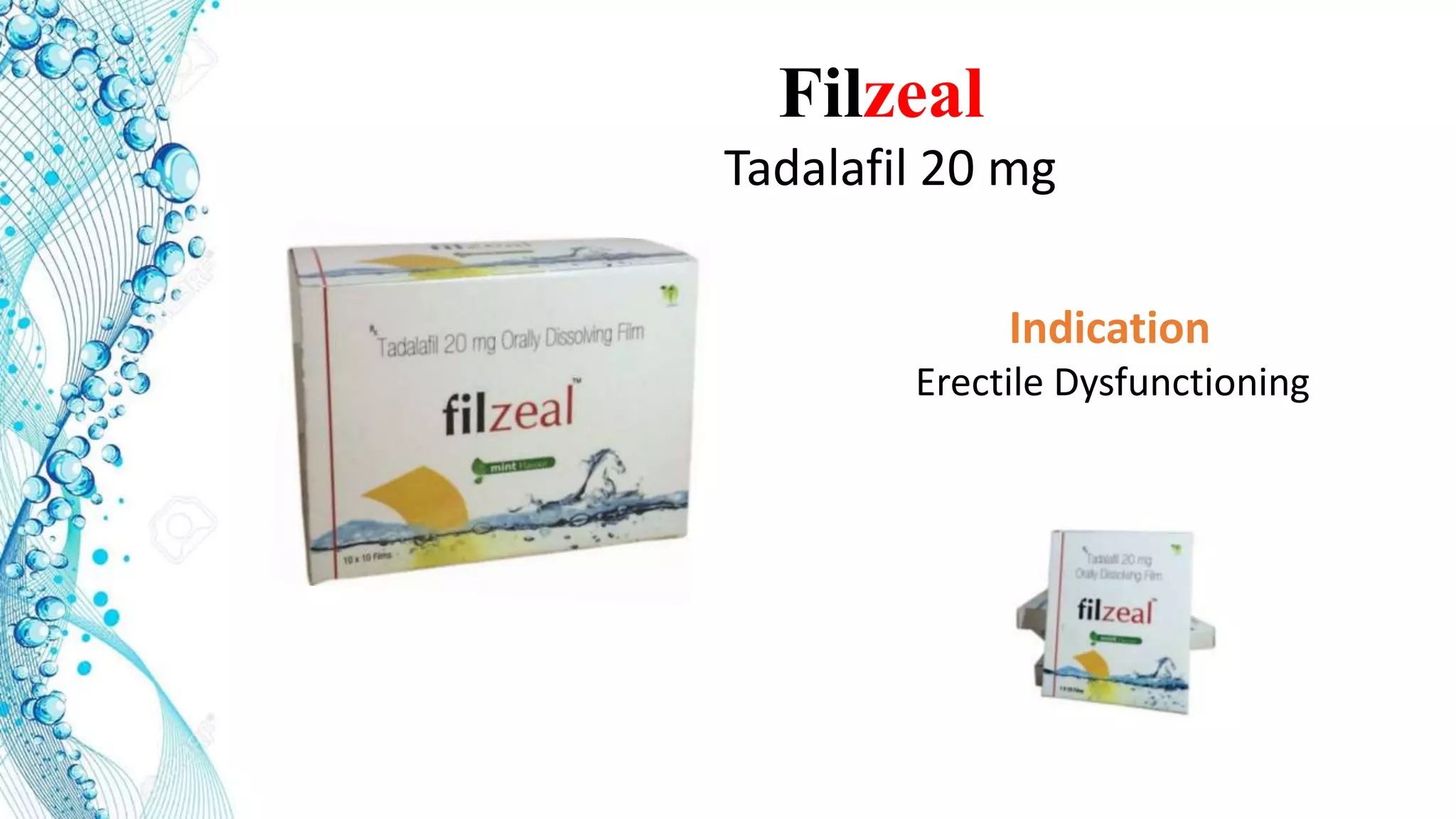
Filzeal
Tadalafil 20 mg
Indication
Erectile Dysfunctioning
Thanks…..

Orally Disintegrating Strips

  • 1.
    Emerging Trend toAlternate the Drug Delivery System
  • 2.
    • What isDrug ? • Routes OF Administration..!! • Different dosage forms…!!! • Condition ..? • ODF…!!!! • Products..!!!
  • 3.
    What Is Drugs •Natural or synthetic substance which (when taken into a living body) affects its functioning or structure, and is used in the diagnosis, mitigation, treatment, or prevention of a disease or relief of discomfort. • Also called legal drug or medicine. A legal or medicinal drug (such as Paracetamol, Aspirin), however, can be harmful and addictive if misused.
  • 4.
    ROUTES OF DRUGADMINISTRATION
  • 5.
    What are theDosage forms Depending on the method/route of administration, dosage forms come in several types. Oral 1. Pill, i.e. tablet or capsule 2. Specialty tablet like buccal, sub-lingual, or orally- disintegrating 3. Thin film (e.g., Mouth dissolving films) 4. Liquid solution or suspension (e.g., drink or syrup) 5. Powder or liquid or solid crystals 6. Natural or herbal plant, seed, or food of sorts (e.g., marijuana such as that found in "special brownies") 7. Pastes (e.g., Toothpaste) Parenteral 1. Intradermal (ID) 2. Intramuscular (IM) 3. Intraosseous (IO) 4. Intraperitoneal (IP) 5. Intravenous (IV) 6. Subcutaneous (SC) 7. Intrathecal (IT) Injection into the spinal column Drug delivery refers to approaches, formulations, technologies, and systems for transporting a pharmaceutical compound in the body as needed to safely achieve its desired therapeutic effect
  • 6.
    Suppository •Vaginal (e.g., douche,pessary, etc.) •rectal •Urethral suppositories •Nasal suppositories •Ear cones Inhalational •Aerosol •Inhaler •Nebulizer •Vaporizer Topical •Cream, gel, liniment or balm, lotion, or ointment, etc. •Ear drops (otic) •Eye drops (ophthalmic) •Skin patch (transdermal) •Vaginal rings Route of Drug Administration Delay time for Action Intravenous route 30-60 seconds Intraosseous route 30-60 seconds Endotracheal inhalation 2-3 minutes Sublingual route 3-5 minutes Intramuscular route 10-20 minutes Rectal route 5-30 minutes Ingestion 30-90 minutes
  • 7.
    1. Old Person(Anginapectoris) 2. Travelling to some place 3. Don’t have water 4. No Doctor around him 5. He has only conventional drug “ tablet of verapamil” What he’ll Do ? Condition …?
  • 8.
  • 9.
    Oral Route OfAdministration and Development of Oral Disintegrating Film Technology
  • 10.
    Oral Route ismost preferred route of administration by Manufacturers and Medical Practitioners. About 60% of all dosage forms available are the oral solid dosage form. The lower bioavailability, long onset time and dysphagia patients turned the manufacturer to the parenteral and liquid orals. But the liquid orals (syrup, suspension, emulsion etc.) have the problem of accurate dosing mainly and parenteral are painful drug delivery, so most patient incompliance.
  • 11.
    Conventional Tablets Modified ReleasedCapsules Fast Dissolving Tablets/Caps. Orally Disintegrating Films. 3 Factors for Development 1. Convinience 2. Bioavailibity 3. Rapid onset of action 4. Maximum efficacy
  • 12.
    The ODFs placeas an alternative in the market due to the consumer’s preference for a fast dissolving product over conventional tablets / capsules. The oral thin-film technology is still in the beginning stages and has bright future ahead because it fulfils all the need of patients Eventually, film formulations having drug/s will be commercially launched using the oral film technology. However, for future growth point of view the oral thin film sector is well-positioned A/q to Technology catalyst and Root analysis firms --- $500M to $2 billion Orally Disintegrating Films These approved Rx films, have potential to dominate over other oral dosage forms of the same drugs. It seems that the value of the overall oral thin film market will grow significantly. In US market the OTC films of pain management and motion sickness are commercialized. More importantly, prescription OTFs have now been approved in US, EU and Japan which are the three major regions.
  • 13.
  • 14.
    1: Stratum basale 2:Stratum spinosum 3: Stratum granulosum 4: Stratum corneum Histology of buccal cavity Total Surface area of oral cavity is 100cm 1/3 are covered with epithelium layer 2 types of layers exist 1. Keratinized (Ceramides) 2. Non- Keratinized (polar lipids, particularly cholesterol sulphate and glucosylceramides)
  • 15.
    1. Delivery systemis simply place Film on Tongue or in Buccal cavity 2. Instantly wet by saliva (Due to Hydrophilic agent present in film ) 3. Hydrated film dissolves and release medication/ active constituent 4. And would be available for oromucosal absorption. Mechanism of action
  • 16.
    Mucoadhesion Saliva : 99%of water, 1% of Protein and Carbohydrate, (0.5 to 2litres) Stages 1. Contact Stage 1. Formation of Bond (Mucoadhesive Molecule + Glycoprotien) 2. Consolidation stage Solution(Drug+ Mucus) is ready to absorb
  • 17.
    The absorption potentialof oral mucosa is influenced by The lipid solubility and therefore the permeability of the solution (osmosis); The ionization (pH); The molecular weight of the substances. For example, absorption of some drugs via oral mucosa is shown to incr- ease when carrier pH is lowering (more acidic) and decrease with a lowering of pH (more alkaline) Absorption 1. Trans cellular (Across the biological Membrane) 2. Para cellular (Intercellular space)
  • 18.
    Bioavailability The administration via ODFwas found to provide rapid relief of symptoms, with first‐pass metabolism. The extent of first- pass metabolism decreased to 48% through buccal delivery system. Hence Increases the bioavailability by 50%.
  • 19.
    1. Drugs………. ………………………5-30% w/w 2. Water soluble polymers……………………45% 3. Plasticizers…………………………… …. 0-20% Excipients 1. Surfactants…………………………….. qs 2. Sweetening agents……………….. ……3-6% 3. Saliva stimulating agents………. ……...2-6 % 4. Fillers, Colors, Flavors .... ……. …….. qs Composition
  • 20.
    Water soluble Polymers: Pullulan, gelatin and hypromellose are most commonly used for preparation of ODF. Plasticizers: Glycerol, Propylene glycol, low molecular weight polyethylene glycols, phthalate derivatives like dimethyl, diethyl and dibutyl phthalate, Citrate derivatives such as tributyl, triethyl, acetyl citrate, triacetin and castor oil are some of the commonly used plasticizer excipients Sweeteners: Dextrose, fructose, glucose, liquid glucose and maltose. Surfactants: Sodium lauryl sulfate, benzalkonium chloride, tweens Saliva stimulating agents: Citric acid, malic acid, lactic acid, ascorbic acid and tartaric acid Flavors: Any flavor (US-FDA approved) can be added, such as intense mints, sour fruit flavors or sweet confectionery flavors15
  • 21.
    Drugs has beenIncorporated as ODF. • Antiulcer (e.g. omeprazole, ) • Antiasthamatics (salbutamol sulphate) • Antitussives, Expectorants, Antihistaminics, NSAID’S(e.g. paracetamol, meloxicam, valdecoxib) Less bitter, potent and highly lipophilic drug should be preferred for ODF. • Proven that the concentration level of API per dose can extend up to 50% per dose weight.
  • 22.
    Advantage Disadvantage • Nospecial Set up is required for Pharma Industry • Rapid disintegration and dissolution in oral cavity and promote systemic absorption of API’s (Large surface area). • No need of water or spoon for administration or chewing. • Dose accuracy in comparison with liquid dosage forms. • Rapid onset of action. • Bypass FPM (First Pass Metabolism). • Lower Doses • Minimal Side effects . • Destructive acidic environment of stomach can be avoided. • Delivery can also be terminated easily. • Site specific action and Local action • Noninvasive • Patent Life Extension • High doses cannot be incorporated into the strip. (Hence researchers have proven that the level of active can be improved upto 50% per dose weight.) Ex. Gas-X Thin strips has loading of 62.5 mg/strips • Expensive Packaging of oral film.
  • 23.
    Disadvantages of LDF a.Shorter life than other dosage form, b. Harder to measure accuracy, c. Need special storage condition d. Less stable, e. Easily affected by microorganisms, f. Bulky to carry around. g. Easy to loss by the breakage of the container. h. Measuring dose is required. Disadvantages of ODF 1. Swallowing 2. Formulation difficulties. 3. Some drugs have poor oral bioavailability or poor water solubility. 4. Some drugs have an irritant effect on the stomach Disadvantages of Sublingual DF. 1. Area available for absorption is much less. 2. Unsuitable for bitter drugs 3. Poor Patient compliance 4. Eating, drinking, and smoking is not allowed. 5. Administration of highly ionic drug is not allowed. 6. Administration of high dose is not possible Advantage of ODF’s over other dosage forms
  • 24.
  • 25.
    Bthyn-12 Methylcobalamine 1500mcg Indications Diabetic Neuropathy DiabeticNephropathy CVD Fibromylgia Alzhiemers Disease Anemia Cervical Spondolytis Megaloblastic anaemia
  • 26.
    Dxthyn and DxthynDS Dextromethorphan 5.5mg and 11mg Indication In cough associated with Smoking and pollution Acute and chronic RTI
  • 27.
  • 28.