Learning Goals:
 Understand the basics of the
communication process
Explain why public speaking is a
powerful and worth mastering
Identify the skills necessary to compose
and deliver a speech
Describe the choices at each stage of the
speech creation process
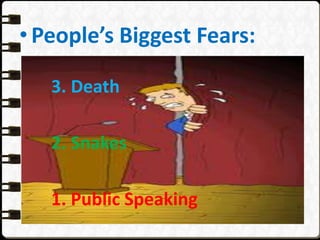
• People’s Biggest Fears:
3. Death
2. Snakes
1. Public Speaking
• About 10 percent of the population
loves public speaking.
• •Another 10 percent are genuinely
terrified.
• •The rest of us – roughly the 80 percent
in the middle –get butterflies, get
anxious, don’t sleep much the night
before – but we know that we’re going
to live through it. It’s just not much fun.
• Don’t worry, you are in very good
company! Many people – including
celebrities and politicians - admit to
being dead of having to speak in public
and suffer the same symptoms as you
might: tongue-tied, blushing, damp
hands, the shakes!
FAQ
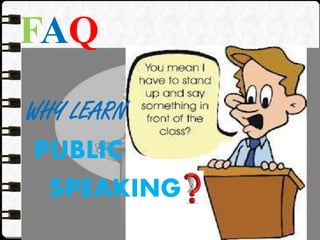
Why learn public speaking?
Can speeches really change the
world?
Can speeches really make a
difference in my life?
Can speeches really make a
difference on campus?
FAQ
WHY LEARN
PUBLIC
SPEAKING?
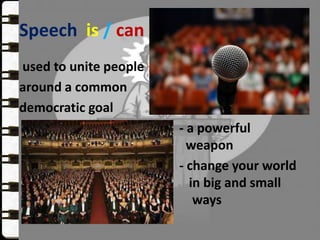
Speech is / can
used to unite people
around a common
democratic goal
- a powerful
weapon
- change your world
in big and small
ways
Rhetoric . . .
- term from ancient Greek for the
study of how words can persuade
an audience.
“Let’s have less
rhetoric and more
action.”
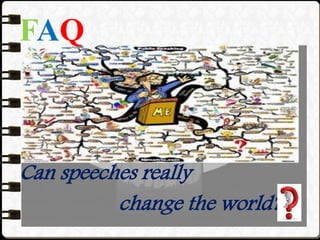
FAQ
Can speeches really
change the world?
The Power of Public Speaking to
Change the World
• Need the power of words to speak a better
existence.
• Speak with clarity and conviction and need
to listen and be attentive to other people’s
viewpoints.
• Speech should not only motivate us to
make a community but speak in a way that
generates cooperation and insight and that
avoids division and narrow-mindedness.
FAQ
Can speeches really make a
difference in my life?
Can speeches really make a
difference in my life?
• The speech you give as an answer to the job
interview question, “Tell us a little bit about
yourself”
• The speech you give when you pitch an
important business idea
• The speech you give when you are trying to
persuade people in your community to
change something in your community that
needs changing.
Can speeches really make a
difference in my life?
• The speech you give when you are convincing
a loved one to do something – enter a long-
term relationship, or to support you in an
important endeavor.
• The speeches you give to convince others to
vote for a candidate or a law that afftects
your everyday life.
FAQ
Can speeches really make a
difference on campus?
Can speeches really make a difference
on campus?
• Your ability to be clear and persuasive with
your peers could change the quality of
campus life for a huge number of students
“YOUR SPEECH IS WHAT MAKES YOUR
BELIEFS MATTER”
Speaking Connects You to Others:
Democracy in Everyday Life
• A good public speech, no matter what the
context, ultimately strives towards the best
ideals of democracy.
DEMOCRACY – a system of government where
people govern themselves, either through
direct votes on policy issues or by electing
officials who deliberate and make decisions on
their behalf.
#ESSENCE OF DEMOCRACY
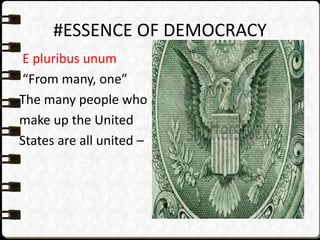
E pluribus unum
“From many, one”
The many people who
make up the United
States are all united –
FAQ
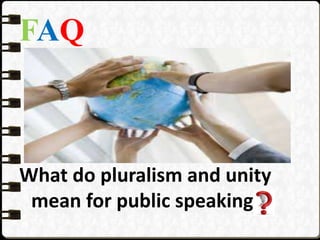
What do pluralism and unity
mean for public speaking?
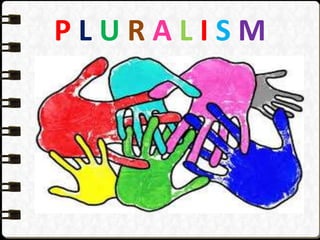
P L U R A L I S M
P L U R A L I S M
- means that our democracy is made up
of people who are different – different
backgrounds ( class, race, gender,
sexuality, religious orientation, and
geographical origins).
- It is more than just our different
backgrounds. There is also different in
democracy because we have different
ideas and beliefs.
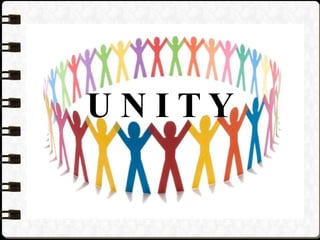
U N I T Y
U N I T Y
UNITY means the
differences are not
disabling:
We are all members of
the same national public
PUBLIC SPEAKING is about:
Unity of democracy
- respecting common
commitment
Pluralism of democracy
- preserves the important
differences that make each of
us who we are.
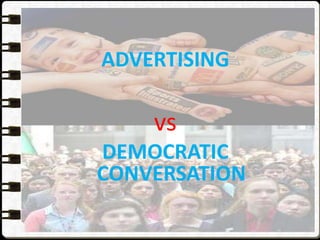
ADVERTISING
vs
DEMOCRATIC
CONVERSATION
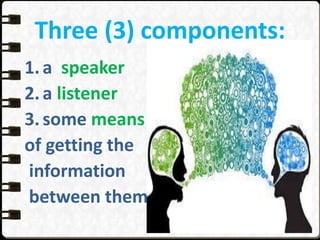
Three (3) components:
1.a speaker
2.a listener
3.some means
of getting the
information
between them
Rhetorical Situations
Make a list of the most common rhetorical
situations you engage in:
Who are the most common listeners?
Why?
Are these situations usually face-to-face
or electronic? Why?
Which ones are the easiest? Most
difficult? Why?
THE PUBLIC IN PUBLIC SPEAKING
ADAPTATION – adjusting a
topic, arguments, and
presentation to fit a particular
audience.
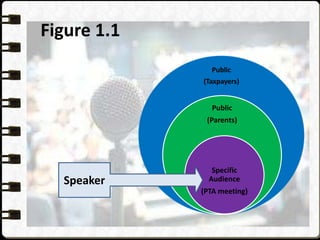
PUBLIC – a group of people
who share a common set of
concerns.
Figure 1.1
Public
(Taxpayers)
Public
(Parents)
Specific
Audience
(PTA meeting)
Speaker
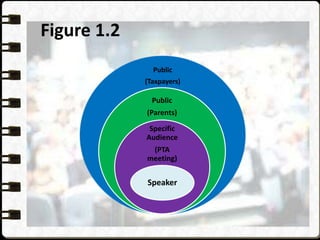
Figure 1.2
Public
(Taxpayers)
Public
(Parents)
Specific
Audience
(PTA
meeting)
Speaker
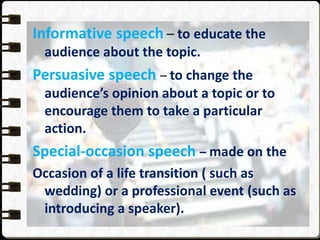
Informative speech – to educate the
audience about the topic.
Persuasive speech – to change the
audience’s opinion about a topic or to
encourage them to take a particular
action.
Special-occasion speech – made on the
Occasion of a life transition ( such as
wedding) or a professional event (such as
introducing a speaker).
S P E A K I N G is
about making choices
Choices– in public
speaking, these are about the
topic, information, and
arguments, organization, visual
aids and other supporting
materials, and type of DELIVERY (
act of making a speech to an
audience).
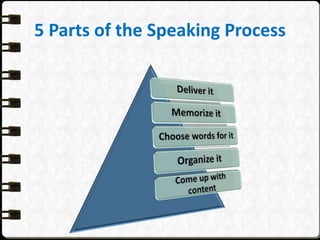
5 Parts of the Speaking Process
P R E P A R A T I O N
means planning the best way to
present your message so that the
audience will respond favorably:
audience’s interest, expectations
and predispositions
P R E P A R A T I O N
How will you prepare your speech?
What do you want to say?
What information and arguments will you
use to support your claims?
How will you organize the speech and move
from point to point?
What words, images, or technology will be
important to creating compelling
experience for the audience?
P E R F O R M A N C E
Performance or delivery is the part
of the process you think first.
How will you deliver or “perform”
your speech?
What tone, pace, and gestures will
you use?

Oralcom week 1-2

  • 3.
    Learning Goals:  Understandthe basics of the communication process Explain why public speaking is a powerful and worth mastering Identify the skills necessary to compose and deliver a speech Describe the choices at each stage of the speech creation process
  • 4.
    • People’s BiggestFears: 3. Death 2. Snakes 1. Public Speaking
  • 5.
    • About 10percent of the population loves public speaking. • •Another 10 percent are genuinely terrified. • •The rest of us – roughly the 80 percent in the middle –get butterflies, get anxious, don’t sleep much the night before – but we know that we’re going to live through it. It’s just not much fun.
  • 6.
    • Don’t worry,you are in very good company! Many people – including celebrities and politicians - admit to being dead of having to speak in public and suffer the same symptoms as you might: tongue-tied, blushing, damp hands, the shakes!
  • 8.
    FAQ Why learn publicspeaking? Can speeches really change the world? Can speeches really make a difference in my life? Can speeches really make a difference on campus?
  • 9.
  • 10.
    Speech is /can used to unite people around a common democratic goal - a powerful weapon - change your world in big and small ways
  • 11.
    Rhetoric . .. - term from ancient Greek for the study of how words can persuade an audience. “Let’s have less rhetoric and more action.”
  • 12.
  • 13.
    The Power ofPublic Speaking to Change the World • Need the power of words to speak a better existence. • Speak with clarity and conviction and need to listen and be attentive to other people’s viewpoints. • Speech should not only motivate us to make a community but speak in a way that generates cooperation and insight and that avoids division and narrow-mindedness.
  • 14.
    FAQ Can speeches reallymake a difference in my life?
  • 15.
    Can speeches reallymake a difference in my life? • The speech you give as an answer to the job interview question, “Tell us a little bit about yourself” • The speech you give when you pitch an important business idea • The speech you give when you are trying to persuade people in your community to change something in your community that needs changing.
  • 16.
    Can speeches reallymake a difference in my life? • The speech you give when you are convincing a loved one to do something – enter a long- term relationship, or to support you in an important endeavor. • The speeches you give to convince others to vote for a candidate or a law that afftects your everyday life.
  • 17.
    FAQ Can speeches reallymake a difference on campus?
  • 18.
    Can speeches reallymake a difference on campus? • Your ability to be clear and persuasive with your peers could change the quality of campus life for a huge number of students “YOUR SPEECH IS WHAT MAKES YOUR BELIEFS MATTER”
  • 19.
    Speaking Connects Youto Others: Democracy in Everyday Life • A good public speech, no matter what the context, ultimately strives towards the best ideals of democracy. DEMOCRACY – a system of government where people govern themselves, either through direct votes on policy issues or by electing officials who deliberate and make decisions on their behalf.
  • 20.
    #ESSENCE OF DEMOCRACY Epluribus unum “From many, one” The many people who make up the United States are all united –
  • 21.
    FAQ What do pluralismand unity mean for public speaking?
  • 22.
    P L UR A L I S M
  • 23.
    P L UR A L I S M - means that our democracy is made up of people who are different – different backgrounds ( class, race, gender, sexuality, religious orientation, and geographical origins). - It is more than just our different backgrounds. There is also different in democracy because we have different ideas and beliefs.
  • 24.
    U N IT Y
  • 25.
    U N IT Y UNITY means the differences are not disabling: We are all members of the same national public
  • 26.
    PUBLIC SPEAKING isabout: Unity of democracy - respecting common commitment Pluralism of democracy - preserves the important differences that make each of us who we are.
  • 27.
  • 29.
    Three (3) components: 1.aspeaker 2.a listener 3.some means of getting the information between them
  • 30.
    Rhetorical Situations Make alist of the most common rhetorical situations you engage in: Who are the most common listeners? Why? Are these situations usually face-to-face or electronic? Why? Which ones are the easiest? Most difficult? Why?
  • 31.
    THE PUBLIC INPUBLIC SPEAKING
  • 32.
    ADAPTATION – adjustinga topic, arguments, and presentation to fit a particular audience. PUBLIC – a group of people who share a common set of concerns.
  • 33.
  • 34.
  • 35.
    Informative speech –to educate the audience about the topic. Persuasive speech – to change the audience’s opinion about a topic or to encourage them to take a particular action. Special-occasion speech – made on the Occasion of a life transition ( such as wedding) or a professional event (such as introducing a speaker).
  • 36.
    S P EA K I N G is about making choices
  • 37.
    Choices– in public speaking,these are about the topic, information, and arguments, organization, visual aids and other supporting materials, and type of DELIVERY ( act of making a speech to an audience).
  • 38.
    5 Parts ofthe Speaking Process
  • 39.
    P R EP A R A T I O N means planning the best way to present your message so that the audience will respond favorably: audience’s interest, expectations and predispositions
  • 40.
    P R EP A R A T I O N How will you prepare your speech? What do you want to say? What information and arguments will you use to support your claims? How will you organize the speech and move from point to point? What words, images, or technology will be important to creating compelling experience for the audience?
  • 41.
    P E RF O R M A N C E Performance or delivery is the part of the process you think first. How will you deliver or “perform” your speech? What tone, pace, and gestures will you use?