Communicating With
    Others
TABLE OF CONENTS
•   Slide 3 - Communication
•   Slide 4 - Model of Communication
•   Slide 5 - Processes of Communicating
•   Slide 6 - Processes of Communicating
•   Slide 7 – Verbal and Nonverbal Communication
•   Slide 8 – 5 Types of Communication
•   Slide 9 – Communication Includes
•   Slide 10 – Truth vs. Validity
•   Slide 11 – Threshold
•   Slide 12 – Facts
Communication
• It occurs when one person
  transfers an idea to another
  person.
• The activity of transporting
  information
• A exchange of giving news or
  information
• Effective conversing or
  expressing with others
MODEL OF
COMMUNICATION
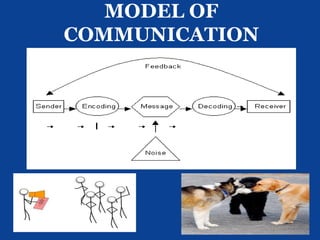
• Sender- primary responsibility for the
  success or failure of the communication
  act
• Encoding- translating ideas into symbols
• Message- travels over the channels,
  symbols you use become the message
• Channel- is where the message passes
  The channels are our senses sight, sound
  touch, taste and smell.
•Decoding- based on your personal
background, education ,and exercise
you attach meaning to the message

•Receiver-gets the message and
provides feedback

•Feedback- data that is sent to the
main source

•Noise-any interruption or change in
the message
Verbal and Nonverbal
            Communication

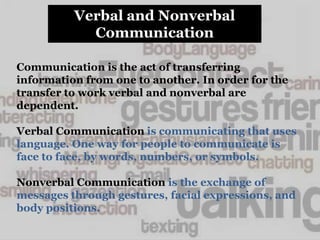
Communication is the act of transferring
information from one to another. In order for the
transfer to work verbal and nonverbal are
dependent.

Verbal Communication is communicating that uses
language. One way for people to communicate is
face to face, by words, numbers, or symbols.

Nonverbal Communication is the exchange of
messages through gestures, facial expressions, and
body positions.
Five Types of Communication
Intrapersonal-communicating with yourself
Interpersonal-with one other person 1 on 1
Small group- a pattern of communication is
established (3-11)
Public communication-everyone is in a place
where communication is being taken place
Mass communication- transmission of
messages passes using electronics to transmit for
example ( media and technology)
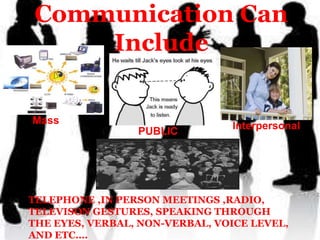
Communication Can
    Include


Mass                            Interpersonal
                 PUBLIC


TELEPHONE ,IN PERSON MEETINGS ,RADIO,
TELEVISON GESTURES, SPEAKING THROUGH
THE EYES, VERBAL, NON-VERBAL, VOICE LEVEL,
AND ETC….
Truth vs. Validity
Truth is a certainty of a belief that’s affirmative. A
fact that has been verified. For example a proven
statement.

Truth with capital “T” accurate situation of an
event and reasons understandings are incorrect.

Truth with small “t” what someone believes as the
only answer to a event.

Validity is a quality of being used to support an
argument. It is measured with certainty.
Critical thinkers use validity to make decisions,
not truth. Means they don’t rely on truth. It is
based on reasonable positions.
THRESHOLD
Threshold is validity on the continuous of certainty that
speaks out to describe before someone will commit to a
decision.
Most people have a threshold with respect that is to a
particular point of view.
• No two people have the same threshold on a same matter.
• A person’s threshold can change over the period.
• On some topics, people may not have thresholds that can
be reached.
• It varies depending on the matter.
• Threshold are effected by psychological and physiological
settings. Example, buying a expensive car your threshold
to buying a lowered priced when you bought the car for
$30,000.
•Threshold can be lowered. Creating the right kind of
argument can soften or lower the threshold of an
audience.
DID YOU KNOW FACTS


- No two people decode the same.
- Actions speak louder than words nonverbal
communication for example, you may not know it
but you are still communicating with someone by not
talking but by gestures or your face reactions.

Communicating with others slideshare

  • 1.
  • 2.
    TABLE OF CONENTS • Slide 3 - Communication • Slide 4 - Model of Communication • Slide 5 - Processes of Communicating • Slide 6 - Processes of Communicating • Slide 7 – Verbal and Nonverbal Communication • Slide 8 – 5 Types of Communication • Slide 9 – Communication Includes • Slide 10 – Truth vs. Validity • Slide 11 – Threshold • Slide 12 – Facts
  • 3.
    Communication • It occurswhen one person transfers an idea to another person. • The activity of transporting information • A exchange of giving news or information • Effective conversing or expressing with others
  • 4.
  • 5.
    • Sender- primaryresponsibility for the success or failure of the communication act • Encoding- translating ideas into symbols • Message- travels over the channels, symbols you use become the message • Channel- is where the message passes The channels are our senses sight, sound touch, taste and smell.
  • 6.
    •Decoding- based onyour personal background, education ,and exercise you attach meaning to the message •Receiver-gets the message and provides feedback •Feedback- data that is sent to the main source •Noise-any interruption or change in the message
  • 7.
    Verbal and Nonverbal Communication Communication is the act of transferring information from one to another. In order for the transfer to work verbal and nonverbal are dependent. Verbal Communication is communicating that uses language. One way for people to communicate is face to face, by words, numbers, or symbols. Nonverbal Communication is the exchange of messages through gestures, facial expressions, and body positions.
  • 8.
    Five Types ofCommunication Intrapersonal-communicating with yourself Interpersonal-with one other person 1 on 1 Small group- a pattern of communication is established (3-11) Public communication-everyone is in a place where communication is being taken place Mass communication- transmission of messages passes using electronics to transmit for example ( media and technology)
  • 9.
    Communication Can Include Mass Interpersonal PUBLIC TELEPHONE ,IN PERSON MEETINGS ,RADIO, TELEVISON GESTURES, SPEAKING THROUGH THE EYES, VERBAL, NON-VERBAL, VOICE LEVEL, AND ETC….
  • 10.
    Truth vs. Validity Truthis a certainty of a belief that’s affirmative. A fact that has been verified. For example a proven statement. Truth with capital “T” accurate situation of an event and reasons understandings are incorrect. Truth with small “t” what someone believes as the only answer to a event. Validity is a quality of being used to support an argument. It is measured with certainty. Critical thinkers use validity to make decisions, not truth. Means they don’t rely on truth. It is based on reasonable positions.
  • 11.
    THRESHOLD Threshold is validityon the continuous of certainty that speaks out to describe before someone will commit to a decision. Most people have a threshold with respect that is to a particular point of view. • No two people have the same threshold on a same matter. • A person’s threshold can change over the period. • On some topics, people may not have thresholds that can be reached. • It varies depending on the matter. • Threshold are effected by psychological and physiological settings. Example, buying a expensive car your threshold to buying a lowered priced when you bought the car for $30,000. •Threshold can be lowered. Creating the right kind of argument can soften or lower the threshold of an audience.
  • 12.
    DID YOU KNOWFACTS - No two people decode the same. - Actions speak louder than words nonverbal communication for example, you may not know it but you are still communicating with someone by not talking but by gestures or your face reactions.