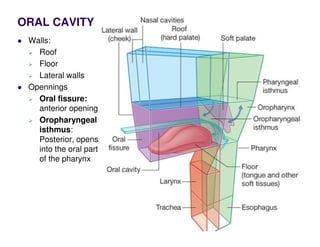
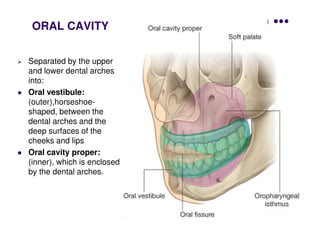
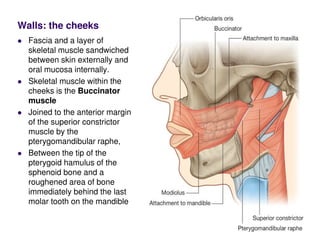
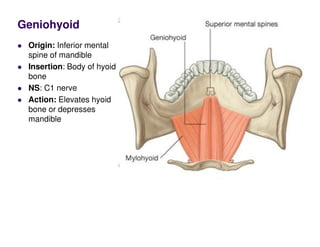
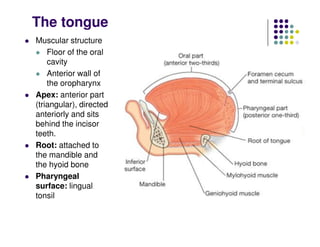
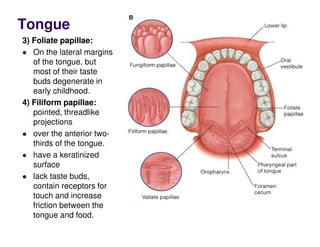
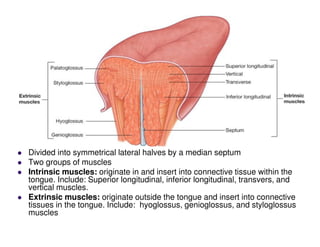
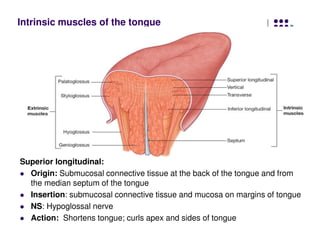
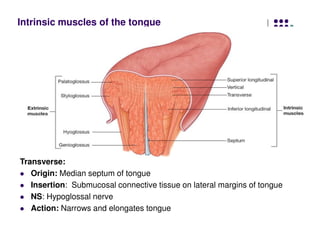
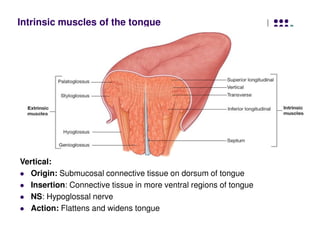
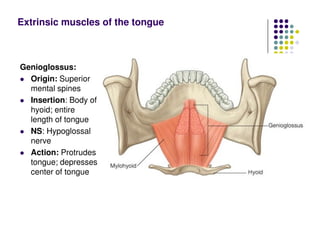
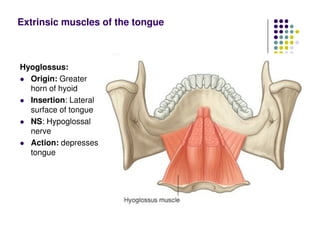
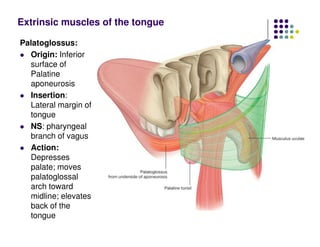
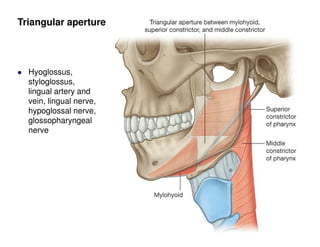
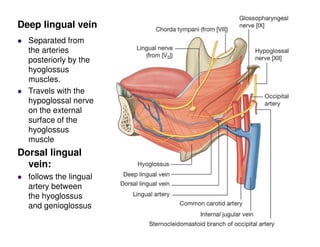
The oral cavity has walls, a roof, and floor that form its boundaries. It has two openings - the oral fissure anteriorly and the oropharyngeal isthmus posteriorly. The oral cavity is separated into the oral vestibule and oral cavity proper by the upper and lower dental arches. The walls include the cheeks, which are made of skin, muscle and oral mucosa. The floor is formed by the mylohyoid and geniohyoid muscles and the tongue. The tongue has various papillae and is composed of intrinsic and extrinsic muscles that aid in movement and functions like speech and swallowing. Blood vessels like the lingual artery supply the tongue.