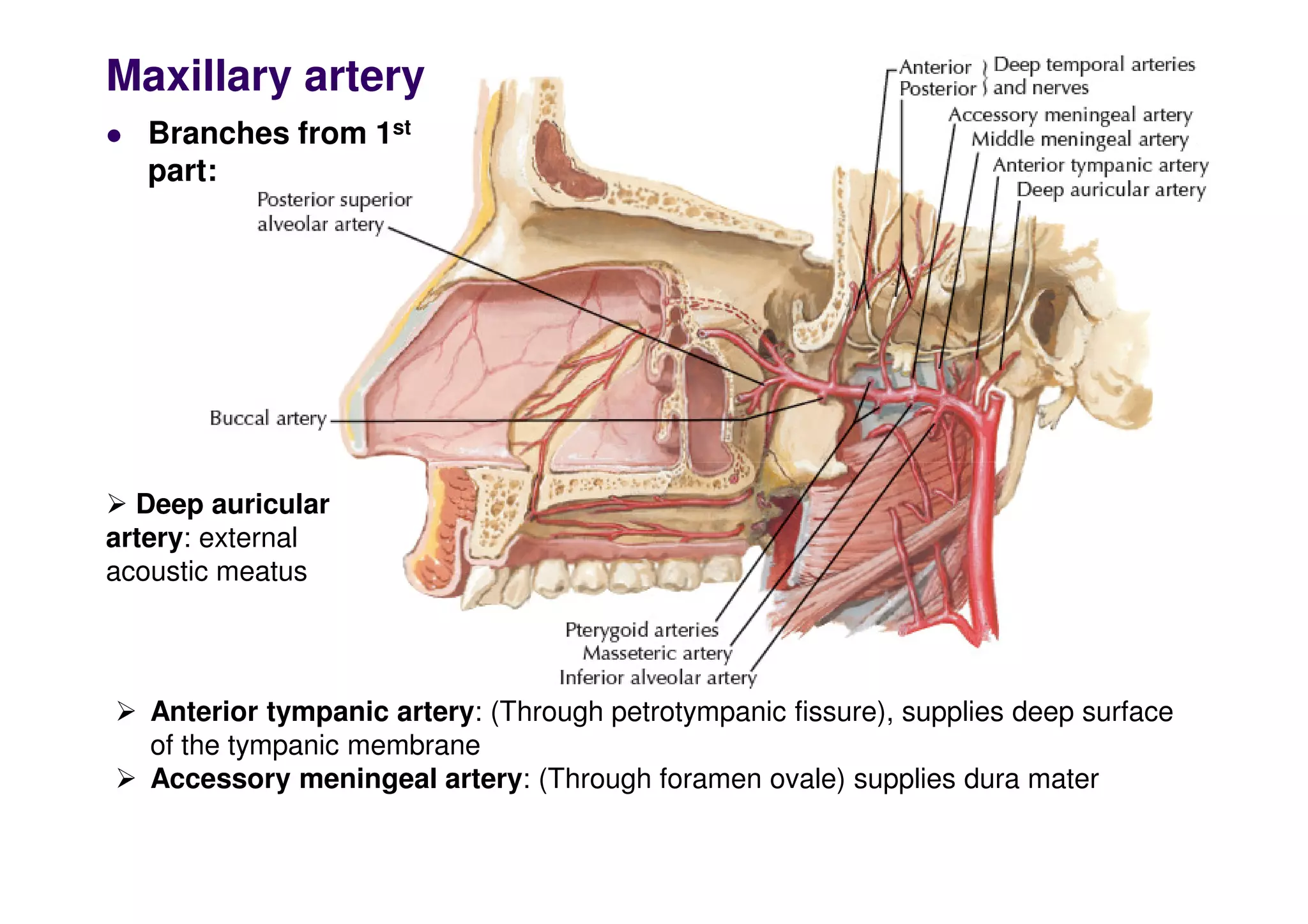
Branches from 1st
part:
Maxillary artery
 Anterior tympanic artery: (Through petrotympanic fissure), supplies deep surface
of the tympanic membrane
 Accessory meningeal artery: (Through foramen ovale) supplies dura mater
 Deep auricular
artery: external
acoustic meatus
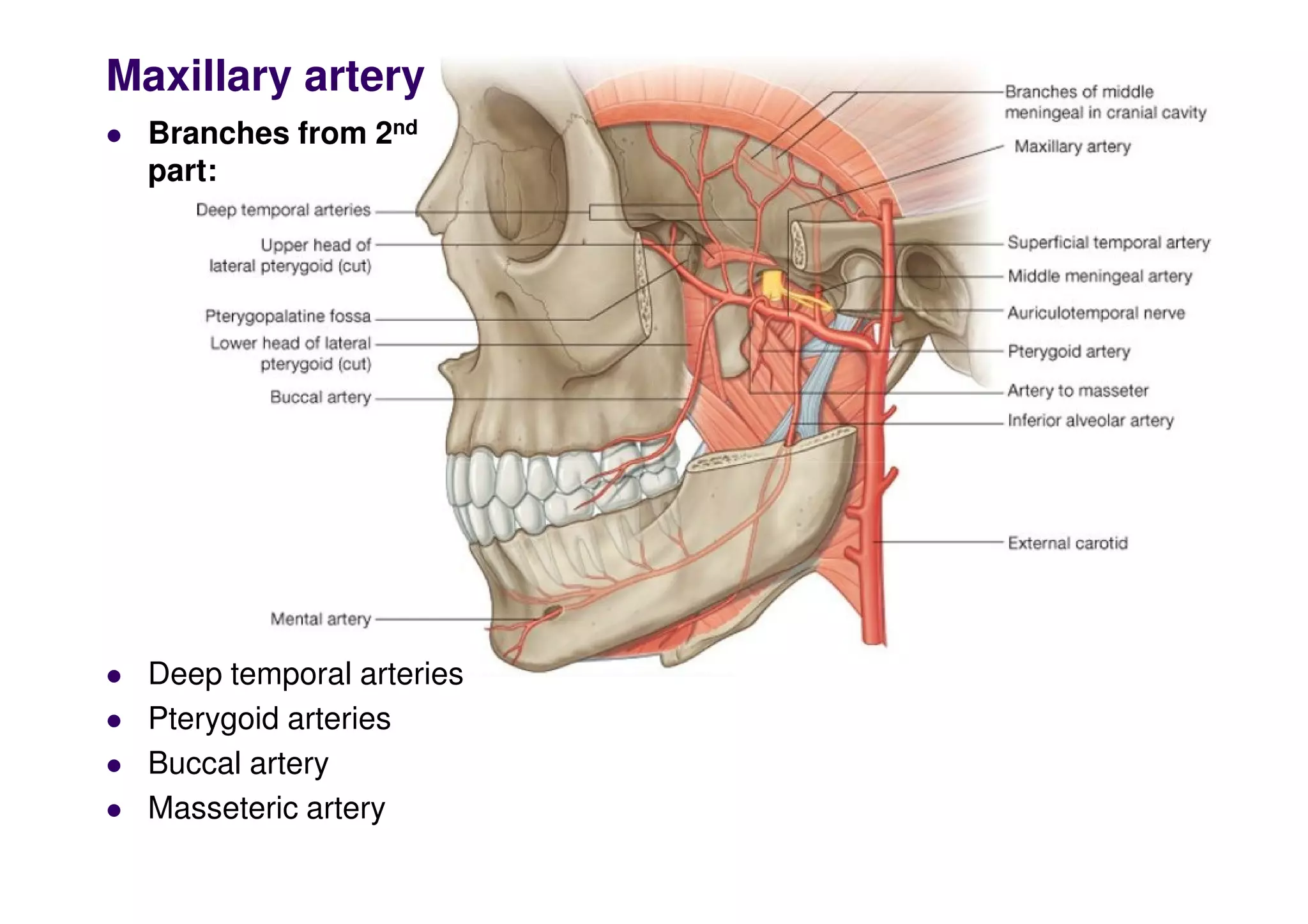
Maxillary artery
 Branches from 2nd
part:
 Deep temporal arteries
 Pterygoid arteries
 Buccal artery
 Masseteric artery
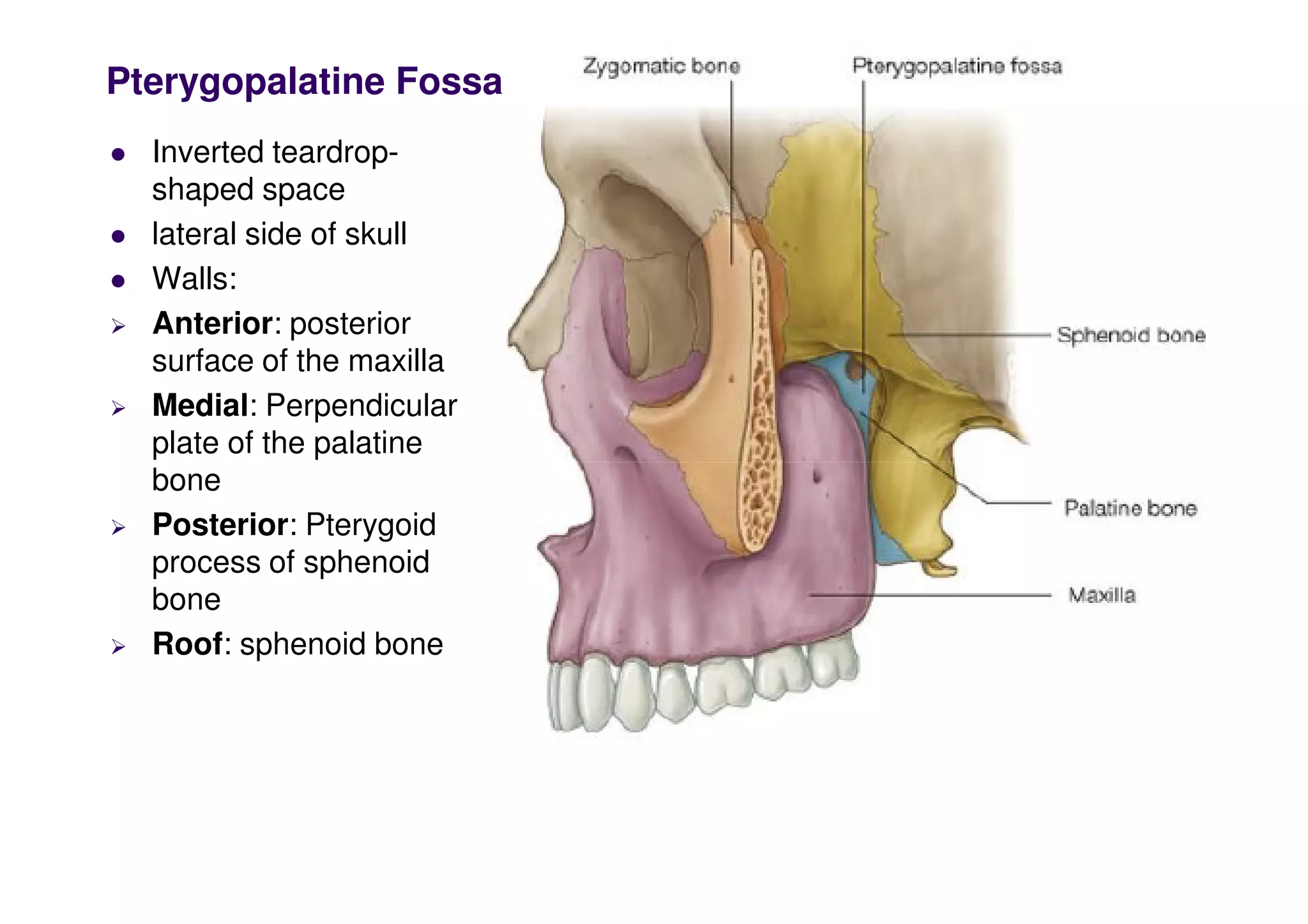
Pterygopalatine Fossa
 Inverted teardrop-
shaped space
 lateral side of skull
 Walls:
 Anterior: posterior
surface of the maxilla
 Medial: Perpendicular
plate of the palatine
bone
 Posterior: Pterygoid
process of sphenoid
bone
 Roof: sphenoid bone
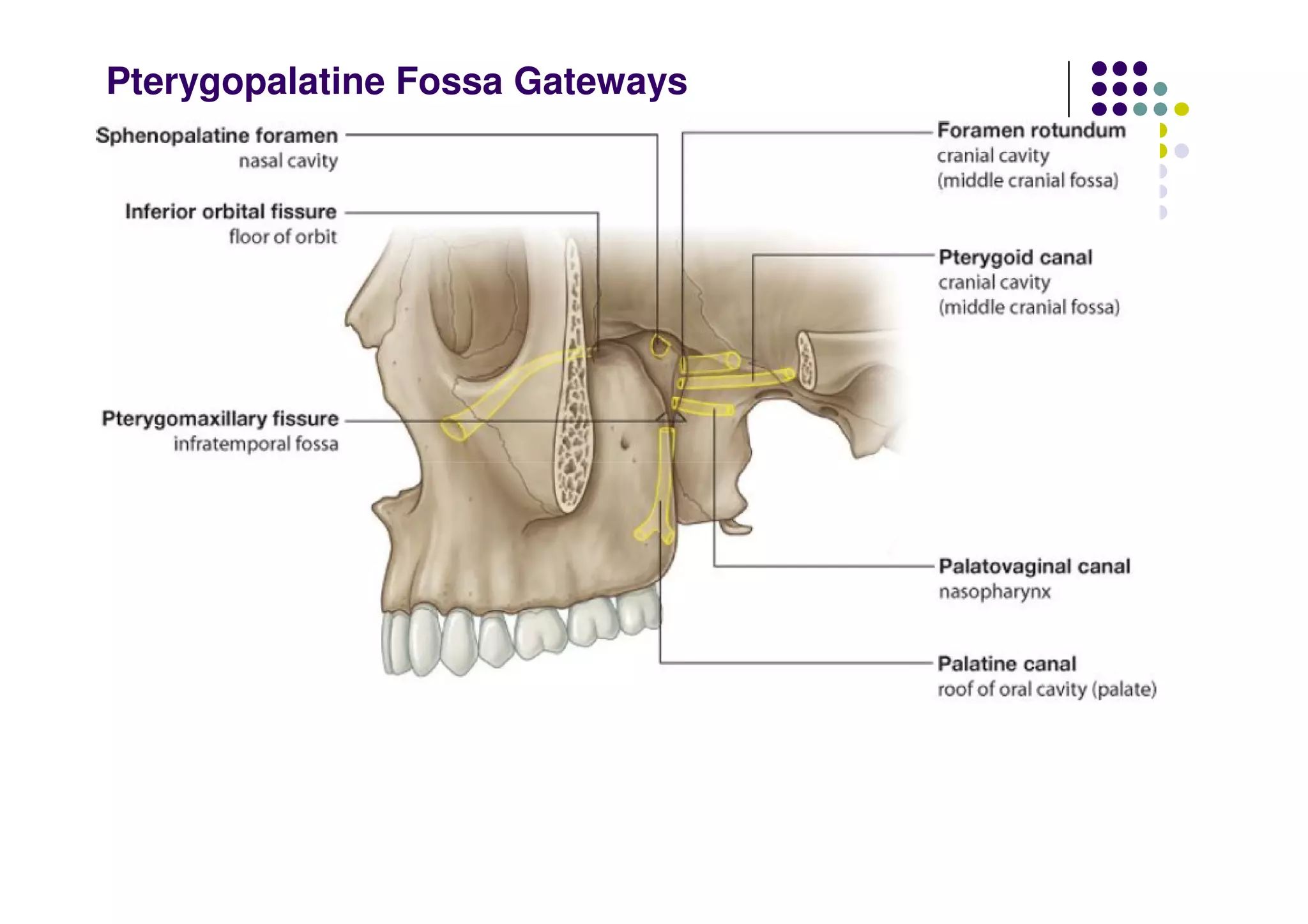
Pterygopalatine Fossa Gateways
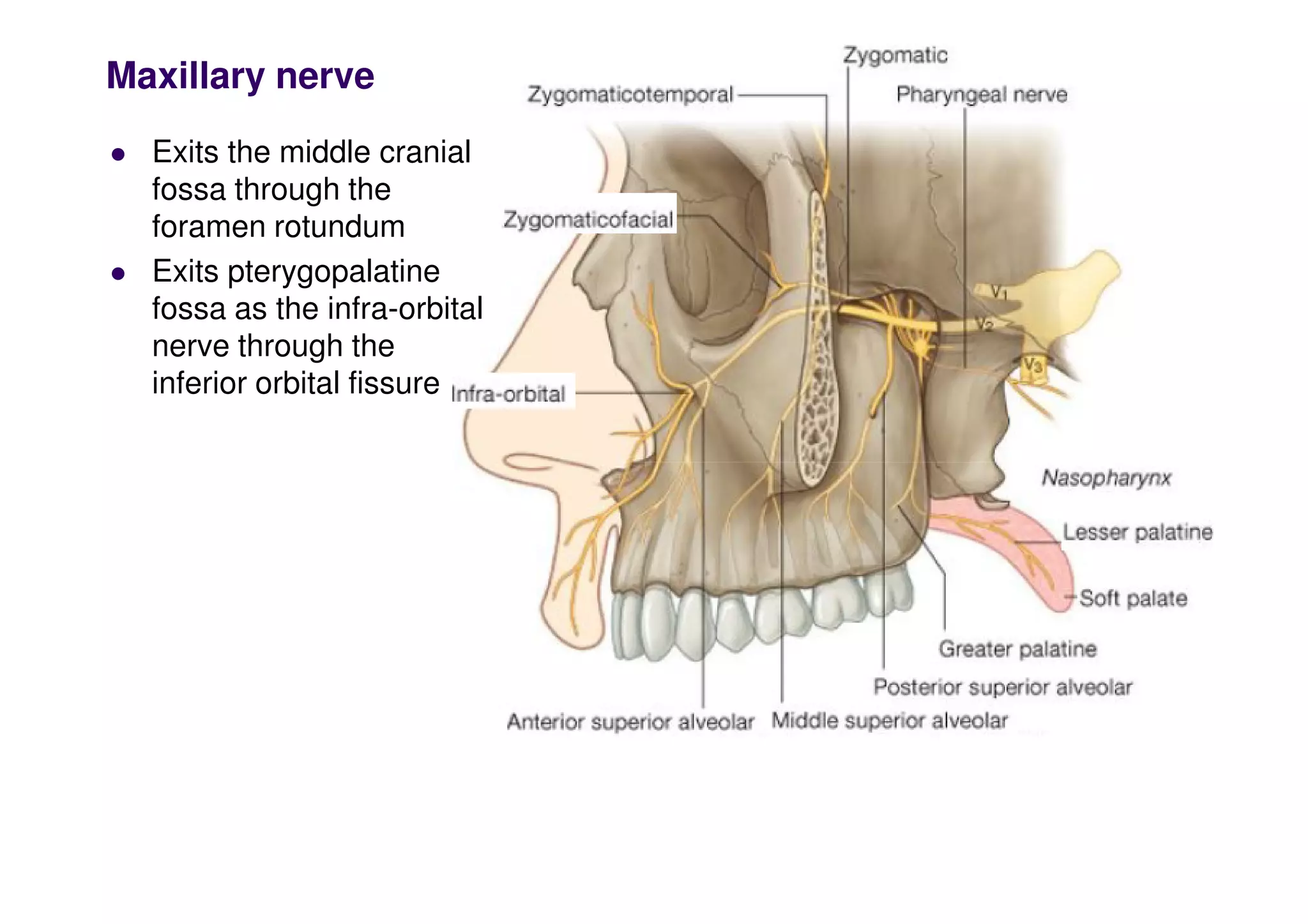
Maxillary nerve
 Exits the middle cranial
fossa through the
foramen rotundum
 Exits pterygopalatine
fossa as the infra-orbital
nerve through the
inferior orbital fissure
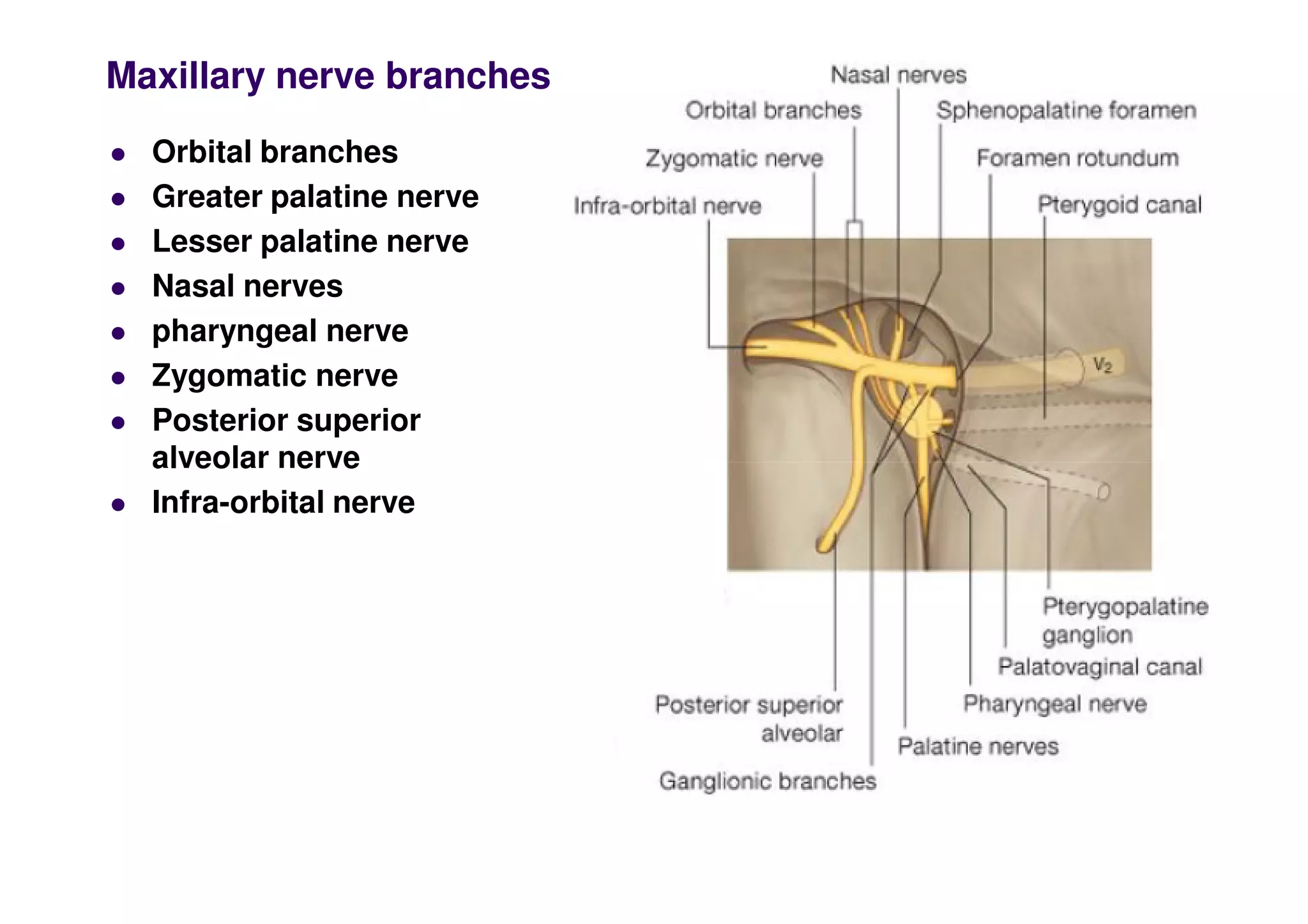
Maxillary nerve branches
 Orbital branches
 Greater palatine nerve
 Lesser palatine nerve
 Nasal nerves
 pharyngeal nerve
 Zygomatic nerve
 Posterior superior
alveolar nerve
alveolar nerve
 Infra-orbital nerve
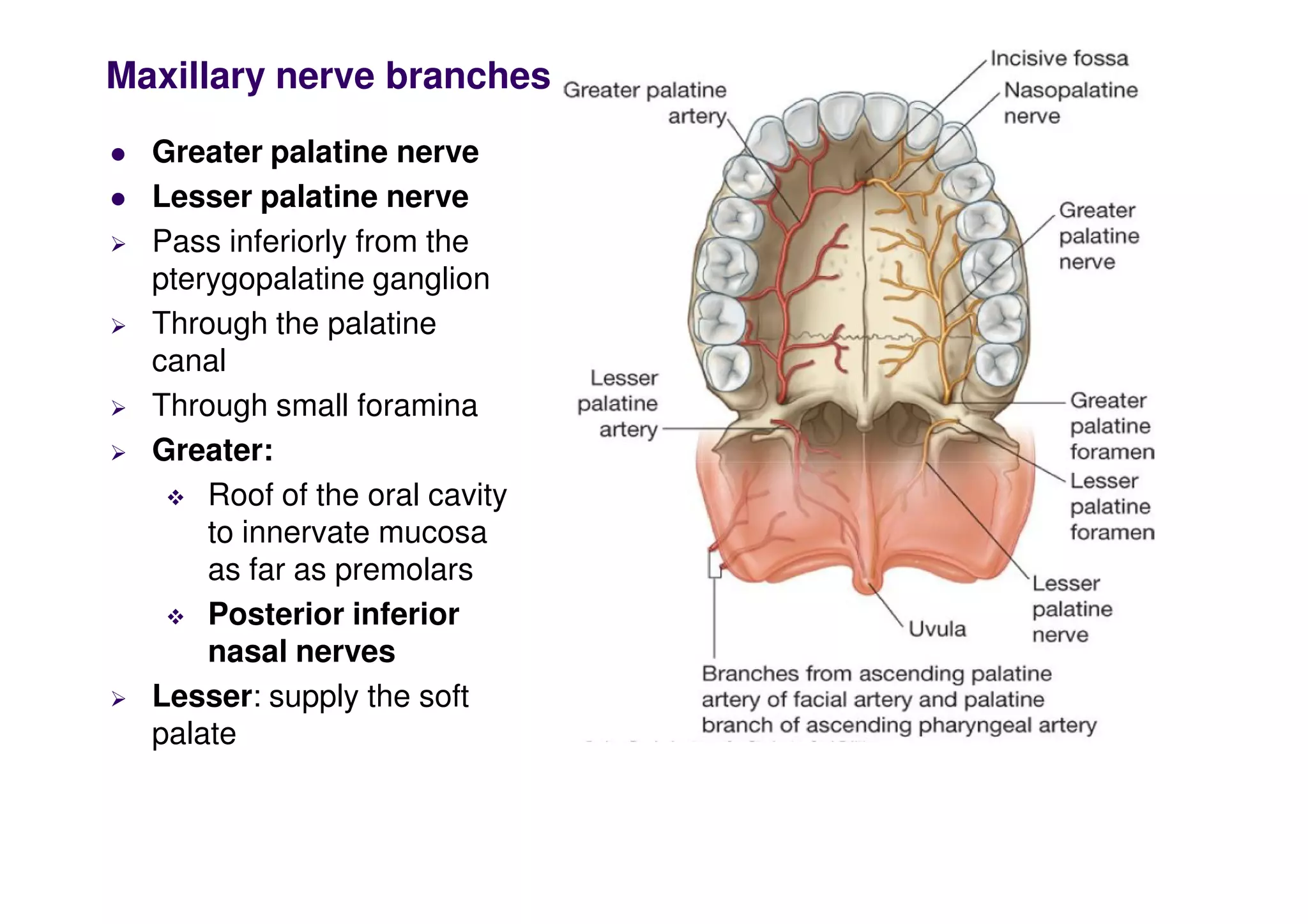
Maxillary nerve branches
 Greater palatine nerve
 Lesser palatine nerve
 Pass inferiorly from the
pterygopalatine ganglion
 Through the palatine
canal
 Through small foramina
 Greater:
 Greater:
 Roof of the oral cavity
to innervate mucosa
as far as premolars
 Posterior inferior
nasal nerves
 Lesser: supply the soft
palate
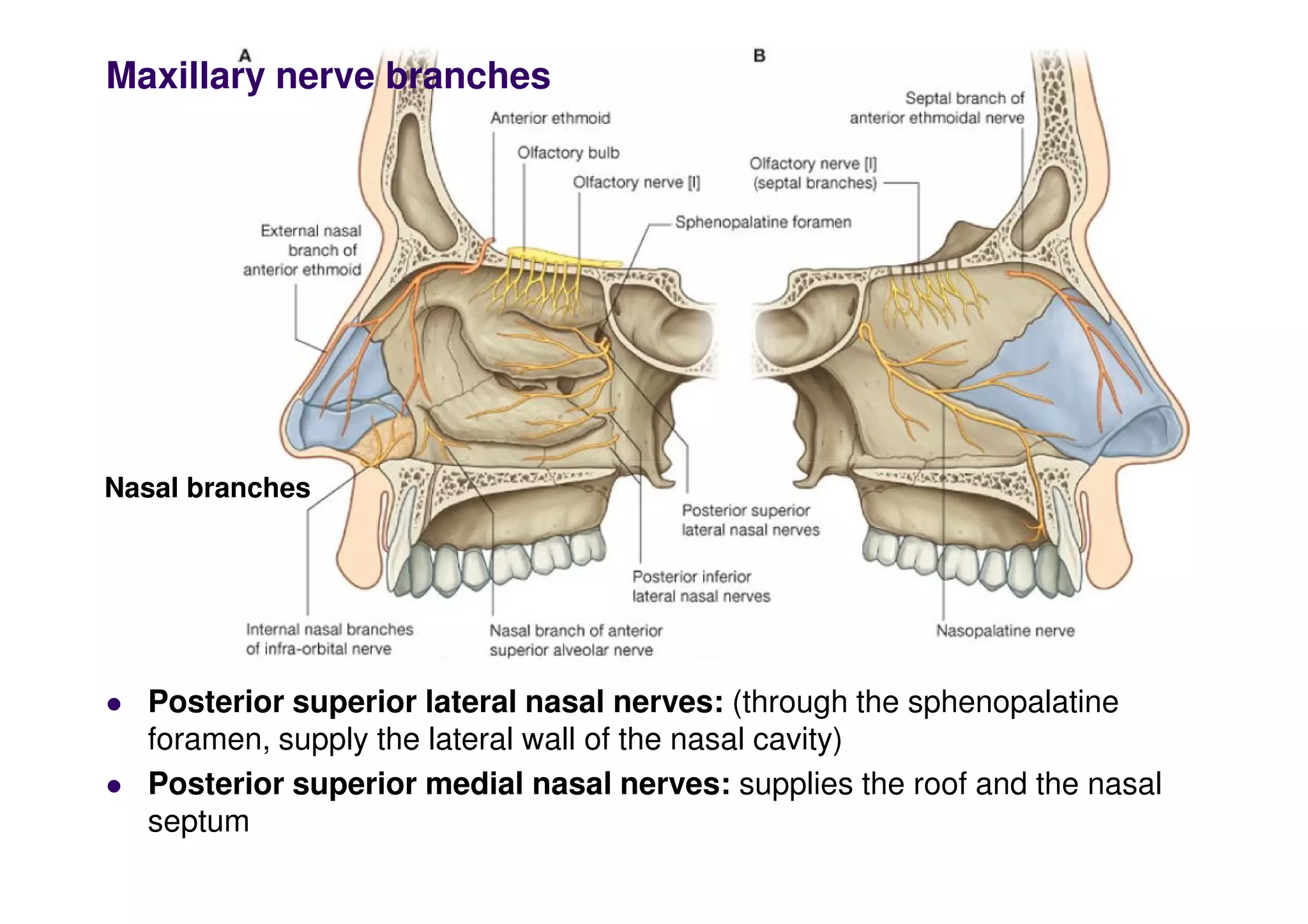
Maxillary nerve branches
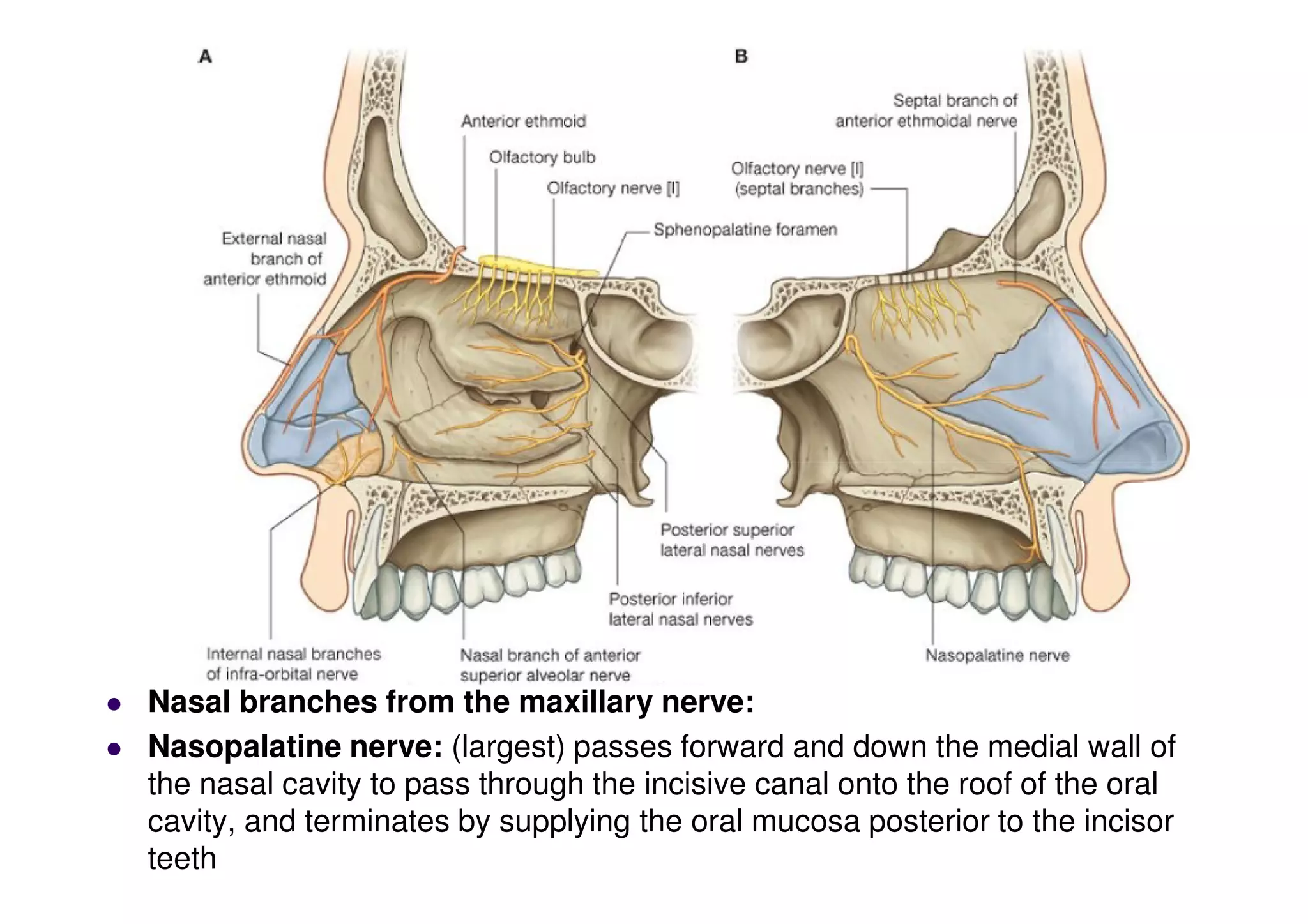
 Posterior superior lateral nasal nerves: (through the sphenopalatine
foramen, supply the lateral wall of the nasal cavity)
 Posterior superior medial nasal nerves: supplies the roof and the nasal
septum
Nasal branches
Nasal branches from the maxillary nerve:
 Nasopalatine nerve: (largest) passes forward and down the medial wall of
the nasal cavity to pass through the incisive canal onto the roof of the oral
cavity, and terminates by supplying the oral mucosa posterior to the incisor
teeth
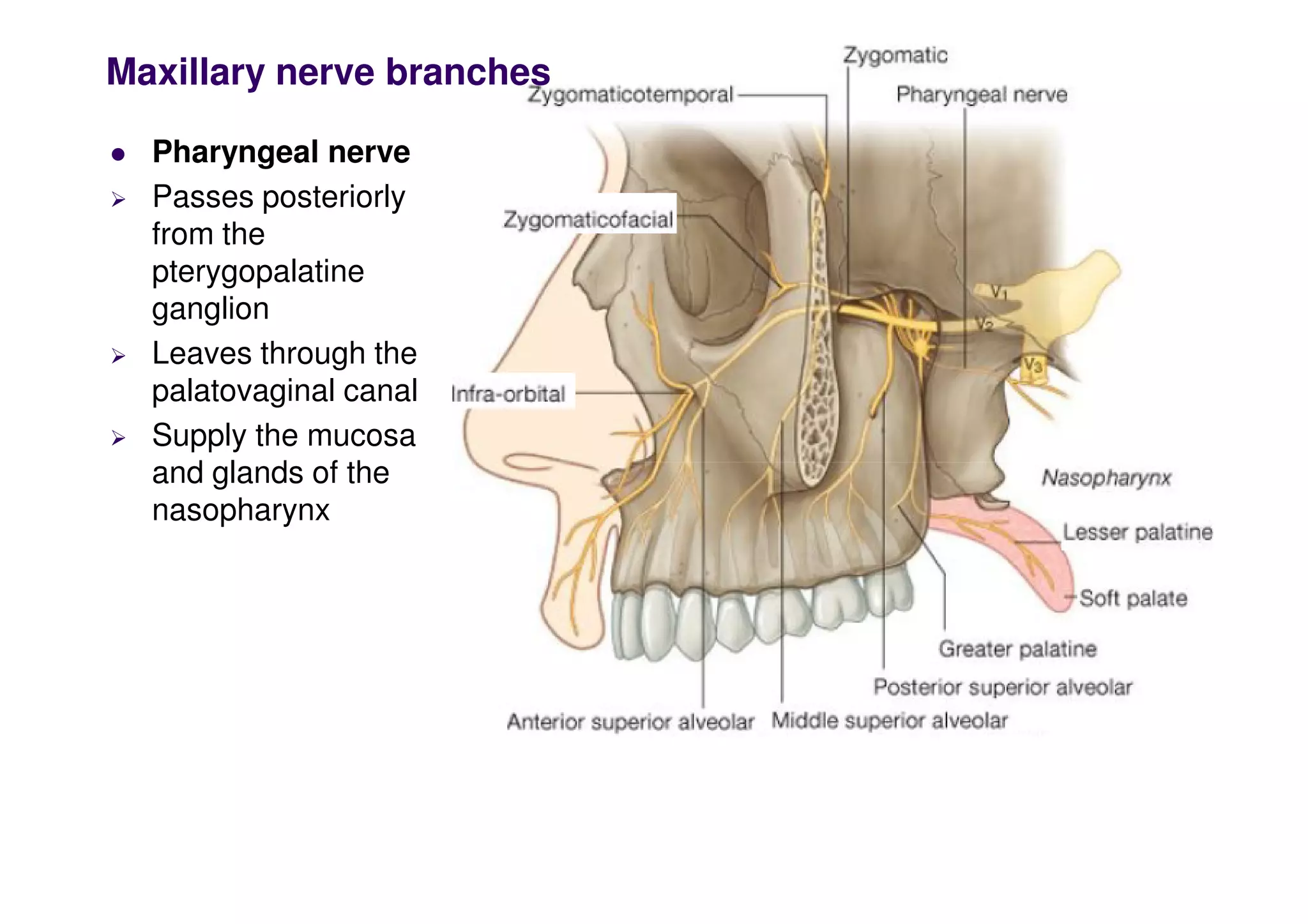
Maxillary nerve branches
 Pharyngeal nerve
 Passes posteriorly
from the
pterygopalatine
ganglion
 Leaves through the
palatovaginal canal
 Supply the mucosa
and glands of the
and glands of the
nasopharynx
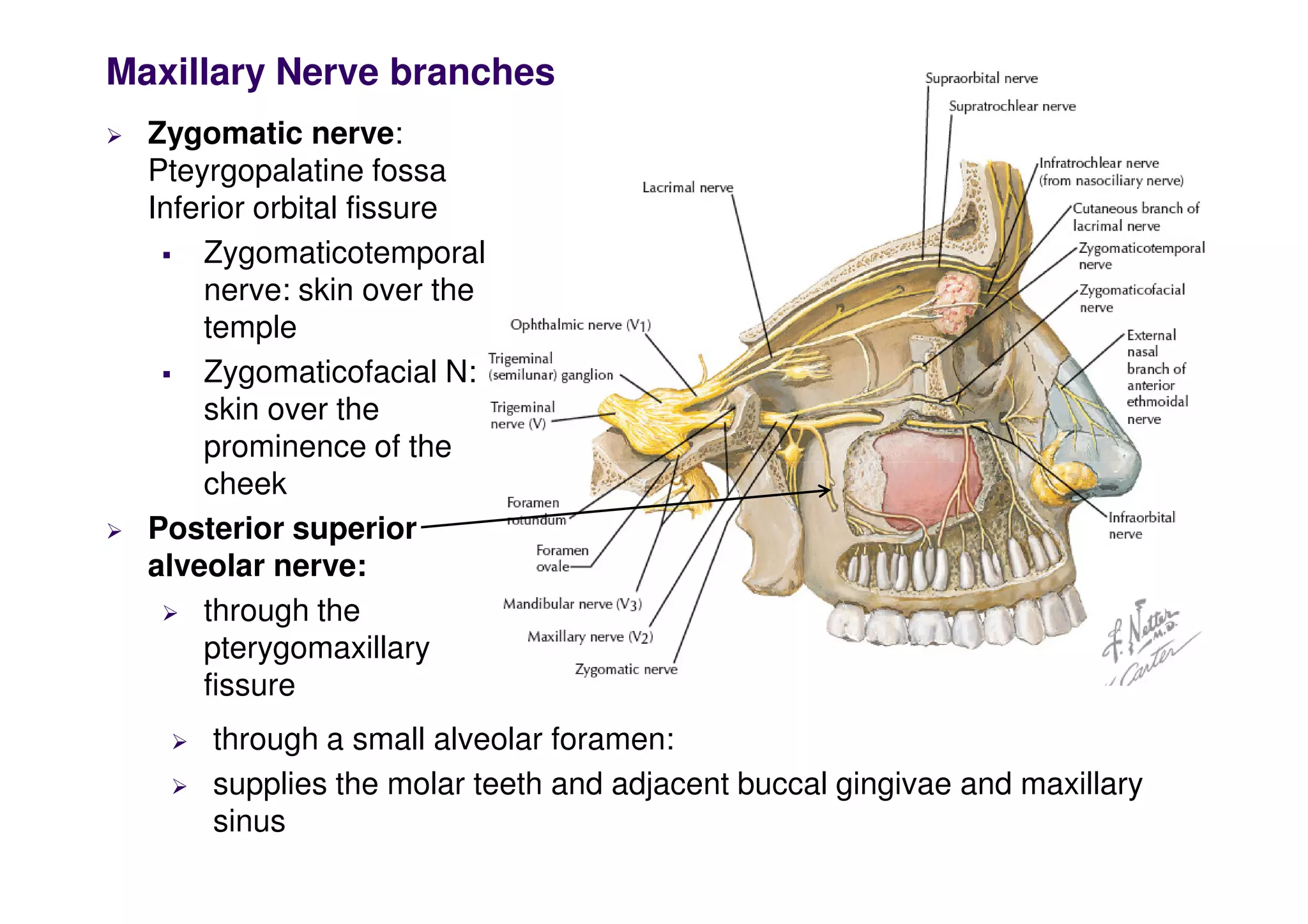
Maxillary Nerve branches
 Zygomatic nerve:
Pteyrgopalatine fossa
Inferior orbital fissure
 Zygomaticotemporal
nerve: skin over the
temple
 Zygomaticofacial N:
skin over the
prominence of the
prominence of the
cheek
 Posterior superior
alveolar nerve:
 through the
pterygomaxillary
fissure
 through a small alveolar foramen:
 supplies the molar teeth and adjacent buccal gingivae and maxillary
sinus
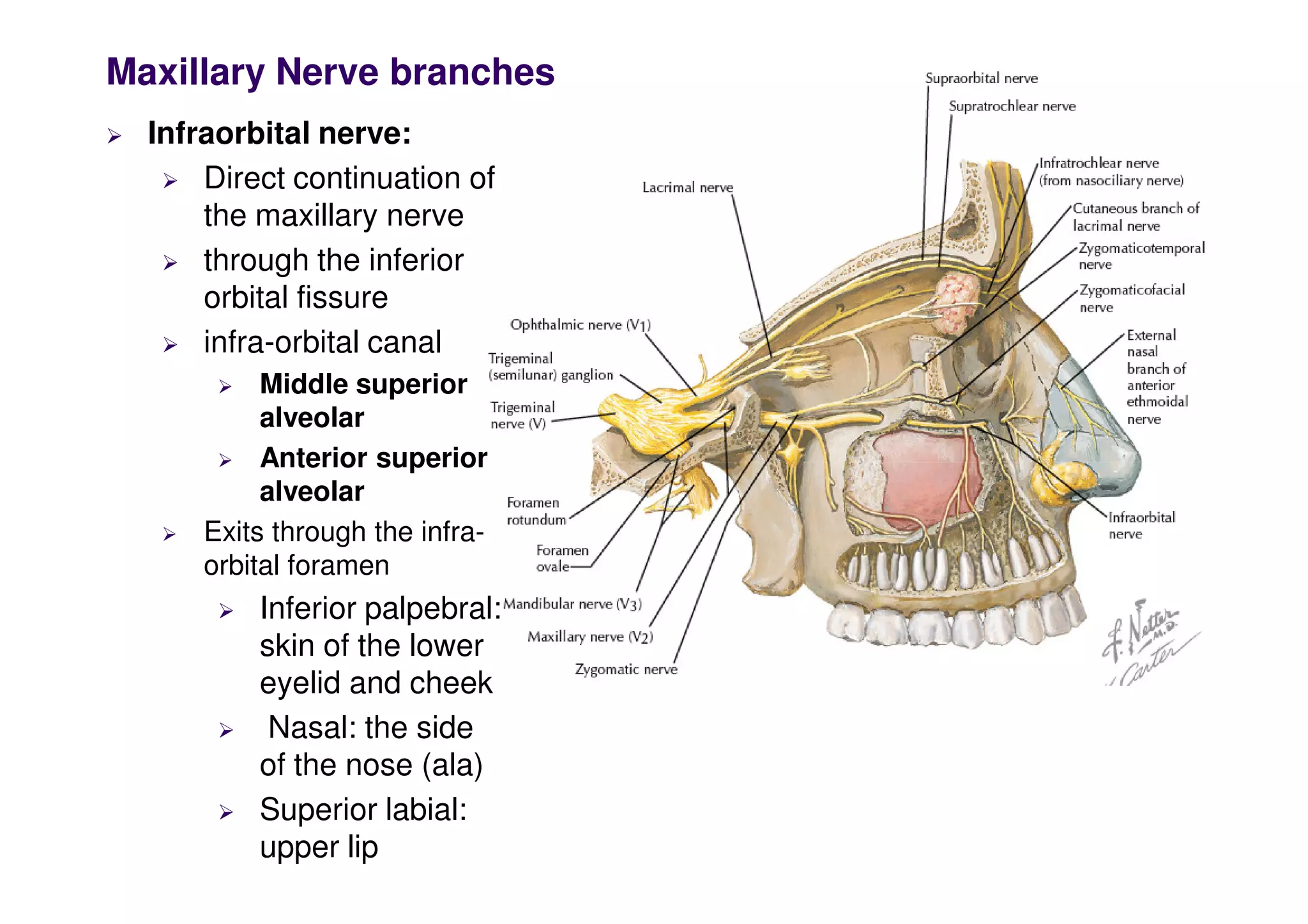
Maxillary Nerve branches
 Infraorbital nerve:
 Direct continuation of
the maxillary nerve
 through the inferior
orbital fissure
 infra-orbital canal
 Middle superior
alveolar
 Anterior superior
 Anterior superior
alveolar
 Exits through the infra-
orbital foramen
 Inferior palpebral:
skin of the lower
eyelid and cheek
 Nasal: the side
of the nose (ala)
 Superior labial:
upper lip
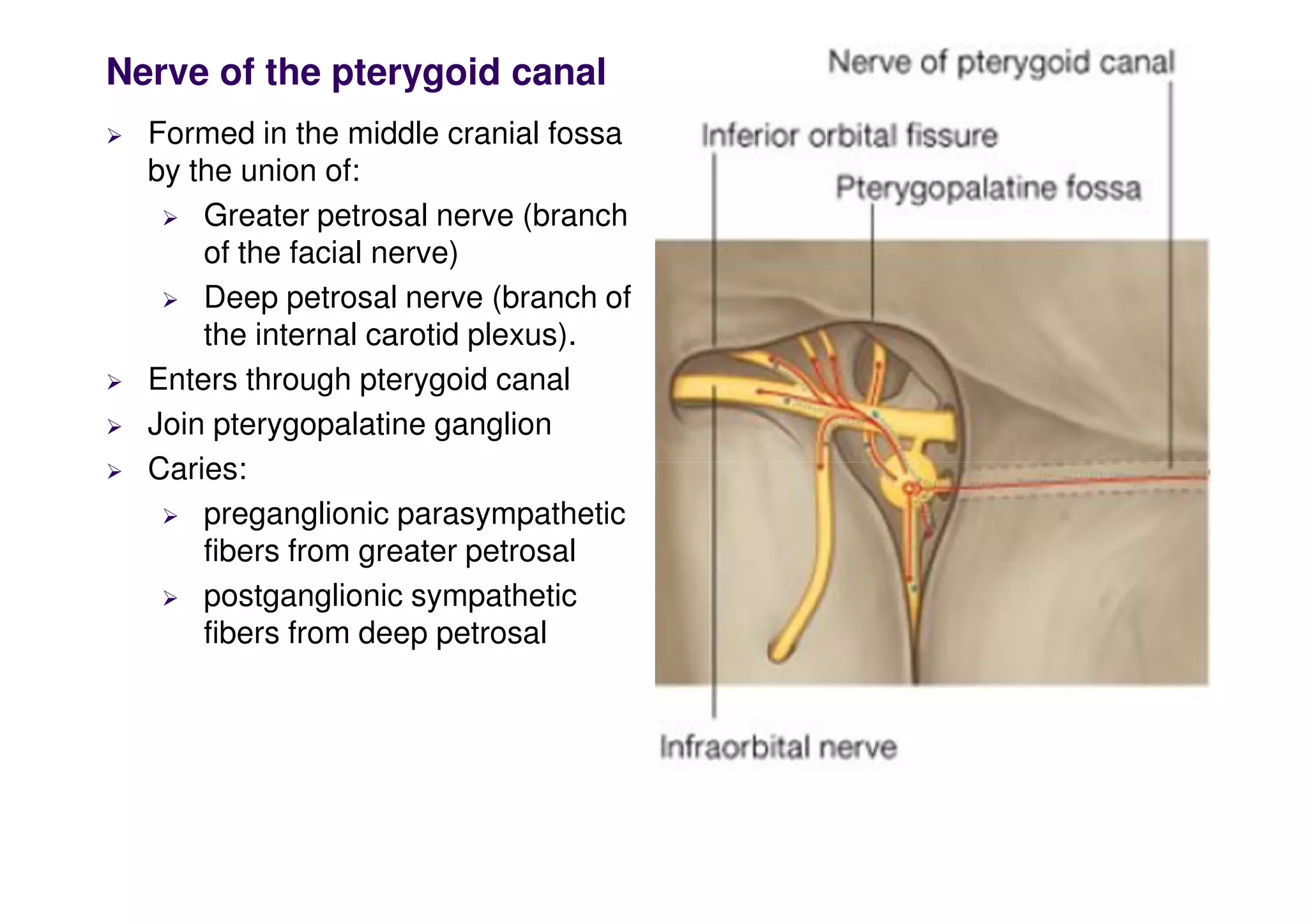
Nerve of the pterygoid canal
 Formed in the middle cranial fossa
by the union of:
 Greater petrosal nerve (branch
of the facial nerve)
 Deep petrosal nerve (branch of
the internal carotid plexus).
 Enters through pterygoid canal
 Join pterygopalatine ganglion
 Caries:
 Caries:
 preganglionic parasympathetic
fibers from greater petrosal
 postganglionic sympathetic
fibers from deep petrosal

temporal_and_infratemporal_3.pdf

  • 1.
    Branches from 1st part: Maxillaryartery Anterior tympanic artery: (Through petrotympanic fissure), supplies deep surface of the tympanic membrane Accessory meningeal artery: (Through foramen ovale) supplies dura mater Deep auricular artery: external acoustic meatus
  • 2.
    Maxillary artery Branchesfrom 2nd part: Deep temporal arteries Pterygoid arteries Buccal artery Masseteric artery
  • 3.
    Pterygopalatine Fossa Invertedteardrop- shaped space lateral side of skull Walls: Anterior: posterior surface of the maxilla Medial: Perpendicular plate of the palatine bone Posterior: Pterygoid process of sphenoid bone Roof: sphenoid bone
  • 4.
  • 5.
    Maxillary nerve Exitsthe middle cranial fossa through the foramen rotundum Exits pterygopalatine fossa as the infra-orbital nerve through the inferior orbital fissure
  • 6.
    Maxillary nerve branches Orbital branches Greater palatine nerve Lesser palatine nerve Nasal nerves pharyngeal nerve Zygomatic nerve Posterior superior alveolar nerve alveolar nerve Infra-orbital nerve
  • 7.
    Maxillary nerve branches Greater palatine nerve Lesser palatine nerve Pass inferiorly from the pterygopalatine ganglion Through the palatine canal Through small foramina Greater: Greater: Roof of the oral cavity to innervate mucosa as far as premolars Posterior inferior nasal nerves Lesser: supply the soft palate
  • 8.
    Maxillary nerve branches Posterior superior lateral nasal nerves: (through the sphenopalatine foramen, supply the lateral wall of the nasal cavity) Posterior superior medial nasal nerves: supplies the roof and the nasal septum Nasal branches
  • 9.
    Nasal branches fromthe maxillary nerve: Nasopalatine nerve: (largest) passes forward and down the medial wall of the nasal cavity to pass through the incisive canal onto the roof of the oral cavity, and terminates by supplying the oral mucosa posterior to the incisor teeth
  • 10.
    Maxillary nerve branches Pharyngeal nerve Passes posteriorly from the pterygopalatine ganglion Leaves through the palatovaginal canal Supply the mucosa and glands of the and glands of the nasopharynx
  • 11.
    Maxillary Nerve branches Zygomatic nerve: Pteyrgopalatine fossa Inferior orbital fissure Zygomaticotemporal nerve: skin over the temple Zygomaticofacial N: skin over the prominence of the prominence of the cheek Posterior superior alveolar nerve: through the pterygomaxillary fissure through a small alveolar foramen: supplies the molar teeth and adjacent buccal gingivae and maxillary sinus
  • 12.
    Maxillary Nerve branches Infraorbital nerve: Direct continuation of the maxillary nerve through the inferior orbital fissure infra-orbital canal Middle superior alveolar Anterior superior Anterior superior alveolar Exits through the infra- orbital foramen Inferior palpebral: skin of the lower eyelid and cheek Nasal: the side of the nose (ala) Superior labial: upper lip
  • 13.
    Nerve of thepterygoid canal Formed in the middle cranial fossa by the union of: Greater petrosal nerve (branch of the facial nerve) Deep petrosal nerve (branch of the internal carotid plexus). Enters through pterygoid canal Join pterygopalatine ganglion Caries: Caries: preganglionic parasympathetic fibers from greater petrosal postganglionic sympathetic fibers from deep petrosal