Optimising Your Business
David Sayce
Digital Marketing Consultant
www.dsayce.com
Papergecko.com
No Magic,
No Silver Bullet
(No rabbits out of hats)
• Plan it out
• Choose benefits over features
• Show, don’t tell
• Use local-targeted content
• Evaluate traffic sources
• Focus on the right audience
Optimising your website for search engines
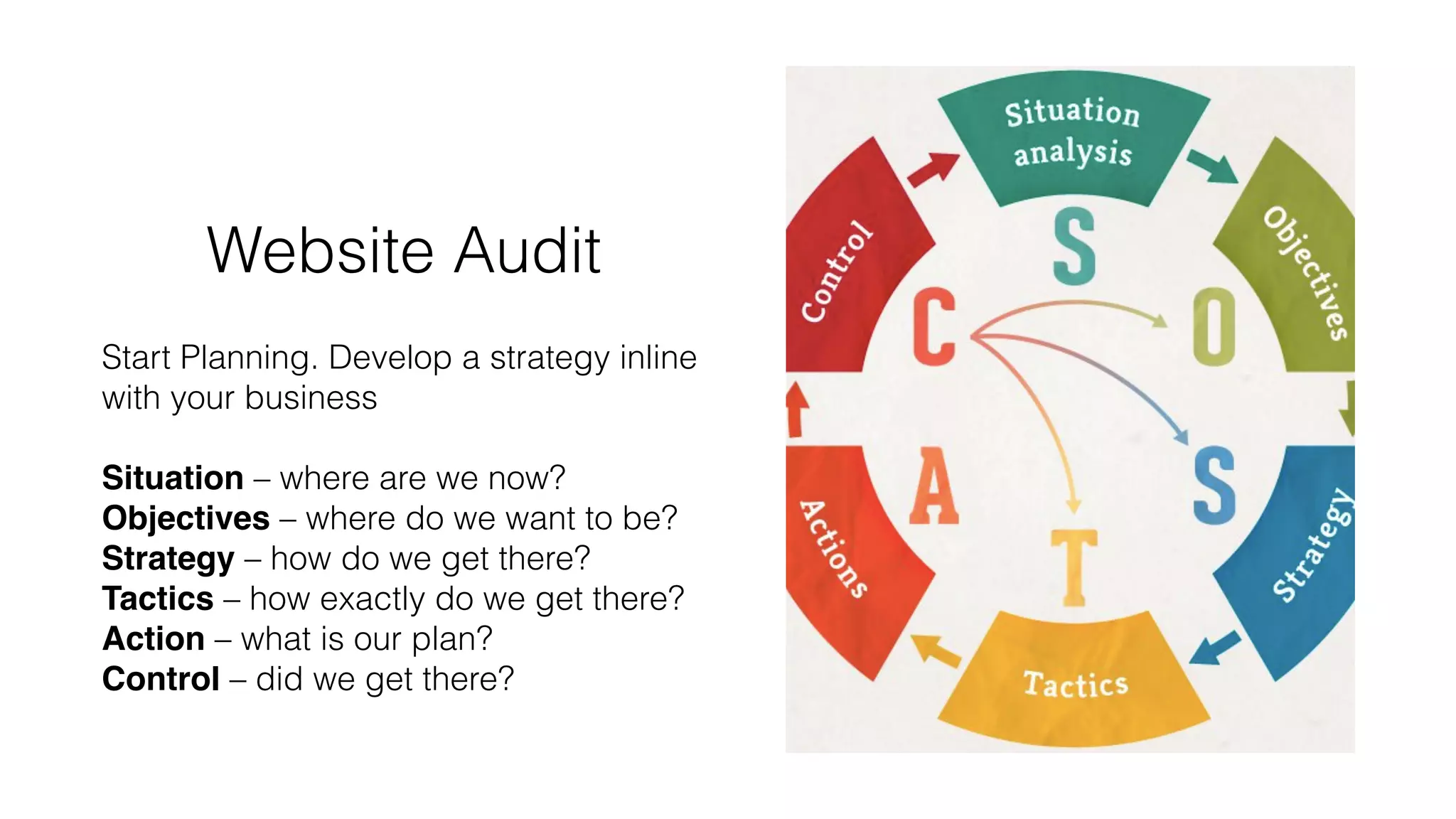
Website Audit
Start Planning. Develop a strategy inline
with your business
Situation – where are we now?
Objectives – where do we want to be?
Strategy – how do we get there?
Tactics – how exactly do we get there?
Action – what is our plan?
Control – did we get there?
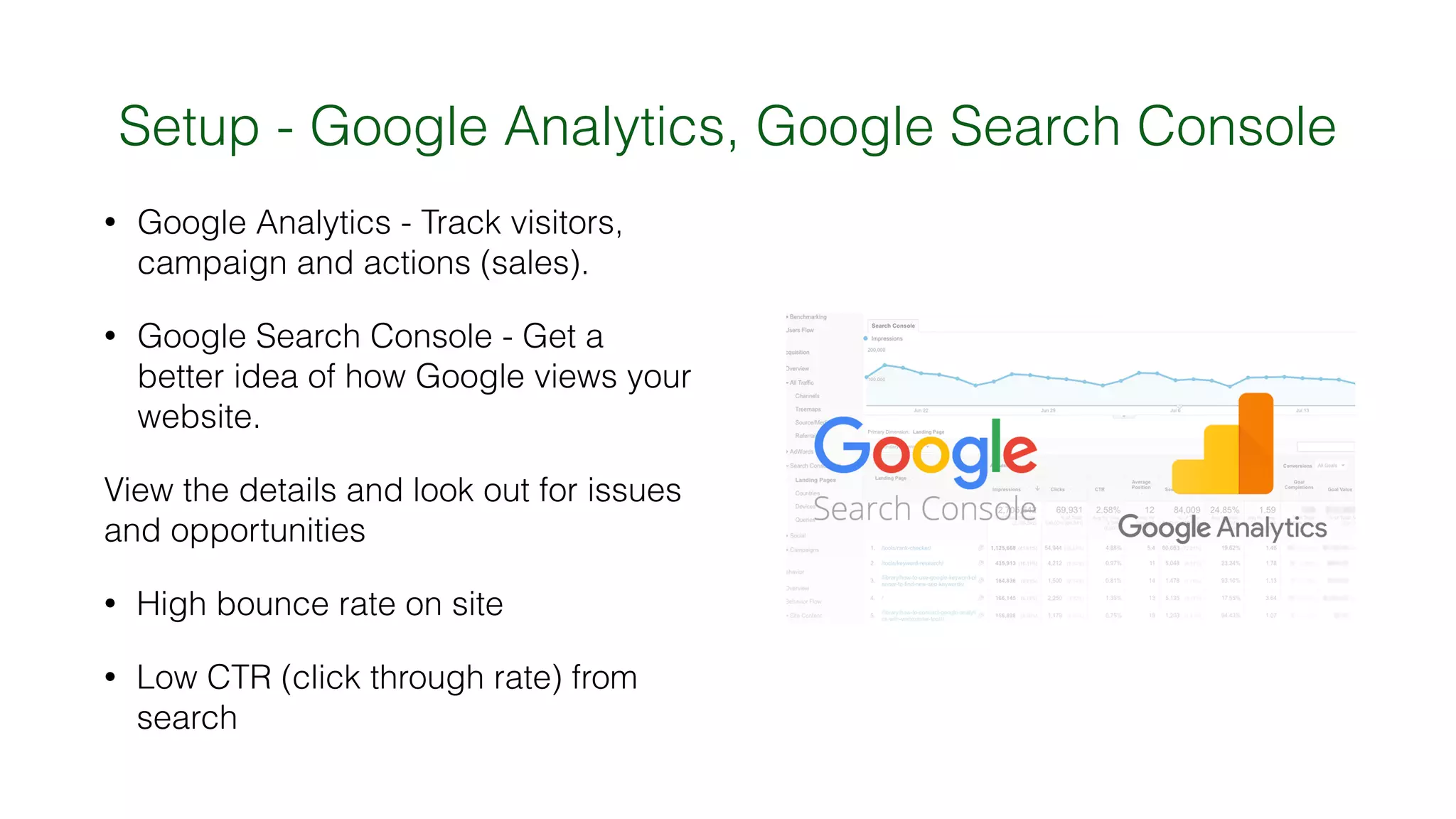
Setup - Google Analytics, Google Search Console
• Google Analytics - Track visitors,
campaign and actions (sales).
• Google Search Console - Get a
better idea of how Google views your
website.
View the details and look out for issues
and opportunities
• High bounce rate on site
• Low CTR (click through rate) from
search
Speed & Security
• Google uses any of over 200
attributes to rank your website
• Google has confirmed Speed &
Security
• Use HTTPS across your website
• Check your website: 

https://developers.google.com/
speed/pagespeed/insights/
Meta Titles & Descriptions
• The title element of a web page
should be an accurate and concise
description of a page's content
• The meta description tag is used to
summarise a web page's content.
Search engines use these to let
visitors know what a page is about
before they click on it.
Optimising for Humans v Robots
Follow the guidelines from Google, but
remember you are dealing with
people.
Emotion plays a big part
It’s not always about ranking in
Google!
Tools to use
• Google: Analytics, Search Console
• Crawling: Screaming Frog, Sitebulb
• SEMrush
• Moz
…and many more!
Making your website work for the customer 
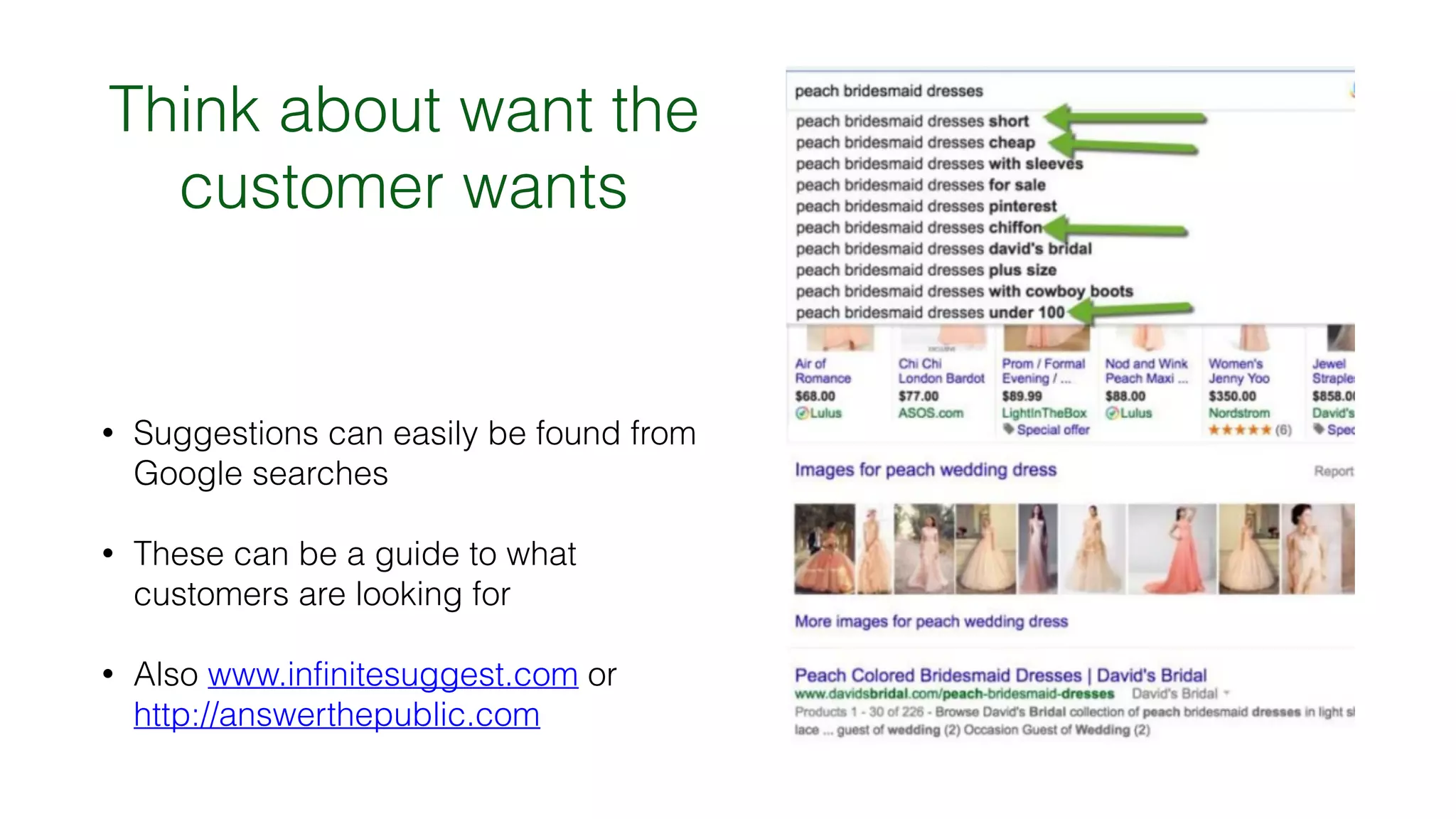
Think about want the
customer wants
• Suggestions can easily be found from
Google searches
• These can be a guide to what
customers are looking for
• Also www.infinitesuggest.com or

http://answerthepublic.com
Example
• Title tag: from a user perspective, very important to optimise. Title
tags communicate what the page is all about to users, and are a
ranking factor.
• URL: from a user perspective, not as important to optimise as title
tags and meta descriptions.
• Meta description: from a user perspective, very important to
optimise. While not a ranking factor, it’s your opportunity to sell
people on clicking your result over those above or below it. Get
good at telling short stories!
Improving visitors from Search
• Look at the search results, are they
compelling, emotional?
• Focus on smaller product / service
groups
• Test the journey as a user, minimise
your bias (The Mother Test)
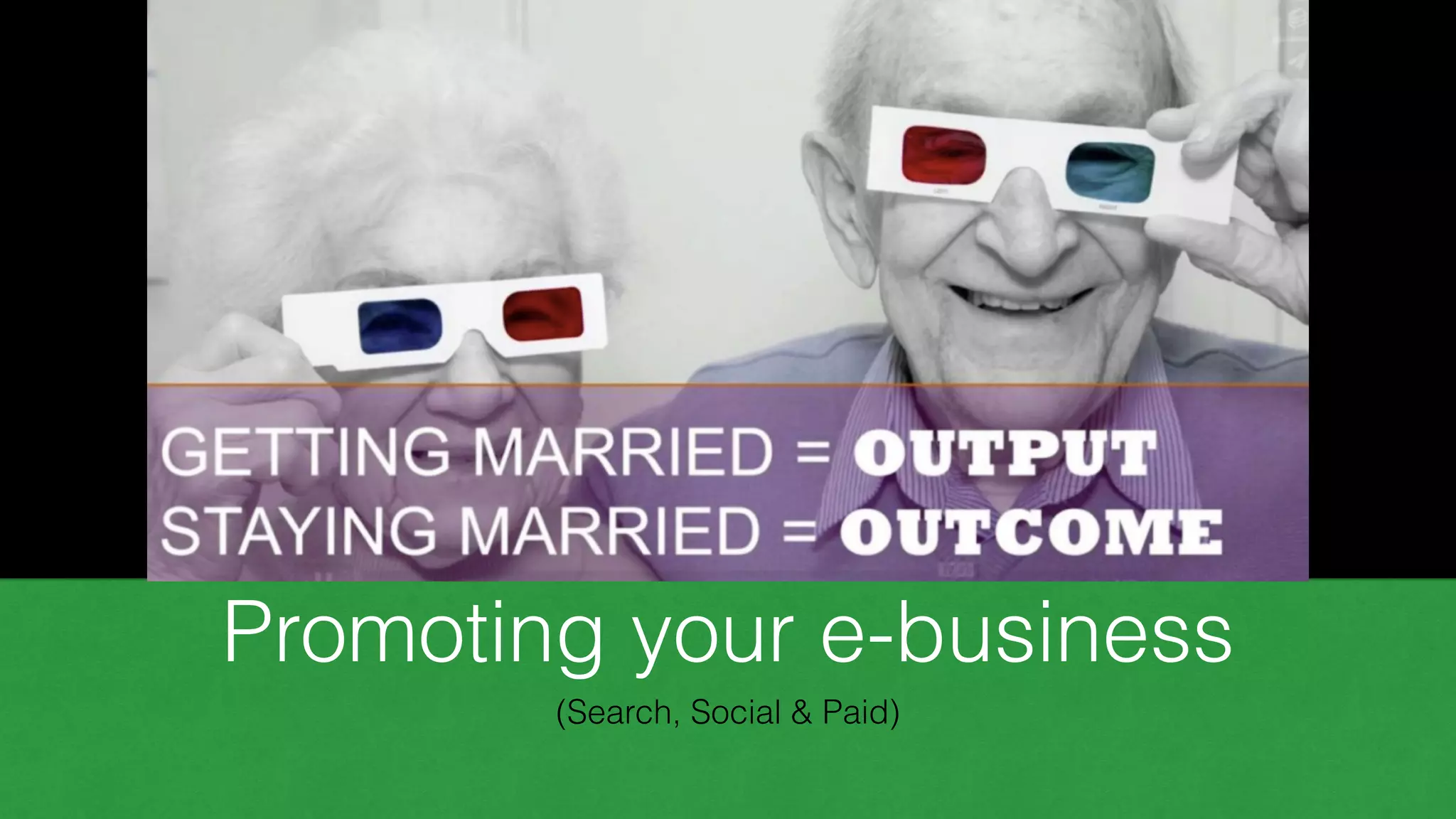
Promoting your e-business
(Search, Social & Paid)
Search
• Spend time working on your SEO
strategy
• SEO is a long term strategy
• The benefits can take 4-6+ months
to show, but a strong foundation in
search is priceless
• High ranking is only good if it is
directly improving the business
Social
• Selling can be done through social
• …but it is more about amplification
• Be where your audience is
• Be informative, educational,
entertaining
• be consistent and keep sales
messages to <20%
Paid
• Know your audience
• Make sure you already have a
strong footprint through organic
• Test, test, test. Run multiple small
campaigns to target your best
audience
• Know the system to get the most out
of it, be efficient
Email Marketing
• Don’t forget email marketing
• 20+ years old
• When it comes to purchases made
as a result of receiving a marketing
message, email has the highest
conversion rate (66%), when
compared to social, direct mail and
more. – DMA
Thank you!
Any Questions?
David Sayce
Digital Marketing Consultant
Contact me
07710 01 49 55
hello@dsayce.com
www.dsayce.com
@dsayce
https://uk.linkedin.com/in/dsayce

Optimising your business

  • 1.
    Optimising Your Business DavidSayce Digital Marketing Consultant www.dsayce.com Papergecko.com
  • 2.
    No Magic, No SilverBullet (No rabbits out of hats) • Plan it out • Choose benefits over features • Show, don’t tell • Use local-targeted content • Evaluate traffic sources • Focus on the right audience
  • 3.
    Optimising your websitefor search engines
  • 4.
    Website Audit Start Planning.Develop a strategy inline with your business Situation – where are we now? Objectives – where do we want to be? Strategy – how do we get there? Tactics – how exactly do we get there? Action – what is our plan? Control – did we get there?
  • 6.
    Setup - GoogleAnalytics, Google Search Console • Google Analytics - Track visitors, campaign and actions (sales). • Google Search Console - Get a better idea of how Google views your website. View the details and look out for issues and opportunities • High bounce rate on site • Low CTR (click through rate) from search
  • 7.
    Speed & Security •Google uses any of over 200 attributes to rank your website • Google has confirmed Speed & Security • Use HTTPS across your website • Check your website: 
 https://developers.google.com/ speed/pagespeed/insights/
  • 8.
    Meta Titles &Descriptions • The title element of a web page should be an accurate and concise description of a page's content • The meta description tag is used to summarise a web page's content. Search engines use these to let visitors know what a page is about before they click on it.
  • 9.
    Optimising for Humansv Robots Follow the guidelines from Google, but remember you are dealing with people. Emotion plays a big part It’s not always about ranking in Google!
  • 10.
    Tools to use •Google: Analytics, Search Console • Crawling: Screaming Frog, Sitebulb • SEMrush • Moz …and many more!
  • 11.
    Making your websitework for the customer 
  • 12.
    Think about wantthe customer wants • Suggestions can easily be found from Google searches • These can be a guide to what customers are looking for • Also www.infinitesuggest.com or
 http://answerthepublic.com
  • 13.
    Example • Title tag:from a user perspective, very important to optimise. Title tags communicate what the page is all about to users, and are a ranking factor. • URL: from a user perspective, not as important to optimise as title tags and meta descriptions. • Meta description: from a user perspective, very important to optimise. While not a ranking factor, it’s your opportunity to sell people on clicking your result over those above or below it. Get good at telling short stories!
  • 14.
    Improving visitors fromSearch • Look at the search results, are they compelling, emotional? • Focus on smaller product / service groups • Test the journey as a user, minimise your bias (The Mother Test)
  • 15.
  • 16.
    Search • Spend timeworking on your SEO strategy • SEO is a long term strategy • The benefits can take 4-6+ months to show, but a strong foundation in search is priceless • High ranking is only good if it is directly improving the business
  • 17.
    Social • Selling canbe done through social • …but it is more about amplification • Be where your audience is • Be informative, educational, entertaining • be consistent and keep sales messages to <20%
  • 18.
    Paid • Know youraudience • Make sure you already have a strong footprint through organic • Test, test, test. Run multiple small campaigns to target your best audience • Know the system to get the most out of it, be efficient
  • 19.
    Email Marketing • Don’tforget email marketing • 20+ years old • When it comes to purchases made as a result of receiving a marketing message, email has the highest conversion rate (66%), when compared to social, direct mail and more. – DMA
  • 20.
    Thank you! Any Questions? DavidSayce Digital Marketing Consultant Contact me 07710 01 49 55 hello@dsayce.com www.dsayce.com @dsayce https://uk.linkedin.com/in/dsayce