International Research Journal of Engineering and Technology (IRJET) e-ISSN: 2395 -0056
Volume: 04 Issue: 03 | Mar -2017 www.irjet.net p-ISSN: 2395-0072
© 2017, IRJET | Impact Factor value: 5.181 | ISO 9001:2008 Certified Journal | Page 2881
OPTIMAL RATE ALLOCATION AND LOST PACKET RETRANSMISSION IN
VIDEO STREAMING
P.Manothini1, E.Prateep2, S.Ramya3, S.Shwetha4.
1Assistant Professor, Department of Electronics and Communication Engineering, Jansons Institute Of Technology,
Coimbatore.
234 Students, Department of Electronics and Communication Engineering, Jansons Institute of Technology,
Karumathampatti, Coimbatore.
Abstract:We consider the problem of optimal rate
allocation and admission control for adaptive video
streaming sessions in wireless networks with user
dynamics. The major aim is to achieve an optimal
tradeoff between several key objectives: maximizing
the average rate utility per user, minimizing the
temporal rate variability, retransmission of lost
packets and maximizing the number of users
supported. We identify the structure of algorithms that
achieve asymptotically optimal performance in large-
capacity systems, and exploit the insight into this
structure to devise parsimonious and robust online
algorithms. Extensive simulation experiments
demonstrate that the proposed online algorithms
perform well, even in systems with relatively small
capacity.
KEYWORDS Network simulator2, VMware, fedora,
Linux, Video streaming ,QoS, VoD, Rate Adaption
1.INTRODUCTION
Video traffic is experiencing tremendous growth,
fueled by the proliferation of online video content
and the steady expansion in transmission
bandwidths. The amount of video traffic is forecast to
double annually in the next several years, and is
expected to account for the dominant share of wire
line as well as wireless Internet traffic soon[1].The
available hardware and technology for consumers
and service providers today allow for advanced
multimedia services over IP-based networks. Hence,
the popularity of video and audio streaming services
such as Video-on-Demand (VoD), advanced on-line
gaming, and video chatting and conferences are
increasing.[8] The demand for resource efficiency
and robustness in the network follows. The current
commercially available data transfer technology for
streaming media does not adjust well to the best
effort heterogeneous Internet architecture, and QoS
demands are impossible to guarantee.[3] A central
problem with this development is that the Internet
itself is extremely dynamic and unpredictable, while
the real-time services we want to lay on top of it
demand stable conditions for constant and
uninterrupted throughput.[7] It is not only the
demand for QoS that increases. As CPU and memory
get physically smaller and more efficient, the number
of applications that can be run on small devices
increases as well. With this new flora of handheld
computers, PDAs and cell phones, the wish for
terminal mobility and easy wireless access to the
same advanced services follows.[2] Now, while the
Internet itself has unpredictable throughput, the
wireless access networks add even more uncertainty
to the QoS-possibilities. Most Internet based VoD
services today rely on pre-compressed media,
allowing consumers to choose between two or three
different qualities to fit the given end to end
connection (figure 1).[9] For video conferencing and
live streaming, the media is compressed on the fly,
but the compression rate is normally controlled by an
offline codec. This means that the video codec has no
direct contact with the network and transport layer,
where the actual transmission status is found. Thus,
these approaches do not fully utilize the available
resources at any given time and they might not
provide the chosen quality during the entire session
because of sudden changes in the network load
somewhere along the path[6]. With an online codec
solution, the communicating parties of a multimedia
transfer could adopt to the network state at any given
time in the session. This is extra desirable for a
mobile terminal which has a constantly changing
radio coverage, or for a system that supports session-
mobility, allowing the user to change terminal
equipment without interrupting or restarting an
ongoing session. Figure the concept behind a solution
based on continuous network feedback upstream
from the client to the media server[4].
International Research Journal of Engineering and Technology (IRJET) e-ISSN: 2395 -0056
Volume: 04 Issue: 03 | Mar -2017 www.irjet.net p-ISSN: 2395-0072
© 2017, IRJET | Impact Factor value: 5.181 | ISO 9001:2008 Certified Journal | Page 2882
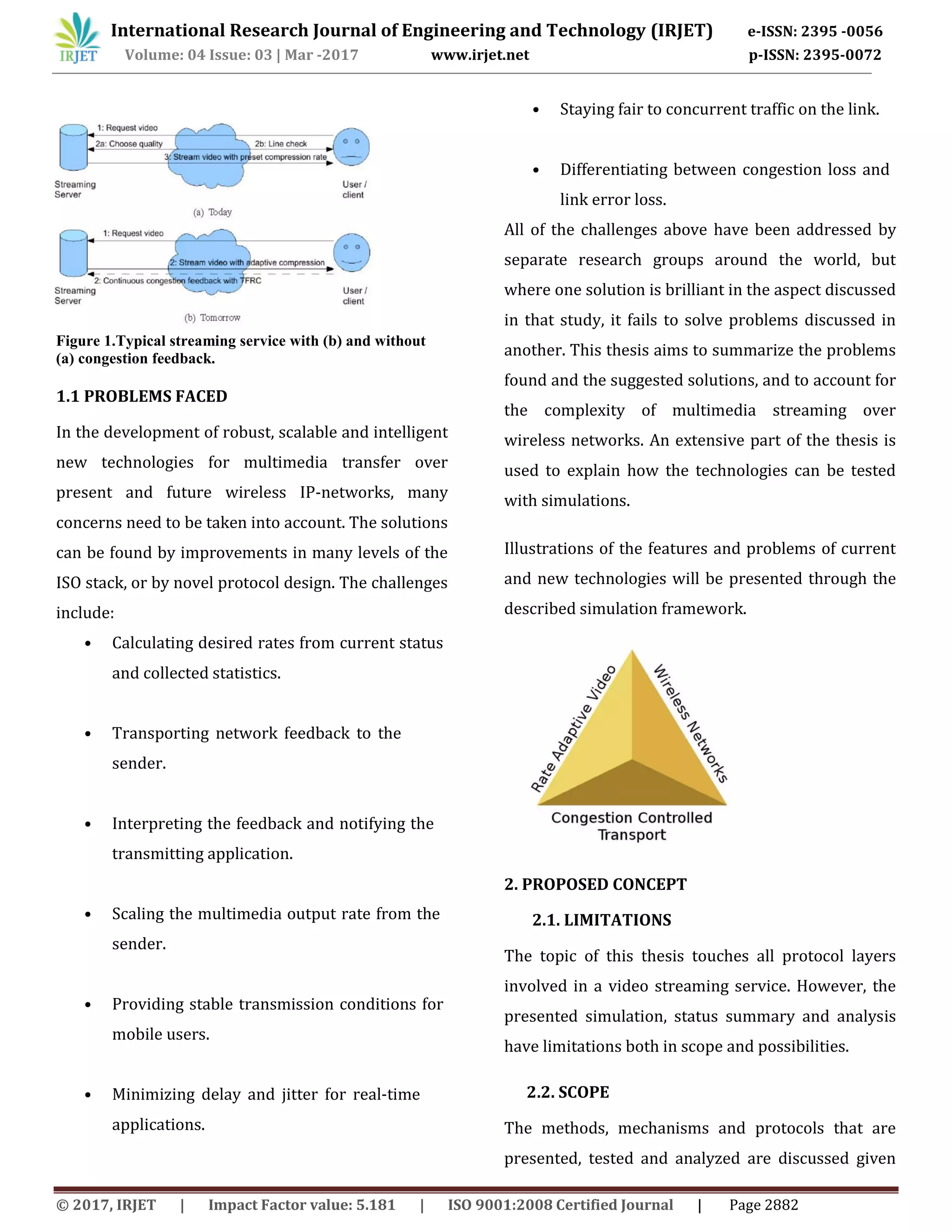
Figure 1.Typical streaming service with (b) and without
(a) congestion feedback.
1.1 PROBLEMS FACED
In the development of robust, scalable and intelligent
new technologies for multimedia transfer over
present and future wireless IP-networks, many
concerns need to be taken into account. The solutions
can be found by improvements in many levels of the
ISO stack, or by novel protocol design. The challenges
include:
• Calculating desired rates from current status
and collected statistics.
• Transporting network feedback to the
sender.
• Interpreting the feedback and notifying the
transmitting application.
• Scaling the multimedia output rate from the
sender.
• Providing stable transmission conditions for
mobile users.
• Minimizing delay and jitter for real-time
applications.
• Staying fair to concurrent traffic on the link.
• Differentiating between congestion loss and
link error loss.
All of the challenges above have been addressed by
separate research groups around the world, but
where one solution is brilliant in the aspect discussed
in that study, it fails to solve problems discussed in
another. This thesis aims to summarize the problems
found and the suggested solutions, and to account for
the complexity of multimedia streaming over
wireless networks. An extensive part of the thesis is
used to explain how the technologies can be tested
with simulations.
Illustrations of the features and problems of current
and new technologies will be presented through the
described simulation framework.
2. PROPOSED CONCEPT
2.1. LIMITATIONS
The topic of this thesis touches all protocol layers
involved in a video streaming service. However, the
presented simulation, status summary and analysis
have limitations both in scope and possibilities.
2.2. SCOPE
The methods, mechanisms and protocols that are
presented, tested and analyzed are discussed given
International Research Journal of Engineering and Technology (IRJET) e-ISSN: 2395 -0056
Volume: 04 Issue: 03 | Mar -2017 www.irjet.net p-ISSN: 2395-0072
© 2017, IRJET | Impact Factor value: 5.181 | ISO 9001:2008 Certified Journal | Page 2883
the need and demand for a set of services with a
certain quality. How the services are built up, and
how the technology will and can be used in different
scenarios and settings, is mentioned but not
emphasized any further. The focus of this work is
mainly on the transport and MAC layers of the
protocol stack, and does not prioritize details from
the physical or application layers.[5] The cost-
efficiency of each technology in real-life
implementation and business-related topics such as
time to market, commercial support, industry
cooperation and market potential, which are
fundamental for a thorough understanding of a
standard development process, are left for future
studies. The thesis seeks to enlighten the
technological possibilities in terms of quality and
performance, but an important factor such as
security is left out of the scope. For every new
product and service intended for online use today,
security is a big concern that may be regarded as a
part of the total QoS. [3]Understanding topics such as
service authentication, authorization and
confidentiality, and how current technology in this
field can be integrated with new media transport
without breaking their performance and intention, is
very important. Without this knowledge, technology
that can replace today’s well-established protocol
stack (or parts of it) may not succeed.
C.BLOCK DIAGRAM
Figure2.block diagram of video transmission
Figure 2. illustrates an overview of the transmission
system described above. Broadband wireless
networks are known to be susceptible to variations in
wireless link quality. To counter the variation in link
quality, a user-defined link adaptation scheme is used
in wireless networks such as IEEE 802.11 and IEEE
802.16 networks. This mechanism is also known as
rate adaptation in other standards (e.g., 3GPP). The
link adaptation scheme adapts transmission
parameters to dynamic channel conditions, based on
some measured parameters. These parameters are
generally measured at the receiver and are delivered
to the transmitter through a feedback mechanism.
The transmitter uses this information to determine a
specific modulation and coding scheme (MCS) for the
next packet to be transmitted. Under good channel
conditions, more information bits and spectrally
efficient modulation schemes can be used; whereas,
under bad channel conditions, link adaptation adds
resilience to the transmitted signal, reducing the
number of delivered information bits per symbol.
Several transmitter parameters can be modified by
the link adaptive scheme.
International Research Journal of Engineering and Technology (IRJET) e-ISSN: 2395 -0056
Volume: 04 Issue: 03 | Mar -2017 www.irjet.net p-ISSN: 2395-0072
© 2017, IRJET | Impact Factor value: 5.181 | ISO 9001:2008 Certified Journal | Page 2884
2.4. FORMULAE
We take the function G(・) to be affine,
Hk (wk) = wk (QR(k) − QR(k − 1))
Let G(・) be a function on W (as defined in
Section V) of the form
G(w) = h0 +_KRk=1 hk(wk).
2.5.GRAPH
PACKET DELIVERY RATIO
SENT PACKETS
RECEIVED PACKET
3. CONCLUSION
We have addressed the problem of optimal rate
allocation for video streaming in wireless networks
with user dynamics, and developed online,
parsimonious algorithms with provable convergence
properties and performance guarantees. In future
work we plan to extend the work to account for
capacity variations due to slow fading as caused by
user mobility.
4. ACKNOWLEDGEMENT:
It is indeed a great pleasure and proud privilege to
acknowledge the help and support we received from the
positive minds around us in making this endeavor a
successful one. We extended our profound gratitude to
Dr.V.Vetri Chelvi M.E., Ph.D., Head of the Department,
Department of Electronics and Communication
Engineering, Jansons Institute of Technology, who has
always been a source of inspiration. We would like to
acknowledge the support and enthusiasm provided by
our Guide Ms.Manothini.P, Assistant Professor,
Department of Electronics and Communication
Engineering, Jansons Institute of Technology.
5. REFERENCES:
[1] Vinay Joseph, Sem Borst, Martin I. Reiman,
Optimal Rate Allocation for Video Streaming in
Wireless Networks With User Dynamics.In:
IEEE/ACM Transactions on Networking.(April
2016)
[2] K. Miller, E. Quacchio, G. Gennari, A. Wolisz
(2012). adaptation algorithm for adaptive streaming
over HTTP. In: Proc. Packet Video Workshop 2012.
International Research Journal of Engineering and Technology (IRJET) e-ISSN: 2395 -0056
Volume: 04 Issue: 03 | Mar -2017 www.irjet.net p-ISSN: 2395-0072
© 2017, IRJET | Impact Factor value: 5.181 | ISO 9001:2008 Certified Journal | Page 2885
[3]R. Houdaille, S. Gouache (2012). Shaping HTTP
adaptive streams for a better user experience.
In:Proc. ACM MMSys 2012.
[4] K.A.D. Havey, R. Chertov (2012). Receiver
driven rate adaptation for wireless multimedia
applications. In: Proc. ACM MMSys 2012.
[5] F. Dobrian, V. Sekar, A. Awan, I. Stoica, D.A. Joseph,
A. Ganjam, J. Zhan, H. Zhang (2011). Understanding
the impact of video quality on user engagement. In:
Proc. ACM SIGCOMM 2011.
[6] D. De Vleeschauwer, H. Viswanathan, A. Beck, S.
enno, G. Li, R.B.Miller (2013). Optimization of HTTP
adaptive streaming over mobilecellular networks. In:
Proc. IEEE Infocom 2013.
[7] T. Cloonan (2011). Competitive analysis of
adaptive video streaming implementations. In: SCTE
Cable-Tec Expo.
[8]S. Akhshabi, A.C. Begen, C. Dovrolis (2012). An
experimental evaluation of rate adaptation
algorithms in adaptive streaming over HTTP. In: Proc.
ACM MMSys 2011.
[9]H. Viswanathan, D. De Vleeschauwer, A. Beck, S.
Benno, R.B. Miller,G. Li, M.M. Clougherty, D.C.
Robinson (2013). Mobile video optimization at the
base station: adaptive guaranteed bit rate for HTTP
adaptive streaming. Bell Labs Techn. J. 18 (2), 159–
174.

Optimal Rate Allocation and Lost Packet Retransmission in Video Streaming

  • 1.
    International Research Journalof Engineering and Technology (IRJET) e-ISSN: 2395 -0056 Volume: 04 Issue: 03 | Mar -2017 www.irjet.net p-ISSN: 2395-0072 © 2017, IRJET | Impact Factor value: 5.181 | ISO 9001:2008 Certified Journal | Page 2881 OPTIMAL RATE ALLOCATION AND LOST PACKET RETRANSMISSION IN VIDEO STREAMING P.Manothini1, E.Prateep2, S.Ramya3, S.Shwetha4. 1Assistant Professor, Department of Electronics and Communication Engineering, Jansons Institute Of Technology, Coimbatore. 234 Students, Department of Electronics and Communication Engineering, Jansons Institute of Technology, Karumathampatti, Coimbatore. Abstract:We consider the problem of optimal rate allocation and admission control for adaptive video streaming sessions in wireless networks with user dynamics. The major aim is to achieve an optimal tradeoff between several key objectives: maximizing the average rate utility per user, minimizing the temporal rate variability, retransmission of lost packets and maximizing the number of users supported. We identify the structure of algorithms that achieve asymptotically optimal performance in large- capacity systems, and exploit the insight into this structure to devise parsimonious and robust online algorithms. Extensive simulation experiments demonstrate that the proposed online algorithms perform well, even in systems with relatively small capacity. KEYWORDS Network simulator2, VMware, fedora, Linux, Video streaming ,QoS, VoD, Rate Adaption 1.INTRODUCTION Video traffic is experiencing tremendous growth, fueled by the proliferation of online video content and the steady expansion in transmission bandwidths. The amount of video traffic is forecast to double annually in the next several years, and is expected to account for the dominant share of wire line as well as wireless Internet traffic soon[1].The available hardware and technology for consumers and service providers today allow for advanced multimedia services over IP-based networks. Hence, the popularity of video and audio streaming services such as Video-on-Demand (VoD), advanced on-line gaming, and video chatting and conferences are increasing.[8] The demand for resource efficiency and robustness in the network follows. The current commercially available data transfer technology for streaming media does not adjust well to the best effort heterogeneous Internet architecture, and QoS demands are impossible to guarantee.[3] A central problem with this development is that the Internet itself is extremely dynamic and unpredictable, while the real-time services we want to lay on top of it demand stable conditions for constant and uninterrupted throughput.[7] It is not only the demand for QoS that increases. As CPU and memory get physically smaller and more efficient, the number of applications that can be run on small devices increases as well. With this new flora of handheld computers, PDAs and cell phones, the wish for terminal mobility and easy wireless access to the same advanced services follows.[2] Now, while the Internet itself has unpredictable throughput, the wireless access networks add even more uncertainty to the QoS-possibilities. Most Internet based VoD services today rely on pre-compressed media, allowing consumers to choose between two or three different qualities to fit the given end to end connection (figure 1).[9] For video conferencing and live streaming, the media is compressed on the fly, but the compression rate is normally controlled by an offline codec. This means that the video codec has no direct contact with the network and transport layer, where the actual transmission status is found. Thus, these approaches do not fully utilize the available resources at any given time and they might not provide the chosen quality during the entire session because of sudden changes in the network load somewhere along the path[6]. With an online codec solution, the communicating parties of a multimedia transfer could adopt to the network state at any given time in the session. This is extra desirable for a mobile terminal which has a constantly changing radio coverage, or for a system that supports session- mobility, allowing the user to change terminal equipment without interrupting or restarting an ongoing session. Figure the concept behind a solution based on continuous network feedback upstream from the client to the media server[4].
  • 2.
    International Research Journalof Engineering and Technology (IRJET) e-ISSN: 2395 -0056 Volume: 04 Issue: 03 | Mar -2017 www.irjet.net p-ISSN: 2395-0072 © 2017, IRJET | Impact Factor value: 5.181 | ISO 9001:2008 Certified Journal | Page 2882 Figure 1.Typical streaming service with (b) and without (a) congestion feedback. 1.1 PROBLEMS FACED In the development of robust, scalable and intelligent new technologies for multimedia transfer over present and future wireless IP-networks, many concerns need to be taken into account. The solutions can be found by improvements in many levels of the ISO stack, or by novel protocol design. The challenges include: • Calculating desired rates from current status and collected statistics. • Transporting network feedback to the sender. • Interpreting the feedback and notifying the transmitting application. • Scaling the multimedia output rate from the sender. • Providing stable transmission conditions for mobile users. • Minimizing delay and jitter for real-time applications. • Staying fair to concurrent traffic on the link. • Differentiating between congestion loss and link error loss. All of the challenges above have been addressed by separate research groups around the world, but where one solution is brilliant in the aspect discussed in that study, it fails to solve problems discussed in another. This thesis aims to summarize the problems found and the suggested solutions, and to account for the complexity of multimedia streaming over wireless networks. An extensive part of the thesis is used to explain how the technologies can be tested with simulations. Illustrations of the features and problems of current and new technologies will be presented through the described simulation framework. 2. PROPOSED CONCEPT 2.1. LIMITATIONS The topic of this thesis touches all protocol layers involved in a video streaming service. However, the presented simulation, status summary and analysis have limitations both in scope and possibilities. 2.2. SCOPE The methods, mechanisms and protocols that are presented, tested and analyzed are discussed given
  • 3.
    International Research Journalof Engineering and Technology (IRJET) e-ISSN: 2395 -0056 Volume: 04 Issue: 03 | Mar -2017 www.irjet.net p-ISSN: 2395-0072 © 2017, IRJET | Impact Factor value: 5.181 | ISO 9001:2008 Certified Journal | Page 2883 the need and demand for a set of services with a certain quality. How the services are built up, and how the technology will and can be used in different scenarios and settings, is mentioned but not emphasized any further. The focus of this work is mainly on the transport and MAC layers of the protocol stack, and does not prioritize details from the physical or application layers.[5] The cost- efficiency of each technology in real-life implementation and business-related topics such as time to market, commercial support, industry cooperation and market potential, which are fundamental for a thorough understanding of a standard development process, are left for future studies. The thesis seeks to enlighten the technological possibilities in terms of quality and performance, but an important factor such as security is left out of the scope. For every new product and service intended for online use today, security is a big concern that may be regarded as a part of the total QoS. [3]Understanding topics such as service authentication, authorization and confidentiality, and how current technology in this field can be integrated with new media transport without breaking their performance and intention, is very important. Without this knowledge, technology that can replace today’s well-established protocol stack (or parts of it) may not succeed. C.BLOCK DIAGRAM Figure2.block diagram of video transmission Figure 2. illustrates an overview of the transmission system described above. Broadband wireless networks are known to be susceptible to variations in wireless link quality. To counter the variation in link quality, a user-defined link adaptation scheme is used in wireless networks such as IEEE 802.11 and IEEE 802.16 networks. This mechanism is also known as rate adaptation in other standards (e.g., 3GPP). The link adaptation scheme adapts transmission parameters to dynamic channel conditions, based on some measured parameters. These parameters are generally measured at the receiver and are delivered to the transmitter through a feedback mechanism. The transmitter uses this information to determine a specific modulation and coding scheme (MCS) for the next packet to be transmitted. Under good channel conditions, more information bits and spectrally efficient modulation schemes can be used; whereas, under bad channel conditions, link adaptation adds resilience to the transmitted signal, reducing the number of delivered information bits per symbol. Several transmitter parameters can be modified by the link adaptive scheme.
  • 4.
    International Research Journalof Engineering and Technology (IRJET) e-ISSN: 2395 -0056 Volume: 04 Issue: 03 | Mar -2017 www.irjet.net p-ISSN: 2395-0072 © 2017, IRJET | Impact Factor value: 5.181 | ISO 9001:2008 Certified Journal | Page 2884 2.4. FORMULAE We take the function G(・) to be affine, Hk (wk) = wk (QR(k) − QR(k − 1)) Let G(・) be a function on W (as defined in Section V) of the form G(w) = h0 +_KRk=1 hk(wk). 2.5.GRAPH PACKET DELIVERY RATIO SENT PACKETS RECEIVED PACKET 3. CONCLUSION We have addressed the problem of optimal rate allocation for video streaming in wireless networks with user dynamics, and developed online, parsimonious algorithms with provable convergence properties and performance guarantees. In future work we plan to extend the work to account for capacity variations due to slow fading as caused by user mobility. 4. ACKNOWLEDGEMENT: It is indeed a great pleasure and proud privilege to acknowledge the help and support we received from the positive minds around us in making this endeavor a successful one. We extended our profound gratitude to Dr.V.Vetri Chelvi M.E., Ph.D., Head of the Department, Department of Electronics and Communication Engineering, Jansons Institute of Technology, who has always been a source of inspiration. We would like to acknowledge the support and enthusiasm provided by our Guide Ms.Manothini.P, Assistant Professor, Department of Electronics and Communication Engineering, Jansons Institute of Technology. 5. REFERENCES: [1] Vinay Joseph, Sem Borst, Martin I. Reiman, Optimal Rate Allocation for Video Streaming in Wireless Networks With User Dynamics.In: IEEE/ACM Transactions on Networking.(April 2016) [2] K. Miller, E. Quacchio, G. Gennari, A. Wolisz (2012). adaptation algorithm for adaptive streaming over HTTP. In: Proc. Packet Video Workshop 2012.
  • 5.
    International Research Journalof Engineering and Technology (IRJET) e-ISSN: 2395 -0056 Volume: 04 Issue: 03 | Mar -2017 www.irjet.net p-ISSN: 2395-0072 © 2017, IRJET | Impact Factor value: 5.181 | ISO 9001:2008 Certified Journal | Page 2885 [3]R. Houdaille, S. Gouache (2012). Shaping HTTP adaptive streams for a better user experience. In:Proc. ACM MMSys 2012. [4] K.A.D. Havey, R. Chertov (2012). Receiver driven rate adaptation for wireless multimedia applications. In: Proc. ACM MMSys 2012. [5] F. Dobrian, V. Sekar, A. Awan, I. Stoica, D.A. Joseph, A. Ganjam, J. Zhan, H. Zhang (2011). Understanding the impact of video quality on user engagement. In: Proc. ACM SIGCOMM 2011. [6] D. De Vleeschauwer, H. Viswanathan, A. Beck, S. enno, G. Li, R.B.Miller (2013). Optimization of HTTP adaptive streaming over mobilecellular networks. In: Proc. IEEE Infocom 2013. [7] T. Cloonan (2011). Competitive analysis of adaptive video streaming implementations. In: SCTE Cable-Tec Expo. [8]S. Akhshabi, A.C. Begen, C. Dovrolis (2012). An experimental evaluation of rate adaptation algorithms in adaptive streaming over HTTP. In: Proc. ACM MMSys 2011. [9]H. Viswanathan, D. De Vleeschauwer, A. Beck, S. Benno, R.B. Miller,G. Li, M.M. Clougherty, D.C. Robinson (2013). Mobile video optimization at the base station: adaptive guaranteed bit rate for HTTP adaptive streaming. Bell Labs Techn. J. 18 (2), 159– 174.