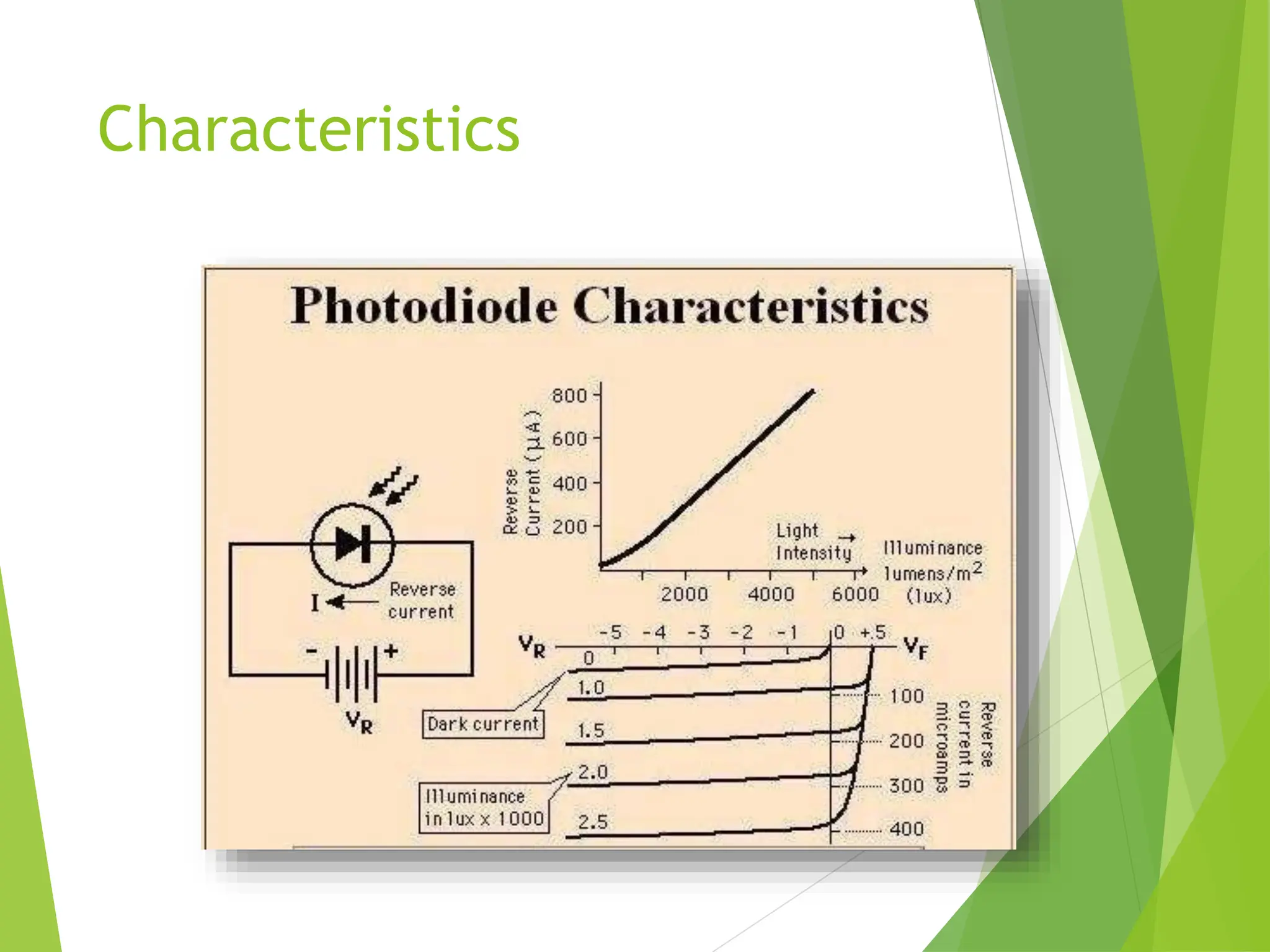
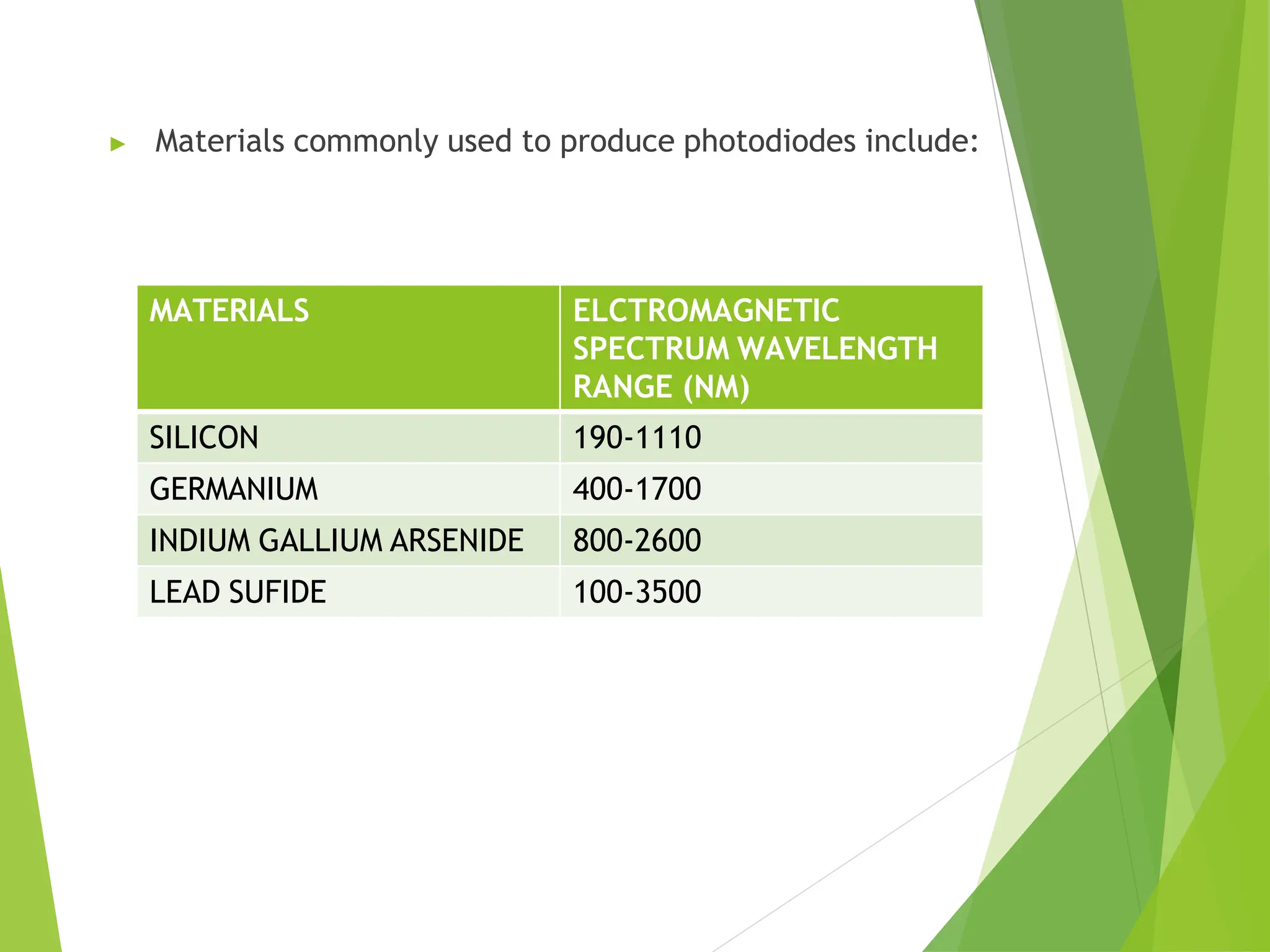
Photodiodes are semiconductor devices that convert light into an electrical current. When light strikes the photodiode's PN junction, electrons are excited creating free charge carriers. This results in a photocurrent that can be measured. Photodiodes operate in reverse bias and can be used as solar cells, photodetectors, or LEDs. Common materials used include silicon, germanium, indium gallium arsenide, and lead sulfide, depending on the desired wavelength detection range. Photodiodes find applications in devices like optical mice, smoke detectors, and infrared remote controls.



![Analog_PPT_No._1 gcgd gcd_-_Photo_diode3[1].pptx](https://cdn.slidesharecdn.com/ss_thumbnails/analogpptno-250410203526-39e4e6cf-thumbnail.jpg?width=640&height=640&fit=bounds)


