OPERATIONS WITH SEGMENTS
Exercise 1
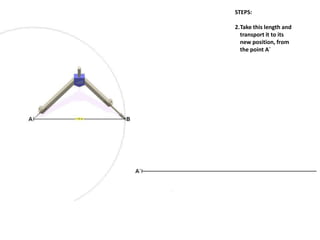
Copy the line segment AB onto the ray from the given origin A´
___
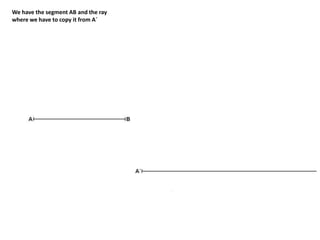
We have the segment AB and the ray
where we have to copy it from A´
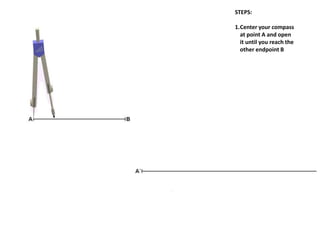
STEPS:
1.Center your compass
at point A and open
it until you reach the
other endpoint B
STEPS:
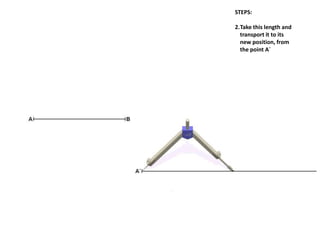
2.Take this length and
transport it to its
new position, from
the point A´
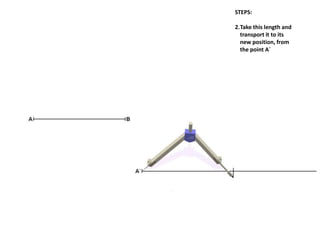
STEPS:
2.Take this length and
transport it to its
new position, from
the point A´
STEPS:
2.Take this length and
transport it to its
new position, from
the point A´
STEPS:
2.Take this length and
transport it to its
new position, from
the point A´
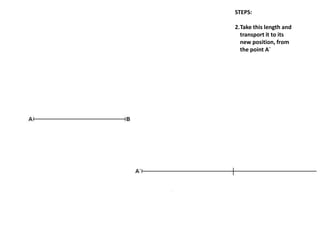
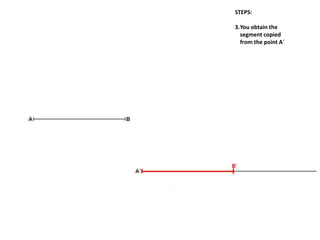
STEPS:
3.You obtain the
segment copied
from the point A´
Exercise 2
Draw the perpendicular bisector of the line segment AB
and mark its midpoint M
___
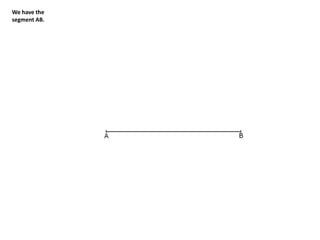
We have the
segment AB.
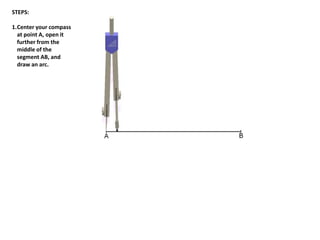
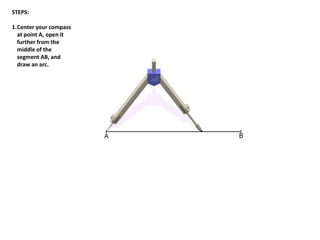
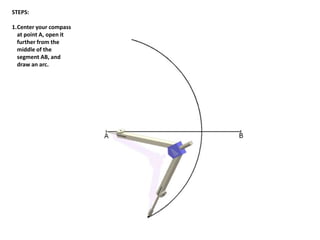
STEPS:
1.Center your compass
at point A, open it
further from the
middle of the
segment AB, and
draw an arc.
STEPS:
1.Center your compass
at point A, open it
further from the
middle of the
segment AB, and
draw an arc.
STEPS:
1.Center your compass
at point A, open it
further from the
middle of the
segment AB, and
draw an arc.
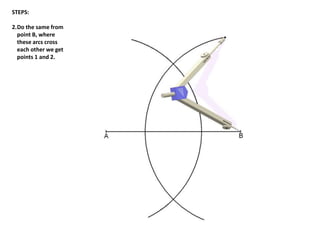
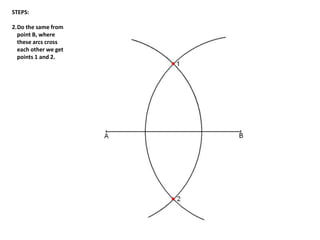
STEPS:
2.Do the same from
point B, where
these arcs cross
each other we get
points 1 and 2.
STEPS:
2.Do the same from
point B, where
these arcs cross
each other we get
points 1 and 2.
STEPS:
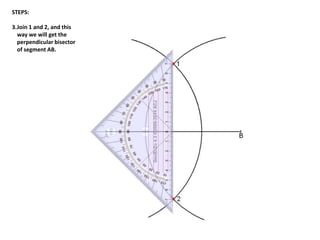
3.Join 1 and 2, and this
way we will get the
perpendicular bisector
of segment AB.
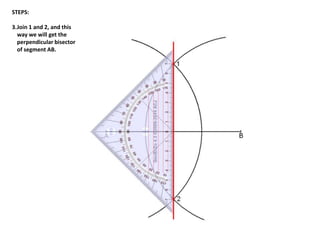
STEPS:
3.Join 1 and 2, and this
way we will get the
perpendicular bisector
of segment AB.
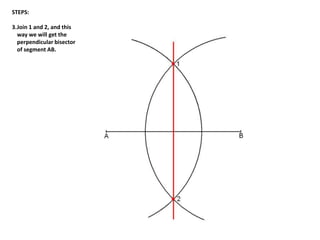
STEPS:
3.Join 1 and 2, and this
way we will get the
perpendicular bisector
of segment AB.
Exercise 3
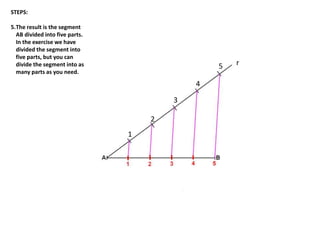
Divide the line segment AB into 5 equal parts
___
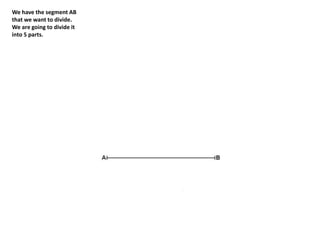
We have the segment AB
that we want to divide.
We are going to divide it
into 5 parts.
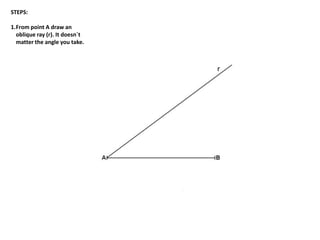
STEPS:
1.From point A draw an
oblique ray (r). It doesn´t
matter the angle you take.
r
1
r
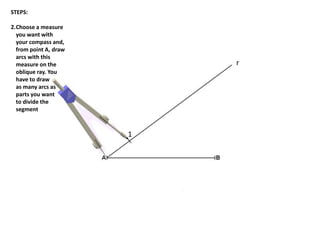
STEPS:
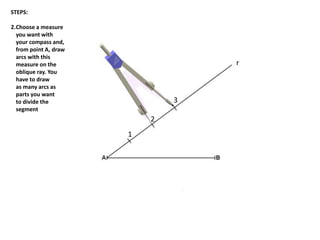
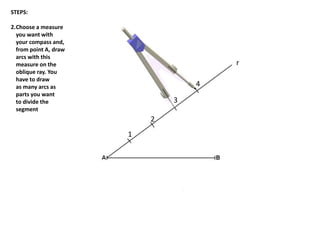
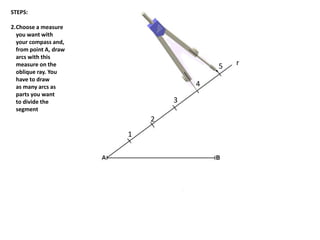
2.Choose a measure
you want with
your compass and,
from point A, draw
arcs with this
measure on the
oblique ray. You
have to draw
as many arcs as
parts you want
to divide the
segment
1
2
r
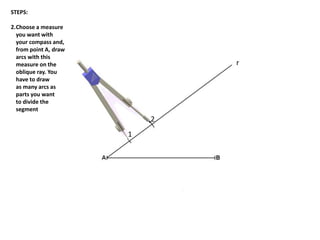
STEPS:
2.Choose a measure
you want with
your compass and,
from point A, draw
arcs with this
measure on the
oblique ray. You
have to draw
as many arcs as
parts you want
to divide the
segment
1
2
3
r
STEPS:
2.Choose a measure
you want with
your compass and,
from point A, draw
arcs with this
measure on the
oblique ray. You
have to draw
as many arcs as
parts you want
to divide the
segment
1
2
3
r
4
STEPS:
2.Choose a measure
you want with
your compass and,
from point A, draw
arcs with this
measure on the
oblique ray. You
have to draw
as many arcs as
parts you want
to divide the
segment
r
1
2
3
4
5
STEPS:
2.Choose a measure
you want with
your compass and,
from point A, draw
arcs with this
measure on the
oblique ray. You
have to draw
as many arcs as
parts you want
to divide the
segment
r
1
2
3
4
5
STEPS:
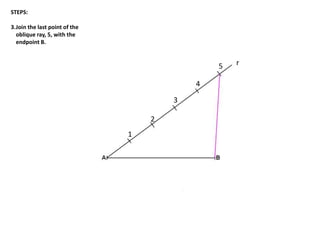
3.Join the last point of the
oblique ray, 5, with the
endpoint B.
r
1
2
3
4
5
STEPS:
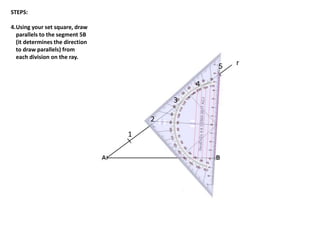
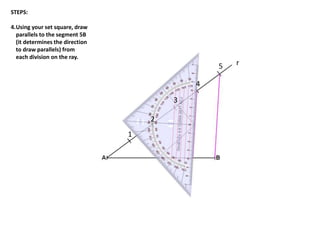
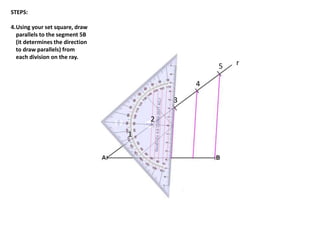
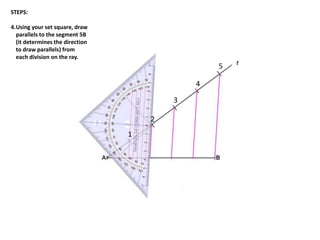
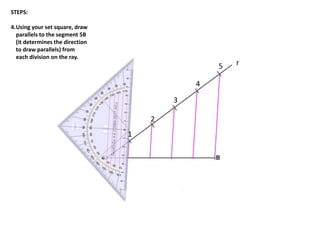
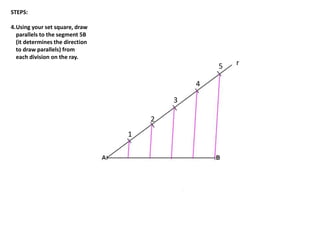
4.Using your set square, draw
parallels to the segment 5B
(it determines the direction
to draw parallels) from
each division on the ray.
r
1
2
3
4
5
STEPS:
4.Using your set square, draw
parallels to the segment 5B
(it determines the direction
to draw parallels) from
each division on the ray.
r
1
2
3
4
5
STEPS:
4.Using your set square, draw
parallels to the segment 5B
(it determines the direction
to draw parallels) from
each division on the ray.
r
1
2
3
4
5
STEPS:
4.Using your set square, draw
parallels to the segment 5B
(it determines the direction
to draw parallels) from
each division on the ray.
r
1
2
3
4
5
STEPS:
4.Using your set square, draw
parallels to the segment 5B
(it determines the direction
to draw parallels) from
each division on the ray.
r
1
2
3
4
5
STEPS:
4.Using your set square, draw
parallels to the segment 5B
(it determines the direction
to draw parallels) from
each division on the ray.
r
1
2
3
4
5
STEPS:
5.The result is the segment
AB divided into five parts.
In the exercise we have
divided the segment into
five parts, but you can
divide the segment into as
many parts as you need.
Exercise 4
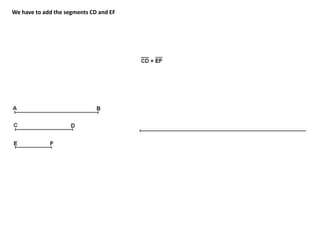
Given the following line segments AB, CD and EF,
carry out the requested operations
___ ___ ___
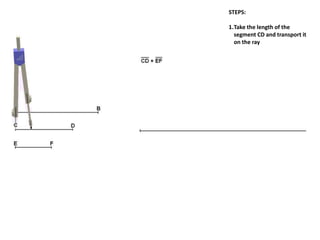
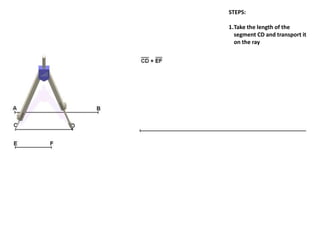
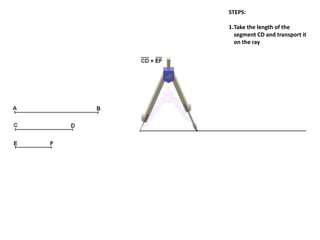
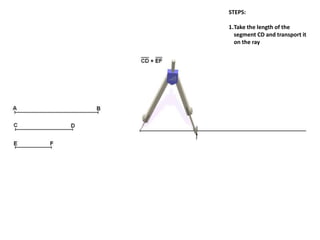
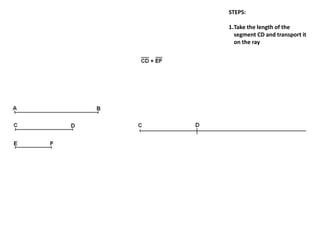
CD + EF
___ ___
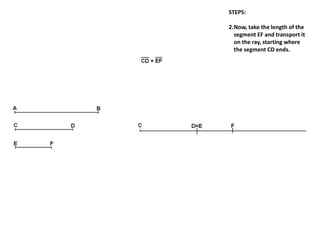
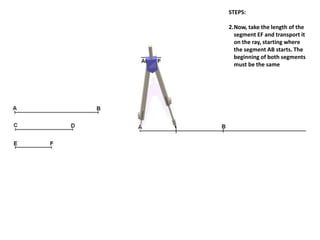
We have to add the segments CD and EF
STEPS:
1.Take the length of the
segment CD and transport it
on the ray
STEPS:
1.Take the length of the
segment CD and transport it
on the ray
STEPS:
1.Take the length of the
segment CD and transport it
on the ray
STEPS:
1.Take the length of the
segment CD and transport it
on the ray
STEPS:
1.Take the length of the
segment CD and transport it
on the ray
STEPS:
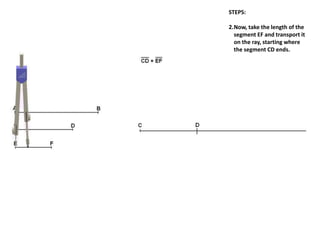
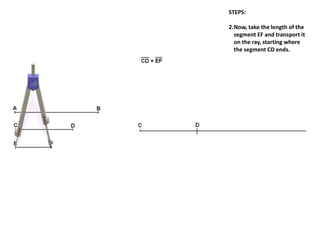
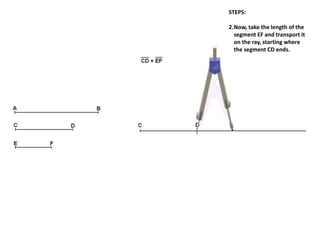
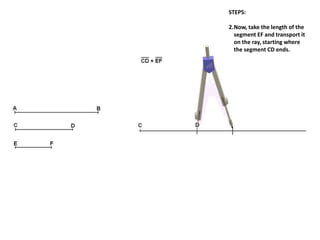
2.Now, take the length of the
segment EF and transport it
on the ray, starting where
the segment CD ends.
STEPS:
2.Now, take the length of the
segment EF and transport it
on the ray, starting where
the segment CD ends.
STEPS:
2.Now, take the length of the
segment EF and transport it
on the ray, starting where
the segment CD ends.
STEPS:
2.Now, take the length of the
segment EF and transport it
on the ray, starting where
the segment CD ends.
STEPS:
2.Now, take the length of the
segment EF and transport it
on the ray, starting where
the segment CD ends.
STEPS:
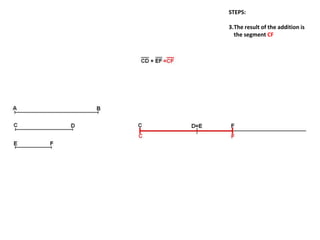
3.The result of the addition is
the segment CF
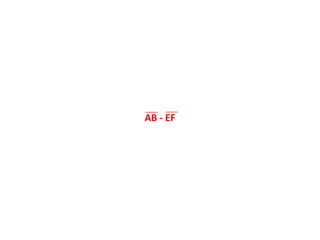
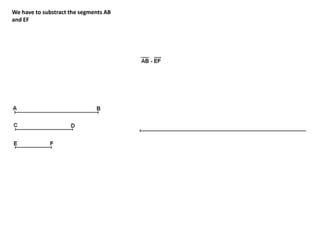
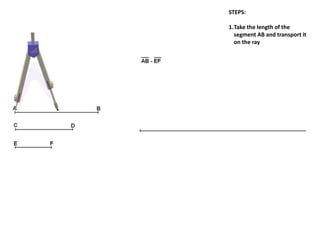
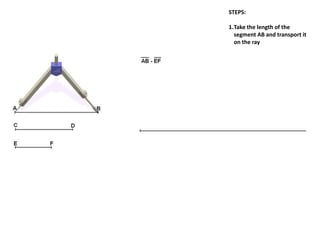
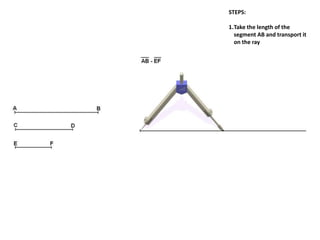
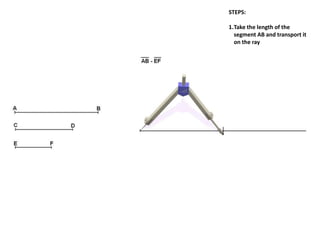
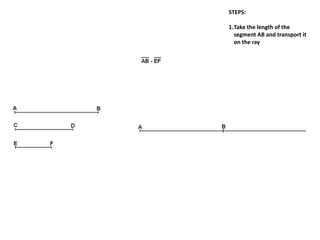
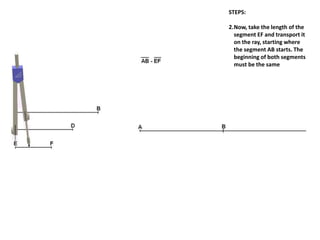
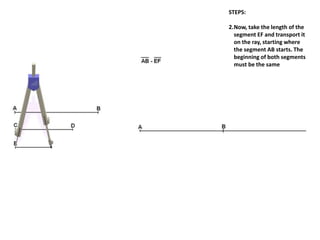
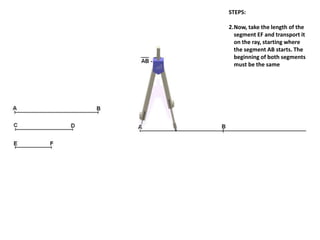
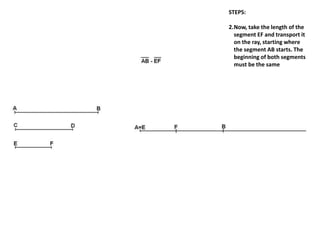
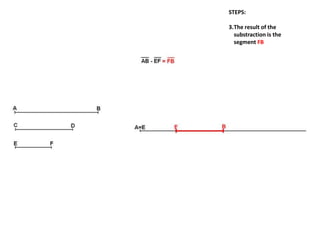
AB - EF
___ ___
We have to substract the segments AB
and EF
STEPS:
1.Take the length of the
segment AB and transport it
on the ray
STEPS:
1.Take the length of the
segment AB and transport it
on the ray
STEPS:
1.Take the length of the
segment AB and transport it
on the ray
STEPS:
1.Take the length of the
segment AB and transport it
on the ray
STEPS:
1.Take the length of the
segment AB and transport it
on the ray
STEPS:
2.Now, take the length of the
segment EF and transport it
on the ray, starting where
the segment AB starts. The
beginning of both segments
must be the same
STEPS:
2.Now, take the length of the
segment EF and transport it
on the ray, starting where
the segment AB starts. The
beginning of both segments
must be the same
STEPS:
2.Now, take the length of the
segment EF and transport it
on the ray, starting where
the segment AB starts. The
beginning of both segments
must be the same
STEPS:
2.Now, take the length of the
segment EF and transport it
on the ray, starting where
the segment AB starts. The
beginning of both segments
must be the same
STEPS:
2.Now, take the length of the
segment EF and transport it
on the ray, starting where
the segment AB starts. The
beginning of both segments
must be the same
STEPS:
3.The result of the
substraction is the
segment FB
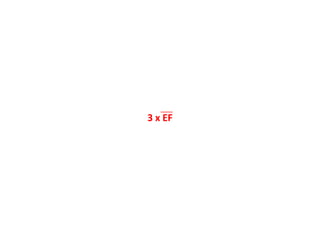
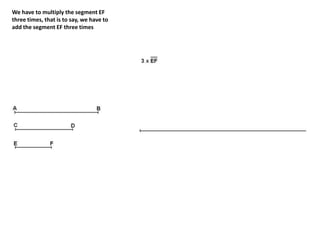
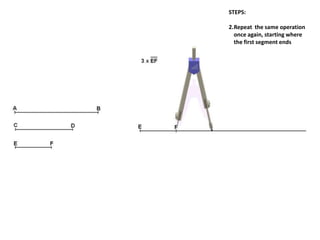
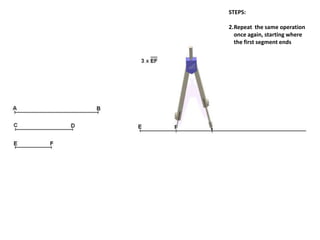
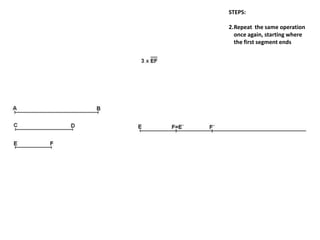
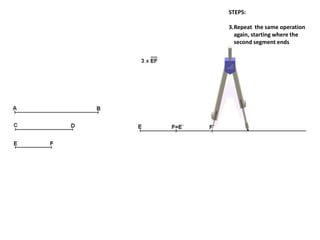
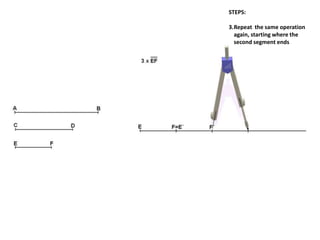
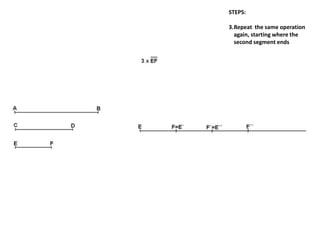
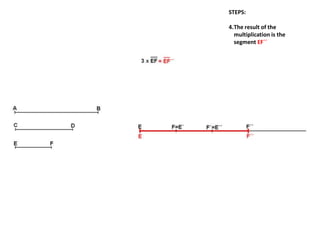
3 x EF
___
We have to multiply the segment EF
three times, that is to say, we have to
add the segment EF three times
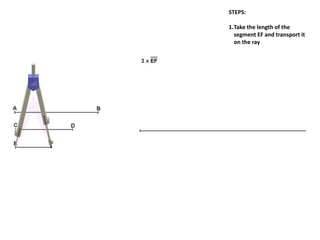
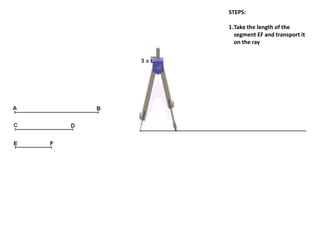
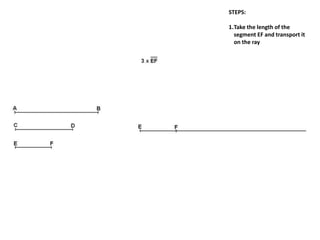
STEPS:
1.Take the length of the
segment EF and transport it
on the ray
STEPS:
1.Take the length of the
segment EF and transport it
on the ray
STEPS:
1.Take the length of the
segment EF and transport it
on the ray
STEPS:
2.Repeat the same operation
once again, starting where
the first segment ends
STEPS:
2.Repeat the same operation
once again, starting where
the first segment ends
STEPS:
2.Repeat the same operation
once again, starting where
the first segment ends
STEPS:
3.Repeat the same operation
again, starting where the
second segment ends
STEPS:
3.Repeat the same operation
again, starting where the
second segment ends
STEPS:
3.Repeat the same operation
again, starting where the
second segment ends
STEPS:
4.The result of the
multiplication is the
segment EF´´
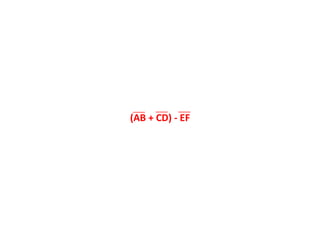
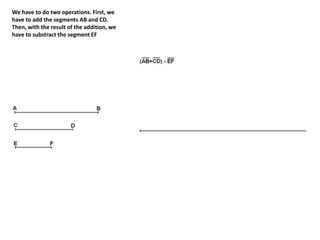
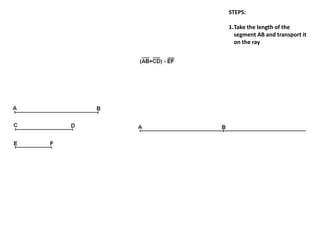
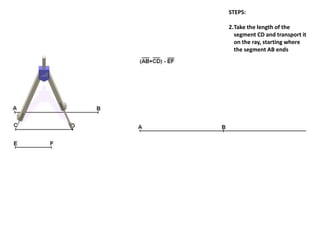
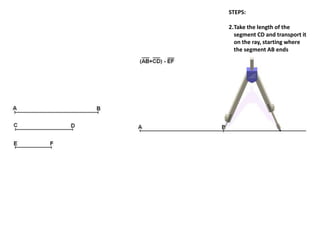
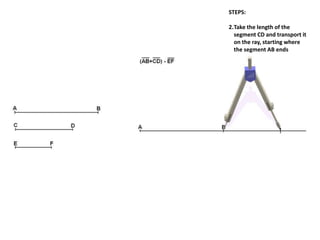
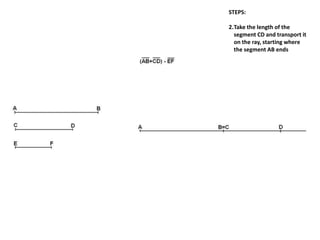
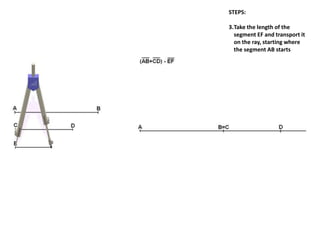
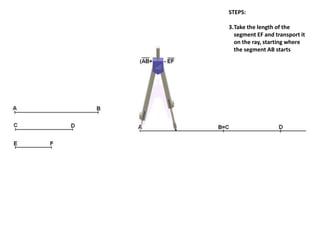
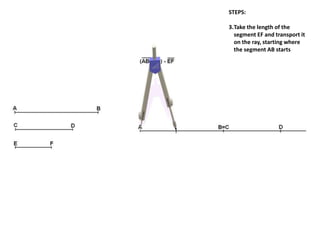
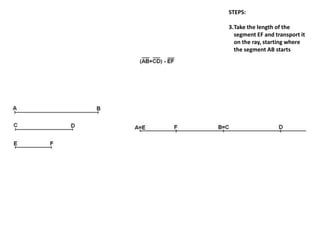
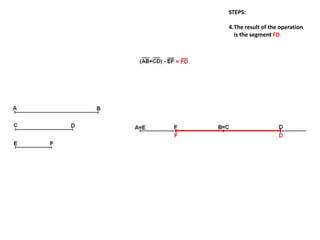
(AB + CD) - EF
___ ___ ___
We have to do two operations. First, we
have to add the segments AB and CD.
Then, with the result of the addition, we
have to substract the segment EF
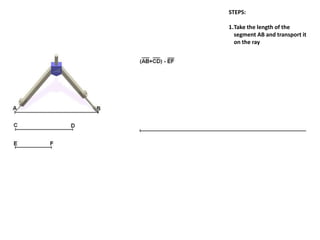
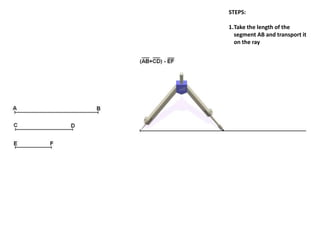
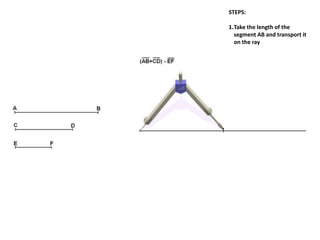
STEPS:
1.Take the length of the
segment AB and transport it
on the ray
STEPS:
1.Take the length of the
segment AB and transport it
on the ray
STEPS:
1.Take the length of the
segment AB and transport it
on the ray
STEPS:
1.Take the length of the
segment AB and transport it
on the ray
STEPS:
2.Take the length of the
segment CD and transport it
on the ray, starting where
the segment AB ends
STEPS:
2.Take the length of the
segment CD and transport it
on the ray, starting where
the segment AB ends
STEPS:
2.Take the length of the
segment CD and transport it
on the ray, starting where
the segment AB ends
STEPS:
2.Take the length of the
segment CD and transport it
on the ray, starting where
the segment AB ends
STEPS:
3.Take the length of the
segment EF and transport it
on the ray, starting where
the segment AB starts
STEPS:
3.Take the length of the
segment EF and transport it
on the ray, starting where
the segment AB starts
STEPS:
3.Take the length of the
segment EF and transport it
on the ray, starting where
the segment AB starts
STEPS:
3.Take the length of the
segment EF and transport it
on the ray, starting where
the segment AB starts
STEPS:
4.The result of the operation
is the segment FD
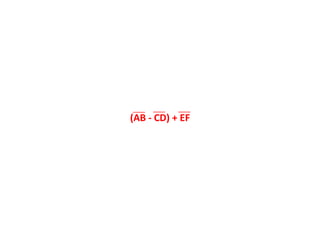
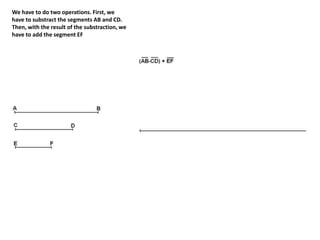
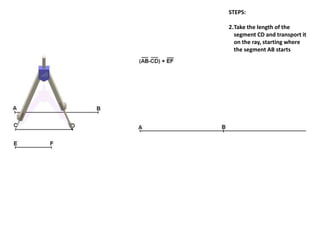
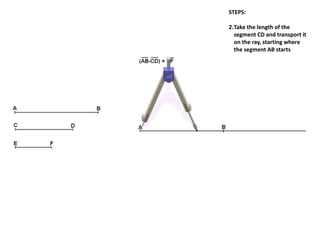
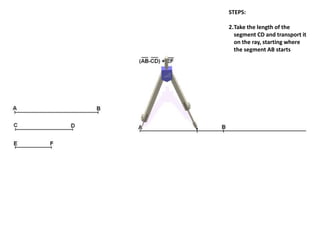
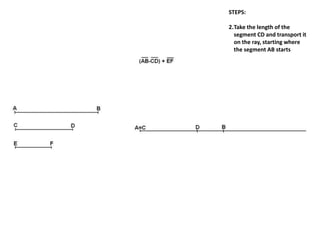
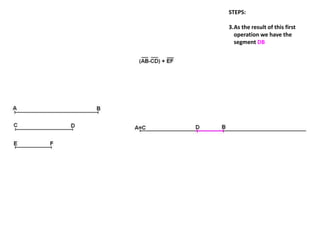
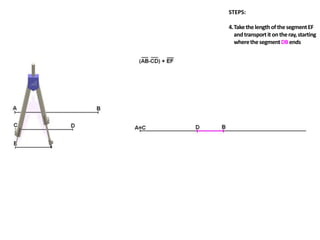
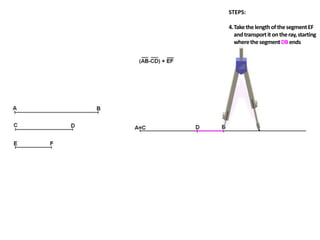
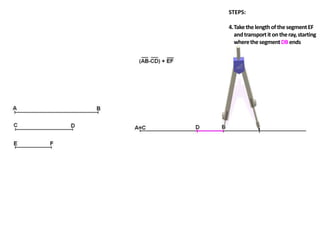
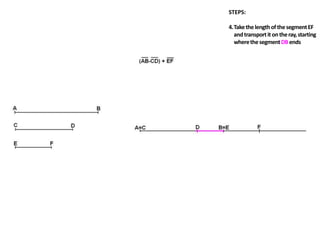
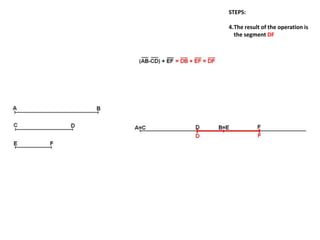
(AB - CD) + EF
___ ___ ___
We have to do two operations. First, we
have to substract the segments AB and CD.
Then, with the result of the substraction, we
have to add the segment EF
STEPS:
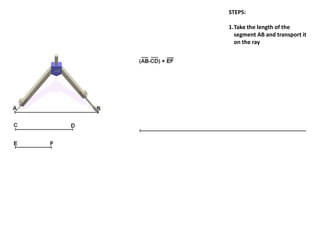
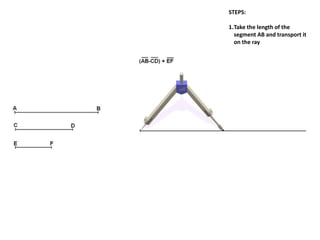
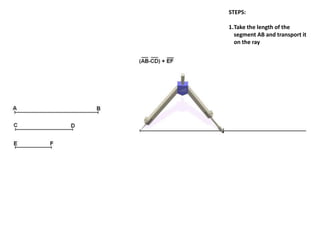
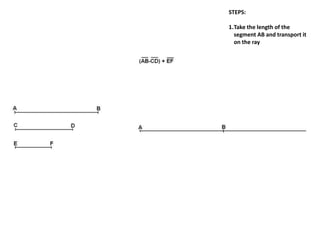
1.Take the length of the
segment AB and transport it
on the ray
STEPS:
1.Take the length of the
segment AB and transport it
on the ray
STEPS:
1.Take the length of the
segment AB and transport it
on the ray
STEPS:
1.Take the length of the
segment AB and transport it
on the ray
STEPS:
2.Take the length of the
segment CD and transport it
on the ray, starting where
the segment AB starts
STEPS:
2.Take the length of the
segment CD and transport it
on the ray, starting where
the segment AB starts
STEPS:
2.Take the length of the
segment CD and transport it
on the ray, starting where
the segment AB starts
STEPS:
2.Take the length of the
segment CD and transport it
on the ray, starting where
the segment AB starts
STEPS:
3.As the result of this first
operation we have the
segment DB
STEPS:
4.TakethelengthofthesegmentEF
andtransportitontheray,starting
wherethesegmentDBends
STEPS:
4.TakethelengthofthesegmentEF
andtransportitontheray,starting
wherethesegmentDBends
STEPS:
4.TakethelengthofthesegmentEF
andtransportitontheray,starting
wherethesegmentDBends
STEPS:
4.TakethelengthofthesegmentEF
andtransportitontheray,starting
wherethesegmentDBends
STEPS:
4.The result of the operation is
the segment DF

Operations with segments