Operating System Structures
BY NAVID DANESHVARAN
SOFTWARE ENGINEERING STUDENT AT KHARAZMI UNIVERSITY
2
Types of Operating System Structures
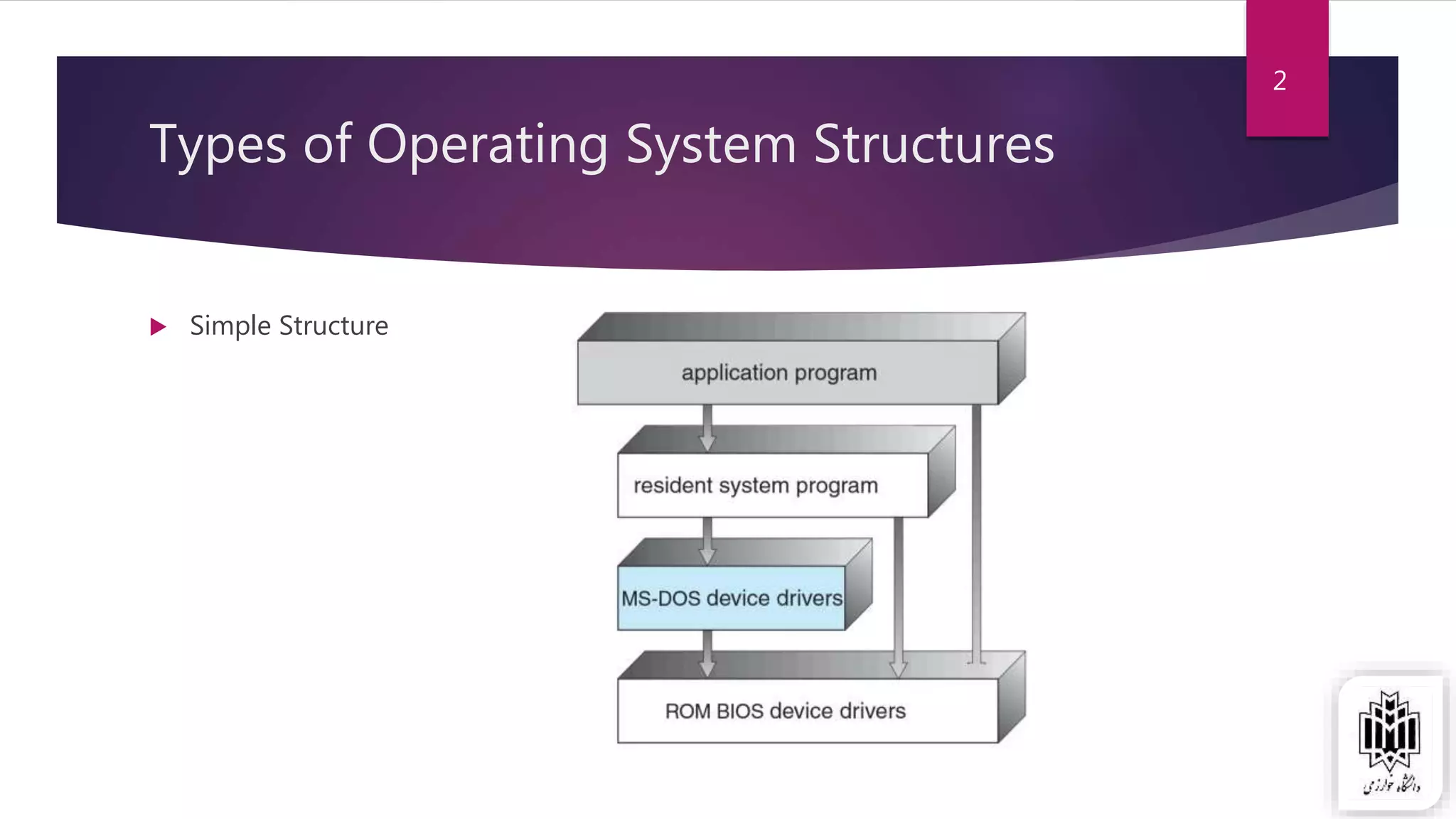
 Simple Structure
3
Limited Hardware Effect
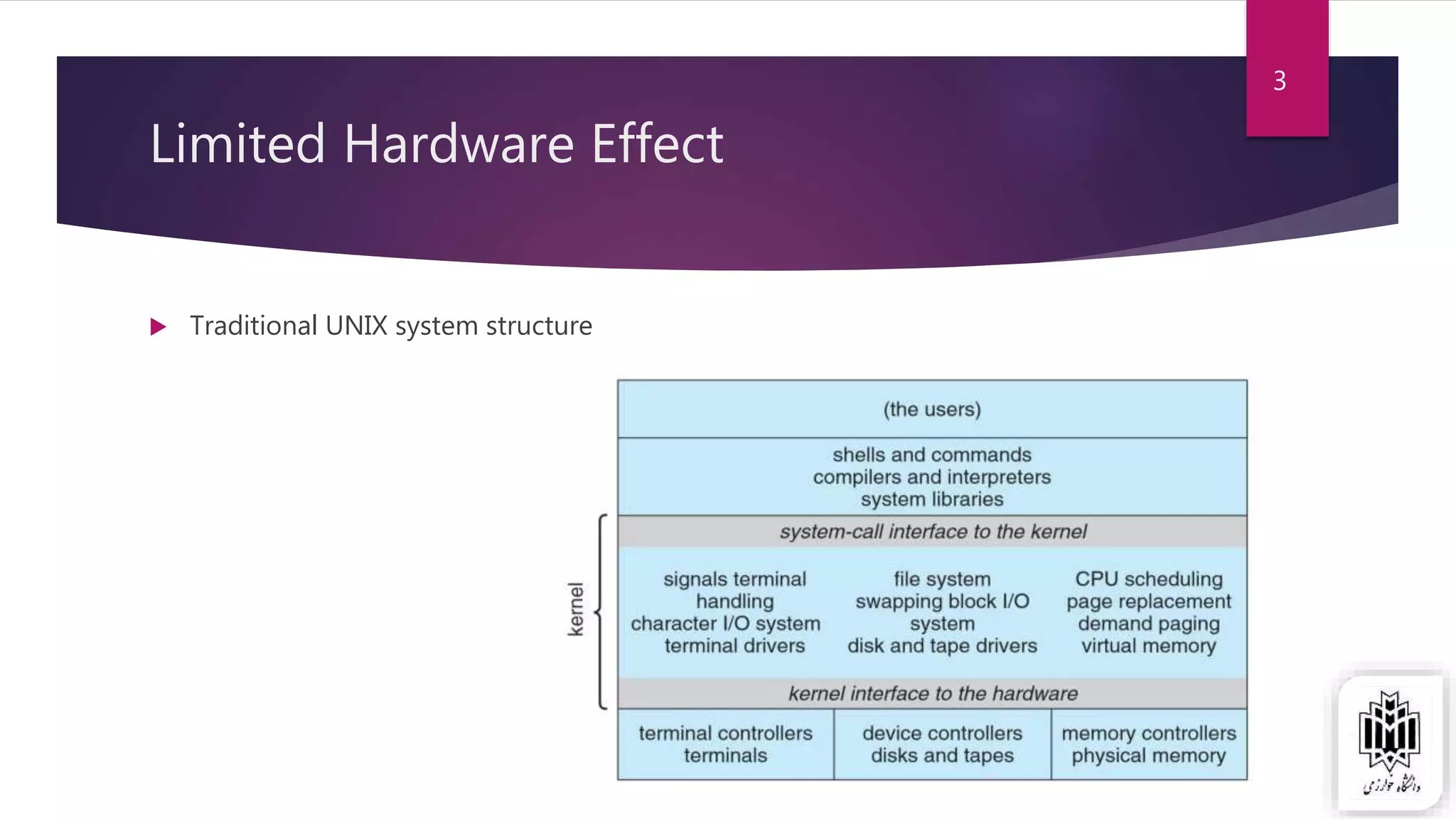
 Traditional UNIX system structure
4
Types of Operating System Structures
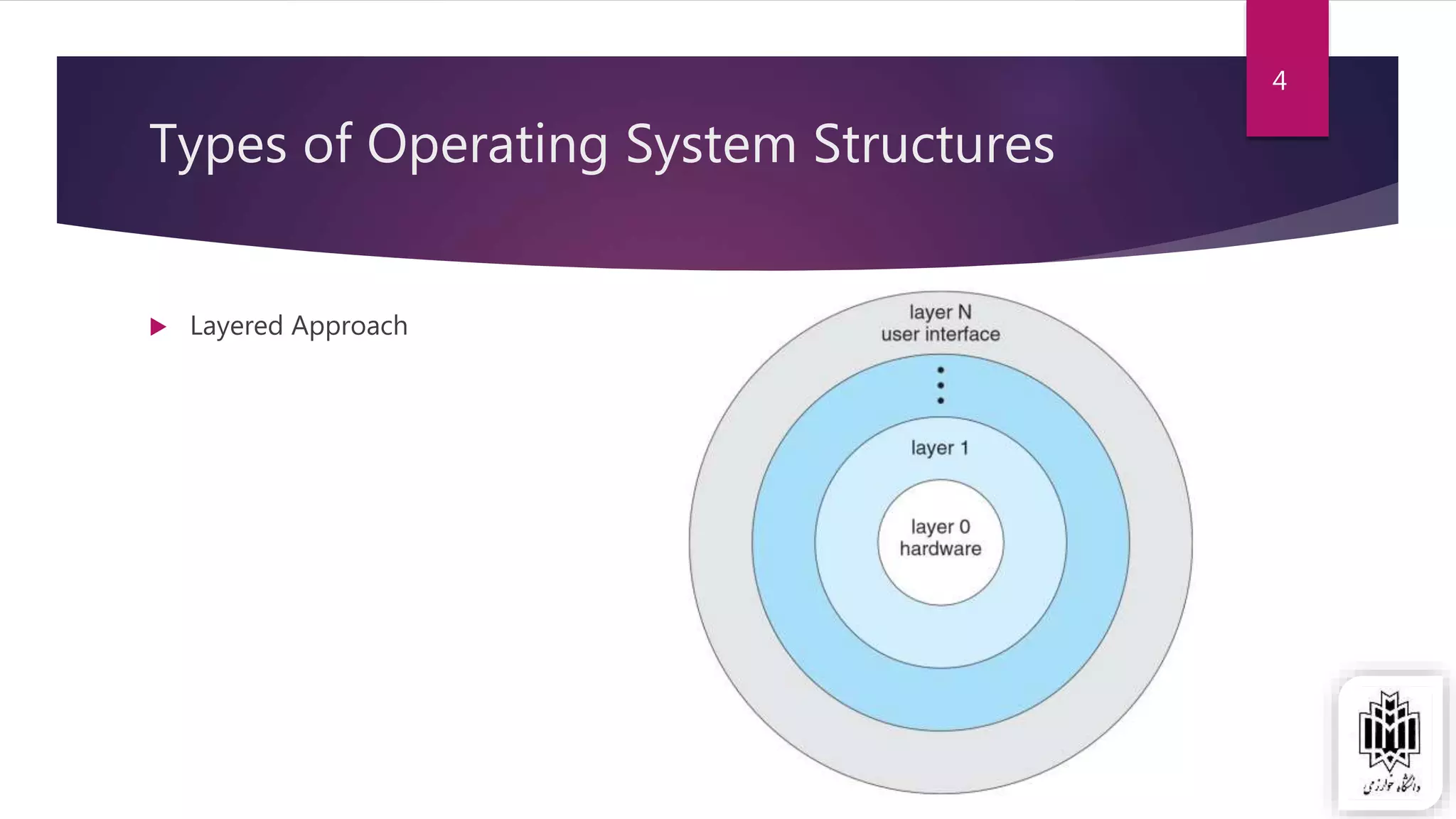
 Layered Approach
5
Types of Operating System Structures
 Microkernel
6
Types of Operating System Structures
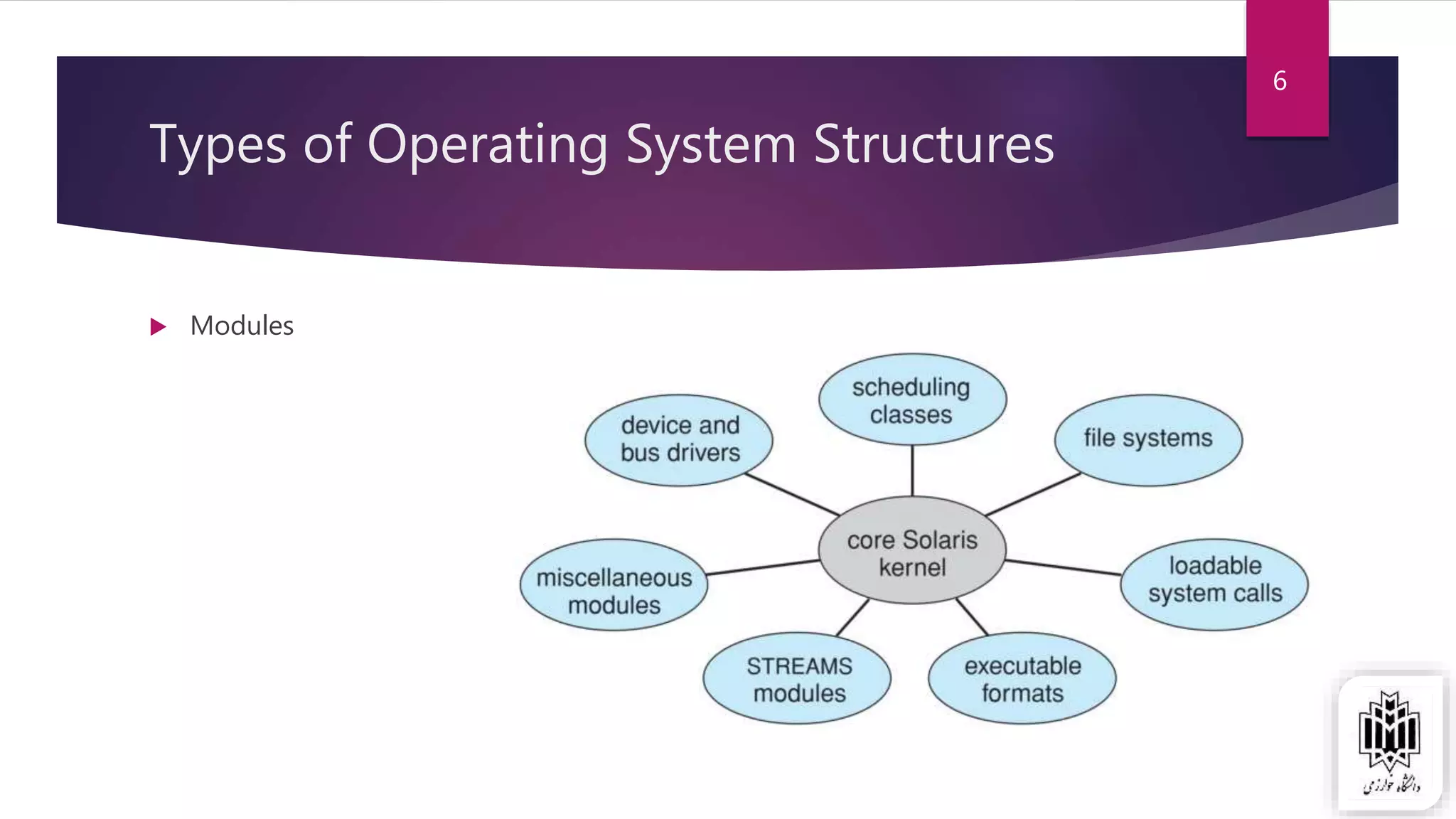
 Modules
7
Types of Operating System Structures
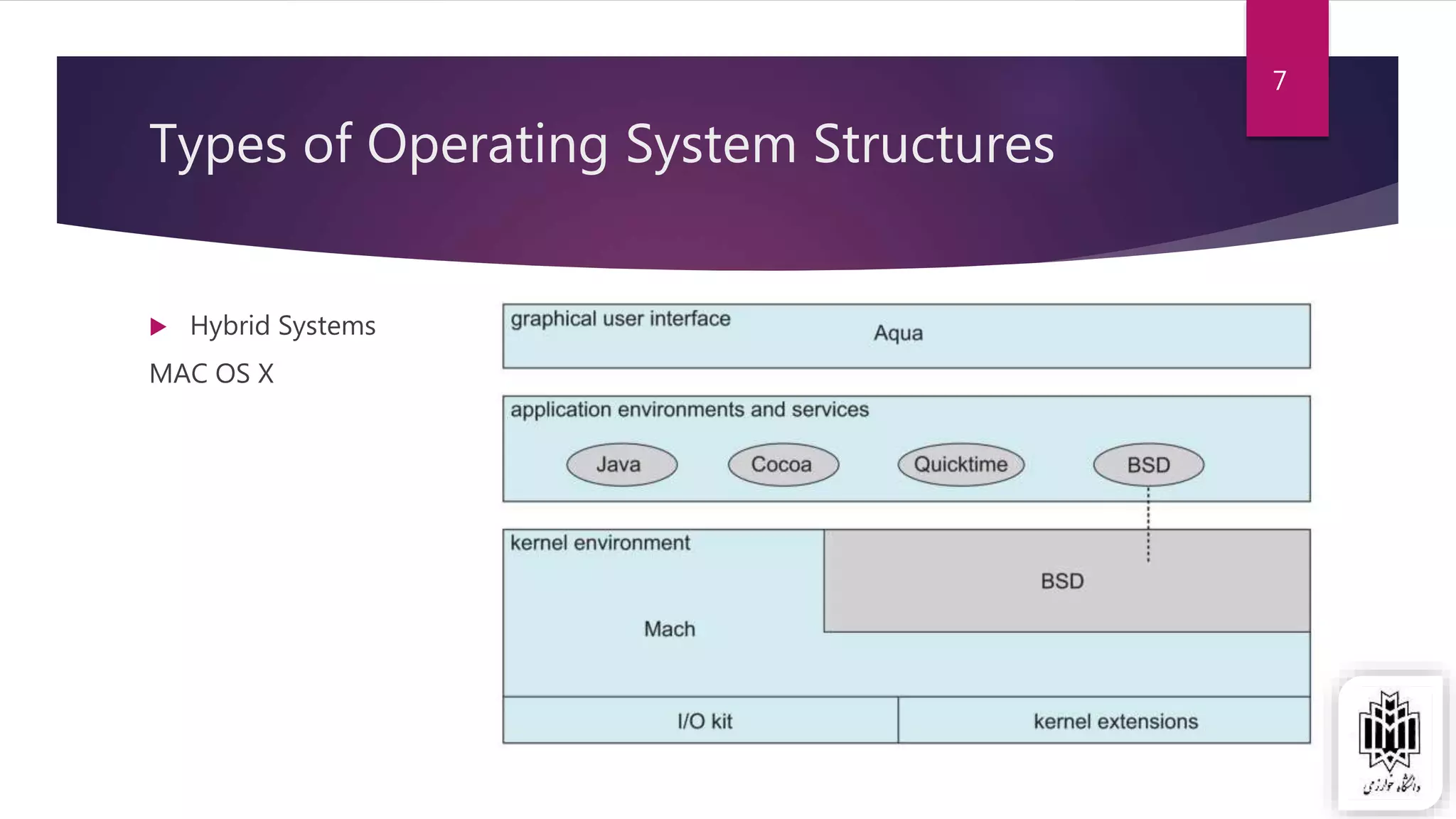
 Hybrid Systems
MAC OS X
8
Types of Operating System Structures
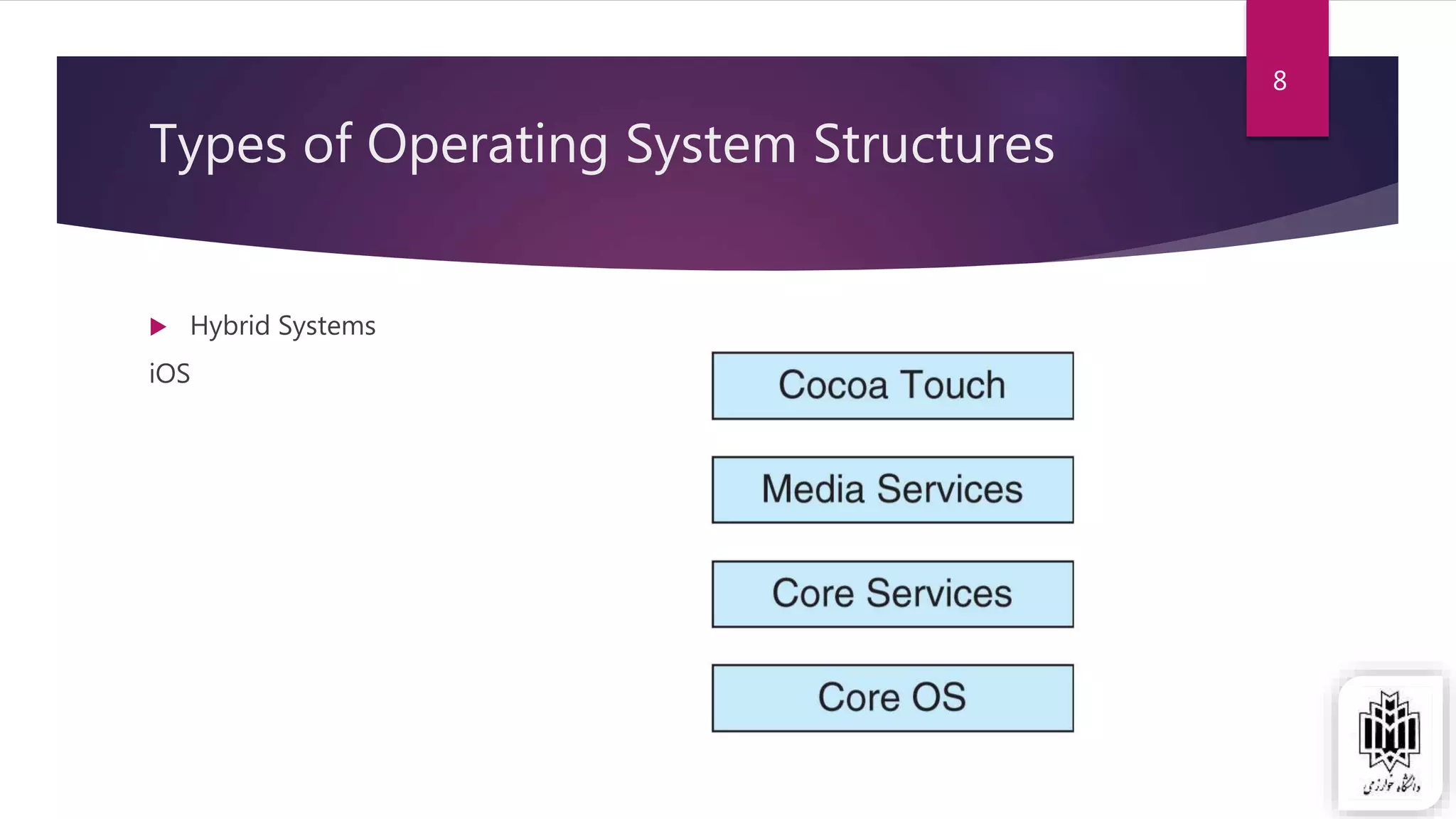
 Hybrid Systems
iOS
9
Types of Operating System Structures
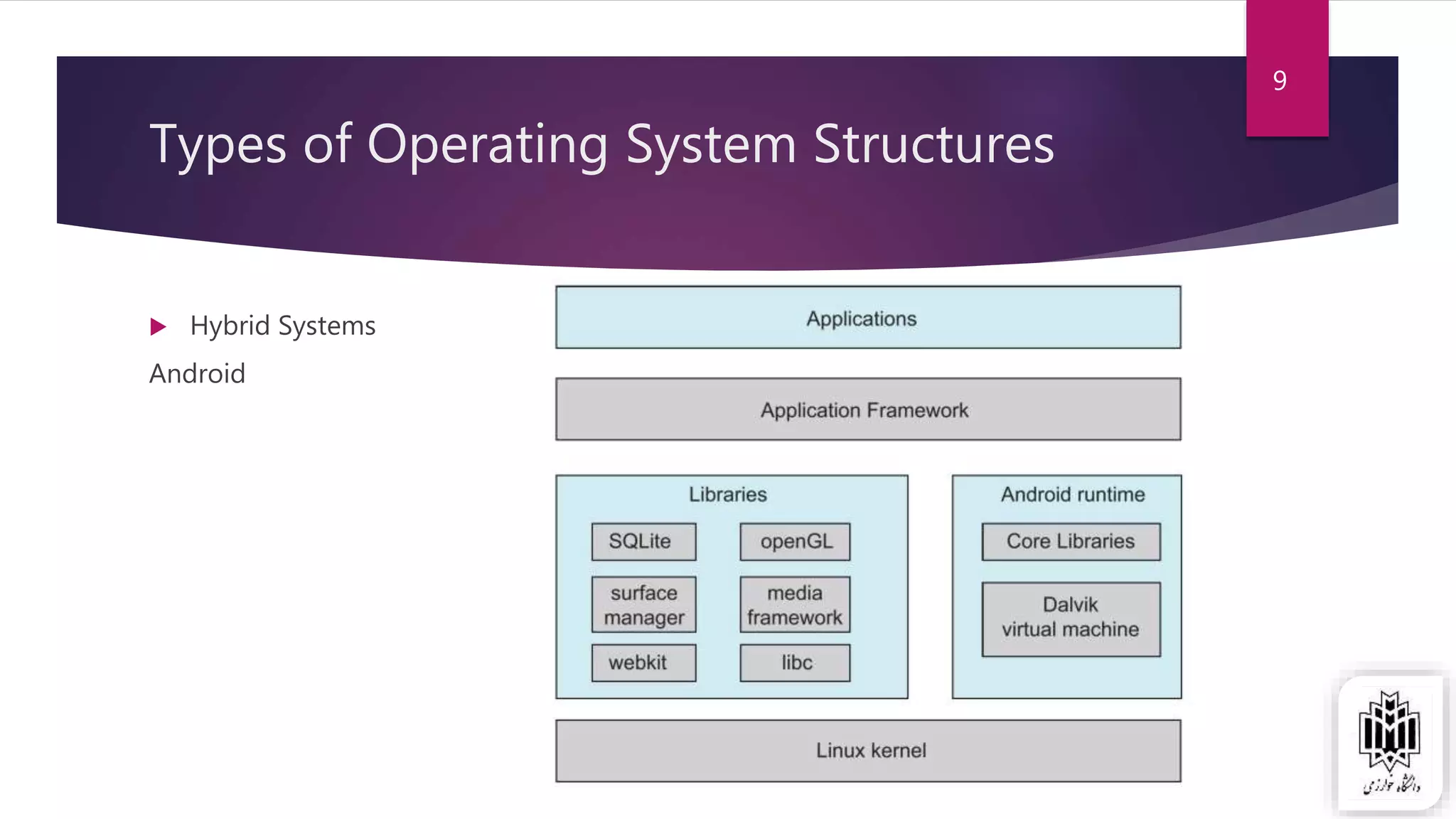
 Hybrid Systems
Android
10
VxWorks
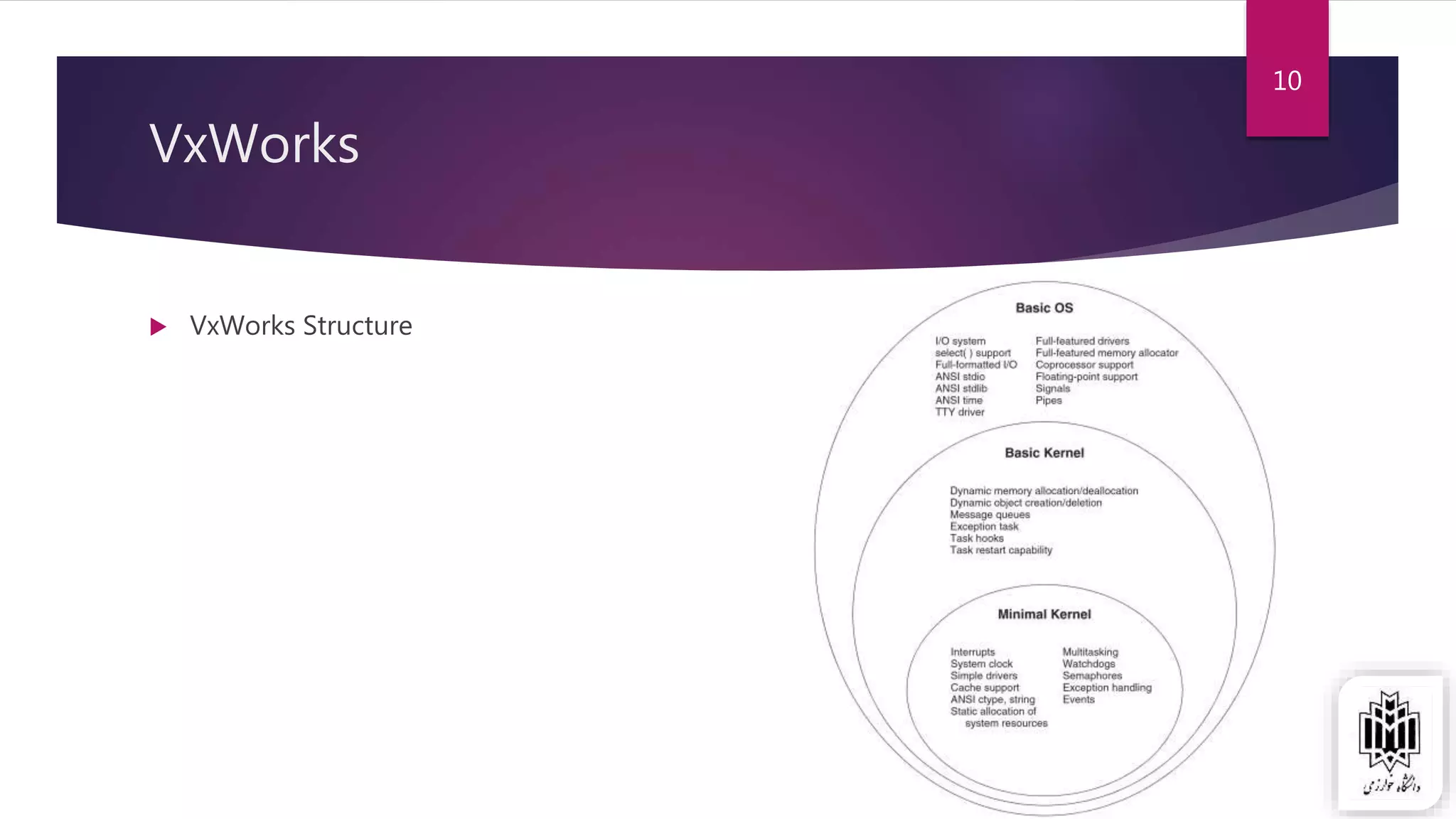
 VxWorks Structure
11
VxWorks
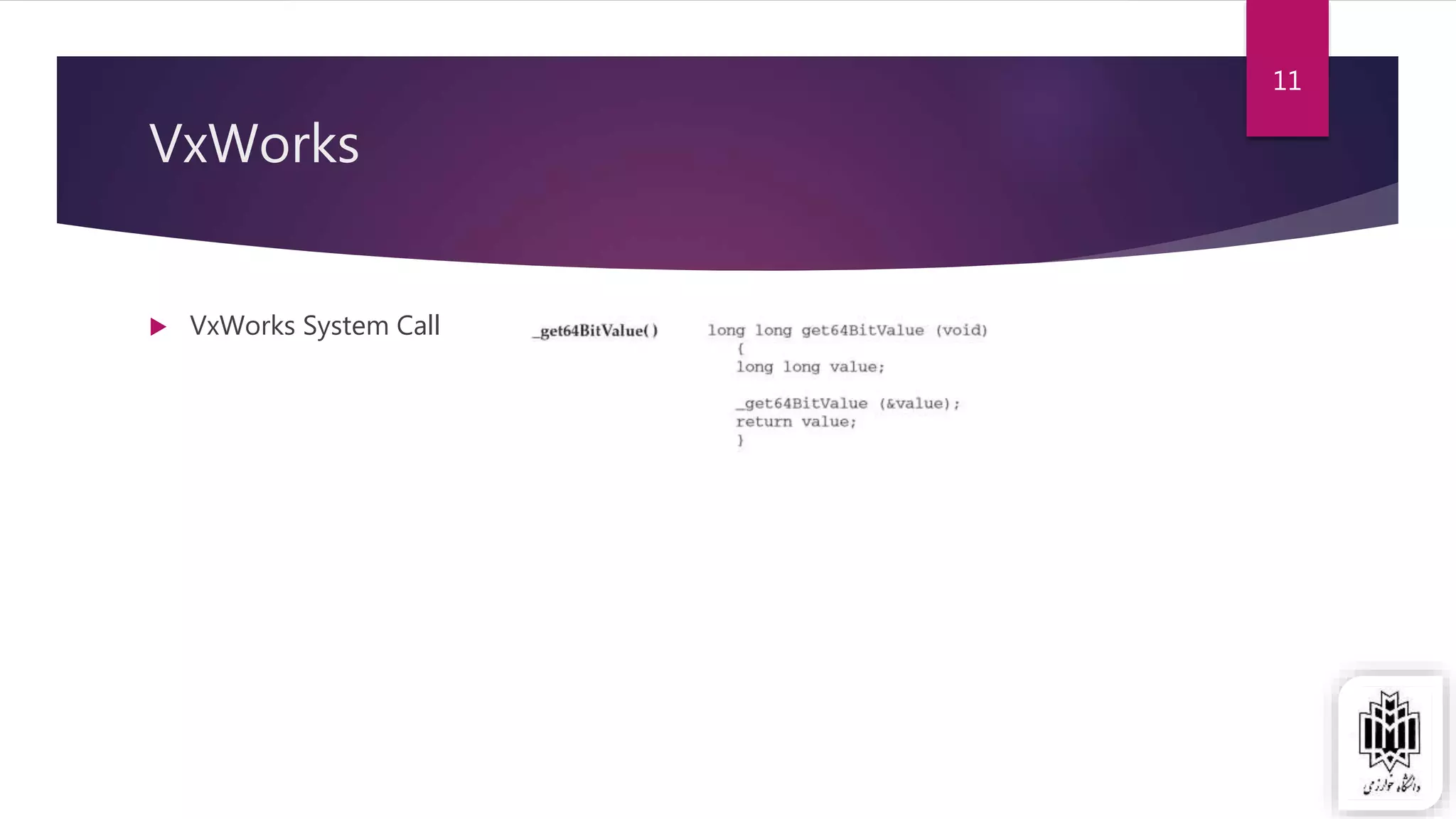
 VxWorks System Call
12
VxWorks
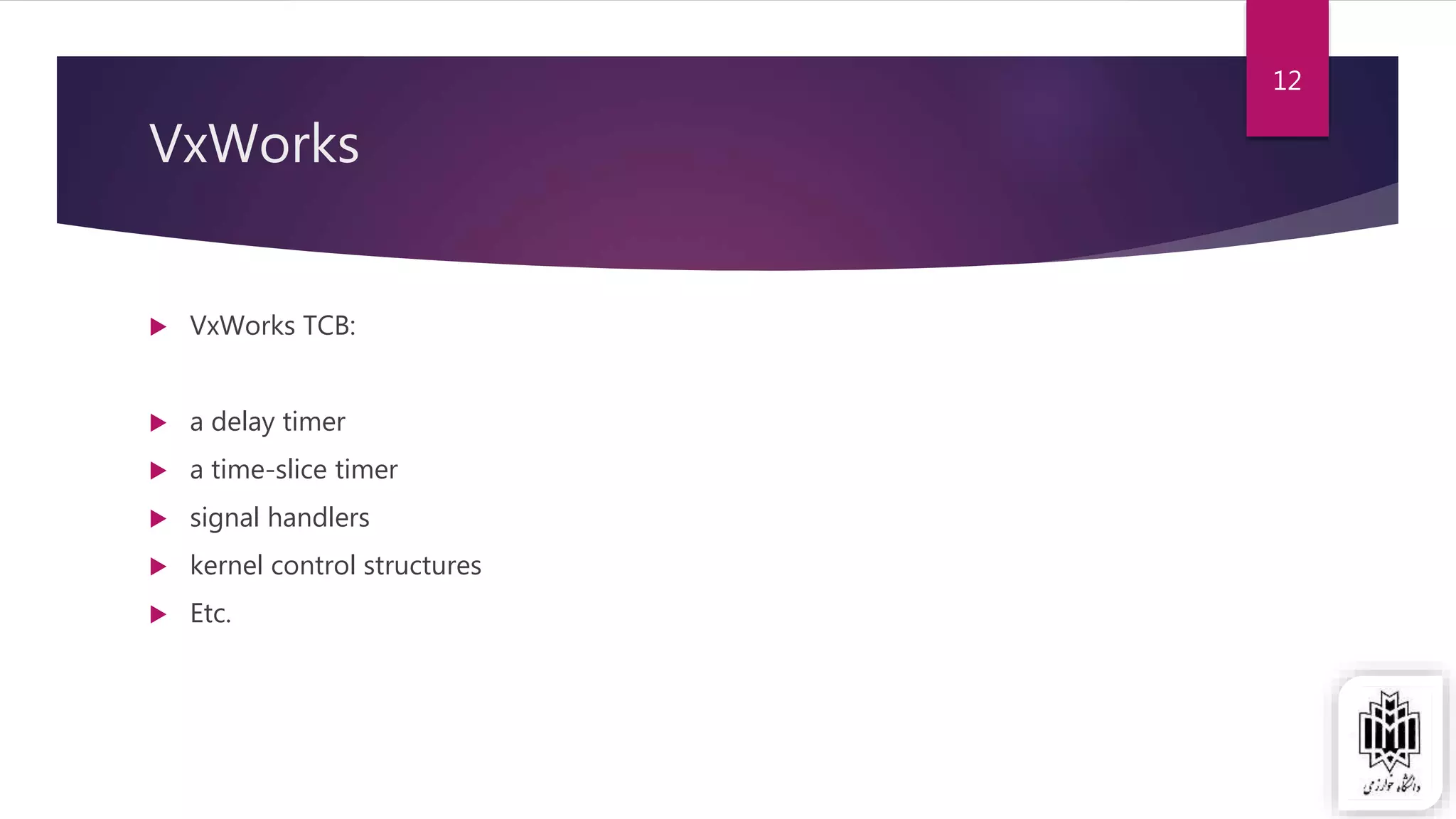
 VxWorks TCB:
 a delay timer
 a time-slice timer
 signal handlers
 kernel control structures
 Etc.
13
Resources
[1] A. Silberschatz, Operating System Concepts, 2012.
[2] "vxworks_kernel_programmers_guide_6.2," [Online]. Available:
https://www.uio.no/studier/emner/matnat/fys/FYS4220/h11/undervisningsmateriale/laboppgaver-
rt/vxworks_kernel_programmers_guide_6.2.pdf.
[3] "TCB in VxWorks," [Online]. Available: http://comp.os.vxworks.narkive.com/0awyxysO/tcb-in-vxworks.
References

Operating System Structure

Editor's Notes

  • #8 Mach provides memory management; support for remote procedure calls (RPCs) and interprocess communication (IPC) facilities, including message passing; and thread scheduling. The BSD component provides a BSD command-line interface, support for networking and file systems, and an implementation of POSIX APIs, including Pthreads. I/O kit for development of device drivers and dynamically loadable modules (which Mac OS X refers to as kernel extensions)
  • #9 Cocoa Touch is an API for Objective-C that provides several frameworks for developing applications that run on iOS devices. The media services layer provides services for graphics, audio, and video. The core services layer provides a variety of features, including support for cloud computing and databases. The bottom layered presents the core operating system, which is based on the kernel environment of MAC OS X.
  • #10 Linux is used primarily for process, memory, and device-driver support for hardware and has been expanded to include power management. frameworks for developing web browsers (webkit), database support (SQLite), and multimedia. The libc library is similar to the standard C library but is much smaller and has been designed for the slower CPUs that characterize mobile devices.