September 2014 
Ms. Schacht and Ms. Rollings
Our Goals 
• Instill a love of learning, wondering, 
and figuring out! 
• Develop independence and self-regulation 
skills, while nurturing each 
child’s self esteem. 
• Create happy memories 
• Form strong school/home partnership
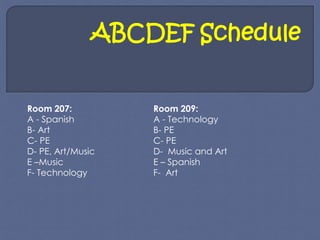
ABCDEF Schedule 
Room 207: 
A - Spanish 
B- Art 
C- PE 
D- PE, Art/Music 
E –Music 
F- Technology 
Room 209: 
A - Technology 
B- PE 
C- PE 
D- Music and Art 
E – Spanish 
F- Art
•Absent Notes 
• Email 
• Send in folder 
• Check Parent Portal for unexcused 
absences for Honor Rolls 
•Tardies 
• Attendance is entered by 8:40 
• Any tardies = no perfect attendance
•Every child starts the day on green 
•A yellow note = child received a warning, but 
behavior continued 
•Red notes are VERY rare. 
• Note home, meeting 
•Red, yellow, and green slips may be sent home 
by specialist teachers
What will my child bring home 
from school? 
Red Folder 
Daily Homework, Graded Daily Homework, Tests, 
Communication/notes 
Book Baggie 
Just right books, Guided Reading book, Goal 
cards 
Please check & empty folders daily.
Homework 
The red homework folder AND Book Baggie will 
be sent home each night. 
 Nightly homework (unless otherwise noted) 
includes: 
• Reading for 20 minutes (Reading Log Optional) 
• Any Guided Reading homework 
• Math worksheet 
• Fundations practice- Due every 1-2 weeks; Work at your 
own pace. 
 Allow students to attempt homework 
independently. Then, go over it with them and 
revise as needed. 
 Not meant to be challenging! Contact teacher
Reading 
Reader’s Workshop- Each student reads books at their 
independent reading level (Just Right books) 
 Our goal for students is not just reading the words; 
 Making meaning 
 Slowing down to become thoughtful, active 
readers. 
 Growing a love of reading 
 Preparing students for future academic life of 
interacting with many different texts. 
 Independent Reading, Partner Reading, Book Clubs, 
Guided Reading, Read Alouds
Read Aloud 
The National Reading Panel found that “The single most 
important activity for building the background knowledge 
required for success in reading is reading aloud to children.” This 
applies at home and at school. (Jim Trelease, The Read Aloud 
Handbook) 
Benefits: 
• Equates reading with pleasure 
• Expands vocabulary 
• Strengthens reading comprehension 
• Models fluent reading 
• Exposes students to a variety of subjects and 
genres that helps build literary knowledge. 
• Instills identity of a reader in a child
Small Group Reading 
Instruction 
Guided Reading Groups 
• Approx 3 x a week 
• Your child is given books at a level higher than the 
one they can read by themselves 
• Meant to bump kids up to more complex texts 
• Strategy Groups 
• Your child uses just right books to practice 
reading strategies. (e.g. Think about how the 
character is feeling.) 
• Meant to help kids go deeper
•Phonics/spelling program. Focus is to 
learn word patterns- not memorize. 
•Packet sent home at start of unit. Due by 
date on packet (2-3 weeks). 
•DO memorize how to spell Trick Words!
•Everyday Math – spiral curriculum, 
conceptual knowledge 
•Family letters are a great source of Info. 
•HomeLink- homework page 
•Enrichment packet for a challenge on Web 
page 
•Grades- Worksheets, Unit Test, Open 
Response
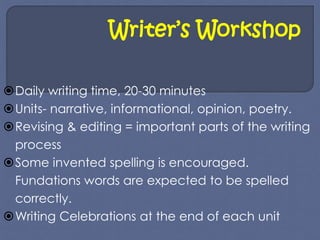
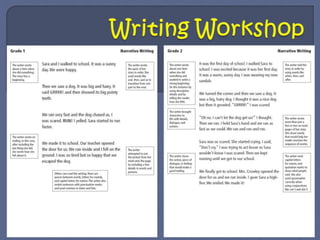
Writer’s Workshop 
Daily writing time, 20-30 minutes 
Units- narrative, informational, opinion, poetry. 
Revising & editing = important parts of the writing 
process 
Some invented spelling is encouraged. 
Fundations words are expected to be spelled 
correctly. 
Writing Celebrations at the end of each unit
-
•Science & Social Studies alternate each 
quarter 
•Field Trips! 
•Occasional homework for thematic unit-watch 
newsletter & family letters.
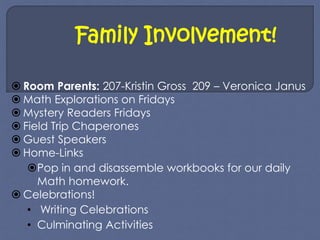
Family Involvement! 
 Room Parents: 207-Kristin Gross 209 – Veronica Janus 
 Math Explorations on Fridays 
 Mystery Readers Fridays 
 Field Trip Chaperones 
 Guest Speakers 
 Home-Links 
Pop in and disassemble workbooks for our daily 
Math homework. 
 Celebrations! 
• Writing Celebrations 
• Culminating Activities
•Weekly e-newsletters 
•Class Web page 
• Email
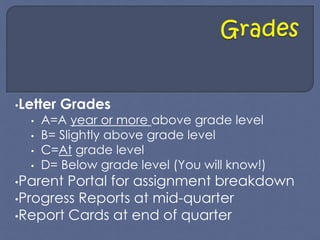
•Letter Grades 
• A=A year or more above grade level 
• B= Slightly above grade level 
• C=At grade level 
• D= Below grade level (You will know!) 
•Parent Portal for assignment breakdown 
•Progress Reports at mid-quarter 
•Report Cards at end of quarter
Birthdays! 
• On your child’s birthday, a family member is welcome 
to come in and read a book to the class to celebrate. 
• No food treats, please 
• Birthday Party Invitation Policy 
• Invitations can be passed out at school ONLY when 
a whole class is invited (or all girls/all boys). 
• Small group invitations should distributed outside of 
school.
-Email to schedule an appointment: 
jfisher7@cps.edu 
- or clrollings@cps.edu 
-No drop-ins before or after school 
(dismissal)

Disney II First Grade Open House Slideshow 2014

  • 1.
    September 2014 Ms.Schacht and Ms. Rollings
  • 2.
    Our Goals •Instill a love of learning, wondering, and figuring out! • Develop independence and self-regulation skills, while nurturing each child’s self esteem. • Create happy memories • Form strong school/home partnership
  • 3.
    ABCDEF Schedule Room207: A - Spanish B- Art C- PE D- PE, Art/Music E –Music F- Technology Room 209: A - Technology B- PE C- PE D- Music and Art E – Spanish F- Art
  • 4.
    •Absent Notes •Email • Send in folder • Check Parent Portal for unexcused absences for Honor Rolls •Tardies • Attendance is entered by 8:40 • Any tardies = no perfect attendance
  • 5.
    •Every child startsthe day on green •A yellow note = child received a warning, but behavior continued •Red notes are VERY rare. • Note home, meeting •Red, yellow, and green slips may be sent home by specialist teachers
  • 6.
    What will mychild bring home from school? Red Folder Daily Homework, Graded Daily Homework, Tests, Communication/notes Book Baggie Just right books, Guided Reading book, Goal cards Please check & empty folders daily.
  • 7.
    Homework The redhomework folder AND Book Baggie will be sent home each night.  Nightly homework (unless otherwise noted) includes: • Reading for 20 minutes (Reading Log Optional) • Any Guided Reading homework • Math worksheet • Fundations practice- Due every 1-2 weeks; Work at your own pace.  Allow students to attempt homework independently. Then, go over it with them and revise as needed.  Not meant to be challenging! Contact teacher
  • 8.
    Reading Reader’s Workshop-Each student reads books at their independent reading level (Just Right books)  Our goal for students is not just reading the words;  Making meaning  Slowing down to become thoughtful, active readers.  Growing a love of reading  Preparing students for future academic life of interacting with many different texts.  Independent Reading, Partner Reading, Book Clubs, Guided Reading, Read Alouds
  • 9.
    Read Aloud TheNational Reading Panel found that “The single most important activity for building the background knowledge required for success in reading is reading aloud to children.” This applies at home and at school. (Jim Trelease, The Read Aloud Handbook) Benefits: • Equates reading with pleasure • Expands vocabulary • Strengthens reading comprehension • Models fluent reading • Exposes students to a variety of subjects and genres that helps build literary knowledge. • Instills identity of a reader in a child
  • 10.
    Small Group Reading Instruction Guided Reading Groups • Approx 3 x a week • Your child is given books at a level higher than the one they can read by themselves • Meant to bump kids up to more complex texts • Strategy Groups • Your child uses just right books to practice reading strategies. (e.g. Think about how the character is feeling.) • Meant to help kids go deeper
  • 11.
    •Phonics/spelling program. Focusis to learn word patterns- not memorize. •Packet sent home at start of unit. Due by date on packet (2-3 weeks). •DO memorize how to spell Trick Words!
  • 12.
    •Everyday Math –spiral curriculum, conceptual knowledge •Family letters are a great source of Info. •HomeLink- homework page •Enrichment packet for a challenge on Web page •Grades- Worksheets, Unit Test, Open Response
  • 13.
    Writer’s Workshop Dailywriting time, 20-30 minutes Units- narrative, informational, opinion, poetry. Revising & editing = important parts of the writing process Some invented spelling is encouraged. Fundations words are expected to be spelled correctly. Writing Celebrations at the end of each unit
  • 14.
  • 15.
    •Science & SocialStudies alternate each quarter •Field Trips! •Occasional homework for thematic unit-watch newsletter & family letters.
  • 16.
    Family Involvement! Room Parents: 207-Kristin Gross 209 – Veronica Janus  Math Explorations on Fridays  Mystery Readers Fridays  Field Trip Chaperones  Guest Speakers  Home-Links Pop in and disassemble workbooks for our daily Math homework.  Celebrations! • Writing Celebrations • Culminating Activities
  • 17.
  • 18.
    •Letter Grades •A=A year or more above grade level • B= Slightly above grade level • C=At grade level • D= Below grade level (You will know!) •Parent Portal for assignment breakdown •Progress Reports at mid-quarter •Report Cards at end of quarter
  • 19.
    Birthdays! • Onyour child’s birthday, a family member is welcome to come in and read a book to the class to celebrate. • No food treats, please • Birthday Party Invitation Policy • Invitations can be passed out at school ONLY when a whole class is invited (or all girls/all boys). • Small group invitations should distributed outside of school.
  • 20.
    -Email to schedulean appointment: jfisher7@cps.edu - or clrollings@cps.edu -No drop-ins before or after school (dismissal)