WELCOME TO ROOM
209
Ms. Rollings First Grade
Hopes & Dreams for 209
To create
happy, life-
long
memories of
learning,
friendship,
and fun.
To meet the
needs of
each child,
through
personalized
teaching and
playful
learning.
To develop
problem
solving skills,
collaborative
thinking, and
a “Can Do”
attitude.
To nurture
life-long
learners, who
are curious
and articulate
about the
world around
them.
“We worry about what a child will became tomorrow,
yet we forget that he is someone today.”
-Stacia Tauscher
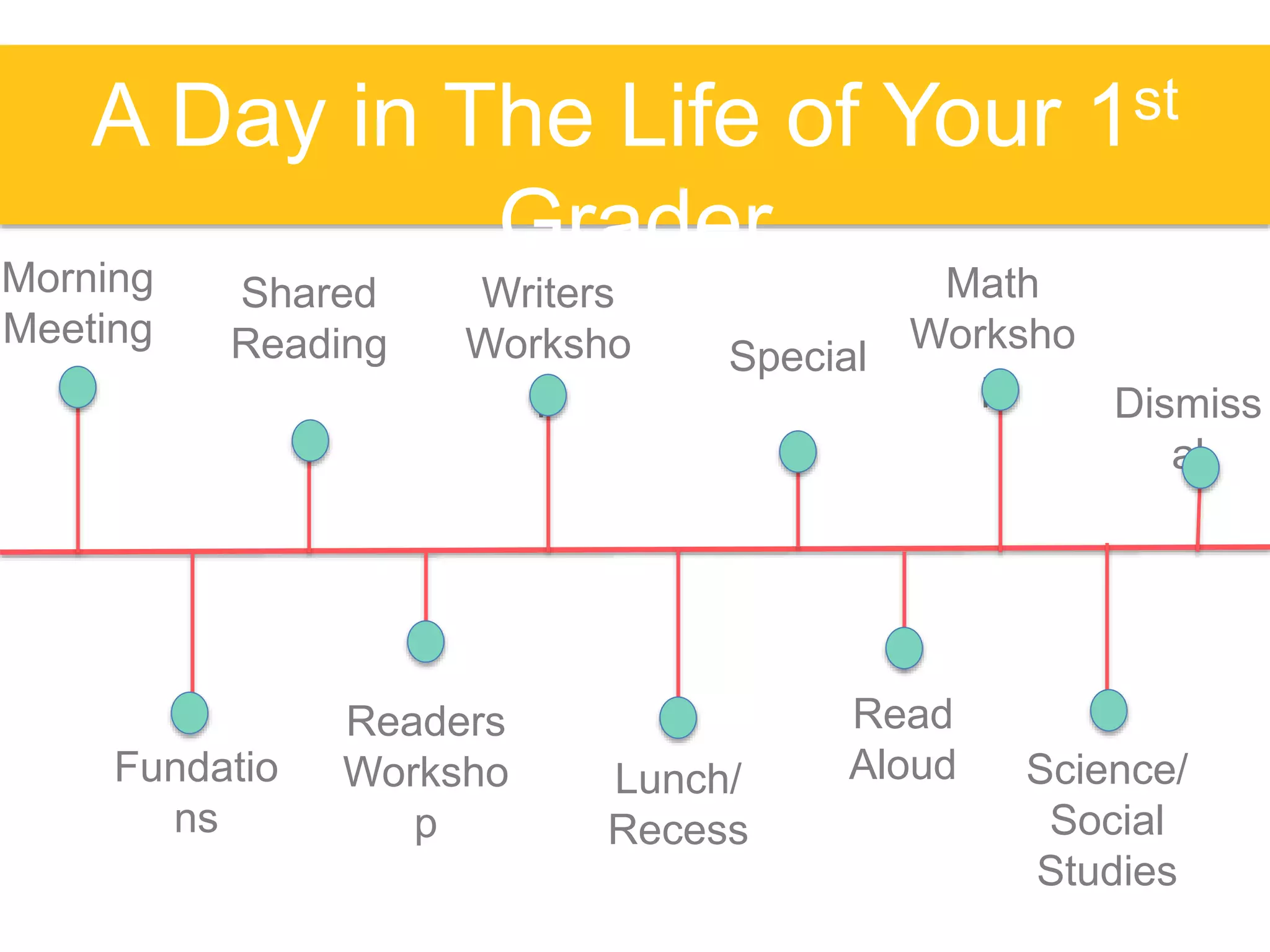
A Day in The Life of Your 1st
GraderMorning
Meeting
Lunch/
Recess
Writers
Worksho
p
Readers
Worksho
p
Special
Fundatio
ns
Math
Worksho
p
Read
Aloud
Dismiss
al
Science/
Social
Studies
Shared
Reading
SPECIALS SCHEDULE
Monday Tuesday Wednesd
ay
Thursday Monday
Technolo
gy
Art PE &
Music
PE Music &
PE
ATTENDANCE
 Absence Notes: Email me and Mr. Santiago
o Unexcused absences = no Honor Roll awards
 Tardies: After 8:35am
o Any tardies = no Perfect Attendance award
Each school day is filled with valuable
learning.
Please avoid early dismissals, late arrivals,
and
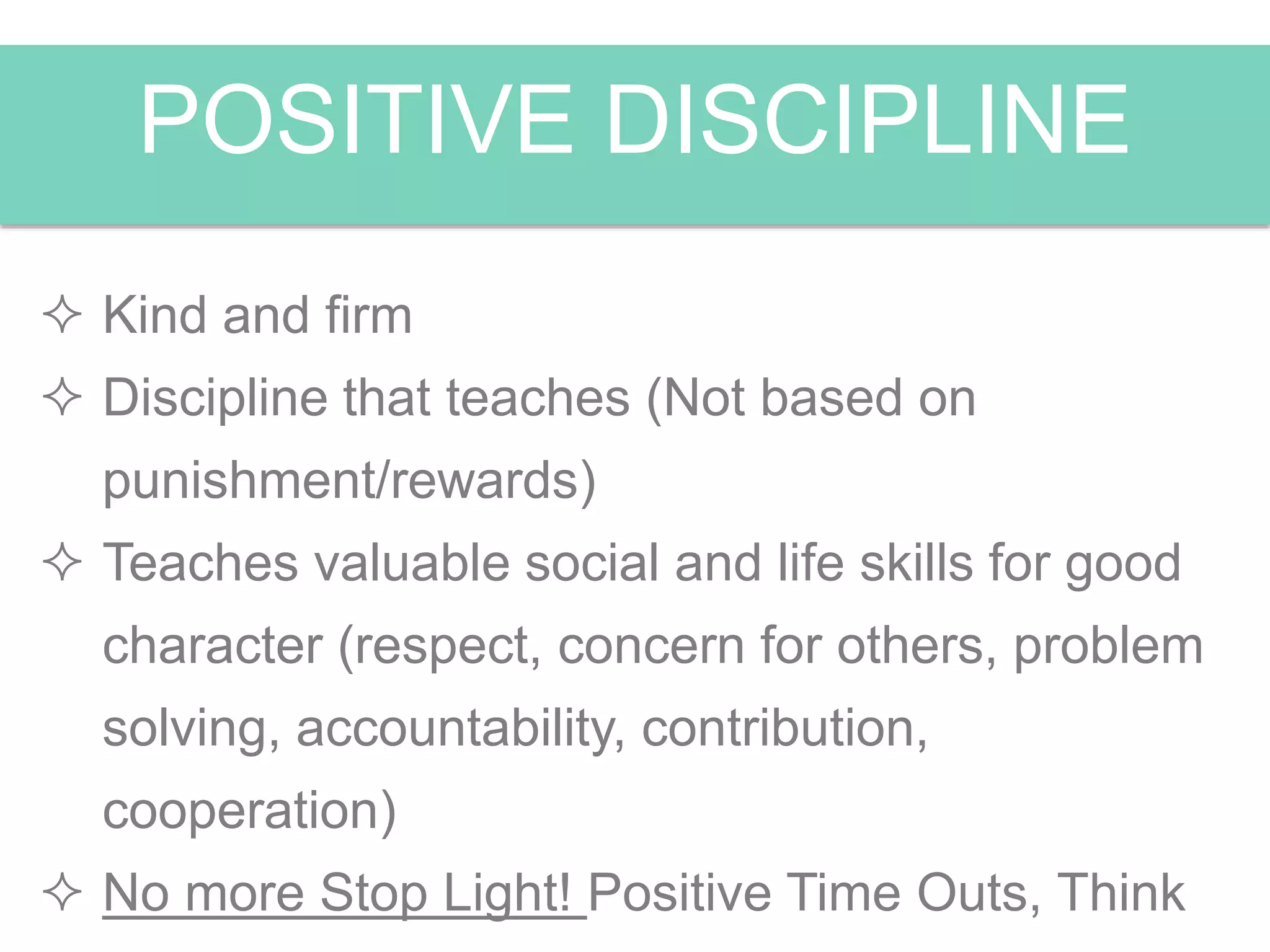
POSITIVE DISCIPLINE
 Kind and firm
 Discipline that teaches (Not based on
punishment/rewards)
 Teaches valuable social and life skills for good
character (respect, concern for others, problem
solving, accountability, contribution,
cooperation)
 No more Stop Light! Positive Time Outs, Think
BUILDING
INDEPENDENCE! I Can Do It!
o Carry my own backpack
o Pack my own folder
o Turn in my homework and notes
o Zip/tie/button!
o Solve problems
o Classroom Jobs
HOMEWORK
 Monday - Thursday
 Kids should try independently first.
 Check and help as needed.
 Send a note if math homework > 15 min.
*Nightly Homework*
 Read for 20 minutes (most important)
 Math worksheet (~10 minutes)
 Fundations Packet (Due ~ every 2 weeks)
Level D
Level J
GROWING
READERS!
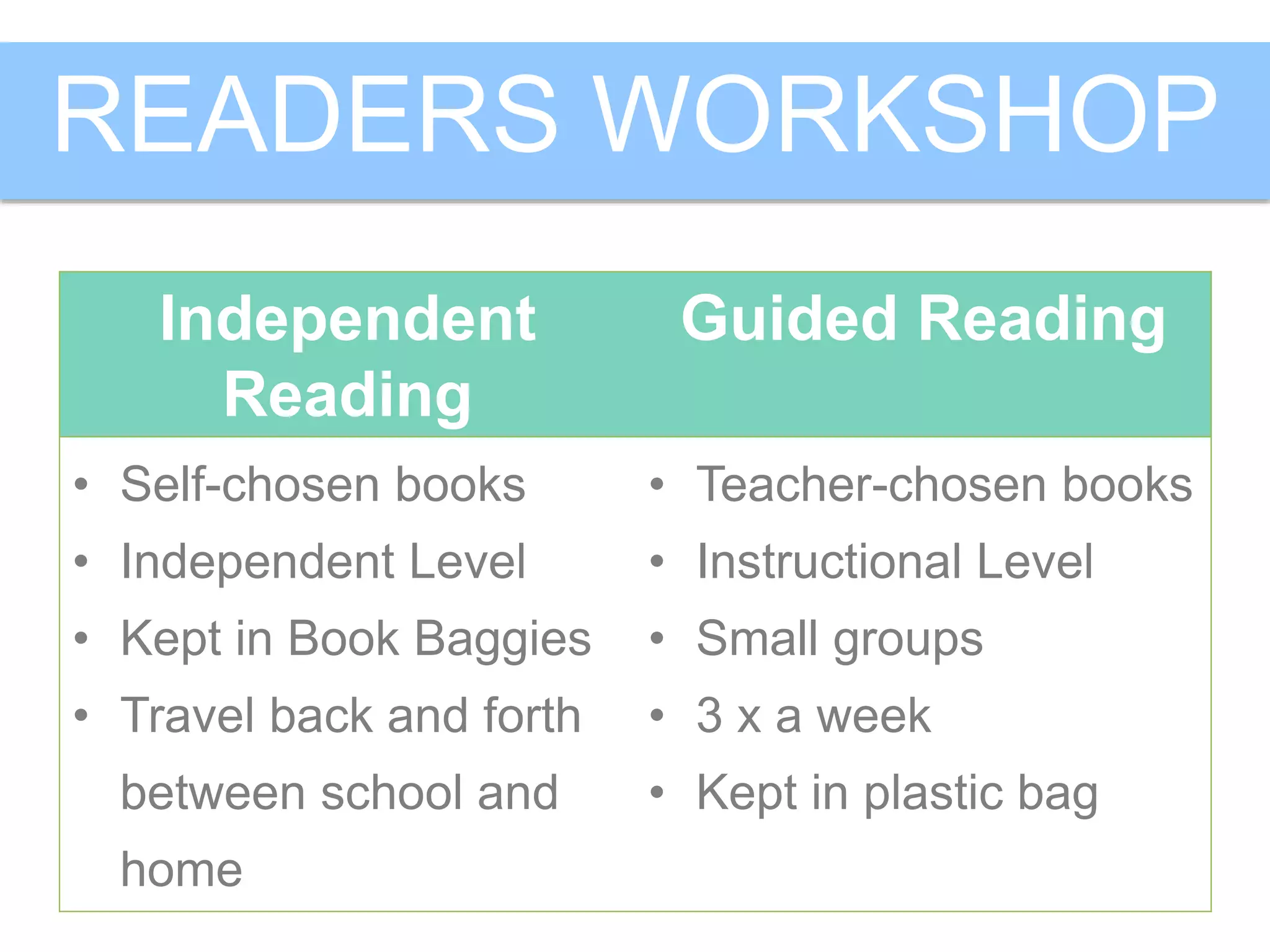
READERS WORKSHOP
Independent
Reading
Guided Reading
• Self-chosen books
• Independent Level
• Kept in Book Baggies
• Travel back and forth
between school and
home
• Teacher-chosen books
• Instructional Level
• Small groups
• 3 x a week
• Kept in plastic bag
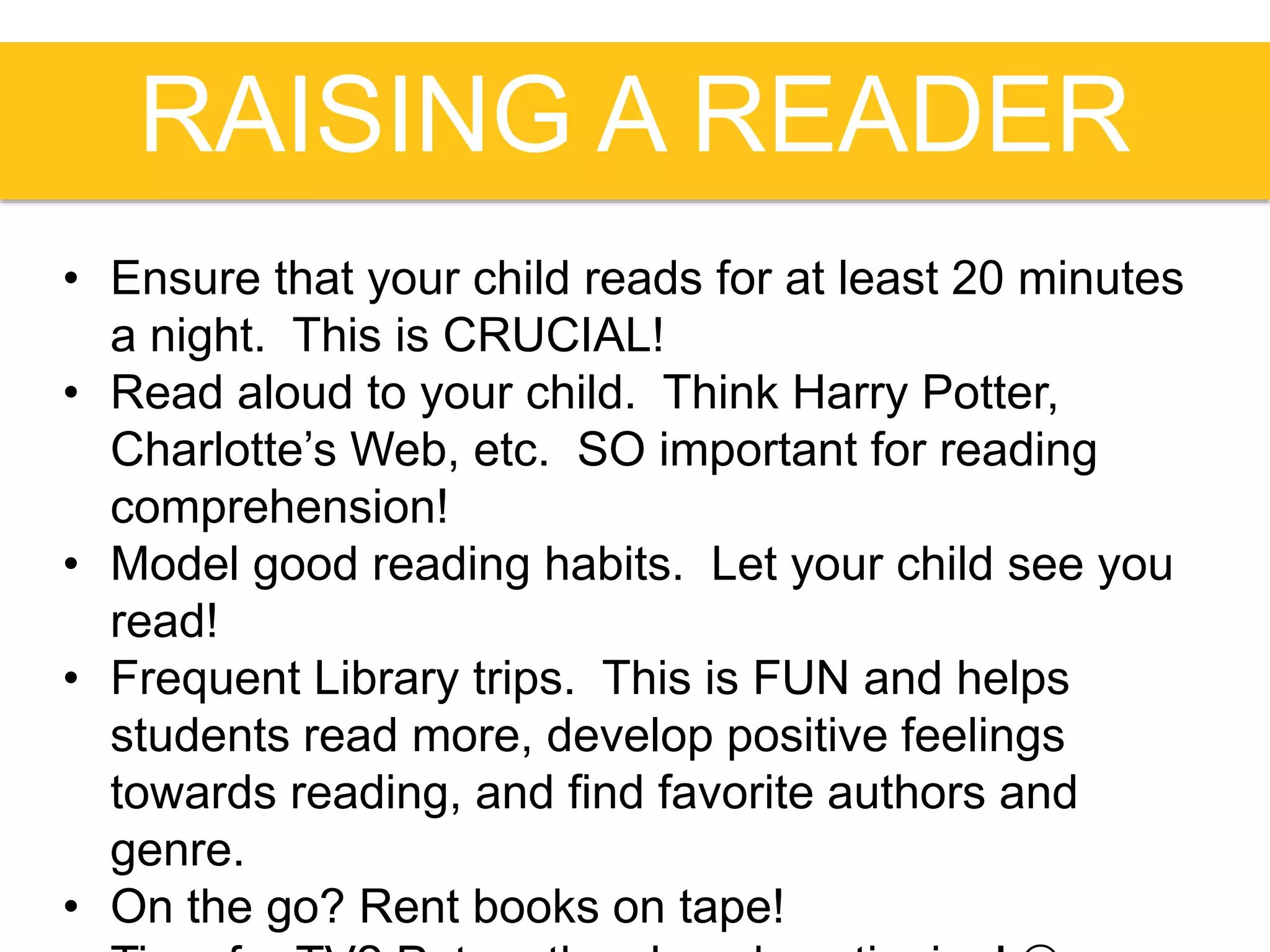
RAISING A READER
• Ensure that your child reads for at least 20 minutes
a night. This is CRUCIAL!
• Read aloud to your child. Think Harry Potter,
Charlotte’s Web, etc. SO important for reading
comprehension!
• Model good reading habits. Let your child see you
read!
• Frequent Library trips. This is FUN and helps
students read more, develop positive feelings
towards reading, and find favorite authors and
genre.
• On the go? Rent books on tape!
FUNDATIONS &
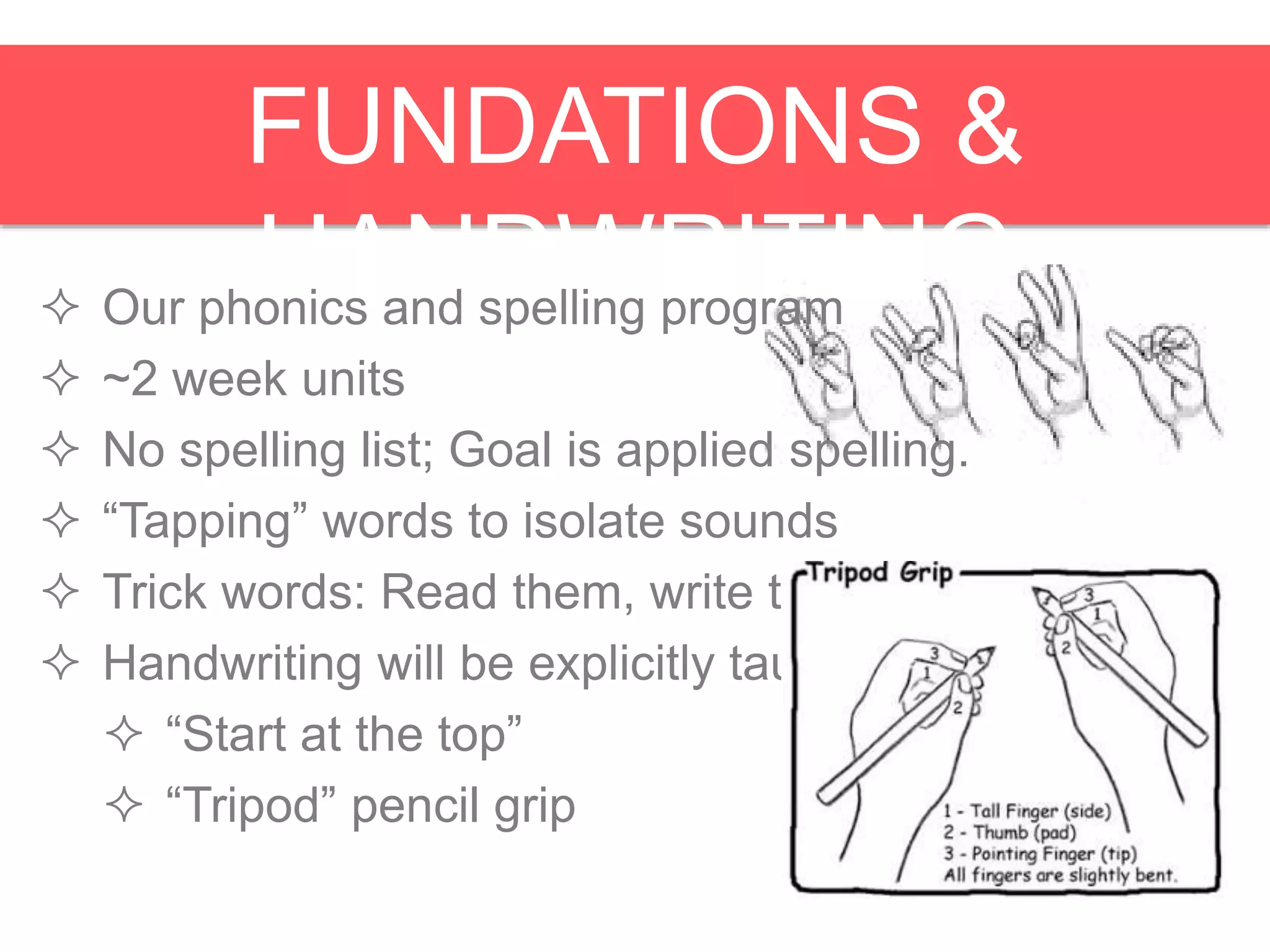
HANDWRITING Our phonics and spelling program
 ~2 week units
 No spelling list; Goal is applied spelling.
 “Tapping” words to isolate sounds
 Trick words: Read them, write them
 Handwriting will be explicitly taught.
 “Start at the top”
 “Tripod” pencil grip
WRITERS WORKSHOP
 Narrative, How-To, Information books,
Persuasive, and Fiction
 Think -> Say -> Sketch -> Write ->
Make it better!
 Handwriting/Spelling/Grammar are only
small parts of writing
 Detailed rubrics help you track your
child’s progress
 Writing Celebrations!
RAISING A WRITER
o “Writing Center”
o Different types of paper, stationary,
blank books, postcards, envelopes,
pens, markers, etc.
o Spur writing ideas at home.
o Notice good writing in read alouds
o Share writing with relatives
o Writing check-ins
o “What are you working on in WW?”
GROWING
WRITERS!
1st Grade Expectations
End of K Expectations
2nd Grade Expectations
GROWING
WRITERS!
Students
receiving B’s or
A’s in writing
regularly
demonstrate
many or most of
the skills of a 2nd
grade writer.
MATHEMATICS
• Adding and Subtracting
• Discovering efficient strategies
• Word problems
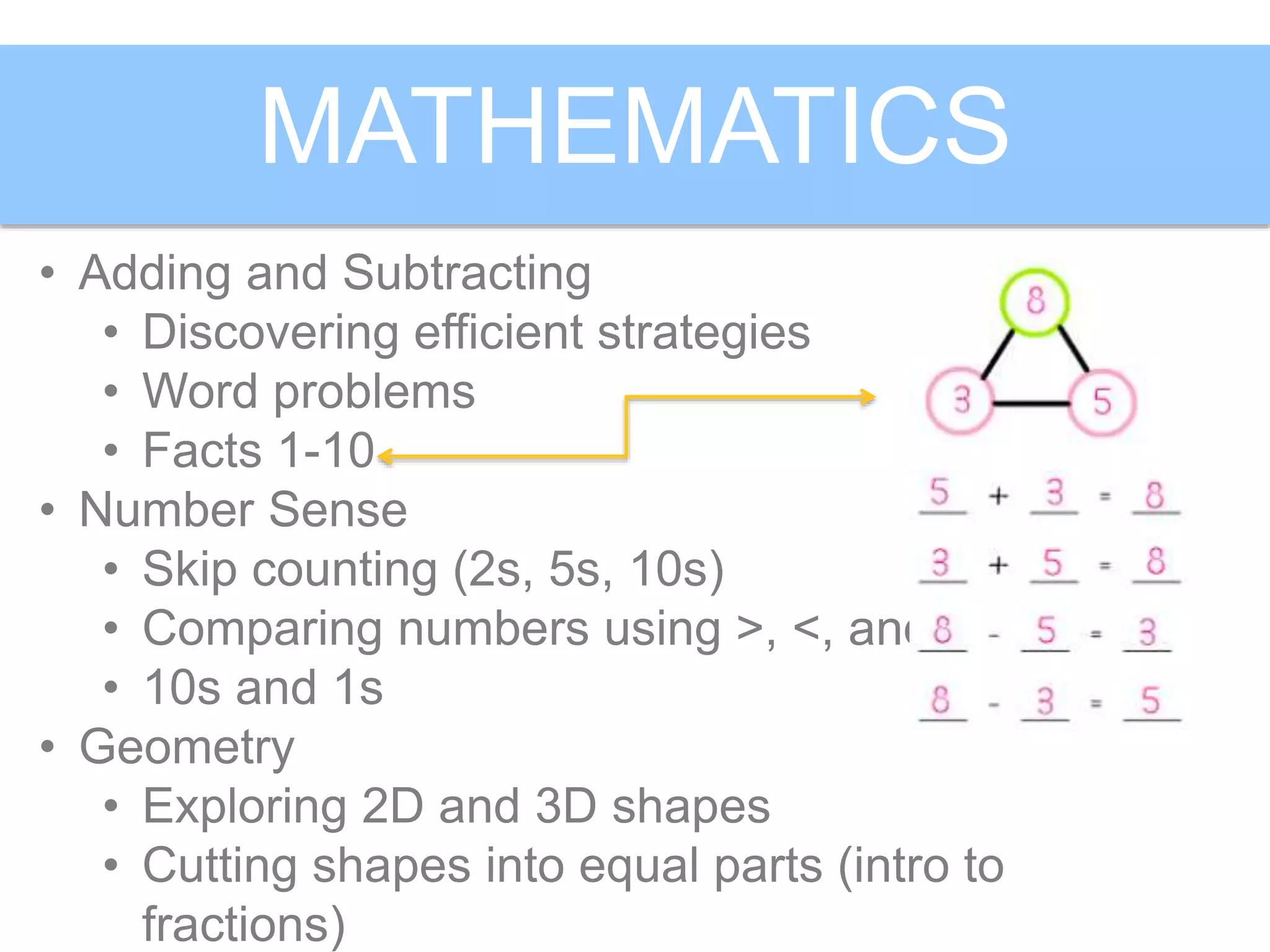
• Facts 1-10
• Number Sense
• Skip counting (2s, 5s, 10s)
• Comparing numbers using >, <, and =
• 10s and 1s
• Geometry
• Exploring 2D and 3D shapes
• Cutting shapes into equal parts (intro to
fractions)
RAISING A
MATHEMATICIAN• Play games and talk about math in the real world.
Go grocery shopping together, count change,
bake and cook, etc.
• Reinforce addition and subtraction facts for sums
under 10.
• Ask your children to explain how they came up
with an answer. (How did you count? How did
you add/subtract?)
• Practice estimating to develop measurement
sense: Try estimating the number of windows in
your house- then count and see.
• Practice Mental Math (“Start at 37, count by 10s”)
SCIENCE & SOCIAL
STUDIESScience Units
o Insects and Life
Cycles
o Bridges and
Engineering
o Rocks, Sand, and Silt
o Organisms
Social Studies Units
o Families Same, Families
Different
o Pilgrims and
Wampanoags
o Families Around the
World
o Pioneer Families Inquiry based
 Letting kids’ natural curiosities and wonders lead
the way
 Learning through nonfiction reading and writing
 Hands-on experiments and observations
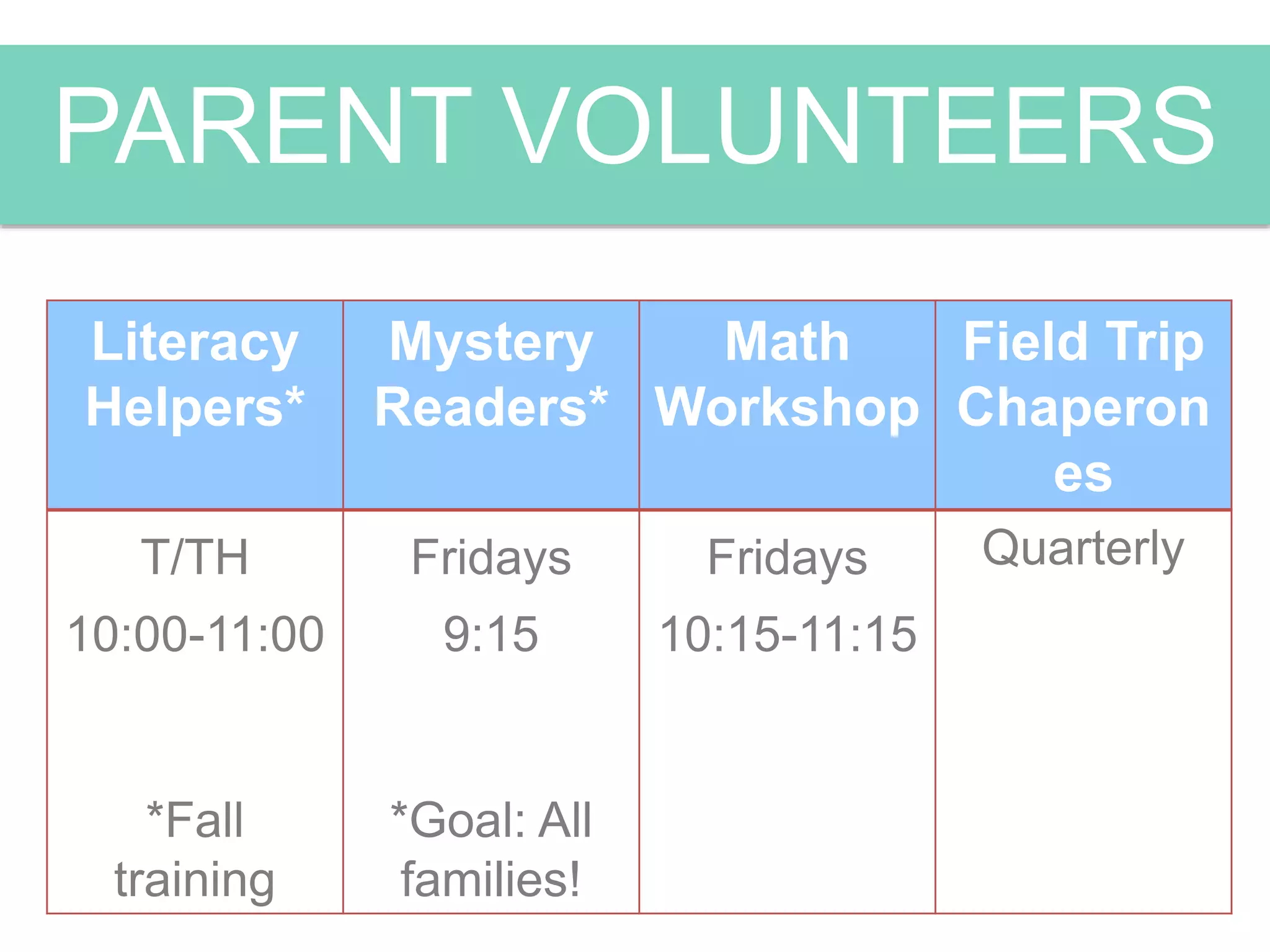
PARENT VOLUNTEERS
Literacy
Helpers*
Mystery
Readers*
Math
Workshop
Field Trip
Chaperon
es
T/TH
10:00-11:00
*Fall
training
Fridays
9:15
*Goal: All
families!
Fridays
10:15-11:15
Quarterly
GRADES
• The Board of Ed requires letter grades for all students 1st
grade and up.
• At just 6-7 years old, children are still developing at
different rates.
• We do our best to translate the children’s progress into
grades, but we find it more important that each child is
being challenged appropriately for his/her level.
• We will not be discussing letter grades with the children in
the classroom or showing them their report cards.
• We recommended de-emphasizing letter grades with your
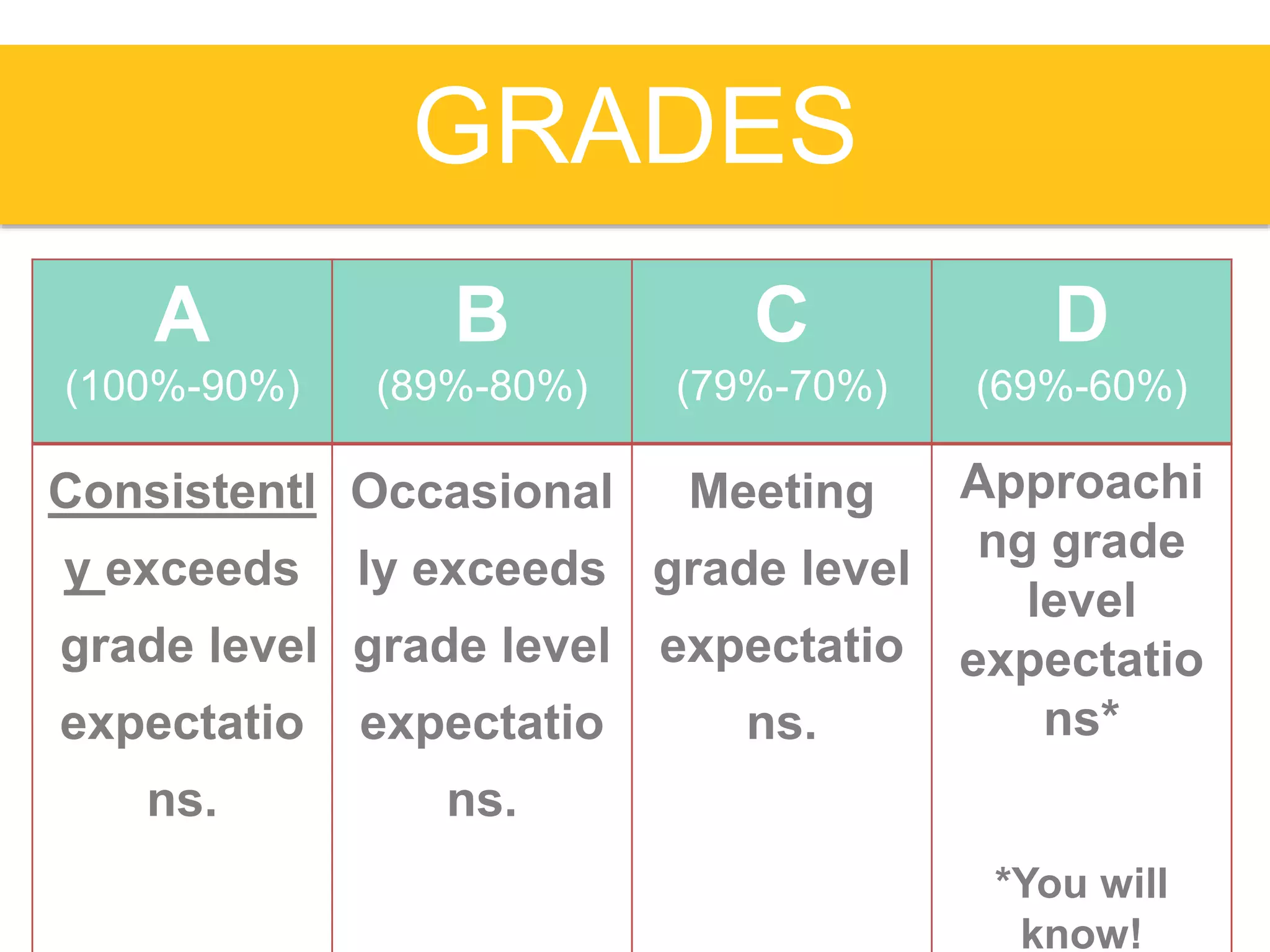
GRADES
A
(100%-90%)
B
(89%-80%)
C
(79%-70%)
D
(69%-60%)
Consistentl
y exceeds
grade level
expectatio
ns.
Occasional
ly exceeds
grade level
expectatio
ns.
Meeting
grade level
expectatio
ns.
Approachi
ng grade
level
expectatio
ns*
*You will
know!
CONTACTING US
• Email for minor inquiries
• Scheduled meetings for longer
conversations.
• Avoid morning/afternoon drop-
ins, please.

First Grade Open House 2015

  • 1.
    WELCOME TO ROOM 209 Ms.Rollings First Grade
  • 2.
    Hopes & Dreamsfor 209 To create happy, life- long memories of learning, friendship, and fun. To meet the needs of each child, through personalized teaching and playful learning. To develop problem solving skills, collaborative thinking, and a “Can Do” attitude. To nurture life-long learners, who are curious and articulate about the world around them. “We worry about what a child will became tomorrow, yet we forget that he is someone today.” -Stacia Tauscher
  • 3.
    A Day inThe Life of Your 1st GraderMorning Meeting Lunch/ Recess Writers Worksho p Readers Worksho p Special Fundatio ns Math Worksho p Read Aloud Dismiss al Science/ Social Studies Shared Reading
  • 4.
    SPECIALS SCHEDULE Monday TuesdayWednesd ay Thursday Monday Technolo gy Art PE & Music PE Music & PE
  • 5.
    ATTENDANCE  Absence Notes:Email me and Mr. Santiago o Unexcused absences = no Honor Roll awards  Tardies: After 8:35am o Any tardies = no Perfect Attendance award Each school day is filled with valuable learning. Please avoid early dismissals, late arrivals, and
  • 6.
    POSITIVE DISCIPLINE  Kindand firm  Discipline that teaches (Not based on punishment/rewards)  Teaches valuable social and life skills for good character (respect, concern for others, problem solving, accountability, contribution, cooperation)  No more Stop Light! Positive Time Outs, Think
  • 7.
    BUILDING INDEPENDENCE! I CanDo It! o Carry my own backpack o Pack my own folder o Turn in my homework and notes o Zip/tie/button! o Solve problems o Classroom Jobs
  • 8.
    HOMEWORK  Monday -Thursday  Kids should try independently first.  Check and help as needed.  Send a note if math homework > 15 min. *Nightly Homework*  Read for 20 minutes (most important)  Math worksheet (~10 minutes)  Fundations Packet (Due ~ every 2 weeks)
  • 9.
  • 10.
    READERS WORKSHOP Independent Reading Guided Reading •Self-chosen books • Independent Level • Kept in Book Baggies • Travel back and forth between school and home • Teacher-chosen books • Instructional Level • Small groups • 3 x a week • Kept in plastic bag
  • 11.
    RAISING A READER •Ensure that your child reads for at least 20 minutes a night. This is CRUCIAL! • Read aloud to your child. Think Harry Potter, Charlotte’s Web, etc. SO important for reading comprehension! • Model good reading habits. Let your child see you read! • Frequent Library trips. This is FUN and helps students read more, develop positive feelings towards reading, and find favorite authors and genre. • On the go? Rent books on tape!
  • 12.
    FUNDATIONS & HANDWRITING Ourphonics and spelling program  ~2 week units  No spelling list; Goal is applied spelling.  “Tapping” words to isolate sounds  Trick words: Read them, write them  Handwriting will be explicitly taught.  “Start at the top”  “Tripod” pencil grip
  • 13.
    WRITERS WORKSHOP  Narrative,How-To, Information books, Persuasive, and Fiction  Think -> Say -> Sketch -> Write -> Make it better!  Handwriting/Spelling/Grammar are only small parts of writing  Detailed rubrics help you track your child’s progress  Writing Celebrations!
  • 14.
    RAISING A WRITER o“Writing Center” o Different types of paper, stationary, blank books, postcards, envelopes, pens, markers, etc. o Spur writing ideas at home. o Notice good writing in read alouds o Share writing with relatives o Writing check-ins o “What are you working on in WW?”
  • 15.
  • 16.
    2nd Grade Expectations GROWING WRITERS! Students receivingB’s or A’s in writing regularly demonstrate many or most of the skills of a 2nd grade writer.
  • 17.
    MATHEMATICS • Adding andSubtracting • Discovering efficient strategies • Word problems • Facts 1-10 • Number Sense • Skip counting (2s, 5s, 10s) • Comparing numbers using >, <, and = • 10s and 1s • Geometry • Exploring 2D and 3D shapes • Cutting shapes into equal parts (intro to fractions)
  • 18.
    RAISING A MATHEMATICIAN• Playgames and talk about math in the real world. Go grocery shopping together, count change, bake and cook, etc. • Reinforce addition and subtraction facts for sums under 10. • Ask your children to explain how they came up with an answer. (How did you count? How did you add/subtract?) • Practice estimating to develop measurement sense: Try estimating the number of windows in your house- then count and see. • Practice Mental Math (“Start at 37, count by 10s”)
  • 19.
    SCIENCE & SOCIAL STUDIESScienceUnits o Insects and Life Cycles o Bridges and Engineering o Rocks, Sand, and Silt o Organisms Social Studies Units o Families Same, Families Different o Pilgrims and Wampanoags o Families Around the World o Pioneer Families Inquiry based  Letting kids’ natural curiosities and wonders lead the way  Learning through nonfiction reading and writing  Hands-on experiments and observations
  • 20.
  • 21.
    GRADES • The Boardof Ed requires letter grades for all students 1st grade and up. • At just 6-7 years old, children are still developing at different rates. • We do our best to translate the children’s progress into grades, but we find it more important that each child is being challenged appropriately for his/her level. • We will not be discussing letter grades with the children in the classroom or showing them their report cards. • We recommended de-emphasizing letter grades with your
  • 22.
    GRADES A (100%-90%) B (89%-80%) C (79%-70%) D (69%-60%) Consistentl y exceeds grade level expectatio ns. Occasional lyexceeds grade level expectatio ns. Meeting grade level expectatio ns. Approachi ng grade level expectatio ns* *You will know!
  • 23.
    CONTACTING US • Emailfor minor inquiries • Scheduled meetings for longer conversations. • Avoid morning/afternoon drop- ins, please.