What is ECBCheck?
ECBCheck
Scope of Open ECBCheck
 Open = Inclusiveness – developed through a
multistakeholder involvement
 Certification = Quality Framework provides possibilty to
obtain a certification for e-learning programmes or courses
 Programmes = training/learning offer that consists of
several modules, a number of lessons, min. 45 hours
 Courses = short learning units, max.150 hours
 E-L = min. 20% of technology enhanced learning
Objective of Open ECBCheck
To build a quality label for e-learning which serves
the needs of the community to improve quality,
strengthen recognition, enable individual and
organisational learning through
 Recognition – recognition of quality achievements through building
a community
 Consensus – creating an international consensus on quality criteria
 Openness – to existing concepts and strategies and experiences
 Inclusiveness – building on a multistakeholder involvement
 Transparency – creating quality transparency through clear criteria
& processes
Partners and Initiators
http://ecbcheck.efquel.org
InWEnt /GIZ
European Foundation for Quality in E-Learning
United Nations University
International Labour Organisation
Food and Agricultural organisation
UNEP
CoL
UNITAR
CGIAR
SPIDER
International Institut for Communication Development
European Foundation for Management Development
World bank Institute
African Virtual University
Open University Catalunya
Namibia Qualifications Authority
South African Qualifications Authority
University of Western Cape
Open University of Philippines
…
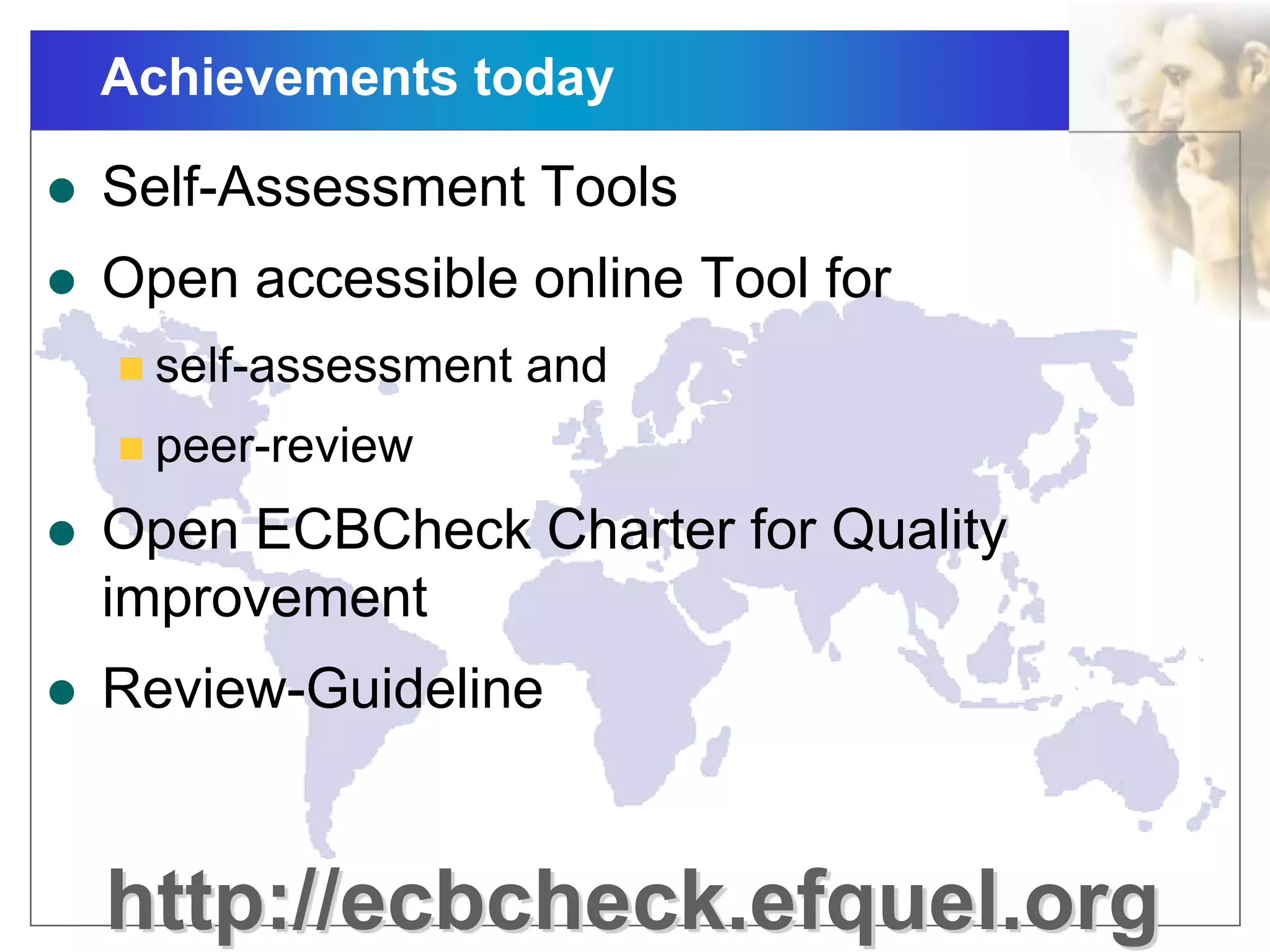
Achievements today
 Self-Assessment Tools
 Open accessible online Tool for
 self-assessment and
 peer-review
 Open ECBCheck Charter for Quality
improvement
 Review-Guideline
http://ecbcheck.efquel.org
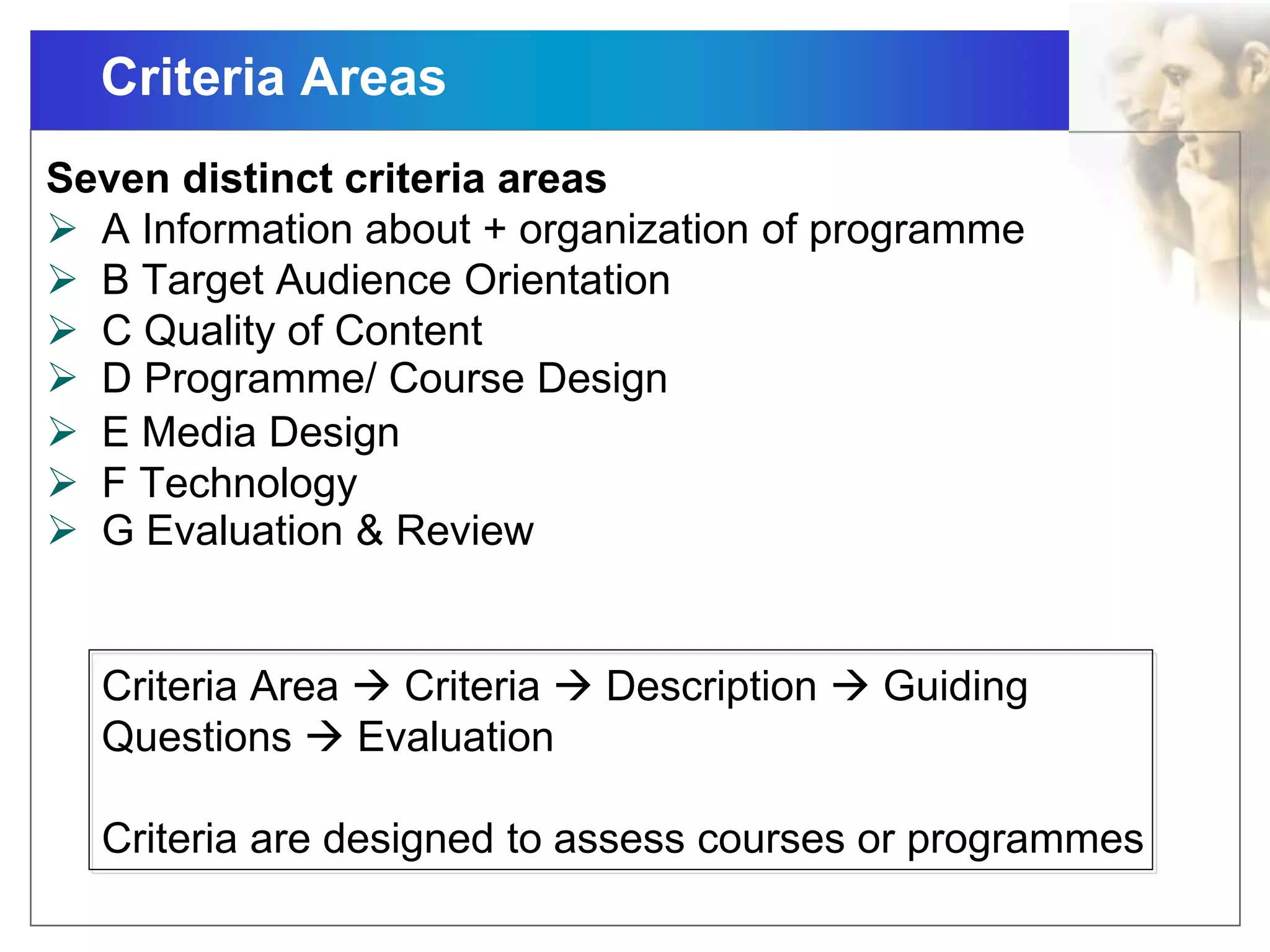
Criteria Areas
Seven distinct criteria areas
 A Information about + organization of programme
 B Target Audience Orientation
 C Quality of Content
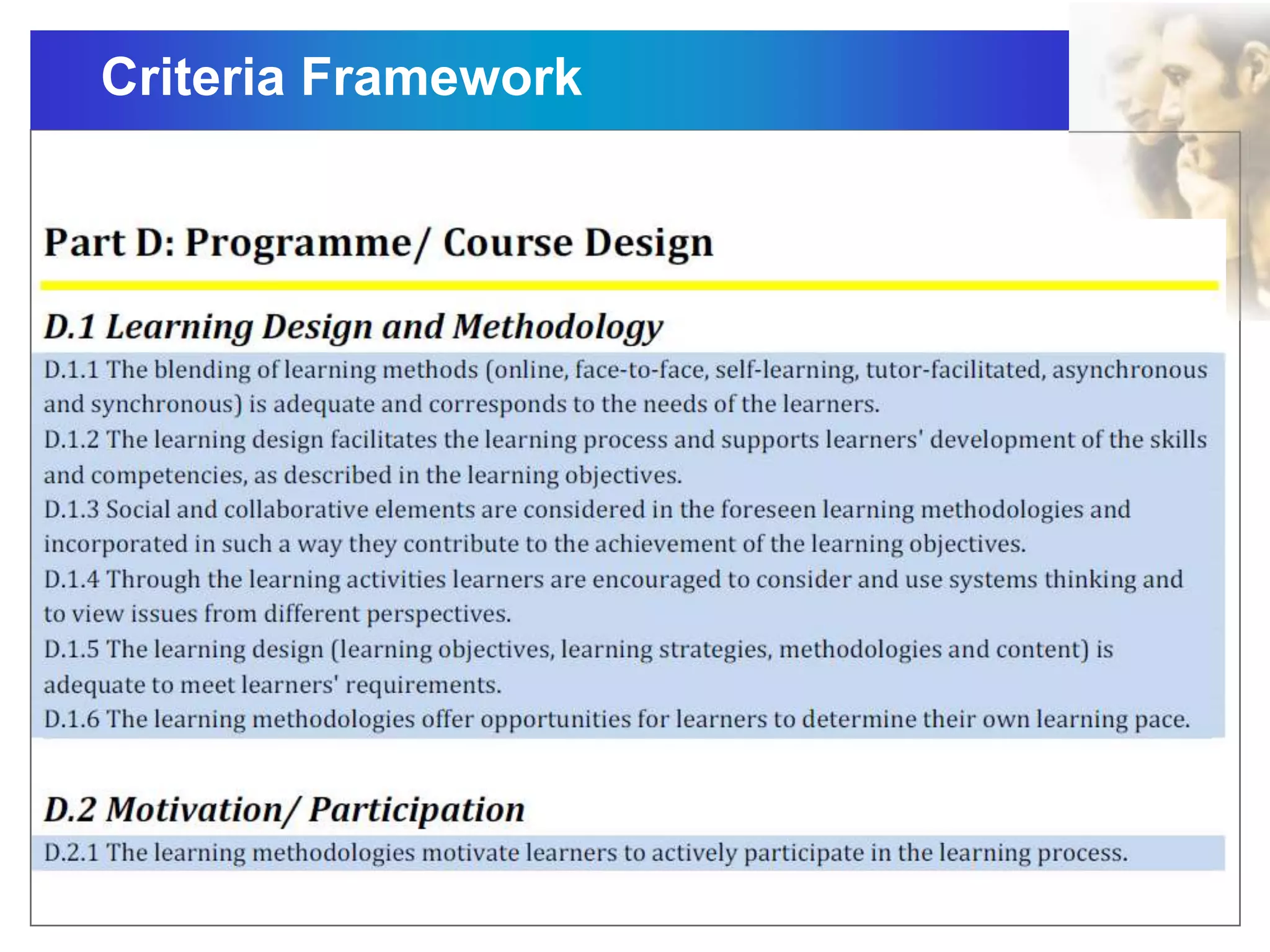
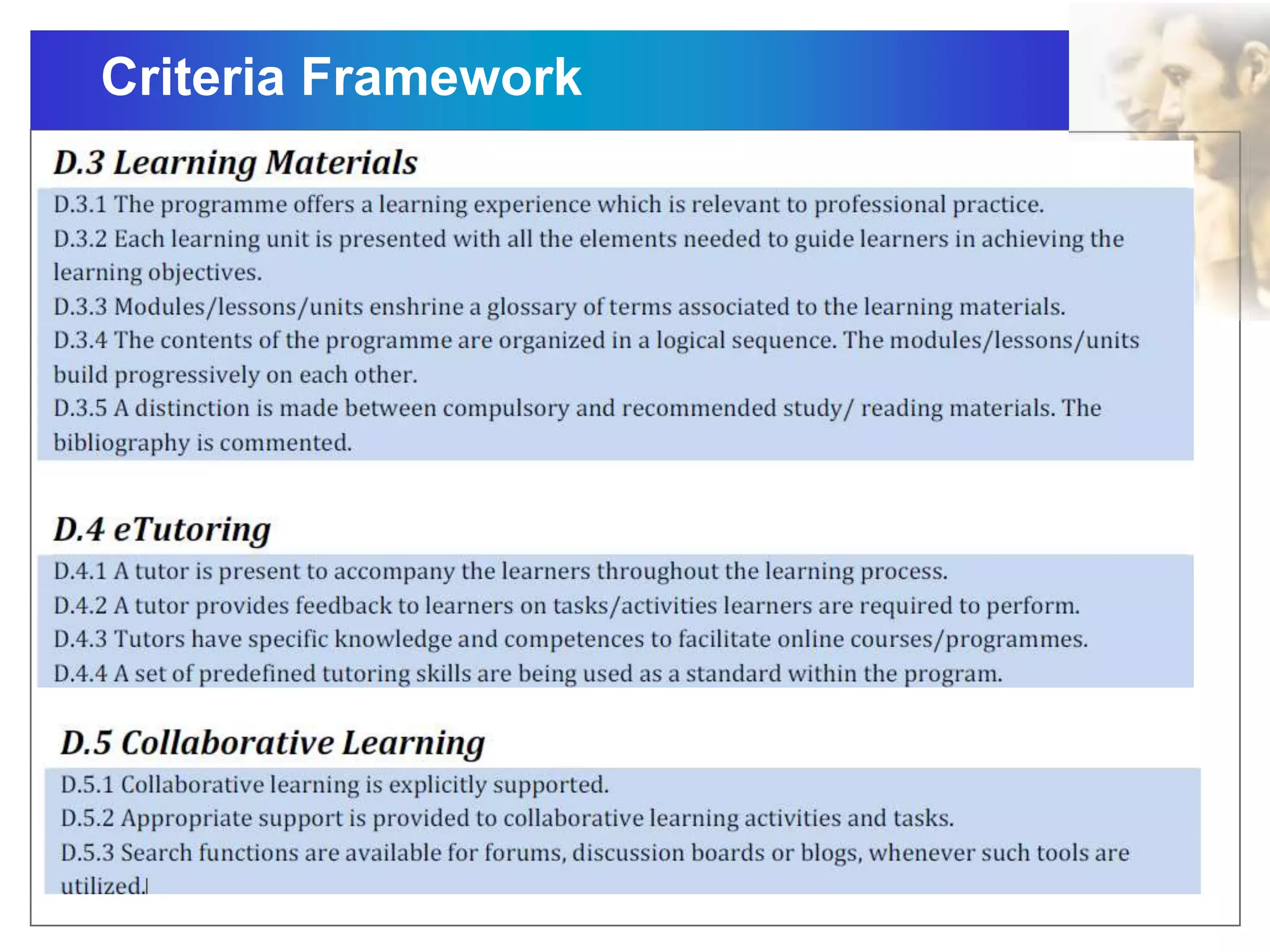
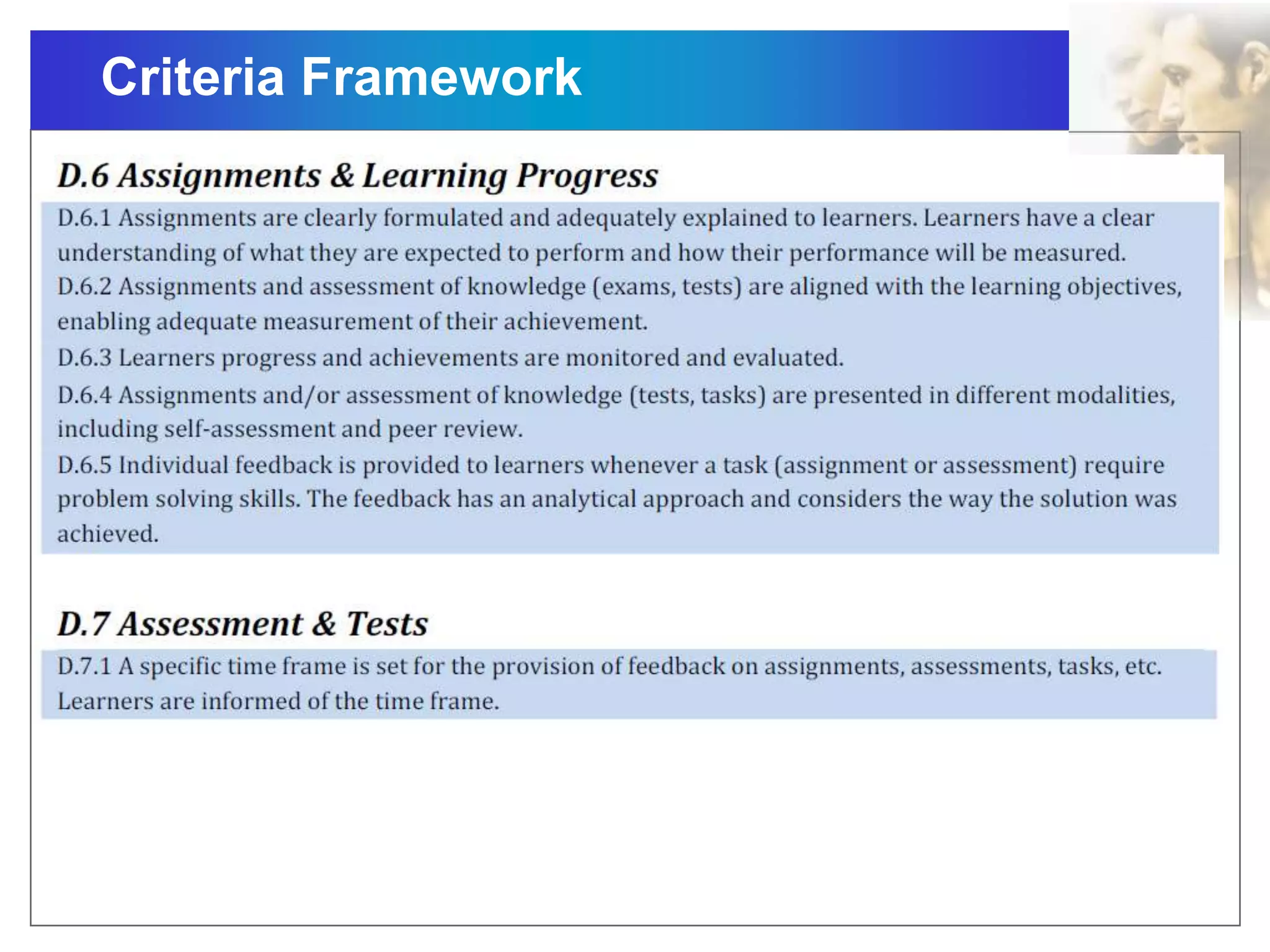
 D Programme/ Course Design
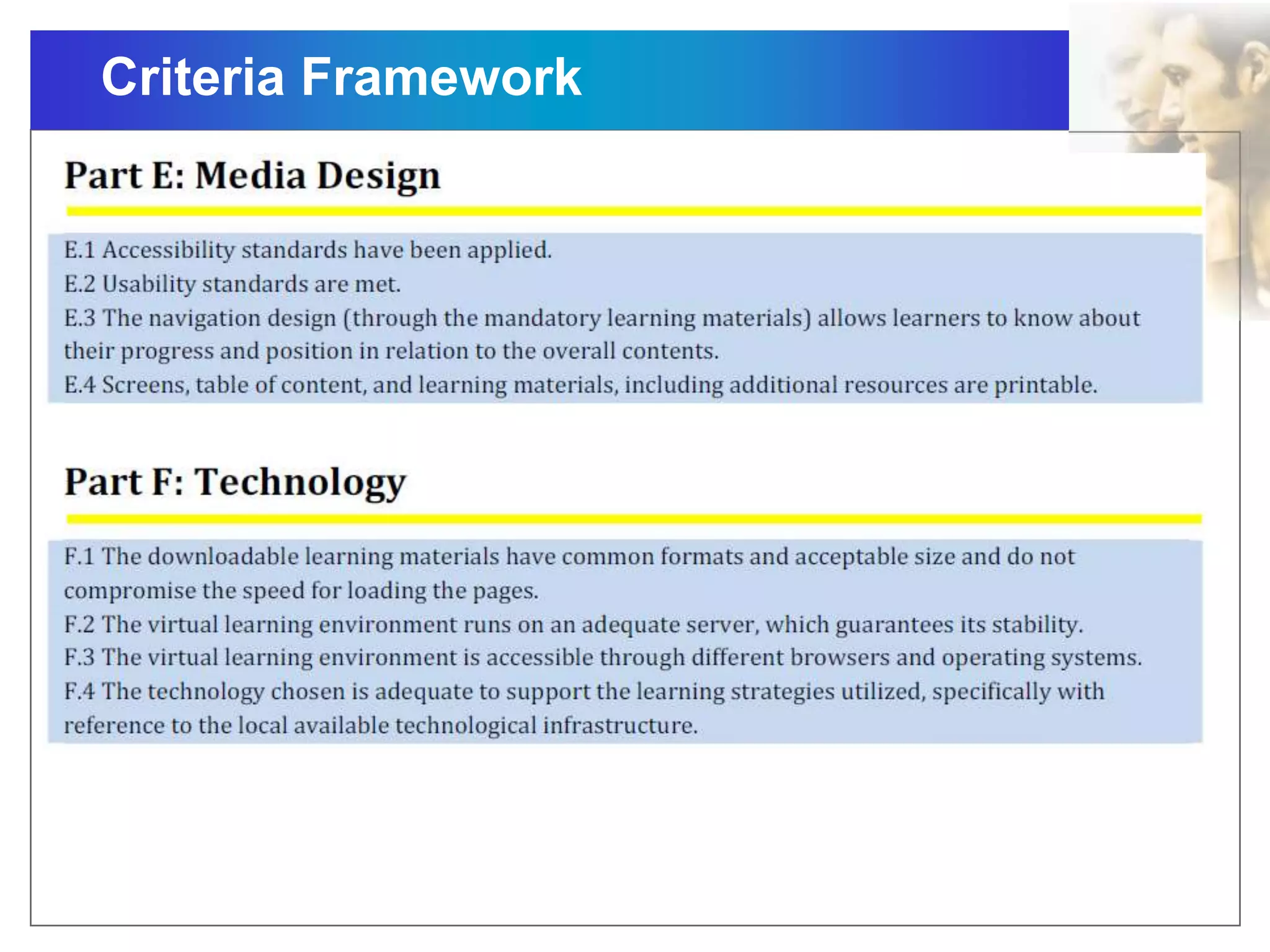
 E Media Design
 F Technology
 G Evaluation & Review
Criteria Area  Criteria  Description  Guiding
Questions  Evaluation
Criteria are designed to assess courses or programmes
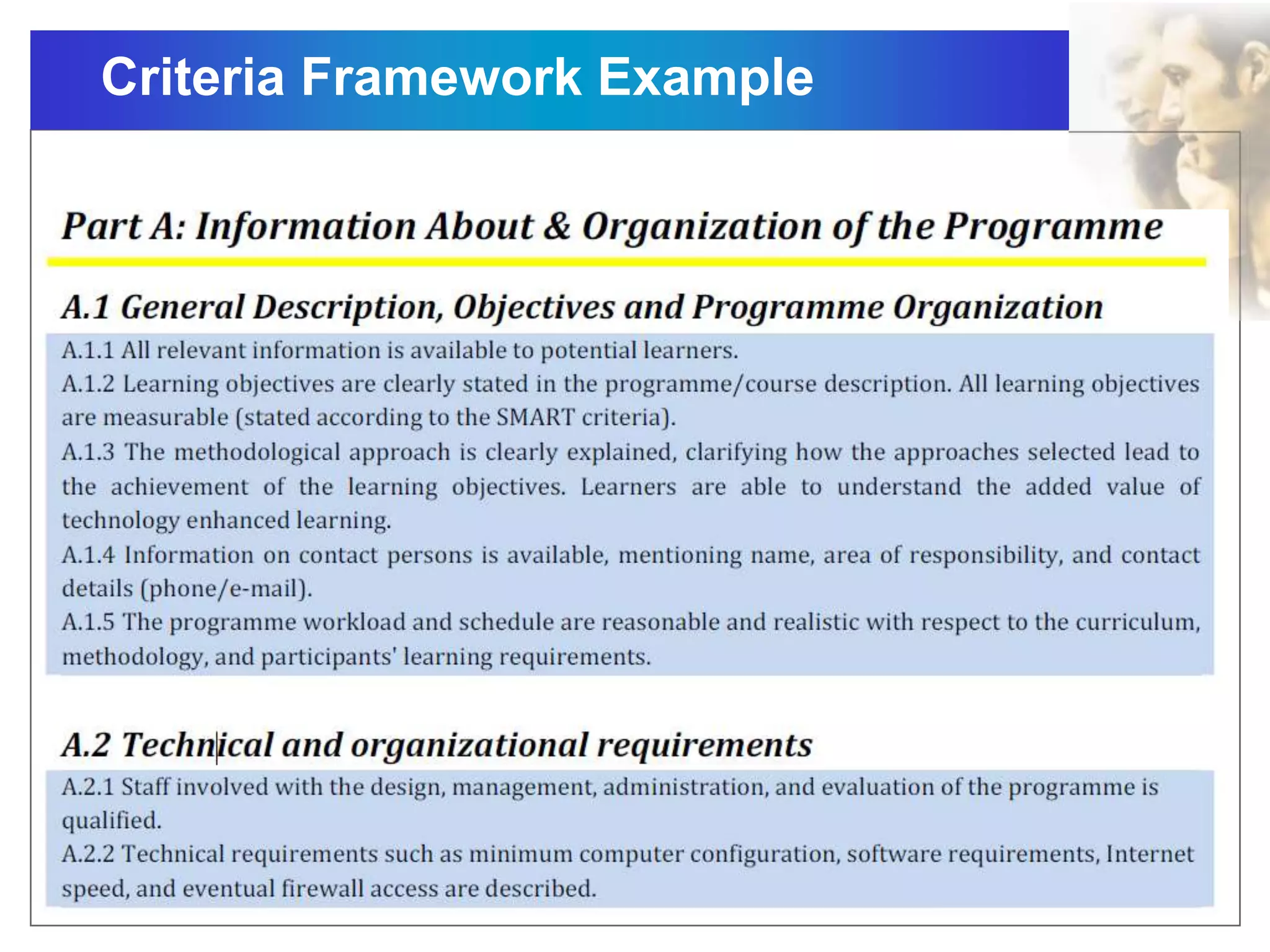
Criteria Framework Example
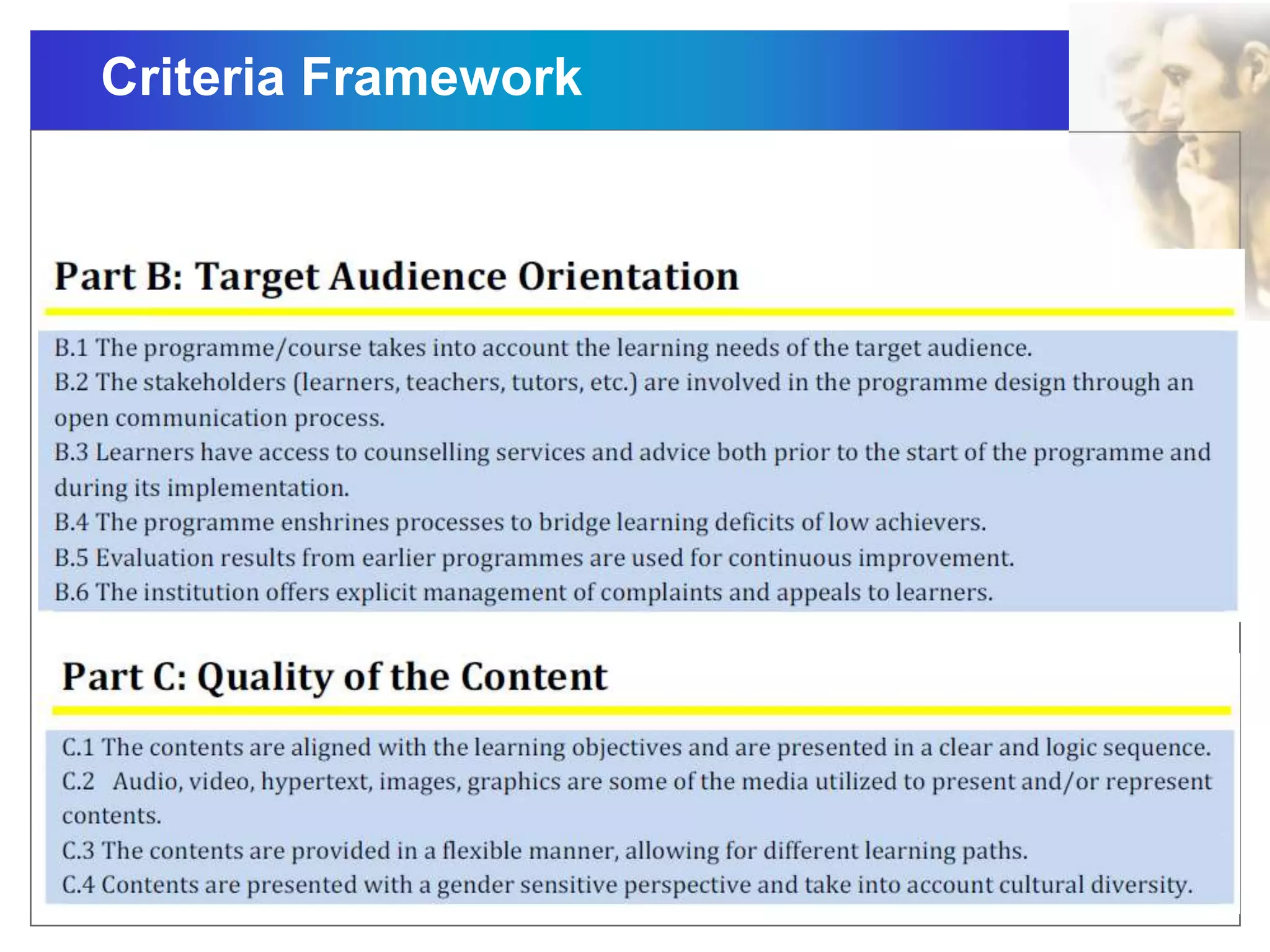
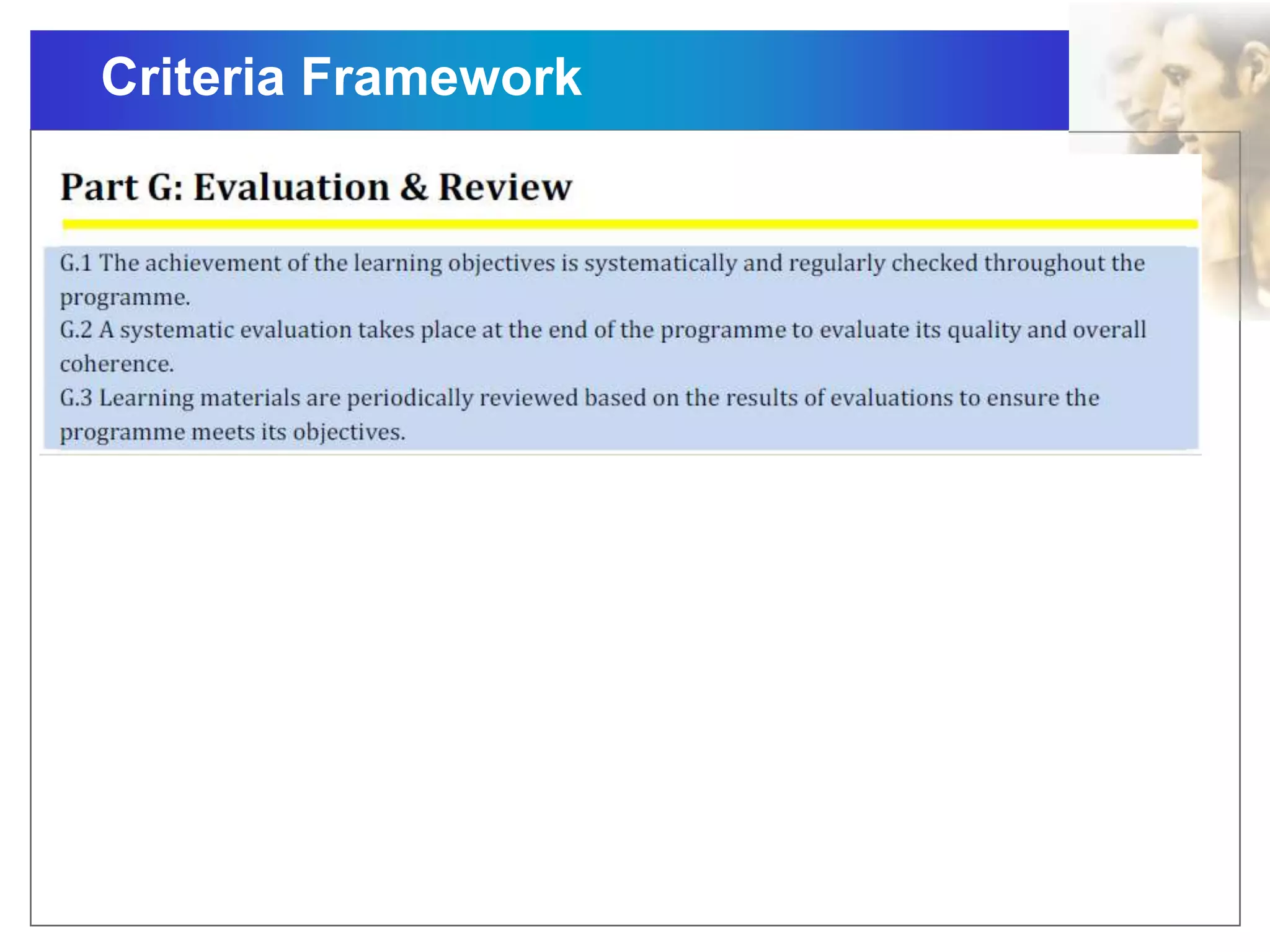
Criteria Framework
Criteria Framework
Criteria Framework
Criteria Framework
Criteria Framework
Criteria Framework
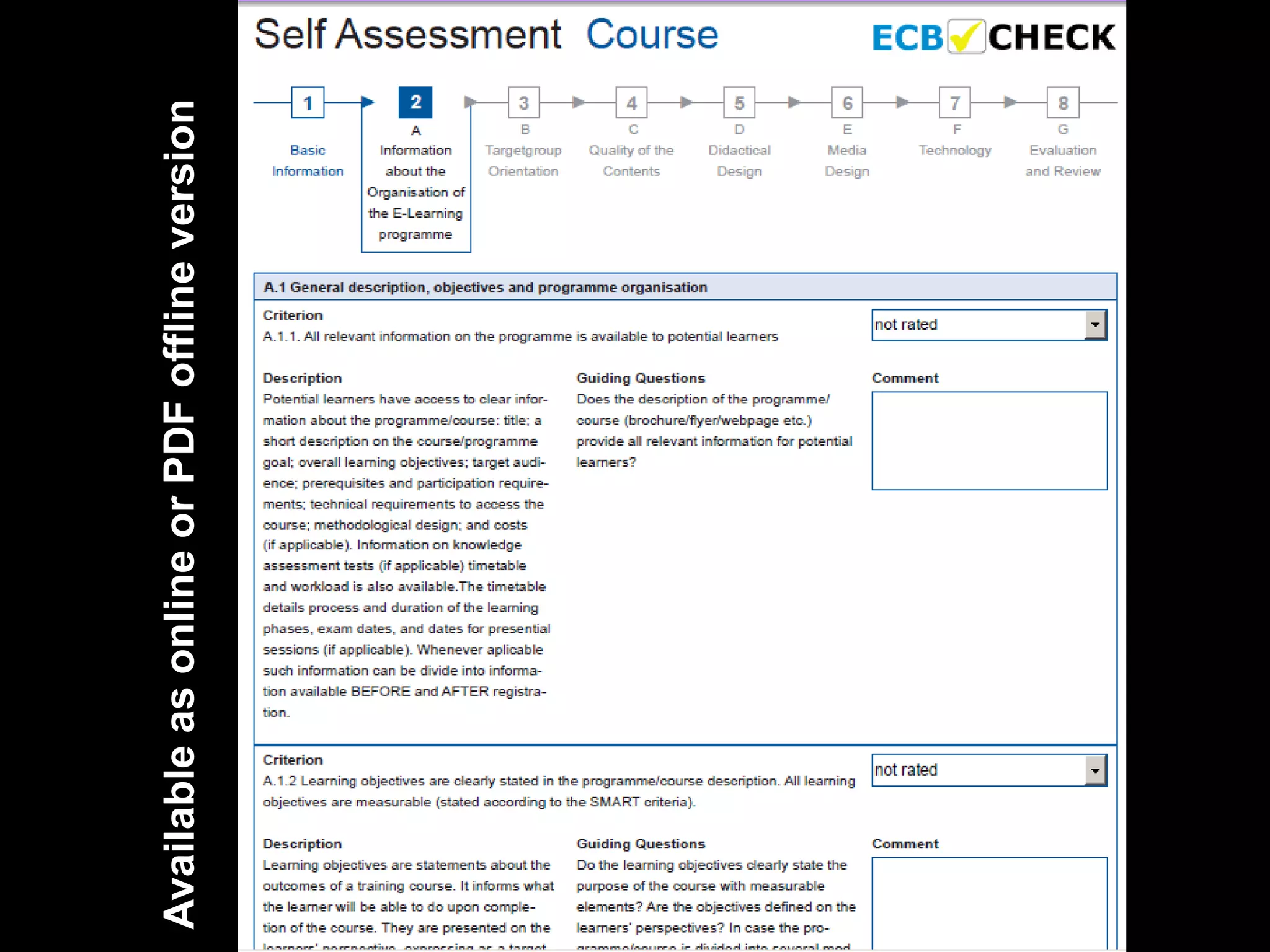
Available
as
online
or
PDF
offline
version
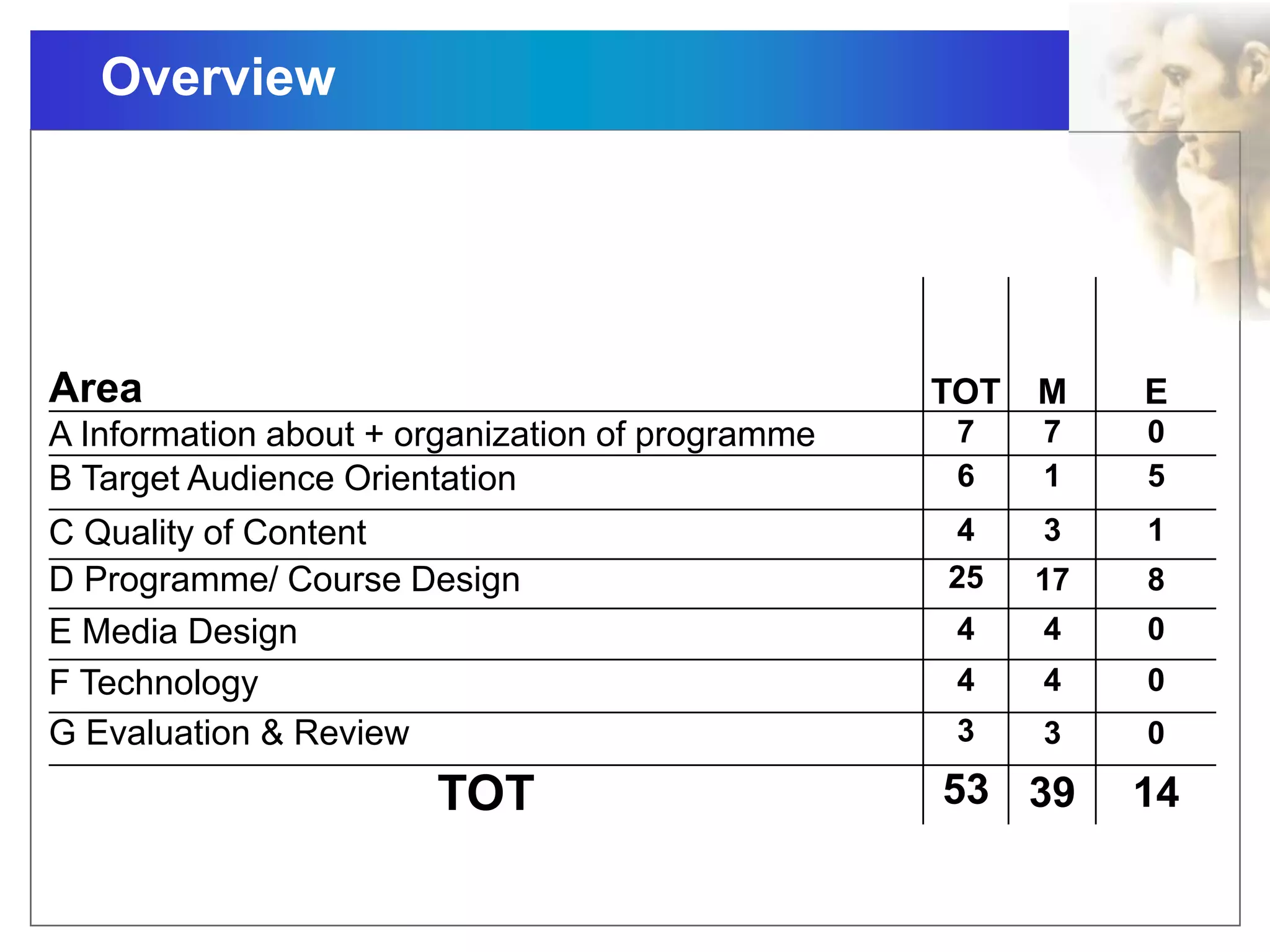
Overview
Area TOT M E
A Information about + organization of programme 7 7 0
B Target Audience Orientation 6 1 5
C Quality of Content 4 3 1
D Programme/ Course Design 25 17 8
E Media Design 4 4 0
F Technology 4 4 0
G Evaluation & Review 3 3 0
TOT 53 39 14
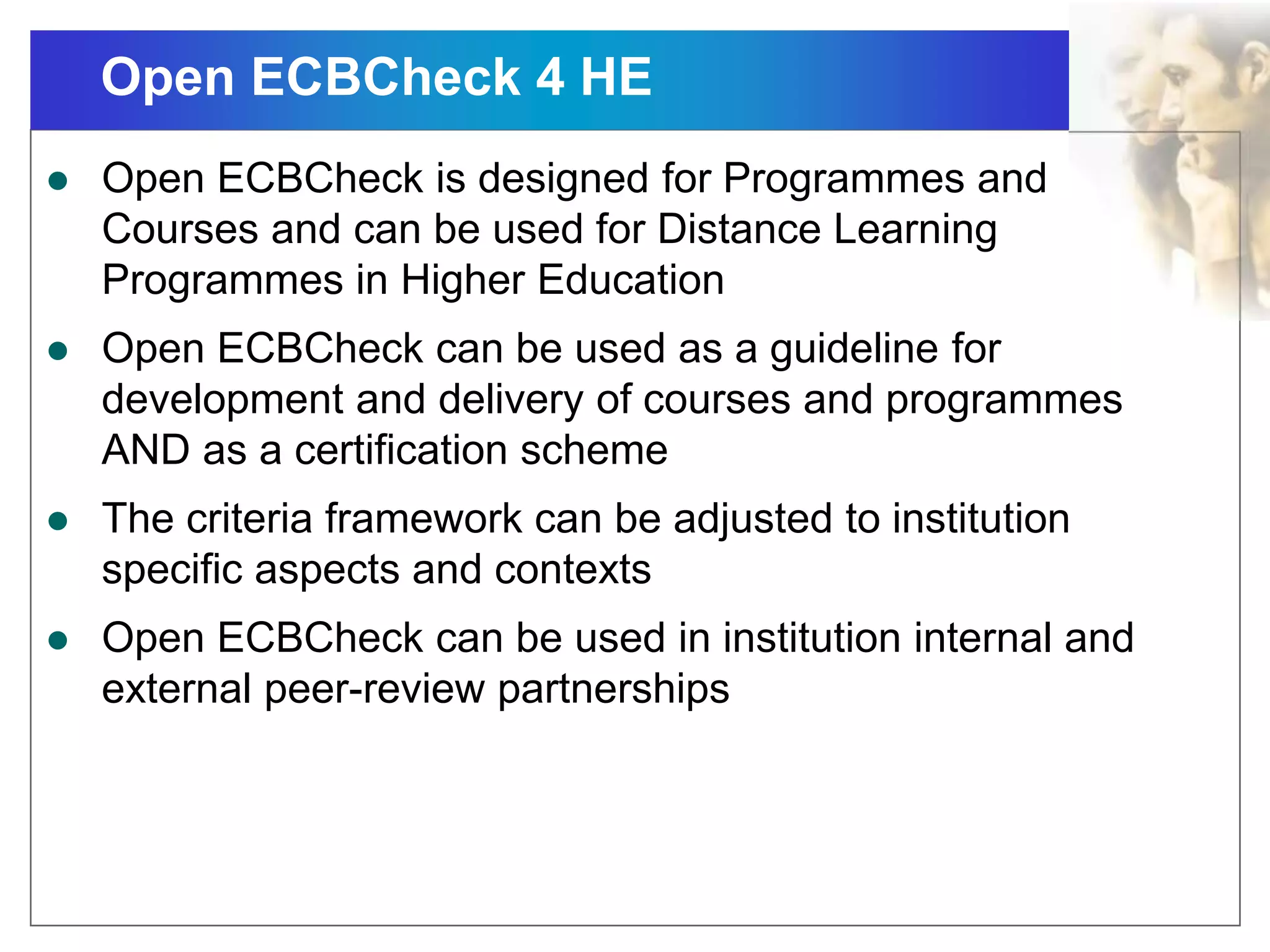
Open ECBCheck 4 HE
 Open ECBCheck is designed for Programmes and
Courses and can be used for Distance Learning
Programmes in Higher Education
 Open ECBCheck can be used as a guideline for
development and delivery of courses and programmes
AND as a certification scheme
 The criteria framework can be adjusted to institution
specific aspects and contexts
 Open ECBCheck can be used in institution internal and
external peer-review partnerships
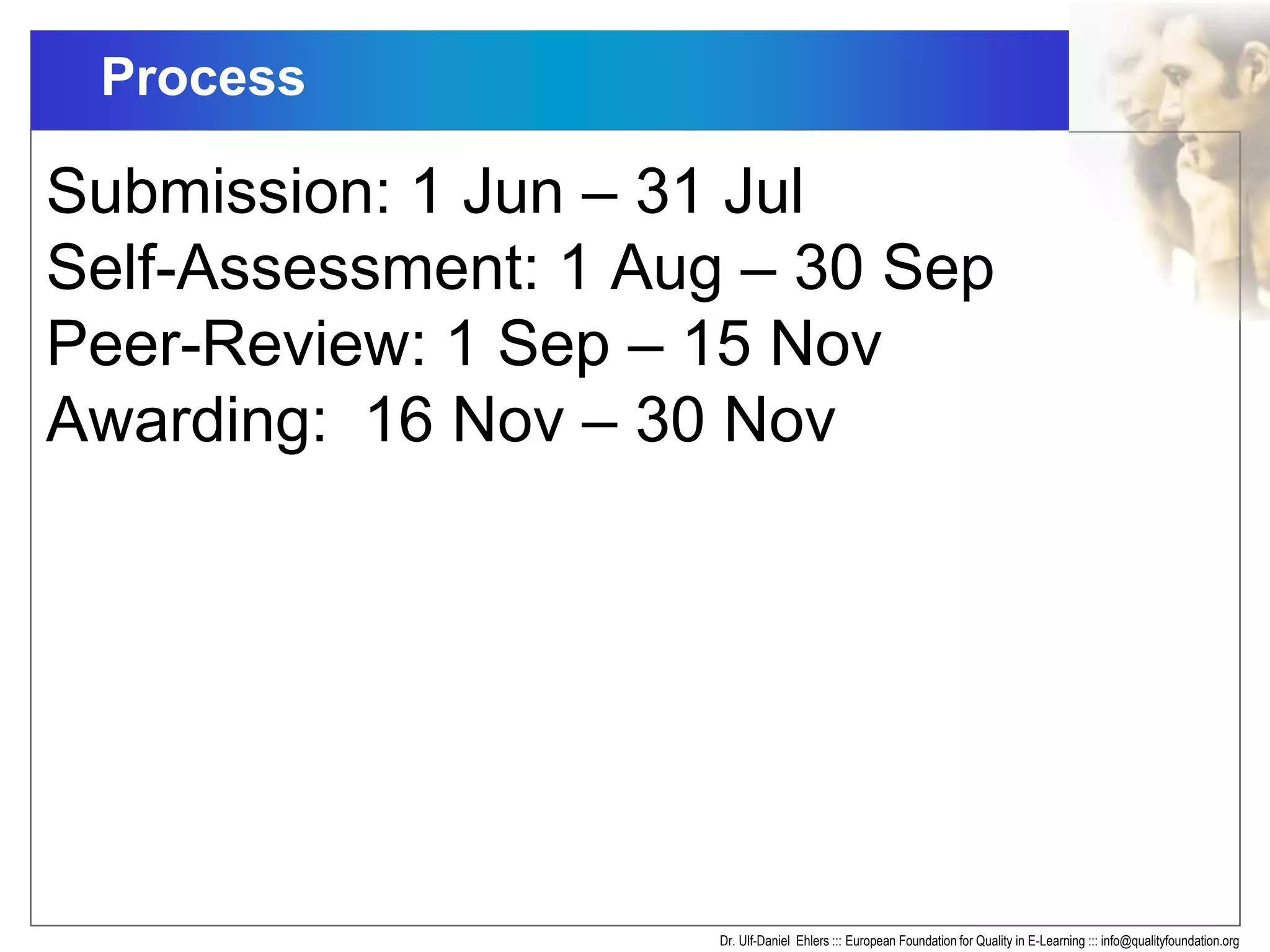
Process
Dr. Ulf-Daniel Ehlers ::: European Foundation for Quality in E-Learning ::: info@qualityfoundation.org
Submission: 1 Jun – 31 Jul
Self-Assessment: 1 Aug – 30 Sep
Peer-Review: 1 Sep – 15 Nov
Awarding: 16 Nov – 30 Nov
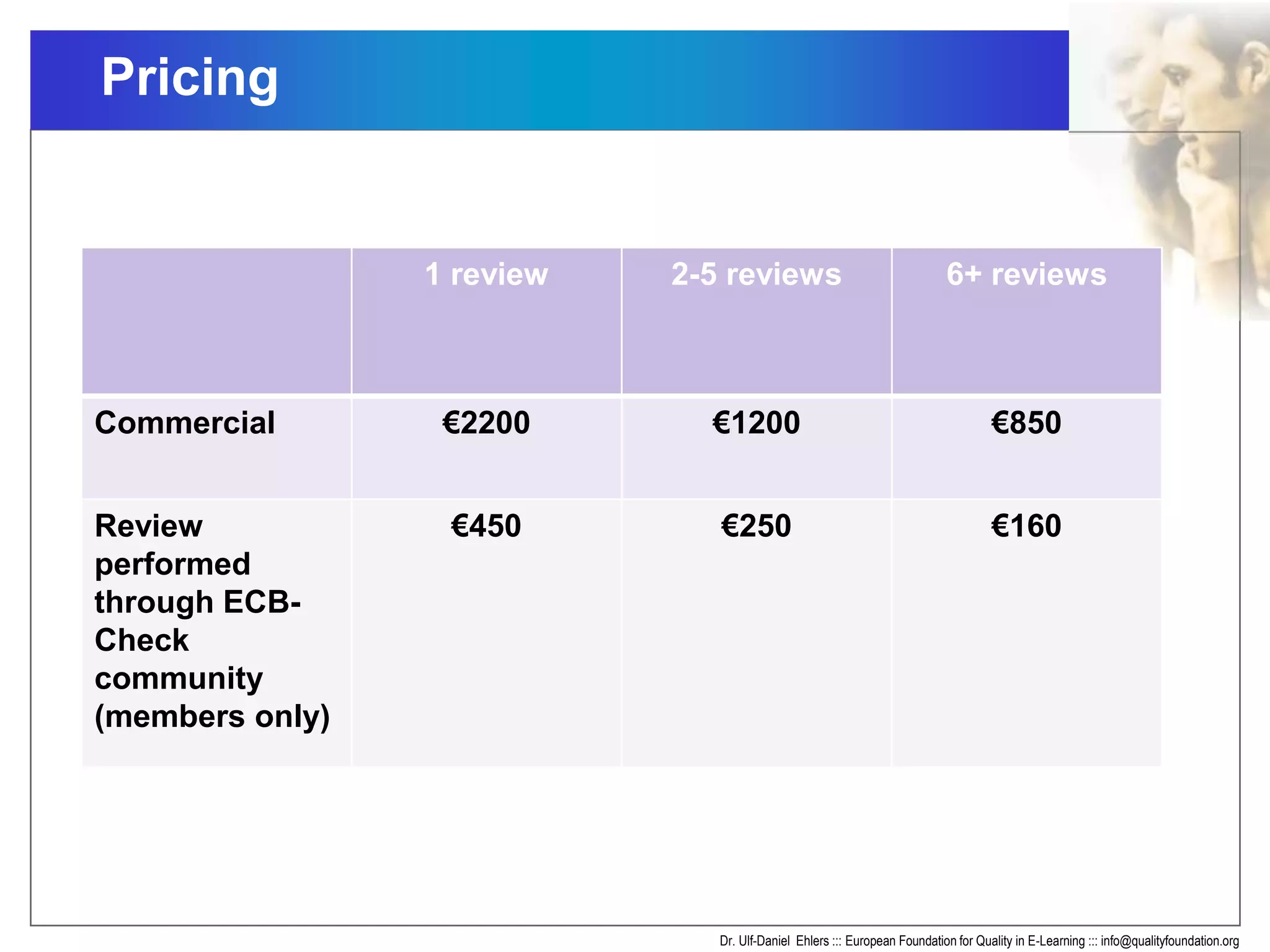
Pricing
1 review 2-5 reviews 6+ reviews
Commercial €2200 €1200 €850
Review
performed
through ECB-
Check
community
(members only)
€450 €250 €160
Dr. Ulf-Daniel Ehlers ::: European Foundation for Quality in E-Learning ::: info@qualityfoundation.org
Thank you very much!
…sign up for quality…
http://www.efquel.org

Open ECBCheck Presentation

  • 1.
  • 2.
    Scope of OpenECBCheck  Open = Inclusiveness – developed through a multistakeholder involvement  Certification = Quality Framework provides possibilty to obtain a certification for e-learning programmes or courses  Programmes = training/learning offer that consists of several modules, a number of lessons, min. 45 hours  Courses = short learning units, max.150 hours  E-L = min. 20% of technology enhanced learning
  • 3.
    Objective of OpenECBCheck To build a quality label for e-learning which serves the needs of the community to improve quality, strengthen recognition, enable individual and organisational learning through  Recognition – recognition of quality achievements through building a community  Consensus – creating an international consensus on quality criteria  Openness – to existing concepts and strategies and experiences  Inclusiveness – building on a multistakeholder involvement  Transparency – creating quality transparency through clear criteria & processes
  • 4.
    Partners and Initiators http://ecbcheck.efquel.org InWEnt/GIZ European Foundation for Quality in E-Learning United Nations University International Labour Organisation Food and Agricultural organisation UNEP CoL UNITAR CGIAR SPIDER International Institut for Communication Development European Foundation for Management Development World bank Institute African Virtual University Open University Catalunya Namibia Qualifications Authority South African Qualifications Authority University of Western Cape Open University of Philippines …
  • 5.
    Achievements today  Self-AssessmentTools  Open accessible online Tool for  self-assessment and  peer-review  Open ECBCheck Charter for Quality improvement  Review-Guideline http://ecbcheck.efquel.org
  • 6.
    Criteria Areas Seven distinctcriteria areas  A Information about + organization of programme  B Target Audience Orientation  C Quality of Content  D Programme/ Course Design  E Media Design  F Technology  G Evaluation & Review Criteria Area  Criteria  Description  Guiding Questions  Evaluation Criteria are designed to assess courses or programmes
  • 7.
  • 8.
  • 9.
  • 10.
  • 11.
  • 12.
  • 13.
  • 14.
  • 15.
    Overview Area TOT ME A Information about + organization of programme 7 7 0 B Target Audience Orientation 6 1 5 C Quality of Content 4 3 1 D Programme/ Course Design 25 17 8 E Media Design 4 4 0 F Technology 4 4 0 G Evaluation & Review 3 3 0 TOT 53 39 14
  • 16.
    Open ECBCheck 4HE  Open ECBCheck is designed for Programmes and Courses and can be used for Distance Learning Programmes in Higher Education  Open ECBCheck can be used as a guideline for development and delivery of courses and programmes AND as a certification scheme  The criteria framework can be adjusted to institution specific aspects and contexts  Open ECBCheck can be used in institution internal and external peer-review partnerships
  • 17.
    Process Dr. Ulf-Daniel Ehlers::: European Foundation for Quality in E-Learning ::: info@qualityfoundation.org Submission: 1 Jun – 31 Jul Self-Assessment: 1 Aug – 30 Sep Peer-Review: 1 Sep – 15 Nov Awarding: 16 Nov – 30 Nov
  • 18.
    Pricing 1 review 2-5reviews 6+ reviews Commercial €2200 €1200 €850 Review performed through ECB- Check community (members only) €450 €250 €160 Dr. Ulf-Daniel Ehlers ::: European Foundation for Quality in E-Learning ::: info@qualityfoundation.org
  • 19.
    Thank you verymuch! …sign up for quality… http://www.efquel.org