Specialist High Skills Major
SHSM
Apprenticeship
College University
Workplace
Health and Wellness
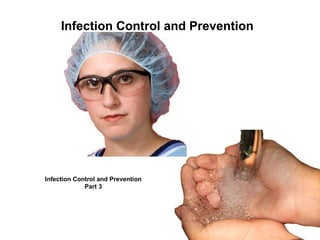
Infection Control and Prevention
Part 3
Infection Transmission commonly ocurs in 5 ways:
1. Contact – Direct or indirect
2. Droplet – Large drops into the nose or mouth
3. Vehicle – Food, water, medications ingested
4. Airborne - small particles of droplets or dust
5. Vectorborne – Insects or organisms
Infection and Transmission: A Review
Microorganisms (Microbes) are tiny animals and plants found everywhere
Infection occurs when pathogens colonize and alter the normal
function of an organism
Infection Control & Prevention
There are 4 major practices for infection control and
Prevention:
1. Hand Washing – Hand washing is the greatest and
most important practice for infection control and
prevention!
2. Protective Barriers
3. Care of Equipment in a Medical Setting
4. Health Care Worker Practices.
Hand Washing
Infection Control & Prevention
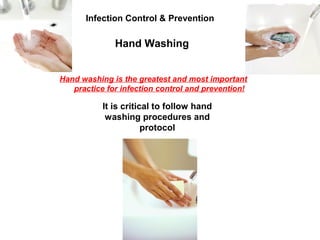
Hand washing is the greatest and most important
practice for infection control and prevention!
It is critical to follow hand
washing procedures and
protocol
Infection Control & Prevention Hand Washing
Infection Control & Prevention
Hand Washing
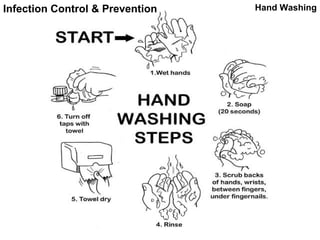
Hand Washing Steps:
1. Thoroughly wet the hands
2. Add soap – if using a bar of soap, rub for
20 seconds
3. Scrub hands, including backs, wrists,
between fingers and under the nails.
4. Rinse soap off.
5. Dry hands thoroughly with a paper towel
(avoid hand dryers where possible).
6. Turn off the water / tap using the paper
towel.
Infection Control & Prevention
Protective Barriers
Personal Protective Equipment is specialized clothing and
equipment worn by health care workers for their safety.
This equipment is especially important to workers who may come
in contact with blood and bodily fluids of a patient
Protective Barriers
Infection Control & Prevention
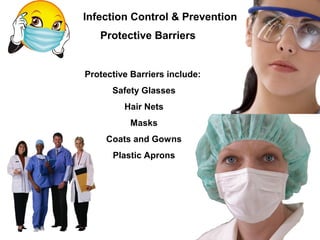
Protective Barriers include:
Safety Glasses
Hair Nets
Masks
Coats and Gowns
Plastic Aprons
Care of Equipment
Infection Control & Prevention
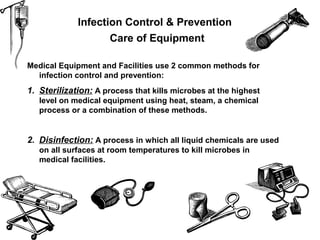
Medical Equipment and Facilities use 2 common methods for
infection control and prevention:
1. Sterilization: A process that kills microbes at the highest
level on medical equipment using heat, steam, a chemical
process or a combination of these methods.
2. Disinfection: A process in which all liquid chemicals are used
on all surfaces at room temperatures to kill microbes in
medical facilities.
Health Care Practices
Infection Control & Prevention
Asepsis: The term referring to practices used to keep an
area free of disease-causing microbes.
Medical Asepsis: Practices include hand washing, and
personal protective barriers
Surgical Asepsis: Includes sterilization techniques for
equipment
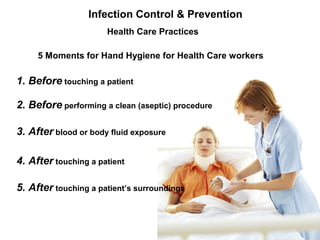
5 Moments for Hand Hygiene for Health Care workers
1. Before touching a patient
2. Before performing a clean (aseptic) procedure
3. After blood or body fluid exposure
4. After touching a patient
5. After touching a patient’s surroundings
Infection Control & Prevention
Health Care Practices
Infection Control & Prevention
Important Terms in Infection Control and Prevention
Antiseptic: A substance that kills microbes on living tissue
Germicide: A product or chemical that destroys pathogens on
living tissue or facility surfaces
Alcohol Hand Cleaner: A waterless antiseptic used as a
substitute to hand washing, with
approximately a 70% alcohol content
Nosocomial Infections: Infections acquired in a health care
setting

ONTAP - Infection Control 3

  • 1.
    Specialist High SkillsMajor SHSM Apprenticeship College University Workplace Health and Wellness
  • 2.
    Infection Control andPrevention Infection Control and Prevention Part 3
  • 3.
    Infection Transmission commonlyocurs in 5 ways: 1. Contact – Direct or indirect 2. Droplet – Large drops into the nose or mouth 3. Vehicle – Food, water, medications ingested 4. Airborne - small particles of droplets or dust 5. Vectorborne – Insects or organisms Infection and Transmission: A Review Microorganisms (Microbes) are tiny animals and plants found everywhere Infection occurs when pathogens colonize and alter the normal function of an organism
  • 4.
    Infection Control &Prevention There are 4 major practices for infection control and Prevention: 1. Hand Washing – Hand washing is the greatest and most important practice for infection control and prevention! 2. Protective Barriers 3. Care of Equipment in a Medical Setting 4. Health Care Worker Practices.
  • 5.
    Hand Washing Infection Control& Prevention Hand washing is the greatest and most important practice for infection control and prevention! It is critical to follow hand washing procedures and protocol
  • 6.
    Infection Control &Prevention Hand Washing
  • 7.
    Infection Control &Prevention Hand Washing Hand Washing Steps: 1. Thoroughly wet the hands 2. Add soap – if using a bar of soap, rub for 20 seconds 3. Scrub hands, including backs, wrists, between fingers and under the nails. 4. Rinse soap off. 5. Dry hands thoroughly with a paper towel (avoid hand dryers where possible). 6. Turn off the water / tap using the paper towel.
  • 8.
    Infection Control &Prevention Protective Barriers Personal Protective Equipment is specialized clothing and equipment worn by health care workers for their safety. This equipment is especially important to workers who may come in contact with blood and bodily fluids of a patient
  • 9.
    Protective Barriers Infection Control& Prevention Protective Barriers include: Safety Glasses Hair Nets Masks Coats and Gowns Plastic Aprons
  • 10.
    Care of Equipment InfectionControl & Prevention Medical Equipment and Facilities use 2 common methods for infection control and prevention: 1. Sterilization: A process that kills microbes at the highest level on medical equipment using heat, steam, a chemical process or a combination of these methods. 2. Disinfection: A process in which all liquid chemicals are used on all surfaces at room temperatures to kill microbes in medical facilities.
  • 11.
    Health Care Practices InfectionControl & Prevention Asepsis: The term referring to practices used to keep an area free of disease-causing microbes. Medical Asepsis: Practices include hand washing, and personal protective barriers Surgical Asepsis: Includes sterilization techniques for equipment
  • 12.
    5 Moments forHand Hygiene for Health Care workers 1. Before touching a patient 2. Before performing a clean (aseptic) procedure 3. After blood or body fluid exposure 4. After touching a patient 5. After touching a patient’s surroundings Infection Control & Prevention Health Care Practices
  • 13.
    Infection Control &Prevention Important Terms in Infection Control and Prevention Antiseptic: A substance that kills microbes on living tissue Germicide: A product or chemical that destroys pathogens on living tissue or facility surfaces Alcohol Hand Cleaner: A waterless antiseptic used as a substitute to hand washing, with approximately a 70% alcohol content Nosocomial Infections: Infections acquired in a health care setting