Download as PDF, PPTX
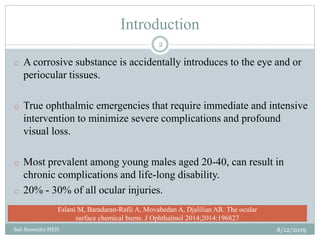
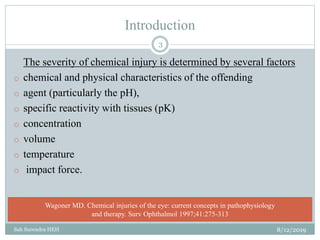
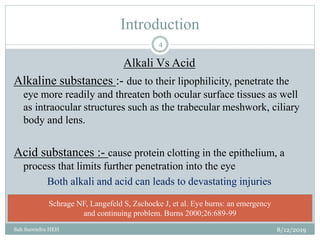
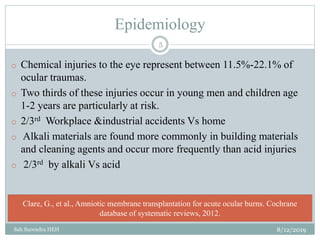
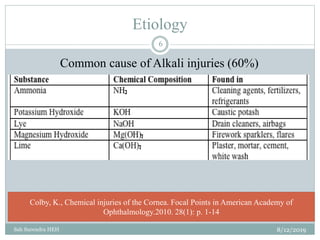
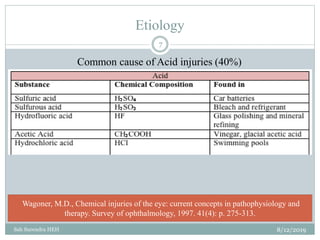
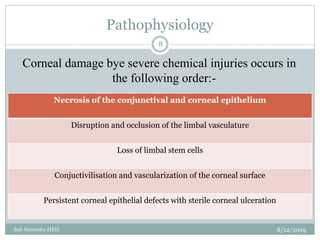
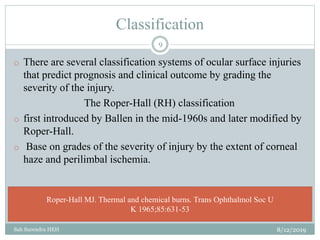
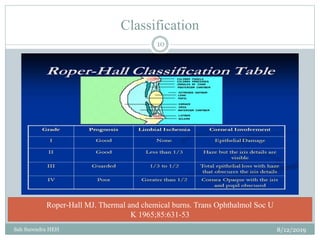
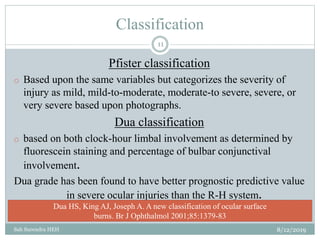
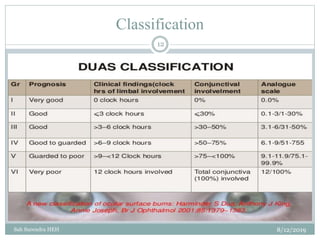
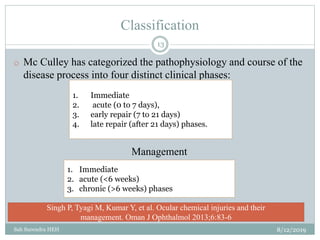
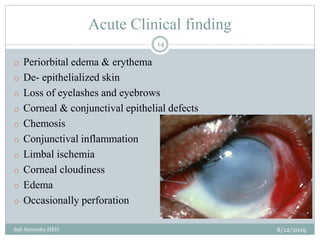
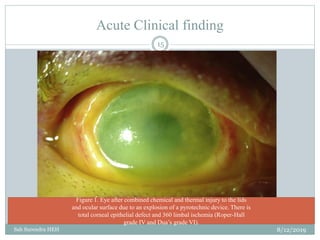
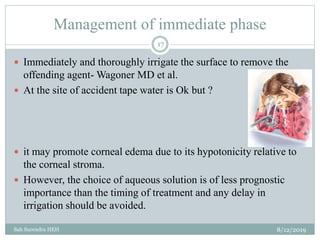
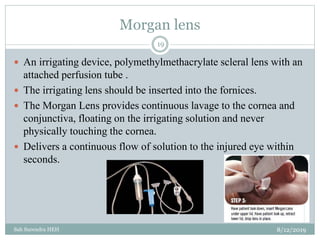
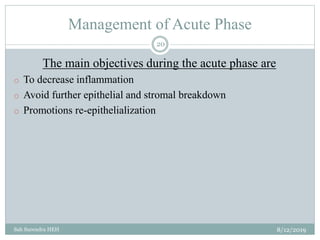
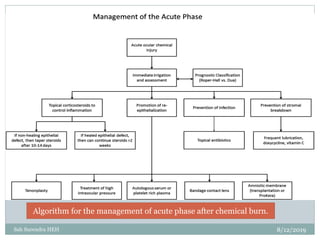
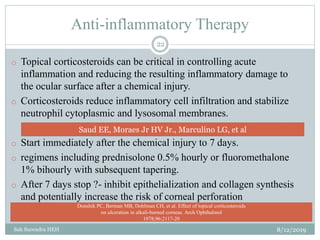
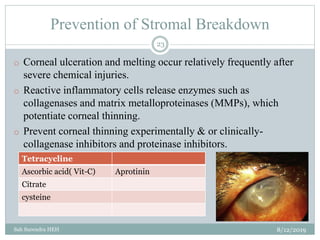
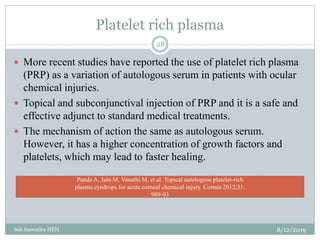
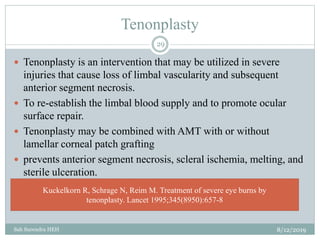
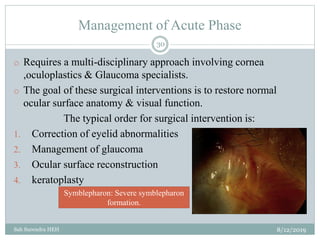
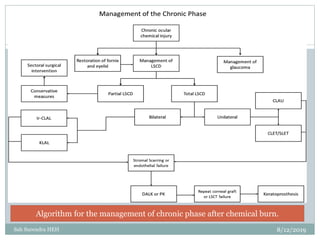

This document discusses ocular surface chemical injuries. It begins by defining chemical injuries as true ophthalmic emergencies requiring immediate intervention to minimize complications and visual loss. The severity is determined by factors like the chemical, concentration, temperature and impact force. Alkali substances penetrate more readily than acids. Common causes of injuries are discussed. The pathophysiology, classifications, clinical findings, and management approaches for the immediate, acute and chronic phases are outlined. Management of the acute phase focuses on decreasing inflammation, preventing further epithelial and stromal breakdown, and promoting re-epithelialization through techniques like anti-inflammatory therapy, prevention of thinning, lubrication, antibiotics, bandage contact lenses and amniotic membrane transplantation.


![PERI-PROSTHETIC FRACTURE NAIL-PLATE CONSTRUCT [NPC].pptx](https://cdn.slidesharecdn.com/ss_thumbnails/drarunkumardrmohamedashrafperiprostheticfrasturenail-plateconstructnpc-260209164459-7e9d15a1-thumbnail.jpg?width=640&height=640&fit=bounds)


