REGIONAL LABOUR INSTITUTE 
GOVERNMENT OF INDIA 
MINISTRY OF LABOUR AND EMPLOYMENT 
DIRECTORATE GENERAL FACTORY ADVICE SERVICES AND LABOUR INSTITUTES 
SECTOR-47, FARIDABAD, HARYANA 
PHONE: 0129-2437064, 2468044, FAX: 0129-2437064 
E-mail: rlifaridabad@yahoo.com 
PPT of Occupational Dermatitis 
Chair Person- Dr. S. Saini (MBBS,AFIH,MBA) 
Deputy Director (Medical) 
Presented By- Dr. Imtiyaz Mohammed Ansari
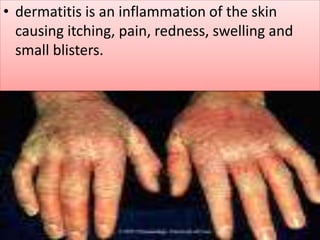
• dermatitis is an inflammation of the skin 
causing itching, pain, redness, swelling and 
small blisters.
Occupational Dermatitis 
4 of 7 criteria must be positive to conclude OCD 
1- Clinical Appearance Is Consistent With CD. 
2- Continuous Irritants Or Allergens are Present In Workplace. 
3- Anatomic Distribution Of Dermatitis Is Consistent With Skin 
Exposure To Chemicals In Course Of Various Job Tasks. 
4- Temporal Relationship Between Exposure And Onset Of Symptoms Is 
Consistent With CD. 
5- No Occupational Exposures Are Excluded As Probable Causes Of 
Dermatitis. 
6- Dermatitis Improves Away From Work Exposure And Re-exposure 
Causes Exacerbation. 
7- There Are Positive-reaction And Relevant Patch Tests Performed 
According To Established Guidelines
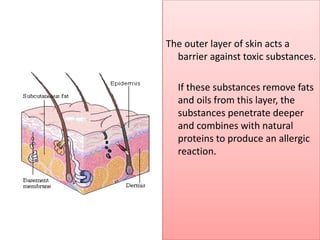
The outer layer of skin acts a 
barrier against toxic substances. 
If these substances remove fats 
and oils from this layer, the 
substances penetrate deeper 
and combines with natural 
proteins to produce an allergic 
reaction.
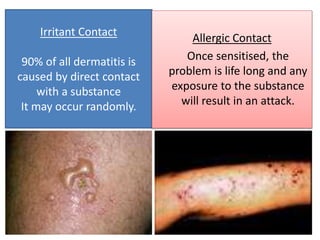
Irritant Contact 
90% of all dermatitis is 
caused by direct contact 
with a substance 
It may occur randomly. 
Allergic Contact 
Once sensitised, the 
problem is life long and any 
exposure to the substance 
will result in an attack.
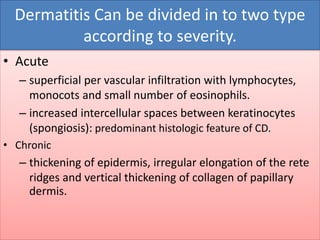
Dermatitis Can be divided in to two type 
according to severity. 
• Acute 
– superficial per vascular infiltration with lymphocytes, 
monocots and small number of eosinophils. 
– increased intercellular spaces between keratinocytes 
(spongiosis): predominant histologic feature of CD. 
• Chronic 
– thickening of epidermis, irregular elongation of the rete 
ridges and vertical thickening of collagen of papillary 
dermis.
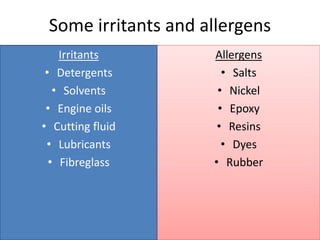
Some irritants and allergens 
Irritants 
• Detergents 
• Solvents 
• Engine oils 
• Cutting fluid 
• Lubricants 
• Fibreglass 
Allergens 
• Salts 
• Nickel 
• Epoxy 
• Resins 
• Dyes 
• Rubber
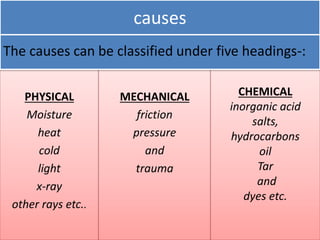
causes 
The causes can be classified under five headings-: 
PHYSICAL 
Moisture 
heat 
cold 
light 
x-ray 
other rays etc.. 
MECHANICAL 
friction 
pressure 
and 
trauma 
CHEMICAL 
inorganic acid 
salts, 
hydrocarbons 
oil 
Tar 
and 
dyes etc.
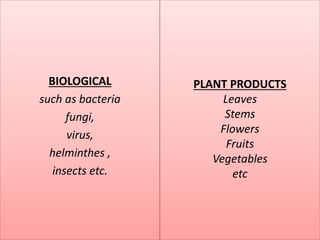
BIOLOGICAL 
such as bacteria 
fungi, 
virus, 
helminthes , 
insects etc. 
PLANT PRODUCTS 
Leaves 
Stems 
Flowers 
Fruits 
Vegetables 
etc
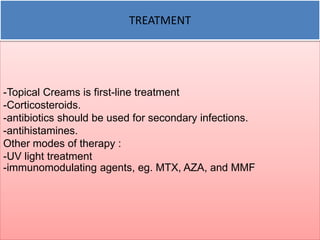
TREATMENT 
-Topical Creams is first-line treatment 
-Corticosteroids. 
-antibiotics should be used for secondary infections. 
-antihistamines. 
Other modes of therapy : 
-UV light treatment 
-immunomodulating agents, eg. MTX, AZA, and MMF
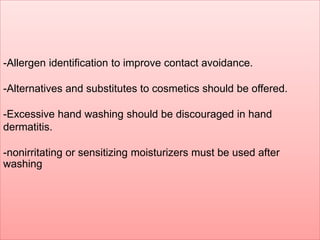
-Allergen identification to improve contact avoidance. 
-Alternatives and substitutes to cosmetics should be offered. 
-Excessive hand washing should be discouraged in hand 
dermatitis. 
-nonirritating or sensitizing moisturizers must be used after 
washing
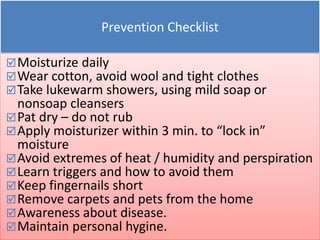
Prevention Checklist 
Moisturize daily 
Wear cotton, avoid wool and tight clothes 
Take lukewarm showers, using mild soap or 
nonsoap cleansers 
Pat dry – do not rub 
Apply moisturizer within 3 min. to “lock in” 
moisture 
Avoid extremes of heat / humidity and perspiration 
Learn triggers and how to avoid them 
Keep fingernails short 
Remove carpets and pets from the home 
Awareness about disease. 
Maintain personal hygine.
Thanks for your time 
Bye 
Imtiyaz mohammed ansari

Occupational dermatitis by dr. imtiyaz

  • 1.
    REGIONAL LABOUR INSTITUTE GOVERNMENT OF INDIA MINISTRY OF LABOUR AND EMPLOYMENT DIRECTORATE GENERAL FACTORY ADVICE SERVICES AND LABOUR INSTITUTES SECTOR-47, FARIDABAD, HARYANA PHONE: 0129-2437064, 2468044, FAX: 0129-2437064 E-mail: rlifaridabad@yahoo.com PPT of Occupational Dermatitis Chair Person- Dr. S. Saini (MBBS,AFIH,MBA) Deputy Director (Medical) Presented By- Dr. Imtiyaz Mohammed Ansari
  • 2.
    • dermatitis isan inflammation of the skin causing itching, pain, redness, swelling and small blisters.
  • 3.
    Occupational Dermatitis 4of 7 criteria must be positive to conclude OCD 1- Clinical Appearance Is Consistent With CD. 2- Continuous Irritants Or Allergens are Present In Workplace. 3- Anatomic Distribution Of Dermatitis Is Consistent With Skin Exposure To Chemicals In Course Of Various Job Tasks. 4- Temporal Relationship Between Exposure And Onset Of Symptoms Is Consistent With CD. 5- No Occupational Exposures Are Excluded As Probable Causes Of Dermatitis. 6- Dermatitis Improves Away From Work Exposure And Re-exposure Causes Exacerbation. 7- There Are Positive-reaction And Relevant Patch Tests Performed According To Established Guidelines
  • 4.
    The outer layerof skin acts a barrier against toxic substances. If these substances remove fats and oils from this layer, the substances penetrate deeper and combines with natural proteins to produce an allergic reaction.
  • 5.
    Irritant Contact 90%of all dermatitis is caused by direct contact with a substance It may occur randomly. Allergic Contact Once sensitised, the problem is life long and any exposure to the substance will result in an attack.
  • 6.
    Dermatitis Can bedivided in to two type according to severity. • Acute – superficial per vascular infiltration with lymphocytes, monocots and small number of eosinophils. – increased intercellular spaces between keratinocytes (spongiosis): predominant histologic feature of CD. • Chronic – thickening of epidermis, irregular elongation of the rete ridges and vertical thickening of collagen of papillary dermis.
  • 7.
    Some irritants andallergens Irritants • Detergents • Solvents • Engine oils • Cutting fluid • Lubricants • Fibreglass Allergens • Salts • Nickel • Epoxy • Resins • Dyes • Rubber
  • 8.
    causes The causescan be classified under five headings-: PHYSICAL Moisture heat cold light x-ray other rays etc.. MECHANICAL friction pressure and trauma CHEMICAL inorganic acid salts, hydrocarbons oil Tar and dyes etc.
  • 9.
    BIOLOGICAL such asbacteria fungi, virus, helminthes , insects etc. PLANT PRODUCTS Leaves Stems Flowers Fruits Vegetables etc
  • 10.
    TREATMENT -Topical Creamsis first-line treatment -Corticosteroids. -antibiotics should be used for secondary infections. -antihistamines. Other modes of therapy : -UV light treatment -immunomodulating agents, eg. MTX, AZA, and MMF
  • 11.
    -Allergen identification toimprove contact avoidance. -Alternatives and substitutes to cosmetics should be offered. -Excessive hand washing should be discouraged in hand dermatitis. -nonirritating or sensitizing moisturizers must be used after washing
  • 12.
    Prevention Checklist Moisturizedaily Wear cotton, avoid wool and tight clothes Take lukewarm showers, using mild soap or nonsoap cleansers Pat dry – do not rub Apply moisturizer within 3 min. to “lock in” moisture Avoid extremes of heat / humidity and perspiration Learn triggers and how to avoid them Keep fingernails short Remove carpets and pets from the home Awareness about disease. Maintain personal hygine.
  • 13.
    Thanks for yourtime Bye Imtiyaz mohammed ansari