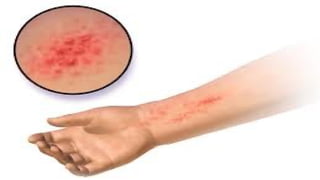
TYPES
1. Irritant ContactDermatitis (ICD)
○ Most common type
○ Caused by direct damage to skin’s outer layer
○ Common irritants: water, soaps, detergents, solvents,
acids, alkalis, oils
○ Eczema patients more susceptible
8.
Allergic Contact Dermatitis(ACD)
● Immune system response to allergens after
sensitization
● Common allergens: nickel, chromium, rubber
chemicals, fragrances, epoxy resins, some
plants
DIANOSES
● Medical &occupational history – job duties,
materials handled
● Physical examination – assess type & severity of
dermatitis
20.
Patch testing: smallamounts of common allergens
(including those relevant to patient’s occupation)
are applied to skin under adhesive patches. The skin
is then checked after 48 hrs.
There is no specific test for irritant contact
dermatitis. It is often diagnosed based on history
and examination and by excluding allergic causes.
CONCLUSION
● Occupational dermatitisis preventable with awareness and
proactive measures.
● Early identification of irritants and allergens, along with
protective workplace practices, is essential to protect skin
health.
● Prompt diagnosis and treatment can prevent chronic
complications.
● Collaboration between employees, employers, and healthcare
professionals ensures safer work environments and healthier