Interpersonal
Communication
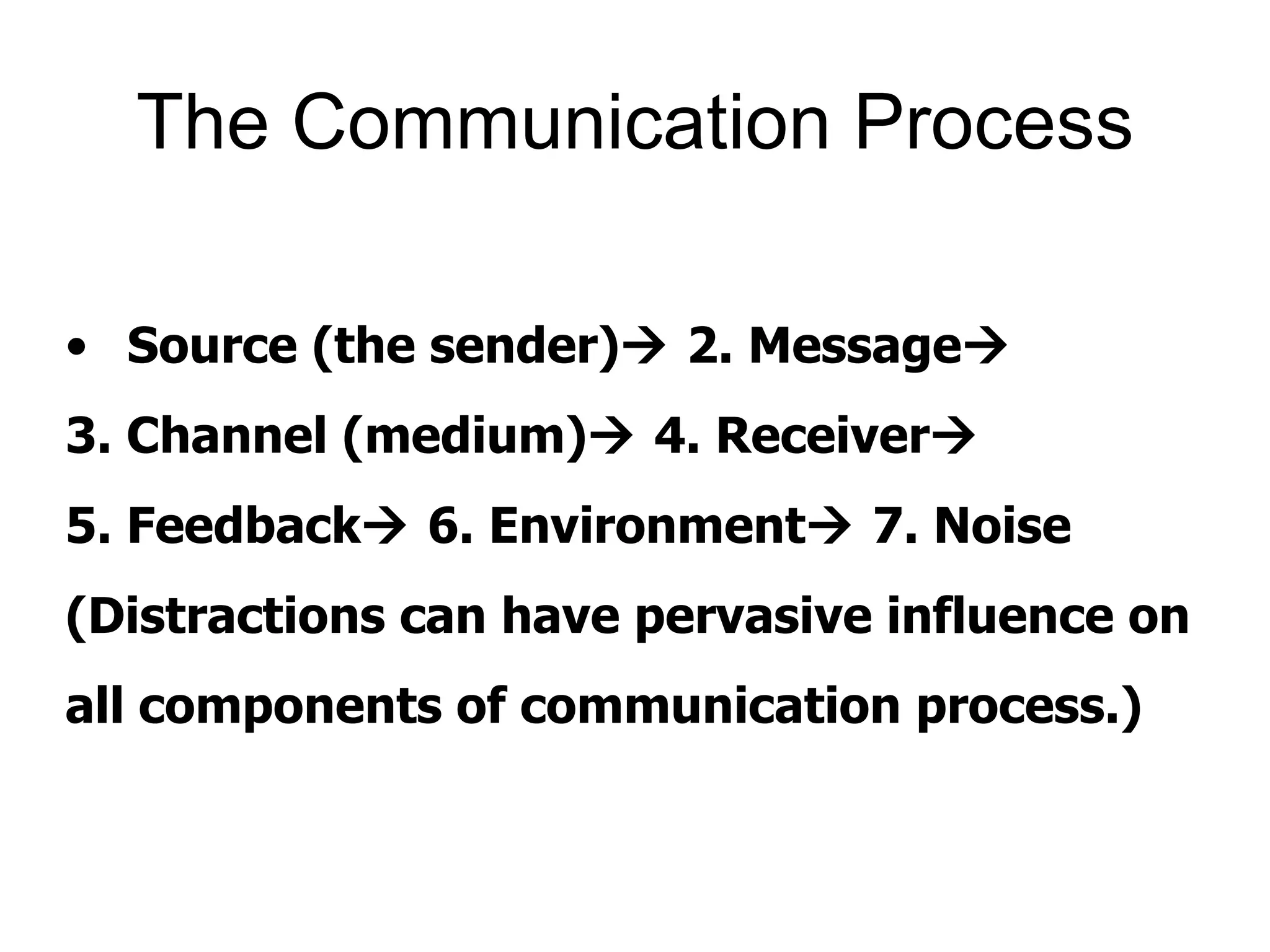
The Communication Process

• Source (the sender) 2. Message
3. Channel (medium) 4. Receiver
5. Feedback 6. Environment 7. Noise
(Distractions can have pervasive influence on
all components of communication process.)
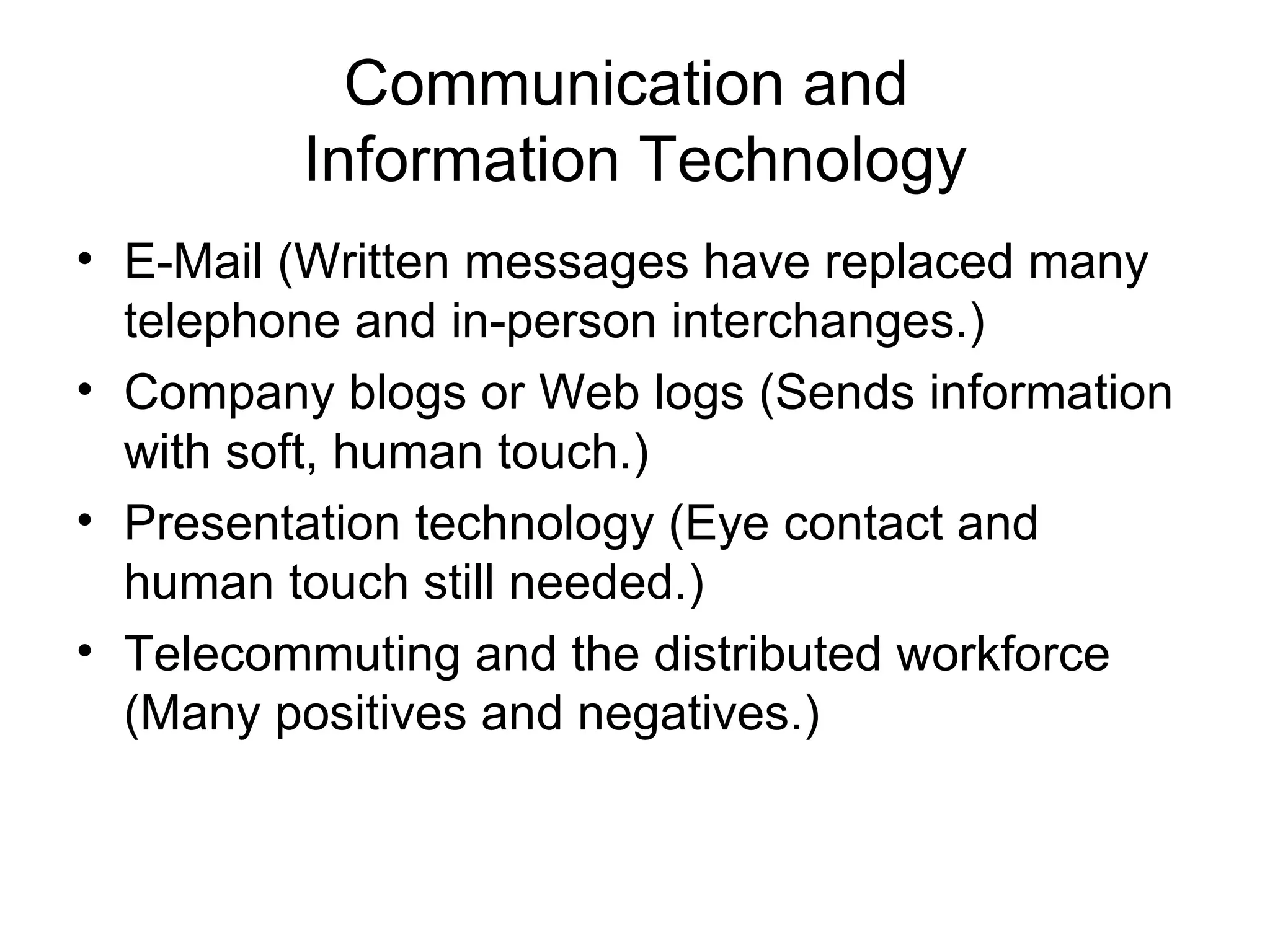
Communication and
         Information Technology
• E-Mail (Written messages have replaced many
  telephone and in-person interchanges.)
• Company blogs or Web logs (Sends information
  with soft, human touch.)
• Presentation technology (Eye contact and
  human touch still needed.)
• Telecommuting and the distributed workforce
  (Many positives and negatives.)
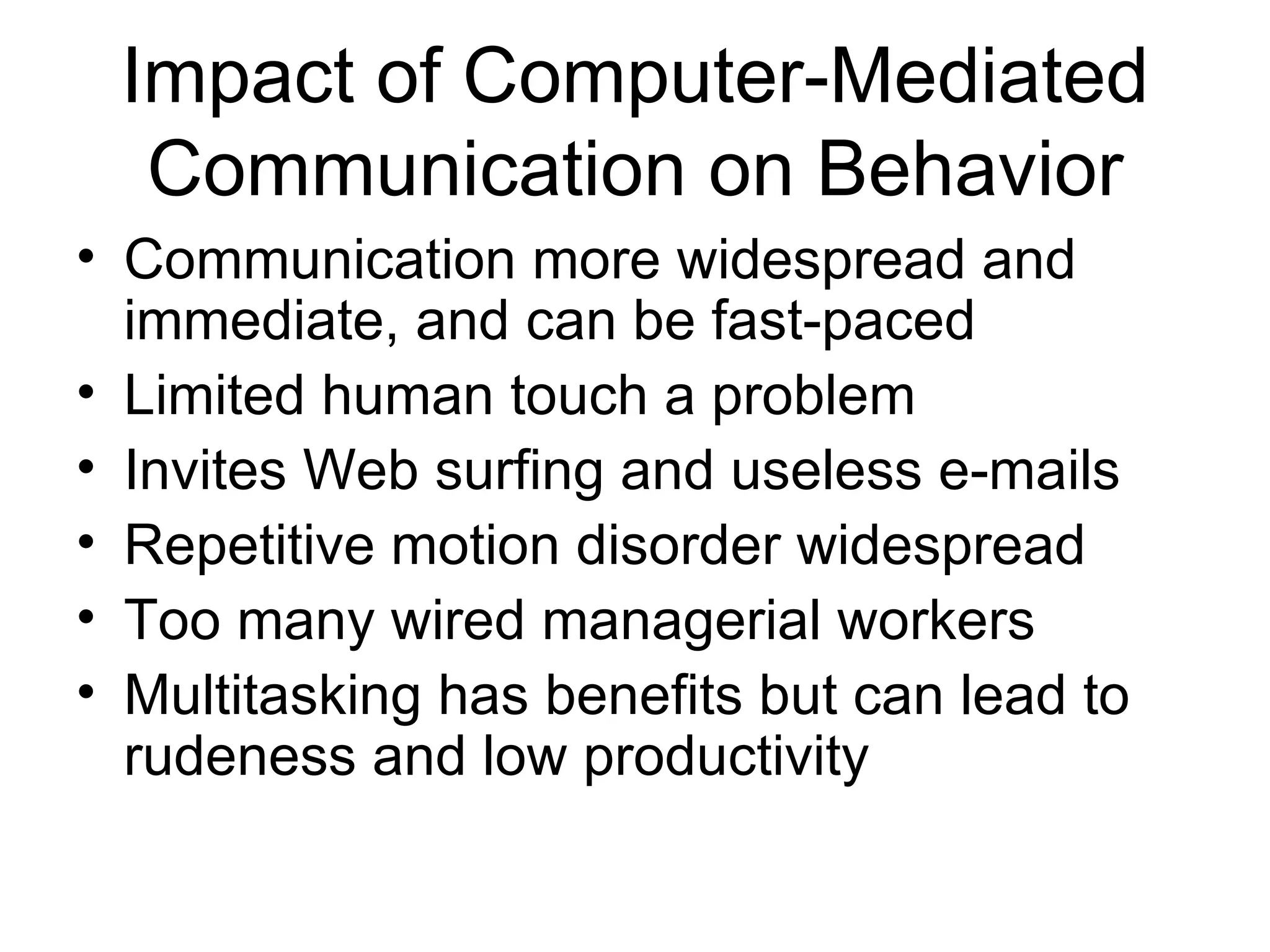
Impact of Computer-Mediated
  Communication on Behavior
• Communication more widespread and
  immediate, and can be fast-paced
• Limited human touch a problem
• Invites Web surfing and useless e-mails
• Repetitive motion disorder widespread
• Too many wired managerial workers
• Multitasking has benefits but can lead to
  rudeness and low productivity
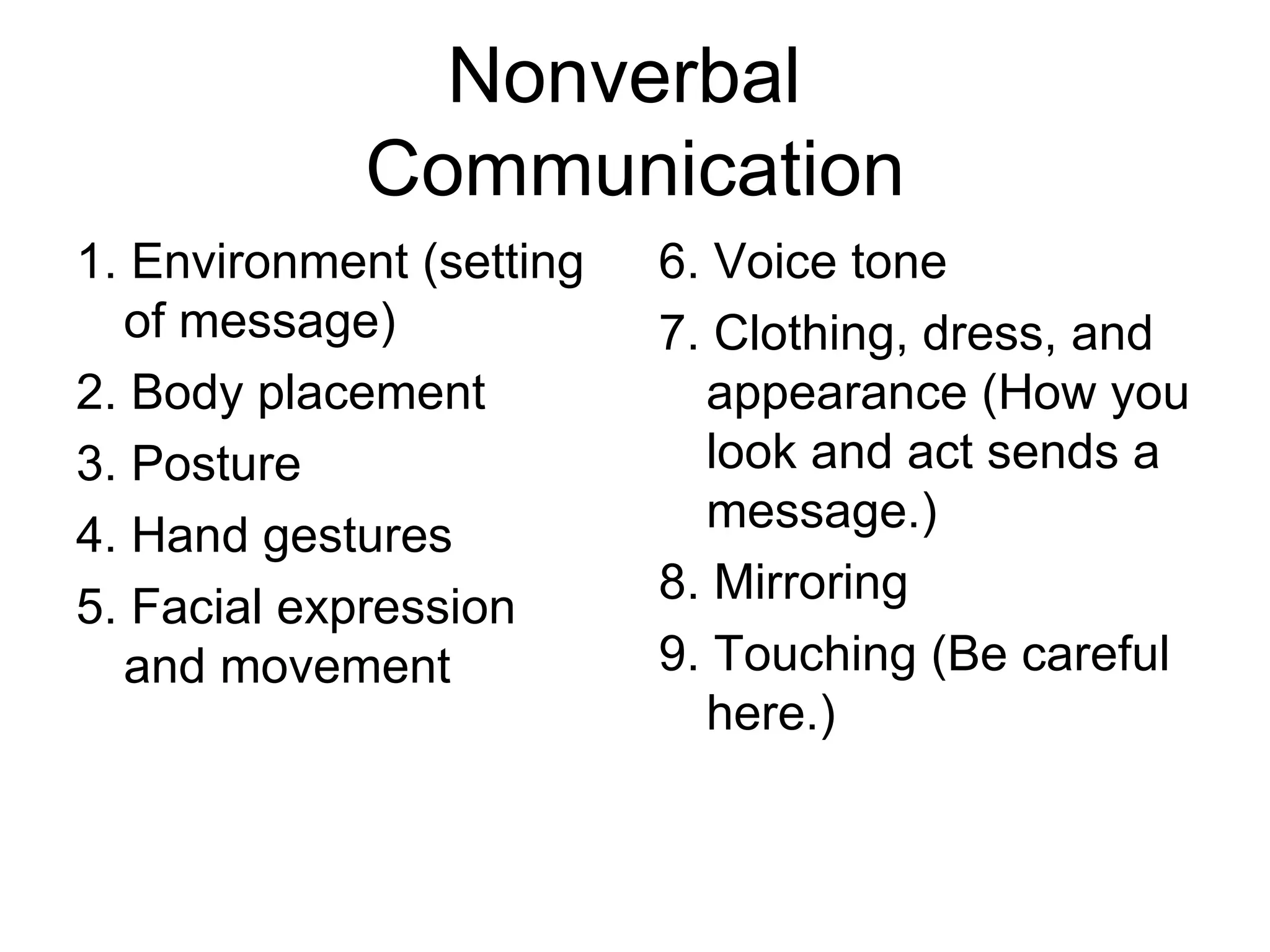
Nonverbal
             Communication
1. Environment (setting   6. Voice tone
  of message)             7. Clothing, dress, and
2. Body placement           appearance (How you
3. Posture                  look and act sends a
4. Hand gestures            message.)
                          8. Mirroring
5. Facial expression
  and movement            9. Touching (Be careful
                            here.)
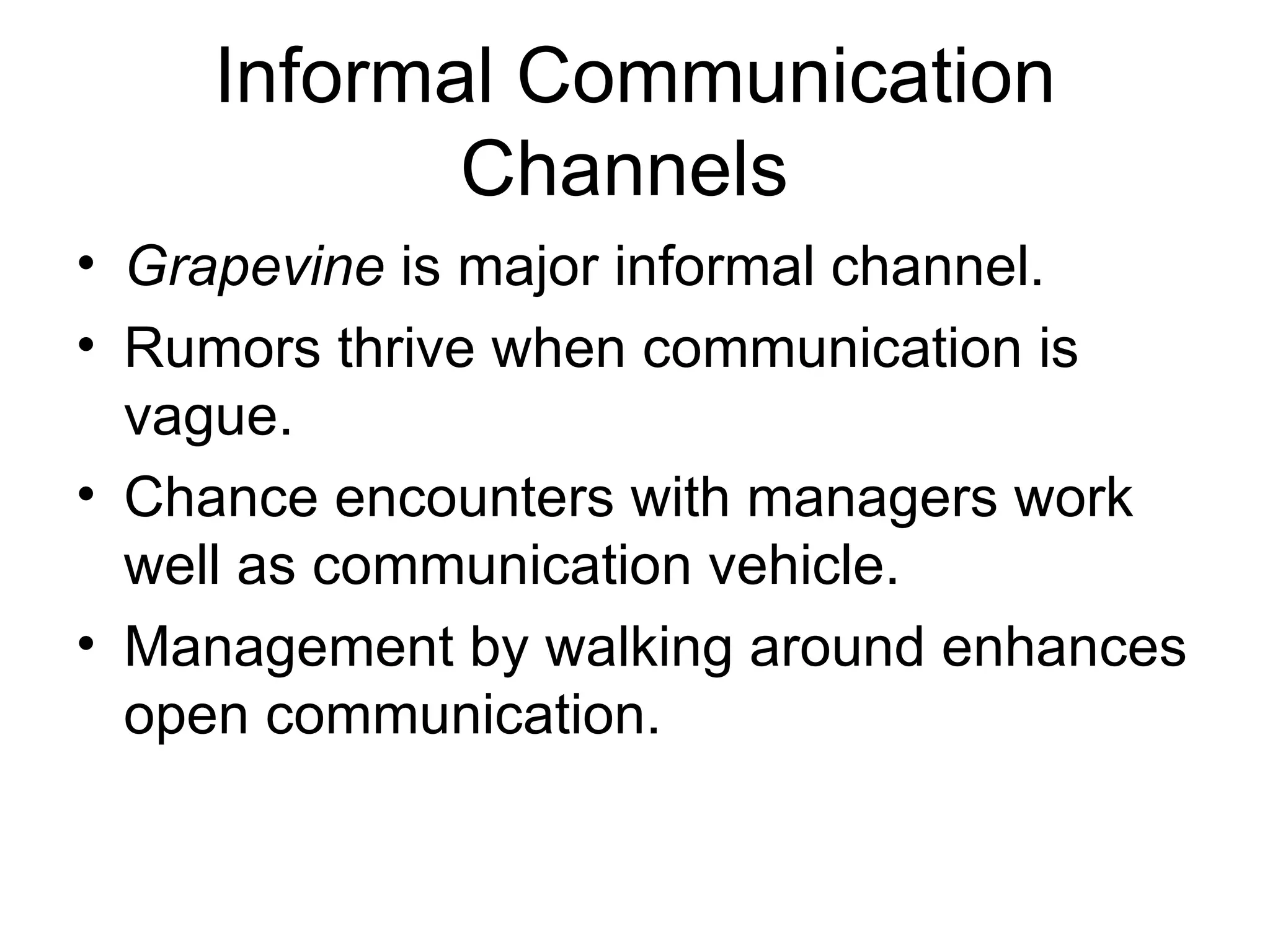
Informal Communication
           Channels
• Grapevine is major informal channel.
• Rumors thrive when communication is
  vague.
• Chance encounters with managers work
  well as communication vehicle.
• Management by walking around enhances
  open communication.
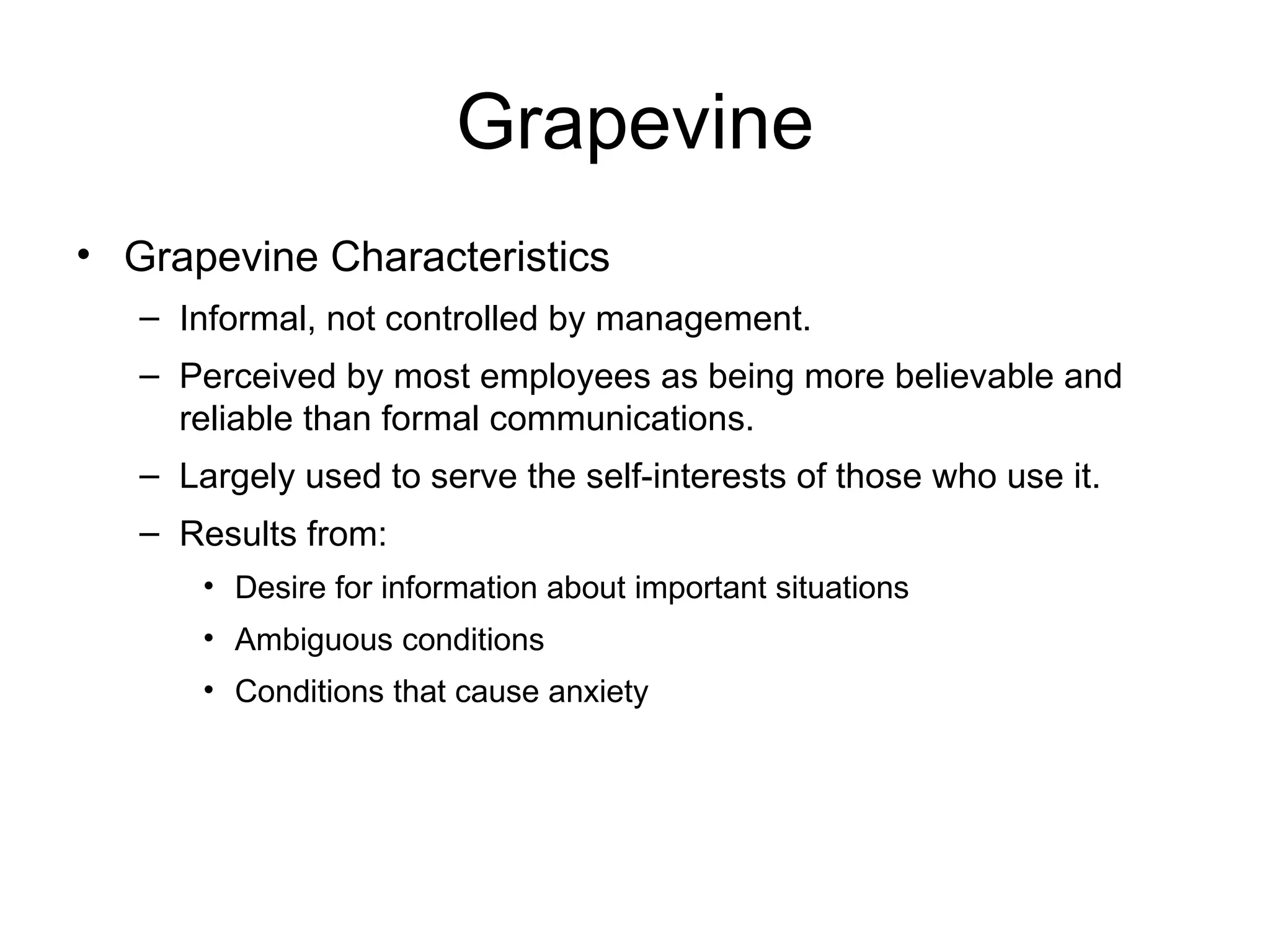
Grapevine
• Grapevine Characteristics
   – Informal, not controlled by management.
   – Perceived by most employees as being more believable and
     reliable than formal communications.
   – Largely used to serve the self-interests of those who use it.
   – Results from:
       • Desire for information about important situations
       • Ambiguous conditions
       • Conditions that cause anxiety
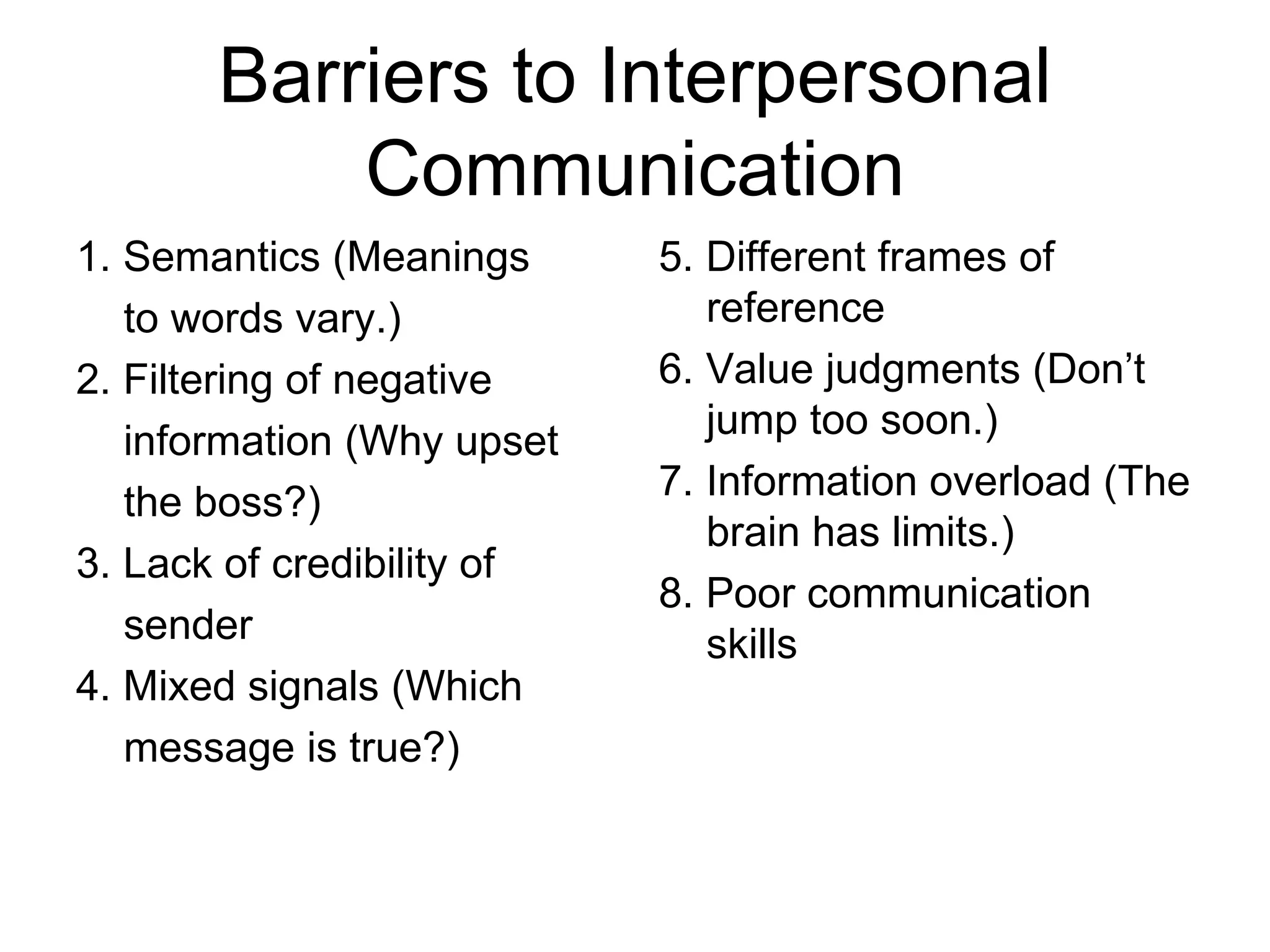
Barriers to Interpersonal
           Communication
1. Semantics (Meanings      5. Different frames of
   to words vary.)             reference
2. Filtering of negative    6. Value judgments (Don’t
                               jump too soon.)
   information (Why upset
   the boss?)               7. Information overload (The
                               brain has limits.)
3. Lack of credibility of
                            8. Poor communication
   sender                      skills
4. Mixed signals (Which
   message is true?)
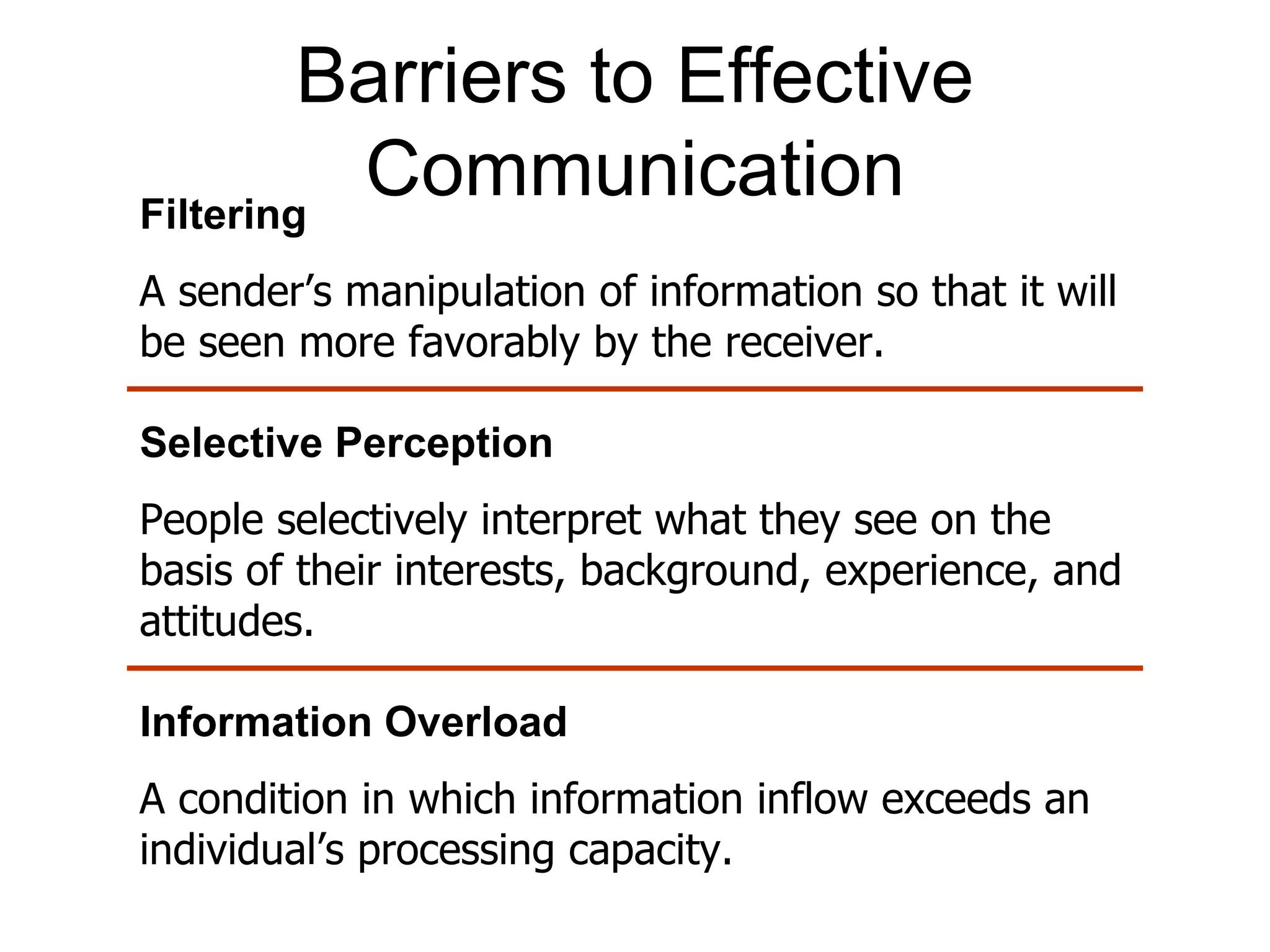
Barriers to Effective
Filtering
          Communication
A sender’s manipulation of information so that it will
be seen more favorably by the receiver.

Selective Perception
People selectively interpret what they see on the
basis of their interests, background, experience, and
attitudes.

Information Overload
A condition in which information inflow exceeds an
individual’s processing capacity.
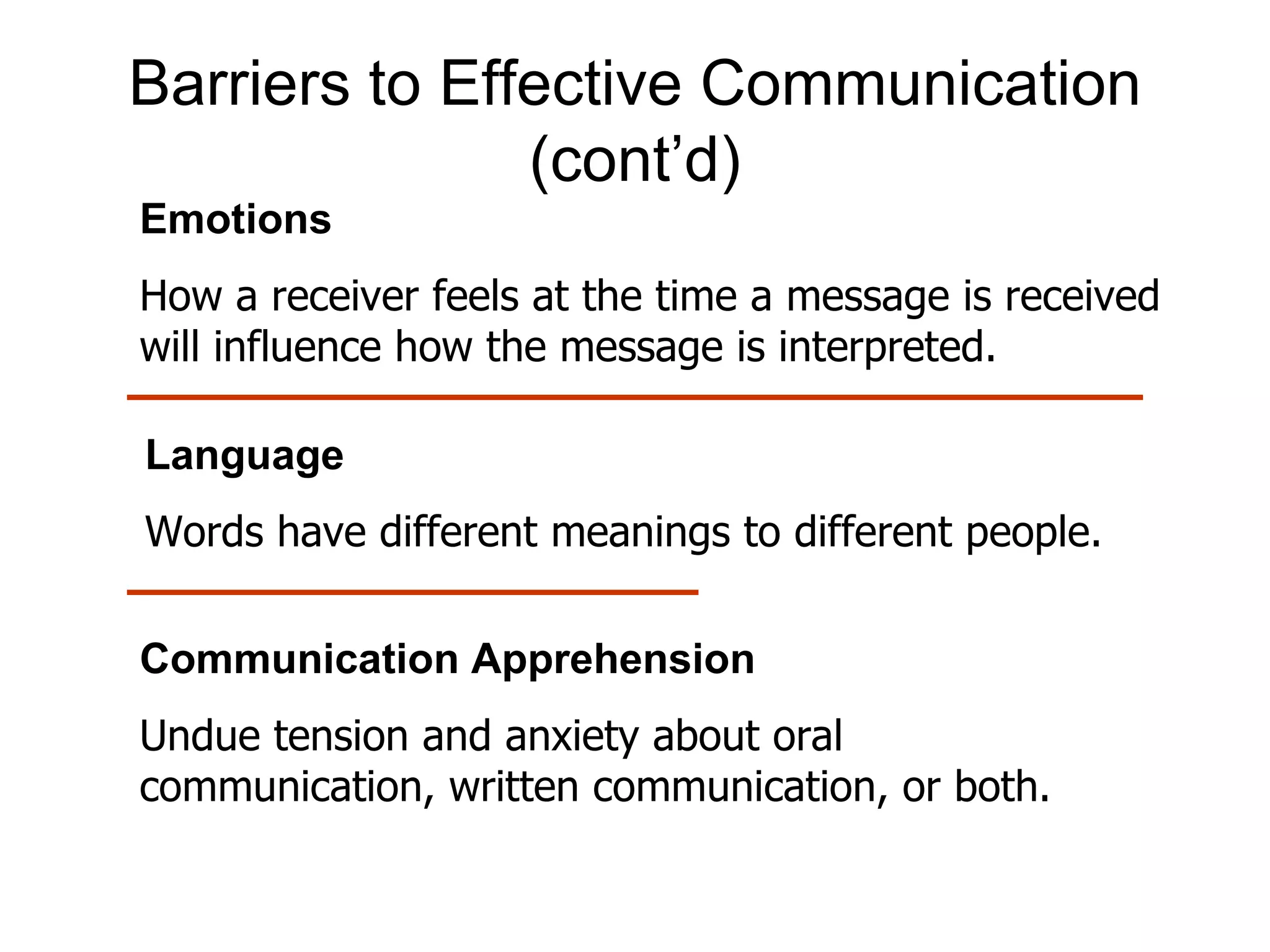
Barriers to Effective Communication
               (cont’d)
Emotions
How a receiver feels at the time a message is received
will influence how the message is interpreted.

Language
Words have different meanings to different people.

Communication Apprehension
Undue tension and anxiety about oral
communication, written communication, or both.
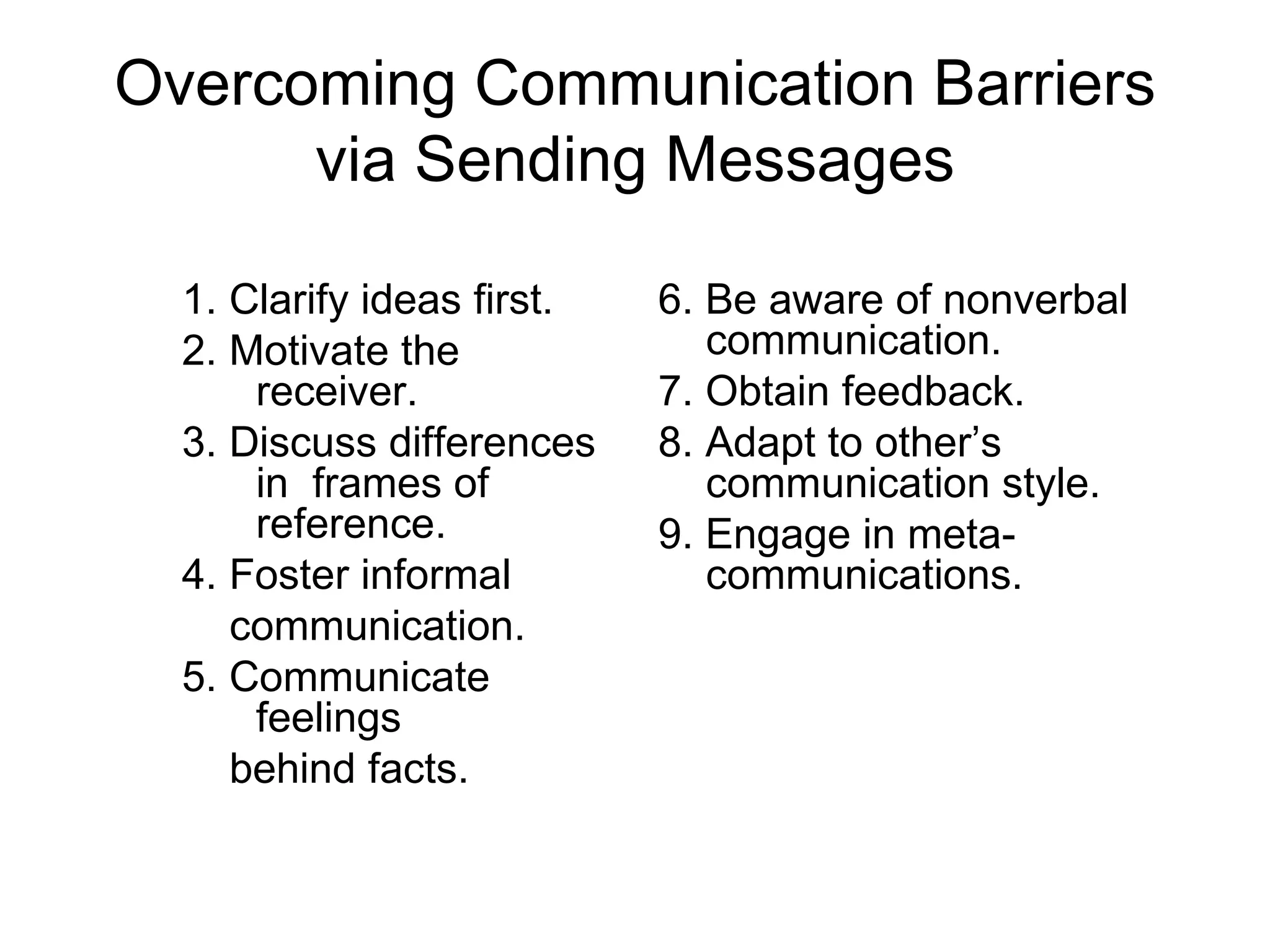
Overcoming Communication Barriers
      via Sending Messages

  1. Clarify ideas first.   6. Be aware of nonverbal
  2. Motivate the              communication.
      receiver.             7. Obtain feedback.
  3. Discuss differences    8. Adapt to other’s
      in frames of             communication style.
      reference.            9. Engage in meta-
  4. Foster informal           communications.
     communication.
  5. Communicate
      feelings
     behind facts.
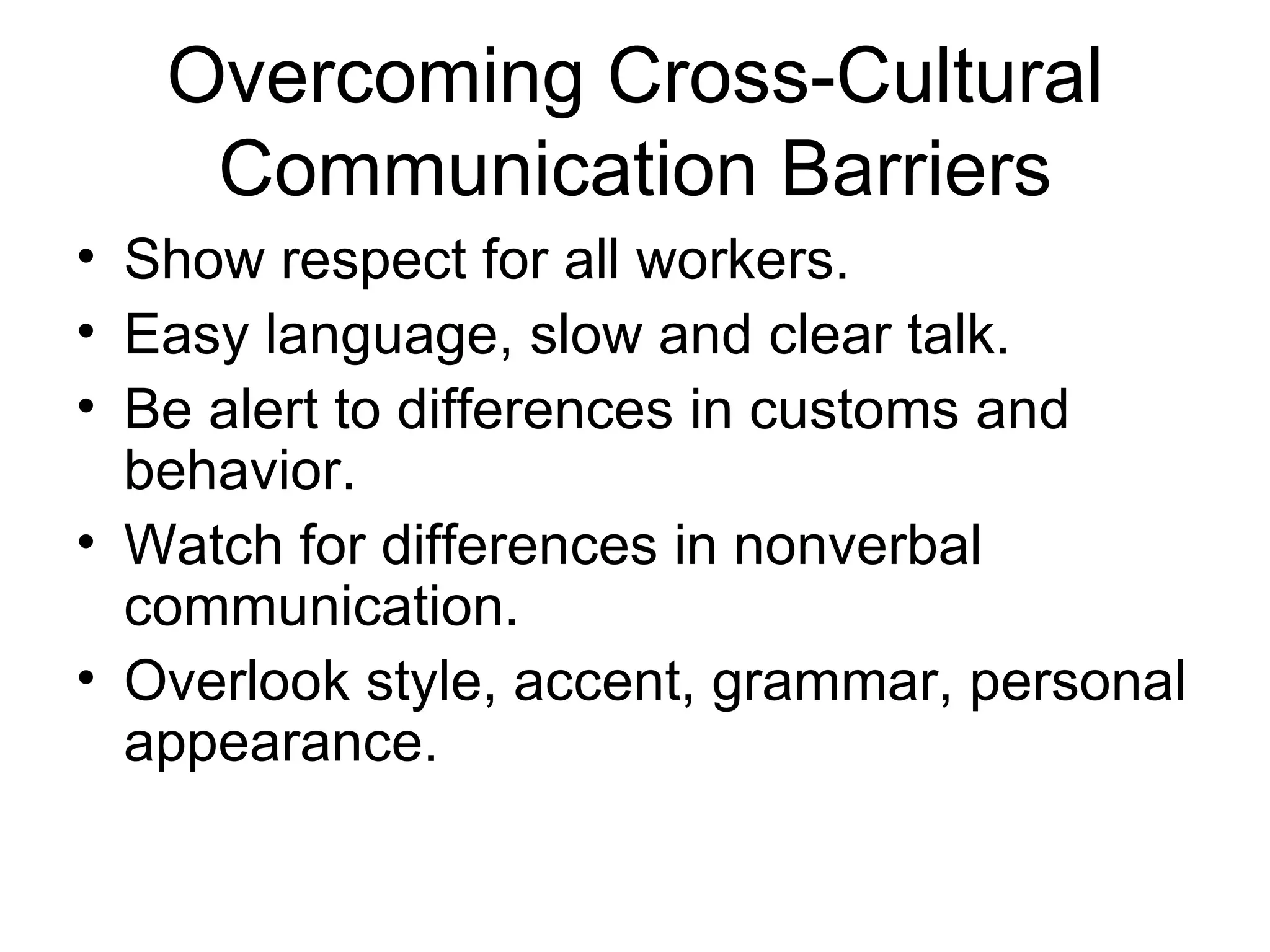
Overcoming Cross-Cultural
    Communication Barriers
• Show respect for all workers.
• Easy language, slow and clear talk.
• Be alert to differences in customs and
  behavior.
• Watch for differences in nonverbal
  communication.
• Overlook style, accent, grammar, personal
  appearance.
Overcoming Cross-Cultural
 Communication Barriers, cont.
• Listen for understanding, not agreement.
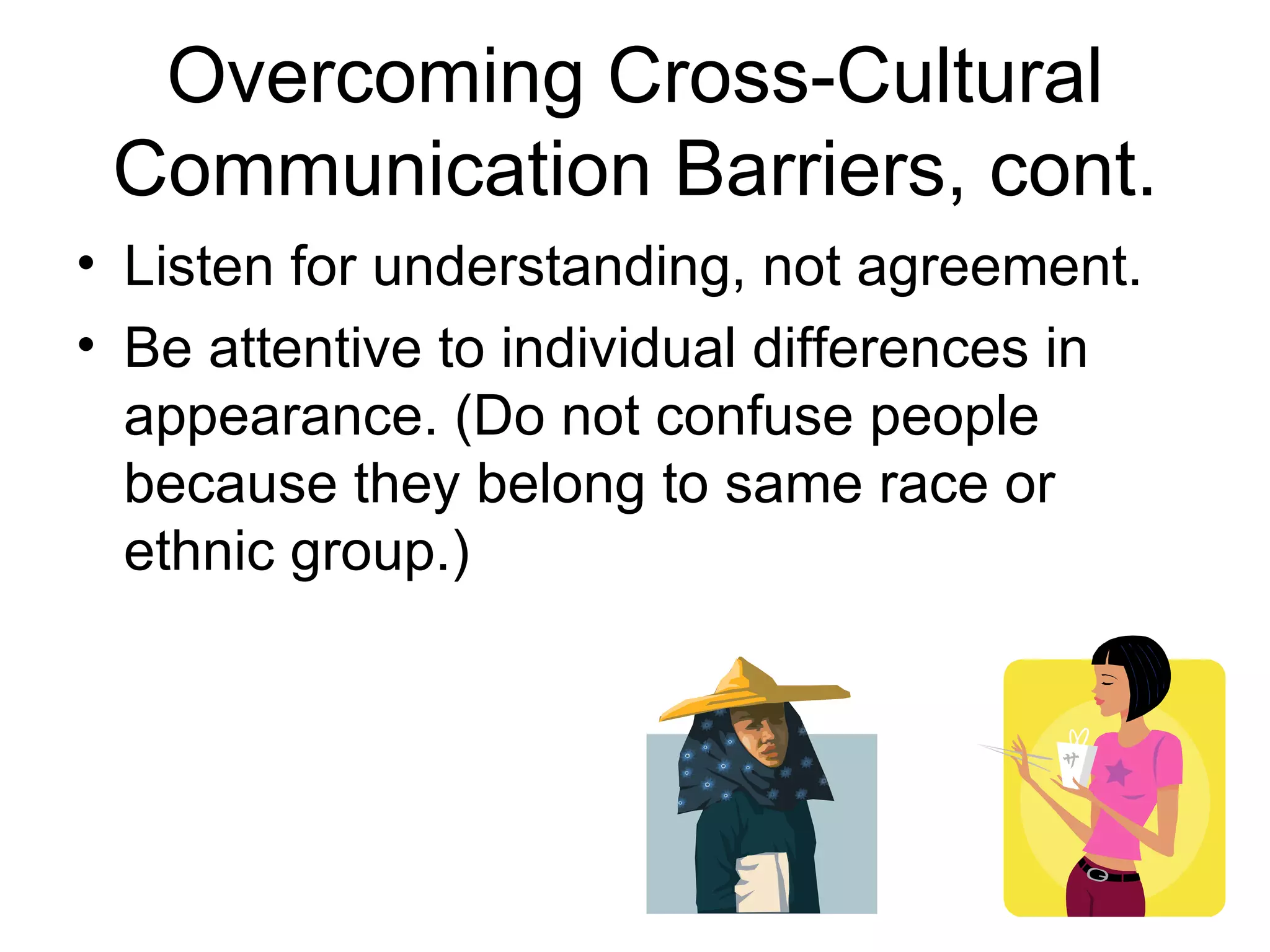
• Be attentive to individual differences in
  appearance. (Do not confuse people
  because they belong to same race or
  ethnic group.)

Oblecture7 communication -1-

  • 1.
  • 2.
    The Communication Process •Source (the sender) 2. Message 3. Channel (medium) 4. Receiver 5. Feedback 6. Environment 7. Noise (Distractions can have pervasive influence on all components of communication process.)
  • 3.
    Communication and Information Technology • E-Mail (Written messages have replaced many telephone and in-person interchanges.) • Company blogs or Web logs (Sends information with soft, human touch.) • Presentation technology (Eye contact and human touch still needed.) • Telecommuting and the distributed workforce (Many positives and negatives.)
  • 4.
    Impact of Computer-Mediated Communication on Behavior • Communication more widespread and immediate, and can be fast-paced • Limited human touch a problem • Invites Web surfing and useless e-mails • Repetitive motion disorder widespread • Too many wired managerial workers • Multitasking has benefits but can lead to rudeness and low productivity
  • 5.
    Nonverbal Communication 1. Environment (setting 6. Voice tone of message) 7. Clothing, dress, and 2. Body placement appearance (How you 3. Posture look and act sends a 4. Hand gestures message.) 8. Mirroring 5. Facial expression and movement 9. Touching (Be careful here.)
  • 6.
    Informal Communication Channels • Grapevine is major informal channel. • Rumors thrive when communication is vague. • Chance encounters with managers work well as communication vehicle. • Management by walking around enhances open communication.
  • 7.
    Grapevine • Grapevine Characteristics – Informal, not controlled by management. – Perceived by most employees as being more believable and reliable than formal communications. – Largely used to serve the self-interests of those who use it. – Results from: • Desire for information about important situations • Ambiguous conditions • Conditions that cause anxiety
  • 8.
    Barriers to Interpersonal Communication 1. Semantics (Meanings 5. Different frames of to words vary.) reference 2. Filtering of negative 6. Value judgments (Don’t jump too soon.) information (Why upset the boss?) 7. Information overload (The brain has limits.) 3. Lack of credibility of 8. Poor communication sender skills 4. Mixed signals (Which message is true?)
  • 9.
    Barriers to Effective Filtering Communication A sender’s manipulation of information so that it will be seen more favorably by the receiver. Selective Perception People selectively interpret what they see on the basis of their interests, background, experience, and attitudes. Information Overload A condition in which information inflow exceeds an individual’s processing capacity.
  • 10.
    Barriers to EffectiveCommunication (cont’d) Emotions How a receiver feels at the time a message is received will influence how the message is interpreted. Language Words have different meanings to different people. Communication Apprehension Undue tension and anxiety about oral communication, written communication, or both.
  • 11.
    Overcoming Communication Barriers via Sending Messages 1. Clarify ideas first. 6. Be aware of nonverbal 2. Motivate the communication. receiver. 7. Obtain feedback. 3. Discuss differences 8. Adapt to other’s in frames of communication style. reference. 9. Engage in meta- 4. Foster informal communications. communication. 5. Communicate feelings behind facts.
  • 12.
    Overcoming Cross-Cultural Communication Barriers • Show respect for all workers. • Easy language, slow and clear talk. • Be alert to differences in customs and behavior. • Watch for differences in nonverbal communication. • Overlook style, accent, grammar, personal appearance.
  • 13.
    Overcoming Cross-Cultural CommunicationBarriers, cont. • Listen for understanding, not agreement. • Be attentive to individual differences in appearance. (Do not confuse people because they belong to same race or ethnic group.)