SDFF
PRESENTED BY:
• Uttam Raj
TYPES OF COMMUNICATION BARRIER
 Physical Barrier
 Cultural Barrier
 Language Barrier
 Emotional Barrier
 Gender Barrier
 Organizational Barrier
 Perceptual Barrier
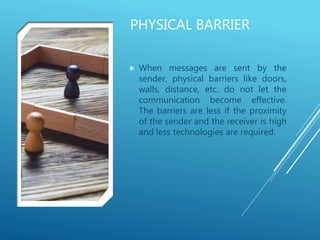
PHYSICAL BARRIER
 When messages are sent by the
sender, physical barriers like doors,
walls, distance, etc. do not let the
communication become effective.
The barriers are less if the proximity
of the sender and the receiver is high
and less technologies are required.
CULTURAL BARRIER
 People who live in various cultures and historical
epochs communicate differently and have different
patterns of thought. A Cultural barrier in
communication occurs mainly when communication
happens between two different cultural backgrounds.
We encounter cultural barriers in everyday life.
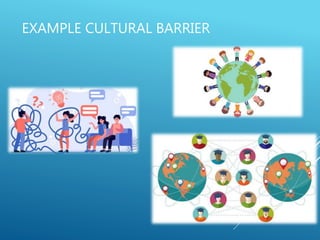
EXAMPLE CULTURAL BARRIER
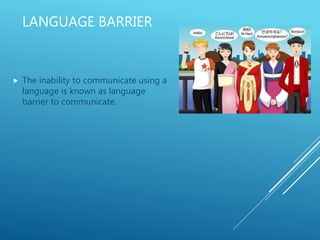
LANGUAGE BARRIER
 The inability to communicate using a
language is known as language
barrier to communicate.
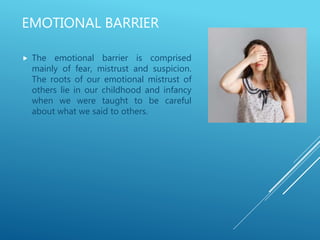
EMOTIONAL BARRIER
 The emotional barrier is comprised
mainly of fear, mistrust and suspicion.
The roots of our emotional mistrust of
others lie in our childhood and infancy
when we were taught to be careful
about what we said to others.
EXAMPLE OF EMOTIONAL BARRIER
 Angary
 Pride
 Anxiety
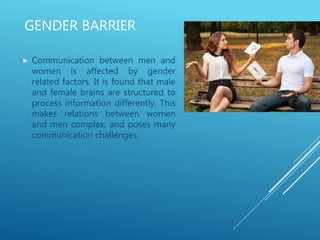
GENDER BARRIER
 Communication between men and
women is affected by gender
related factors. It is found that male
and female brains are structured to
process information differently. This
makes relations between women
and men complex; and poses many
communication challenges.
EXAMPLE OF GENDER BARRIER
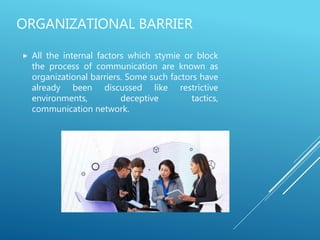
ORGANIZATIONAL BARRIER
 All the internal factors which stymie or block
the process of communication are known as
organizational barriers. Some such factors have
already been discussed like restrictive
environments, deceptive tactics,
communication network.
CASE STUDY
 Amar , the marketing manager of Narmada Garments
Ltd. allows the salesman working under him to freely
express their Frank opinion and feelings regarding
work related matters before him .
 Organisational policy
 Rules & Regulations
 Status
 Organisational facilities
PERCEPTUAL BARRIER
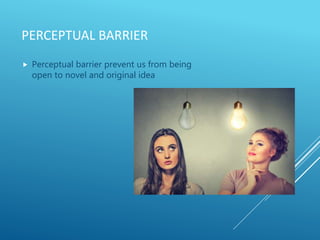
 Perceptual barrier prevent us from being
open to novel and original idea
EXAMPLE OF PERCEPTUAL BARRIER
Communication barrier

Communication barrier

  • 1.
  • 2.
  • 4.
    TYPES OF COMMUNICATIONBARRIER  Physical Barrier  Cultural Barrier  Language Barrier  Emotional Barrier  Gender Barrier  Organizational Barrier  Perceptual Barrier
  • 5.
    PHYSICAL BARRIER  Whenmessages are sent by the sender, physical barriers like doors, walls, distance, etc. do not let the communication become effective. The barriers are less if the proximity of the sender and the receiver is high and less technologies are required.
  • 7.
    CULTURAL BARRIER  Peoplewho live in various cultures and historical epochs communicate differently and have different patterns of thought. A Cultural barrier in communication occurs mainly when communication happens between two different cultural backgrounds. We encounter cultural barriers in everyday life.
  • 8.
  • 9.
    LANGUAGE BARRIER  Theinability to communicate using a language is known as language barrier to communicate.
  • 11.
    EMOTIONAL BARRIER  Theemotional barrier is comprised mainly of fear, mistrust and suspicion. The roots of our emotional mistrust of others lie in our childhood and infancy when we were taught to be careful about what we said to others.
  • 12.
    EXAMPLE OF EMOTIONALBARRIER  Angary  Pride  Anxiety
  • 13.
    GENDER BARRIER  Communicationbetween men and women is affected by gender related factors. It is found that male and female brains are structured to process information differently. This makes relations between women and men complex; and poses many communication challenges.
  • 14.
  • 15.
    ORGANIZATIONAL BARRIER  Allthe internal factors which stymie or block the process of communication are known as organizational barriers. Some such factors have already been discussed like restrictive environments, deceptive tactics, communication network.
  • 16.
    CASE STUDY  Amar, the marketing manager of Narmada Garments Ltd. allows the salesman working under him to freely express their Frank opinion and feelings regarding work related matters before him .  Organisational policy  Rules & Regulations  Status  Organisational facilities
  • 17.
    PERCEPTUAL BARRIER  Perceptualbarrier prevent us from being open to novel and original idea
  • 18.