OBJECT RELATION
THEORY
PRESENTED BY –
Shubhrima Khan
1st year M.Sc. Nursing
Apollo Gleneagles Nursing College
CONCEPT OF THE THEORY
• In 1975 Margaret Mahler has formulated this theory.
• The theory describes the separation individuation process of the child
from the maternal figure.
• Based on observation of the interactions of children with their mother.
• The process begins in the 4th
or 5th
month of life and is completed by the
age of 3 years.
PHASES OF THE THEORY
PHASE 1 – AUTISTIC PHASE (birth – 1 month)
• Also known as normal autism.
• The infant exists in a half sleeping , half awaking
state.
• Focus: fulfillment of basic needs and comfort.
CONT..
PHASE 2 – SYMBIOTIC PHASE (1 – 5 months)
• The child views the self as an extension of the
mother.
• Absence of or rejection by maternal figure can
lead to symbiotic psychosis.
• Fixation in this phase predisposes the child to
adolescent or adulthood schizophrenia.
CONT..
PHASE 3 – SEPARATION-INDIVIDUATION (5 – 36 months)
• Represents ‘psychological birth’ of the child.
• The child evolves his progression from a symbiotic extension of
the mothering figure to a distinct and separate being.
• Consists of four subphases.
CONT..
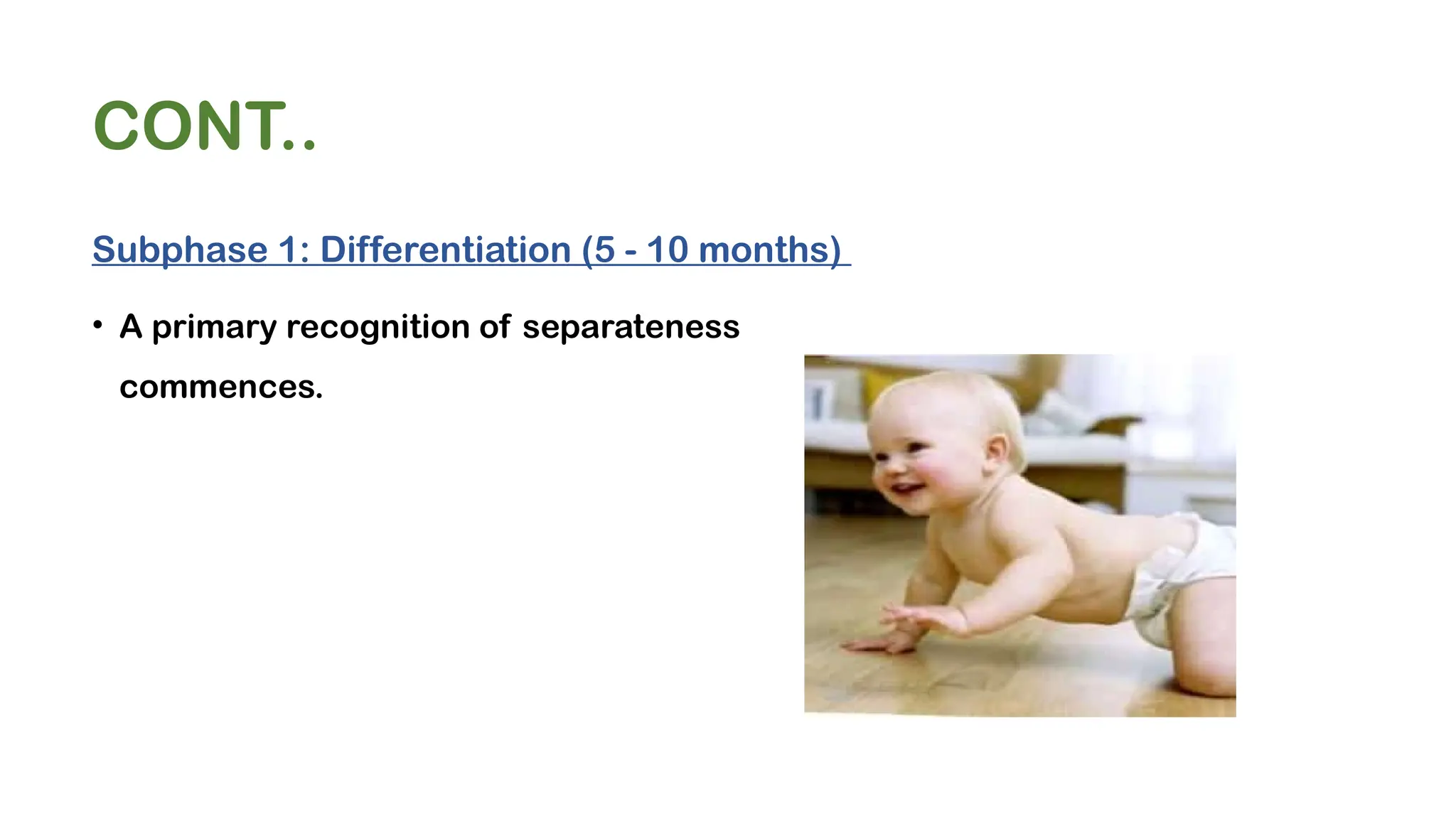
Subphase 1: Differentiation (5 - 10 months)
• A primary recognition of separateness
commences.
CONT..
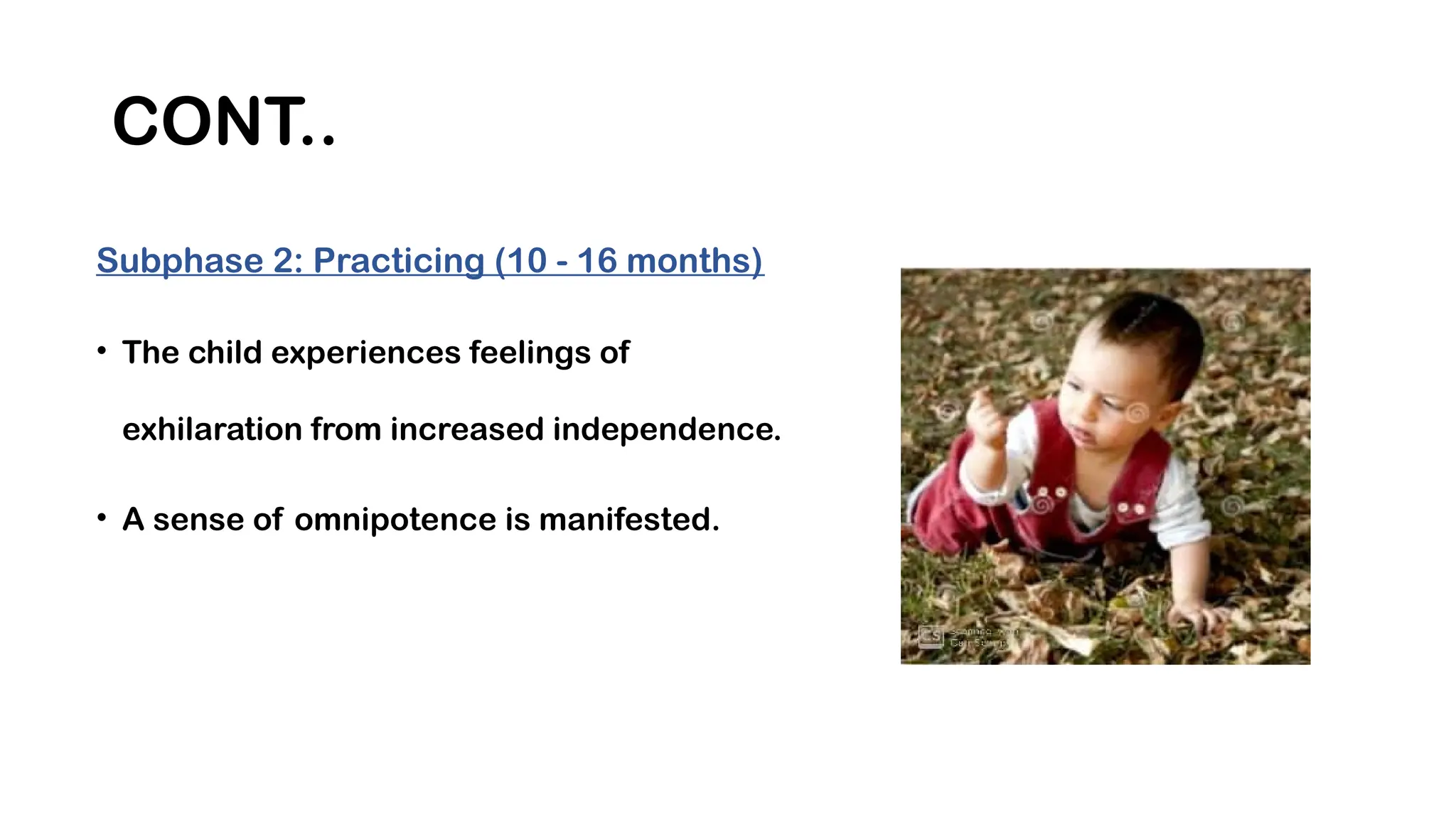
Subphase 2: Practicing (10 - 16 months)
• The child experiences feelings of
exhilaration from increased independence.
• A sense of omnipotence is manifested.
CONT..
Subphase 3: Rapprochement (16 - 24 months)
• Child becomes increasingly aware of his or her separateness from the
mothering figure.
• Sense of fearlessness and omnipotence diminishes.
• The child recognizing the mother as a Separate individual.
• The child needs the mothering figure to be available.
• The most critical thing is mothering response.
• If mother withholds nurturing feelings of rage and fear of abandonment
develop.
CONT..
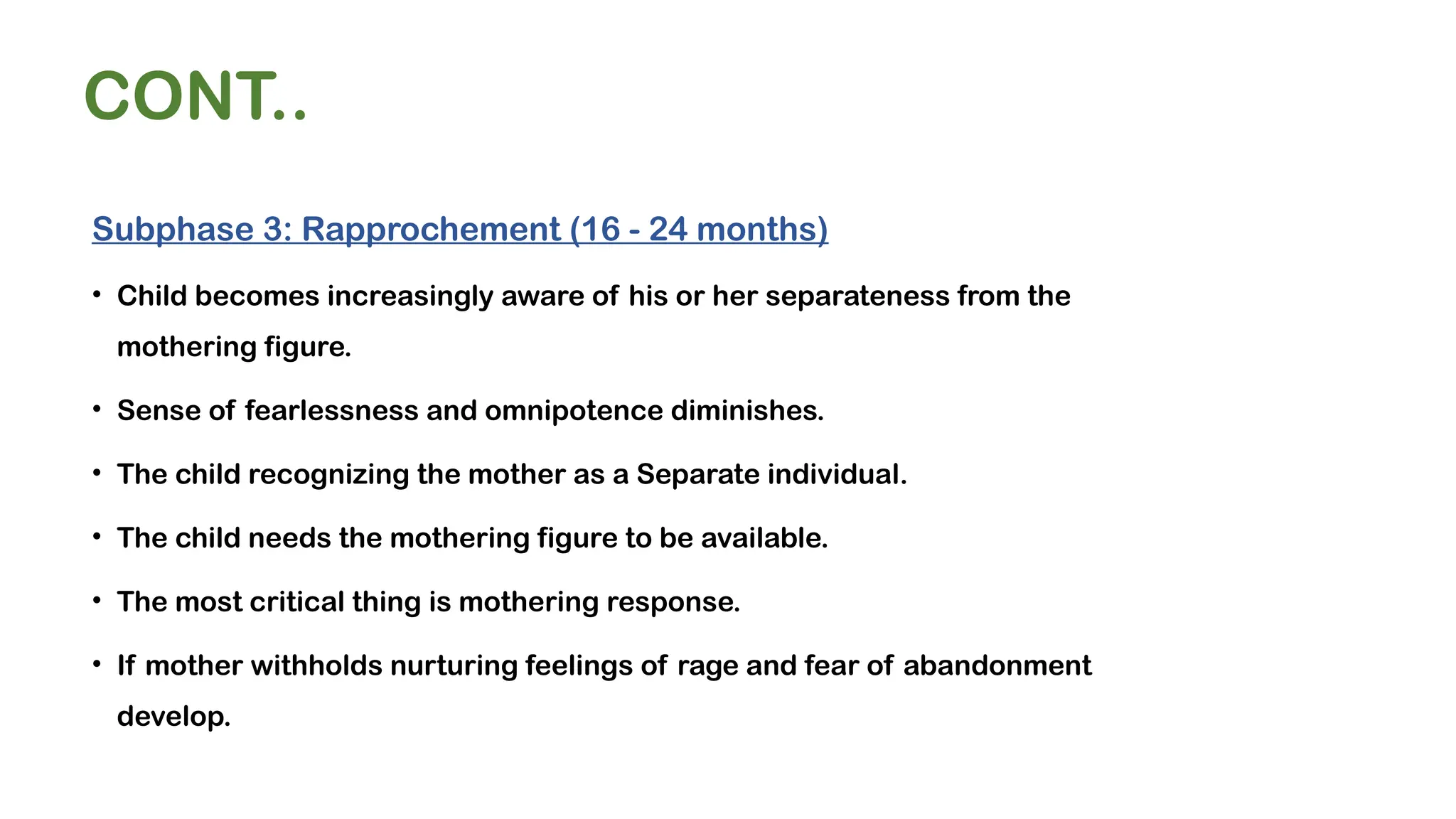
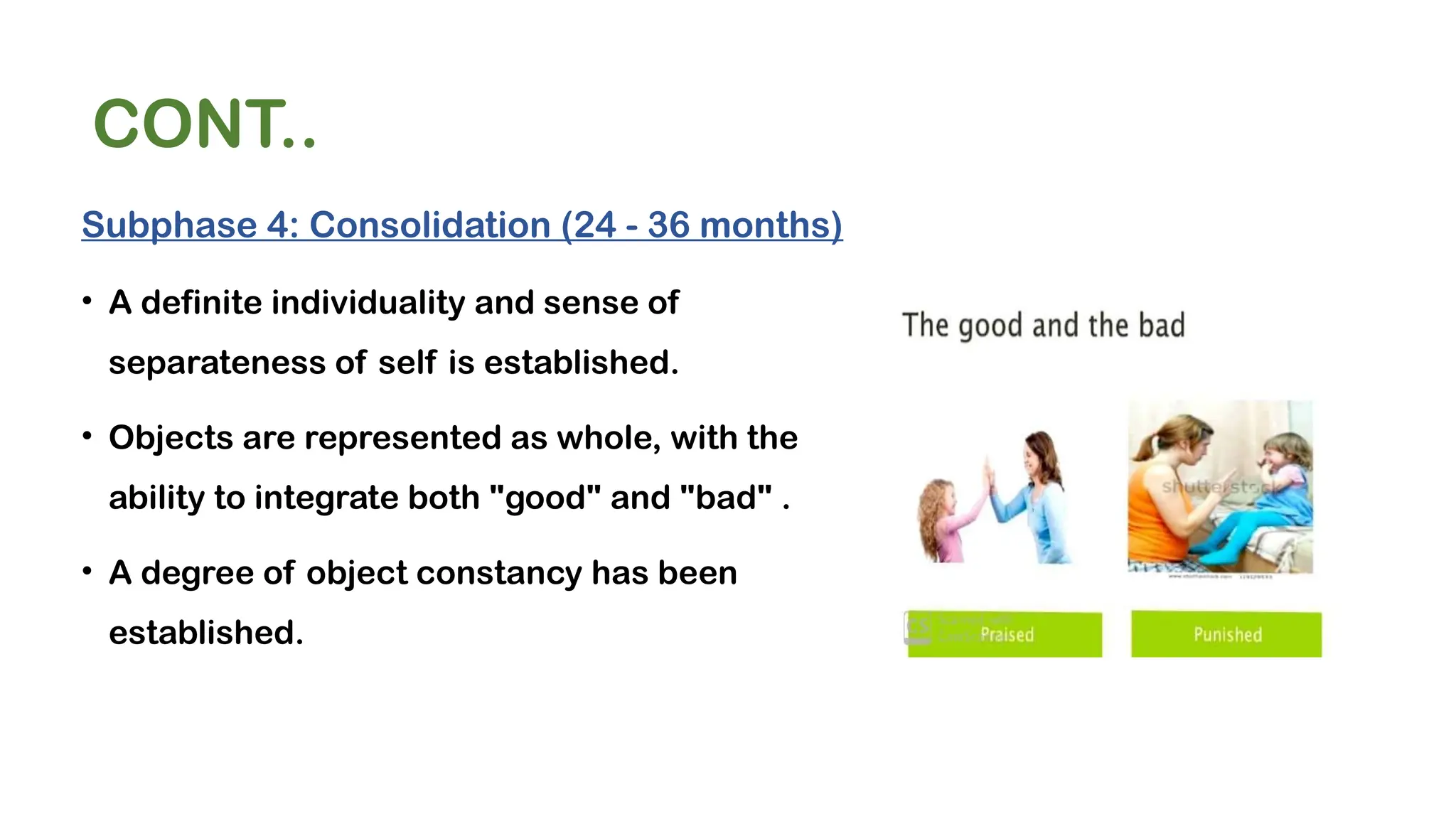
Subphase 4: Consolidation (24 - 36 months)
• A definite individuality and sense of
separateness of self is established.
• Objects are represented as whole, with the
ability to integrate both "good" and "bad" .
• A degree of object constancy has been
established.
RELEVANCE OF THE THEORY TO
NURSING PRACTICE
• To assess the client's level of individuation.
• Trace the emotional problems and to provide nursing care.
CONCLUSION
According to the object relations theory, the way mothers and infants
interact plays a crucial role in infant’s growth and development. If
care is adequate or "good enough," children are able to develop their
true selves, which is the part of the baby that is creative and
spontaneous.
OBJECT RELATION THEORY. THEORIES OF PERSONALITY DEVELOPMENT

OBJECT RELATION THEORY. THEORIES OF PERSONALITY DEVELOPMENT

  • 1.
    OBJECT RELATION THEORY PRESENTED BY– Shubhrima Khan 1st year M.Sc. Nursing Apollo Gleneagles Nursing College
  • 2.
    CONCEPT OF THETHEORY • In 1975 Margaret Mahler has formulated this theory. • The theory describes the separation individuation process of the child from the maternal figure. • Based on observation of the interactions of children with their mother. • The process begins in the 4th or 5th month of life and is completed by the age of 3 years.
  • 3.
    PHASES OF THETHEORY PHASE 1 – AUTISTIC PHASE (birth – 1 month) • Also known as normal autism. • The infant exists in a half sleeping , half awaking state. • Focus: fulfillment of basic needs and comfort.
  • 4.
    CONT.. PHASE 2 –SYMBIOTIC PHASE (1 – 5 months) • The child views the self as an extension of the mother. • Absence of or rejection by maternal figure can lead to symbiotic psychosis. • Fixation in this phase predisposes the child to adolescent or adulthood schizophrenia.
  • 5.
    CONT.. PHASE 3 –SEPARATION-INDIVIDUATION (5 – 36 months) • Represents ‘psychological birth’ of the child. • The child evolves his progression from a symbiotic extension of the mothering figure to a distinct and separate being. • Consists of four subphases.
  • 6.
    CONT.. Subphase 1: Differentiation(5 - 10 months) • A primary recognition of separateness commences.
  • 7.
    CONT.. Subphase 2: Practicing(10 - 16 months) • The child experiences feelings of exhilaration from increased independence. • A sense of omnipotence is manifested.
  • 8.
    CONT.. Subphase 3: Rapprochement(16 - 24 months) • Child becomes increasingly aware of his or her separateness from the mothering figure. • Sense of fearlessness and omnipotence diminishes. • The child recognizing the mother as a Separate individual. • The child needs the mothering figure to be available. • The most critical thing is mothering response. • If mother withholds nurturing feelings of rage and fear of abandonment develop.
  • 9.
    CONT.. Subphase 4: Consolidation(24 - 36 months) • A definite individuality and sense of separateness of self is established. • Objects are represented as whole, with the ability to integrate both "good" and "bad" . • A degree of object constancy has been established.
  • 10.
    RELEVANCE OF THETHEORY TO NURSING PRACTICE • To assess the client's level of individuation. • Trace the emotional problems and to provide nursing care.
  • 11.
    CONCLUSION According to theobject relations theory, the way mothers and infants interact plays a crucial role in infant’s growth and development. If care is adequate or "good enough," children are able to develop their true selves, which is the part of the baby that is creative and spontaneous.