Submitted To:
Mrs. Shailza Sharma
Associate Professor
Department of psychiatry
DMC&H ,CON
Submitted by :
Palak Surya
M.Sc. (N) 1st
year
Roll no : 6
Theory of Object Relations
• Margret Mahler (Mahler, pine and Bergman,
1975) formulated a theory that describes the
separation individuation process of the infant
from the mother figure (primary caregiver).
• She describes this process as progressing
through three major phases :-
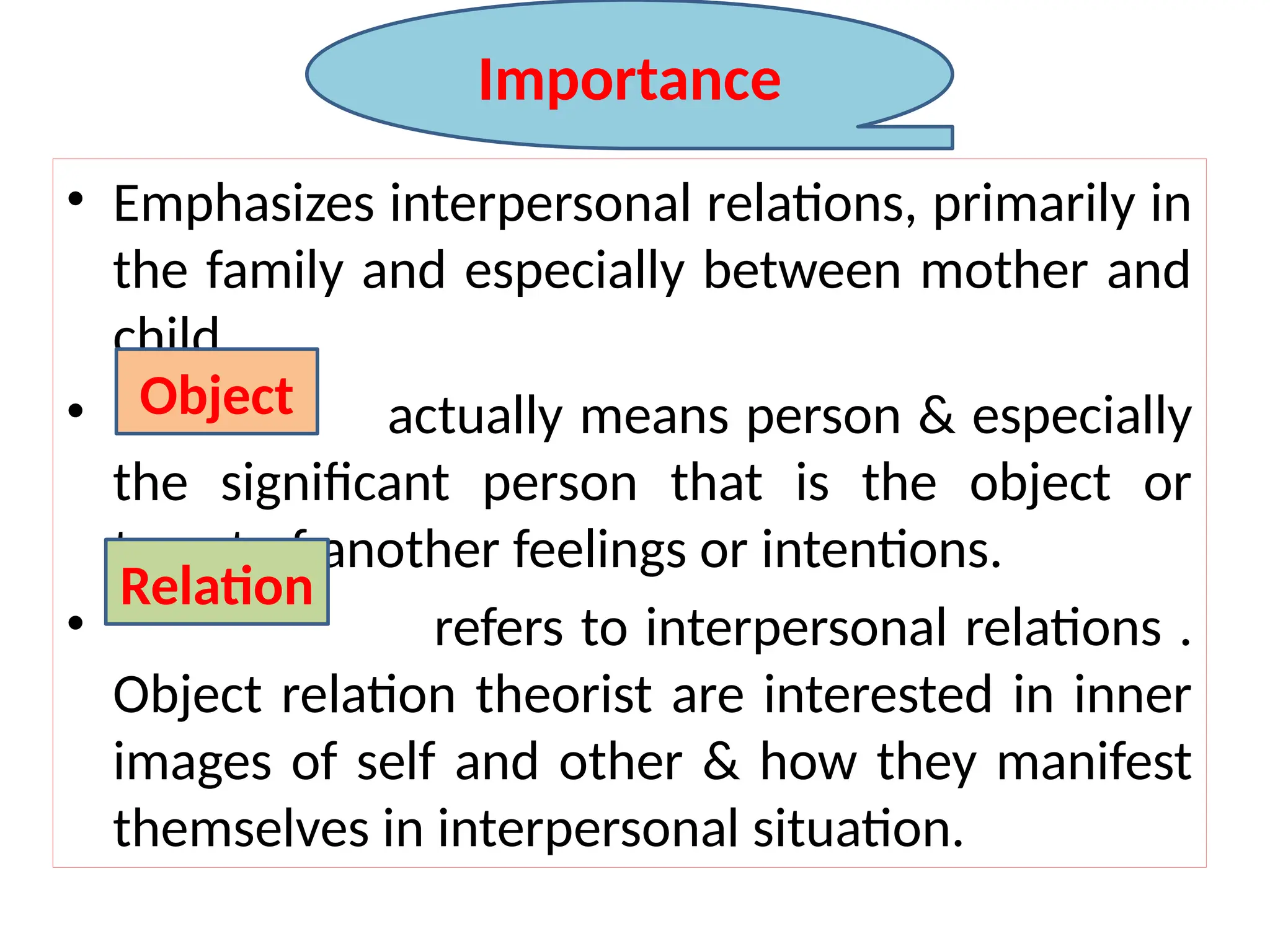
• Emphasizes interpersonal relations, primarily in
the family and especially between mother and
child.
• actually means person & especially
the significant person that is the object or
target of another feelings or intentions.
• refers to interpersonal relations .
Object relation theorist are interested in inner
images of self and other & how they manifest
themselves in interpersonal situation.
Object
Relation
Importance
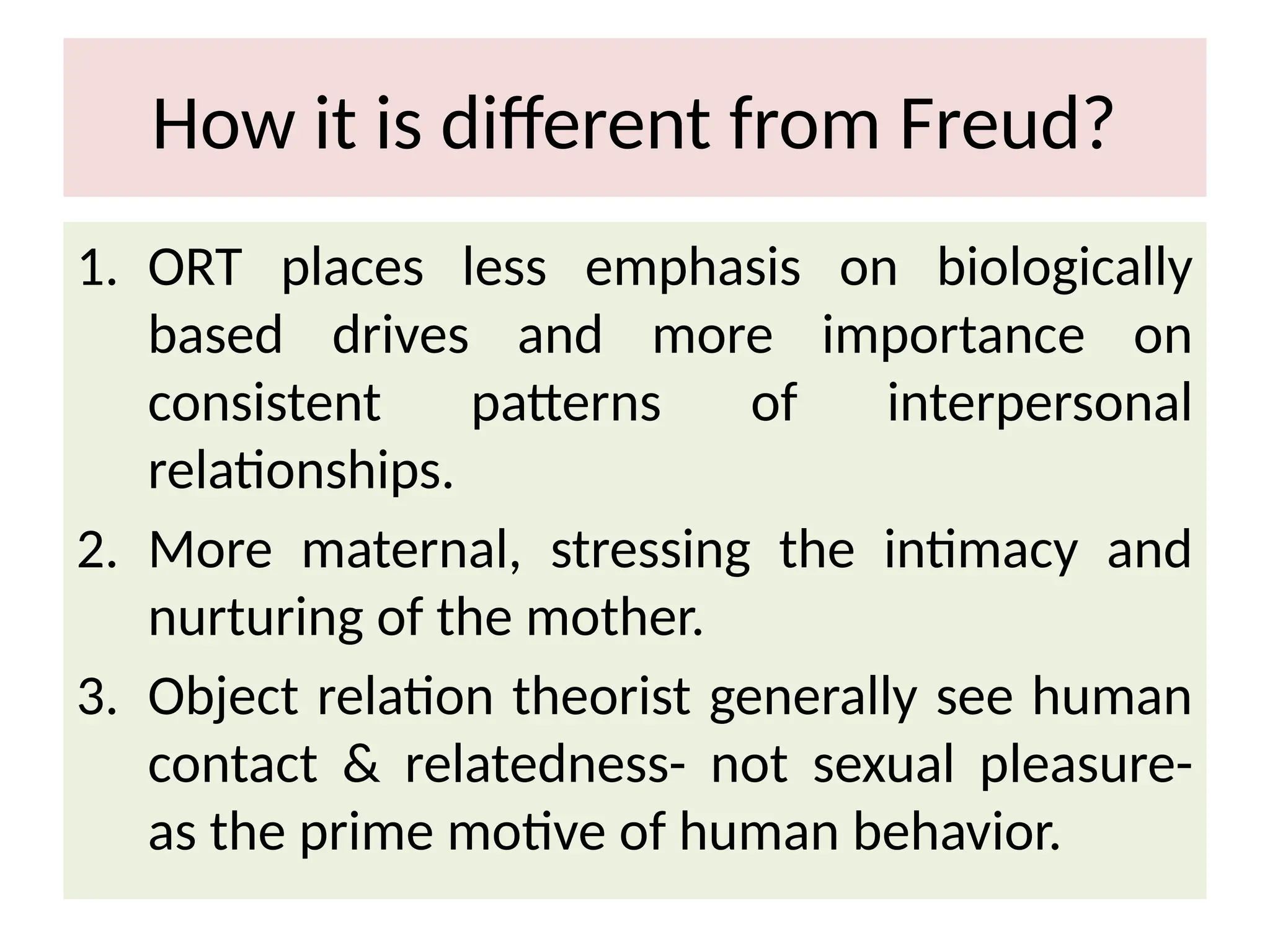
How it is different from Freud?
1. ORT places less emphasis on biologically
based drives and more importance on
consistent patterns of interpersonal
relationships.
2. More maternal, stressing the intimacy and
nurturing of the mother.
3. Object relation theorist generally see human
contact & relatedness- not sexual pleasure-
as the prime motive of human behavior.
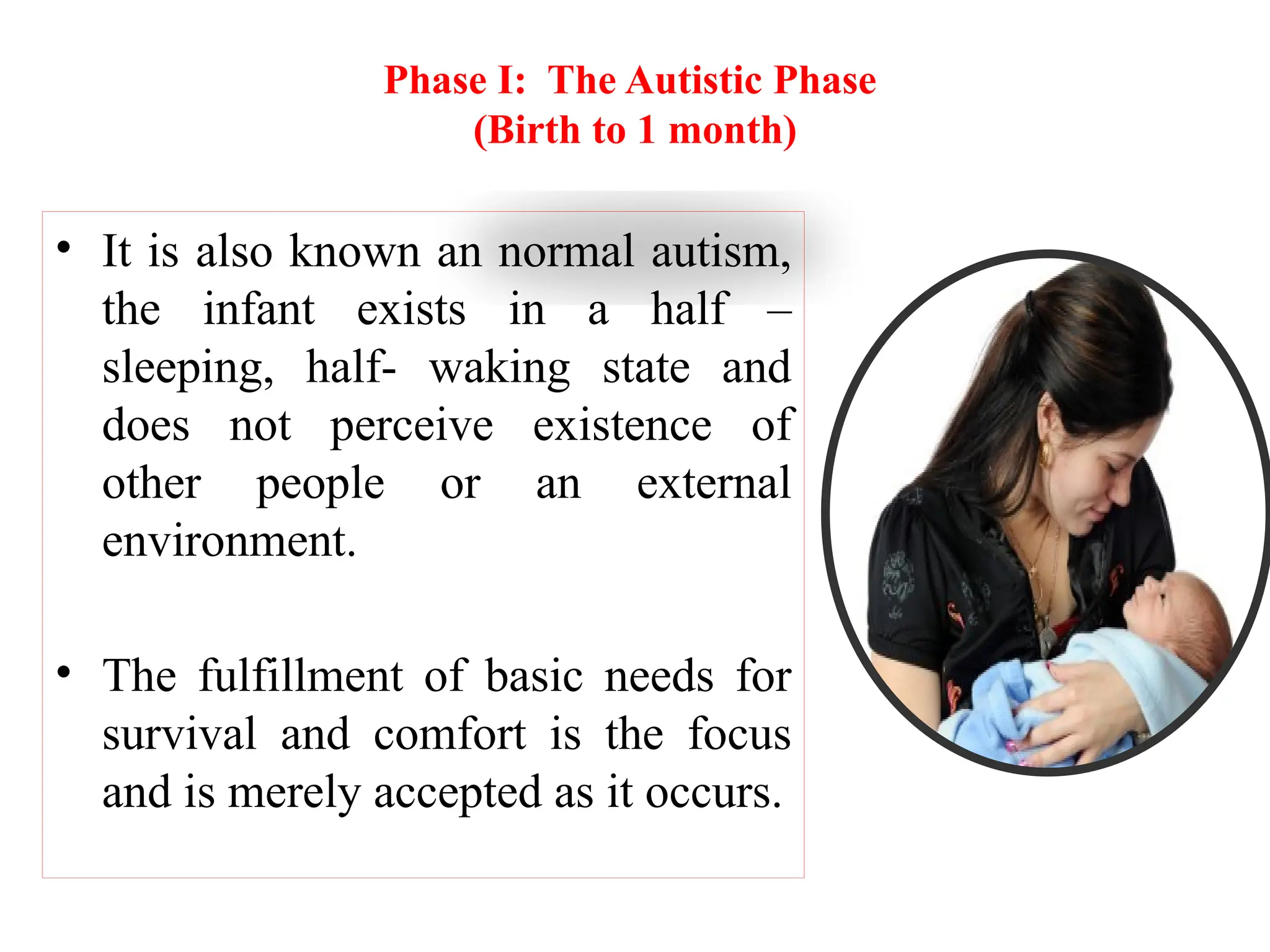
Phase I: The Autistic Phase
(Birth to 1 month)
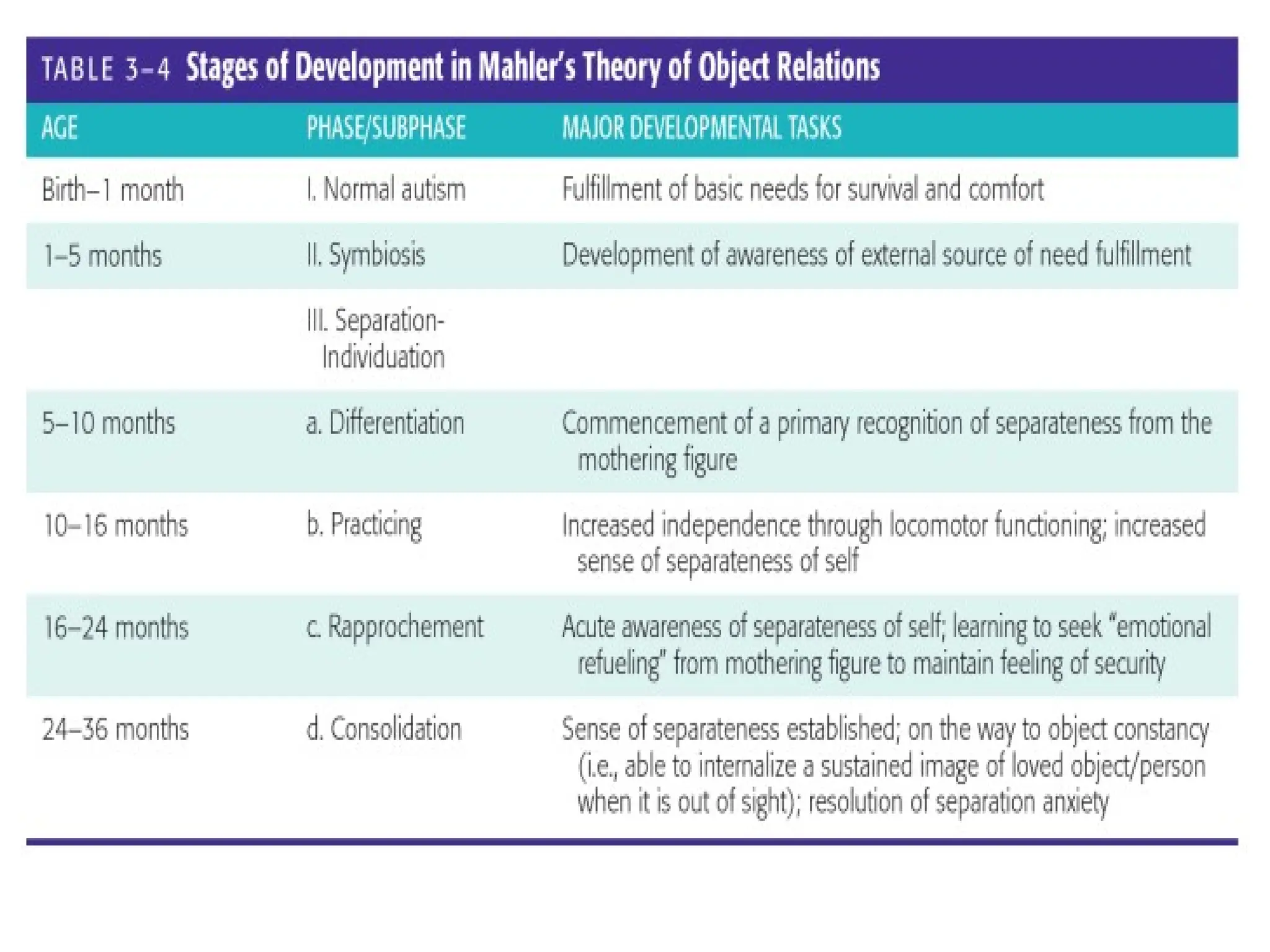
• It is also known an normal autism,
the infant exists in a half –
sleeping, half- waking state and
does not perceive existence of
other people or an external
environment.
• The fulfillment of basic needs for
survival and comfort is the focus
and is merely accepted as it occurs.
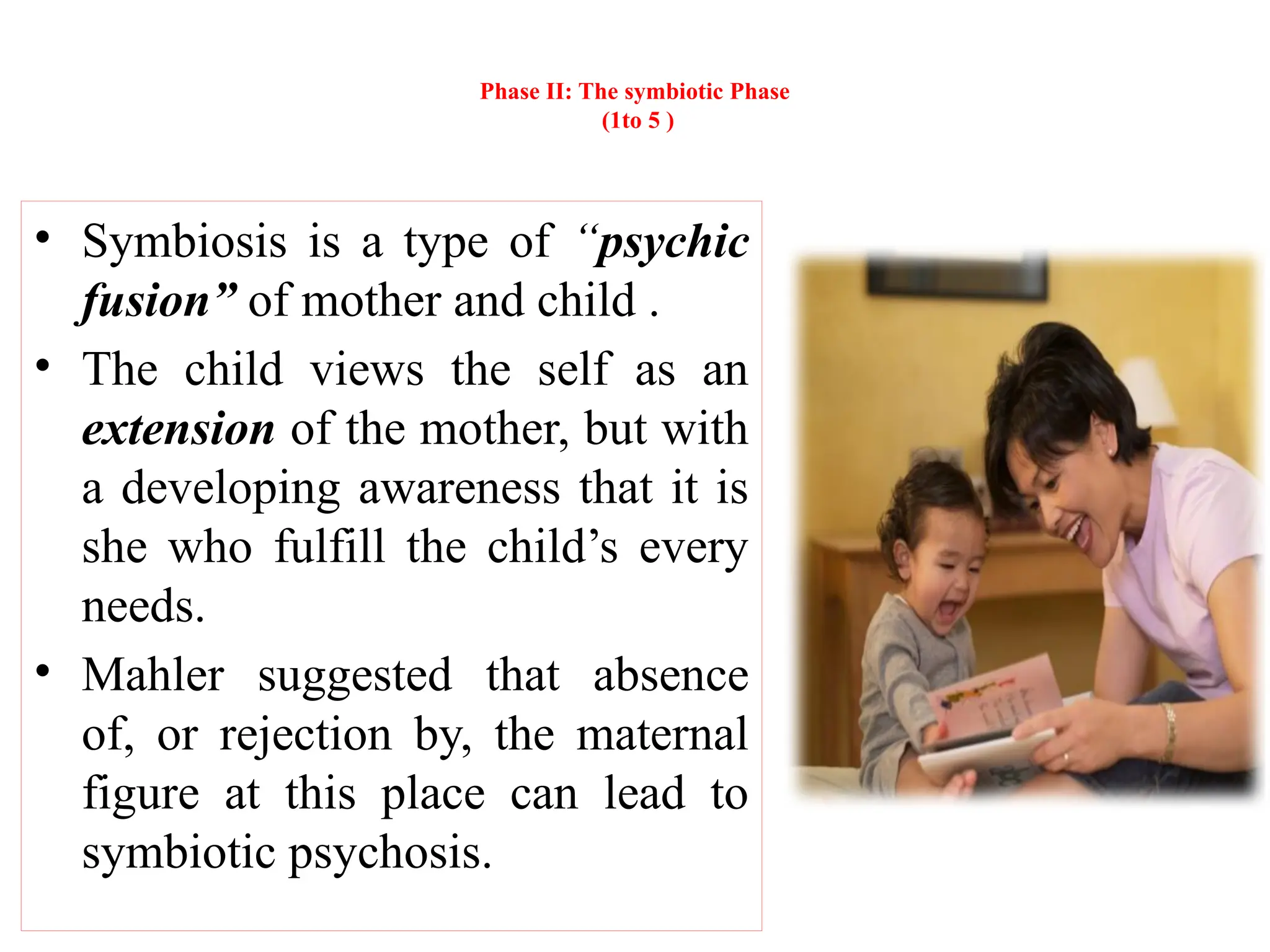
Phase II: The symbiotic Phase
(1to 5 )
• Symbiosis is a type of “psychic
fusion” of mother and child .
• The child views the self as an
extension of the mother, but with
a developing awareness that it is
she who fulfill the child’s every
needs.
• Mahler suggested that absence
of, or rejection by, the maternal
figure at this place can lead to
symbiotic psychosis.
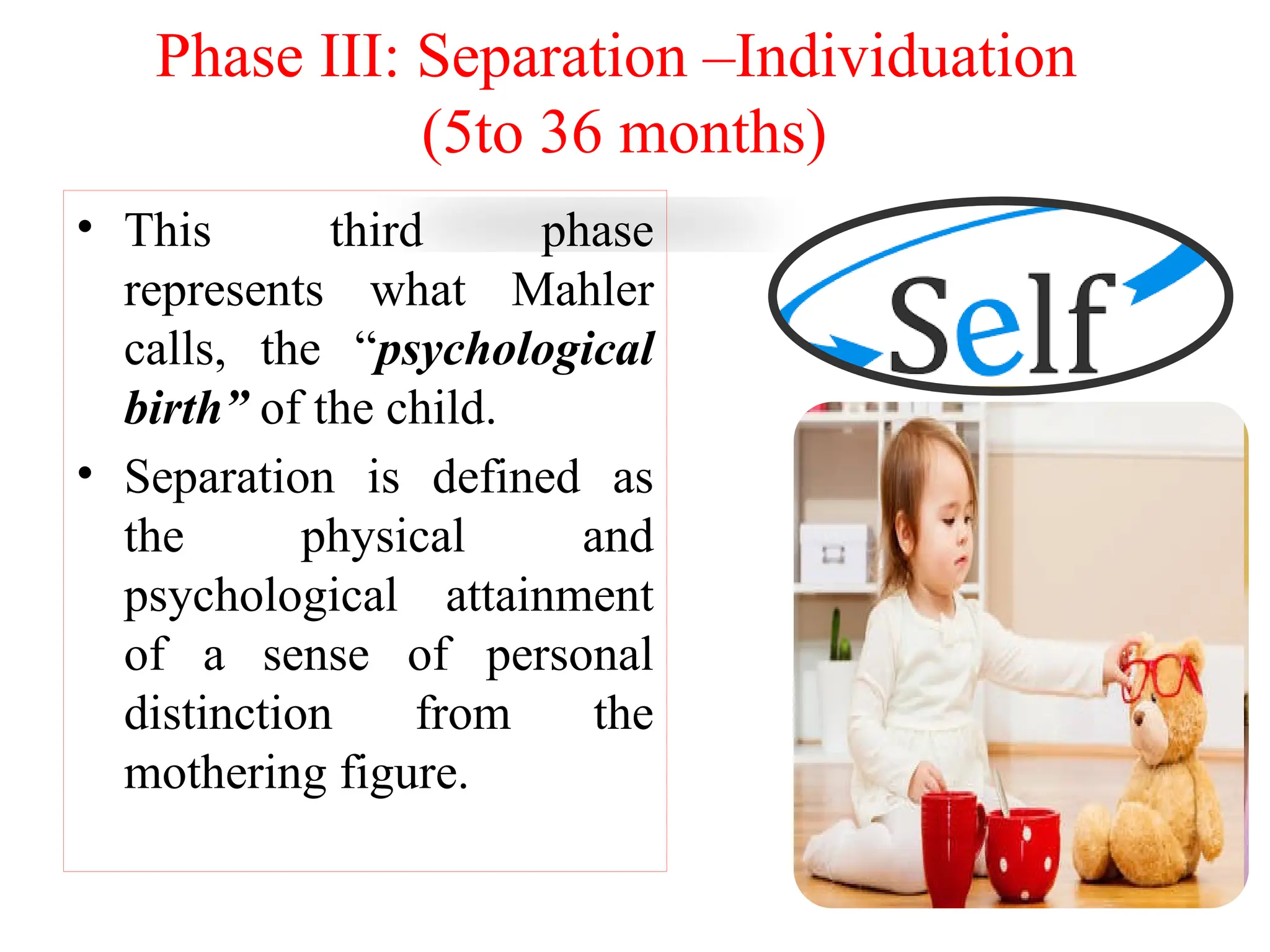
Phase III: Separation –Individuation
(5to 36 months)
• This third phase
represents what Mahler
calls, the “psychological
birth” of the child.
• Separation is defined as
the physical and
psychological attainment
of a sense of personal
distinction from the
mothering figure.
• Individuation occurs with the strengthening of
the ego and an acceptance of a sense of “self”
the independent ego boundaries.
• This phase is divided in to four sub phases.
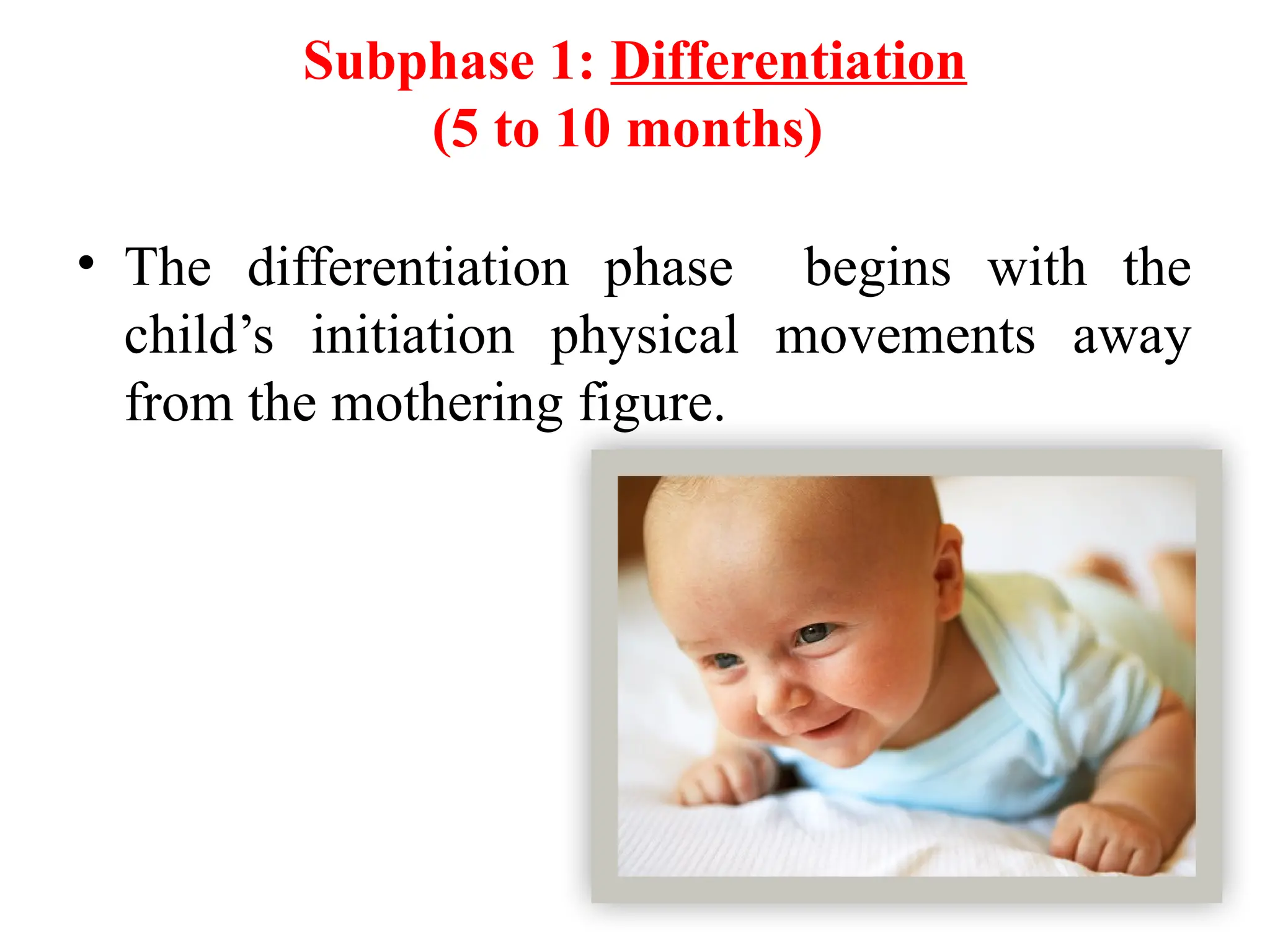
Subphase 1: Differentiation
(5 to 10 months)
• The differentiation phase begins with the
child’s initiation physical movements away
from the mothering figure.
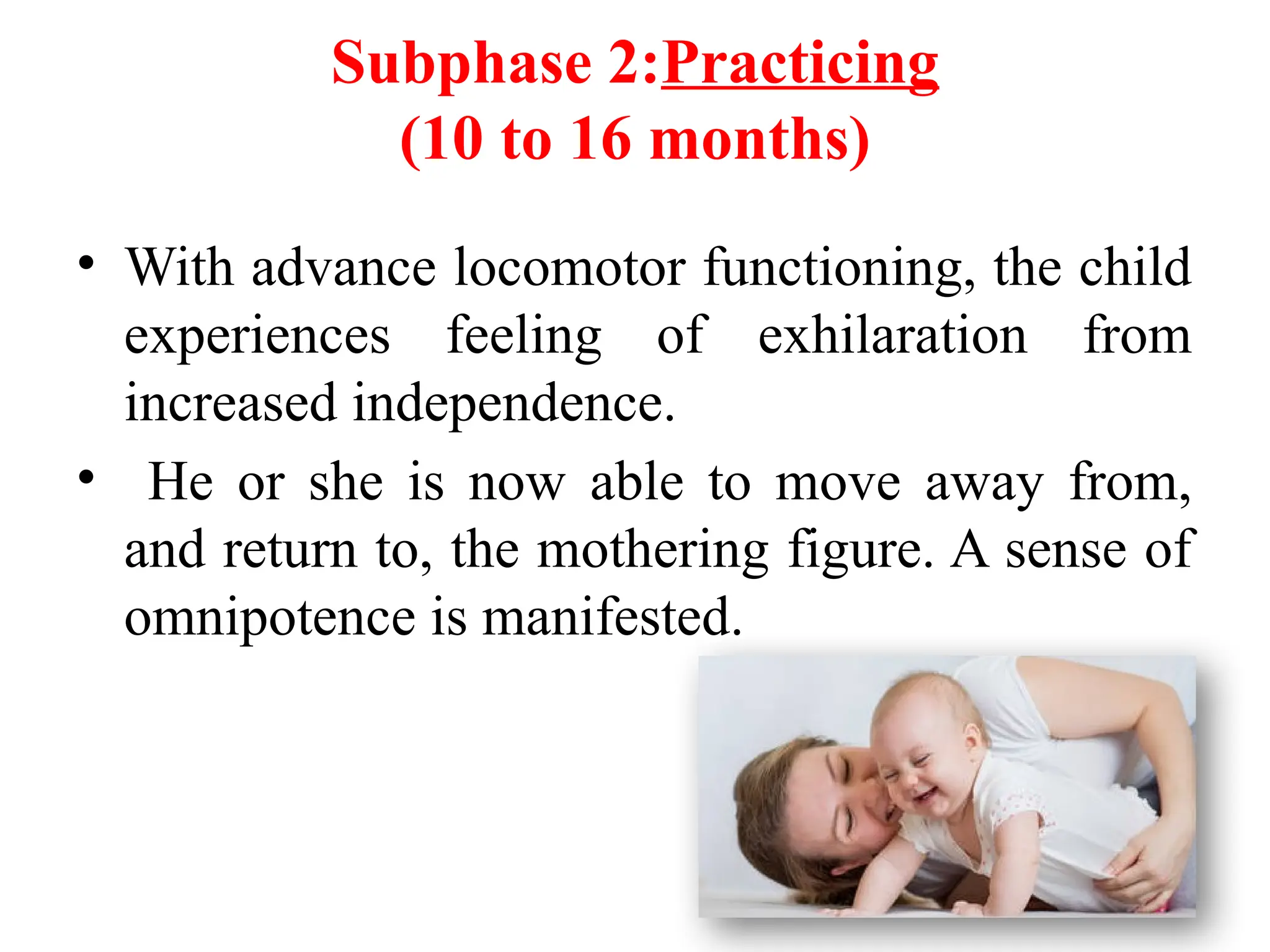
Subphase 2:Practicing
(10 to 16 months)
• With advance locomotor functioning, the child
experiences feeling of exhilaration from
increased independence.
• He or she is now able to move away from,
and return to, the mothering figure. A sense of
omnipotence is manifested.
Subphase 3: Rapprochement
(16 to 24 months)
• Rapprochement , is extremely critical to the child’s
health ego development.
• During this time, the child becomes increasingly
aware of his or her separateness from the mothering
figure, while the sense of fearlessness and
omnipotence diminishes. The child, now recognizes
the mother as a separate individual, wishes to
reestablish closeness with her.
• The need is for the mothering figure to be available to
provide “ emotional refueling” on demand.
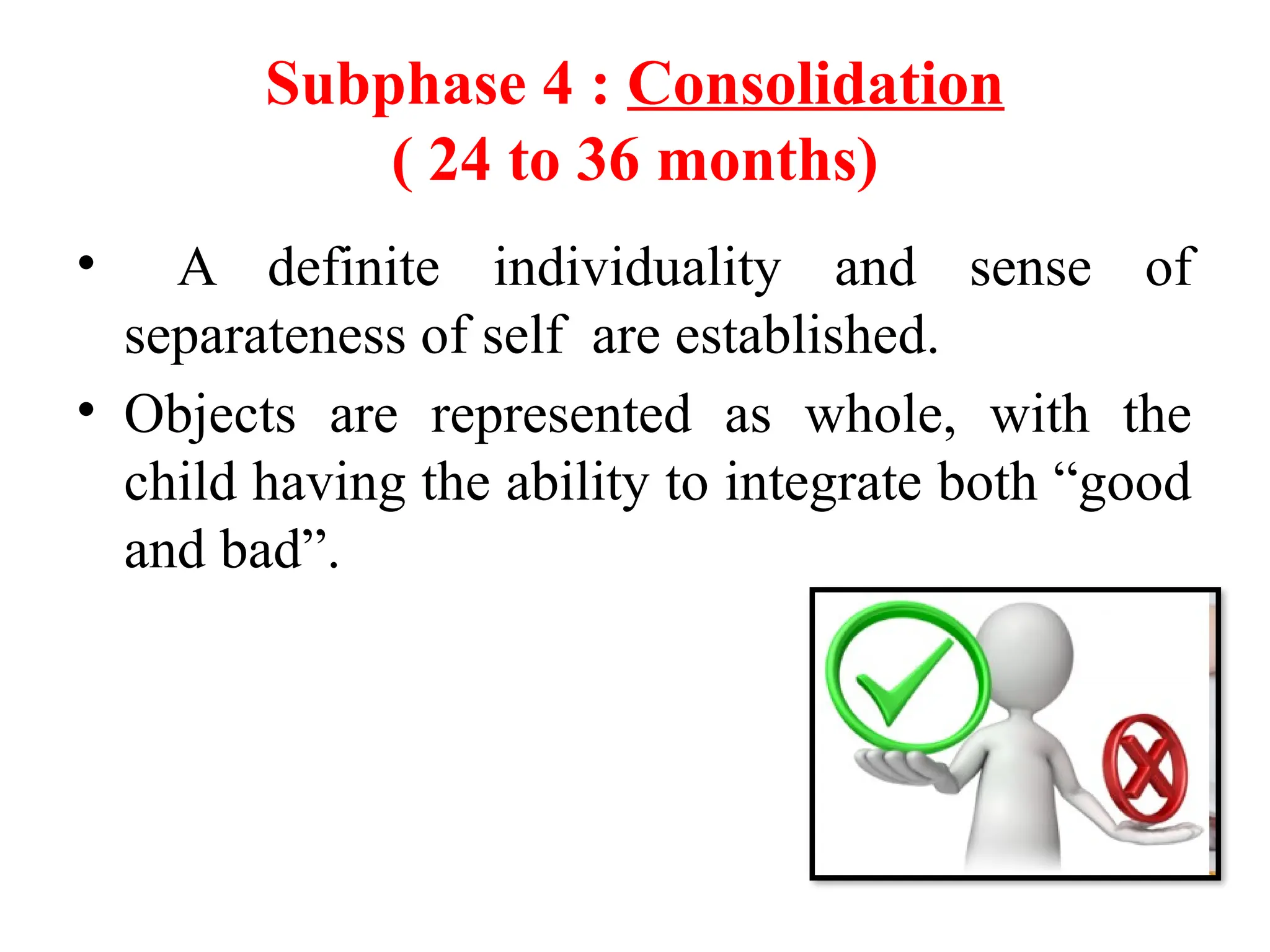
Subphase 4 : Consolidation
( 24 to 36 months)
• A definite individuality and sense of
separateness of self are established.
• Objects are represented as whole, with the
child having the ability to integrate both “good
and bad”.
Cont………
A degree of object constancy is established
as the child is able to internalize a
sustained image of the mothering figure as
enduring and loving, while maintaining the
perception of her as a separate person in the
outside world.
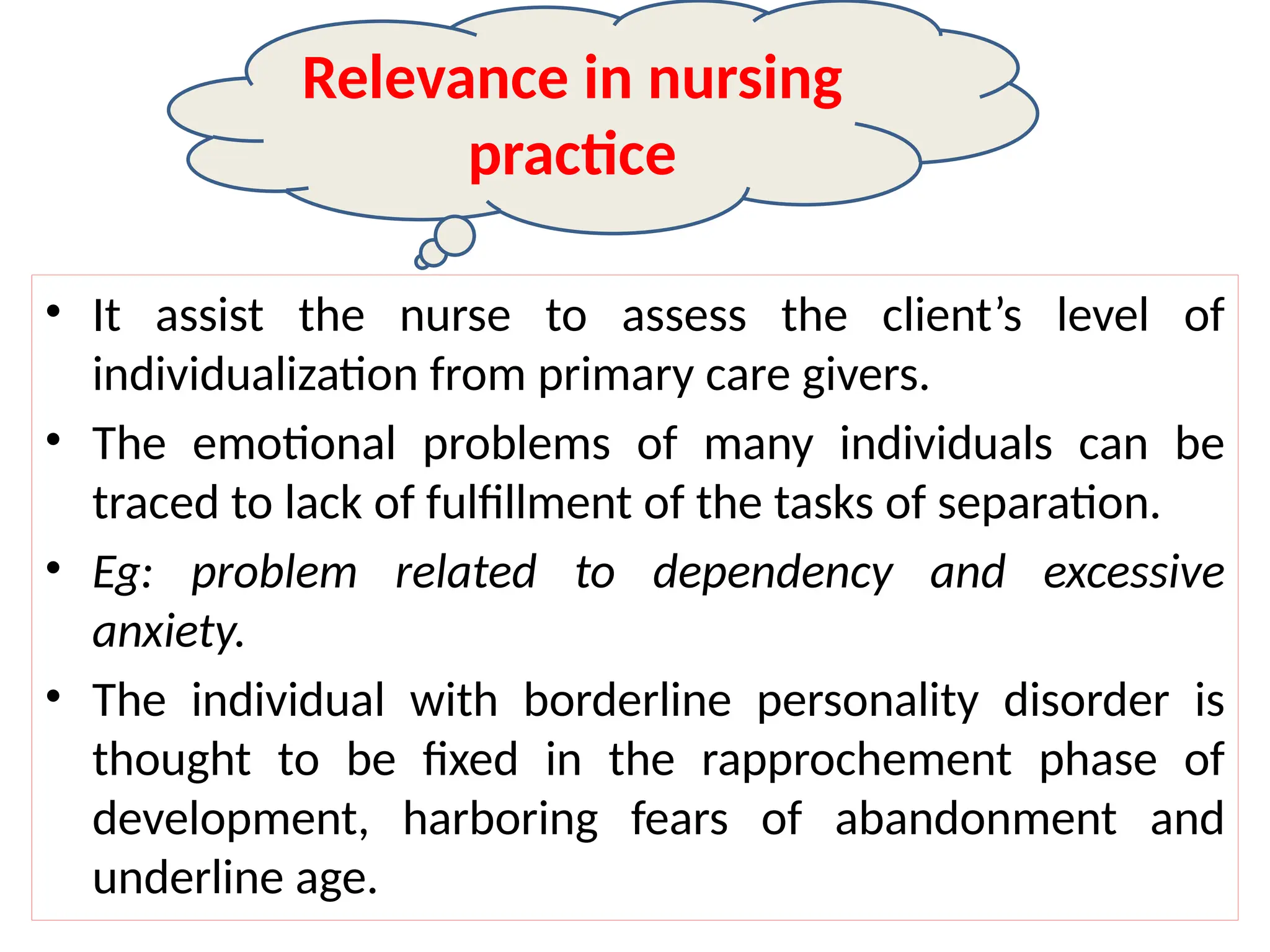
• It assist the nurse to assess the client’s level of
individualization from primary care givers.
• The emotional problems of many individuals can be
traced to lack of fulfillment of the tasks of separation.
• Eg: problem related to dependency and excessive
anxiety.
• The individual with borderline personality disorder is
thought to be fixed in the rapprochement phase of
development, harboring fears of abandonment and
underline age.
Relevance in nursing
practice
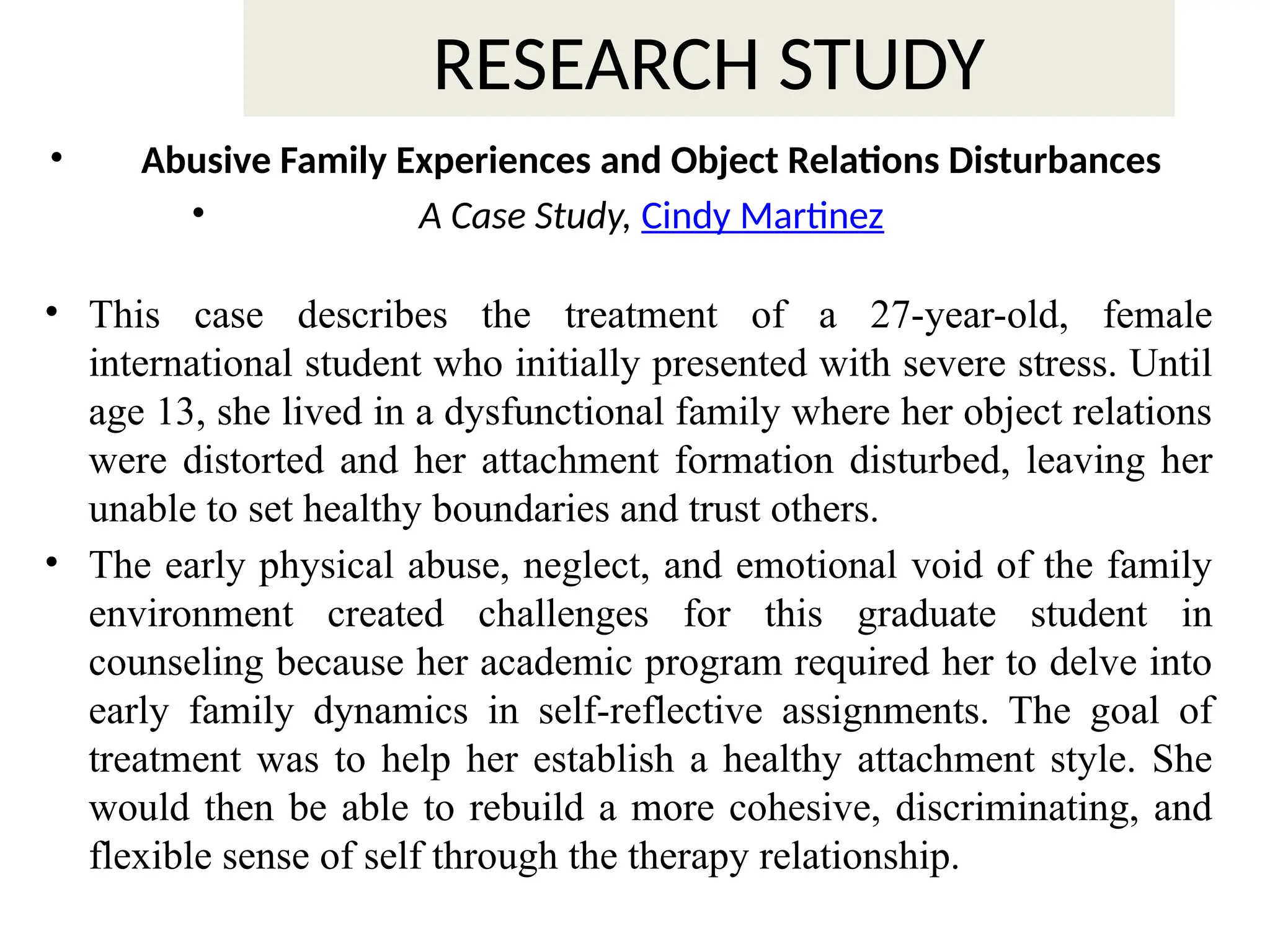
RESEARCH STUDY
• Abusive Family Experiences and Object Relations Disturbances
• A Case Study, Cindy Martinez
• This case describes the treatment of a 27-year-old, female
international student who initially presented with severe stress. Until
age 13, she lived in a dysfunctional family where her object relations
were distorted and her attachment formation disturbed, leaving her
unable to set healthy boundaries and trust others.
• The early physical abuse, neglect, and emotional void of the family
environment created challenges for this graduate student in
counseling because her academic program required her to delve into
early family dynamics in self-reflective assignments. The goal of
treatment was to help her establish a healthy attachment style. She
would then be able to rebuild a more cohesive, discriminating, and
flexible sense of self through the therapy relationship.
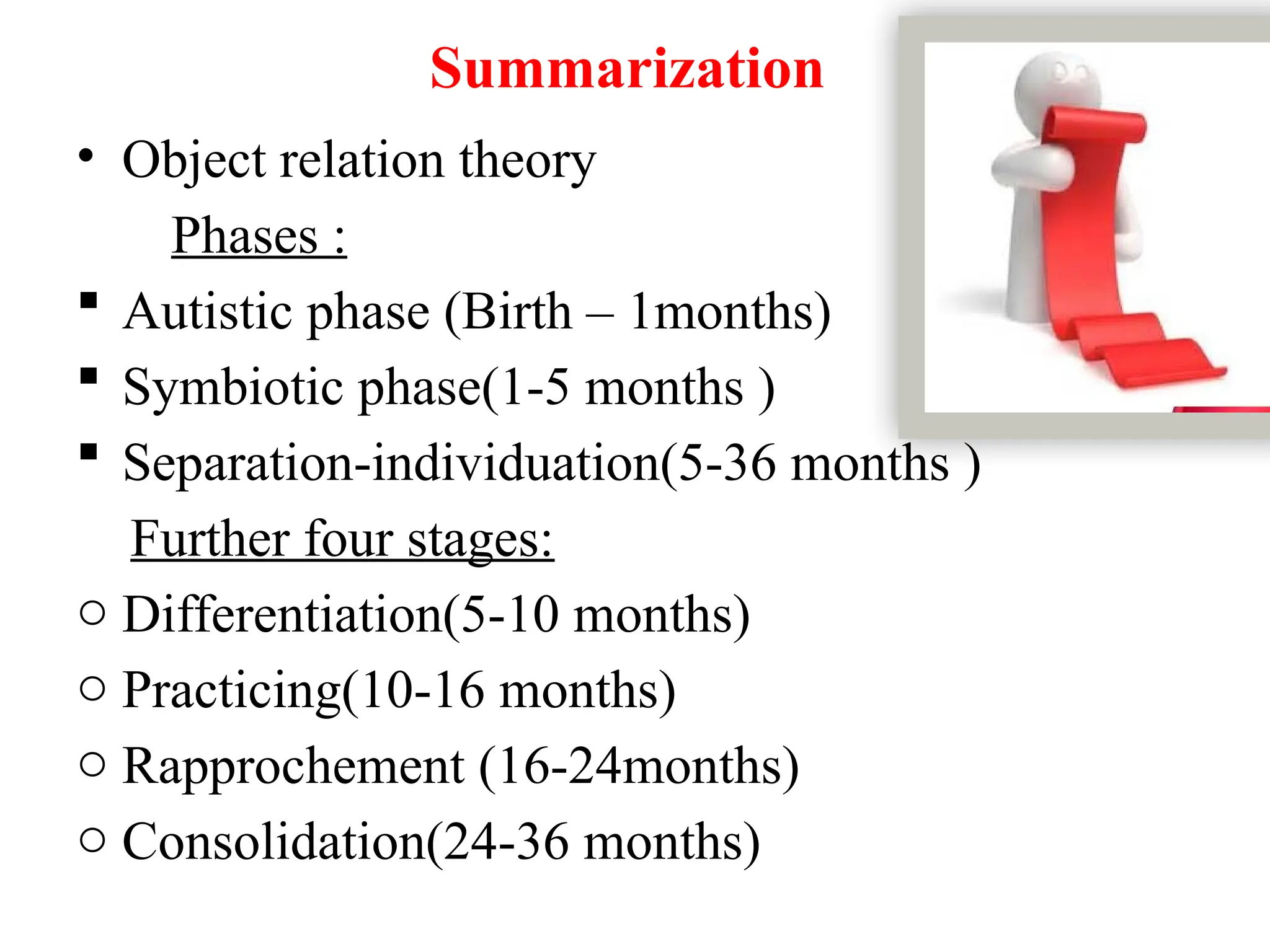
Summarization
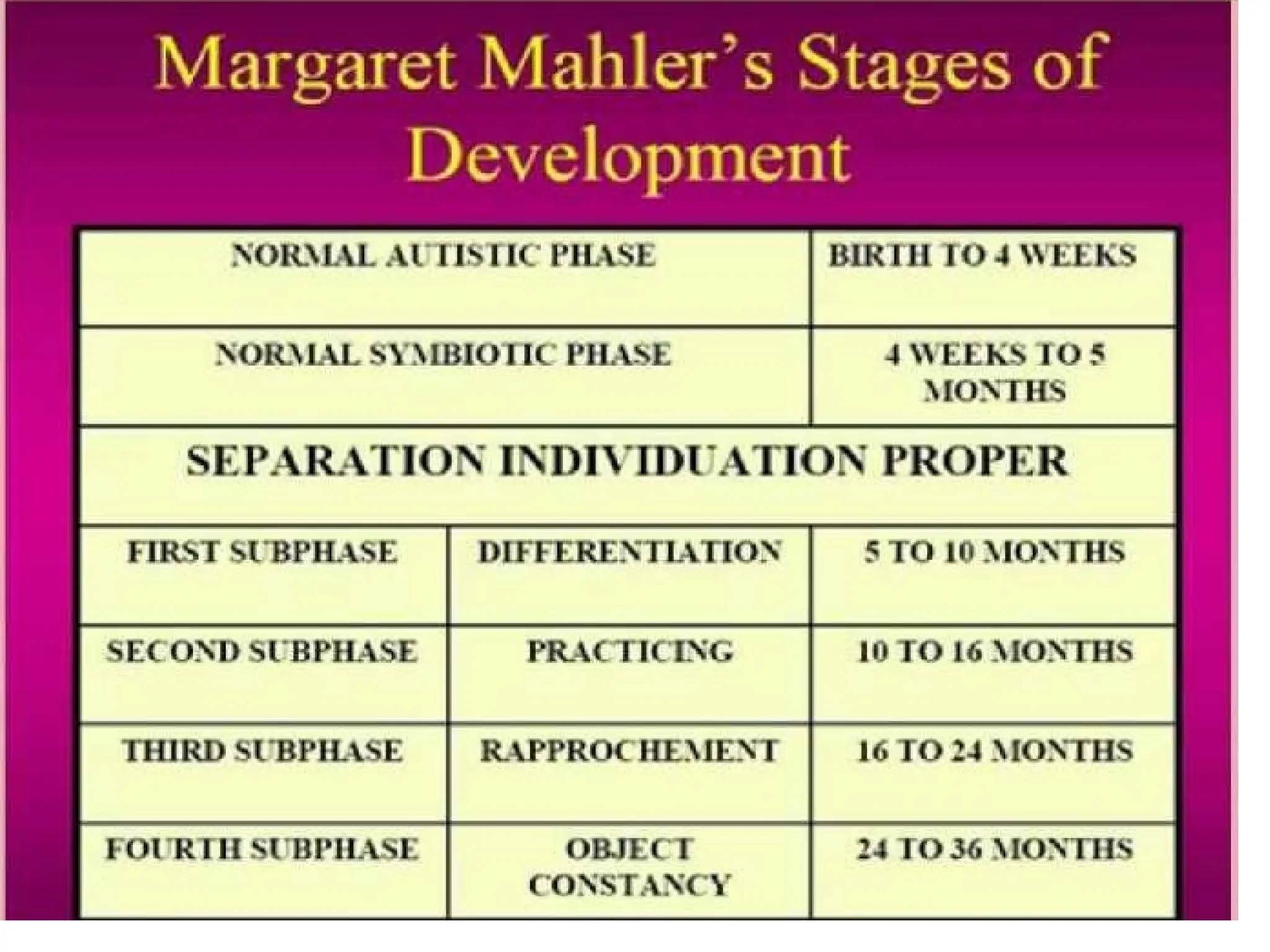
• Object relation theory
Phases :
 Autistic phase (Birth – 1months)
 Symbiotic phase(1-5 months )
 Separation-individuation(5-36 months )
Further four stages:
o Differentiation(5-10 months)
o Practicing(10-16 months)
o Rapprochement (16-24months)
o Consolidation(24-36 months)
Recaptualization
• Fill in the blanks:
• The object relation theory was formulated
by--------------.
• The symbiotic phase start from ------------
• Margret Mahler
• 1-5 months
Bibliography
• Townsend C. Mary; Psychiatric Mental Health
Nursing; Robert G. Matron publisher; 8th
edition ; page no. 36-39.
• References:
• www.childdevelopmentmedia.com
• www.wikipedia.com
theory of object relations is a very important theory in psychology which discovers how humans seek familiarity rather than safety

theory of object relations is a very important theory in psychology which discovers how humans seek familiarity rather than safety

  • 1.
    Submitted To: Mrs. ShailzaSharma Associate Professor Department of psychiatry DMC&H ,CON Submitted by : Palak Surya M.Sc. (N) 1st year Roll no : 6
  • 2.
    Theory of ObjectRelations • Margret Mahler (Mahler, pine and Bergman, 1975) formulated a theory that describes the separation individuation process of the infant from the mother figure (primary caregiver). • She describes this process as progressing through three major phases :-
  • 3.
    • Emphasizes interpersonalrelations, primarily in the family and especially between mother and child. • actually means person & especially the significant person that is the object or target of another feelings or intentions. • refers to interpersonal relations . Object relation theorist are interested in inner images of self and other & how they manifest themselves in interpersonal situation. Object Relation Importance
  • 4.
    How it isdifferent from Freud? 1. ORT places less emphasis on biologically based drives and more importance on consistent patterns of interpersonal relationships. 2. More maternal, stressing the intimacy and nurturing of the mother. 3. Object relation theorist generally see human contact & relatedness- not sexual pleasure- as the prime motive of human behavior.
  • 6.
    Phase I: TheAutistic Phase (Birth to 1 month) • It is also known an normal autism, the infant exists in a half – sleeping, half- waking state and does not perceive existence of other people or an external environment. • The fulfillment of basic needs for survival and comfort is the focus and is merely accepted as it occurs.
  • 7.
    Phase II: Thesymbiotic Phase (1to 5 ) • Symbiosis is a type of “psychic fusion” of mother and child . • The child views the self as an extension of the mother, but with a developing awareness that it is she who fulfill the child’s every needs. • Mahler suggested that absence of, or rejection by, the maternal figure at this place can lead to symbiotic psychosis.
  • 8.
    Phase III: Separation–Individuation (5to 36 months) • This third phase represents what Mahler calls, the “psychological birth” of the child. • Separation is defined as the physical and psychological attainment of a sense of personal distinction from the mothering figure.
  • 9.
    • Individuation occurswith the strengthening of the ego and an acceptance of a sense of “self” the independent ego boundaries. • This phase is divided in to four sub phases.
  • 10.
    Subphase 1: Differentiation (5to 10 months) • The differentiation phase begins with the child’s initiation physical movements away from the mothering figure.
  • 11.
    Subphase 2:Practicing (10 to16 months) • With advance locomotor functioning, the child experiences feeling of exhilaration from increased independence. • He or she is now able to move away from, and return to, the mothering figure. A sense of omnipotence is manifested.
  • 12.
    Subphase 3: Rapprochement (16to 24 months) • Rapprochement , is extremely critical to the child’s health ego development. • During this time, the child becomes increasingly aware of his or her separateness from the mothering figure, while the sense of fearlessness and omnipotence diminishes. The child, now recognizes the mother as a separate individual, wishes to reestablish closeness with her. • The need is for the mothering figure to be available to provide “ emotional refueling” on demand.
  • 13.
    Subphase 4 :Consolidation ( 24 to 36 months) • A definite individuality and sense of separateness of self are established. • Objects are represented as whole, with the child having the ability to integrate both “good and bad”.
  • 14.
    Cont……… A degree ofobject constancy is established as the child is able to internalize a sustained image of the mothering figure as enduring and loving, while maintaining the perception of her as a separate person in the outside world.
  • 16.
    • It assistthe nurse to assess the client’s level of individualization from primary care givers. • The emotional problems of many individuals can be traced to lack of fulfillment of the tasks of separation. • Eg: problem related to dependency and excessive anxiety. • The individual with borderline personality disorder is thought to be fixed in the rapprochement phase of development, harboring fears of abandonment and underline age. Relevance in nursing practice
  • 17.
    RESEARCH STUDY • AbusiveFamily Experiences and Object Relations Disturbances • A Case Study, Cindy Martinez • This case describes the treatment of a 27-year-old, female international student who initially presented with severe stress. Until age 13, she lived in a dysfunctional family where her object relations were distorted and her attachment formation disturbed, leaving her unable to set healthy boundaries and trust others. • The early physical abuse, neglect, and emotional void of the family environment created challenges for this graduate student in counseling because her academic program required her to delve into early family dynamics in self-reflective assignments. The goal of treatment was to help her establish a healthy attachment style. She would then be able to rebuild a more cohesive, discriminating, and flexible sense of self through the therapy relationship.
  • 19.
    Summarization • Object relationtheory Phases :  Autistic phase (Birth – 1months)  Symbiotic phase(1-5 months )  Separation-individuation(5-36 months ) Further four stages: o Differentiation(5-10 months) o Practicing(10-16 months) o Rapprochement (16-24months) o Consolidation(24-36 months)
  • 20.
    Recaptualization • Fill inthe blanks: • The object relation theory was formulated by--------------. • The symbiotic phase start from ------------
  • 21.
  • 22.
    Bibliography • Townsend C.Mary; Psychiatric Mental Health Nursing; Robert G. Matron publisher; 8th edition ; page no. 36-39. • References: • www.childdevelopmentmedia.com • www.wikipedia.com