NEUTROPHILIC DERMATOSES
PRASAD
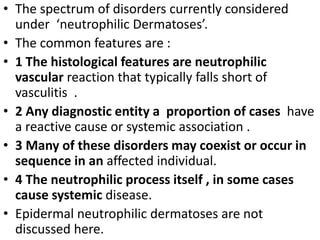
• The spectrum of disorders currently considered
under ‘neutrophilic Dermatoses’.
• The common features are :
• 1 The histological features are neutrophilic
vascular reaction that typically falls short of
vasculitis .
• 2 Any diagnostic entity a proportion of cases have
a reactive cause or systemic association .
• 3 Many of these disorders may coexist or occur in
sequence in an affected individual.
• 4 The neutrophilic process itself , in some cases
cause systemic disease.
• Epidermal neutrophilic dermatoses are not
discussed here.
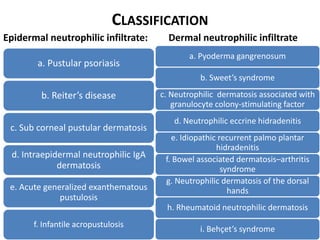
CLASSIFICATION
Epidermal neutrophilic infiltrate:
a. Pustular psoriasis
b. Reiter’s disease
c. Sub corneal pustular dermatosis
d. Intraepidermal neutrophilic IgA
dermatosis
e. Acute generalized exanthematous
pustulosis
f. Infantile acropustulosis
Dermal neutrophilic infiltrate
a. Pyoderma gangrenosum
b. Sweet’s syndrome
c. Neutrophilic dermatosis associated with
granulocyte colony-stimulating factor
d. Neutrophilic eccrine hidradenitis
e. Idiopathic recurrent palmo plantar
hidradenitis
f. Bowel associated dermatosis–arthritis
syndrome
g. Neutrophilic dermatosis of the dorsal
hands
h. Rheumatoid neutrophilic dermatosis
i. Behçet’s syndrome
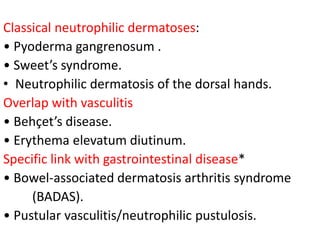
Classical neutrophilic dermatoses:
• Pyoderma gangrenosum .
• Sweet’s syndrome.
• Neutrophilic dermatosis of the dorsal hands.
Overlap with vasculitis
• Behçet’s disease.
• Erythema elevatum diutinum.
Specific link with gastrointestinal disease*
• Bowel-associated dermatosis arthritis syndrome
(BADAS).
• Pustular vasculitis/neutrophilic pustulosis.
• Aseptic abscesses in Crohn’s disease.
• Pyodermatitis–pyostomatitis vegetans.
• Peristomal pyoderma gangrenosum.
Associated with acne or pustulosis†
• Synovitis, acne, pustulosis, hyperostosis, osteomyelitis
(SAPHO).
• Pyogenic arthritis, pyoderma gangrenosum, acne (PAPA).
Associated with connective tissue disease or immune complex
disease
• Rheumatoid neutrophilic dermatitis/dermatosis.
• Palisaded neutrophilic and granulomatous dermatitis.
• Relapsing polychondritis.
• Sweet’s syndrome-like, erythema gyratum repens-like, and
figurate neutrophilic infiltrate, in systemic lupus
erythematosus.
Paraneoplastic or typically chemotherapy-associated:
• Paraneoplastic neutrophilic figurate erythema.
• Neutrophilic eccrine hidradenitis.
Systemic neutrophilic dermatoses:
• Neuro-Sweet’s syndrome.
• Other internal sites: myositis, pulmonary, pericarditis,
osteitis , lymph nodes, aseptic neutrophilic abscesses
(splenic or visceral), etc.
Other extra-cutaneous neutrophilic disease:
• Peripheral ulcerative keratitis.
• Neutrophilic panniculitis.
Auto inflammatory diseases.
• Familial Mediterranean fever
• Hyper-IgD syndrome
Non-vessel centred and miscellaneous.
• Sub corneal pustular dermatosis (Sneddon–
Wilkinson disease).
• Intra epidermal neutrophilic IgA dermatosis.
• Neutrophilic urticaria.
• Neutrophilic spongiosis.
• Neutrophilic sebaceous adenitis.
Pyoderma gangrenosum
• Definition:
• Pyoderma gangrenosum (PG) is a rare,chronic
recurrent, non-infectious cutaneous
ulcerating disease, with a primary neutrophilic
infiltrate, associated with underlying systemic
disease.
• Diagnosis is based on typical clinical features
and exclusion of other cutaneous ulcerating
diseases, as described in several reviews .
The ETIOLOGY AND PATHOGENISIS
• A defect in neutrophil chemotaxis is the basic
pathologic problem in PG.
• Abnormal immune reactivity and cross-reacting
auto antibodies directed at antigens common to
the skin and intestine or joints are other
proposed pathogenic mechanisms.
• The possibility of cross-reactivity between
Escherichia coli and cutaneous antigens has been
suspected for many years and treatment to
decrease bowel bacteria has shown some benefit
in therapy of PG.
ASSOCIATED DISEASES of PG
1.Gastrointestinal:
Ulcerative colitis,
Crohn’s disease,
chronic active hepatitis,
primary biliary cirrhosis
2. Joint disorders:
Rheumatoid arthritis,
enteropathic arthritis,
osteoarthritis
3. Hematological:
Myeloid leukemia,
myeloma,
Polycythemia vera,
myelofibrosis
4. Connective tissue diseases and vasculitides:
SLE,Takayasu’s arteritis,
Wegener’s granulomatosis, Behçet’s
disease
5. Infections:
HIV, Hepatitis C,
Chlamydia pneumoniae infection
6. Drugs:
isotretinoin,
granulocyte colony-stimulating factor
7. Other diseases: S
solid tumors,
monoclonal gammopathies,
antiphospholipid antibody syndrome, diabetes
DIAGNOSTIC CRITERIA OF PG
• Major criteria (both required)
• 1 Rapid (usually >1 cm/day) progression of
painful, necrolytic ulceration with an irregular,
undermined, violaceous border—
• usually with a preceding papule, pustule or
bulla, and pain out of proportion to the size of
the ulcerated area
• 2 Exclusion of other causes of ulceration.
• Minor criteria (at least two required)
• 1 (a) history of pathergy, or (b) presence of cribriform
scarring
• 2 Presence of a disease known to be associated with PG (
IBD, polyarthritis, myelodysplasia or leukaemia, but
monoclonal gammopathy .
• About 50% have an associated systemic disease)
• 3 Appropriate histopathological findings (sterile dermal
neutrophilia,excluding infective causes)
• 4 Rapid response to oral corticosteroid therapy (usually
interpreted as at least 50% reduction in size using
1–2 mg/kg/day).
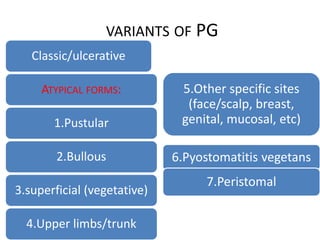
VARIANTS OF PG
Classic/ulcerative
ATYPICAL FORMS:
1.Pustular
2.Bullous
3.superficial (vegetative)
4.Upper limbs/trunk
5.Other specific sites
(face/scalp, breast,
genital, mucosal, etc)
6.Pyostomatitis vegetans
7.Peristomal
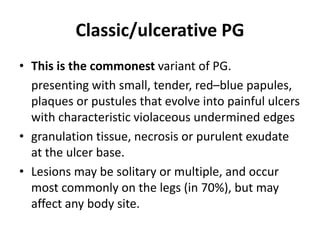
Classic/ulcerative PG
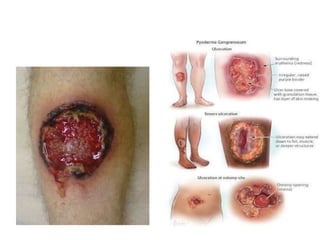
• This is the commonest variant of PG.
presenting with small, tender, red–blue papules,
plaques or pustules that evolve into painful ulcers
with characteristic violaceous undermined edges
• granulation tissue, necrosis or purulent exudate
at the ulcer base.
• Lesions may be solitary or multiple, and occur
most commonly on the legs (in 70%), but may
affect any body site.
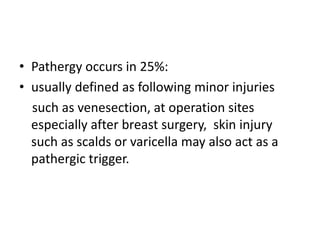
• Pathergy occurs in 25%:
• usually defined as following minor injuries
such as venesection, at operation sites
especially after breast surgery, skin injury
such as scalds or varicella may also act as a
pathergic trigger.
• Healing usually occurs with an atrophic
cribriform scar.
• Associated symptoms include fever, malaise,
myalgia and arthralgia.
• Disease associations include IBD, arthritis,
monoclonal gammopathy or internal
malignancy;
ATYPICAL FORMS
• pustular PG.
• Pustular PG occurs during acute exacerbations
of IBD.
• Discrete painful pustules, with a surrounding
halo of erythema,present as a scattered
distribution on the extensor aspects of the
limbs.
• Pustular PG lesions often resolve with control
of IBD.
• Bullous PG.
• It presents with rapidly arising,superficial,
haemorrhagic bullae, typically ulcerates and
heals with scarring, often located on the arms.
• It shares clinical and histopathological findings
with Sweet’s syndrome.
• Bullous PG is especially associated with
myeloproliferative disorders
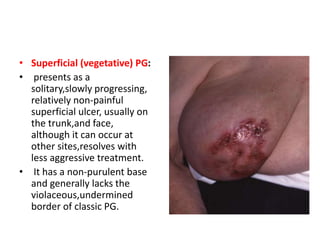
• Superficial (vegetative) PG:
• presents as a
solitary,slowly progressing,
relatively non-painful
superficial ulcer, usually on
the trunk,and face,
although it can occur at
other sites,resolves with
less aggressive treatment.
• It has a non-purulent base
and generally lacks the
violaceous,undermined
border of classic PG.
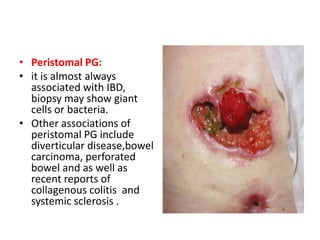
• Peristomal PG:
• it is almost always
associated with IBD,
biopsy may show giant
cells or bacteria.
• Other associations of
peristomal PG include
diverticular disease,bowel
carcinoma, perforated
bowel and as well as
recent reports of
collagenous colitis and
systemic sclerosis .
• upper limbs/trunk/face:
• is a more superficial variant than classic PG.
• It can occur at any site but most commonly on the
arms or face.
• It can be bullous, and it may be difficult to
differentiate from Sweet’s syndrome.
• It is viewed as including neutrophilic dermatosis of the
dorsal hands
• The importance of this pattern is that the strongest
link with internal disease is with myelogenous
leukaemias, myeloproliferative disorders or IgA
gammopathies
• Pyostomatitis vegetans :
• It is a disorder in which there is oral mucosal
thickening with multiple pustules and ulcers
on an erythematous base (at any site,
although the tongue is less affected).
• The oral lesions have a very strong link with
IBD, especially active ulcerative colitis.
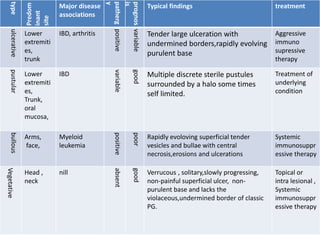
type
Predom
inant
site
Major disease
associations
patherg
y
prognos
is
Typical findings treatmentulcerative
Lower
extremiti
es,
trunk
IBD, arthritis
positive
variable
Tender large ulceration with
undermined borders,rapidly evolving
purulent base
Aggressive
immuno
supressive
therapy
pustular
Lower
extremiti
es,
Trunk,
oral
mucosa,
IBD
variable
good
Multiple discrete sterile pustules
surrounded by a halo some times
self limited.
Treatment of
underlying
condition
bullous
Arms,
face,
Myeloid
leukemia
positive
poor
Rapidly evoloving superficial tender
vesicles and bullae with central
necrosis,erosions and ulcerations
Systemic
immunosuppr
essive therapy
Vegetative
Head ,
neck
nill
absent
good
Verrucous , solitary,slowly progressing,
non-painful superficial ulcer, non-
purulent base and lacks the
violaceous,undermined border of classic
PG.
Topical or
intra lesional ,
Systemic
immunosuppr
essive therapy
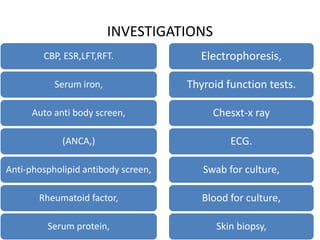
INVESTIGATIONS
CBP, ESR,LFT,RFT.
Serum iron,
Auto anti body screen,
(ANCA,)
Anti-phospholipid antibody screen,
Rheumatoid factor,
Serum protein,
Electrophoresis,
Thyroid function tests.
Chesxt-x ray
ECG.
Swab for culture,
Blood for culture,
Skin biopsy,
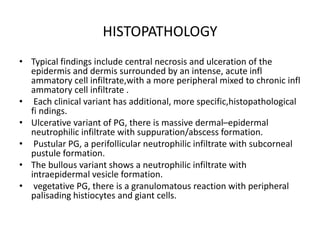
HISTOPATHOLOGY
• Typical findings include central necrosis and ulceration of the
epidermis and dermis surrounded by an intense, acute infl
ammatory cell infiltrate,with a more peripheral mixed to chronic infl
ammatory cell infiltrate .
• Each clinical variant has additional, more specific,histopathological
fi ndings.
• Ulcerative variant of PG, there is massive dermal–epidermal
neutrophilic infiltrate with suppuration/abscess formation.
• Pustular PG, a perifollicular neutrophilic infiltrate with subcorneal
pustule formation.
• The bullous variant shows a neutrophilic infiltrate with
intraepidermal vesicle formation.
• vegetative PG, there is a granulomatous reaction with peripheral
palisading histiocytes and giant cells.
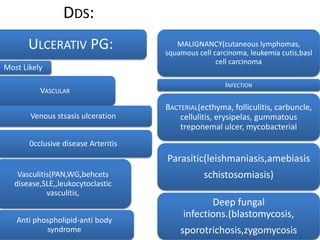
DDS:
ULCERATIV PG:
Most Likely
VASCULAR
Venous stsasis ulceration
0cclusive disease Arteritis
Vasculitis(PAN,WG,behcets
disease,SLE,,leukocytoclastic
vasculitis,
Anti phospholipid-anti body
syndrome
MALIGNANCY(cutaneous lymphomas,
squamous cell carcinoma, leukemia cutis,basl
cell carcinoma
INFECTION
BACTERIAL(ecthyma, folliculitis, carbuncle,
cellulitis, erysipelas, gummatous
treponemal ulcer, mycobacterial
Parasitic(leishmaniasis,amebiasis
schistosomiasis)
Deep fungal
infections.(blastomycosis,
sporotrichosis,zygomycosis
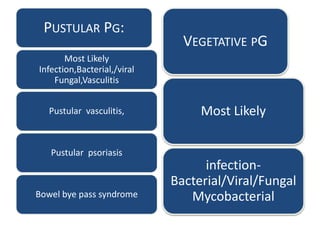
PUSTULAR PG:
Most Likely
Infection,Bacterial,/viral
Fungal,Vasculitis
Pustular vasculitis,
Pustular psoriasis
Bowel bye pass syndrome
VEGETATIVE PG
Most Likely
infection-
Bacterial/Viral/Fungal
Mycobacterial
prognosis
• Patients with vegetative Pg, pustular PG
generally Have a good prognosis .
• UlcerativePG, bullousPG Have a poor
prognosis.
TREATMENT
Topical:
Topical or intralesional
corticosteroids
Tacrolimus .
Nicotine .
Cromolyn sodium/disodium
cromoglycate.
Platelet-derived growth facor
Sweet syndrome
• Definition:
• Sweet’s syndrome is characterized by fever,
peripheral neutrophil leukocytosis, acute
onset of painful, erythematous papules,
plaques or nodules and histological findings of
a dense neutrophilic infiltrate without
evidence of primary vasculitis.
Sweet’s syndrome can be subdivided into three groups.
1. Classical or idiopathic .
2. Malignancy-associated.
3. Drug-induced .
ETIOPATHOGENESIS
• Sweet syndrome may result from a
hypersensitivity reaction to an eliciting
bacterial, viral, or tumor antigen.
• Leukotactic mechanisms and dermal
dendrocytes, Circulating auto antibodies,
immune complexes, HLA serotypes, and
cytokines have all been postulated to
contribute to the pathogenesis of Sweet
syndrome.
Drug-induced
Sweet’s syndrome
•(G-CSF)therapy
,alltrans-retinoic acid ,
minocycline ,
trimethoprim–
Sulfamethoxazole ,
carbamazepine and
oral contraceptives.
Classical or
idiopathic Sweet’s.
• typically affects women in
the third to fifth decade .
• infection
•(streptococcal upper
respiratory infections and
yersinial gastrointestinal
infections).
• IBD (ulcerative colitis and
Crohn’s disease).
• pregnancy.
Malignancy-
associated Sweet’s
syndrome
• estimated to comprise20–25% .
• men and women are equally affected .
• Associated malignancies are acute
myelogenous leukaemia,tumours of
genito urinary organs, breast and
gastrointestinal tract,.
• Sweet’s syndrome may be the initial
manifestation of malignancy or may
precede the diagnosis by months to
years, making close follow-up essential.
• In addition, recurrent episodes of
Sweet’s syndrome may be an indication
of cancer recurrence .
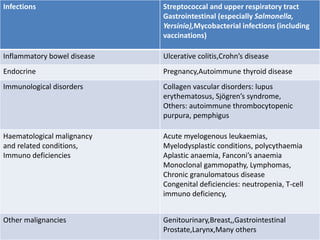
Infections Streptococcal and upper respiratory tract
Gastrointestinal (especially Salmonella,
Yersinia),Mycobacterial infections (including
vaccinations)
Inflammatory bowel disease Ulcerative colitis,Crohn’s disease
Endocrine Pregnancy,Autoimmune thyroid disease
Immunological disorders Collagen vascular disorders: lupus
erythematosus, Sjögren’s syndrome,
Others: autoimmune thrombocytopenic
purpura, pemphigus
Haematological malignancy
and related conditions,
Immuno deficiencies
Acute myelogenous leukaemias,
Myelodysplastic conditions, polycythaemia
Aplastic anaemia, Fanconi’s anaemia
Monoclonal gammopathy, Lymphomas,
Chronic granulomatous disease
Congenital deficiencies: neutropenia, T-cell
immuno deficiency,
Other malignancies Genitourinary,Breast,,Gastrointestinal
Prostate,Larynx,Many others
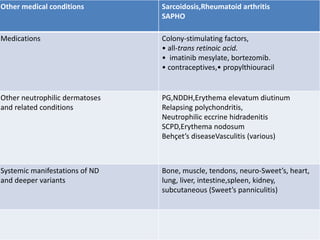
Other medical conditions Sarcoidosis,Rheumatoid arthritis
SAPHO
Medications Colony-stimulating factors,
• all-trans retinoic acid.
• imatinib mesylate, bortezomib.
• contraceptives,• propylthiouracil
Other neutrophilic dermatoses
and related conditions
PG,NDDH,Erythema elevatum diutinum
Relapsing polychondritis,
Neutrophilic eccrine hidradenitis
SCPD,Erythema nodosum
Behçet’s diseaseVasculitis (various)
Systemic manifestations of ND
and deeper variants
Bone, muscle, tendons, neuro-Sweet’s, heart,
lung, liver, intestine,spleen, kidney,
subcutaneous (Sweet’s panniculitis)
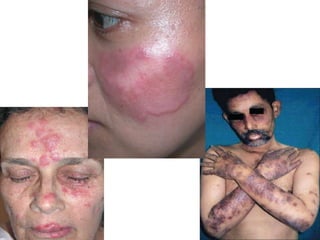
• The clinical presentation of Sweet’s syndrome
• persistent high fever, neutrophilia.
• Multiple to solitary, erythematous to violaceous tender
papules or nodules that often coalesce to form irregular
plaques
• The lesions typically involve the arms, face and neck, but may
occur anywhere.
• Later lesions may appear –pseudovesicular ,tiny pustules .
• The plaques may develop central yellowish discoloration,
producing a targetoid appearance .
• The distribution localized on the face , or widespread as may
occur in malignancy-associated cases.
• Several unusual body site distributions have been reported,
including localization to (recent wounds ,old scars , an area of
lymphoedema , an area of radiotherapy ),
• Healing usually occurs without scarring,
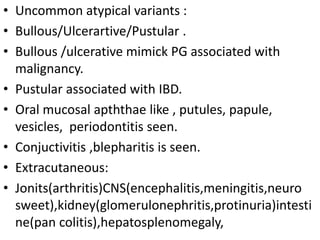
• Uncommon atypical variants :
• Bullous/Ulcerartive/Pustular .
• Bullous /ulcerative mimick PG associated with
malignancy.
• Pustular associated with IBD.
• Oral mucosal apththae like , putules, papule,
vesicles, periodontitis seen.
• Conjuctivitis ,blepharitis is seen.
• Extracutaneous:
• Jonits(arthritis)CNS(encephalitis,meningitis,neuro
sweet),kidney(glomerulonephritis,protinuria)intesti
ne(pan colitis),hepatosplenomegaly,
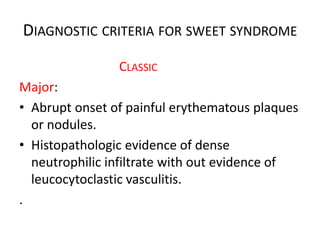
DIAGNOSTIC CRITERIA FOR SWEET SYNDROME
CLASSIC
Major:
• Abrupt onset of painful erythematous plaques
or nodules.
• Histopathologic evidence of dense
neutrophilic infiltrate with out evidence of
leucocytoclastic vasculitis.
.
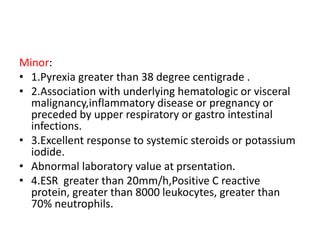
Minor:
• 1.Pyrexia greater than 38 degree centigrade .
• 2.Association with underlying hematologic or visceral
malignancy,inflammatory disease or pregnancy or
preceded by upper respiratory or gastro intestinal
infections.
• 3.Excellent response to systemic steroids or potassium
iodide.
• Abnormal laboratory value at prsentation.
• 4.ESR greater than 20mm/h,Positive C reactive
protein, greater than 8000 leukocytes, greater than
70% neutrophils.
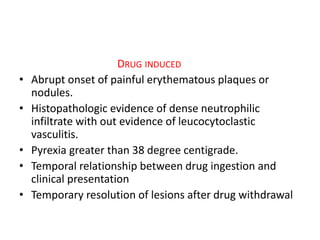
DRUG INDUCED
• Abrupt onset of painful erythematous plaques or
nodules.
• Histopathologic evidence of dense neutrophilic
infiltrate with out evidence of leucocytoclastic
vasculitis.
• Pyrexia greater than 38 degree centigrade.
• Temporal relationship between drug ingestion and
clinical presentation
• Temporary resolution of lesions after drug withdrawal
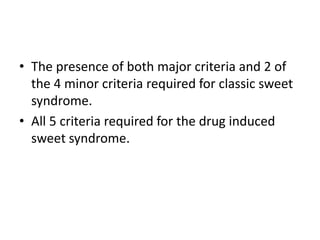
• The presence of both major criteria and 2 of
the 4 minor criteria required for classic sweet
syndrome.
• All 5 criteria required for the drug induced
sweet syndrome.
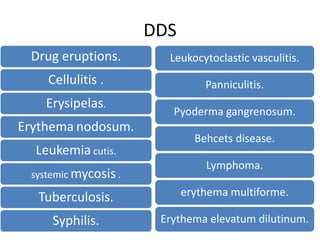
DDS
Drug eruptions.
Cellulitis .
Erysipelas.
Erythema nodosum.
Leukemia cutis.
systemic mycosis .
Tuberculosis.
Syphilis.
Leukocytoclastic vasculitis.
Panniculitis.
Pyoderma gangrenosum.
Behcets disease.
Lymphoma.
erythema multiforme.
Erythema elevatum dilutinum.
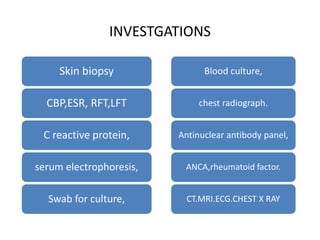
INVESTGATIONS
Skin biopsy
CBP,ESR, RFT,LFT
C reactive protein,
serum electrophoresis,
Swab for culture,
Blood culture,
chest radiograph.
Antinuclear antibody panel,
ANCA,rheumatoid factor.
CT.MRI.ECG.CHEST X RAY
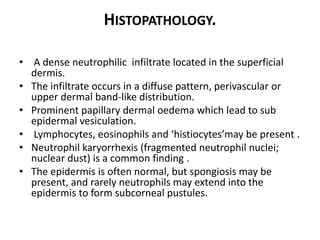
HISTOPATHOLOGY.
• A dense neutrophilic infiltrate located in the superficial
dermis.
• The infiltrate occurs in a diffuse pattern, perivascular or
upper dermal band-like distribution.
• Prominent papillary dermal oedema which lead to sub
epidermal vesiculation.
• Lymphocytes, eosinophils and ‘histiocytes’may be present .
• Neutrophil karyorrhexis (fragmented neutrophil nuclei;
nuclear dust) is a common finding .
• The epidermis is often normal, but spongiosis may be
present, and rarely neutrophils may extend into the
epidermis to form subcorneal pustules.
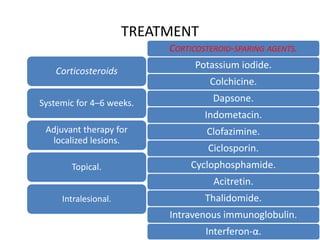
TREATMENT
Corticosteroids
Systemic for 4–6 weeks.
Adjuvant therapy for
localized lesions.
Topical.
Intralesional.
CORTICOSTEROID-SPARING AGENTS.
Potassium iodide.
Colchicine.
Dapsone.
Indometacin.
Clofazimine.
Ciclosporin.
Cyclophosphamide.
Acitretin.
Thalidomide.
Intravenous immunoglobulin.
Interferon-α.

Nutrophilic dermatosis

  • 1.
  • 2.
    • The spectrumof disorders currently considered under ‘neutrophilic Dermatoses’. • The common features are : • 1 The histological features are neutrophilic vascular reaction that typically falls short of vasculitis . • 2 Any diagnostic entity a proportion of cases have a reactive cause or systemic association . • 3 Many of these disorders may coexist or occur in sequence in an affected individual. • 4 The neutrophilic process itself , in some cases cause systemic disease. • Epidermal neutrophilic dermatoses are not discussed here.
  • 3.
    CLASSIFICATION Epidermal neutrophilic infiltrate: a.Pustular psoriasis b. Reiter’s disease c. Sub corneal pustular dermatosis d. Intraepidermal neutrophilic IgA dermatosis e. Acute generalized exanthematous pustulosis f. Infantile acropustulosis Dermal neutrophilic infiltrate a. Pyoderma gangrenosum b. Sweet’s syndrome c. Neutrophilic dermatosis associated with granulocyte colony-stimulating factor d. Neutrophilic eccrine hidradenitis e. Idiopathic recurrent palmo plantar hidradenitis f. Bowel associated dermatosis–arthritis syndrome g. Neutrophilic dermatosis of the dorsal hands h. Rheumatoid neutrophilic dermatosis i. Behçet’s syndrome
  • 4.
    Classical neutrophilic dermatoses: •Pyoderma gangrenosum . • Sweet’s syndrome. • Neutrophilic dermatosis of the dorsal hands. Overlap with vasculitis • Behçet’s disease. • Erythema elevatum diutinum. Specific link with gastrointestinal disease* • Bowel-associated dermatosis arthritis syndrome (BADAS). • Pustular vasculitis/neutrophilic pustulosis.
  • 5.
    • Aseptic abscessesin Crohn’s disease. • Pyodermatitis–pyostomatitis vegetans. • Peristomal pyoderma gangrenosum. Associated with acne or pustulosis† • Synovitis, acne, pustulosis, hyperostosis, osteomyelitis (SAPHO). • Pyogenic arthritis, pyoderma gangrenosum, acne (PAPA). Associated with connective tissue disease or immune complex disease • Rheumatoid neutrophilic dermatitis/dermatosis. • Palisaded neutrophilic and granulomatous dermatitis. • Relapsing polychondritis. • Sweet’s syndrome-like, erythema gyratum repens-like, and figurate neutrophilic infiltrate, in systemic lupus erythematosus.
  • 6.
    Paraneoplastic or typicallychemotherapy-associated: • Paraneoplastic neutrophilic figurate erythema. • Neutrophilic eccrine hidradenitis. Systemic neutrophilic dermatoses: • Neuro-Sweet’s syndrome. • Other internal sites: myositis, pulmonary, pericarditis, osteitis , lymph nodes, aseptic neutrophilic abscesses (splenic or visceral), etc. Other extra-cutaneous neutrophilic disease: • Peripheral ulcerative keratitis. • Neutrophilic panniculitis.
  • 7.
    Auto inflammatory diseases. •Familial Mediterranean fever • Hyper-IgD syndrome Non-vessel centred and miscellaneous. • Sub corneal pustular dermatosis (Sneddon– Wilkinson disease). • Intra epidermal neutrophilic IgA dermatosis. • Neutrophilic urticaria. • Neutrophilic spongiosis. • Neutrophilic sebaceous adenitis.
  • 8.
    Pyoderma gangrenosum • Definition: •Pyoderma gangrenosum (PG) is a rare,chronic recurrent, non-infectious cutaneous ulcerating disease, with a primary neutrophilic infiltrate, associated with underlying systemic disease. • Diagnosis is based on typical clinical features and exclusion of other cutaneous ulcerating diseases, as described in several reviews .
  • 9.
    The ETIOLOGY ANDPATHOGENISIS • A defect in neutrophil chemotaxis is the basic pathologic problem in PG. • Abnormal immune reactivity and cross-reacting auto antibodies directed at antigens common to the skin and intestine or joints are other proposed pathogenic mechanisms. • The possibility of cross-reactivity between Escherichia coli and cutaneous antigens has been suspected for many years and treatment to decrease bowel bacteria has shown some benefit in therapy of PG.
  • 10.
    ASSOCIATED DISEASES ofPG 1.Gastrointestinal: Ulcerative colitis, Crohn’s disease, chronic active hepatitis, primary biliary cirrhosis 2. Joint disorders: Rheumatoid arthritis, enteropathic arthritis, osteoarthritis 3. Hematological: Myeloid leukemia, myeloma, Polycythemia vera, myelofibrosis 4. Connective tissue diseases and vasculitides: SLE,Takayasu’s arteritis, Wegener’s granulomatosis, Behçet’s disease 5. Infections: HIV, Hepatitis C, Chlamydia pneumoniae infection 6. Drugs: isotretinoin, granulocyte colony-stimulating factor 7. Other diseases: S solid tumors, monoclonal gammopathies, antiphospholipid antibody syndrome, diabetes
  • 11.
    DIAGNOSTIC CRITERIA OFPG • Major criteria (both required) • 1 Rapid (usually >1 cm/day) progression of painful, necrolytic ulceration with an irregular, undermined, violaceous border— • usually with a preceding papule, pustule or bulla, and pain out of proportion to the size of the ulcerated area • 2 Exclusion of other causes of ulceration.
  • 12.
    • Minor criteria(at least two required) • 1 (a) history of pathergy, or (b) presence of cribriform scarring • 2 Presence of a disease known to be associated with PG ( IBD, polyarthritis, myelodysplasia or leukaemia, but monoclonal gammopathy . • About 50% have an associated systemic disease) • 3 Appropriate histopathological findings (sterile dermal neutrophilia,excluding infective causes) • 4 Rapid response to oral corticosteroid therapy (usually interpreted as at least 50% reduction in size using 1–2 mg/kg/day).
  • 13.
    VARIANTS OF PG Classic/ulcerative ATYPICALFORMS: 1.Pustular 2.Bullous 3.superficial (vegetative) 4.Upper limbs/trunk 5.Other specific sites (face/scalp, breast, genital, mucosal, etc) 6.Pyostomatitis vegetans 7.Peristomal
  • 14.
    Classic/ulcerative PG • Thisis the commonest variant of PG. presenting with small, tender, red–blue papules, plaques or pustules that evolve into painful ulcers with characteristic violaceous undermined edges • granulation tissue, necrosis or purulent exudate at the ulcer base. • Lesions may be solitary or multiple, and occur most commonly on the legs (in 70%), but may affect any body site.
  • 16.
    • Pathergy occursin 25%: • usually defined as following minor injuries such as venesection, at operation sites especially after breast surgery, skin injury such as scalds or varicella may also act as a pathergic trigger.
  • 17.
    • Healing usuallyoccurs with an atrophic cribriform scar. • Associated symptoms include fever, malaise, myalgia and arthralgia. • Disease associations include IBD, arthritis, monoclonal gammopathy or internal malignancy;
  • 18.
    ATYPICAL FORMS • pustularPG. • Pustular PG occurs during acute exacerbations of IBD. • Discrete painful pustules, with a surrounding halo of erythema,present as a scattered distribution on the extensor aspects of the limbs. • Pustular PG lesions often resolve with control of IBD.
  • 19.
    • Bullous PG. •It presents with rapidly arising,superficial, haemorrhagic bullae, typically ulcerates and heals with scarring, often located on the arms. • It shares clinical and histopathological findings with Sweet’s syndrome. • Bullous PG is especially associated with myeloproliferative disorders
  • 20.
    • Superficial (vegetative)PG: • presents as a solitary,slowly progressing, relatively non-painful superficial ulcer, usually on the trunk,and face, although it can occur at other sites,resolves with less aggressive treatment. • It has a non-purulent base and generally lacks the violaceous,undermined border of classic PG.
  • 21.
    • Peristomal PG: •it is almost always associated with IBD, biopsy may show giant cells or bacteria. • Other associations of peristomal PG include diverticular disease,bowel carcinoma, perforated bowel and as well as recent reports of collagenous colitis and systemic sclerosis .
  • 22.
    • upper limbs/trunk/face: •is a more superficial variant than classic PG. • It can occur at any site but most commonly on the arms or face. • It can be bullous, and it may be difficult to differentiate from Sweet’s syndrome. • It is viewed as including neutrophilic dermatosis of the dorsal hands • The importance of this pattern is that the strongest link with internal disease is with myelogenous leukaemias, myeloproliferative disorders or IgA gammopathies
  • 23.
    • Pyostomatitis vegetans: • It is a disorder in which there is oral mucosal thickening with multiple pustules and ulcers on an erythematous base (at any site, although the tongue is less affected). • The oral lesions have a very strong link with IBD, especially active ulcerative colitis.
  • 24.
    type Predom inant site Major disease associations patherg y prognos is Typical findingstreatmentulcerative Lower extremiti es, trunk IBD, arthritis positive variable Tender large ulceration with undermined borders,rapidly evolving purulent base Aggressive immuno supressive therapy pustular Lower extremiti es, Trunk, oral mucosa, IBD variable good Multiple discrete sterile pustules surrounded by a halo some times self limited. Treatment of underlying condition bullous Arms, face, Myeloid leukemia positive poor Rapidly evoloving superficial tender vesicles and bullae with central necrosis,erosions and ulcerations Systemic immunosuppr essive therapy Vegetative Head , neck nill absent good Verrucous , solitary,slowly progressing, non-painful superficial ulcer, non- purulent base and lacks the violaceous,undermined border of classic PG. Topical or intra lesional , Systemic immunosuppr essive therapy
  • 25.
    INVESTIGATIONS CBP, ESR,LFT,RFT. Serum iron, Autoanti body screen, (ANCA,) Anti-phospholipid antibody screen, Rheumatoid factor, Serum protein, Electrophoresis, Thyroid function tests. Chesxt-x ray ECG. Swab for culture, Blood for culture, Skin biopsy,
  • 26.
    HISTOPATHOLOGY • Typical findingsinclude central necrosis and ulceration of the epidermis and dermis surrounded by an intense, acute infl ammatory cell infiltrate,with a more peripheral mixed to chronic infl ammatory cell infiltrate . • Each clinical variant has additional, more specific,histopathological fi ndings. • Ulcerative variant of PG, there is massive dermal–epidermal neutrophilic infiltrate with suppuration/abscess formation. • Pustular PG, a perifollicular neutrophilic infiltrate with subcorneal pustule formation. • The bullous variant shows a neutrophilic infiltrate with intraepidermal vesicle formation. • vegetative PG, there is a granulomatous reaction with peripheral palisading histiocytes and giant cells.
  • 27.
    DDS: ULCERATIV PG: Most Likely VASCULAR Venousstsasis ulceration 0cclusive disease Arteritis Vasculitis(PAN,WG,behcets disease,SLE,,leukocytoclastic vasculitis, Anti phospholipid-anti body syndrome MALIGNANCY(cutaneous lymphomas, squamous cell carcinoma, leukemia cutis,basl cell carcinoma INFECTION BACTERIAL(ecthyma, folliculitis, carbuncle, cellulitis, erysipelas, gummatous treponemal ulcer, mycobacterial Parasitic(leishmaniasis,amebiasis schistosomiasis) Deep fungal infections.(blastomycosis, sporotrichosis,zygomycosis
  • 28.
    PUSTULAR PG: Most Likely Infection,Bacterial,/viral Fungal,Vasculitis Pustularvasculitis, Pustular psoriasis Bowel bye pass syndrome VEGETATIVE PG Most Likely infection- Bacterial/Viral/Fungal Mycobacterial
  • 29.
    prognosis • Patients withvegetative Pg, pustular PG generally Have a good prognosis . • UlcerativePG, bullousPG Have a poor prognosis.
  • 30.
    TREATMENT Topical: Topical or intralesional corticosteroids Tacrolimus. Nicotine . Cromolyn sodium/disodium cromoglycate. Platelet-derived growth facor
  • 31.
    Sweet syndrome • Definition: •Sweet’s syndrome is characterized by fever, peripheral neutrophil leukocytosis, acute onset of painful, erythematous papules, plaques or nodules and histological findings of a dense neutrophilic infiltrate without evidence of primary vasculitis.
  • 32.
    Sweet’s syndrome canbe subdivided into three groups. 1. Classical or idiopathic . 2. Malignancy-associated. 3. Drug-induced .
  • 33.
    ETIOPATHOGENESIS • Sweet syndromemay result from a hypersensitivity reaction to an eliciting bacterial, viral, or tumor antigen. • Leukotactic mechanisms and dermal dendrocytes, Circulating auto antibodies, immune complexes, HLA serotypes, and cytokines have all been postulated to contribute to the pathogenesis of Sweet syndrome.
  • 34.
    Drug-induced Sweet’s syndrome •(G-CSF)therapy ,alltrans-retinoic acid, minocycline , trimethoprim– Sulfamethoxazole , carbamazepine and oral contraceptives.
  • 35.
    Classical or idiopathic Sweet’s. •typically affects women in the third to fifth decade . • infection •(streptococcal upper respiratory infections and yersinial gastrointestinal infections). • IBD (ulcerative colitis and Crohn’s disease). • pregnancy.
  • 36.
    Malignancy- associated Sweet’s syndrome • estimatedto comprise20–25% . • men and women are equally affected . • Associated malignancies are acute myelogenous leukaemia,tumours of genito urinary organs, breast and gastrointestinal tract,. • Sweet’s syndrome may be the initial manifestation of malignancy or may precede the diagnosis by months to years, making close follow-up essential. • In addition, recurrent episodes of Sweet’s syndrome may be an indication of cancer recurrence .
  • 37.
    Infections Streptococcal andupper respiratory tract Gastrointestinal (especially Salmonella, Yersinia),Mycobacterial infections (including vaccinations) Inflammatory bowel disease Ulcerative colitis,Crohn’s disease Endocrine Pregnancy,Autoimmune thyroid disease Immunological disorders Collagen vascular disorders: lupus erythematosus, Sjögren’s syndrome, Others: autoimmune thrombocytopenic purpura, pemphigus Haematological malignancy and related conditions, Immuno deficiencies Acute myelogenous leukaemias, Myelodysplastic conditions, polycythaemia Aplastic anaemia, Fanconi’s anaemia Monoclonal gammopathy, Lymphomas, Chronic granulomatous disease Congenital deficiencies: neutropenia, T-cell immuno deficiency, Other malignancies Genitourinary,Breast,,Gastrointestinal Prostate,Larynx,Many others
  • 38.
    Other medical conditionsSarcoidosis,Rheumatoid arthritis SAPHO Medications Colony-stimulating factors, • all-trans retinoic acid. • imatinib mesylate, bortezomib. • contraceptives,• propylthiouracil Other neutrophilic dermatoses and related conditions PG,NDDH,Erythema elevatum diutinum Relapsing polychondritis, Neutrophilic eccrine hidradenitis SCPD,Erythema nodosum Behçet’s diseaseVasculitis (various) Systemic manifestations of ND and deeper variants Bone, muscle, tendons, neuro-Sweet’s, heart, lung, liver, intestine,spleen, kidney, subcutaneous (Sweet’s panniculitis)
  • 39.
    • The clinicalpresentation of Sweet’s syndrome • persistent high fever, neutrophilia. • Multiple to solitary, erythematous to violaceous tender papules or nodules that often coalesce to form irregular plaques • The lesions typically involve the arms, face and neck, but may occur anywhere. • Later lesions may appear –pseudovesicular ,tiny pustules . • The plaques may develop central yellowish discoloration, producing a targetoid appearance . • The distribution localized on the face , or widespread as may occur in malignancy-associated cases. • Several unusual body site distributions have been reported, including localization to (recent wounds ,old scars , an area of lymphoedema , an area of radiotherapy ), • Healing usually occurs without scarring,
  • 41.
    • Uncommon atypicalvariants : • Bullous/Ulcerartive/Pustular . • Bullous /ulcerative mimick PG associated with malignancy. • Pustular associated with IBD. • Oral mucosal apththae like , putules, papule, vesicles, periodontitis seen. • Conjuctivitis ,blepharitis is seen. • Extracutaneous: • Jonits(arthritis)CNS(encephalitis,meningitis,neuro sweet),kidney(glomerulonephritis,protinuria)intesti ne(pan colitis),hepatosplenomegaly,
  • 42.
    DIAGNOSTIC CRITERIA FORSWEET SYNDROME CLASSIC Major: • Abrupt onset of painful erythematous plaques or nodules. • Histopathologic evidence of dense neutrophilic infiltrate with out evidence of leucocytoclastic vasculitis. .
  • 43.
    Minor: • 1.Pyrexia greaterthan 38 degree centigrade . • 2.Association with underlying hematologic or visceral malignancy,inflammatory disease or pregnancy or preceded by upper respiratory or gastro intestinal infections. • 3.Excellent response to systemic steroids or potassium iodide. • Abnormal laboratory value at prsentation. • 4.ESR greater than 20mm/h,Positive C reactive protein, greater than 8000 leukocytes, greater than 70% neutrophils.
  • 44.
    DRUG INDUCED • Abruptonset of painful erythematous plaques or nodules. • Histopathologic evidence of dense neutrophilic infiltrate with out evidence of leucocytoclastic vasculitis. • Pyrexia greater than 38 degree centigrade. • Temporal relationship between drug ingestion and clinical presentation • Temporary resolution of lesions after drug withdrawal
  • 45.
    • The presenceof both major criteria and 2 of the 4 minor criteria required for classic sweet syndrome. • All 5 criteria required for the drug induced sweet syndrome.
  • 46.
    DDS Drug eruptions. Cellulitis . Erysipelas. Erythemanodosum. Leukemia cutis. systemic mycosis . Tuberculosis. Syphilis. Leukocytoclastic vasculitis. Panniculitis. Pyoderma gangrenosum. Behcets disease. Lymphoma. erythema multiforme. Erythema elevatum dilutinum.
  • 47.
    INVESTGATIONS Skin biopsy CBP,ESR, RFT,LFT Creactive protein, serum electrophoresis, Swab for culture, Blood culture, chest radiograph. Antinuclear antibody panel, ANCA,rheumatoid factor. CT.MRI.ECG.CHEST X RAY
  • 48.
    HISTOPATHOLOGY. • A denseneutrophilic infiltrate located in the superficial dermis. • The infiltrate occurs in a diffuse pattern, perivascular or upper dermal band-like distribution. • Prominent papillary dermal oedema which lead to sub epidermal vesiculation. • Lymphocytes, eosinophils and ‘histiocytes’may be present . • Neutrophil karyorrhexis (fragmented neutrophil nuclei; nuclear dust) is a common finding . • The epidermis is often normal, but spongiosis may be present, and rarely neutrophils may extend into the epidermis to form subcorneal pustules.
  • 49.
    TREATMENT Corticosteroids Systemic for 4–6weeks. Adjuvant therapy for localized lesions. Topical. Intralesional. CORTICOSTEROID-SPARING AGENTS. Potassium iodide. Colchicine. Dapsone. Indometacin. Clofazimine. Ciclosporin. Cyclophosphamide. Acitretin. Thalidomide. Intravenous immunoglobulin. Interferon-α.