
NUTRITION
AND
DIGESTION
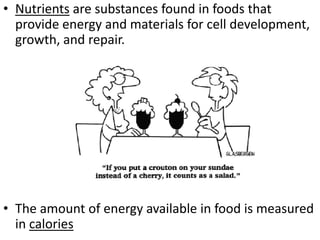
• Nutrients are substances found in foods that
provide energy and materials for cell development,
growth, and repair.

• The amount of energy available in food is measured
in calories
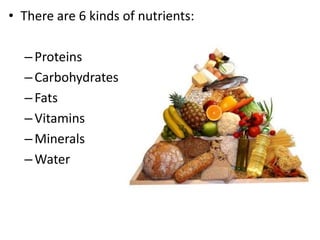
• There are 6 kinds of nutrients:
– Proteins
– Carbohydrates
– Fats
– Vitamins
– Minerals
– Water
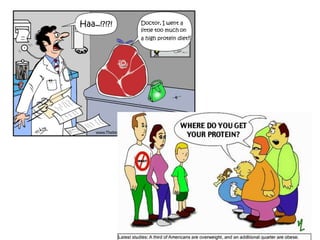
• Proteins are large molecules that contain carbon,
hydrogen, oxygen and nitrogen. They are made
up of amino acids.

• Amino acids are the building blocks of protein
– Essential amino acids cannot be made by the
body’s cells, and must be supplied by the food
you eat
• Protein is used for growth and repair of body cells
and helps to form muscle, skin and hair
• Carbohydrates are the main source of energy in
the body

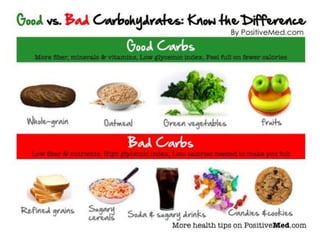
• All carbohydrates are not the same
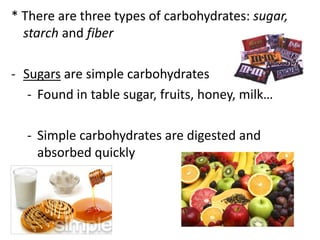
* There are three types of carbohydrates: sugar,
starch and fiber
- Sugars are simple carbohydrates
- Found in table sugar, fruits, honey, milk…

- Simple carbohydrates are digested and
absorbed quickly
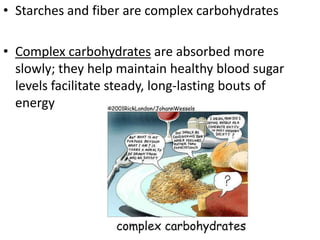
• Starches and fiber are complex carbohydrates
• Complex carbohydrates are absorbed more
slowly; they help maintain healthy blood sugar
levels facilitate steady, long-lasting bouts of
energy
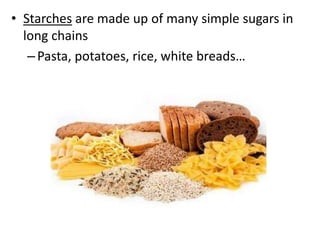
• Starches are made up of many simple sugars in
long chains
– Pasta, potatoes, rice, white breads…
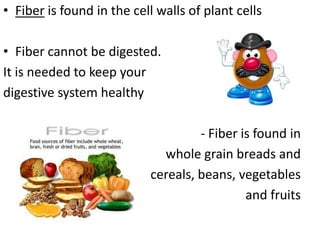
• Fiber is found in the cell walls of plant cells
• Fiber cannot be digested.
It is needed to keep your
digestive system healthy

- Fiber is found in
whole grain breads and
cereals, beans, vegetables
and fruits
• Fats or lipids are necessary nutrients because
they provide energy and help your body absorb
vitamins

– Fat tissue cushions your internal organs
– Fat is a storage unit for energy; it can release
twice as much energy as carbs

– Excess energy from all foods you eat is
converted to fat and stored for later use.
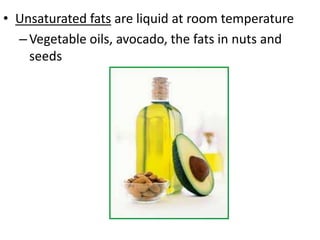
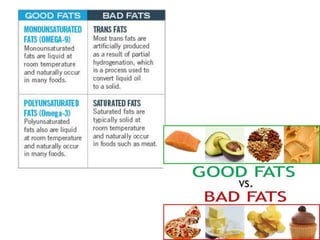
• Unsaturated fats are liquid at room temperature
– Vegetable oils, avocado, the fats in nuts and
seeds
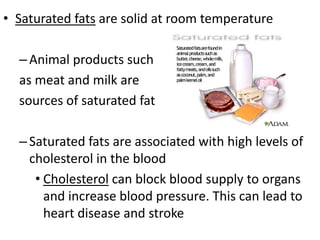
• Saturated fats are solid at room temperature
– Animal products such
as meat and milk are
sources of saturated fat

– Saturated fats are associated with high levels of
cholesterol in the blood
• Cholesterol can block blood supply to organs
and increase blood pressure. This can lead to
heart disease and stroke
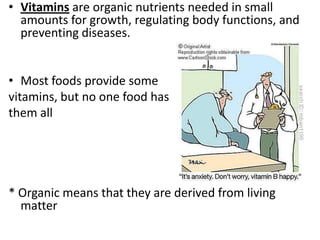
• Vitamins are organic nutrients needed in small
amounts for growth, regulating body functions, and
preventing diseases.

• Most foods provide some
vitamins, but no one food has
them all

* Organic means that they are derived from living
matter
• Minerals are inorganic nutrients that regulate
chemical reactions in the body
• Your body uses about 14 different minerals
• The minerals used in largest amounts are calcium
and phosphorus
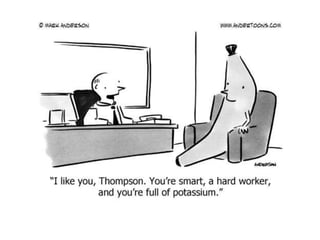
• Other minerals include potassium, iron, and
sodium
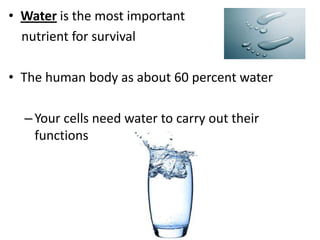
• Water is the most important
nutrient for survival
• The human body as about 60 percent water
– Your cells need water to carry out their
functions
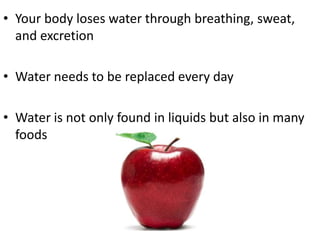
• Your body loses water through breathing, sweat,
and excretion
• Water needs to be replaced every day
• Water is not only found in liquids but also in many
foods
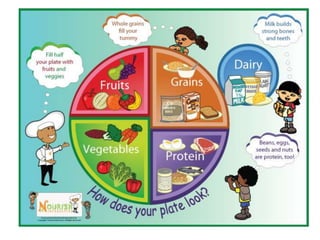
• Because no food has every nutrient, you need to
eat a variety of foods to maintain optimum health.
• A food group is a collection of foods that contain
the same type of nutrient
• There are five food groups:
– Bread/cereal
– Vegetables
– Fruit
– Dairy
– Meat/beans
Nutritio nand digestion1

Nutritio nand digestion1

  • 1.
  • 2.
    • Nutrients aresubstances found in foods that provide energy and materials for cell development, growth, and repair. • The amount of energy available in food is measured in calories
  • 3.
    • There are6 kinds of nutrients: – Proteins – Carbohydrates – Fats – Vitamins – Minerals – Water
  • 4.
    • Proteins arelarge molecules that contain carbon, hydrogen, oxygen and nitrogen. They are made up of amino acids. • Amino acids are the building blocks of protein – Essential amino acids cannot be made by the body’s cells, and must be supplied by the food you eat • Protein is used for growth and repair of body cells and helps to form muscle, skin and hair
  • 6.
    • Carbohydrates arethe main source of energy in the body • All carbohydrates are not the same
  • 7.
    * There arethree types of carbohydrates: sugar, starch and fiber - Sugars are simple carbohydrates - Found in table sugar, fruits, honey, milk… - Simple carbohydrates are digested and absorbed quickly
  • 8.
    • Starches andfiber are complex carbohydrates • Complex carbohydrates are absorbed more slowly; they help maintain healthy blood sugar levels facilitate steady, long-lasting bouts of energy
  • 9.
    • Starches aremade up of many simple sugars in long chains – Pasta, potatoes, rice, white breads…
  • 10.
    • Fiber isfound in the cell walls of plant cells • Fiber cannot be digested. It is needed to keep your digestive system healthy - Fiber is found in whole grain breads and cereals, beans, vegetables and fruits
  • 12.
    • Fats orlipids are necessary nutrients because they provide energy and help your body absorb vitamins – Fat tissue cushions your internal organs – Fat is a storage unit for energy; it can release twice as much energy as carbs – Excess energy from all foods you eat is converted to fat and stored for later use.
  • 13.
    • Unsaturated fatsare liquid at room temperature – Vegetable oils, avocado, the fats in nuts and seeds
  • 14.
    • Saturated fatsare solid at room temperature – Animal products such as meat and milk are sources of saturated fat – Saturated fats are associated with high levels of cholesterol in the blood • Cholesterol can block blood supply to organs and increase blood pressure. This can lead to heart disease and stroke
  • 17.
    • Vitamins areorganic nutrients needed in small amounts for growth, regulating body functions, and preventing diseases. • Most foods provide some vitamins, but no one food has them all * Organic means that they are derived from living matter
  • 18.
    • Minerals areinorganic nutrients that regulate chemical reactions in the body • Your body uses about 14 different minerals • The minerals used in largest amounts are calcium and phosphorus • Other minerals include potassium, iron, and sodium
  • 20.
    • Water isthe most important nutrient for survival • The human body as about 60 percent water – Your cells need water to carry out their functions
  • 21.
    • Your bodyloses water through breathing, sweat, and excretion • Water needs to be replaced every day • Water is not only found in liquids but also in many foods
  • 22.
    • Because nofood has every nutrient, you need to eat a variety of foods to maintain optimum health. • A food group is a collection of foods that contain the same type of nutrient • There are five food groups: – Bread/cereal – Vegetables – Fruit – Dairy – Meat/beans