NUTRIENTS
• Why do we need food?
• Nutrients in food.
• Structure of large molecule.

• Food Test.
WHY DO WE NEED FOOD?
• We need food to give us ENERGY
• We need food to keep us
HEALTHY
• We need food to REPAIR and
REPLACE damaged and worn out
Tissues
• We need food to GROW
NUTRIENTS IN FOOD
• Carbohydrates
• Proteins

• Fats ( lipids)
• Vitamins
• Mineral Salts
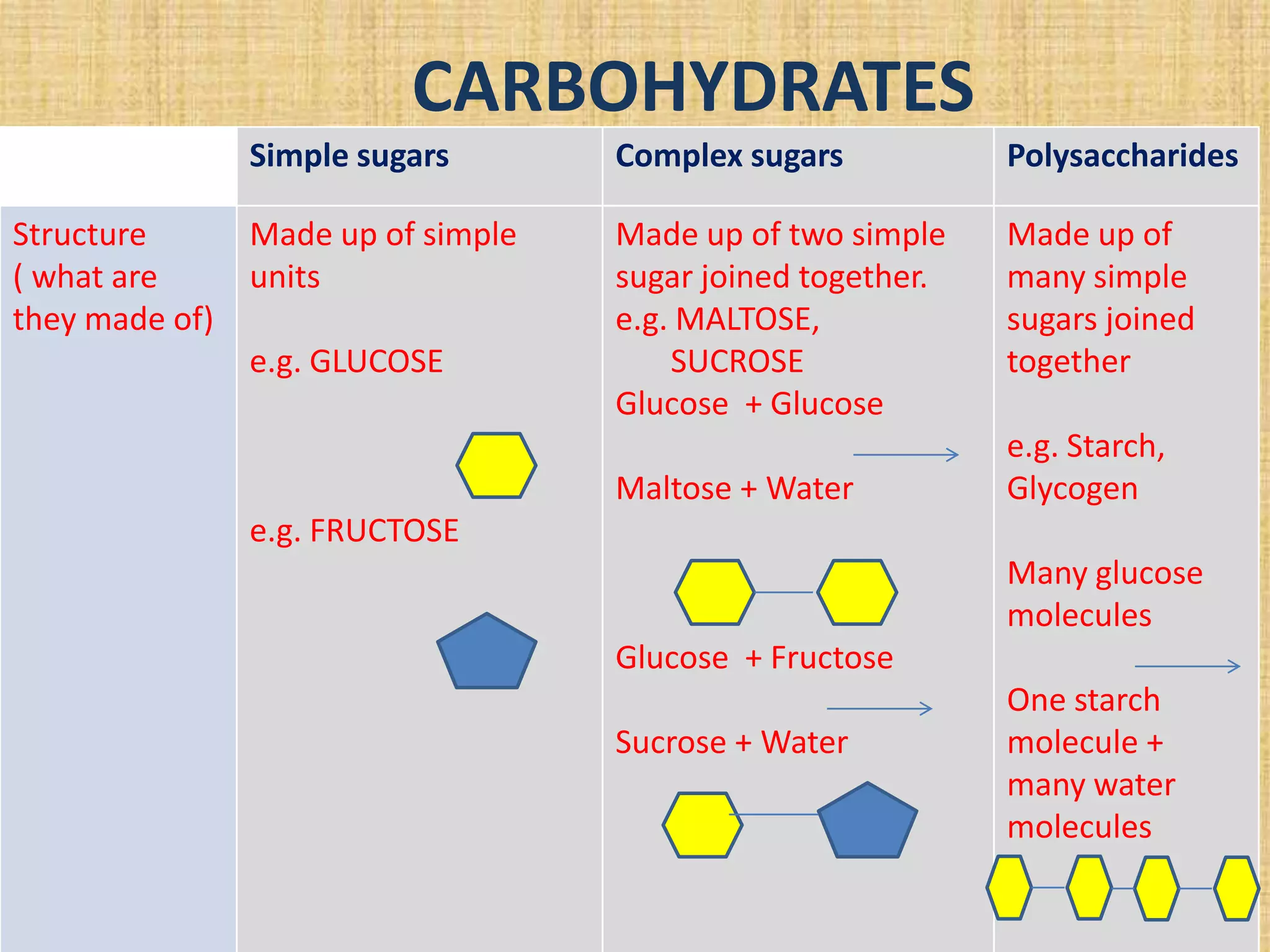
CARBOHYDRATES
Simple sugars
Structure
( what are
they made of)

Complex sugars

Polysaccharides

Made up of simple
units

Made up of two simple
sugar joined together.
e.g. MALTOSE,
SUCROSE
Glucose + Glucose

Made up of
many simple
sugars joined
together

e.g. GLUCOSE

Maltose + Water

e.g. Starch,
Glycogen

e.g. FRUCTOSE
Many glucose
molecules
Glucose + Fructose
Sucrose + Water

One starch
molecule +
many water
molecules
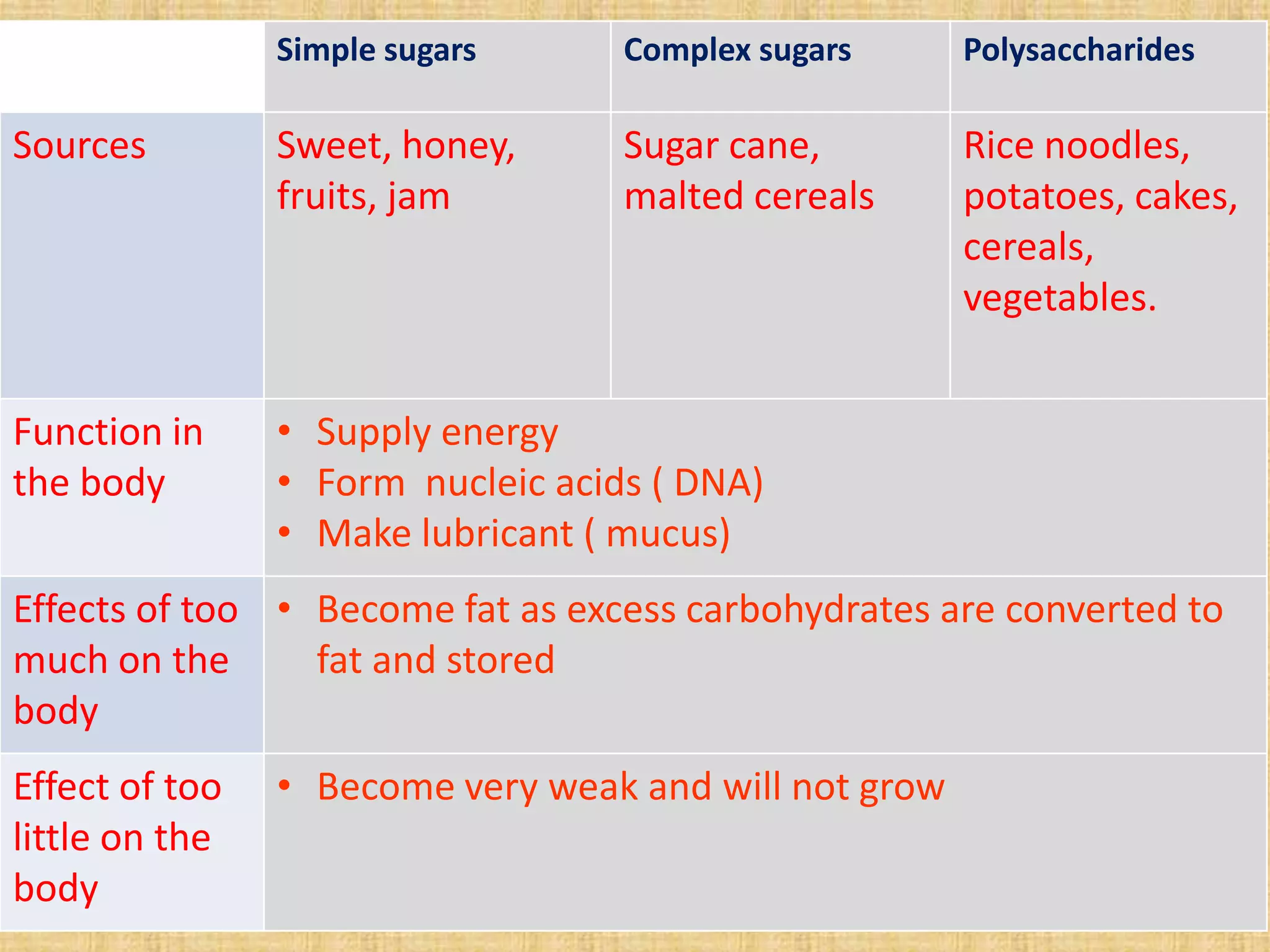
Simple sugars

Complex sugars

Polysaccharides

Sources

Sweet, honey,
fruits, jam

Sugar cane,
malted cereals

Rice noodles,
potatoes, cakes,
cereals,
vegetables.

Function in
the body

• Supply energy
• Form nucleic acids ( DNA)
• Make lubricant ( mucus)

Effects of too • Become fat as excess carbohydrates are converted to
much on the
fat and stored
body
Effect of too
little on the
body

• Become very weak and will not grow
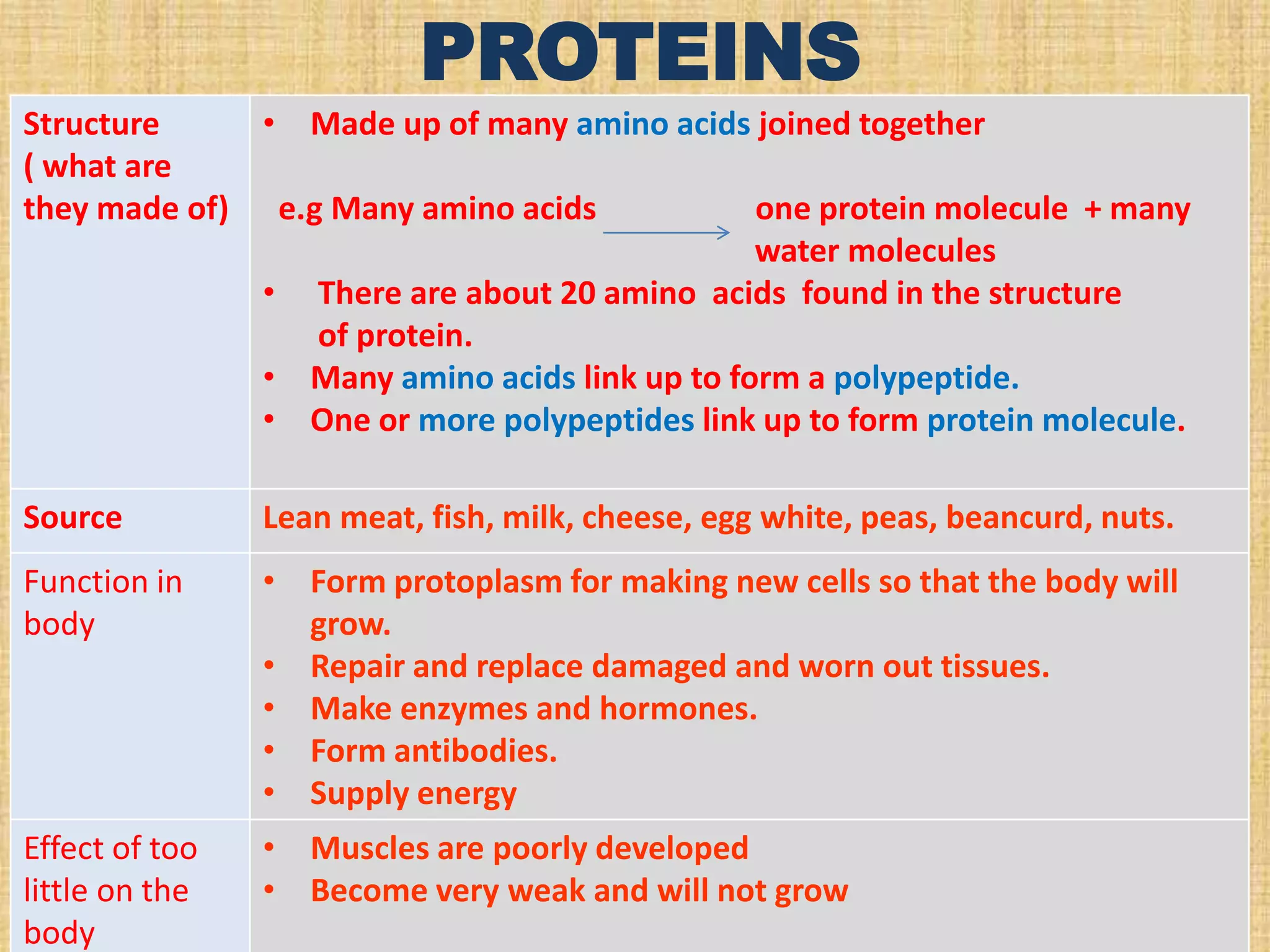
PROTEINS
Structure
• Made up of many amino acids joined together
( what are
they made of) e.g Many amino acids
one protein molecule + many
water molecules
• There are about 20 amino acids found in the structure
of protein.
• Many amino acids link up to form a polypeptide.
• One or more polypeptides link up to form protein molecule.
Source

Lean meat, fish, milk, cheese, egg white, peas, beancurd, nuts.

Function in
body

• Form protoplasm for making new cells so that the body will
grow.
• Repair and replace damaged and worn out tissues.
• Make enzymes and hormones.
• Form antibodies.
• Supply energy

Effect of too
little on the
body

• Muscles are poorly developed
• Become very weak and will not grow
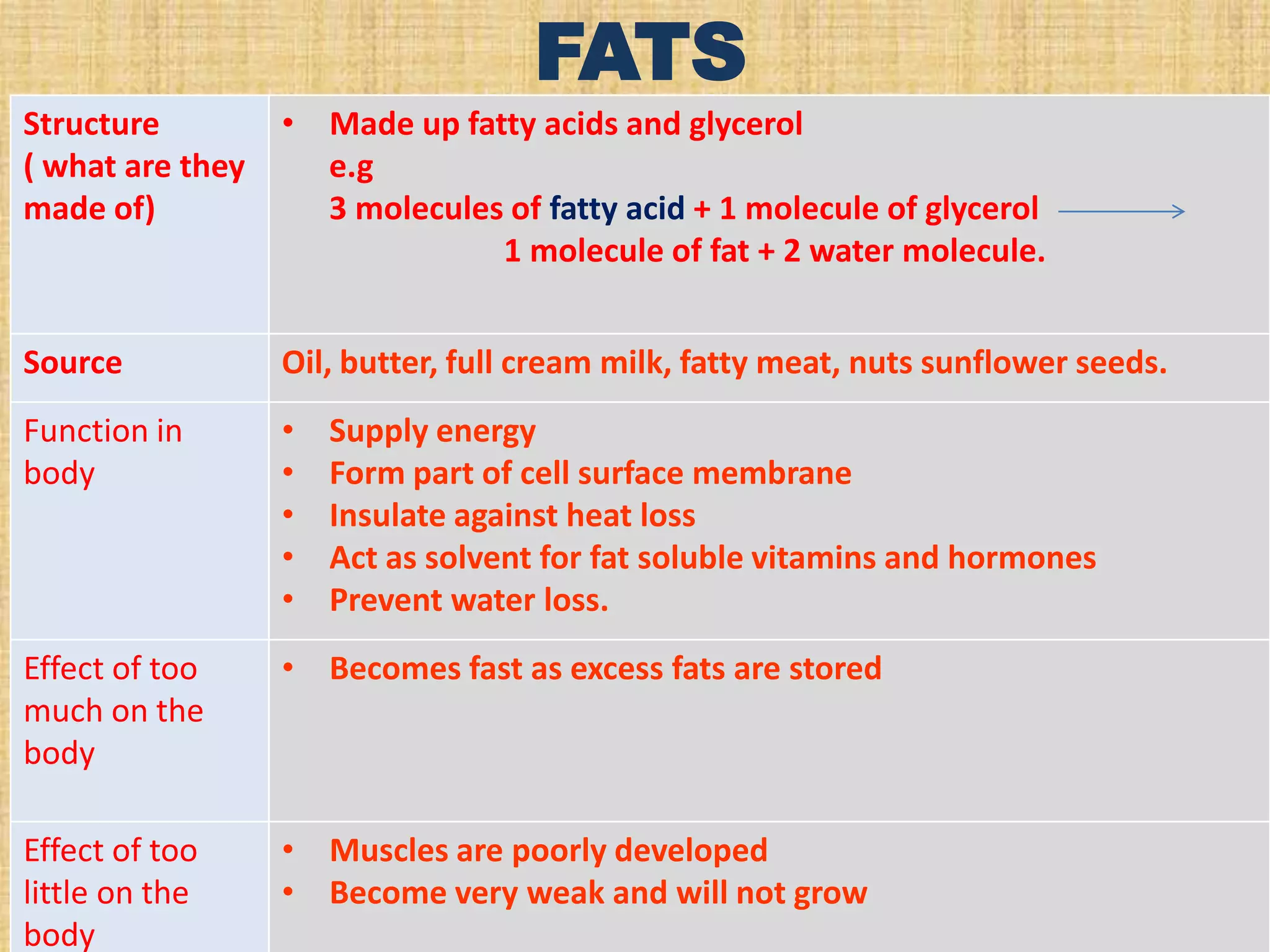
FATS
Structure
( what are they
made of)

• Made up fatty acids and glycerol
e.g
3 molecules of fatty acid + 1 molecule of glycerol
1 molecule of fat + 2 water molecule.

Source

Oil, butter, full cream milk, fatty meat, nuts sunflower seeds.

Function in
body

•
•
•
•
•

Effect of too
much on the
body

• Becomes fast as excess fats are stored

Effect of too
little on the
body

• Muscles are poorly developed
• Become very weak and will not grow

Supply energy
Form part of cell surface membrane
Insulate against heat loss
Act as solvent for fat soluble vitamins and hormones
Prevent water loss.
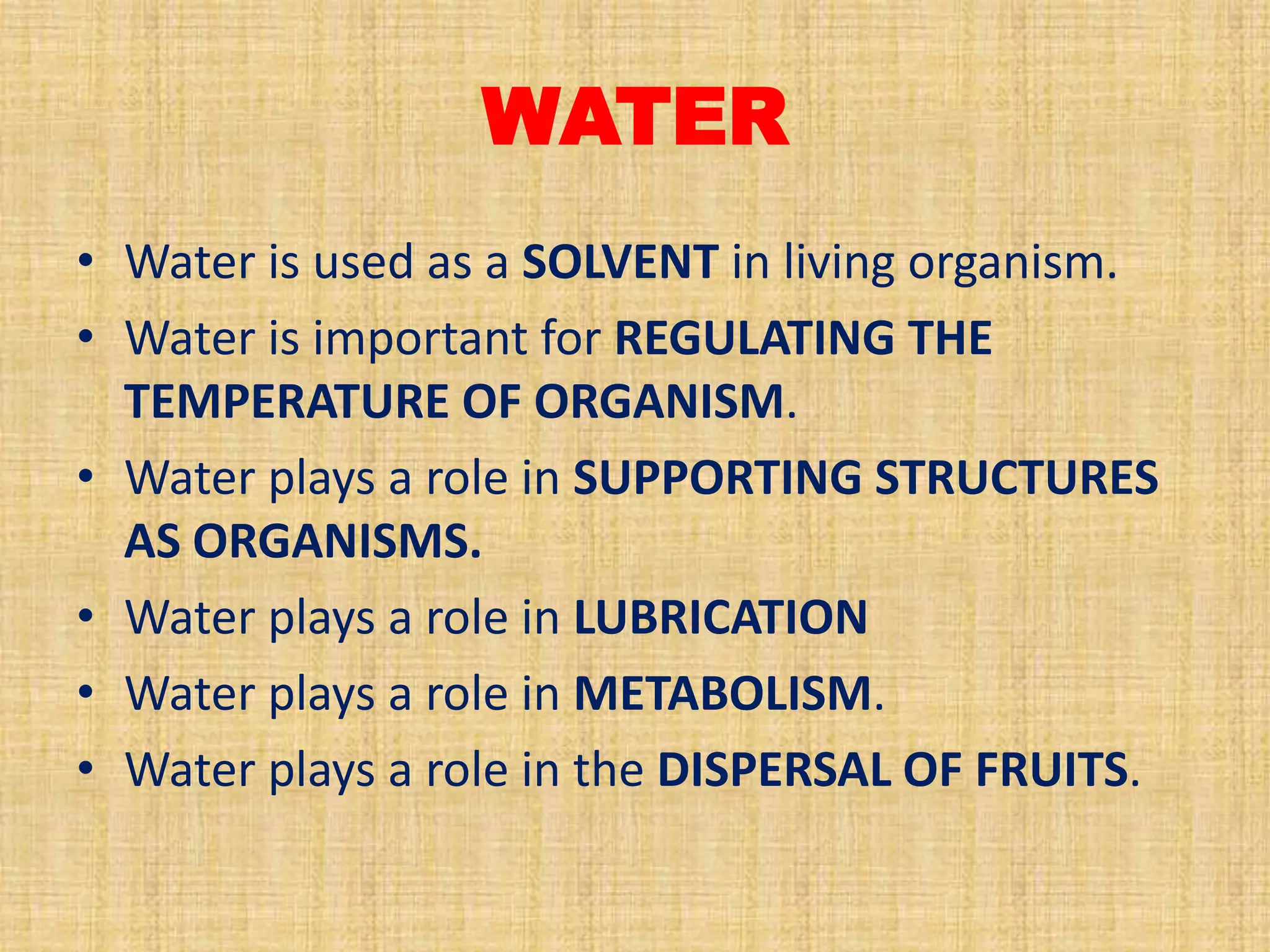
WATER
• Water is used as a SOLVENT in living organism.
• Water is important for REGULATING THE
TEMPERATURE OF ORGANISM.
• Water plays a role in SUPPORTING STRUCTURES
AS ORGANISMS.
• Water plays a role in LUBRICATION
• Water plays a role in METABOLISM.
• Water plays a role in the DISPERSAL OF FRUITS.
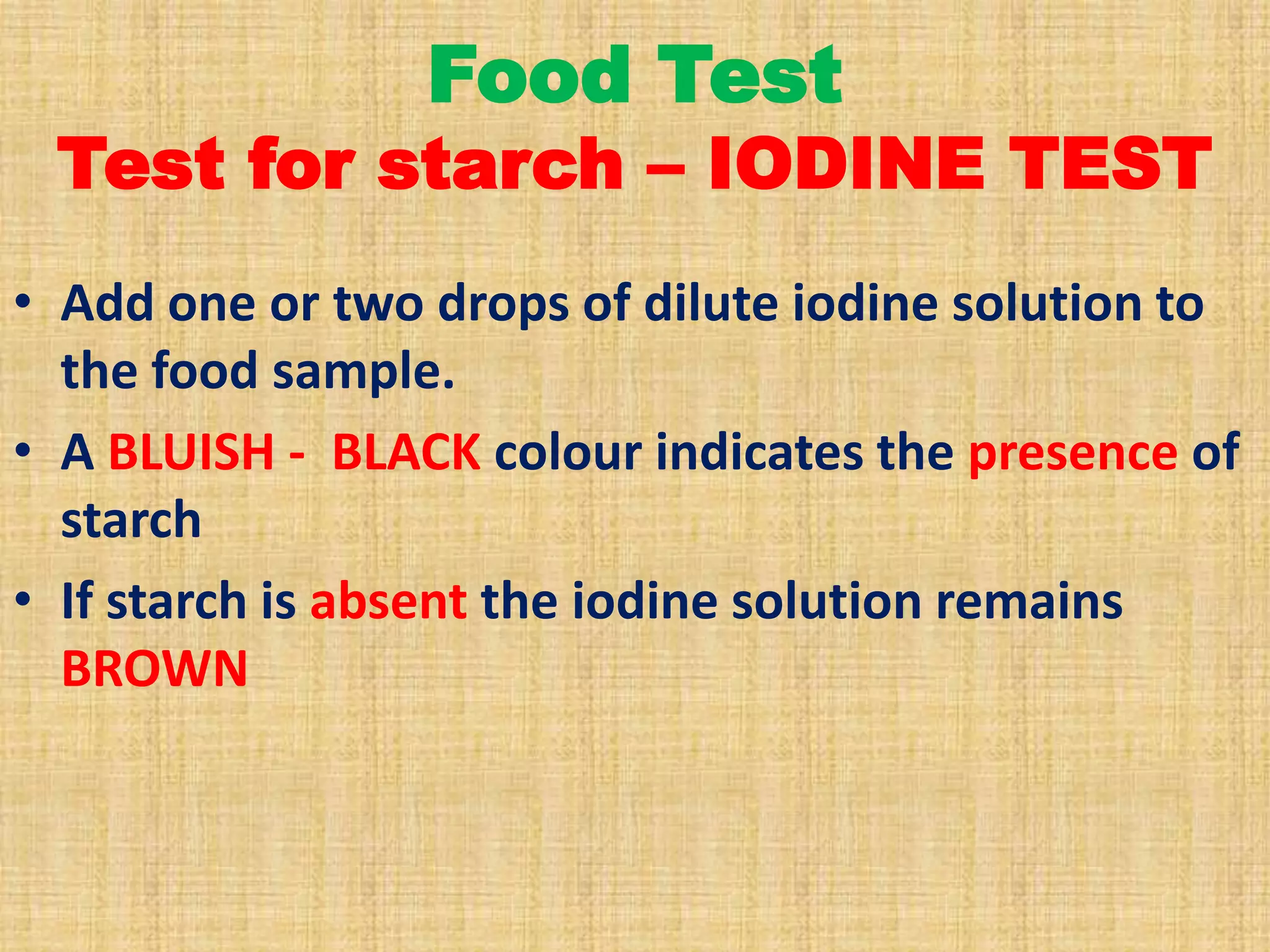
Food Test

Test for starch – IODINE TEST
• Add one or two drops of dilute iodine solution to
the food sample.
• A BLUISH - BLACK colour indicates the presence of
starch
• If starch is absent the iodine solution remains
BROWN
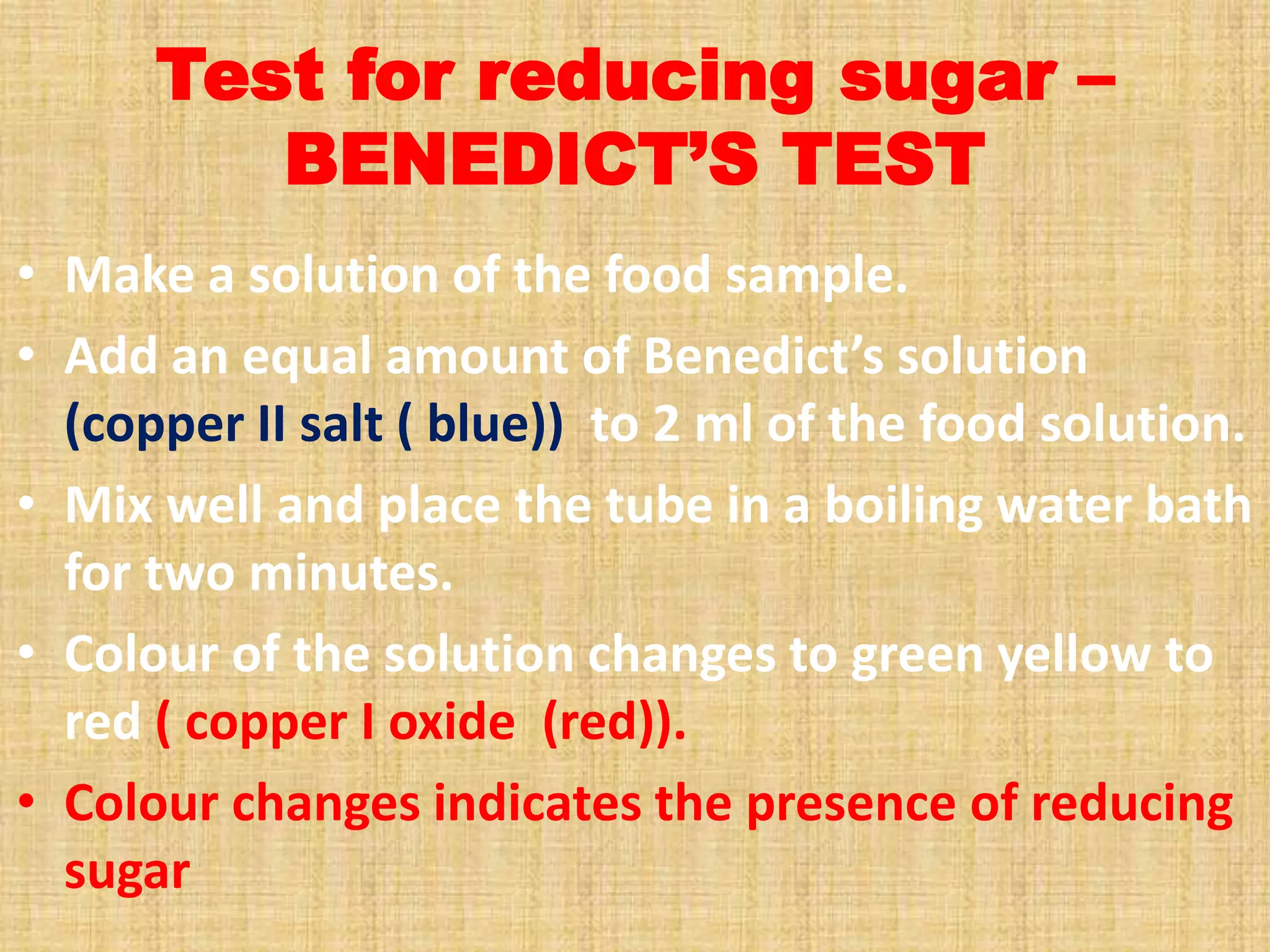
Test for reducing sugar –
BENEDICT’S TEST
• Make a solution of the food sample.
• Add an equal amount of Benedict’s solution
(copper II salt ( blue)) to 2 ml of the food solution.
• Mix well and place the tube in a boiling water bath
for two minutes.
• Colour of the solution changes to green yellow to
red ( copper I oxide (red)).
• Colour changes indicates the presence of reducing
sugar
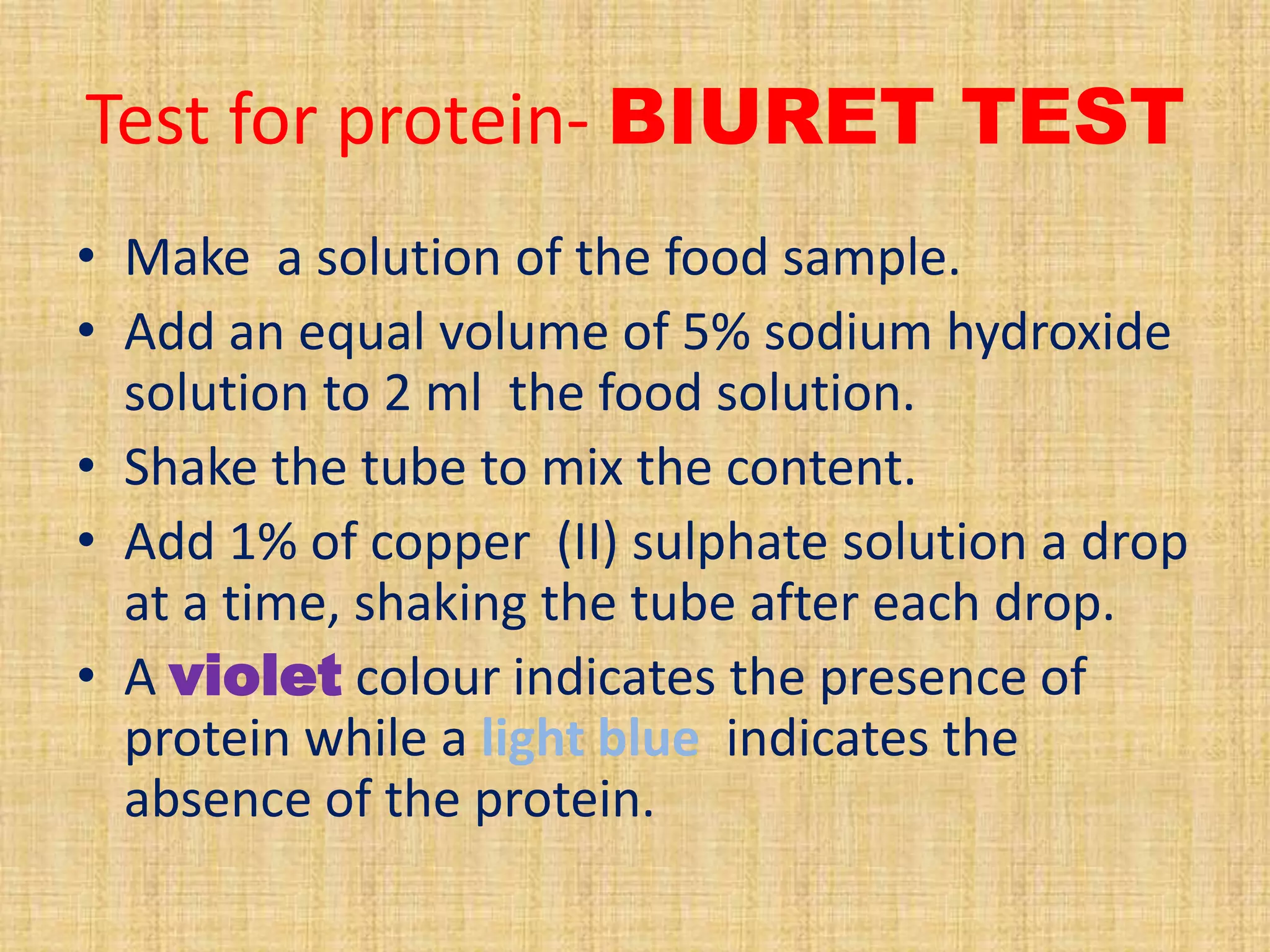
Test for protein- BIURET TEST
• Make a solution of the food sample.
• Add an equal volume of 5% sodium hydroxide
solution to 2 ml the food solution.
• Shake the tube to mix the content.
• Add 1% of copper (II) sulphate solution a drop
at a time, shaking the tube after each drop.
• A violet colour indicates the presence of
protein while a light blue indicates the
absence of the protein.
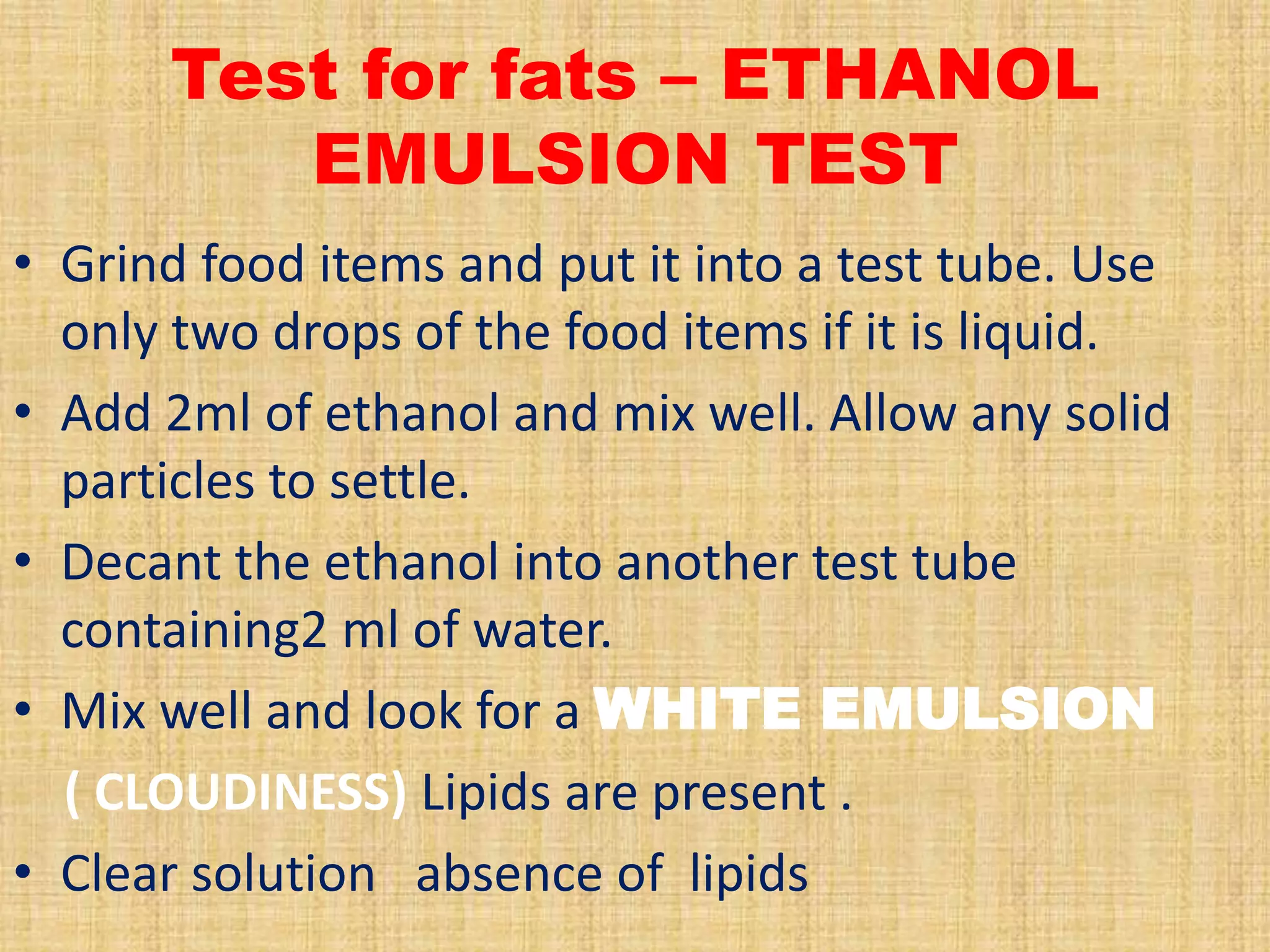
Test for fats – ETHANOL
EMULSION TEST
• Grind food items and put it into a test tube. Use
only two drops of the food items if it is liquid.
• Add 2ml of ethanol and mix well. Allow any solid
particles to settle.
• Decant the ethanol into another test tube
containing2 ml of water.
• Mix well and look for a WHITE EMULSION
( CLOUDINESS) Lipids are present .
• Clear solution absence of lipids

Nutrients

  • 1.
    NUTRIENTS • Why dowe need food? • Nutrients in food. • Structure of large molecule. • Food Test.
  • 2.
    WHY DO WENEED FOOD? • We need food to give us ENERGY • We need food to keep us HEALTHY • We need food to REPAIR and REPLACE damaged and worn out Tissues • We need food to GROW
  • 3.
    NUTRIENTS IN FOOD •Carbohydrates • Proteins • Fats ( lipids) • Vitamins • Mineral Salts
  • 4.
    CARBOHYDRATES Simple sugars Structure ( whatare they made of) Complex sugars Polysaccharides Made up of simple units Made up of two simple sugar joined together. e.g. MALTOSE, SUCROSE Glucose + Glucose Made up of many simple sugars joined together e.g. GLUCOSE Maltose + Water e.g. Starch, Glycogen e.g. FRUCTOSE Many glucose molecules Glucose + Fructose Sucrose + Water One starch molecule + many water molecules
  • 5.
    Simple sugars Complex sugars Polysaccharides Sources Sweet,honey, fruits, jam Sugar cane, malted cereals Rice noodles, potatoes, cakes, cereals, vegetables. Function in the body • Supply energy • Form nucleic acids ( DNA) • Make lubricant ( mucus) Effects of too • Become fat as excess carbohydrates are converted to much on the fat and stored body Effect of too little on the body • Become very weak and will not grow
  • 6.
    PROTEINS Structure • Made upof many amino acids joined together ( what are they made of) e.g Many amino acids one protein molecule + many water molecules • There are about 20 amino acids found in the structure of protein. • Many amino acids link up to form a polypeptide. • One or more polypeptides link up to form protein molecule. Source Lean meat, fish, milk, cheese, egg white, peas, beancurd, nuts. Function in body • Form protoplasm for making new cells so that the body will grow. • Repair and replace damaged and worn out tissues. • Make enzymes and hormones. • Form antibodies. • Supply energy Effect of too little on the body • Muscles are poorly developed • Become very weak and will not grow
  • 7.
    FATS Structure ( what arethey made of) • Made up fatty acids and glycerol e.g 3 molecules of fatty acid + 1 molecule of glycerol 1 molecule of fat + 2 water molecule. Source Oil, butter, full cream milk, fatty meat, nuts sunflower seeds. Function in body • • • • • Effect of too much on the body • Becomes fast as excess fats are stored Effect of too little on the body • Muscles are poorly developed • Become very weak and will not grow Supply energy Form part of cell surface membrane Insulate against heat loss Act as solvent for fat soluble vitamins and hormones Prevent water loss.
  • 8.
    WATER • Water isused as a SOLVENT in living organism. • Water is important for REGULATING THE TEMPERATURE OF ORGANISM. • Water plays a role in SUPPORTING STRUCTURES AS ORGANISMS. • Water plays a role in LUBRICATION • Water plays a role in METABOLISM. • Water plays a role in the DISPERSAL OF FRUITS.
  • 9.
    Food Test Test forstarch – IODINE TEST • Add one or two drops of dilute iodine solution to the food sample. • A BLUISH - BLACK colour indicates the presence of starch • If starch is absent the iodine solution remains BROWN
  • 10.
    Test for reducingsugar – BENEDICT’S TEST • Make a solution of the food sample. • Add an equal amount of Benedict’s solution (copper II salt ( blue)) to 2 ml of the food solution. • Mix well and place the tube in a boiling water bath for two minutes. • Colour of the solution changes to green yellow to red ( copper I oxide (red)). • Colour changes indicates the presence of reducing sugar
  • 11.
    Test for protein-BIURET TEST • Make a solution of the food sample. • Add an equal volume of 5% sodium hydroxide solution to 2 ml the food solution. • Shake the tube to mix the content. • Add 1% of copper (II) sulphate solution a drop at a time, shaking the tube after each drop. • A violet colour indicates the presence of protein while a light blue indicates the absence of the protein.
  • 12.
    Test for fats– ETHANOL EMULSION TEST • Grind food items and put it into a test tube. Use only two drops of the food items if it is liquid. • Add 2ml of ethanol and mix well. Allow any solid particles to settle. • Decant the ethanol into another test tube containing2 ml of water. • Mix well and look for a WHITE EMULSION ( CLOUDINESS) Lipids are present . • Clear solution absence of lipids