

Nutritional Requirements, Raw
Materials Used For Culture Media
And Physical
Parameters For Growth
Prepared By-
D.Mahendra,M.Pharm,(Ph.D),.
Dept of PA & QA
Subjects included;
• Cultivation
• Medium
• Inoculation of media
• The Requirements for Growth
• Preparation
• Classification
• Eplanation of types of media
functionally.
Cultivation;
The propagation of living organisms, applied
especially to the growth of microorganisms or other
cells in artificial media.
Medium
Any preparation that contains nutrients essential for
microorganisms growth.
Culture medium:
A nutrient substance that is used to grow
micro-organisms .
Inoculation of media
Introduction of infected material to the medium ,for
cultivation of organisms.
Agar
Is Complex polysaccharide, Used as solidifying
agent for culture media in Petri plates, slants, and
deeps. Generally not metabolized by microbes
Liquefies at 100°C
Solidifies at ~40°C
The Requirements for Growth
1.CHEMICAL
REQUIREMENTS
(NUTRITIONAL FACTORS)
• Carbon
• Nitrogen, sulfur, and phosphorous
• Trace elements
• Organic growth factor
• Vitamins (e.g. folic acid, vitamin B-12, vitamin K)
• Oxygen
2.PHYSICAL REQUIREMENTS
• Temperature
• PH
• Hydrostatic Pressure
• Osmotic pressure
Preparation
• Wash hands & wear gloves
• Sterilize all equipments
• Pour D/W in glassware (required amount)
• Add powder ingredients (required amount)
• Heat to dissolve completely
• Autoclave
• Dispense the medium into tubes ,bottles
&plates
• Store at required temperature
• Sterilizing Culture Media
Classification
1. Consistency
2. Nutritional
3. Functional
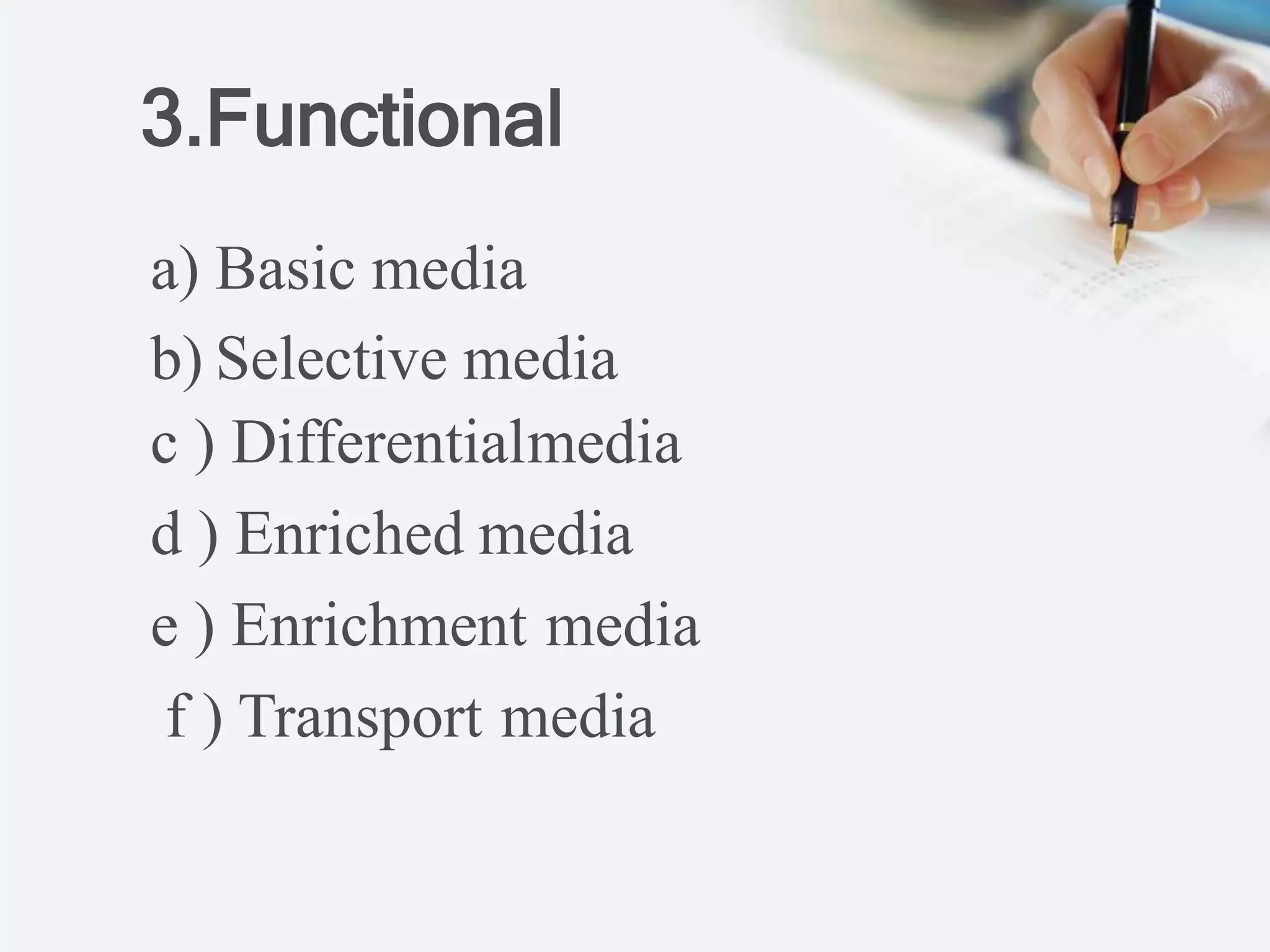
1.Consistency
a ) Solid e.g nutrient agar
b ) Semi-solid e.g peptone water.
c ) Liquid medium e.g nutrient broth.
2.Nutritional
a ) Simple e.g peptone water
b ) Complex e.g blood agar
c ) Synthetic e.g Davis /mingioli medium
3.Functional
a) Basic media
b) Selective media
c ) Differentialmedia
d ) Enriched media
e ) Enrichment media
f ) Transport media
Basic media
• This is an undefined medium because the
amino acid source contains a variety of
compounds with the exact composition
being unknown.
• Nutrient media contain all the elements
that most bacteria need for growth and are
non-selective, so they are used for the
general cultivation and maintenance of
bacteria kept in laboratory culture
collections.
Basic media
• This media contains;
1.A carbon source such as glucose for
bacterial growth
2.Water
3.Various salts needed for bacterial growth
1. nutrient broth which is liquid media
There are two types:
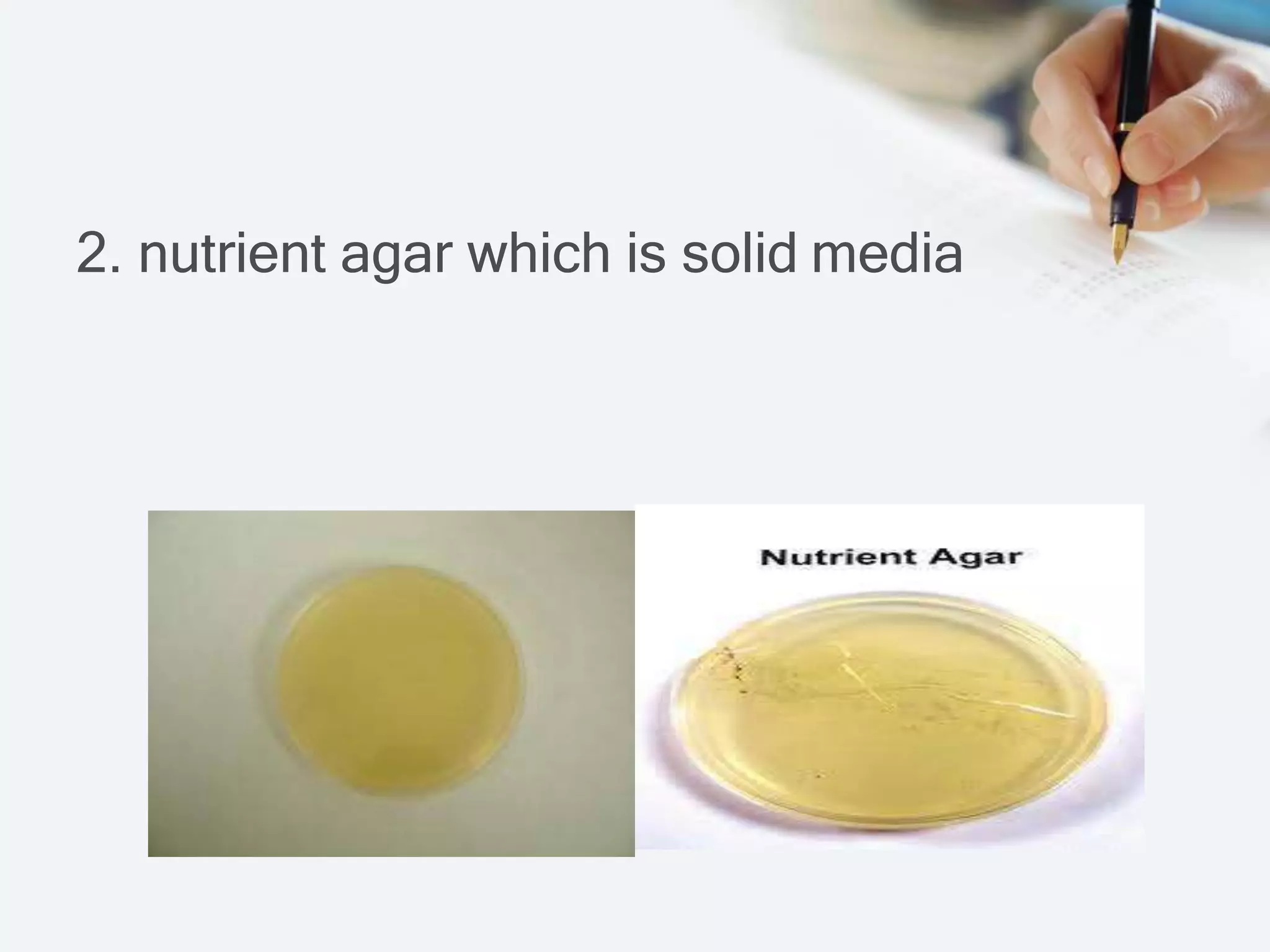
2. nutrient agar which is solid media
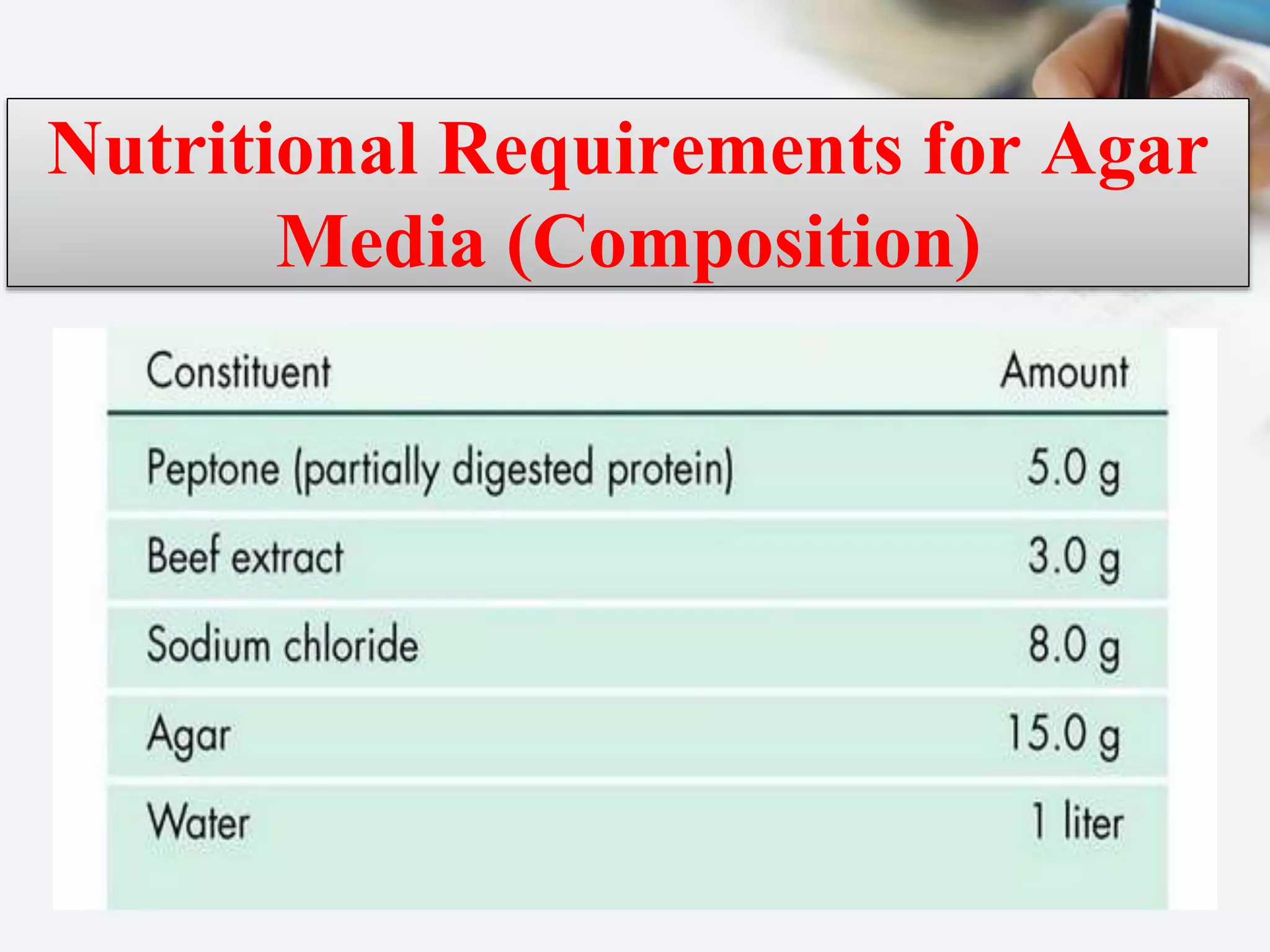
Nutritional Requirements for Agar
Media (Composition)
Selective media
• culture medium that allows the growth of
certain types of organisms, while
inhibiting the growth of other organisms
• Any agar media can be made
selective by addition of certain
inhibitory agents that
don’t affect the pathogen.
• Various approaches to make a
medium selective include addition
ofantibiotics, dyes, chemicals,
alteration of pH or a combination of
these medium
Differential media
• distinguishs one microorganism type from
another based on a difference in colony
appearance includes (color, shape, or
growth pattern) on the media.
• uses the biochemical characteristics of a
microorganism growing in the presence of
specific nutrients or indicators (such as
neutral red, phenol red , or methylene blue)
added to the medium to visibly indicate the
defining characteristics of a microorganism
Differential media
• is used for the detection of microorganisms
and by molecular biologists to detect
recombinant strains of bacteria
• Examples;
Mannitol salt agar
Eosin methylene blue
MacConkey agar
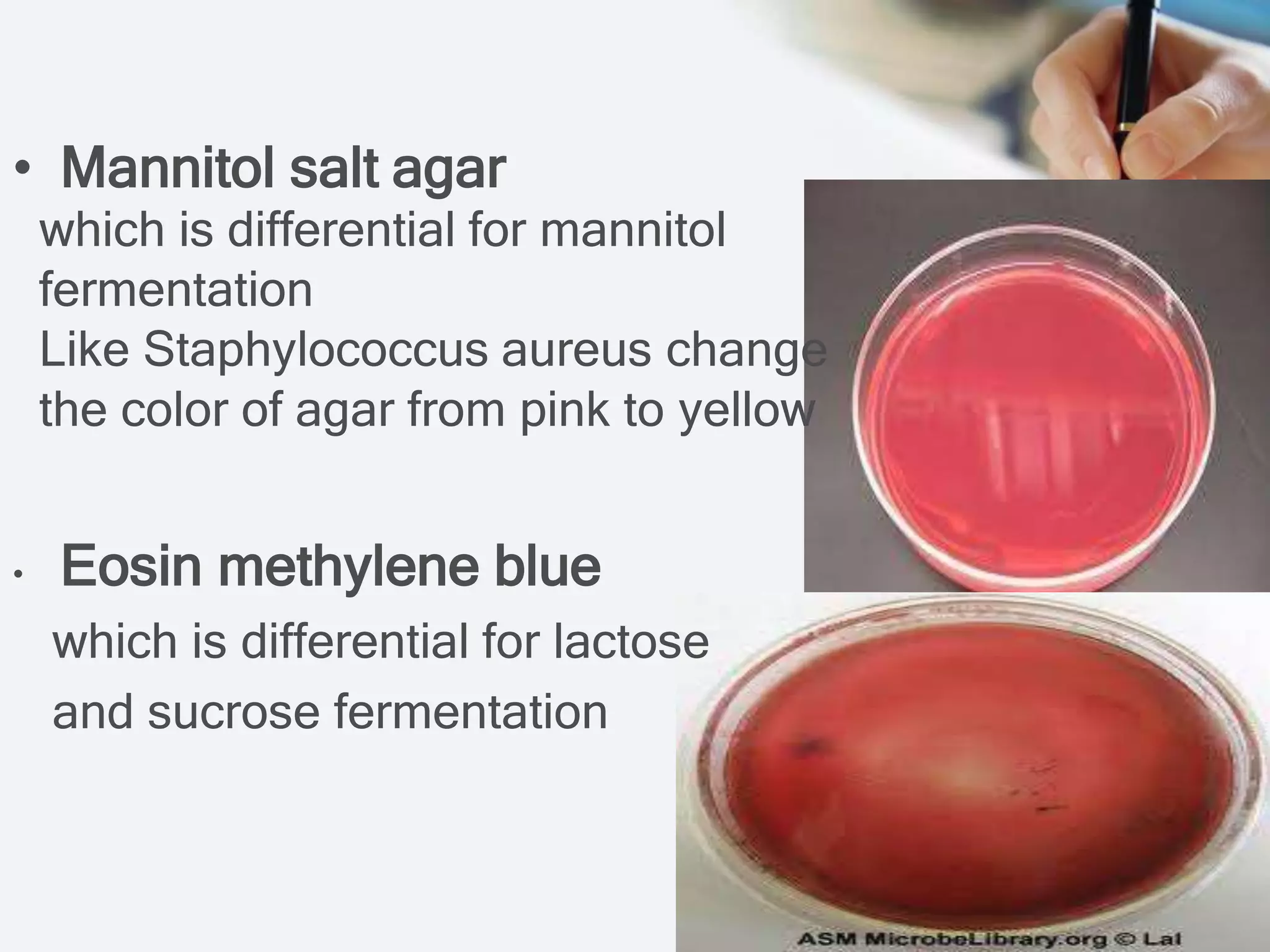
• Mannitol salt agar
which is differential for mannitol
fermentation
Like Staphylococcus aureus change
the color of agar from pink to yellow
• Eosin methylene blue
which is differential for lactose
and sucrose fermentation
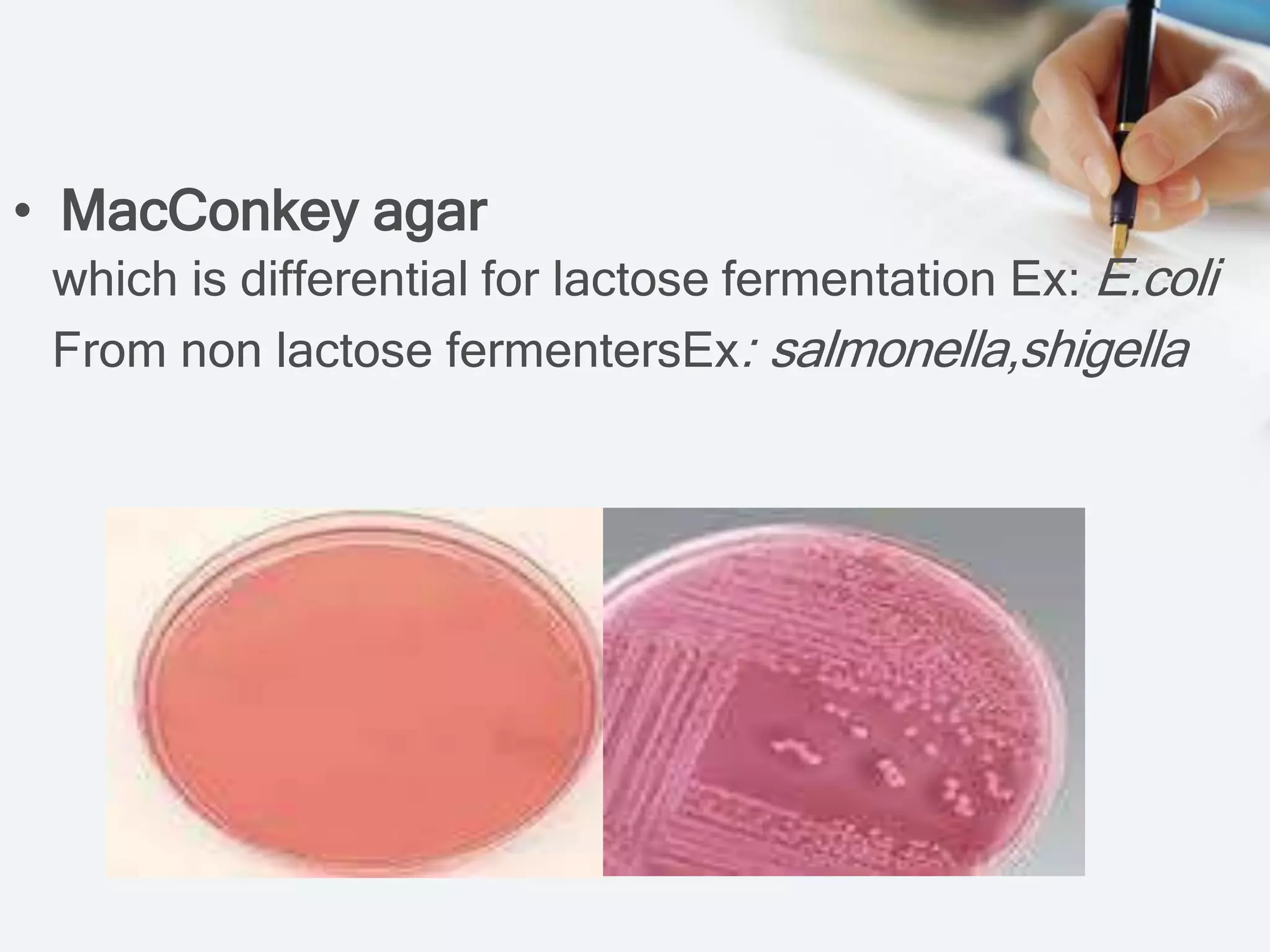
• MacConkey agar
which is differential for lactose fermentation Ex: E.coli
From non lactose fermentersEx: salmonella,shigella
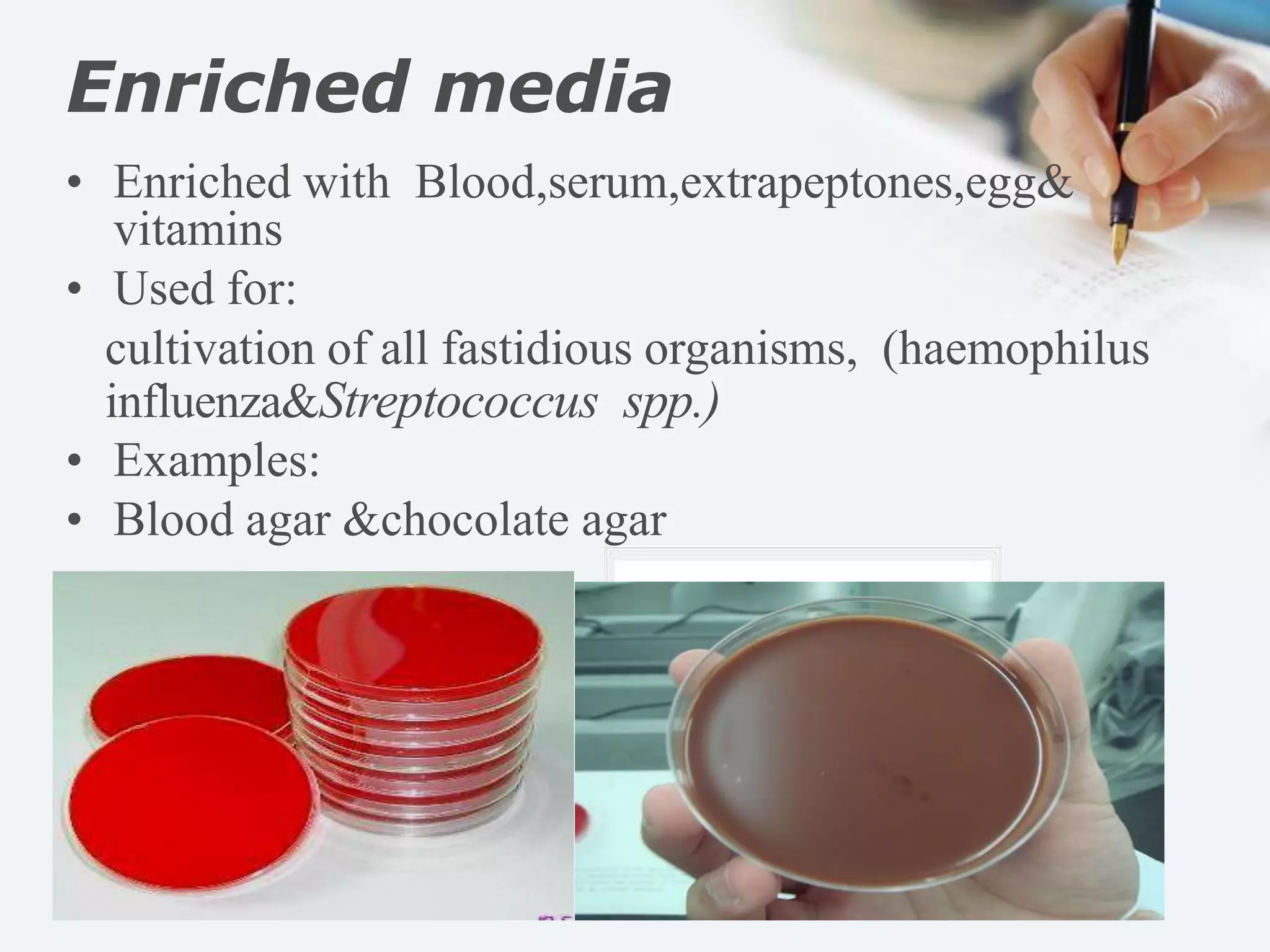
Enriched media
• Enriched with Blood,serum,extrapeptones,egg&
vitamins
• Used for:
cultivation of all fastidious organisms, (haemophilus
influenza&Streptococcus spp.)
• Examples:
• Blood agar &chocolate agar
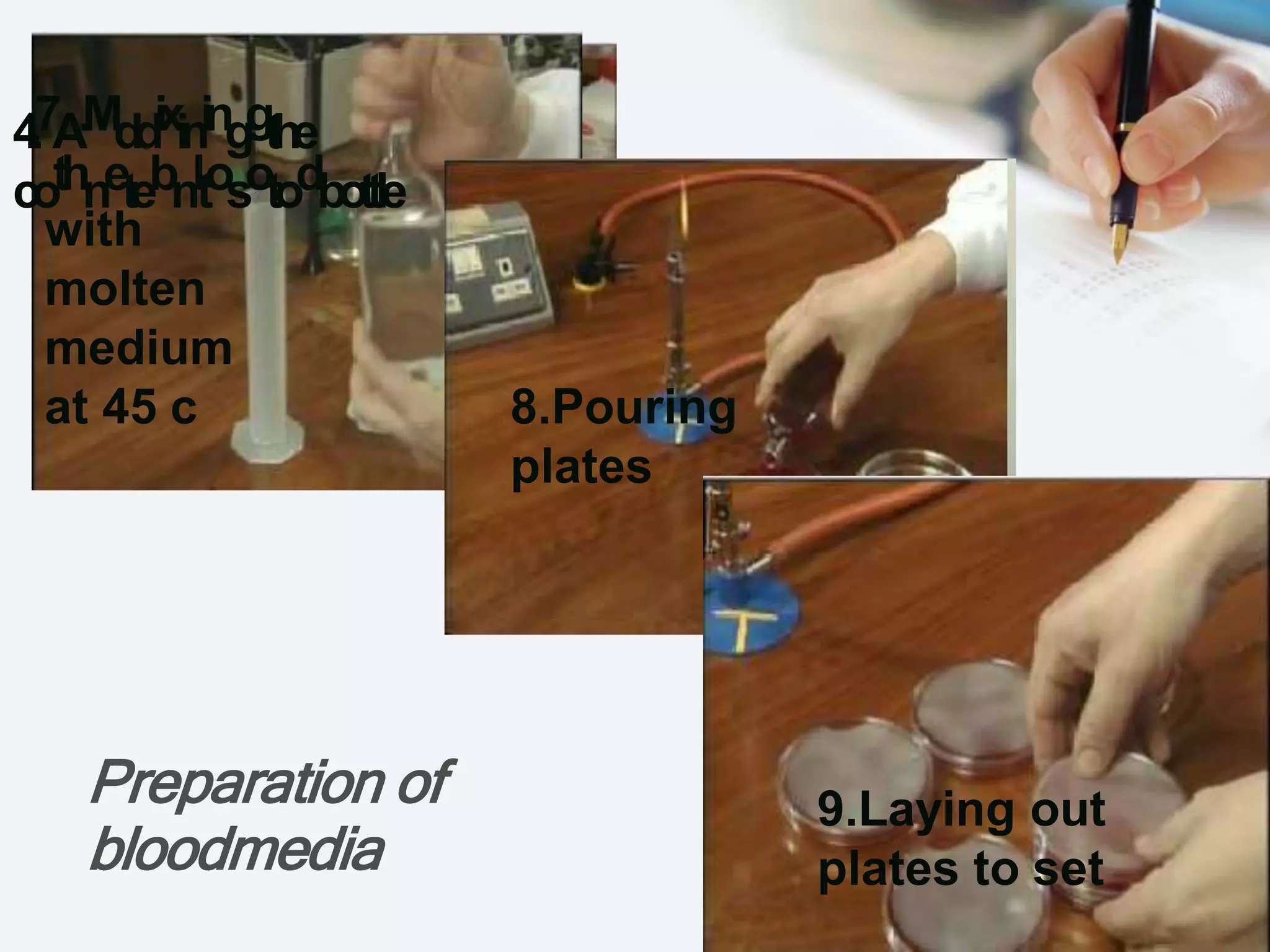
1.agar powders
t
2.Weighing out
he ingredients
3.Measuring
the desired
volume of
water for the
medium
5.Autoclaving
6.Adding
blood to
blood agar
base
medium
4.7A.Mddixininggthe
cothnetebnltosotodbottle
with
molten
medium
at 45 c 8.Pouring
plates
9.Laying out
plates to set
Preparation of
bloodmedia
Enrichment media
• A liquid culture medium promotes the
growth of a particular organism and
prevent the growth of normal
competitors.
• Prevent non pathogenic bacteria from
overgrowing the pathogenic bacteria
• Example: selenite-Fbroth
alkaline-peptone water
Transport media
• Preserve viability and ratio of
microbes during its transportation
over 24_48 hours.
• Example:
CARY-BLAIR MEDIUM
STUART TRANSPORT MEDIUM
CARY-BLAIR MEDIUM
• Intended use;
• for the collection and transport of fecal and rectal
samples, maintaining viability of Salmonella and
Shigella.
• Survival depends upon:
1.bacterial type &concentration , transport medium
formulation, transport temperature and duration.
• the color is white opalescent
• Intended use:
is a semisolid medium used in the transport and
preservation of specimens for the cultivation of
diverse organisms such as gonococci,
streptococci, Enterobacteria
The color : is blue insurface.
STUART TRANSPORT MEDIUM
NUTRIENT MEDIA & REQUIREMENTS

NUTRIENT MEDIA & REQUIREMENTS

  • 1.
    Nutritional Requirements, Raw MaterialsUsed For Culture Media And Physical Parameters For Growth Prepared By- D.Mahendra,M.Pharm,(Ph.D),. Dept of PA & QA
  • 2.
    Subjects included; • Cultivation •Medium • Inoculation of media • The Requirements for Growth • Preparation • Classification • Eplanation of types of media functionally.
  • 3.
    Cultivation; The propagation ofliving organisms, applied especially to the growth of microorganisms or other cells in artificial media. Medium Any preparation that contains nutrients essential for microorganisms growth. Culture medium: A nutrient substance that is used to grow micro-organisms .
  • 4.
    Inoculation of media Introductionof infected material to the medium ,for cultivation of organisms. Agar Is Complex polysaccharide, Used as solidifying agent for culture media in Petri plates, slants, and deeps. Generally not metabolized by microbes Liquefies at 100°C Solidifies at ~40°C
  • 5.
    The Requirements forGrowth 1.CHEMICAL REQUIREMENTS (NUTRITIONAL FACTORS) • Carbon • Nitrogen, sulfur, and phosphorous • Trace elements • Organic growth factor • Vitamins (e.g. folic acid, vitamin B-12, vitamin K) • Oxygen
  • 6.
    2.PHYSICAL REQUIREMENTS • Temperature •PH • Hydrostatic Pressure • Osmotic pressure
  • 7.
    Preparation • Wash hands& wear gloves • Sterilize all equipments • Pour D/W in glassware (required amount) • Add powder ingredients (required amount) • Heat to dissolve completely • Autoclave • Dispense the medium into tubes ,bottles &plates • Store at required temperature • Sterilizing Culture Media
  • 8.
  • 9.
    1.Consistency a ) Solide.g nutrient agar b ) Semi-solid e.g peptone water. c ) Liquid medium e.g nutrient broth.
  • 10.
    2.Nutritional a ) Simplee.g peptone water b ) Complex e.g blood agar c ) Synthetic e.g Davis /mingioli medium
  • 11.
    3.Functional a) Basic media b)Selective media c ) Differentialmedia d ) Enriched media e ) Enrichment media f ) Transport media
  • 13.
    Basic media • Thisis an undefined medium because the amino acid source contains a variety of compounds with the exact composition being unknown. • Nutrient media contain all the elements that most bacteria need for growth and are non-selective, so they are used for the general cultivation and maintenance of bacteria kept in laboratory culture collections.
  • 14.
    Basic media • Thismedia contains; 1.A carbon source such as glucose for bacterial growth 2.Water 3.Various salts needed for bacterial growth
  • 15.
    1. nutrient brothwhich is liquid media There are two types:
  • 16.
    2. nutrient agarwhich is solid media
  • 17.
    Nutritional Requirements forAgar Media (Composition)
  • 18.
    Selective media • culturemedium that allows the growth of certain types of organisms, while inhibiting the growth of other organisms • Any agar media can be made selective by addition of certain inhibitory agents that don’t affect the pathogen. • Various approaches to make a medium selective include addition ofantibiotics, dyes, chemicals, alteration of pH or a combination of these medium
  • 19.
    Differential media • distinguishsone microorganism type from another based on a difference in colony appearance includes (color, shape, or growth pattern) on the media. • uses the biochemical characteristics of a microorganism growing in the presence of specific nutrients or indicators (such as neutral red, phenol red , or methylene blue) added to the medium to visibly indicate the defining characteristics of a microorganism
  • 20.
    Differential media • isused for the detection of microorganisms and by molecular biologists to detect recombinant strains of bacteria • Examples; Mannitol salt agar Eosin methylene blue MacConkey agar
  • 21.
    • Mannitol saltagar which is differential for mannitol fermentation Like Staphylococcus aureus change the color of agar from pink to yellow • Eosin methylene blue which is differential for lactose and sucrose fermentation
  • 22.
    • MacConkey agar whichis differential for lactose fermentation Ex: E.coli From non lactose fermentersEx: salmonella,shigella
  • 23.
    Enriched media • Enrichedwith Blood,serum,extrapeptones,egg& vitamins • Used for: cultivation of all fastidious organisms, (haemophilus influenza&Streptococcus spp.) • Examples: • Blood agar &chocolate agar
  • 24.
    1.agar powders t 2.Weighing out heingredients 3.Measuring the desired volume of water for the medium 5.Autoclaving 6.Adding blood to blood agar base medium 4.7A.Mddixininggthe cothnetebnltosotodbottle with molten medium at 45 c 8.Pouring plates 9.Laying out plates to set Preparation of bloodmedia
  • 25.
    Enrichment media • Aliquid culture medium promotes the growth of a particular organism and prevent the growth of normal competitors. • Prevent non pathogenic bacteria from overgrowing the pathogenic bacteria • Example: selenite-Fbroth alkaline-peptone water
  • 26.
    Transport media • Preserveviability and ratio of microbes during its transportation over 24_48 hours. • Example: CARY-BLAIR MEDIUM STUART TRANSPORT MEDIUM
  • 27.
    CARY-BLAIR MEDIUM • Intendeduse; • for the collection and transport of fecal and rectal samples, maintaining viability of Salmonella and Shigella. • Survival depends upon: 1.bacterial type &concentration , transport medium formulation, transport temperature and duration. • the color is white opalescent
  • 28.
    • Intended use: isa semisolid medium used in the transport and preservation of specimens for the cultivation of diverse organisms such as gonococci, streptococci, Enterobacteria The color : is blue insurface. STUART TRANSPORT MEDIUM