Nucleic Acid Metabolism
Mrs.R.Gloria Jemmi Christobel
Assistant Professor
Department of Biochemistry
V.V.Vanniaperumal College for Women,
Virudhunagar
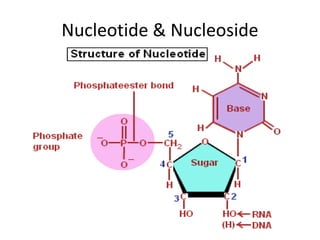
Nucleotide & Nucleoside
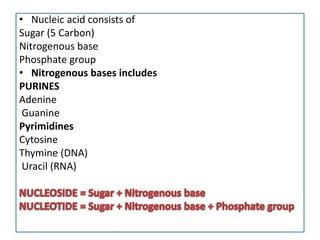
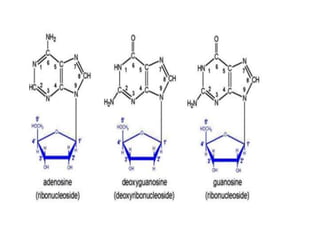
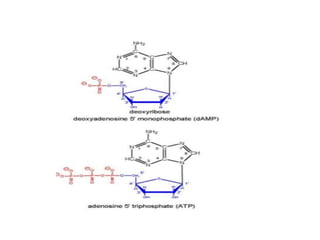
• Nucleic acid consists of
Sugar (5 Carbon)
Nitrogenous base
Phosphate group
• Nitrogenous bases includes
PURINES
Adenine
Guanine
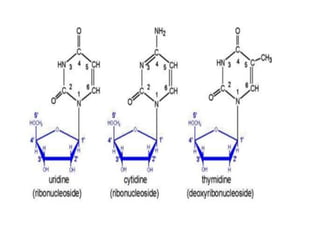
Pyrimidines
Cytosine
Thymine (DNA)
Uracil (RNA)
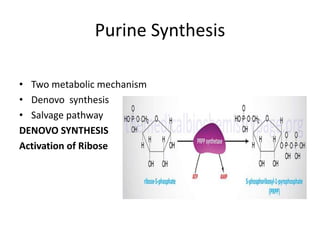
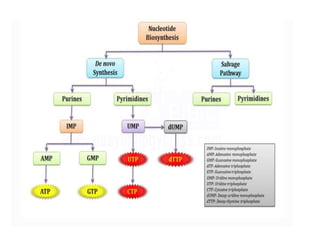
Purine Synthesis
• Two metabolic mechanism
• Denovo synthesis
• Salvage pathway
DENOVO SYNTHESIS
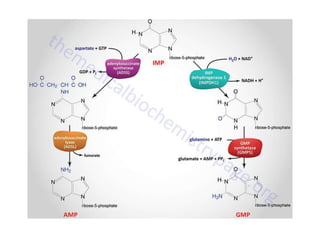
Activation of Ribose
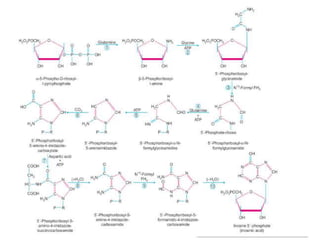
• Enzymes:
(1) amidophosphoribosyltransferase;
(2) phosphoribosylglycinamide synthetase;
(3) phosphoribosylglycinamide formyltransferase;
(4) phosphoribosylformylglycinamidine synthetase;
(5) phosphoribosyl-aminoimidazole synthetase;
(6) phosphoribosylaminoimidazole carboxylase;
(7) phosphoribosylaminoimidazolesuccinocarboxamide
synthetase;
(8) adenylosuccinate lyase;
(9) phosphoribosylaminoimidazolecarboxamide
formyltransferase;
(10) IMP cyclohydrolase.
• De novo synthesis is particularly active in the
liver and placenta.
• Nonhepatic tissues (e.g., bone marrow)
depend on preformed purines that are
synthesized in the liver and transported by red
blood cells. They are very effective in salvaging
the purines and exhibit little or no xanthine
oxidase activity, which oxidizes free purines.
• Salvage Pathway
• The reutilization of purine bases, after conversion
to their respective nucleotides, constitutes
salvage pathways.
• These pathways are particularly important in
extrahepatic tissues.
• Purines arise from the intermediary metabolism
of nucleotides and the degradation
of polynucleotides.
• Salvage occurs mainly by the
phosphoribosyltransferase reaction: Human
tissue contains two phosphoribosyltransferases :
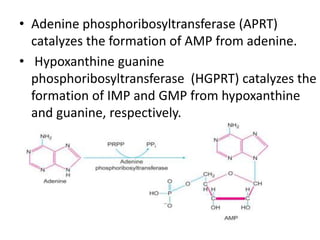
• Adenine phosphoribosyltransferase (APRT)
catalyzes the formation of AMP from adenine.
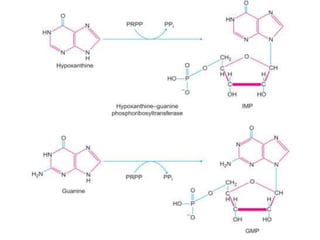
• Hypoxanthine guanine
phosphoribosyltransferase (HGPRT) catalyzes the
formation of IMP and GMP from hypoxanthine
and guanine, respectively.
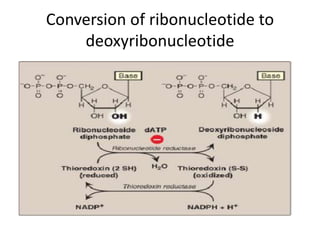
Conversion of ribonucleotide to
deoxyribonucleotide
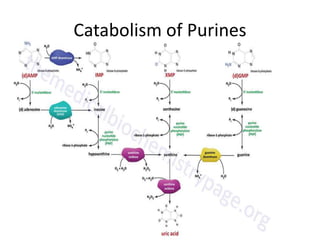
Catabolism of Purines
Pyrimidine Metabolism
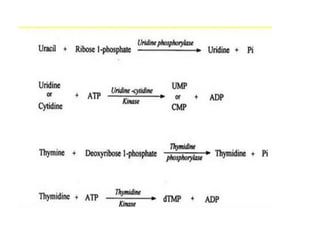
• Biosynthesis of pyrimidine nucleotides can
occur by a de novo pathway or by the
reutilization of preformed pyrimidine bases or
ribonucleosides (salvage pathway)
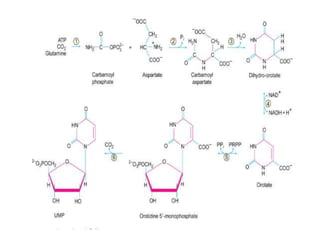
• The biosynthesis of pyrimidine nucleotides
may be conveniently considered in two stages:
the formation of uridine monophosphate
(UMP) and the conversion of UMP to other
pyrimidine nucleotides.

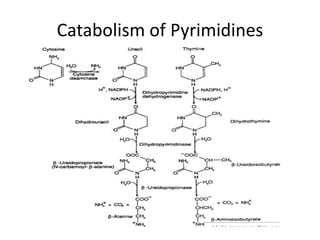
Catabolism of Pyrimidines
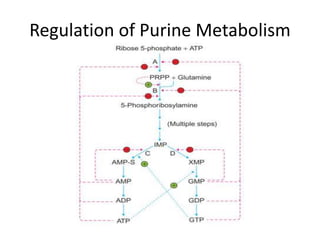
Regulation of Purine Metabolism
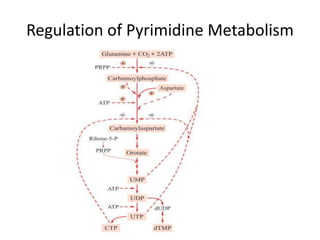
Regulation of Pyrimidine Metabolism
Nucleic acid metabolism

Nucleic acid metabolism

  • 1.
    Nucleic Acid Metabolism Mrs.R.GloriaJemmi Christobel Assistant Professor Department of Biochemistry V.V.Vanniaperumal College for Women, Virudhunagar
  • 2.
  • 3.
    • Nucleic acidconsists of Sugar (5 Carbon) Nitrogenous base Phosphate group • Nitrogenous bases includes PURINES Adenine Guanine Pyrimidines Cytosine Thymine (DNA) Uracil (RNA)
  • 8.
    Purine Synthesis • Twometabolic mechanism • Denovo synthesis • Salvage pathway DENOVO SYNTHESIS Activation of Ribose
  • 10.
    • Enzymes: (1) amidophosphoribosyltransferase; (2)phosphoribosylglycinamide synthetase; (3) phosphoribosylglycinamide formyltransferase; (4) phosphoribosylformylglycinamidine synthetase; (5) phosphoribosyl-aminoimidazole synthetase; (6) phosphoribosylaminoimidazole carboxylase; (7) phosphoribosylaminoimidazolesuccinocarboxamide synthetase; (8) adenylosuccinate lyase; (9) phosphoribosylaminoimidazolecarboxamide formyltransferase; (10) IMP cyclohydrolase.
  • 12.
    • De novosynthesis is particularly active in the liver and placenta. • Nonhepatic tissues (e.g., bone marrow) depend on preformed purines that are synthesized in the liver and transported by red blood cells. They are very effective in salvaging the purines and exhibit little or no xanthine oxidase activity, which oxidizes free purines.
  • 13.
    • Salvage Pathway •The reutilization of purine bases, after conversion to their respective nucleotides, constitutes salvage pathways. • These pathways are particularly important in extrahepatic tissues. • Purines arise from the intermediary metabolism of nucleotides and the degradation of polynucleotides. • Salvage occurs mainly by the phosphoribosyltransferase reaction: Human tissue contains two phosphoribosyltransferases :
  • 14.
    • Adenine phosphoribosyltransferase(APRT) catalyzes the formation of AMP from adenine. • Hypoxanthine guanine phosphoribosyltransferase (HGPRT) catalyzes the formation of IMP and GMP from hypoxanthine and guanine, respectively.
  • 16.
    Conversion of ribonucleotideto deoxyribonucleotide
  • 17.
  • 18.
    Pyrimidine Metabolism • Biosynthesisof pyrimidine nucleotides can occur by a de novo pathway or by the reutilization of preformed pyrimidine bases or ribonucleosides (salvage pathway) • The biosynthesis of pyrimidine nucleotides may be conveniently considered in two stages: the formation of uridine monophosphate (UMP) and the conversion of UMP to other pyrimidine nucleotides.
  • 22.
  • 23.
  • 24.