Nuclear Energy
BY AIJAZ AHMED (GL) K-F16ME29
ZAHID HUSSAIN K-F16ME69
SUHNO KHAN K-F16ME42
IRFAN ALI K-F16ME51
Nuclear Reaction:
A nuclear reaction is semantically considered to be the
process in which two nuclei, or else a nucleus of an atom
and a subatomic particle(such as a proton, neutron, or high
energyelectron) from outside the atom, collide to produce
one or more nuclides that are different from the nuclide(s)
that began the process.
Types of Nuclear Reactions:
• Fission Reactions
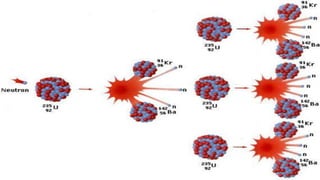
Typical and well-known neutron-induced fission reactions are:
235U (n, 3 n) fission products
These reactions release energy. The released neutrons induce
further reactions, causing contineous chain reactions.
• Fusion Reactions:
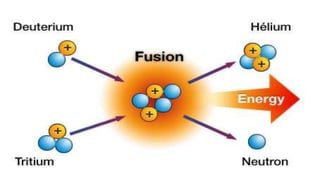
The fusion reaction of deuterium and tritium
is particularly interesting because of its
potential of providing energy for the future.
T (d, n) He
Uses of Nuclear Energy:
 Mainly used in generation of Electricity
 Military applications
 Nuclear Weapons
 Nuclear Medicines
 Food and Agriculture
Advantage of Nuclear Energy:
 The generation of electricity through nuclear energy
reduces the amount of energy generated from fossil
fuels (coal and oil).
 Less use of fossil fuels means lowering green house
gas emmisions (CO2 and others)
 The cost of Nuclear fuel (overall uranium) is 20% of the
cost of energy generated
Disadvantage of Nuclear Energy:
Like fossil fuels , nuclear fuels are non-renewable
energy resources .
If there is an accident , large amounts of radioactive
material could be released into the environment
Nuclear waste remains radioactive and is hazardous to
health for thousands of years
THANK YOU


Nuclear energy

  • 1.
    Nuclear Energy BY AIJAZAHMED (GL) K-F16ME29 ZAHID HUSSAIN K-F16ME69 SUHNO KHAN K-F16ME42 IRFAN ALI K-F16ME51
  • 3.
    Nuclear Reaction: A nuclearreaction is semantically considered to be the process in which two nuclei, or else a nucleus of an atom and a subatomic particle(such as a proton, neutron, or high energyelectron) from outside the atom, collide to produce one or more nuclides that are different from the nuclide(s) that began the process.
  • 4.
    Types of NuclearReactions: • Fission Reactions Typical and well-known neutron-induced fission reactions are: 235U (n, 3 n) fission products These reactions release energy. The released neutrons induce further reactions, causing contineous chain reactions.
  • 6.
    • Fusion Reactions: Thefusion reaction of deuterium and tritium is particularly interesting because of its potential of providing energy for the future. T (d, n) He
  • 8.
    Uses of NuclearEnergy:  Mainly used in generation of Electricity  Military applications  Nuclear Weapons  Nuclear Medicines  Food and Agriculture
  • 11.
    Advantage of NuclearEnergy:  The generation of electricity through nuclear energy reduces the amount of energy generated from fossil fuels (coal and oil).  Less use of fossil fuels means lowering green house gas emmisions (CO2 and others)  The cost of Nuclear fuel (overall uranium) is 20% of the cost of energy generated
  • 12.
    Disadvantage of NuclearEnergy: Like fossil fuels , nuclear fuels are non-renewable energy resources . If there is an accident , large amounts of radioactive material could be released into the environment Nuclear waste remains radioactive and is hazardous to health for thousands of years
  • 15.