THE NORTHERN
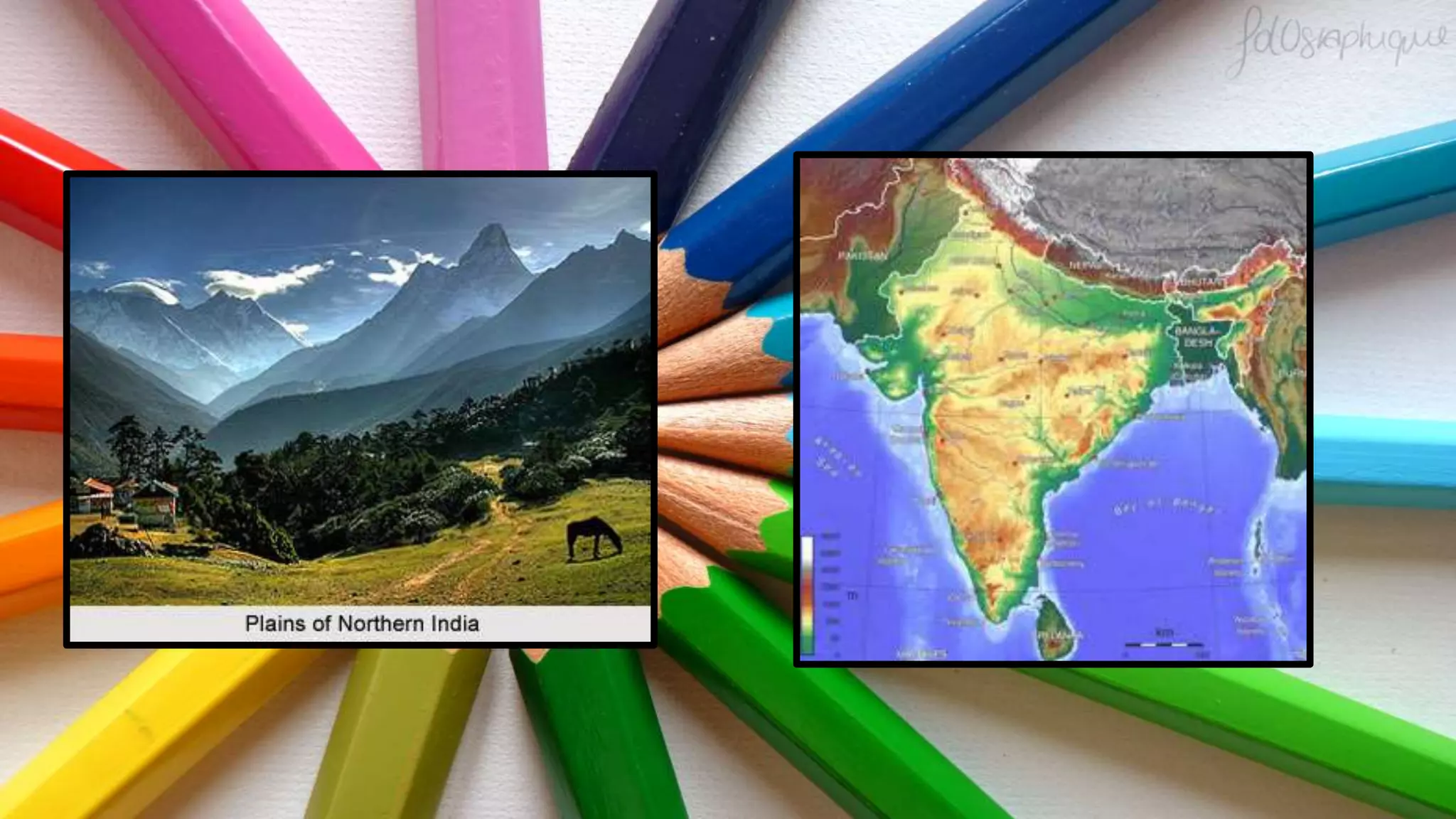
PLAINSThe northern plain has been formed by the interplay of
the three major river systems-
the Indus, the Ganga and the Brahmaputra along
with their tributaries.
 This plain is formed of alluvial soil. The deposition of
alluvium in a vast basin lying at the foothills of the
Himalaya over millions of years, formed this fertile
plain.
It spreads over an area of 7 lakh square km. The plain being
about 2400 km long and 240 to 320 km broad, is a densely
populated physiographic division.
The rivers coming from northern mountains are involved in
depositional work. In the lower course, due to gentle slope,
the velocity of the river decreases which results in the
formation of riverine islands.
THE RIVERS IN THEIR LOWER COURSE SPLIT INTO NUMEROUS CHANNELS
DUE TO THE DEPOSITION SILT. THESE CHANNELS ARE KNOWN AS
DISTRIBUTARIES. THE NORTHERN PLAIN IS BROADLY DIVIDED INTO THREE
SECTIONS. THE WESTERN PART OF THE NORTHERN PLAIN IS REFERRED TO
AS THE PUNJAB PLAINS. FORMED BY THE INDUS AND ITS TRIBUTARIES ,
THE LARGER PART OF THIS PLAIN LIES IN PAKISTAN. THE INDUS AND ITS
TRIBUTARIES-THE JHELUM, THE CHENAB, THE RAVI, THE BEAS AND THE
SATLUJ ORIGINATE IN THE HIMALAYAS. THIS SECTION OF THE PLAIN IS
DOMINATED BY THE DOABS
The Ganga plain extends between
Ghaggar and Teesta rivers. It is
spread over the
states of North India, Haryana,
Delhi,
U.P., Bihar, partly Jharkhand and
West Bengal to its East,
particularly in Assam lies the
Brahmaputra plain.
These vast plains also have diverse
relief features. According to the
variations in relief features, the
Northern plains can be divided into
four regions. The rivers, after
descending from the mountains
deposit pebbles in a narrow belt of
about 8 to 16 km in width lying
parallel to the slopes of the
Shiwaliks. It is known as bhabar.
ALL THE STREAMS DISAPPEAR IN THIS BHABAR. SOUTH OF
THIS BELT, THE STREAMS AND RIVERS RE-EMERGE AND
CREATE A WET, SWAMPY AND MARSHY REGION KNOWN AS
TERAI. THIS WAS A THICKLY FORESTED REGION FULL OF
WILDLIFE. THE FORESTS HAVE CLEARED TO CREATE
AGRICULTURAL LAND AND TO SETTLE MIGRANTS FROM
PAKISTAN AFTER PARTITION.
THE LARGER PART OF THE NORTHERN PLAIN IS FORMED OF OLDER
ALLUVIUM. THEY LIE ABOVE THE FLOOD PLAINS OF THE RIVERS
AND PRESENT A TERRACE LIKE FEATURE. THIS PART IS KNOWN AS
BHANGAR . THE SOIL IN THIS REGION CONTAINS CALCAREOUS
DEPOSITS LOCALLY KNOWN AS KANKAR.
THE NEWER , YOUNGER DEPOSITS OF THE FLOOD PLAINS ARE
CALLED KHADAR. THEY ARE RENEWED ALMOST EVERY YEAR AND
SO ARE FERTILE, THUS IDEAL FOR INTENSIVE AGRICULTURE .

NORTHERN PLAINS

  • 1.
    THE NORTHERN PLAINSThe northernplain has been formed by the interplay of the three major river systems- the Indus, the Ganga and the Brahmaputra along with their tributaries.  This plain is formed of alluvial soil. The deposition of alluvium in a vast basin lying at the foothills of the Himalaya over millions of years, formed this fertile plain.
  • 2.
    It spreads overan area of 7 lakh square km. The plain being about 2400 km long and 240 to 320 km broad, is a densely populated physiographic division. The rivers coming from northern mountains are involved in depositional work. In the lower course, due to gentle slope, the velocity of the river decreases which results in the formation of riverine islands.
  • 4.
    THE RIVERS INTHEIR LOWER COURSE SPLIT INTO NUMEROUS CHANNELS DUE TO THE DEPOSITION SILT. THESE CHANNELS ARE KNOWN AS DISTRIBUTARIES. THE NORTHERN PLAIN IS BROADLY DIVIDED INTO THREE SECTIONS. THE WESTERN PART OF THE NORTHERN PLAIN IS REFERRED TO AS THE PUNJAB PLAINS. FORMED BY THE INDUS AND ITS TRIBUTARIES , THE LARGER PART OF THIS PLAIN LIES IN PAKISTAN. THE INDUS AND ITS TRIBUTARIES-THE JHELUM, THE CHENAB, THE RAVI, THE BEAS AND THE SATLUJ ORIGINATE IN THE HIMALAYAS. THIS SECTION OF THE PLAIN IS DOMINATED BY THE DOABS
  • 5.
    The Ganga plainextends between Ghaggar and Teesta rivers. It is spread over the states of North India, Haryana, Delhi, U.P., Bihar, partly Jharkhand and West Bengal to its East, particularly in Assam lies the Brahmaputra plain.
  • 6.
    These vast plainsalso have diverse relief features. According to the variations in relief features, the Northern plains can be divided into four regions. The rivers, after descending from the mountains deposit pebbles in a narrow belt of about 8 to 16 km in width lying parallel to the slopes of the Shiwaliks. It is known as bhabar.
  • 7.
    ALL THE STREAMSDISAPPEAR IN THIS BHABAR. SOUTH OF THIS BELT, THE STREAMS AND RIVERS RE-EMERGE AND CREATE A WET, SWAMPY AND MARSHY REGION KNOWN AS TERAI. THIS WAS A THICKLY FORESTED REGION FULL OF WILDLIFE. THE FORESTS HAVE CLEARED TO CREATE AGRICULTURAL LAND AND TO SETTLE MIGRANTS FROM PAKISTAN AFTER PARTITION.
  • 8.
    THE LARGER PARTOF THE NORTHERN PLAIN IS FORMED OF OLDER ALLUVIUM. THEY LIE ABOVE THE FLOOD PLAINS OF THE RIVERS AND PRESENT A TERRACE LIKE FEATURE. THIS PART IS KNOWN AS BHANGAR . THE SOIL IN THIS REGION CONTAINS CALCAREOUS DEPOSITS LOCALLY KNOWN AS KANKAR. THE NEWER , YOUNGER DEPOSITS OF THE FLOOD PLAINS ARE CALLED KHADAR. THEY ARE RENEWED ALMOST EVERY YEAR AND SO ARE FERTILE, THUS IDEAL FOR INTENSIVE AGRICULTURE .