This document discusses the importance of effective communication in business. It defines communication as the sharing of information between individuals or groups to reach a common understanding. Good communication is important for increased efficiency, improved quality, increased responsiveness to customers, and more innovation. The document outlines different types of communication, including formal vs informal, verbal vs non-verbal, and vertical vs horizontal. It provides details on verbal and non-verbal communication, including the importance of facial expressions, body language, and other non-verbal cues. The document concludes with a discussion of different communication media and their relative richness of information.
In this document
Powered by AI
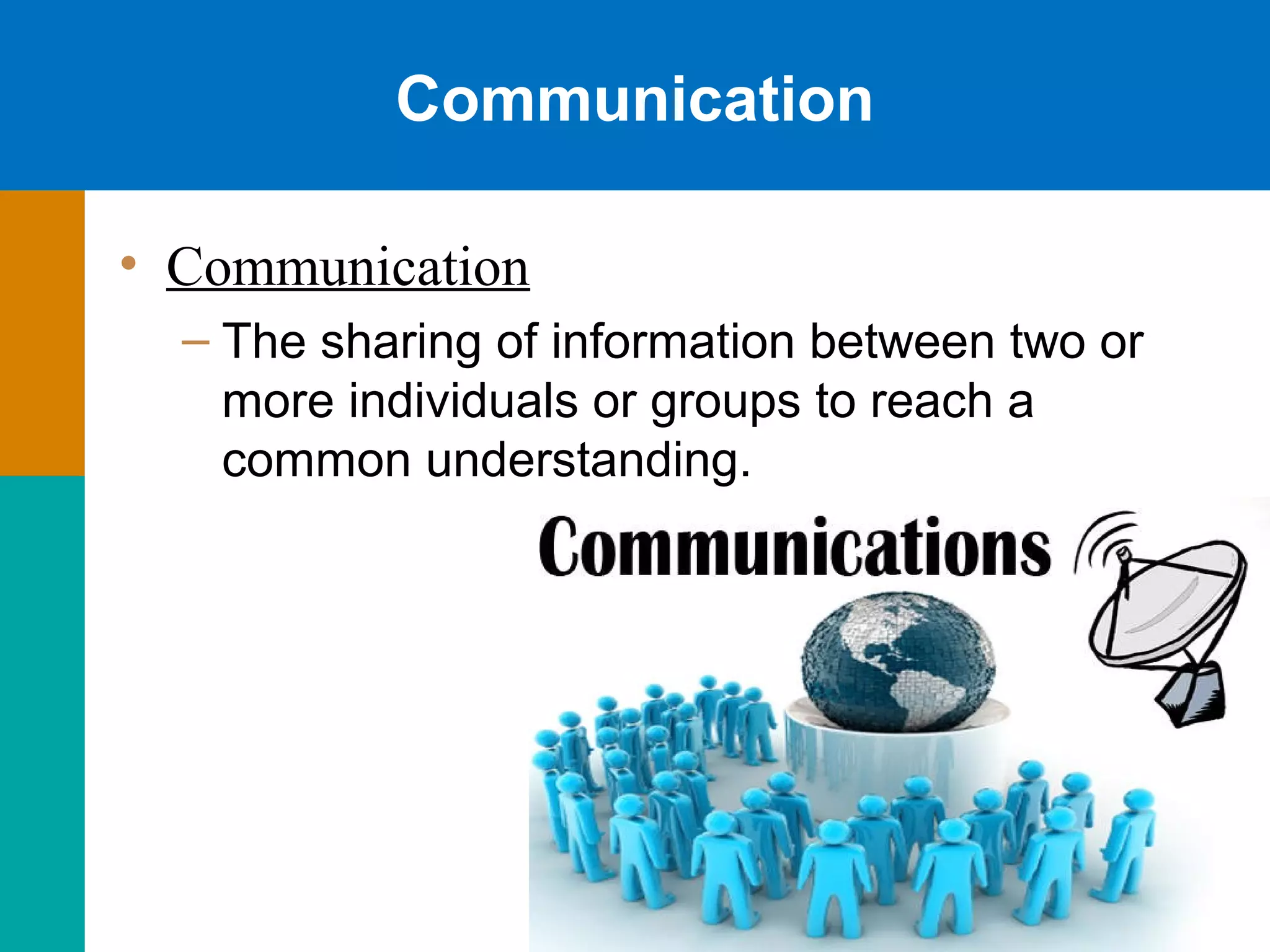
Introduction to business communication, defined as sharing information for common understanding.
Highlights significance: boosts efficiency, quality, responsiveness, and innovation.
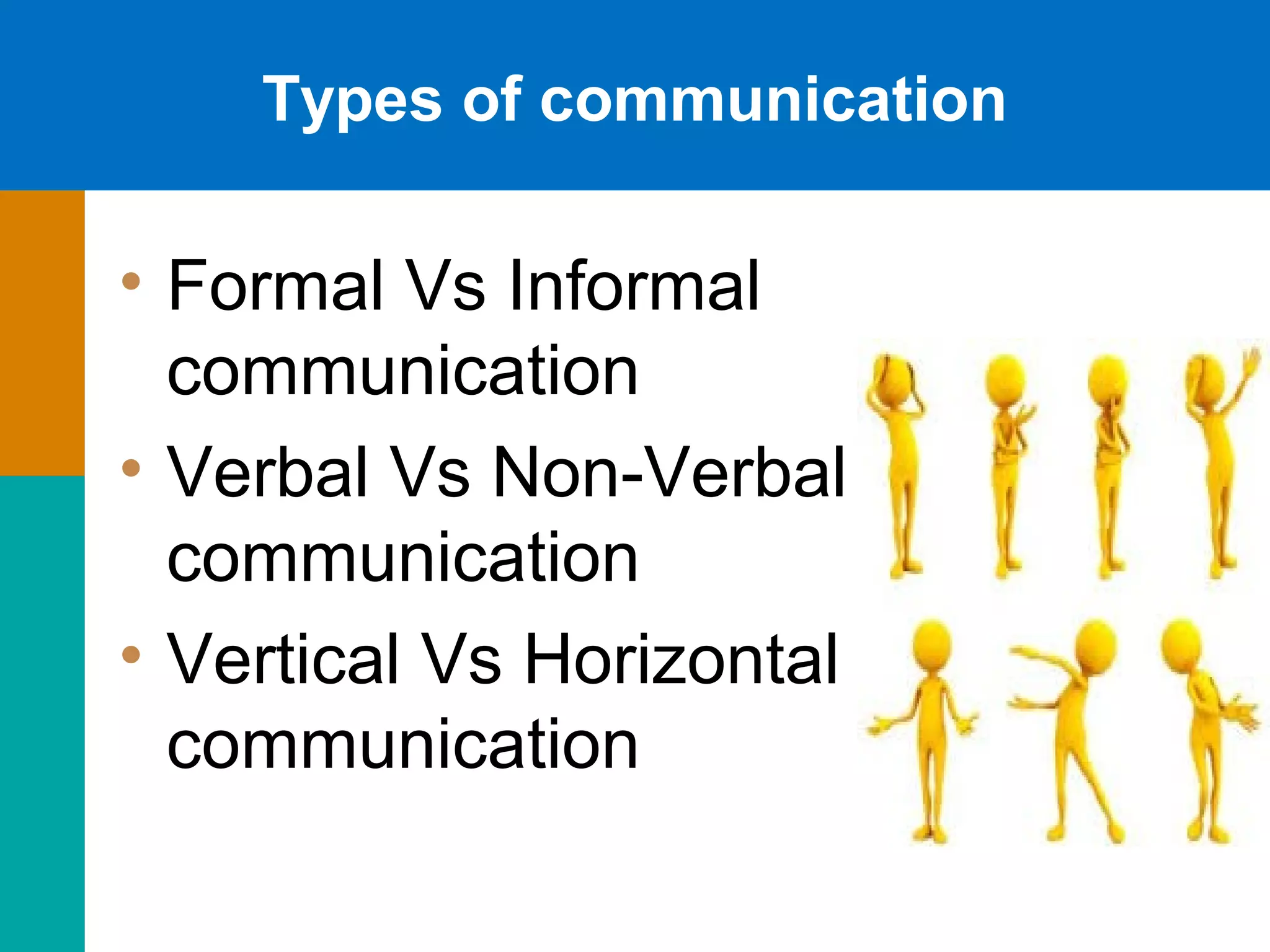
Explores various types, including formal vs. informal, verbal vs. non-verbal, and vertical vs. horizontal.
Details verbal (spoken/written) and non-verbal (body language, facial expressions) communication formats. Focuses on oral and written forms, effective speaking, and voice control for clear communication. Describes key elements such as facial expressions, gestures, posture, and do’s & don’ts for effectiveness.
Lists best practices (do's) and pitfalls (don'ts) for verbal and non-verbal communication.
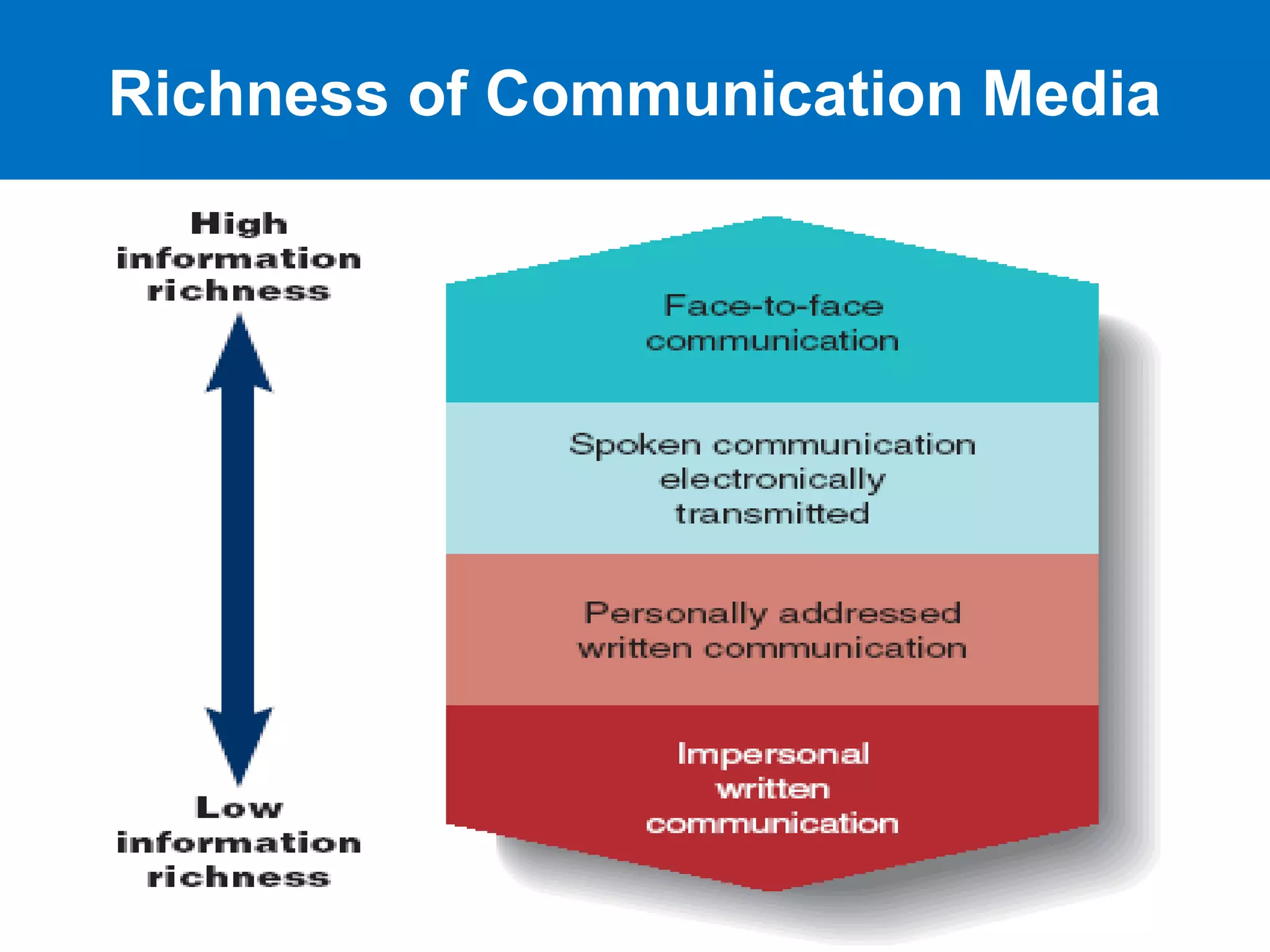
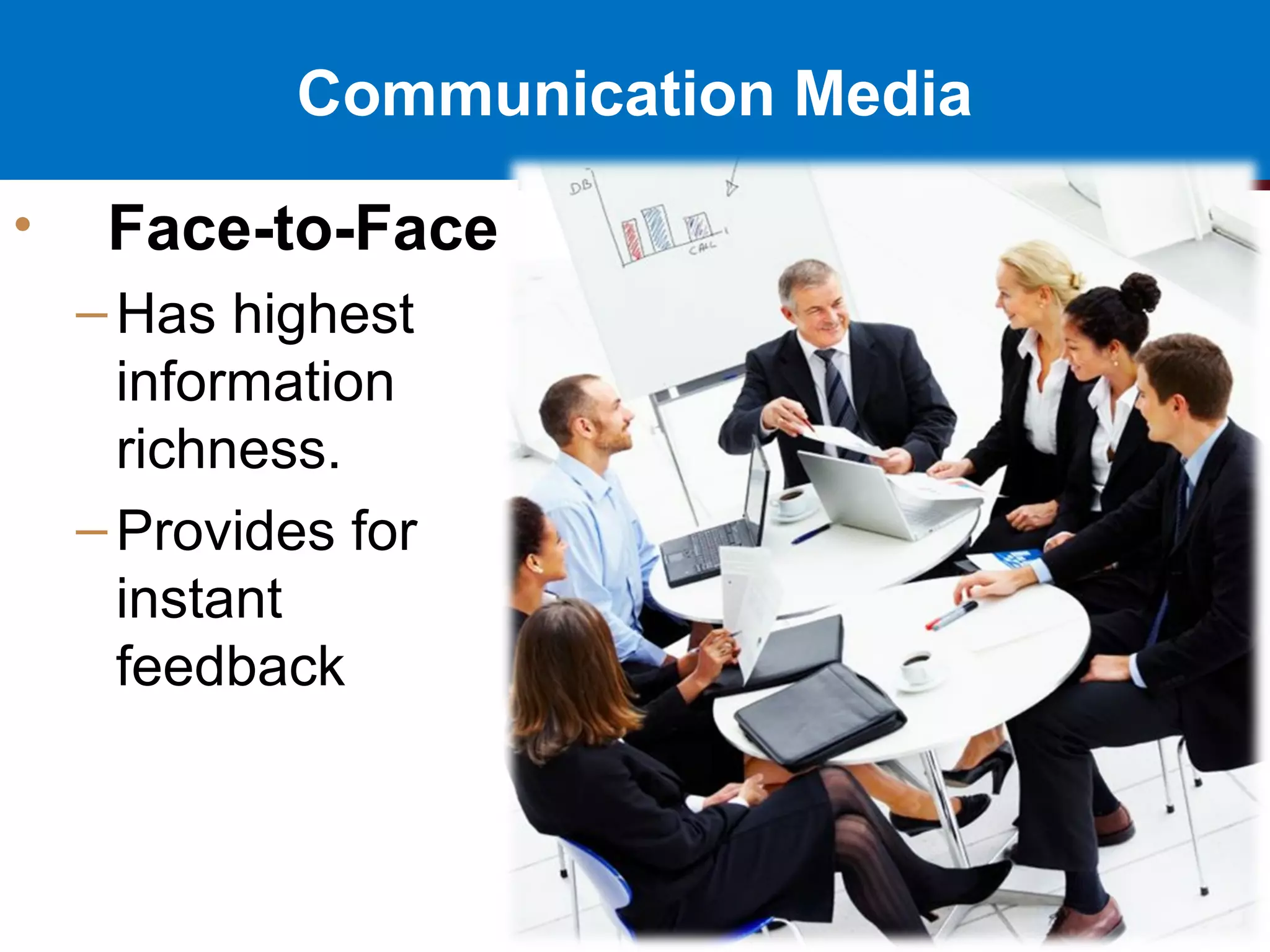
Evaluates different communication media based on richness and feedback capabilities.
Discusses information overload among managers leading to missed important information and productivity losses.
Final reflections on the importance and nuances of effective communication in business.
16-4
Importance of GoodCommunication
– Increased efficiency in new technologies
and skills
– Improved quality of products and services
– Increased responsiveness to customers
– More innovation through communication
5.
Types of communication
•Formal Vs Informal
communication
• Verbal Vs Non-Verbal
communication
• Vertical Vs Horizontal
communication
6.
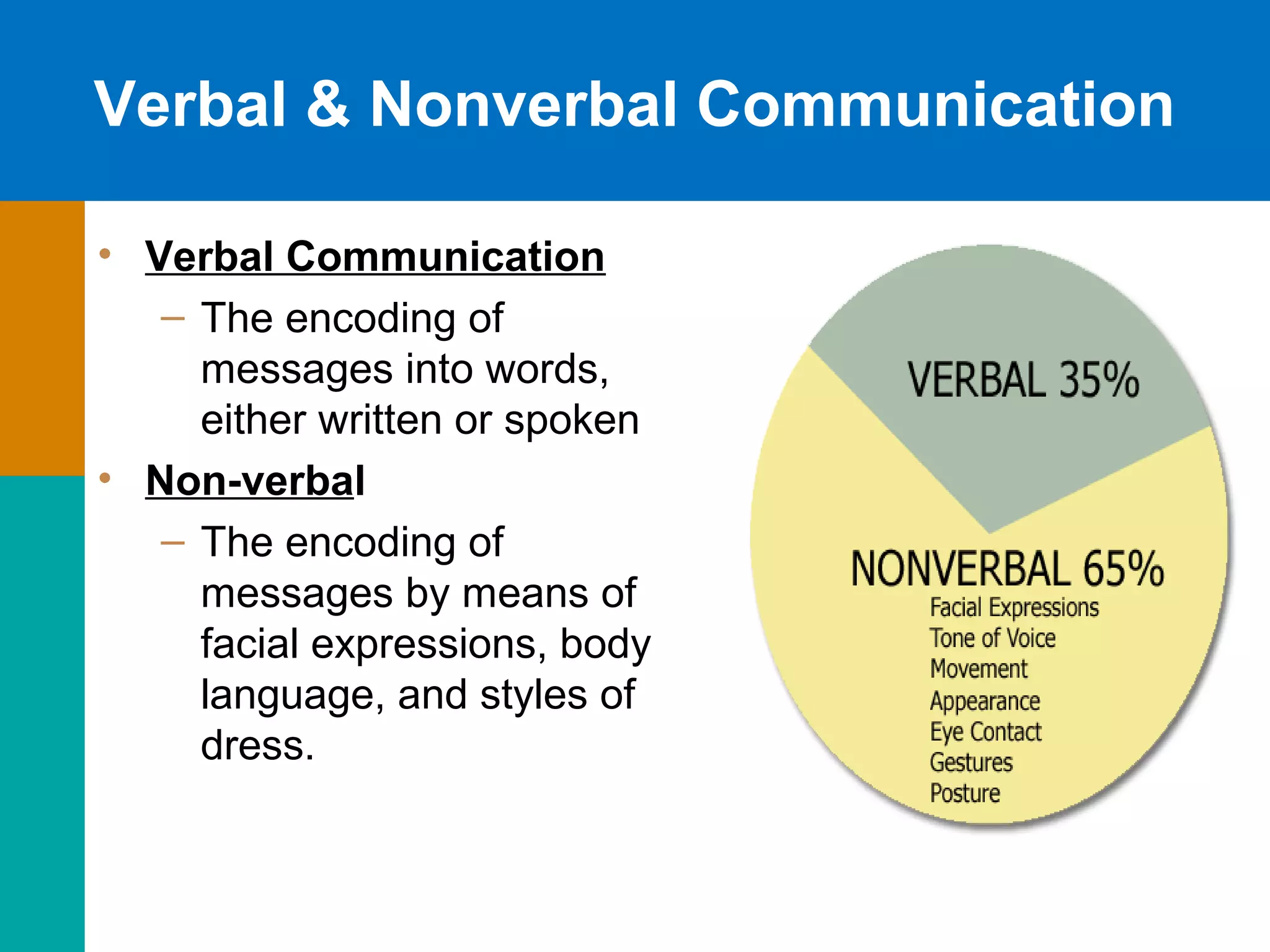
Verbal & NonverbalCommunication
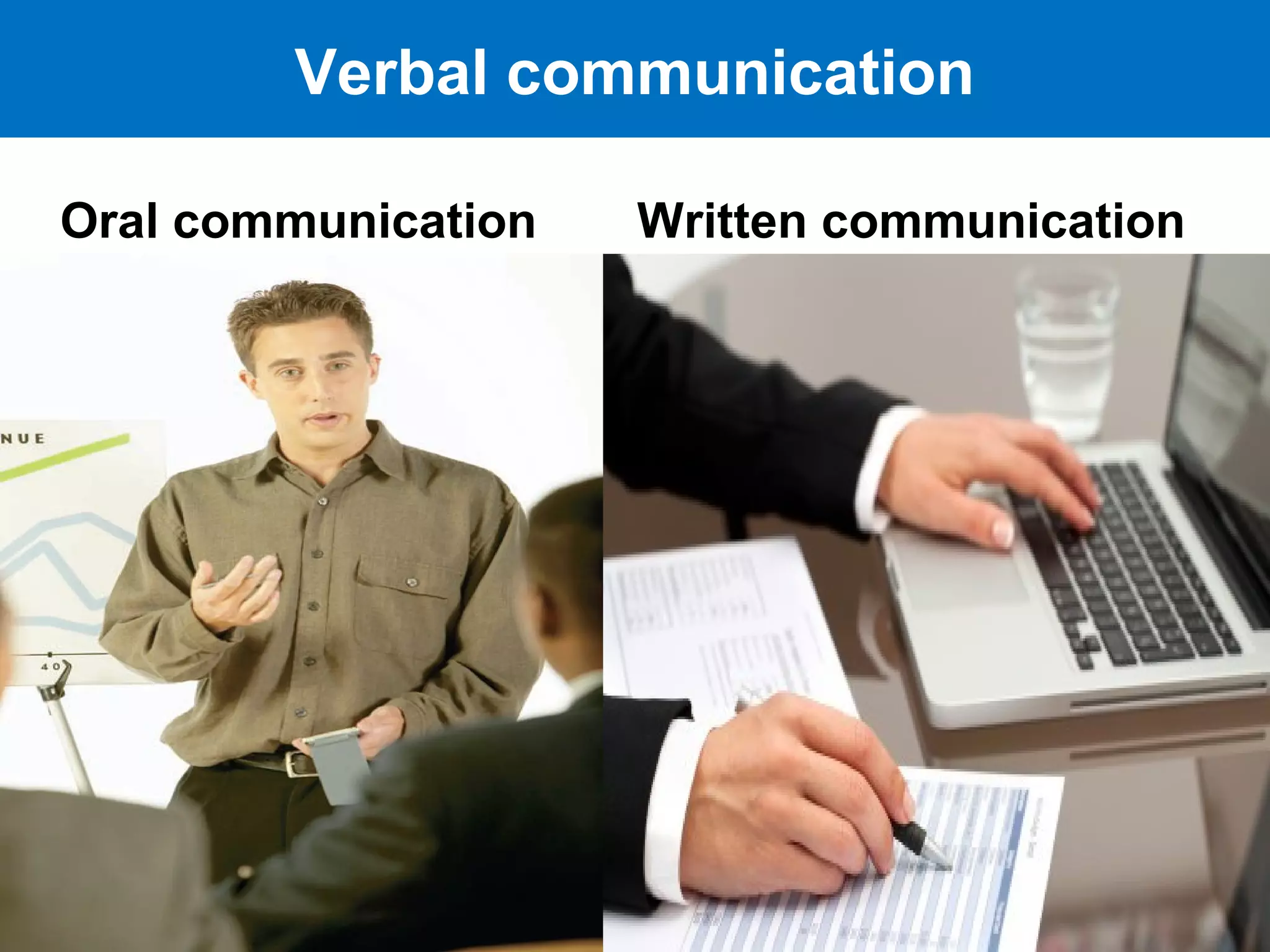
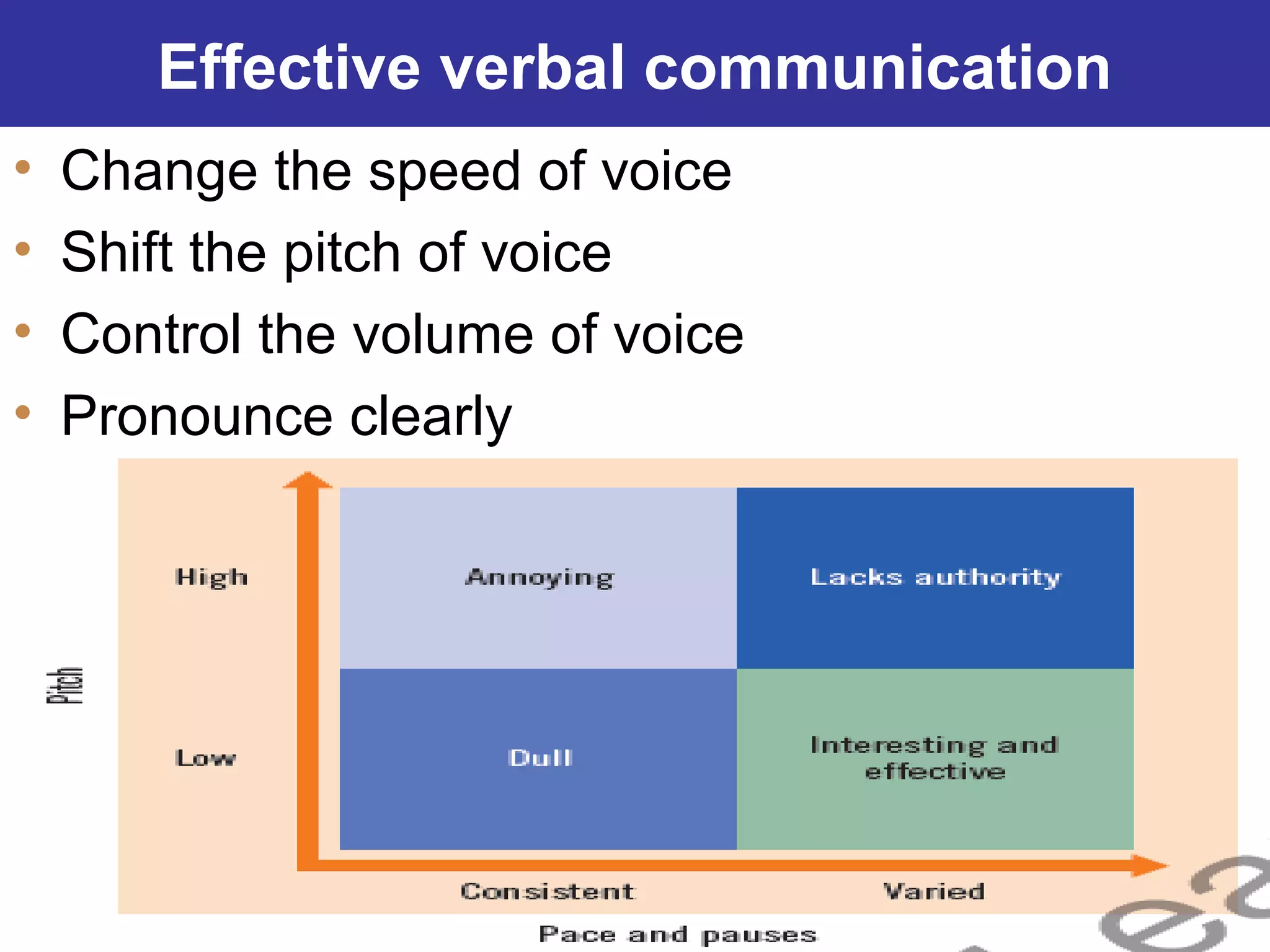
• Verbal Communication
– The encoding of
messages into words,
either written or spoken
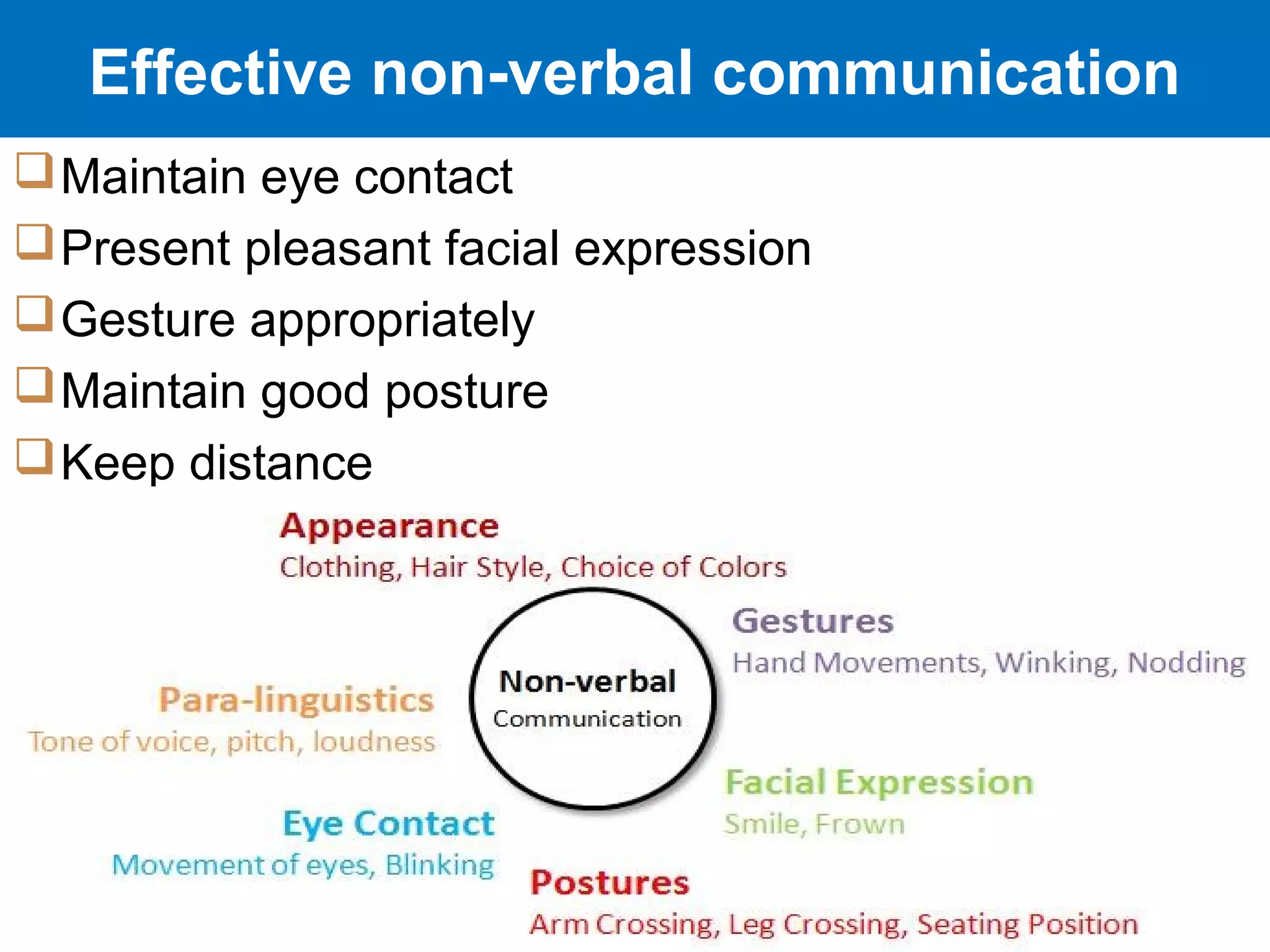
• Non-verbal
– The encoding of
messages by means of
facial expressions, body
language, and styles of
dress.
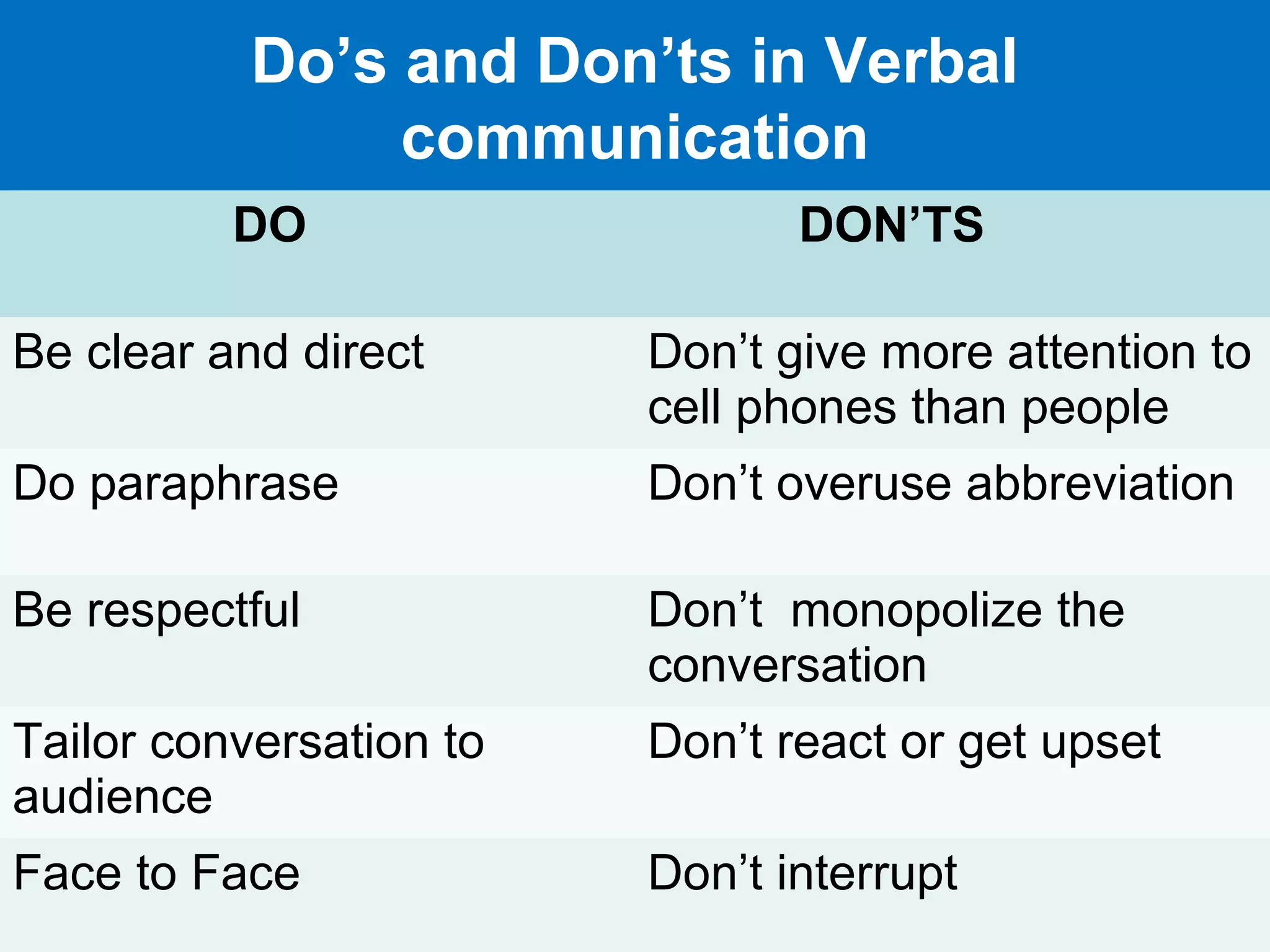
Do’s and Don’tsin Verbal
communication
DO DON’TS
Be clear and direct Don’t give more attention to
cell phones than people
Do paraphrase Don’t overuse abbreviation
Be respectful Don’t monopolize the
conversation
Tailor conversation to
audience
Don’t react or get upset
Face to Face Don’t interrupt
17.
16-17
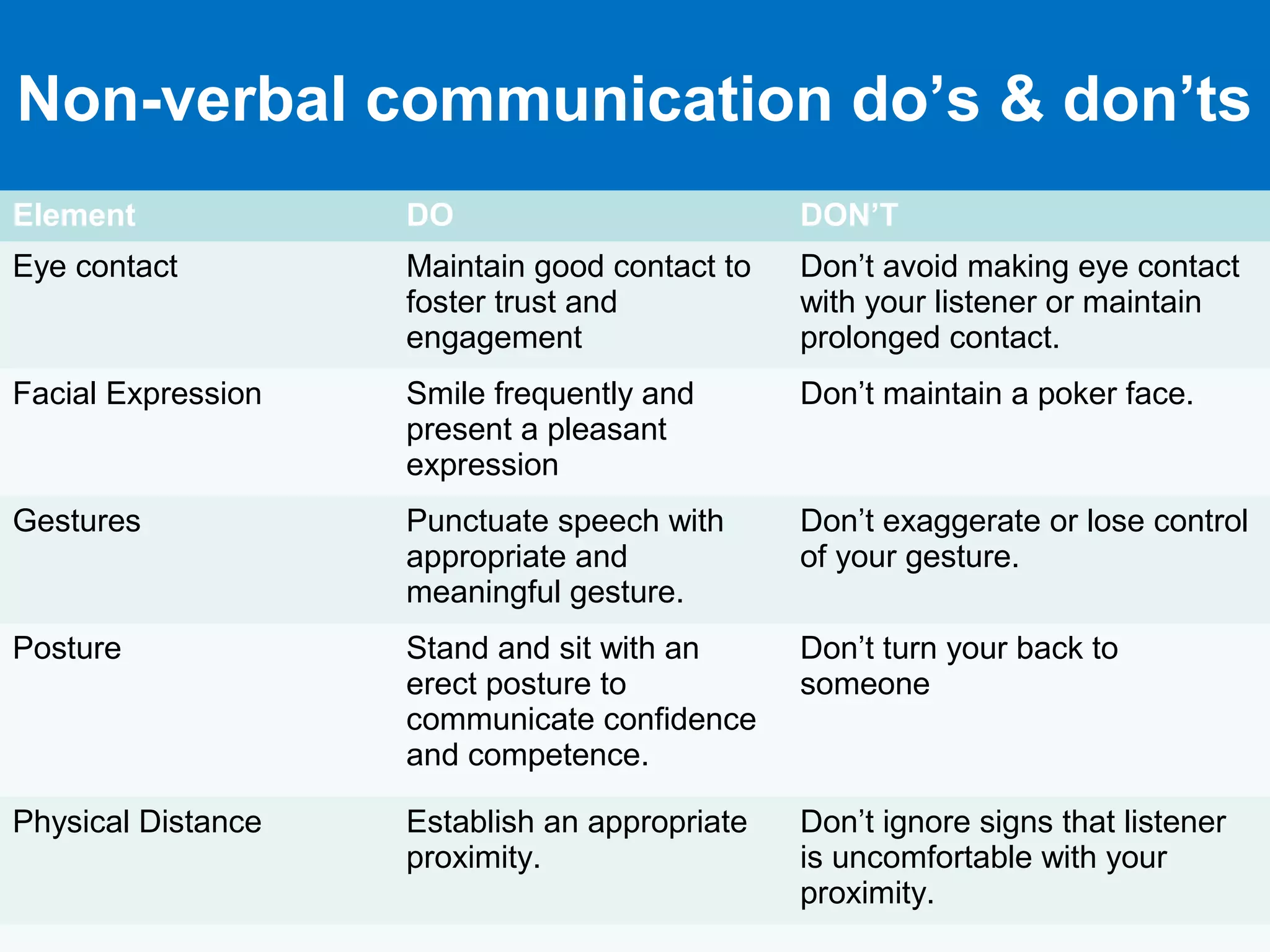
Non-verbal communication do’s& don’ts
Element DO DON’T
Eye contact Maintain good contact to
foster trust and
engagement
Don’t avoid making eye contact
with your listener or maintain
prolonged contact.
Facial Expression Smile frequently and
present a pleasant
expression
Don’t maintain a poker face.
Gestures Punctuate speech with
appropriate and
meaningful gesture.
Don’t exaggerate or lose control
of your gesture.
Posture Stand and sit with an
erect posture to
communicate confidence
and competence.
Don’t turn your back to
someone
Physical Distance Establish an appropriate
proximity.
Don’t ignore signs that listener
is uncomfortable with your
proximity.
Communication Media
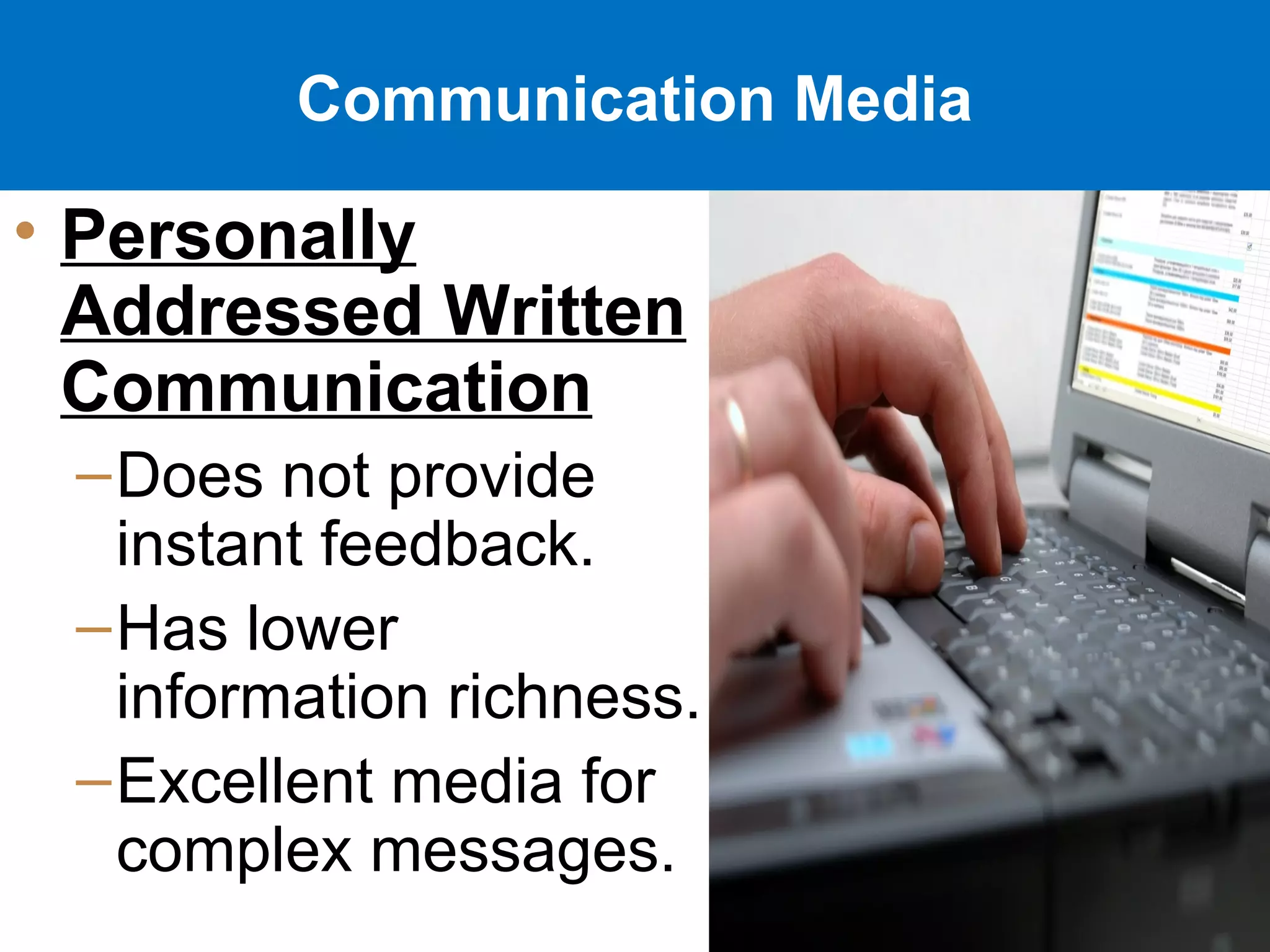
• Personally
AddressedWritten
Communication
–Does not provide
instant feedback.
–Has lower
information richness.
–Excellent media for
complex messages.
22.
16-22
Communication Media
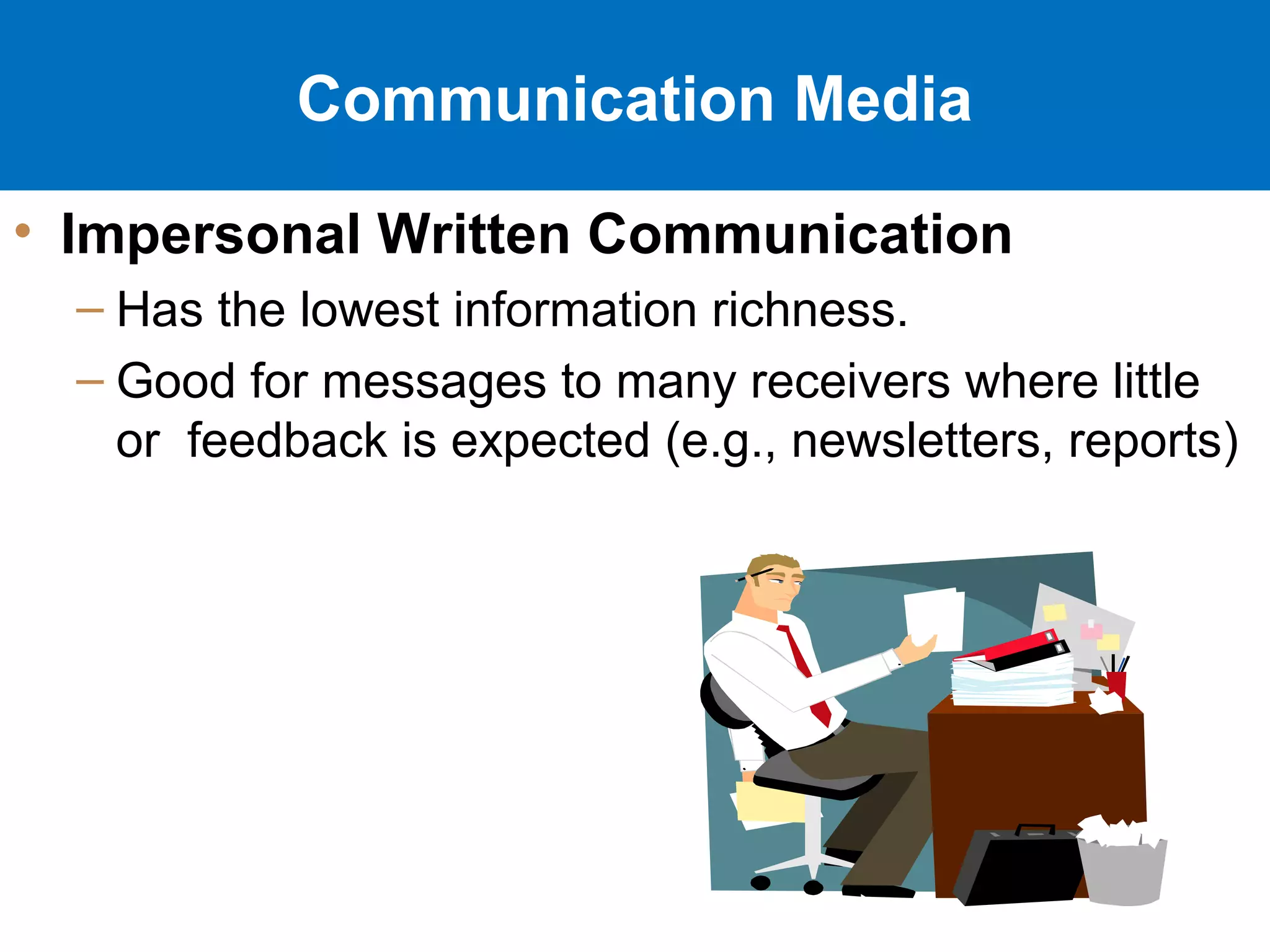
• ImpersonalWritten Communication
– Has the lowest information richness.
– Good for messages to many receivers where little
or feedback is expected (e.g., newsletters, reports)
23.
16-23
Communication Media
• Manymanagers do not have time
to read all the electronic work-
related information available to
them
• Problem with information overload
is the potential for important
information to be ignored or
overlooked
• Can result in lost productivity





![Presentation [Full] Effective Communication Skills](https://cdn.slidesharecdn.com/ss_thumbnails/presentation-effectivecommunicationskills-131227024631-phpapp02-thumbnail.jpg?width=640&height=640&fit=bounds)


