PRESENTATION ON NON DESTRUCTIVE
TESTING (NDT)
PRESENTED TO : Dr. P.K. GUPTA
Prof. ARPIT RASTOGI
PRESENTED BY : SACHIN JHA
(1403040090)
DEPARTMENT OF MECHANICAL ENGINEERING
INDERPRASTHA ENGINEERING COLLEGE
NON DESTRUCTIVE TESTING
Non-destructive testing (NDT) is a wide group
of analysis techniques used in science and
technology industry to evaluate the properties
of a material, component or system without
causing damage.
IMPORTANCE OF NDT
 Accident prevention and to reduce costs
 To improve product reliability
 To determine acceptance to a given
requirement
 To give information on repair criteria.
SOME OF THE METHODS USED
 Visual Inspection
 Liquid Penetrant Inspection
 Acoustic Emission
 Magnetic Particle Inspection
 Eddy Current Inspection
 Ultrasonic Inspection
 Radiographic Inspection
LIQUID PENETRANT INSPECTION
 Liquid Penetrant inspection is also called as
dye penetrant inspection.
 Penetrant may be applied to the test
component by dipping, spraying, or brushing.
 After adequate penetration time, the excess
penetrant is removed, developer is applied.
 Developer helps to draw penetrant out of the
flaw where an invisible indication becomes
visible to the inspector.
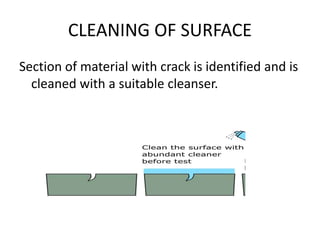
CLEANING OF SURFACE
Section of material with crack is identified and is
cleaned with a suitable cleanser.
APPLICATION OF PENETRANT
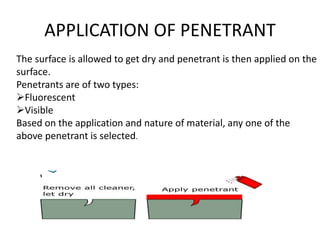
The surface is allowed to get dry and penetrant is then applied on the
surface.
Penetrants are of two types:
Fluorescent
Visible
Based on the application and nature of material, any one of the
above penetrant is selected.
REMOVAL OF PENETRANT
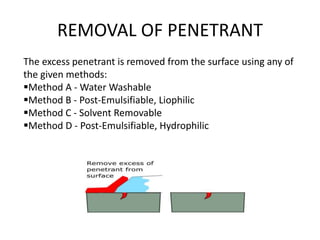
The excess penetrant is removed from the surface using any of
the given methods:
Method A - Water Washable
Method B - Post-Emulsifiable, Liophilic
Method C - Solvent Removable
Method D - Post-Emulsifiable, Hydrophilic
APPLICATION OF DEVELOPER
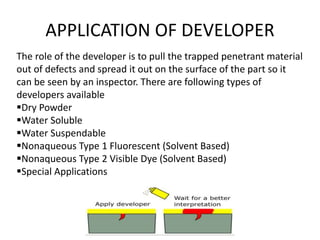
The role of the developer is to pull the trapped penetrant material
out of defects and spread it out on the surface of the part so it
can be seen by an inspector. There are following types of
developers available
Dry Powder
Water Soluble
Water Suspendable
Nonaqueous Type 1 Fluorescent (Solvent Based)
Nonaqueous Type 2 Visible Dye (Solvent Based)
Special Applications
LIMITATIONS OF DYE PENETRANT
TESTING
 Need access to test surface
 Defects must be surface breaking
 Decontamination & pre cleaning of test
surface may be needed
 Vapour hazard
 Very tight and shallow defects difficult to find
 Depth of flaw not indicated
APPLICATION AREAS OF NDT
 Aerospace
 Automobile
 Bridges
 Pipeline
 Power plant
 Pressure vessel
 Rail roads
 Ship building
 Storage Tanks
REFERENCES
 Wikipedia
 marineengineeringonline.com
THANK YOU!!

Non destructive testing

  • 1.
    PRESENTATION ON NONDESTRUCTIVE TESTING (NDT) PRESENTED TO : Dr. P.K. GUPTA Prof. ARPIT RASTOGI PRESENTED BY : SACHIN JHA (1403040090) DEPARTMENT OF MECHANICAL ENGINEERING INDERPRASTHA ENGINEERING COLLEGE
  • 2.
    NON DESTRUCTIVE TESTING Non-destructivetesting (NDT) is a wide group of analysis techniques used in science and technology industry to evaluate the properties of a material, component or system without causing damage.
  • 3.
    IMPORTANCE OF NDT Accident prevention and to reduce costs  To improve product reliability  To determine acceptance to a given requirement  To give information on repair criteria.
  • 4.
    SOME OF THEMETHODS USED  Visual Inspection  Liquid Penetrant Inspection  Acoustic Emission  Magnetic Particle Inspection  Eddy Current Inspection  Ultrasonic Inspection  Radiographic Inspection
  • 5.
    LIQUID PENETRANT INSPECTION Liquid Penetrant inspection is also called as dye penetrant inspection.  Penetrant may be applied to the test component by dipping, spraying, or brushing.  After adequate penetration time, the excess penetrant is removed, developer is applied.  Developer helps to draw penetrant out of the flaw where an invisible indication becomes visible to the inspector.
  • 6.
    CLEANING OF SURFACE Sectionof material with crack is identified and is cleaned with a suitable cleanser.
  • 7.
    APPLICATION OF PENETRANT Thesurface is allowed to get dry and penetrant is then applied on the surface. Penetrants are of two types: Fluorescent Visible Based on the application and nature of material, any one of the above penetrant is selected.
  • 8.
    REMOVAL OF PENETRANT Theexcess penetrant is removed from the surface using any of the given methods: Method A - Water Washable Method B - Post-Emulsifiable, Liophilic Method C - Solvent Removable Method D - Post-Emulsifiable, Hydrophilic
  • 9.
    APPLICATION OF DEVELOPER Therole of the developer is to pull the trapped penetrant material out of defects and spread it out on the surface of the part so it can be seen by an inspector. There are following types of developers available Dry Powder Water Soluble Water Suspendable Nonaqueous Type 1 Fluorescent (Solvent Based) Nonaqueous Type 2 Visible Dye (Solvent Based) Special Applications
  • 10.
    LIMITATIONS OF DYEPENETRANT TESTING  Need access to test surface  Defects must be surface breaking  Decontamination & pre cleaning of test surface may be needed  Vapour hazard  Very tight and shallow defects difficult to find  Depth of flaw not indicated
  • 11.
    APPLICATION AREAS OFNDT  Aerospace  Automobile  Bridges  Pipeline  Power plant  Pressure vessel  Rail roads  Ship building  Storage Tanks
  • 12.