NON-COMMUNICABLEDISEASES
By /Mahmoud Shaqria
‫شقريه‬ ‫محمد‬ ‫محمود‬
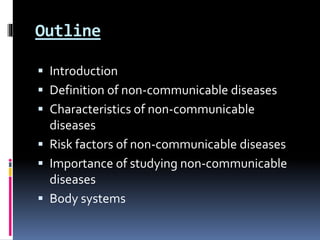
Outline
 Introduction
 Definition of non-communicable diseases
 Characteristics of non-communicable
diseases
 Risk factors of non-communicable diseases
 Importance of studying non-communicable
diseases
 Body systems
 Cardiovascular system.
o Non-communicable diseases in
cardiovascular system.
o Hypertension.
 Digestive system.
o Non-communicable diseases in
digestive system.
o Peptic ulcer.
 Endocrine system.
o Non-communicable diseases in
endocrine system.
o Diabetes mellitus.
 Renal system.
o Non-communicable diseases in renal
system.
o Renal failure.
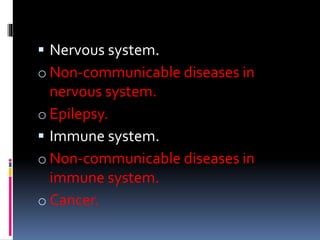
 Nervous system.
o Non-communicable diseases in
nervous system.
o Epilepsy.
 Immune system.
o Non-communicable diseases in
immune system.
o Cancer.
Introduction:
 Non-communicable diseases (NCDs) kill 41 million
people each year, equivalent to 71% of all deaths
globally.
 Each year, 15 million people die from a NCD
between the ages of 30 and 69 years; over 85%
of these "premature" deaths occur in low- and
middle-income countries.
 Tobacco use, physical inactivity, the harmful use
of alcohol and unhealthy diets all increase the
risk of dying from a NCD.
Definition :
 A non-communicable disease (NCD) is a medical
condition or disease that is by definition non-
infectious and non-transmissible among people.
 Non-communicable diseases (NCD) are not passed
from person to person.They are typically of a long
duration and progress slowly.
Characteristics of non-communicable
diseases:
 Not caused by infection.
 Complex causality, with multiple factors.
 Long development period , some of which may have no
symptoms.
 Associated functional impairment or disability.
 Create a need for long-term treatment.
Risk factors of non-communicable
diseases:
Controllable risk factors include :_
 Tobacco use
 High blood pressure
 High cholesterol
 Sedentary lifestyle
 Excessive weight
 Stress
 Drug and alcohol abuse
Uncontrollable risk factors include :_
 Genetic.
 Gender.
 Age .
Importance of studying non-communicable
diseases :
 To reduce premature mortality and morbidity.
 To improve quality of life with particular focus
on developing countries.
 Focus to prevention and early detection
 Identify chronic diseases and it is risk factors
 Promote healthy life style.
Body systems:
 Cardiovascular system
 digestive system
 Respiratory system
 Endocrine system
 Immune system
 Skeletal muscular system
 Nervous system
 Renal system
Cardiovascular system:
Non-communicable cardiovascular diseases :
Cardiovascular diseases are a group of disorders of
the heart and blood vessels and include:
 coronary heart disease: disease of the blood vessels
supplying the heart muscle.
 cerebrovascular disease: disease of the blood
vessels supplying the brain.
 peripheral arterial disease: disease of blood vessels
supplying the arms and legs.
 rheumatic heart disease: damage to the heart muscle and
heart valves from rheumatic fever, caused by streptococcal
bacteria.
 congenital heart disease: malformations of heart structure
existing at birth.
 deep vein thrombosis and pulmonary embolism: blood clots
in the leg veins, which can dislodge and move to the heart
and lungs.
 Raised blood pressure ( hypertension ).
Hypertension
 Definition :
 A state of chronic elevation of arterial blood
pressure above normal level.
The AHA ( American Heart Association ) 2017
guidelines define ranges of blood pressure:
Diastolic (mmHg)Systolic (mmHg)Grade
Less than 80Less than 120Normal blood pressure
Less than 80Between 120 and 129Elevated
Between 80 and 89Between 130 and 139Stage 1 hypertension
At least 90At least 140Stage 2 hypertension
Over 120Over 180Hypertensive crisis
Types of hypertension :
High blood pressure that is not caused by another condition
or disease is called primary or essential hypertension. If it
occurs as a result of another condition, it is called secondary
hypertension.
 Primary hypertension can result from multiple factors,
including blood plasma volume and activity of the hormones
that regulate of blood volume and pressure. It is also
influenced by environmental factors, such as stress and lack
of exercise.
 Secondary hypertension has specific causes and
is a complication of another problem.
It can result from:
 diabetes, due to both kidney problems and nerve
damage.
 kidney disease.
 Cushing syndrome, which can be caused by
corticosteroid drugs.
 hyperthyroidism, or an overactive thyroid
gland.
 hyperparathyroidism, which affects calcium
and phosphorous levels.
 Pregnancy.
 sleep apnea.
 Obesity.
Risk factors of hypertension :
A number of risk factors increase the chances of
having hypertension :_
 Age: Hypertension is more common in people aged over 60
years.With age, blood pressure can increase steadily as the
arteries become stiffer and narrower due to plaque build-up.
 Ethnicity: Some ethnic groups are more prone to
hypertension.
 Size and weight: Being overweight or obese is a key risk factor.
 Alcohol and tobacco use: Consuming large
amounts of alcohol regularly can increase a person's
blood pressure, as can smoking tobacco.
 Sex:The lifetime risk is the same for males and
females, but men are more prone to hypertension
at a younger age.The prevalence tends to be higher
in older women.
 Existing health conditions: Cardiovascular disease,
diabetes, chronic kidney disease, and high
cholesterol levels can lead to hypertension,
especially as people get older.
Signs and Symptoms of hypertension:
 One of the most dangerous aspects of hypertension is
that you may not know that you have it. In fact, nearly
one-third of people who have high blood pressure
don't know it.The only way to know if your blood
pressure is high is through regular checkups.This is
especially important if you have a close relative who
has high blood pressure.
 If your blood pressure is extremely high, there may be certain
symptoms to look out for, including:
 Severe headache.
 Fatigue or confusion.
 Vision problems.
 Chest pain.
 Difficulty breathing.
 Irregular heartbeat.
 Blood in the urine.
 Pounding in your chest, neck, or ears.
Treatment :
 Changing your lifestyle can go a long way toward controlling high
blood pressure.Your doctor may recommend you make lifestyle
changes including:
 Eating a heart-healthy diet with less salt.
 Getting regular physical activity.
 Maintaining a healthy weight or losing weight if you're overweight or
obese.
 Limiting the amount of alcohol you drink.
 Decrease stress.
 But sometimes lifestyle changes aren't
enough. In addition to diet and exercise,
your doctor may recommend medication to
lower your blood pressure.
 Your blood pressure treatment goal
depends on how healthy you are.
Complication :
 C.V.S : hypertensive heart disease and heart
failure.
 Cerebral : hemorrhage , thrombosis and strokes.
 Renal : renal failure .
 Ophthalmic : retinopathy and retinal
hemorrhage.
Prevention :
Primary prevention :
prevention and management of risk factors.
 Lifestyle modification ( healthful lifestyle ).
Control of diet:
 Increase consumption of fresh vegetables
and fruits.
 Reduce animal fat and salt intake .
Reduction of mass obesity :
 In hypertensive obese people , the blood pressure
decreased by 10 mmHg systolic 5 mmHg diastolic
for each 5 kg lost .
Avoid smoking ( anti-smoking program ).
Avoid physical inactivity and mental over activity .
 Prevention and control of any
underlying medical condition.
 Health education :
To increase awareness about risk factors
, and modification of the life style .
Secondary prevention :
Early case finding and proper treatment of
hypertensive patients.
 At the high risk level ; detection and follow up of
high risk persons ( by periodic examination and
screening ) to keep blood pressure within normal
levels , with proper treatment of those with
hypertension .
 At the public level :
A. Health education : to arouse interest of the
public in periodic medical exam , where broad
line and hypertensive cases can be detected
and managed.
B. Guidance of hypertensive cases : for treatment
and management .
Digestive system :-
Non-communicable diseases in digestive
system :-
 Peptic ulcer.
 Gastro esophageal reflux disease (GERD).
 Constipation.
 Crohn`s disease.
 Rectal prolapse.
Peptic ulcer:-
Peptic ulcers are open sores that develop on the inside
lining of your stomach and the upper portion of your small
intestine.
Peptic ulcers include:
 Gastric ulcers that occur on the inside of the stomach.
 Duodenal ulcers that occur on the inside of the upper
portion of your small intestine (duodenum).
Signs and symptoms:-
 Burning stomach pain.
 Feeling of fullness, bloating or belching.
 Fatty food intolerance.
 Heartburn.
 Nausea.
 ulcers may cause severe signs or symptoms
such as :
 Vomiting or vomiting blood — which may appear red
or black.
 Dark blood in stools, or stools that are black or tarry.
 Trouble breathing.
 Feeling faint.
 Nausea or vomiting.
 Unexplained weight loss.
 Appetite changes.
Risk factors:-
 Smoke. Smoking may increase the risk of peptic ulcers in
people who are infected with H. pylori.
 Drink alcohol.Alcohol can irritate and erode the mucous
lining of your stomach, and it increases the amount of
stomach acid that's produced.
 Have untreated stress.
 Eat spicy foods.
Alone, these factors do not cause ulcers, but they can make
them worse and more difficult to heal.
Causes:-
 Helicobacter pylori (H. pylori), a type of bacteria that can
cause a stomach infection and inflammation.
 frequent use of aspirin (Bayer), ibuprofen (Advil), and other
anti-inflammatory drugs (risk associated with this behavior
increases in women and people over the age of 60).
 Smoking.
• Drinking too much alcohol.
 radiation therapy.
 stomach cancer.
treatment:-
 lifestyle change.
 medical treatment :
 antibiotics ( flagyl and one other antibiotics ).
 H2-receptor antagonist.
 Mucosal protection ( misoprostal ).
 Usually avoid antacids as interfere with treatment.
Complications:-
 Internal bleeding. Bleeding can occur as slow
blood loss that leads to anemia or as severe
blood loss that may require hospitalization or a
blood transfusion. Severe blood loss may cause
black or bloody vomit or black or bloody stools.
 Infection. Peptic ulcers can eat a hole through
(perforate) the wall of your stomach or small
intestine, putting you at risk of serious infection of
your abdominal cavity (peritonitis).
 Obstruction. Peptic ulcers can block passage of food
through the digestive tract, causing you to become
full easily, to vomit and to lose weight through either
swelling from inflammation or scarring.
Preventing peptic ulcers:-
 To reduce your risk of developing a peptic ulcer :
 Use caution with aspirin and/or NSAIDs.
 Don’t ignore your ulcer symptoms.
 Protect yourself from infections by washing hands regularly
and consuming foods that have been cooked thoroughly.
 Choose a healthy diet. Choose a healthy diet full of fruits,
especially with vitaminsA and C, vegetables, and whole
grains.
 Consider eliminating milk.
 Control stress.
 Don't smoke.
 Limit or avoid alcohol.
 Try to get enough sleep.
Endocrine system:-
 Diabetic mellitus .
 Hypoglycemia .
 Hyperthyroidism.
 Hypothyroidism.
 Thyroid cancer.
 Osteoporosis.
 Osteomalacia.
Diabetic mellitus:-
Definition of diabetes mellitus :
 Disorder of carbohydrate metabolism
characterized by impaired ability of the body
to produce or respond to insulin and thereby
maintain proper levels of sugar (glucose) in
the blood.
Classification of DM:
 Type 1 diabetes ( IDDM ) : due to β-cell
destruction, usually leading to absolute insulin
deficiency , usually diagnosed in childhood.
 Type 2 diabetes (NIDDM ): due to a progressive
insulin secretory defect on the background of
insulin resistance.
 Gestational diabetes mellitus (GDM) : diabetes
diagnosed in the second or third trimester of
pregnancy.
 Secondary DM : Specific types of diabetes due to
other causes, e.g , pancreatic disease , endocrine
disease , some of drugs such as diuretics –
genetic abnormalities.
Signs and symptoms of DM:
 Frequent urination ( polyuria ) .
 Excessive thirst ( polydipsia ) .
 Unexplained weight loss .
 Extreme hunger ( polyphagia ) .
 Sudden vision changes.
 Tingling or numbness in the hands or feet.
 Feeling very tired much of the time.
 Very dry skin.
 Sores that are slow to heal.
 More infections than usual.
Diagnosis of diabetes mellitus:
Risk factors of diabetes mellitus:
Risk factors of type 1 diabetes mellitus :
 Genetic factors.
 Environmental factors such as  viral
infections e.g mumps – nutritional factors e.g
vitamin D deficiency – immunological factors
e.g slowT-cell mediated autoimmune
disease.
Risk factors of type 2 diabetes mellitus :
 Family history.
 Obesity.
 Drugs such as corticosteroids, contraceptives.
 Pregnancy.
 Life style factors such as  dietary factors e.g
eat high calories , fat . cholesterol – low
physical activity – anxiety – depression.
Complication of DM:
Acute complication :
 Hypoglycemia .
 Diabetic ketoacidosis ( DKA ).
 Lactic acidosis.
 Coma .
Chronic complication :
 Diabetic nephropathy.
 Diabetic neuropathy.
 Diabetic retinopathy.
 Diabetic foot.
 Cerebral stroke.
Prevention of DM:
Prevention of type 1 diabetes:
o Antibody screening :
 In type 1 DM , the immune system cells
attacks insulin-producing cells and produce
antibodies against pancreas tissue .these
antibodies are present as much as 8 years
before the onset of diabetes .
 Islet cell antibodies : the most widely used
antibody markers in assessment of risk.
 Autoantibody markers : insulin autoantibodies
( IAA ) and glutamate decarboxylase antibodies
( GADA ) . if these antibodies are found , the
child is at higher risk for developing DM than
the general population .
 The screening test should be restricted to at
risk groups ( first degree relative of cases ) as
only 10-15% of the new cases come from the
high risk group .
Prevention of environmental
 Prevention of viral infections :
 General prevention measures.
 Mass MMR immunization to prevent the risks
of mumps and rubella.
Health education of mothers :-
 Encourage breast feeding.
 Not to introduce foods to infants and
children that contains nitrosamines.
 To delay introduction of cow`s milk.
 Vitamin D supplementation in vitamin
D deficiency.
Prevention of type 2 DM
o Primary prevention :-
Identify high risk groups :
 Cases with positive family history especially
first degree relatives.
 Obese individuals.
 Pregnant females with excessive weight gain
and mothers of large for age babies.
 Premature atherosclerosis.
 Nutritional education : diet modification of high
risk groups.
 Minimize carbohydrate over consumption.
 Avoid high fat diet . it is better to use mono-
unsaturated fatty acids.
 Avoid excessive fat intake.
 Increase intake of high fiber diet.
 Adequate nutrition during pregnancy.
Healthy lifestyle :
 Promotion of physical exercise.
 Avoid use of diabetogenic drugs among high
risk individuals.
 Control of obesity and maintenance of optimal
bodyweight.
 Premarital counseling and advice to avoid
consanguineous marriage.
Secondary prevention:
DM screening :
 It is recommended for early case finding
among people at various stages of life , and
for those with any of several risk factors .
 Earlier screening is typically recommended
for those with risk factors such as obesity ,
family history of DM , high-risk ethnicity.
 Screening for all adults at age 40 or 50 , and
then periodically may be recommended.
 Screening test may be random blood glucose
test , fasting blood glucose test , blood
glucose test two hours after 75 g of glucose ,
or even glucose tolerance test.
Control of DM :
 It aims to maintain serum glucose level
within normal through the following :
 Lifestyle and diet modification.
 Oral hypoglycemia.
 Insulin use.
Tertiary prevention :
 Prevention of DM complication:
 By controlling the levels of blood glucose ,
blood pressure , and blood lipids.
 Glucose control.
 Blood pressure control.
 Control of blood lipids.
 Care for foot.
Renal system:-
Non-communicable diseases in renal
system :
 Bladder cancer.
 Kidney stones.
 Kidney failure.
 Renal carcinoma.
Renal failure:-
Renal Failure:
 Renal failure, also known as renal insufficiency, is
a medical condition in which the kidneys fail to
adequately filter waste products from the blood
and there are many types of renal failure which it
may be congenital or acquired. Renal failure is
mainly determined by a decrease in glomerular
filtration rate.
Types of renal failure:-
1) Acute renal failure.
2) Chronic renal failure.
This is a sudden and severe loss of kidney function and is often
reversible with adequate treatment.
Definition of acute
renal failure
Pre renal causes :
 Hemorrhagic shock
 Severe dehydration
 Severe hypotension
 Perinatal asphyxia
 Septic shock
 Renal artery obstruction
Renal causes:
 Nephrotoxines (contrast dye)
 Ureterovesical obstruction
 Hemolytic uremic syndrome (HUS)
 Glomerulonephritis and pyleonephritis
Post renal causes:
 Structural abnormalities as, uretropelvic obstruction,
uretrovesical obstruction, neurogenic bladder and outlet
obstruction by stones or tumors.
Causes
Chronic renal failure
Definition:
 This is a gradual and irreversible loss
of kidneys function which occur over
months to years .
Causes :
 The causes of chronic renal failure in children
are different from those in adults.
 The most common causes, especially in
young children are congenital anomalies, as;
renal dysplasia.
 Some diseases as; Glomerulonephritis ,
pyleonephritis and Hemolytic uremic
syndrome (HUS).
 Secondary causes of ESRD as diabetes and
hypertension are not seen in children.
Manifestations of chronic renal disease:
Stages of chronic renal disease:
Management of chronic renal failure:
 Chronic renal failure can be managed
conservatively with medications and diet
restrictions.
 It is usually progresses to ESRD, which is
permanent and irreversible loss of kidney
functions that can no longer managed
conservatively to maintain life and health.
 Dialysis or transplantation is required to treat
ESRD, and treatment usually occurs when only
5%to 10% of kidney functions remain.
Treatment of chronic Renal Failure:
Chronic renal failure can be managed
through 2 methods:
 Dialysis.
 Renal transplantation.
Prevention of renal failure:
Primary prevention :
 Eat healthy diet ( avoid salt – lower potassium
– limit amount of protein ).
 Do exercise.
 Prevent smoking  alcohol.
 Prevent exposure to pollution.
 Health education of the public.
Secondary prevention :
 Make tests ( kidney functions – blood test –
urine test ).
 Urine output measurement.
 Take a sample of kidney tissue
Tertiary prevention :
 This may include medication , kidney
transplant , dialysis .
Nervous system
Non-communicable diseases in nervous
system :
 Stroke.
 Epilepsy.
 Aphasia.
 Alzheimer`s disease.
 Pakinson`s disease.
Epilepsy
Definition of epilepsy :
 A neurological disorder marked by
sudden recurrent episodes of sensory
disturbance, loss of consciousness, or
convulsions, associated with abnormal
electrical activity in the brain.
Because epilepsy is caused by abnormal activity
in the brain, seizures can affect any process your
brain coordinates. Seizure signs and symptoms
may include:
 Temporary confusion
 A staring spell
 Uncontrollable jerking movements of the arms
and legs
 Loss of consciousness or awareness
 Psychic symptoms such as fear, anxiety
Causes of epilepsy :
o Epilepsy has no identifiable cause in about half
the people with the condition. In the other
half, the condition may be traced to various
factors, including:
o Genetic influence. Some types of epilepsy,
which are categorized by the type of seizure you
experience or the part of the brain that is
affected, run in families.
o Head trauma. Head trauma as a result of a car
accident or other traumatic injury can cause
epilepsy.
 Brain conditions. Brain conditions that cause
damage to the brain, such as brain tumors or
strokes, can cause epilepsy. Stroke is a leading
cause of epilepsy in adults older than age 35.
 Infectious diseases. Infectious diseases, such as
meningitis, AIDS and viral encephalitis, can cause
epilepsy.
 Prenatal injury. Before birth, babies are sensitive
to brain damage that could be caused by several
factors, such as an infection in the mother, poor
nutrition or oxygen deficiencies.This brain damage
can result in epilepsy or cerebral palsy.
Risk factors of epilepsy :
 Age.The onset of epilepsy is most common in
children and older adults, but the condition can
occur at any age.
 Family history. If you have a family history of
epilepsy, you may be at an increased risk of
developing a seizure disorder.
 Head injuries. Head injuries are responsible for
some cases of epilepsy.You can reduce your risk by
wearing a seat belt while riding in a car and by
wearing a helmet while bicycling, skiing, riding a
motorcycle or engaging in other activities with a
high risk of head injure.
 Dementia. Dementia can increase the risk of
epilepsy in older adults.
 Brain infections. Infections such as meningitis,
which causes inflammation in your brain or spinal
cord, can increase your risk.
 Seizures in childhood. High fevers in childhood can
sometimes be associated with seizures. Children
who have seizures due to high fevers generally
won't develop epilepsy.The risk of epilepsy
increases if a child has a long seizure, another
nervous system condition or a family history of
epilepsy.
Complication of epilepsy :
 Falling. If you fall during a seizure, you can injure
your head or break a bone.
 Drowning. If you have epilepsy, you're 15 to 19
times more likely to drown while swimming or
bathing than the rest of the population because of
the possibility of having a seizure while in the
water.
 Car accidents. A seizure that causes either loss of
awareness or control can be dangerous if you're
driving a car or operating other equipment.
 Pregnancy complications. Seizures during
pregnancy pose dangers to both mother and
baby.
 Emotional health issues. People with epilepsy
are more likely to have psychological problems,
especially depression, anxiety and suicidal
thoughts and behaviors.
 Sudden unexpected death in epilepsy
(SUDEP). People with epilepsy also have a small
risk of sudden unexpected death.
Prevention of epilepsy :
Primary prevention :
 Prevent head injures  stroke.
 Prevent infectious diseases.
 Prevent psychological disorders.
 Prevent fever in children.
 Do exercise.
Secondary prevention :
 Make CT scan – MRI.
 EEC ( electroencephalogram).
Tertiary prevention :
 This may include medication , surgery .
Immune system
 Non-communicable diseases in immune
system :
 Familial Mediterranean fever.
 Cancer.
 Leukemic.
 Diabetic type A.
Cancer
 Definition of cancer :
 A malignant growth or tumor
resulting from an uncontrolled
division of cells.
Risk factors of cancer :
 Age.
 Alcohol.
 Unhealthy Diet.
 Hormones
 Immunosuppression.
 Infectious Agents.
 Obesity.
 Radiation.
 Genetic factors.
Signs and symptoms of cancer:
 Fatigue.
 Lump or area of thickening that can be felt under the
skin.
 Weight changes, including unintended loss or gain.
 Skin changes, such as yellowing, darkening or redness of
the skin, sores that won't heal, or changes to existing
moles.
 Changes in bowel or bladder habits.
 Persistent cough or trouble breathing.
 Difficulty swallowing.
 Hoarseness.
 Persistent indigestion or discomfort after eating.
 Persistent, unexplained muscle or joint pain.
 Persistent, unexplained fevers or night sweats.
 Unexplained bleeding or bruising.
Complication of cancer:
 Pain .
 Fatigue.
 Difficulty breathing.
 Nausea.
 Diarrhea or constipation.
 Weight loss.
 Chemical changes in your body. Signs and symptoms of
chemical imbalances might include excessive thirst,
frequent urination, constipation and confusion.
 Brain and nervous system problems. Cancer that
involves the brain can cause headaches and stroke-
like signs and symptoms, such as weakness on one
side of your body.
 Unusual immune system reactions to cancer. In
some cases the body's immune system may react to
the presence of cancer by attacking healthy cell.
 Cancer that spreads. As cancer advances, it may
spread to other parts of the body.
 Cancer that returns. Cancer survivors have a risk of
cancer recurrence.
 Death .
Prevention of cancer :
Primary prevention :
 Prevent air pollution.
 Nutrition and food sanitation ( eat healthy
nutrition ).
 Prevent smoking.
 Prevent alcohol.
 Avoid excessive sun exposure.
 Exercise most days of the week.
 Maintain a healthy weight.
 Health education of the public.
Secondary prevention :
 Periodic examination.
 Schedule cancer screening exams.
 Ask a doctors about immunizations
( immunizations for HBV ) .
Tertiary prevention :
 This may include surgery , radiotherapy ,
chemotherapy , hormonal therapy ,
immune therapy and rehabilitation.
Reference
 https://www.psi.org/health-area/non-
communicable-diseases/#about.
 https://www.who.int/news-room/fact-
sheets/detail/noncommunicable-diseases.
 http://www.euro.who.int/en/health-
topics/noncommunicable-
diseases/cardiovascular-
diseases/cardiovascular-diseases2.
 https://www.webmd.com/hypertension-high-
blood-pressure/guide/hypertension-
symptoms-high-blood-pressure.
 https://www.mayoclinic.org/diseases-
conditions/high-blood-pressure/diagnosis-
treatment/drc-20373417.
 https://healthhearty.com/common-diseases-
of-digestive-system.
 https://hunterdongastro.com/peptic-ulcers/.
 https://www.mayoclinic.org/diseases-
conditions/peptic-ulcer/diagnosis-
treatment/drc-20354229.
 https://en.wikipedia.org/wiki/Endocrine_disea
se.
 https://www.britannica.com/science/diabetes-
mellitus.
 http://care.diabetesjournals.org/content/38/Su
pplement_1/S8/.
 https://www.ucsfhealth.org/conditions/diabete
s_mellitus/signs_and_symptoms.html.
 https://www.britannica.com/topic-
browse/Health-and-Medicine/Diseases-and-
Disorders/Renal-System-Diseases.
 https://www.dmu.edu/medterms/nervous-
system/nervous-system-diseases/.
 https://www.healthdirect.gov.au/nervous-
system-diseases.
 https://www.mayoclinic.org/diseases-
conditions/epilepsy/symptoms-causes/syc-
20350093.
 https://www.medicinenet.com/cancer_causes
/article.htm#risk_factors_for_cancer.
THANKyou…

Non communicable-diseases

  • 1.
  • 2.
    Outline  Introduction  Definitionof non-communicable diseases  Characteristics of non-communicable diseases  Risk factors of non-communicable diseases  Importance of studying non-communicable diseases  Body systems
  • 3.
     Cardiovascular system. oNon-communicable diseases in cardiovascular system. o Hypertension.  Digestive system. o Non-communicable diseases in digestive system. o Peptic ulcer.
  • 4.
     Endocrine system. oNon-communicable diseases in endocrine system. o Diabetes mellitus.  Renal system. o Non-communicable diseases in renal system. o Renal failure.
  • 5.
     Nervous system. oNon-communicable diseases in nervous system. o Epilepsy.  Immune system. o Non-communicable diseases in immune system. o Cancer.
  • 6.
    Introduction:  Non-communicable diseases(NCDs) kill 41 million people each year, equivalent to 71% of all deaths globally.
  • 7.
     Each year,15 million people die from a NCD between the ages of 30 and 69 years; over 85% of these "premature" deaths occur in low- and middle-income countries.  Tobacco use, physical inactivity, the harmful use of alcohol and unhealthy diets all increase the risk of dying from a NCD.
  • 8.
    Definition :  Anon-communicable disease (NCD) is a medical condition or disease that is by definition non- infectious and non-transmissible among people.  Non-communicable diseases (NCD) are not passed from person to person.They are typically of a long duration and progress slowly.
  • 9.
    Characteristics of non-communicable diseases: Not caused by infection.  Complex causality, with multiple factors.  Long development period , some of which may have no symptoms.  Associated functional impairment or disability.  Create a need for long-term treatment.
  • 10.
    Risk factors ofnon-communicable diseases: Controllable risk factors include :_  Tobacco use  High blood pressure  High cholesterol  Sedentary lifestyle  Excessive weight  Stress  Drug and alcohol abuse
  • 11.
    Uncontrollable risk factorsinclude :_  Genetic.  Gender.  Age .
  • 12.
    Importance of studyingnon-communicable diseases :  To reduce premature mortality and morbidity.  To improve quality of life with particular focus on developing countries.  Focus to prevention and early detection  Identify chronic diseases and it is risk factors  Promote healthy life style.
  • 13.
    Body systems:  Cardiovascularsystem  digestive system  Respiratory system  Endocrine system  Immune system  Skeletal muscular system  Nervous system  Renal system
  • 14.
    Cardiovascular system: Non-communicable cardiovasculardiseases : Cardiovascular diseases are a group of disorders of the heart and blood vessels and include:  coronary heart disease: disease of the blood vessels supplying the heart muscle.  cerebrovascular disease: disease of the blood vessels supplying the brain.
  • 15.
     peripheral arterialdisease: disease of blood vessels supplying the arms and legs.  rheumatic heart disease: damage to the heart muscle and heart valves from rheumatic fever, caused by streptococcal bacteria.  congenital heart disease: malformations of heart structure existing at birth.  deep vein thrombosis and pulmonary embolism: blood clots in the leg veins, which can dislodge and move to the heart and lungs.  Raised blood pressure ( hypertension ).
  • 16.
    Hypertension  Definition : A state of chronic elevation of arterial blood pressure above normal level.
  • 17.
    The AHA (American Heart Association ) 2017 guidelines define ranges of blood pressure: Diastolic (mmHg)Systolic (mmHg)Grade Less than 80Less than 120Normal blood pressure Less than 80Between 120 and 129Elevated Between 80 and 89Between 130 and 139Stage 1 hypertension At least 90At least 140Stage 2 hypertension Over 120Over 180Hypertensive crisis
  • 18.
    Types of hypertension: High blood pressure that is not caused by another condition or disease is called primary or essential hypertension. If it occurs as a result of another condition, it is called secondary hypertension.  Primary hypertension can result from multiple factors, including blood plasma volume and activity of the hormones that regulate of blood volume and pressure. It is also influenced by environmental factors, such as stress and lack of exercise.
  • 19.
     Secondary hypertensionhas specific causes and is a complication of another problem. It can result from:  diabetes, due to both kidney problems and nerve damage.  kidney disease.  Cushing syndrome, which can be caused by corticosteroid drugs.
  • 20.
     hyperthyroidism, oran overactive thyroid gland.  hyperparathyroidism, which affects calcium and phosphorous levels.  Pregnancy.  sleep apnea.  Obesity.
  • 21.
    Risk factors ofhypertension :
  • 22.
    A number ofrisk factors increase the chances of having hypertension :_  Age: Hypertension is more common in people aged over 60 years.With age, blood pressure can increase steadily as the arteries become stiffer and narrower due to plaque build-up.  Ethnicity: Some ethnic groups are more prone to hypertension.  Size and weight: Being overweight or obese is a key risk factor.
  • 23.
     Alcohol andtobacco use: Consuming large amounts of alcohol regularly can increase a person's blood pressure, as can smoking tobacco.  Sex:The lifetime risk is the same for males and females, but men are more prone to hypertension at a younger age.The prevalence tends to be higher in older women.  Existing health conditions: Cardiovascular disease, diabetes, chronic kidney disease, and high cholesterol levels can lead to hypertension, especially as people get older.
  • 24.
    Signs and Symptomsof hypertension:  One of the most dangerous aspects of hypertension is that you may not know that you have it. In fact, nearly one-third of people who have high blood pressure don't know it.The only way to know if your blood pressure is high is through regular checkups.This is especially important if you have a close relative who has high blood pressure.
  • 25.
     If yourblood pressure is extremely high, there may be certain symptoms to look out for, including:  Severe headache.  Fatigue or confusion.  Vision problems.  Chest pain.  Difficulty breathing.  Irregular heartbeat.  Blood in the urine.  Pounding in your chest, neck, or ears.
  • 26.
    Treatment :  Changingyour lifestyle can go a long way toward controlling high blood pressure.Your doctor may recommend you make lifestyle changes including:  Eating a heart-healthy diet with less salt.  Getting regular physical activity.  Maintaining a healthy weight or losing weight if you're overweight or obese.  Limiting the amount of alcohol you drink.  Decrease stress.
  • 27.
     But sometimeslifestyle changes aren't enough. In addition to diet and exercise, your doctor may recommend medication to lower your blood pressure.  Your blood pressure treatment goal depends on how healthy you are.
  • 28.
    Complication :  C.V.S: hypertensive heart disease and heart failure.  Cerebral : hemorrhage , thrombosis and strokes.  Renal : renal failure .  Ophthalmic : retinopathy and retinal hemorrhage.
  • 29.
    Prevention : Primary prevention: prevention and management of risk factors.  Lifestyle modification ( healthful lifestyle ). Control of diet:  Increase consumption of fresh vegetables and fruits.  Reduce animal fat and salt intake .
  • 30.
    Reduction of massobesity :  In hypertensive obese people , the blood pressure decreased by 10 mmHg systolic 5 mmHg diastolic for each 5 kg lost . Avoid smoking ( anti-smoking program ). Avoid physical inactivity and mental over activity .
  • 31.
     Prevention andcontrol of any underlying medical condition.  Health education : To increase awareness about risk factors , and modification of the life style .
  • 32.
    Secondary prevention : Earlycase finding and proper treatment of hypertensive patients.  At the high risk level ; detection and follow up of high risk persons ( by periodic examination and screening ) to keep blood pressure within normal levels , with proper treatment of those with hypertension .
  • 33.
     At thepublic level : A. Health education : to arouse interest of the public in periodic medical exam , where broad line and hypertensive cases can be detected and managed. B. Guidance of hypertensive cases : for treatment and management .
  • 34.
    Digestive system :- Non-communicablediseases in digestive system :-  Peptic ulcer.  Gastro esophageal reflux disease (GERD).  Constipation.  Crohn`s disease.  Rectal prolapse.
  • 35.
    Peptic ulcer:- Peptic ulcersare open sores that develop on the inside lining of your stomach and the upper portion of your small intestine. Peptic ulcers include:  Gastric ulcers that occur on the inside of the stomach.  Duodenal ulcers that occur on the inside of the upper portion of your small intestine (duodenum).
  • 36.
    Signs and symptoms:- Burning stomach pain.  Feeling of fullness, bloating or belching.  Fatty food intolerance.  Heartburn.  Nausea.
  • 37.
     ulcers maycause severe signs or symptoms such as :  Vomiting or vomiting blood — which may appear red or black.  Dark blood in stools, or stools that are black or tarry.  Trouble breathing.  Feeling faint.  Nausea or vomiting.  Unexplained weight loss.  Appetite changes.
  • 38.
    Risk factors:-  Smoke.Smoking may increase the risk of peptic ulcers in people who are infected with H. pylori.  Drink alcohol.Alcohol can irritate and erode the mucous lining of your stomach, and it increases the amount of stomach acid that's produced.  Have untreated stress.  Eat spicy foods. Alone, these factors do not cause ulcers, but they can make them worse and more difficult to heal.
  • 39.
    Causes:-  Helicobacter pylori(H. pylori), a type of bacteria that can cause a stomach infection and inflammation.  frequent use of aspirin (Bayer), ibuprofen (Advil), and other anti-inflammatory drugs (risk associated with this behavior increases in women and people over the age of 60).  Smoking. • Drinking too much alcohol.  radiation therapy.  stomach cancer.
  • 40.
    treatment:-  lifestyle change. medical treatment :  antibiotics ( flagyl and one other antibiotics ).  H2-receptor antagonist.  Mucosal protection ( misoprostal ).  Usually avoid antacids as interfere with treatment.
  • 41.
    Complications:-  Internal bleeding.Bleeding can occur as slow blood loss that leads to anemia or as severe blood loss that may require hospitalization or a blood transfusion. Severe blood loss may cause black or bloody vomit or black or bloody stools.
  • 42.
     Infection. Pepticulcers can eat a hole through (perforate) the wall of your stomach or small intestine, putting you at risk of serious infection of your abdominal cavity (peritonitis).  Obstruction. Peptic ulcers can block passage of food through the digestive tract, causing you to become full easily, to vomit and to lose weight through either swelling from inflammation or scarring.
  • 43.
    Preventing peptic ulcers:- To reduce your risk of developing a peptic ulcer :  Use caution with aspirin and/or NSAIDs.  Don’t ignore your ulcer symptoms.  Protect yourself from infections by washing hands regularly and consuming foods that have been cooked thoroughly.  Choose a healthy diet. Choose a healthy diet full of fruits, especially with vitaminsA and C, vegetables, and whole grains.
  • 44.
     Consider eliminatingmilk.  Control stress.  Don't smoke.  Limit or avoid alcohol.  Try to get enough sleep.
  • 45.
    Endocrine system:-  Diabeticmellitus .  Hypoglycemia .  Hyperthyroidism.  Hypothyroidism.  Thyroid cancer.  Osteoporosis.  Osteomalacia.
  • 46.
    Diabetic mellitus:- Definition ofdiabetes mellitus :  Disorder of carbohydrate metabolism characterized by impaired ability of the body to produce or respond to insulin and thereby maintain proper levels of sugar (glucose) in the blood.
  • 47.
    Classification of DM: Type 1 diabetes ( IDDM ) : due to β-cell destruction, usually leading to absolute insulin deficiency , usually diagnosed in childhood.  Type 2 diabetes (NIDDM ): due to a progressive insulin secretory defect on the background of insulin resistance.  Gestational diabetes mellitus (GDM) : diabetes diagnosed in the second or third trimester of pregnancy.  Secondary DM : Specific types of diabetes due to other causes, e.g , pancreatic disease , endocrine disease , some of drugs such as diuretics – genetic abnormalities.
  • 48.
    Signs and symptomsof DM:  Frequent urination ( polyuria ) .  Excessive thirst ( polydipsia ) .  Unexplained weight loss .  Extreme hunger ( polyphagia ) .  Sudden vision changes.
  • 49.
     Tingling ornumbness in the hands or feet.  Feeling very tired much of the time.  Very dry skin.  Sores that are slow to heal.  More infections than usual.
  • 50.
  • 51.
    Risk factors ofdiabetes mellitus: Risk factors of type 1 diabetes mellitus :  Genetic factors.  Environmental factors such as viral infections e.g mumps – nutritional factors e.g vitamin D deficiency – immunological factors e.g slowT-cell mediated autoimmune disease.
  • 52.
    Risk factors oftype 2 diabetes mellitus :  Family history.  Obesity.  Drugs such as corticosteroids, contraceptives.  Pregnancy.  Life style factors such as dietary factors e.g eat high calories , fat . cholesterol – low physical activity – anxiety – depression.
  • 53.
    Complication of DM: Acutecomplication :  Hypoglycemia .  Diabetic ketoacidosis ( DKA ).  Lactic acidosis.  Coma .
  • 54.
    Chronic complication : Diabetic nephropathy.  Diabetic neuropathy.  Diabetic retinopathy.  Diabetic foot.  Cerebral stroke.
  • 55.
    Prevention of DM: Preventionof type 1 diabetes: o Antibody screening :  In type 1 DM , the immune system cells attacks insulin-producing cells and produce antibodies against pancreas tissue .these antibodies are present as much as 8 years before the onset of diabetes .  Islet cell antibodies : the most widely used antibody markers in assessment of risk.
  • 56.
     Autoantibody markers: insulin autoantibodies ( IAA ) and glutamate decarboxylase antibodies ( GADA ) . if these antibodies are found , the child is at higher risk for developing DM than the general population .  The screening test should be restricted to at risk groups ( first degree relative of cases ) as only 10-15% of the new cases come from the high risk group .
  • 57.
    Prevention of environmental Prevention of viral infections :  General prevention measures.  Mass MMR immunization to prevent the risks of mumps and rubella. Health education of mothers :-  Encourage breast feeding.
  • 58.
     Not tointroduce foods to infants and children that contains nitrosamines.  To delay introduction of cow`s milk.  Vitamin D supplementation in vitamin D deficiency.
  • 59.
    Prevention of type2 DM o Primary prevention :- Identify high risk groups :  Cases with positive family history especially first degree relatives.  Obese individuals.  Pregnant females with excessive weight gain and mothers of large for age babies.  Premature atherosclerosis.
  • 60.
     Nutritional education: diet modification of high risk groups.  Minimize carbohydrate over consumption.  Avoid high fat diet . it is better to use mono- unsaturated fatty acids.  Avoid excessive fat intake.  Increase intake of high fiber diet.  Adequate nutrition during pregnancy.
  • 61.
    Healthy lifestyle : Promotion of physical exercise.  Avoid use of diabetogenic drugs among high risk individuals.  Control of obesity and maintenance of optimal bodyweight.  Premarital counseling and advice to avoid consanguineous marriage.
  • 62.
    Secondary prevention: DM screening:  It is recommended for early case finding among people at various stages of life , and for those with any of several risk factors .  Earlier screening is typically recommended for those with risk factors such as obesity , family history of DM , high-risk ethnicity.
  • 63.
     Screening forall adults at age 40 or 50 , and then periodically may be recommended.  Screening test may be random blood glucose test , fasting blood glucose test , blood glucose test two hours after 75 g of glucose , or even glucose tolerance test.
  • 64.
    Control of DM:  It aims to maintain serum glucose level within normal through the following :  Lifestyle and diet modification.  Oral hypoglycemia.  Insulin use.
  • 65.
    Tertiary prevention : Prevention of DM complication:  By controlling the levels of blood glucose , blood pressure , and blood lipids.  Glucose control.  Blood pressure control.  Control of blood lipids.  Care for foot.
  • 66.
    Renal system:- Non-communicable diseasesin renal system :  Bladder cancer.  Kidney stones.  Kidney failure.  Renal carcinoma.
  • 67.
    Renal failure:- Renal Failure: Renal failure, also known as renal insufficiency, is a medical condition in which the kidneys fail to adequately filter waste products from the blood and there are many types of renal failure which it may be congenital or acquired. Renal failure is mainly determined by a decrease in glomerular filtration rate.
  • 68.
    Types of renalfailure:- 1) Acute renal failure. 2) Chronic renal failure.
  • 69.
    This is asudden and severe loss of kidney function and is often reversible with adequate treatment. Definition of acute renal failure Pre renal causes :  Hemorrhagic shock  Severe dehydration  Severe hypotension  Perinatal asphyxia  Septic shock  Renal artery obstruction Renal causes:  Nephrotoxines (contrast dye)  Ureterovesical obstruction  Hemolytic uremic syndrome (HUS)  Glomerulonephritis and pyleonephritis Post renal causes:  Structural abnormalities as, uretropelvic obstruction, uretrovesical obstruction, neurogenic bladder and outlet obstruction by stones or tumors. Causes
  • 70.
    Chronic renal failure Definition: This is a gradual and irreversible loss of kidneys function which occur over months to years .
  • 71.
    Causes :  Thecauses of chronic renal failure in children are different from those in adults.  The most common causes, especially in young children are congenital anomalies, as; renal dysplasia.  Some diseases as; Glomerulonephritis , pyleonephritis and Hemolytic uremic syndrome (HUS).  Secondary causes of ESRD as diabetes and hypertension are not seen in children.
  • 72.
  • 73.
    Stages of chronicrenal disease:
  • 74.
    Management of chronicrenal failure:  Chronic renal failure can be managed conservatively with medications and diet restrictions.  It is usually progresses to ESRD, which is permanent and irreversible loss of kidney functions that can no longer managed conservatively to maintain life and health.  Dialysis or transplantation is required to treat ESRD, and treatment usually occurs when only 5%to 10% of kidney functions remain.
  • 75.
    Treatment of chronicRenal Failure: Chronic renal failure can be managed through 2 methods:  Dialysis.  Renal transplantation.
  • 76.
    Prevention of renalfailure: Primary prevention :  Eat healthy diet ( avoid salt – lower potassium – limit amount of protein ).  Do exercise.  Prevent smoking alcohol.  Prevent exposure to pollution.  Health education of the public.
  • 77.
    Secondary prevention : Make tests ( kidney functions – blood test – urine test ).  Urine output measurement.  Take a sample of kidney tissue Tertiary prevention :  This may include medication , kidney transplant , dialysis .
  • 78.
    Nervous system Non-communicable diseasesin nervous system :  Stroke.  Epilepsy.  Aphasia.  Alzheimer`s disease.  Pakinson`s disease.
  • 79.
    Epilepsy Definition of epilepsy:  A neurological disorder marked by sudden recurrent episodes of sensory disturbance, loss of consciousness, or convulsions, associated with abnormal electrical activity in the brain.
  • 80.
    Because epilepsy iscaused by abnormal activity in the brain, seizures can affect any process your brain coordinates. Seizure signs and symptoms may include:  Temporary confusion  A staring spell  Uncontrollable jerking movements of the arms and legs  Loss of consciousness or awareness  Psychic symptoms such as fear, anxiety
  • 81.
    Causes of epilepsy: o Epilepsy has no identifiable cause in about half the people with the condition. In the other half, the condition may be traced to various factors, including: o Genetic influence. Some types of epilepsy, which are categorized by the type of seizure you experience or the part of the brain that is affected, run in families. o Head trauma. Head trauma as a result of a car accident or other traumatic injury can cause epilepsy.
  • 82.
     Brain conditions.Brain conditions that cause damage to the brain, such as brain tumors or strokes, can cause epilepsy. Stroke is a leading cause of epilepsy in adults older than age 35.  Infectious diseases. Infectious diseases, such as meningitis, AIDS and viral encephalitis, can cause epilepsy.  Prenatal injury. Before birth, babies are sensitive to brain damage that could be caused by several factors, such as an infection in the mother, poor nutrition or oxygen deficiencies.This brain damage can result in epilepsy or cerebral palsy.
  • 83.
    Risk factors ofepilepsy :  Age.The onset of epilepsy is most common in children and older adults, but the condition can occur at any age.  Family history. If you have a family history of epilepsy, you may be at an increased risk of developing a seizure disorder.  Head injuries. Head injuries are responsible for some cases of epilepsy.You can reduce your risk by wearing a seat belt while riding in a car and by wearing a helmet while bicycling, skiing, riding a motorcycle or engaging in other activities with a high risk of head injure.
  • 84.
     Dementia. Dementiacan increase the risk of epilepsy in older adults.  Brain infections. Infections such as meningitis, which causes inflammation in your brain or spinal cord, can increase your risk.  Seizures in childhood. High fevers in childhood can sometimes be associated with seizures. Children who have seizures due to high fevers generally won't develop epilepsy.The risk of epilepsy increases if a child has a long seizure, another nervous system condition or a family history of epilepsy.
  • 85.
    Complication of epilepsy:  Falling. If you fall during a seizure, you can injure your head or break a bone.  Drowning. If you have epilepsy, you're 15 to 19 times more likely to drown while swimming or bathing than the rest of the population because of the possibility of having a seizure while in the water.  Car accidents. A seizure that causes either loss of awareness or control can be dangerous if you're driving a car or operating other equipment.
  • 86.
     Pregnancy complications.Seizures during pregnancy pose dangers to both mother and baby.  Emotional health issues. People with epilepsy are more likely to have psychological problems, especially depression, anxiety and suicidal thoughts and behaviors.  Sudden unexpected death in epilepsy (SUDEP). People with epilepsy also have a small risk of sudden unexpected death.
  • 87.
    Prevention of epilepsy: Primary prevention :  Prevent head injures stroke.  Prevent infectious diseases.  Prevent psychological disorders.  Prevent fever in children.  Do exercise.
  • 88.
    Secondary prevention : Make CT scan – MRI.  EEC ( electroencephalogram). Tertiary prevention :  This may include medication , surgery .
  • 89.
    Immune system  Non-communicablediseases in immune system :  Familial Mediterranean fever.  Cancer.  Leukemic.  Diabetic type A.
  • 90.
    Cancer  Definition ofcancer :  A malignant growth or tumor resulting from an uncontrolled division of cells.
  • 91.
    Risk factors ofcancer :  Age.  Alcohol.  Unhealthy Diet.  Hormones  Immunosuppression.  Infectious Agents.  Obesity.  Radiation.  Genetic factors.
  • 92.
    Signs and symptomsof cancer:  Fatigue.  Lump or area of thickening that can be felt under the skin.  Weight changes, including unintended loss or gain.  Skin changes, such as yellowing, darkening or redness of the skin, sores that won't heal, or changes to existing moles.  Changes in bowel or bladder habits.  Persistent cough or trouble breathing.
  • 93.
     Difficulty swallowing. Hoarseness.  Persistent indigestion or discomfort after eating.  Persistent, unexplained muscle or joint pain.  Persistent, unexplained fevers or night sweats.  Unexplained bleeding or bruising.
  • 94.
    Complication of cancer: Pain .  Fatigue.  Difficulty breathing.  Nausea.  Diarrhea or constipation.  Weight loss.  Chemical changes in your body. Signs and symptoms of chemical imbalances might include excessive thirst, frequent urination, constipation and confusion.
  • 95.
     Brain andnervous system problems. Cancer that involves the brain can cause headaches and stroke- like signs and symptoms, such as weakness on one side of your body.  Unusual immune system reactions to cancer. In some cases the body's immune system may react to the presence of cancer by attacking healthy cell.  Cancer that spreads. As cancer advances, it may spread to other parts of the body.  Cancer that returns. Cancer survivors have a risk of cancer recurrence.  Death .
  • 96.
    Prevention of cancer: Primary prevention :  Prevent air pollution.  Nutrition and food sanitation ( eat healthy nutrition ).  Prevent smoking.  Prevent alcohol.  Avoid excessive sun exposure.
  • 97.
     Exercise mostdays of the week.  Maintain a healthy weight.  Health education of the public. Secondary prevention :  Periodic examination.  Schedule cancer screening exams.  Ask a doctors about immunizations ( immunizations for HBV ) .
  • 98.
    Tertiary prevention : This may include surgery , radiotherapy , chemotherapy , hormonal therapy , immune therapy and rehabilitation.
  • 99.
    Reference  https://www.psi.org/health-area/non- communicable-diseases/#about.  https://www.who.int/news-room/fact- sheets/detail/noncommunicable-diseases. http://www.euro.who.int/en/health- topics/noncommunicable- diseases/cardiovascular- diseases/cardiovascular-diseases2.  https://www.webmd.com/hypertension-high- blood-pressure/guide/hypertension- symptoms-high-blood-pressure.
  • 100.
     https://www.mayoclinic.org/diseases- conditions/high-blood-pressure/diagnosis- treatment/drc-20373417.  https://healthhearty.com/common-diseases- of-digestive-system. https://hunterdongastro.com/peptic-ulcers/.  https://www.mayoclinic.org/diseases- conditions/peptic-ulcer/diagnosis- treatment/drc-20354229.  https://en.wikipedia.org/wiki/Endocrine_disea se.
  • 101.
     https://www.britannica.com/science/diabetes- mellitus.  http://care.diabetesjournals.org/content/38/Su pplement_1/S8/. https://www.ucsfhealth.org/conditions/diabete s_mellitus/signs_and_symptoms.html.  https://www.britannica.com/topic- browse/Health-and-Medicine/Diseases-and- Disorders/Renal-System-Diseases.  https://www.dmu.edu/medterms/nervous- system/nervous-system-diseases/.
  • 102.
  • 103.