

NIKE 
We define who we are 
by what we do – and also 
by how we do it. 
Mike Arkin & Kelly Bowker
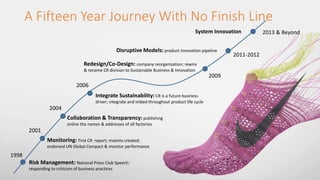
A Fifteen Year Journey With No Finish Line 
Risk Management: National Press Club Speech: 
responding to criticism of business practices 
System Innovation 
Redesign/Co-Design: company reorganization; rewire 
& rename CR division to Sustainable Business & Innovation 
Integrate Sustainability: CR is a future business 
driver; integrate and imbed throughout product life cycle 
Collaboration & Transparency: publishing 
online the names & addresses of all factories 
Monitoring: First CR report; maxims created; 
endorsed UN Global Compact & monitor performance 
1998 
2001 
2004 
2006 
Disruptive Models: product innovation pipeline 
2009 
2011-2012 
2013 & Beyond
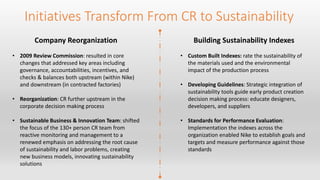
Initiatives Transform From CR to Sustainability 
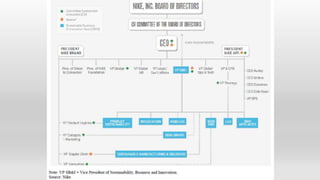
Company Reorganization 
• 2009 Review Commission: resulted in core 
changes that addressed key areas including 
governance, accountabilities, incentives, and 
checks & balances both upstream (within Nike) 
and downstream (in contracted factories) 
• Reorganization: CR further upstream in the 
corporate decision making process 
• Sustainable Business & Innovation Team: shifted 
the focus of the 130+ person CR team from 
reactive monitoring and management to a 
renewed emphasis on addressing the root cause 
of sustainability and labor problems, creating 
new business models, innovating sustainability 
solutions 
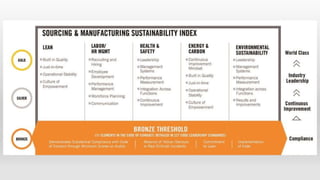
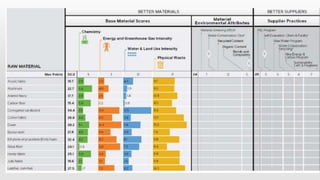
Building Sustainability Indexes 
• Custom Built Indexes: rate the sustainability of 
the materials used and the environmental 
impact of the production process 
• Developing Guidelines: Strategic integration of 
sustainability tools guide early product creation 
decision making process: educate designers, 
developers, and suppliers 
• Standards for Performance Evaluation: 
Implementation the indexes across the 
organization enabled Nike to establish goals and 
targets and measure performance against those 
standards
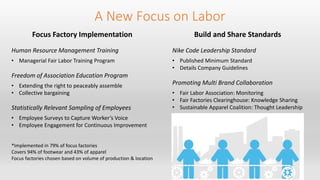
A New Focus on Labor 
Focus Factory Implementation 
Human Resource Management Training 
• Managerial Fair Labor Training Program 
Freedom of Association Education Program 
• Extending the right to peaceably assemble 
• Collective bargaining 
Statistically Relevant Sampling of Employees 
• Employee Surveys to Capture Worker’s Voice 
• Employee Engagement for Continuous Improvement 
*Implemented in 79% of focus factories 
Covers 94% of footwear and 43% of apparel 
Focus factories chosen based on volume of production & location 
Build and Share Standards 
Nike Code Leadership Standard 
• Published Minimum Standard 
• Details Company Guidelines 
Promoting Multi Brand Collaboration 
• Fair Labor Association: Monitoring 
• Fair Factories Clearinghouse: Knowledge Sharing 
• Sustainable Apparel Coalition: Thought Leadership
Distributing Sustainable Principles 
Upstream Focus on Suppliers 
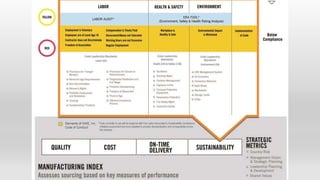
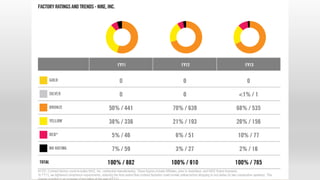
• 785 contract factories 
• 68% rated bronze or better on Nike’s 
Sourcing & Manufacturing 
Sustainability Index 
• 900M units produced annually 
• Lean Manufacturing 
Improved Working Relationships 
• 1.01M contract factory employees 
• Human Resources training to 61% of contract 
factory employees 
• Worked with the Fair Labor Association 
• Sustainable Compliance Initiative 
methodology & tool 
Downstream Focus on Consumers 
• Uncertainty of value of price premium on 
sustainable products 
• Focused on education of issues with customers 
• Communicating sustainable impact and reduction 
through packaging 
• Community programs to increase brand interaction
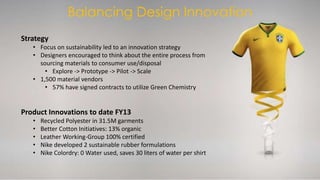
Balancing Design Innovation 
Strategy 
• Focus on sustainability led to an innovation strategy 
• Designers encouraged to think about the entire process from 
sourcing materials to consumer use/disposal 
• Explore -> Prototype -> Pilot -> Scale 
• 1,500 material vendors 
• 57% have signed contracts to utilize Green Chemistry 
Product Innovations to date FY13 
• Recycled Polyester in 31.5M garments 
• Better Cotton Initiatives: 13% organic 
• Leather Working-Group 100% certified 
• Nike developed 2 sustainable rubber formulations 
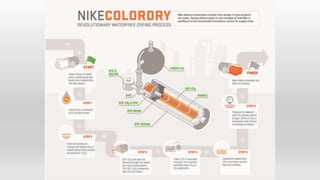
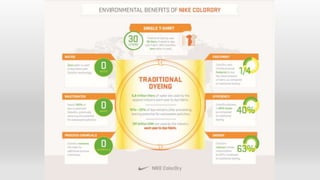
• Nike Colordry: 0 Water used, saves 30 liters of water per shirt
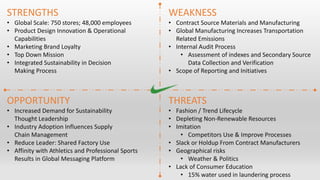
STRENGTHS 
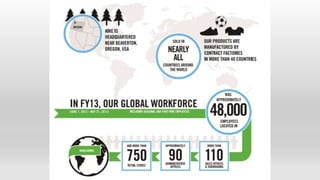
• Global Scale: 750 stores; 48,000 employees 
• Product Design Innovation & Operational 
Capabilities 
• Marketing Brand Loyalty 
• Top Down Mission 
• Integrated Sustainability in Decision 
Making Process 
WEAKNESS 
• Contract Source Materials and Manufacturing 
• Global Manufacturing Increases Transportation 
Related Emissions 
• Internal Audit Process 
• Assessment of indexes and Secondary Source 
Data Collection and Verification 
• Scope of Reporting and Initiatives 
OPPORTUNITY 
• Increased Demand for Sustainability 
Thought Leadership 
• Industry Adoption Influences Supply 
Chain Management 
• Reduce Leader: Shared Factory Use 
• Affinity with Athletics and Professional Sports 
Results in Global Messaging Platform 
THREATS 
• Fashion / Trend Lifecycle 
• Depleting Non-Renewable Resources 
• Imitation 
• Competitors Use & Improve Processes 
• Slack or Holdup From Contract Manufacturers 
• Geographical risks 
• Weather & Politics 
• Lack of Consumer Education 
• 15% water used in laundering process
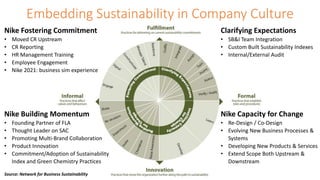
Embedding Sustainability in Company Culture 
Nike Fostering Commitment 
• Moved CR Upstream 
• CR Reporting 
• HR Management Training 
• Employee Engagement 
• Nike 2021: business sim experience 
Nike Building Momentum 
• Founding Partner of FLA 
• Thought Leader on SAC 
• Promoting Multi-Brand Collaboration 
• Product Innovation 
• Commitment/Adoption of Sustainability 
Index and Green Chemistry Practices 
Clarifying Expectations 
• SB&I Team Integration 
• Custom Built Sustainability Indexes 
• Internal/External Audit 
Nike Capacity for Change 
• Re-Design / Co-Design 
• Evolving New Business Processes & 
Systems 
• Developing New Products & Services 
• Extend Scope Both Upstream & 
Downstream 
Source: Network for Business Sustainability
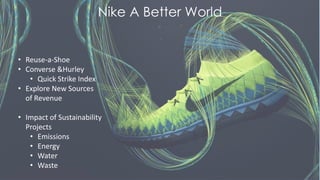
• Reuse-a-Shoe 
• Converse &Hurley 
• Quick Strike Index 
• Explore New Sources 
of Revenue 
• Impact of Sustainability 
Projects 
• Emissions 
• Energy 
• Water 
• Waste 
Nike A Better World
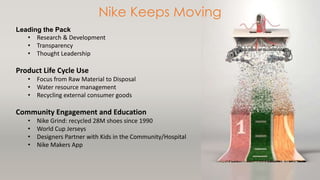
Leading the Pack 
Nike Keeps Moving 
• Research & Development 
• Transparency 
• Thought Leadership 
Product Life Cycle Use 
• Focus from Raw Material to Disposal 
• Water resource management 
• Recycling external consumer goods 
Community Engagement and Education 
• Nike Grind: recycled 28M shoes since 1990 
• World Cup Jerseys 
• Designers Partner with Kids in the Community/Hospital 
• Nike Makers App
QUESTIONS
Appendix
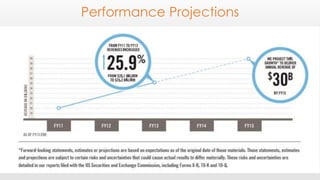
Performance Projections
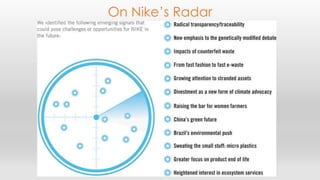
On Nike’s Radar
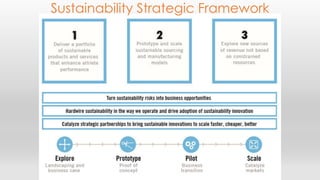
Sustainability Strategic Framework
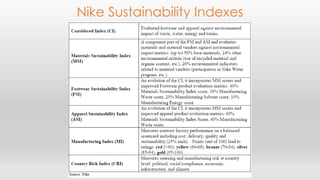
Nike Sustainability Indexes
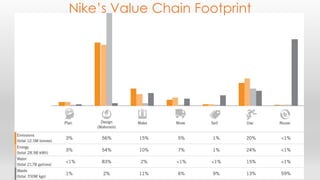
Nike’s Value Chain Footprint
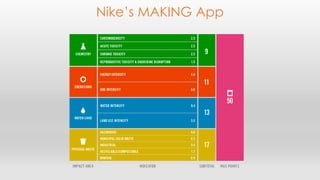
Nike’s MAKING App
References 
Brettman, Allan. "Nike, Doernbecher and 6 Young Designers Present the 2014 Freestyle Collection." OregonLive.com. 
7 Nov. 2014 http://www.oregonlive.com/playbooks-profits/index.ssf/2014/11/nike_doernbecher_and_6_young_d.html 
"Nike CR Report." Nike CR Report. N.p., n.d. Web. 12 Nov. 2014. 
http://www.nikeresponsibility.com/report/content/chapter/our-sustainability-strategy#topic-strengthening-our-core 
Peeples, Lynne. "Groups Giving Second Thoughts To Those Little Black Crumbs On Playing Fields." The Huffington Post. 
TheHuffingtonPost.com, 16 Oct. 2014. Web. 8 Nov. 2014. 
http://www.huffingtonpost.com/2014/10/16/artificial-turf-cancer-crumb-rubber_n_5997228.html 
Carroll, G. “Nike: Sustainability and Labor Practices 2008-2013,” HBP, 2013. 
Bertels, S., “Embedding Sustainability in Organizational Culture: A How-To Guide for Executives,” Network for Business 
Sustainability and Simon Frazier University.

Nike Sustainability Overview

  • 1.
    NIKE We definewho we are by what we do – and also by how we do it. Mike Arkin & Kelly Bowker
  • 2.
    A Fifteen YearJourney With No Finish Line Risk Management: National Press Club Speech: responding to criticism of business practices System Innovation Redesign/Co-Design: company reorganization; rewire & rename CR division to Sustainable Business & Innovation Integrate Sustainability: CR is a future business driver; integrate and imbed throughout product life cycle Collaboration & Transparency: publishing online the names & addresses of all factories Monitoring: First CR report; maxims created; endorsed UN Global Compact & monitor performance 1998 2001 2004 2006 Disruptive Models: product innovation pipeline 2009 2011-2012 2013 & Beyond
  • 3.
    Initiatives Transform FromCR to Sustainability Company Reorganization • 2009 Review Commission: resulted in core changes that addressed key areas including governance, accountabilities, incentives, and checks & balances both upstream (within Nike) and downstream (in contracted factories) • Reorganization: CR further upstream in the corporate decision making process • Sustainable Business & Innovation Team: shifted the focus of the 130+ person CR team from reactive monitoring and management to a renewed emphasis on addressing the root cause of sustainability and labor problems, creating new business models, innovating sustainability solutions Building Sustainability Indexes • Custom Built Indexes: rate the sustainability of the materials used and the environmental impact of the production process • Developing Guidelines: Strategic integration of sustainability tools guide early product creation decision making process: educate designers, developers, and suppliers • Standards for Performance Evaluation: Implementation the indexes across the organization enabled Nike to establish goals and targets and measure performance against those standards
  • 4.
    A New Focuson Labor Focus Factory Implementation Human Resource Management Training • Managerial Fair Labor Training Program Freedom of Association Education Program • Extending the right to peaceably assemble • Collective bargaining Statistically Relevant Sampling of Employees • Employee Surveys to Capture Worker’s Voice • Employee Engagement for Continuous Improvement *Implemented in 79% of focus factories Covers 94% of footwear and 43% of apparel Focus factories chosen based on volume of production & location Build and Share Standards Nike Code Leadership Standard • Published Minimum Standard • Details Company Guidelines Promoting Multi Brand Collaboration • Fair Labor Association: Monitoring • Fair Factories Clearinghouse: Knowledge Sharing • Sustainable Apparel Coalition: Thought Leadership
  • 5.
    Distributing Sustainable Principles Upstream Focus on Suppliers • 785 contract factories • 68% rated bronze or better on Nike’s Sourcing & Manufacturing Sustainability Index • 900M units produced annually • Lean Manufacturing Improved Working Relationships • 1.01M contract factory employees • Human Resources training to 61% of contract factory employees • Worked with the Fair Labor Association • Sustainable Compliance Initiative methodology & tool Downstream Focus on Consumers • Uncertainty of value of price premium on sustainable products • Focused on education of issues with customers • Communicating sustainable impact and reduction through packaging • Community programs to increase brand interaction
  • 6.
    Balancing Design Innovation Strategy • Focus on sustainability led to an innovation strategy • Designers encouraged to think about the entire process from sourcing materials to consumer use/disposal • Explore -> Prototype -> Pilot -> Scale • 1,500 material vendors • 57% have signed contracts to utilize Green Chemistry Product Innovations to date FY13 • Recycled Polyester in 31.5M garments • Better Cotton Initiatives: 13% organic • Leather Working-Group 100% certified • Nike developed 2 sustainable rubber formulations • Nike Colordry: 0 Water used, saves 30 liters of water per shirt
  • 7.
    STRENGTHS • GlobalScale: 750 stores; 48,000 employees • Product Design Innovation & Operational Capabilities • Marketing Brand Loyalty • Top Down Mission • Integrated Sustainability in Decision Making Process WEAKNESS • Contract Source Materials and Manufacturing • Global Manufacturing Increases Transportation Related Emissions • Internal Audit Process • Assessment of indexes and Secondary Source Data Collection and Verification • Scope of Reporting and Initiatives OPPORTUNITY • Increased Demand for Sustainability Thought Leadership • Industry Adoption Influences Supply Chain Management • Reduce Leader: Shared Factory Use • Affinity with Athletics and Professional Sports Results in Global Messaging Platform THREATS • Fashion / Trend Lifecycle • Depleting Non-Renewable Resources • Imitation • Competitors Use & Improve Processes • Slack or Holdup From Contract Manufacturers • Geographical risks • Weather & Politics • Lack of Consumer Education • 15% water used in laundering process
  • 8.
    Embedding Sustainability inCompany Culture Nike Fostering Commitment • Moved CR Upstream • CR Reporting • HR Management Training • Employee Engagement • Nike 2021: business sim experience Nike Building Momentum • Founding Partner of FLA • Thought Leader on SAC • Promoting Multi-Brand Collaboration • Product Innovation • Commitment/Adoption of Sustainability Index and Green Chemistry Practices Clarifying Expectations • SB&I Team Integration • Custom Built Sustainability Indexes • Internal/External Audit Nike Capacity for Change • Re-Design / Co-Design • Evolving New Business Processes & Systems • Developing New Products & Services • Extend Scope Both Upstream & Downstream Source: Network for Business Sustainability
  • 9.
    • Reuse-a-Shoe •Converse &Hurley • Quick Strike Index • Explore New Sources of Revenue • Impact of Sustainability Projects • Emissions • Energy • Water • Waste Nike A Better World
  • 10.
    Leading the Pack Nike Keeps Moving • Research & Development • Transparency • Thought Leadership Product Life Cycle Use • Focus from Raw Material to Disposal • Water resource management • Recycling external consumer goods Community Engagement and Education • Nike Grind: recycled 28M shoes since 1990 • World Cup Jerseys • Designers Partner with Kids in the Community/Hospital • Nike Makers App
  • 11.
  • 12.
  • 15.
  • 16.
  • 17.
  • 18.
  • 22.
  • 26.
  • 27.
    References Brettman, Allan."Nike, Doernbecher and 6 Young Designers Present the 2014 Freestyle Collection." OregonLive.com. 7 Nov. 2014 http://www.oregonlive.com/playbooks-profits/index.ssf/2014/11/nike_doernbecher_and_6_young_d.html "Nike CR Report." Nike CR Report. N.p., n.d. Web. 12 Nov. 2014. http://www.nikeresponsibility.com/report/content/chapter/our-sustainability-strategy#topic-strengthening-our-core Peeples, Lynne. "Groups Giving Second Thoughts To Those Little Black Crumbs On Playing Fields." The Huffington Post. TheHuffingtonPost.com, 16 Oct. 2014. Web. 8 Nov. 2014. http://www.huffingtonpost.com/2014/10/16/artificial-turf-cancer-crumb-rubber_n_5997228.html Carroll, G. “Nike: Sustainability and Labor Practices 2008-2013,” HBP, 2013. Bertels, S., “Embedding Sustainability in Organizational Culture: A How-To Guide for Executives,” Network for Business Sustainability and Simon Frazier University.

Editor's Notes

  • #2 Sustainability is a team sport
  • #6 How their influencing users out of their control – factories/vendors -consumer awareness 2020 goal is that all factories rate bronze and better
  • #7 More than 500,000 different products Polyester: from 3,400 in FY04 19% all recycled 35% of products use polyester Leather: evaluates the pros and cons of real leather provided from cattle farms vs imitation leather Cotton: looks at environment, social & economic impacts Water: looks at use downstream (coloring fabrics) & upstream (consumers’ laundering habits 15%)
  • #8 S: Transparency Top down mission Distribution Nike Grind reuse-a-shoe: 28M since 1990 Cardboard shoe boxes 100% recycled W Contract Source Materials and Manufacturing Global Manufacturing Increases Transportation Related Emissions Internal Audit Process: Assessment of indexes and Secondary Source Data Collection and Verification Scope of Reporting and Initiatives O 57% of apparel material vendors commit to green chemistry practices 1,500 material vendors Distribution: US, Japan, Belgium and China. T Fashion / Trend Lifecycle Depleting Non-Renewable Resources Imitation: Competitors Use & Improve Processes Slack or Holdup From Contract Manufacturers Geographical risks: Weather & Politics Lack of Consumer Education: 15% water in laundering process
  • #10 Flyknit Lunar 1 reduced foot waste by 80% on average Emissions: reduced air freight primary distributors in Belgium, Japan, China & US Energy: offset 46% of energy used in Nike Brand retail stores Green certified (59,000 mWh) Produced renewable energy at 2 global distribution centers in Belgium(wind turbines) & China(solar energy) Water: 15% of water use in the product supply change is in laundry process Waste: 59% of waste is in the disposal phase
  • #11 Nike Grind: used in more than 450,000 locations around the world 6 kids (patients) at Oregon Health & Science University Doernbecher Children's Hospital co-created Freestyle Shoes - Program in place since 2004 have raised more than $8M for expanding research, supporting clinical care, purchasing medical equipment, recruiting experts and helping cover the cost of care.
  • #18 Driving profitable growth & reduce risk through sustainable innovation
  • #26 Exhibit 7 from case
  • #27 Partnered with the London School of Design to develop the app – allows designers to evaluate materials from sourcing/manufacturing to waste Score Card for material evaluation The Higher the Score the Better