NIKE
Inspiration and Innovation for
every athlete in the world.
- Mrudula Kavuri,
IIT Madras
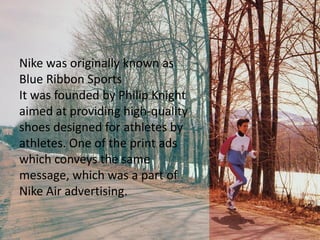
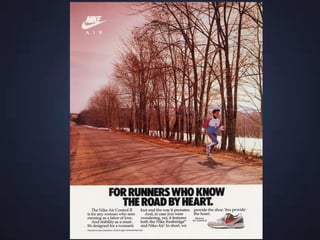
Nike was originally known as
Blue Ribbon Sports
It was founded by Philip Knight
aimed at providing high quality
shoes designed for athletes by
athletes.
BRAND HISTORY OF NIKE
• Founded in 1962.
• Started manufacturing shoes
for runners at competitive
prices.
• 1985: Nike signed up
basketball player, Michael
Jordan as its spokesperson.
• Air Jordan line of basketall
shoes were released
• 1988 : Nike aired the first
ads in its $20 million “Just
Do It” campaign.
• Used geographic
segmentation as the key
marketing strategy to
promote its brand overseas
in Europe.
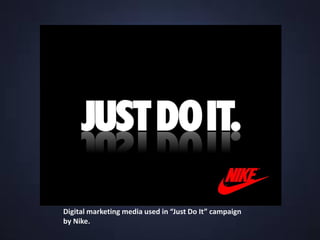
Digital marketing media used in “Just Do It” campaign
by Nike.
• 1994: Nike sponsored
Brazilian team won the World
Cup.
Major breakthrough for the brand
when Brazilian team won.
• 2007: Nike acquired Umbro,
British maker of soccer related
footwear, apparel and
equipment.
• 2008: In summer Olympics,
It sponsored several teams and
athletes and got permission to
run Nike ads during the games.
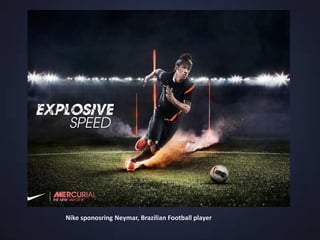
Nike sponosring Neymar, Brazilian Football player
• Started to diversify the
companies and entered new
product categories like
footwear, apparel, and
equipment.
• 2009: Launched Tiger Web
Talkback session at
nikegolf.com when Tiger
Woods endorsed the Nike
Golf brand.
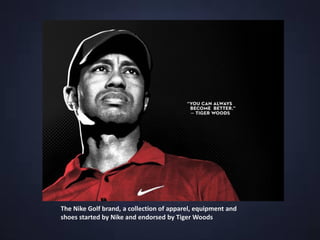
The Nike Golf brand, a collection of apparel, equipment and
shoes started by Nike and endorsed by Tiger Woods
• Nike aligned with Tennis
players Maria Sharapova,
Roger Federer, and Rafael
Nadal to push its Tennis
clothing and sports gear.
• Also aligned with Lance
Armstrong, which also helped
in Armstrong’s LIVESTRONG
campaign.
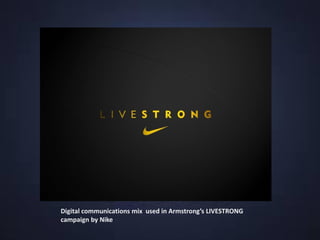
Digital communications mix used in Armstrong’s LIVESTRONG
campaign by Nike
Nike aligned with Lance
Armstrong which helped him
his LIVESTRONG campaign.
The following is a video of
the same.
• Introduced foot Locker, a
new chain stores which
offers basketball products by
Nike brands such as
Converse and Jordan which
featured basketball
superstars like Kobe Bryant
and LeBron James.
Recently launched Nike+(Plus)
technology.
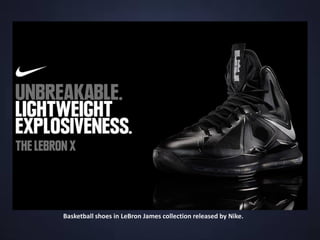
Basketball shoes in LeBron James collection released by Nike.
MARKETING
STRATEGIES
1. Differentiated
offering
2.Using a variety of
marketing
communications mix
3. Brand positioning,
segmentation and
targeting
4. Innovative
technology
(Shoes+Technology)
5. Celebrity
marketing: Pyramid
of influence
6. Conducting and
organising events
like Marathons as a
part of IMCs’
Nike+ hosted the Human Race 10K
event, designed to celebrate running,
drew more than 780,000
participants.
Now, Nike’s revenue
is a whopping $30
million!!!
CONCLUSION
With Nike’s impeccable
marketing strategies, it has
gained a lot of publicity and
now is at the top of the
footwear, apparel and
equipment industry in the
world.
Q&A
Q1. What are the pros, cons and risks associated with
Nike’s core marketing strategy?
Ans.
Nike believes in “pyramid of influence”, and it strategically
positions itself and uses celebrity marketing as its core marketing
strategy to create its brand image
• Pros – A repeatable model allows managers to refine skills and
systematize processes. Their clearly defined audience target –
athletes, sports enthusiasts, well off and brand conscious
customers – makes it easy for them to make target-centric ad
campaigns. It represents emotions and promotes its brand as a
brand of allegiance and loyalty. It uses geographic segmentation
to promote its products and brand.
• However Nike has, always, only been about 1 thing; it only
delivers a specific kind of product.
• Cons – It mainly focuses on producing high-products with cutting
edge technology and sells them at competitve prices. It does not
communicate to the middle class and lower class society.
• Risks – Intense competition and the influence of spokespersons
poses a risk to their strategies. Also ever changing demands and
choices of the consumers along with the international expansion
poses a risk to their strategies.
Q2. If you were Adidas, how would you compete with
Nike?
Ans. The strategy for Adidas is to compete with Nike
should be to target the areas of their weakness.
Adidas should look to better diversify their marketing
strategy. Also Adidas should aim to bring around the
diversified products in market which would further
popularise among consumers directly through its
goods. Investing the increments in the profits to get
some innovative and popular advertisements would
be the stupendous ground breaking product to get
leverage in competing with Nike. Adidas should focus
on creating new products coming up with new
strategies to promote its brand. IT should bring a new
ground breaking product into market to trump Nike
lead in the market. Adidas can also look further to
expand its reach to other sports where Nike has not
set its foot and look for attractive associations such
as those of Nike with the Apple to bring out Nike+.

Nike - Strategic Marketing

  • 1.
    NIKE Inspiration and Innovationfor every athlete in the world. - Mrudula Kavuri, IIT Madras
  • 6.
    Nike was originallyknown as Blue Ribbon Sports It was founded by Philip Knight aimed at providing high quality shoes designed for athletes by athletes.
  • 7.
    BRAND HISTORY OFNIKE • Founded in 1962. • Started manufacturing shoes for runners at competitive prices. • 1985: Nike signed up basketball player, Michael Jordan as its spokesperson.
  • 8.
    • Air Jordanline of basketall shoes were released • 1988 : Nike aired the first ads in its $20 million “Just Do It” campaign. • Used geographic segmentation as the key marketing strategy to promote its brand overseas in Europe.
  • 9.
    Digital marketing mediaused in “Just Do It” campaign by Nike.
  • 10.
    • 1994: Nikesponsored Brazilian team won the World Cup. Major breakthrough for the brand when Brazilian team won. • 2007: Nike acquired Umbro, British maker of soccer related footwear, apparel and equipment. • 2008: In summer Olympics, It sponsored several teams and athletes and got permission to run Nike ads during the games.
  • 11.
    Nike sponosring Neymar,Brazilian Football player
  • 12.
    • Started todiversify the companies and entered new product categories like footwear, apparel, and equipment. • 2009: Launched Tiger Web Talkback session at nikegolf.com when Tiger Woods endorsed the Nike Golf brand.
  • 13.
    The Nike Golfbrand, a collection of apparel, equipment and shoes started by Nike and endorsed by Tiger Woods
  • 14.
    • Nike alignedwith Tennis players Maria Sharapova, Roger Federer, and Rafael Nadal to push its Tennis clothing and sports gear. • Also aligned with Lance Armstrong, which also helped in Armstrong’s LIVESTRONG campaign.
  • 15.
    Digital communications mixused in Armstrong’s LIVESTRONG campaign by Nike
  • 16.
    Nike aligned withLance Armstrong which helped him his LIVESTRONG campaign. The following is a video of the same.
  • 18.
    • Introduced footLocker, a new chain stores which offers basketball products by Nike brands such as Converse and Jordan which featured basketball superstars like Kobe Bryant and LeBron James. Recently launched Nike+(Plus) technology.
  • 19.
    Basketball shoes inLeBron James collection released by Nike.
  • 20.
  • 21.
    2.Using a varietyof marketing communications mix
  • 22.
  • 23.
  • 24.
  • 25.
    6. Conducting and organisingevents like Marathons as a part of IMCs’ Nike+ hosted the Human Race 10K event, designed to celebrate running, drew more than 780,000 participants.
  • 26.
    Now, Nike’s revenue isa whopping $30 million!!!
  • 27.
    CONCLUSION With Nike’s impeccable marketingstrategies, it has gained a lot of publicity and now is at the top of the footwear, apparel and equipment industry in the world.
  • 28.
    Q&A Q1. What arethe pros, cons and risks associated with Nike’s core marketing strategy? Ans. Nike believes in “pyramid of influence”, and it strategically positions itself and uses celebrity marketing as its core marketing strategy to create its brand image • Pros – A repeatable model allows managers to refine skills and systematize processes. Their clearly defined audience target – athletes, sports enthusiasts, well off and brand conscious customers – makes it easy for them to make target-centric ad campaigns. It represents emotions and promotes its brand as a brand of allegiance and loyalty. It uses geographic segmentation to promote its products and brand. • However Nike has, always, only been about 1 thing; it only delivers a specific kind of product. • Cons – It mainly focuses on producing high-products with cutting edge technology and sells them at competitve prices. It does not communicate to the middle class and lower class society. • Risks – Intense competition and the influence of spokespersons poses a risk to their strategies. Also ever changing demands and choices of the consumers along with the international expansion poses a risk to their strategies.
  • 29.
    Q2. If youwere Adidas, how would you compete with Nike? Ans. The strategy for Adidas is to compete with Nike should be to target the areas of their weakness. Adidas should look to better diversify their marketing strategy. Also Adidas should aim to bring around the diversified products in market which would further popularise among consumers directly through its goods. Investing the increments in the profits to get some innovative and popular advertisements would be the stupendous ground breaking product to get leverage in competing with Nike. Adidas should focus on creating new products coming up with new strategies to promote its brand. IT should bring a new ground breaking product into market to trump Nike lead in the market. Adidas can also look further to expand its reach to other sports where Nike has not set its foot and look for attractive associations such as those of Nike with the Apple to bring out Nike+.