Working with Vanguard Sites:
A Voluntary Sector Perspective
George McNamara
Alzheimer’s Society
@george_mcnamara
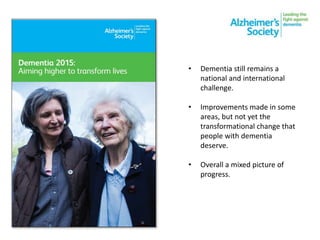
• Dementia still remains a
national and international
challenge.
• Improvements made in some
areas, but not yet the
transformational change that
people with dementia
deserve.
• Overall a mixed picture of
progress.
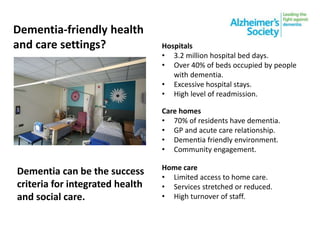
Dementia-friendly health
and care settings? Hospitals
• 3.2 million hospital bed days.
• Over 40% of beds occupied by people
with dementia.
• Excessive hospital stays.
• High level of readmission.
Care homes
• 70% of residents have dementia.
• GP and acute care relationship.
• Dementia friendly environment.
• Community engagement.
Home care
• Limited access to home care.
• Services stretched or reduced.
• High turnover of staff.
Dementia can be the success
criteria for integrated health
and social care.
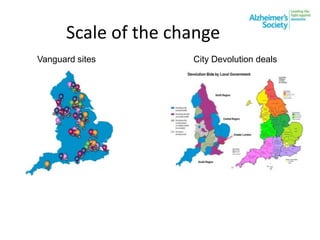
Scale of the change
Vanguard sites City Devolution deals
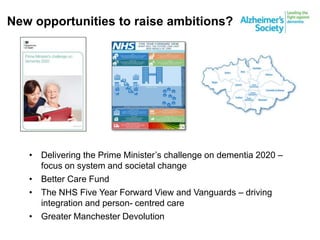
New opportunities to raise ambitions?
• Delivering the Prime Minister’s challenge on dementia 2020 –
focus on system and societal change
• Better Care Fund
• The NHS Five Year Forward View and Vanguards – driving
integration and person- centred care
• Greater Manchester Devolution
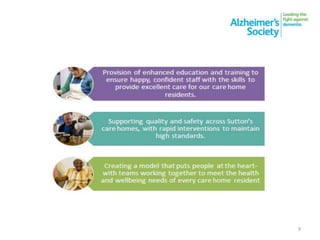
Working with the Sutton Vanguard
Enhanced Health in Care Homes
7
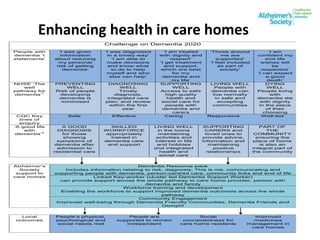
Enhancing health in care homes
Challenge on Dementia 2020
People with
dementia ‘I
statements’
‘I was given
information
about reducing
my personal
risk of getting
dementia’
‘I was diagnosed
in a timely way’
‘I am able to
make decisions
and know what
to do to help
myself and who
else can help’
‘I am treated
with dignity and
respect’
‘I get treatment
and support,
which are best
for my
dementia and
my life’
‘Those around
me are
supported’
‘I feel included
as part of
society’
‘I am
confident my
end life
wishes will
be
respected’
‘I can expect
a good
death’
NHSE ‘The
well
pathway for
dementia’
1
PREVENTING
WELL
Risk of people
developing
dementia is
minimised
DIAGNOSING
WELL
Timely
diagnosis,
integrated care
plan, and review
within the first
year
SUPPORTING
WELL
Access to safe
high quality
health and
social care for
people with
dementia and
carers
LIVING WELL
People with
dementia can
live normally
in safe and
accepting
communities
DYING
WELL
People living
with
dementia die
with dignity
in the place
of their
choosing
CQC Key
lines of
enquiry
Safe Effective Caring Responsive Well-led
‘A good life
with
dementia’
2
A GOOD
DIAGNOSIS
for those
showing
symptoms of
dementia after
admission to
residential care
SKILLED
WORKFORCE
appropriately
trained in
dementia care
and support
LIVING WELL
in the home
maintaining
activities and
interest in life
and hobbies
and integrated
health and
social care
SUPPORTING
CARERS and
loved ones to
provide advice,
information and
maintaining
positive
relationships
PART OF
THE
COMMUNITY
ensuring the
place of home
is also an
integral part of
the community
Alzheimer’s
Society
support to
care homes
Dementia Resource pack
Includes information relating to risk, diagnosis, This is me, communicating and
supporting people with dementia, person-centred care, community links and end of life
Linked Key-worker (cluster led Dementia Support Worker)
can provide support across the whole pathway to care home provider, person with
dementia and family
Workforce training and development
Enabling the workforce to support improved dementia outcomes across the whole
pathway
Community Engagement
Improved well-being through Dementia Friendly Communities, Dementia Friends and
Oomph!
Local
outcomes
People’s physical,
psychological and
social needs met
People are
supported to remain
independent
Social
connectedness for
care home residents
Improved
medicines
management in
care homes
9
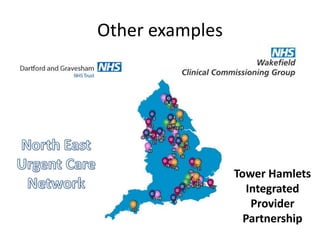
Other examples
Tower Hamlets
Integrated
Provider
Partnership
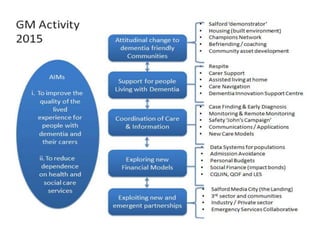
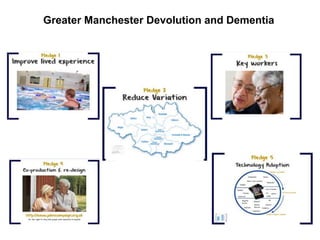
Greater Manchester Devolution and Dementia
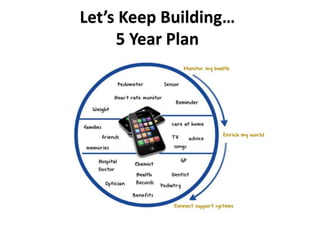
Let’s Keep Building…
5 Year Plan
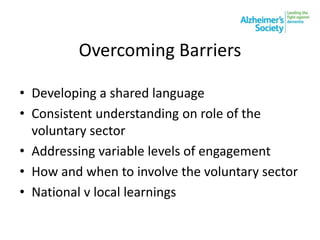
Overcoming Barriers
• Developing a shared language
• Consistent understanding on role of the
voluntary sector
• Addressing variable levels of engagement
• How and when to involve the voluntary sector
• National v local learnings
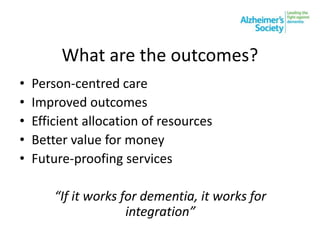
What are the outcomes?
• Person-centred care
• Improved outcomes
• Efficient allocation of resources
• Better value for money
• Future-proofing services
“If it works for dementia, it works for
integration”
Thank you
George McNamara, Alzheimer’s Society
www.alzheimers.org.uk
________________________________________________________________________________________
alzheimers.org.uk

NHS 5YFV Vanguards- George Mcnamara presentation

  • 1.
    Working with VanguardSites: A Voluntary Sector Perspective George McNamara Alzheimer’s Society @george_mcnamara
  • 2.
    • Dementia stillremains a national and international challenge. • Improvements made in some areas, but not yet the transformational change that people with dementia deserve. • Overall a mixed picture of progress.
  • 4.
    Dementia-friendly health and caresettings? Hospitals • 3.2 million hospital bed days. • Over 40% of beds occupied by people with dementia. • Excessive hospital stays. • High level of readmission. Care homes • 70% of residents have dementia. • GP and acute care relationship. • Dementia friendly environment. • Community engagement. Home care • Limited access to home care. • Services stretched or reduced. • High turnover of staff. Dementia can be the success criteria for integrated health and social care.
  • 5.
    Scale of thechange Vanguard sites City Devolution deals
  • 6.
    New opportunities toraise ambitions? • Delivering the Prime Minister’s challenge on dementia 2020 – focus on system and societal change • Better Care Fund • The NHS Five Year Forward View and Vanguards – driving integration and person- centred care • Greater Manchester Devolution
  • 7.
    Working with theSutton Vanguard Enhanced Health in Care Homes 7
  • 8.
    Enhancing health incare homes Challenge on Dementia 2020 People with dementia ‘I statements’ ‘I was given information about reducing my personal risk of getting dementia’ ‘I was diagnosed in a timely way’ ‘I am able to make decisions and know what to do to help myself and who else can help’ ‘I am treated with dignity and respect’ ‘I get treatment and support, which are best for my dementia and my life’ ‘Those around me are supported’ ‘I feel included as part of society’ ‘I am confident my end life wishes will be respected’ ‘I can expect a good death’ NHSE ‘The well pathway for dementia’ 1 PREVENTING WELL Risk of people developing dementia is minimised DIAGNOSING WELL Timely diagnosis, integrated care plan, and review within the first year SUPPORTING WELL Access to safe high quality health and social care for people with dementia and carers LIVING WELL People with dementia can live normally in safe and accepting communities DYING WELL People living with dementia die with dignity in the place of their choosing CQC Key lines of enquiry Safe Effective Caring Responsive Well-led ‘A good life with dementia’ 2 A GOOD DIAGNOSIS for those showing symptoms of dementia after admission to residential care SKILLED WORKFORCE appropriately trained in dementia care and support LIVING WELL in the home maintaining activities and interest in life and hobbies and integrated health and social care SUPPORTING CARERS and loved ones to provide advice, information and maintaining positive relationships PART OF THE COMMUNITY ensuring the place of home is also an integral part of the community Alzheimer’s Society support to care homes Dementia Resource pack Includes information relating to risk, diagnosis, This is me, communicating and supporting people with dementia, person-centred care, community links and end of life Linked Key-worker (cluster led Dementia Support Worker) can provide support across the whole pathway to care home provider, person with dementia and family Workforce training and development Enabling the workforce to support improved dementia outcomes across the whole pathway Community Engagement Improved well-being through Dementia Friendly Communities, Dementia Friends and Oomph! Local outcomes People’s physical, psychological and social needs met People are supported to remain independent Social connectedness for care home residents Improved medicines management in care homes
  • 9.
  • 10.
  • 12.
  • 13.
  • 14.
    Overcoming Barriers • Developinga shared language • Consistent understanding on role of the voluntary sector • Addressing variable levels of engagement • How and when to involve the voluntary sector • National v local learnings
  • 15.
    What are theoutcomes? • Person-centred care • Improved outcomes • Efficient allocation of resources • Better value for money • Future-proofing services “If it works for dementia, it works for integration”
  • 16.
    Thank you George McNamara,Alzheimer’s Society www.alzheimers.org.uk ________________________________________________________________________________________ alzheimers.org.uk