
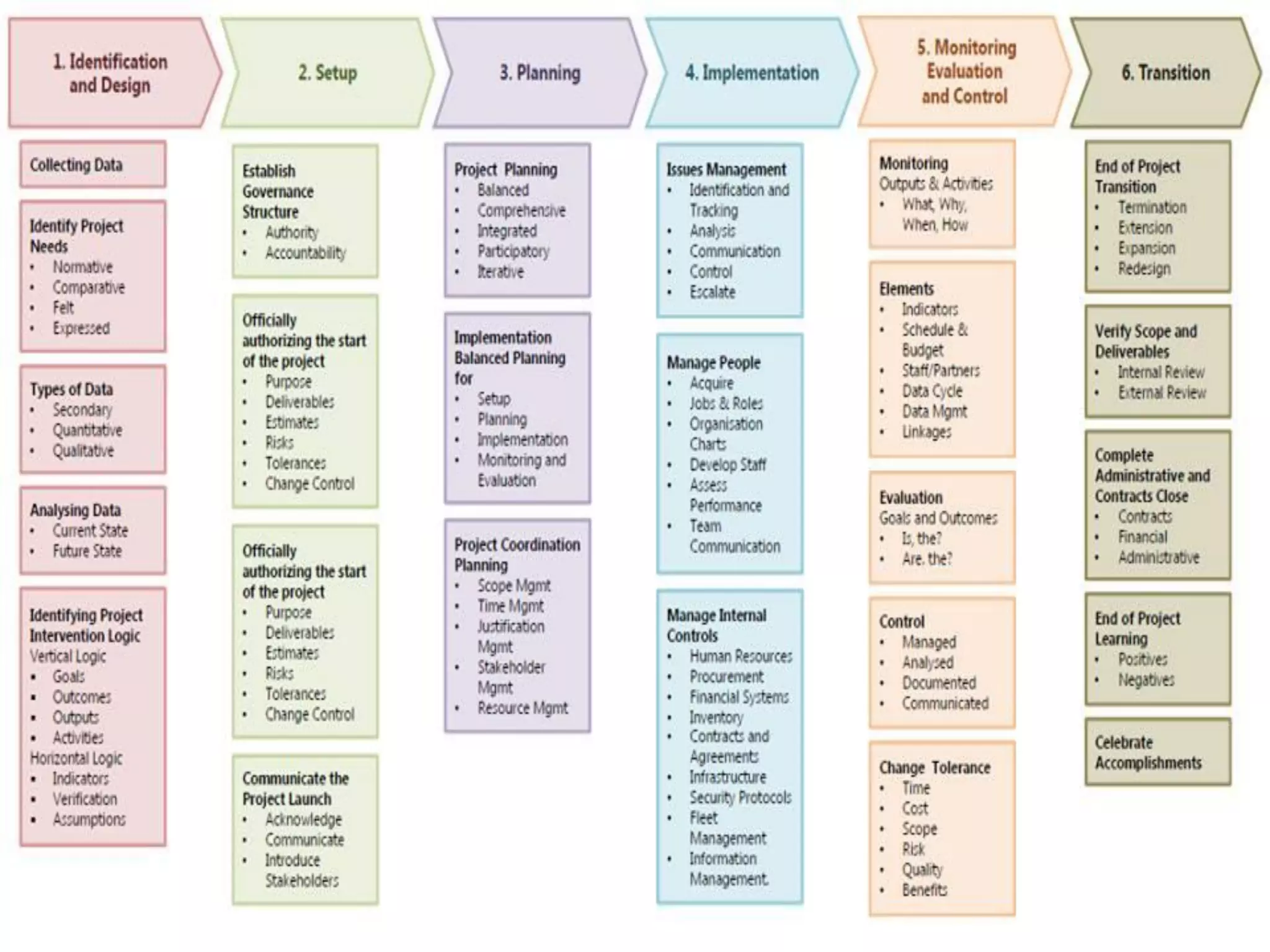
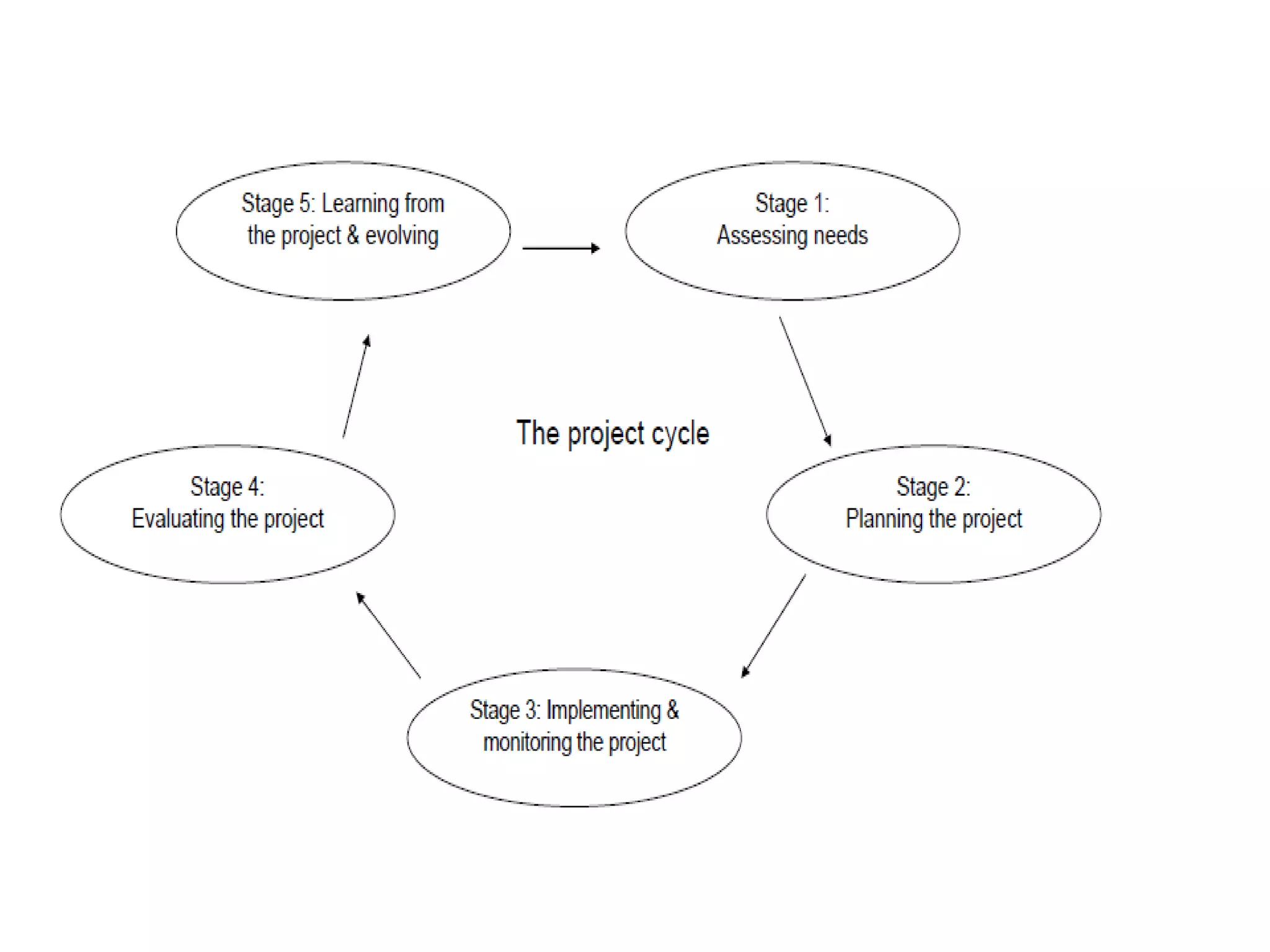
Project Management
The planning,
organizing,
scheduling, leading,
communicating and
controlling of work
activities to achieve
a pre-defined
outcome on time
and within budget.
RISK
RISK
RISK
Time/Schedule
Criteria for Evaluating Development Assistance
Stakeholder Management – to control, direct or tell
Stakeholder Engagement – to interact, involve or empower
Management vs Engagement
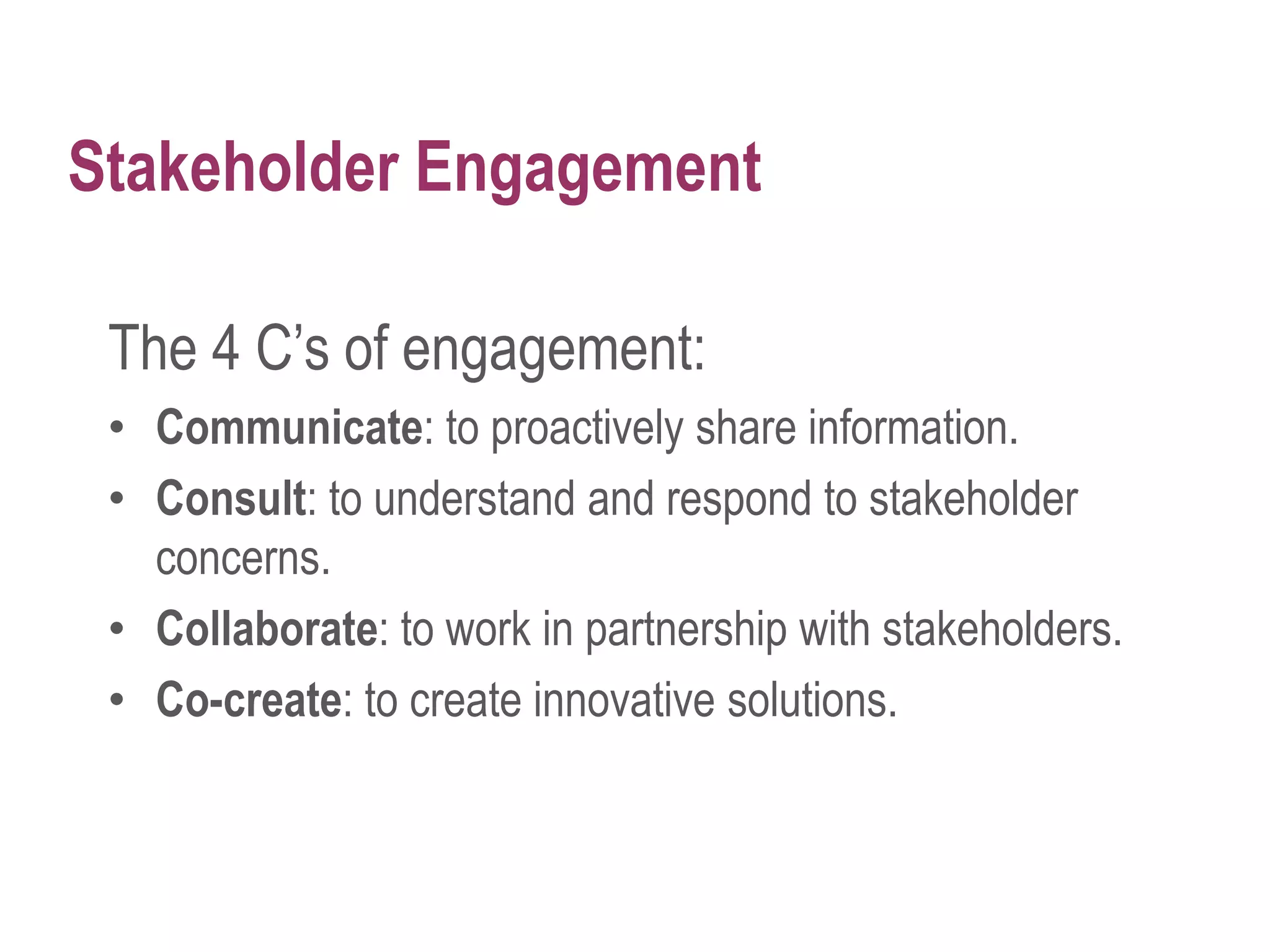
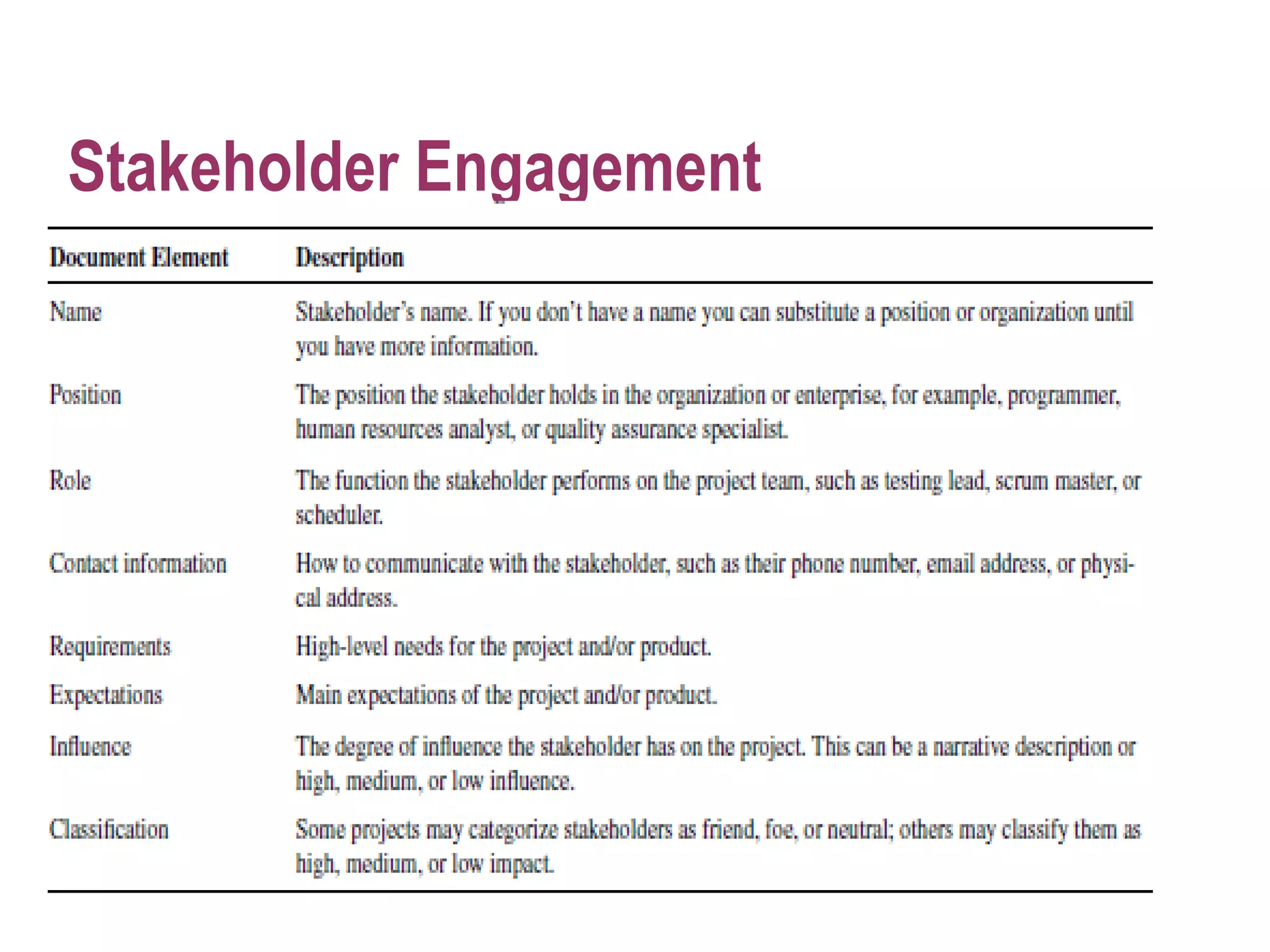
Stakeholder Engagement
The 4 C’s of engagement:
• Communicate: to proactively share information.
• Consult: to understand and respond to stakeholder
concerns.
• Collaborate: to work in partnership with stakeholders.
• Co-create: to create innovative solutions.
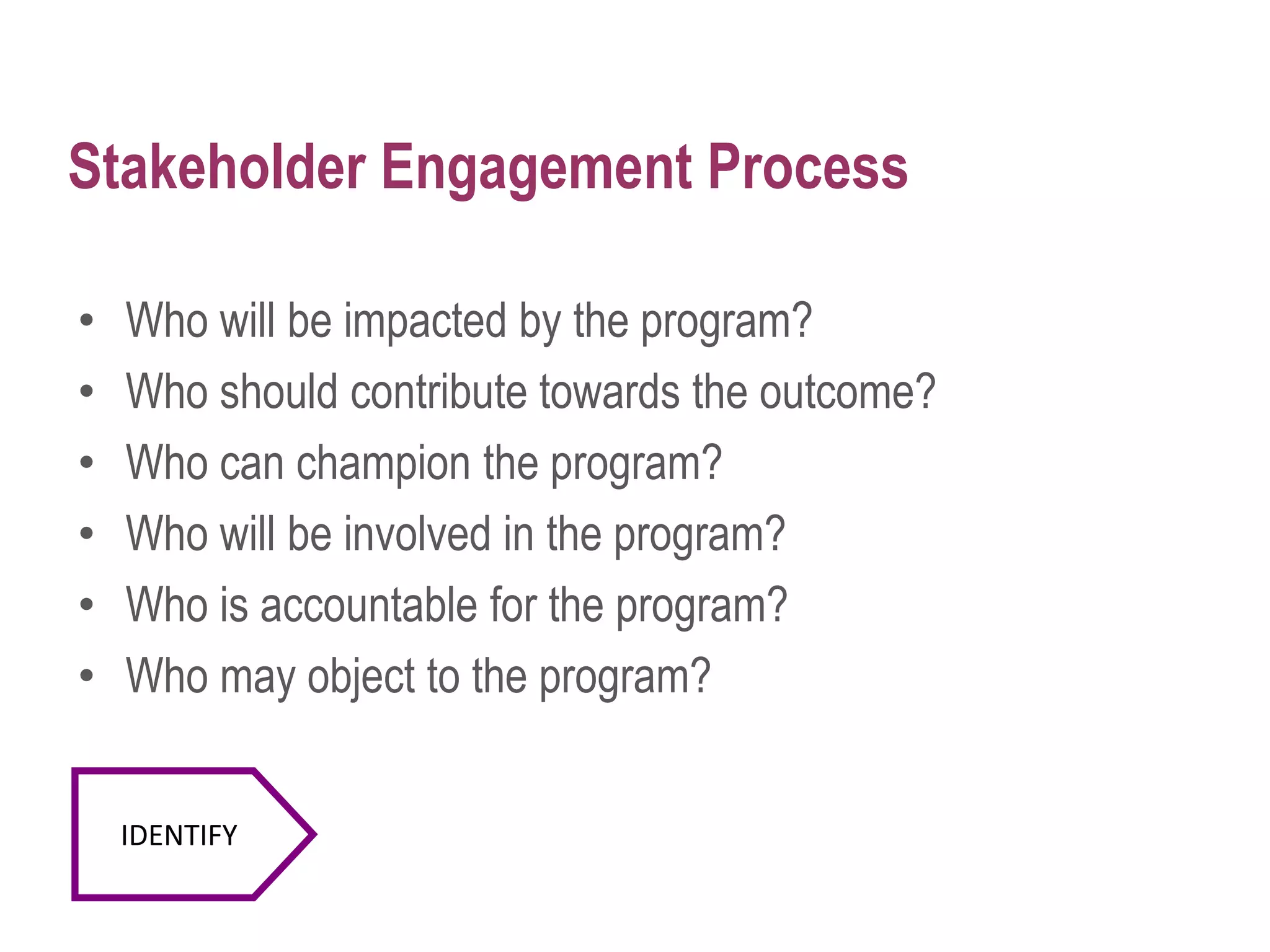
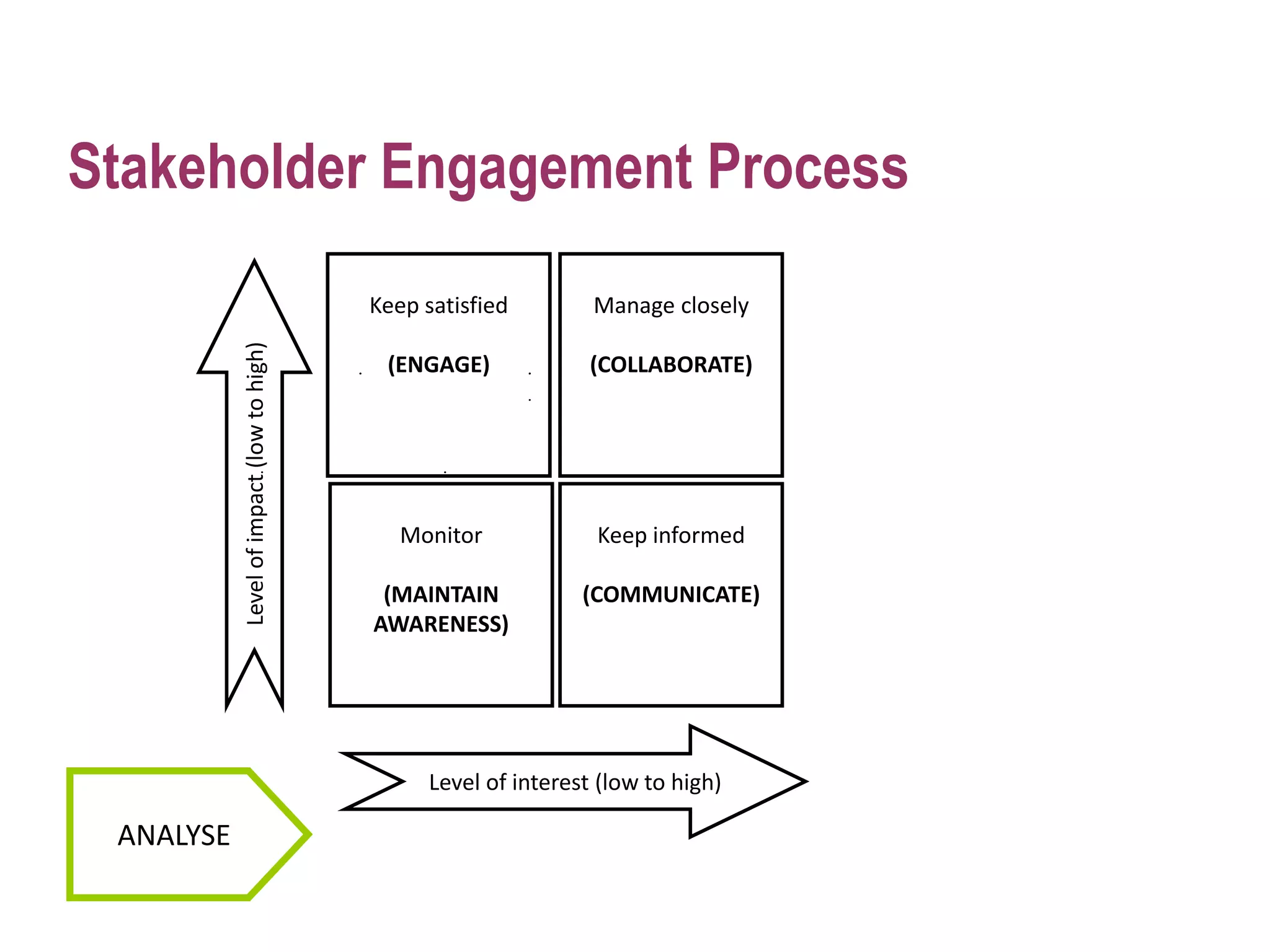
Stakeholder Engagement Process
IDENTIFY ANALYSE PLAN ENGAGE
Stakeholder Engagement Process
• Who will be impacted by the program?
• Who should contribute towards the outcome?
• Who can champion the program?
• Who will be involved in the program?
• Who is accountable for the program?
• Who may object to the program?
IDENTIFY
Stakeholder Engagement Process
Keep satisfied
(ENGAGE)
Manage closely
(COLLABORATE)
Monitor
(MAINTAIN
AWARENESS)
Keep informed
(COMMUNICATE)
Level of interest (low to high)
Levelofimpact(lowtohigh)
ANALYSE
Stakeholder Engagement
Categories of Project Manager Skills
Traditional Management
Skills:
• Planning
• Organizing
• Controlling (Reviewing)
Communication
Skills:
• Writing
• Presenting
• Questioning
• Persuading
• Listening
People Skills:
• Leadership
• Conflict Resolution
• Motivation
• Team Building
• Consensus Building
• Negotiation Skills
• Humor
Knowledge
Performance
OrganizationalSector specific
Personal
Dimensions of a “Competent” PM
biggest gaps →
personal development
priorities
Principles of Evaluation
The following are some of the principles, which should be kept in view
in evaluation.
1. Evaluation is a continuous process (continuity).
2. Evaluation should involve minimum possible costs (inexpensive).
3. Evaluation should be done without prejudice to day to day work
(minimum hindrance to day to day work).
4. Evaluation must be done on a co-operative basis in which the entire
staff and the board members should participate (total participation).
5. As far as possible, the agency should itself evaluate its program but
occasionally outside evaluation machinery should also be made use
of (external evaluation).
6. Total overall examination of the agency will reveal strength and
weaknesses. (agency / program totality).
7. The result of evaluation should be shared with workers of the agency
(sharing).
Steps in Evaluation:
Learningabouttheprogram
Creatingonevaluationplan&Evaluationindicators
Briefingtheconcernedpeopleabouttheevaluationplan&indicators
Revisingandelaboratingtheevaluationplan
InitiatingEvaluation
Utilizing/SharingtheInformation
Desired Situation Sustained benefits
and impact
Present Situation
Mid-Term review End-of project or
final evaluation
Ex-post or impact
evaluation
Time
Types of Evaluation
Evaluation ……
Analysis on how successful the project has been in
Transforming the means (i.e. the resources and inputs
allocated to the project) through project activities into
concrete project results
Provides the stakeholders with information on
inputs/costs per unit produced
Overall Objectives
Efficiency
Means +
Preconditions
Activities+
Assumptions
Results +
Assumptions
Project Purpose
+ Assumptions
Change
utilisation
action
allocation
Analysis on how well the production of project results
Contributes to the achievement of the project purpose,
i.e.: Are there clear Indications of changes and
improvements that benefit the beneficiaries of the
project?
Uses base-line information on the pre project situation
as a starting point
Effectiveness
Impact
Analysis of the overall effects of the project
Analysis of the contribution of the project purpose to
the overall objectives
Focus on long-term changes in the environment of the
project
“Collection” and analysis of information at the levels of
communities and society at large focusing on the final
beneficiaries of the project
Also analysis of unintended impacts (negative
and positive)
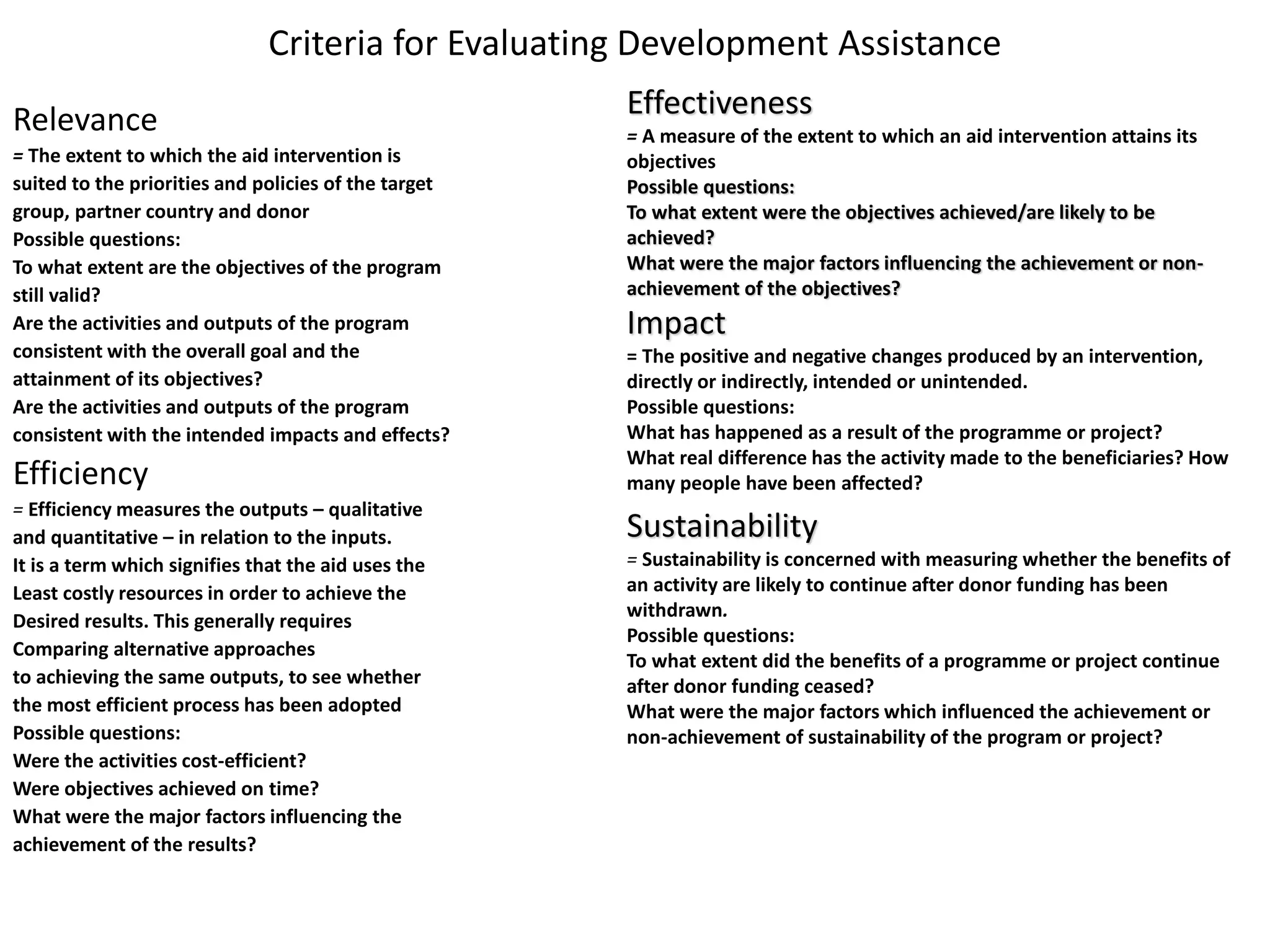
Criteria for Evaluating Development Assistance
Relevance
= The extent to which the aid intervention is
suited to the priorities and policies of the target
group, partner country and donor
Possible questions:
To what extent are the objectives of the program
still valid?
Are the activities and outputs of the program
consistent with the overall goal and the
attainment of its objectives?
Are the activities and outputs of the program
consistent with the intended impacts and effects?
Efficiency
= Efficiency measures the outputs – qualitative
and quantitative – in relation to the inputs.
It is a term which signifies that the aid uses the
Least costly resources in order to achieve the
Desired results. This generally requires
Comparing alternative approaches
to achieving the same outputs, to see whether
the most efficient process has been adopted
Possible questions:
Were the activities cost-efficient?
Were objectives achieved on time?
What were the major factors influencing the
achievement of the results?
Effectiveness
= A measure of the extent to which an aid intervention attains its
objectives
Possible questions:
To what extent were the objectives achieved/are likely to be
achieved?
What were the major factors influencing the achievement or non-
achievement of the objectives?
Impact
= The positive and negative changes produced by an intervention,
directly or indirectly, intended or unintended.
Possible questions:
What has happened as a result of the programme or project?
What real difference has the activity made to the beneficiaries? How
many people have been affected?
Sustainability
= Sustainability is concerned with measuring whether the benefits of
an activity are likely to continue after donor funding has been
withdrawn.
Possible questions:
To what extent did the benefits of a programme or project continue
after donor funding ceased?
What were the major factors which influenced the achievement or
non-achievement of sustainability of the program or project?
Ngo project management

Ngo project management

  • 12.
    Project Management The planning, organizing, scheduling,leading, communicating and controlling of work activities to achieve a pre-defined outcome on time and within budget. RISK RISK RISK Time/Schedule
  • 13.
    Criteria for EvaluatingDevelopment Assistance
  • 22.
    Stakeholder Management –to control, direct or tell Stakeholder Engagement – to interact, involve or empower Management vs Engagement
  • 23.
    Stakeholder Engagement The 4C’s of engagement: • Communicate: to proactively share information. • Consult: to understand and respond to stakeholder concerns. • Collaborate: to work in partnership with stakeholders. • Co-create: to create innovative solutions.
  • 24.
  • 25.
    Stakeholder Engagement Process •Who will be impacted by the program? • Who should contribute towards the outcome? • Who can champion the program? • Who will be involved in the program? • Who is accountable for the program? • Who may object to the program? IDENTIFY
  • 26.
    Stakeholder Engagement Process Keepsatisfied (ENGAGE) Manage closely (COLLABORATE) Monitor (MAINTAIN AWARENESS) Keep informed (COMMUNICATE) Level of interest (low to high) Levelofimpact(lowtohigh) ANALYSE
  • 27.
  • 28.
  • 29.
    Categories of ProjectManager Skills Traditional Management Skills: • Planning • Organizing • Controlling (Reviewing) Communication Skills: • Writing • Presenting • Questioning • Persuading • Listening People Skills: • Leadership • Conflict Resolution • Motivation • Team Building • Consensus Building • Negotiation Skills • Humor
  • 30.
    Knowledge Performance OrganizationalSector specific Personal Dimensions ofa “Competent” PM biggest gaps → personal development priorities
  • 31.
    Principles of Evaluation Thefollowing are some of the principles, which should be kept in view in evaluation. 1. Evaluation is a continuous process (continuity). 2. Evaluation should involve minimum possible costs (inexpensive). 3. Evaluation should be done without prejudice to day to day work (minimum hindrance to day to day work). 4. Evaluation must be done on a co-operative basis in which the entire staff and the board members should participate (total participation). 5. As far as possible, the agency should itself evaluate its program but occasionally outside evaluation machinery should also be made use of (external evaluation). 6. Total overall examination of the agency will reveal strength and weaknesses. (agency / program totality). 7. The result of evaluation should be shared with workers of the agency (sharing).
  • 32.
  • 34.
    Desired Situation Sustainedbenefits and impact Present Situation Mid-Term review End-of project or final evaluation Ex-post or impact evaluation Time Types of Evaluation
  • 35.
    Evaluation …… Analysis onhow successful the project has been in Transforming the means (i.e. the resources and inputs allocated to the project) through project activities into concrete project results Provides the stakeholders with information on inputs/costs per unit produced Overall Objectives Efficiency Means + Preconditions Activities+ Assumptions Results + Assumptions Project Purpose + Assumptions Change utilisation action allocation Analysis on how well the production of project results Contributes to the achievement of the project purpose, i.e.: Are there clear Indications of changes and improvements that benefit the beneficiaries of the project? Uses base-line information on the pre project situation as a starting point Effectiveness Impact Analysis of the overall effects of the project Analysis of the contribution of the project purpose to the overall objectives Focus on long-term changes in the environment of the project “Collection” and analysis of information at the levels of communities and society at large focusing on the final beneficiaries of the project Also analysis of unintended impacts (negative and positive)
  • 36.
    Criteria for EvaluatingDevelopment Assistance Relevance = The extent to which the aid intervention is suited to the priorities and policies of the target group, partner country and donor Possible questions: To what extent are the objectives of the program still valid? Are the activities and outputs of the program consistent with the overall goal and the attainment of its objectives? Are the activities and outputs of the program consistent with the intended impacts and effects? Efficiency = Efficiency measures the outputs – qualitative and quantitative – in relation to the inputs. It is a term which signifies that the aid uses the Least costly resources in order to achieve the Desired results. This generally requires Comparing alternative approaches to achieving the same outputs, to see whether the most efficient process has been adopted Possible questions: Were the activities cost-efficient? Were objectives achieved on time? What were the major factors influencing the achievement of the results? Effectiveness = A measure of the extent to which an aid intervention attains its objectives Possible questions: To what extent were the objectives achieved/are likely to be achieved? What were the major factors influencing the achievement or non- achievement of the objectives? Impact = The positive and negative changes produced by an intervention, directly or indirectly, intended or unintended. Possible questions: What has happened as a result of the programme or project? What real difference has the activity made to the beneficiaries? How many people have been affected? Sustainability = Sustainability is concerned with measuring whether the benefits of an activity are likely to continue after donor funding has been withdrawn. Possible questions: To what extent did the benefits of a programme or project continue after donor funding ceased? What were the major factors which influenced the achievement or non-achievement of sustainability of the program or project?