geometrical tolerance
• A geometrical tolerance is the maximum or
minimum variation from true geometric form
Overview of Geometric Tolerances
We will focus on three basic types of dimensional tolerances:
1. Form tolerances: straightness, circularity, flatness, cylindricity;
2. Orientation tolerances; perpendicularity, parallelism, angularity; and
3. Position tolerances: position, symmetry, concentricity.
Feature Control Frame
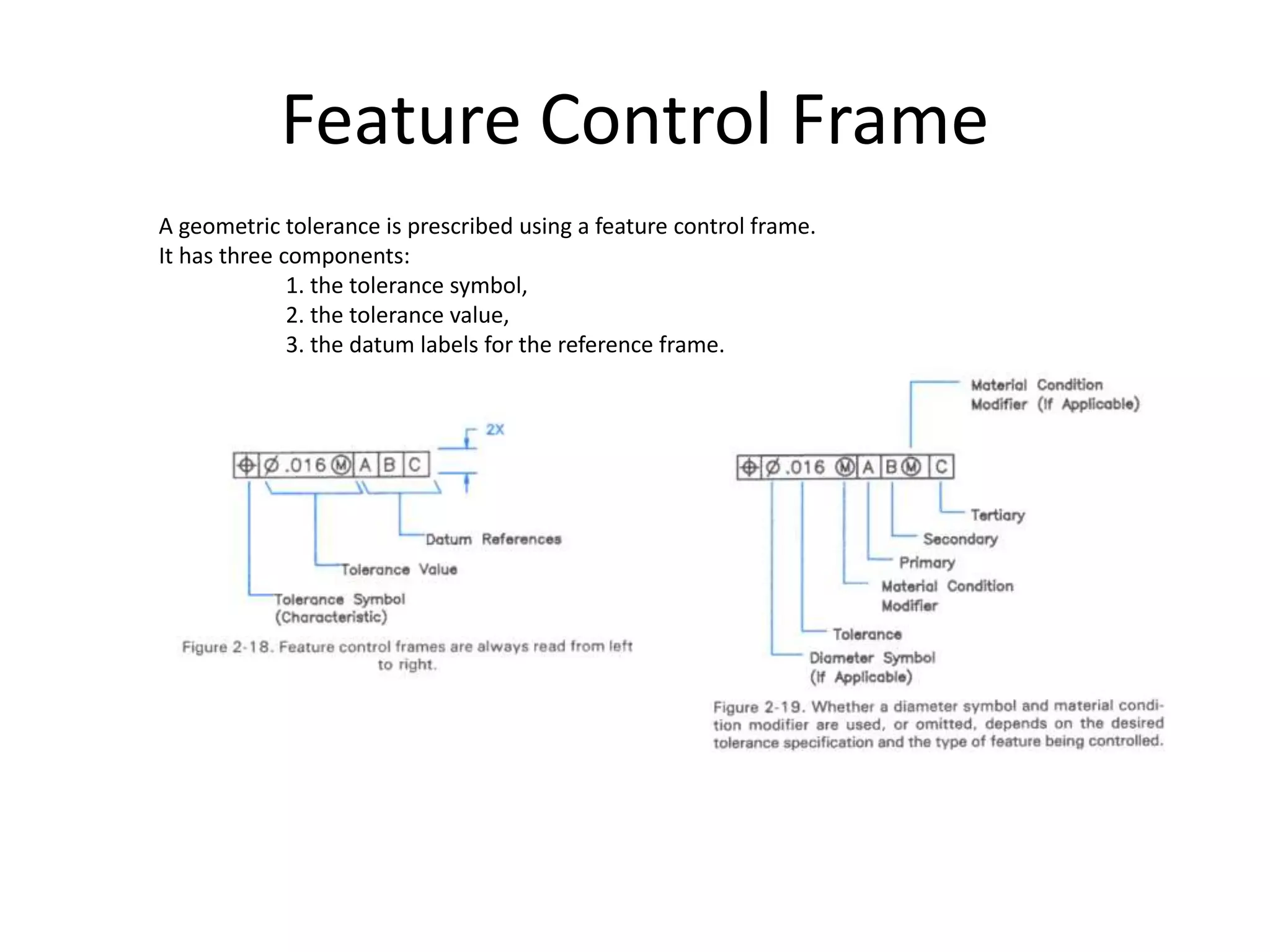
A geometric tolerance is prescribed using a feature control frame.
It has three components:
1. the tolerance symbol,
2. the tolerance value,
3. the datum labels for the reference frame.
Material Conditions
• Maximum Material Condition (MMC): The condition in which a feature contains the maximum amount of
material within the stated limits. e.g. minimum hole diameter, maximum shaft diameter.
• Least Material Condition (LMC): The condition in which a feature contains the least amount of material
within the stated limits. e.g. maximum hole diameter, minimum shaft diameter
RULE #1:
A dimensioned feature must have perfect form at its maximum material condition.
This means:
• A hole is a perfect cylinder when it is at its smallest permissible diameter,
• A shaft is a perfect cylinder when at its largest diameter.
• Planes are perfectly parallel when at their maximum distance.
Straightness of a Shaft
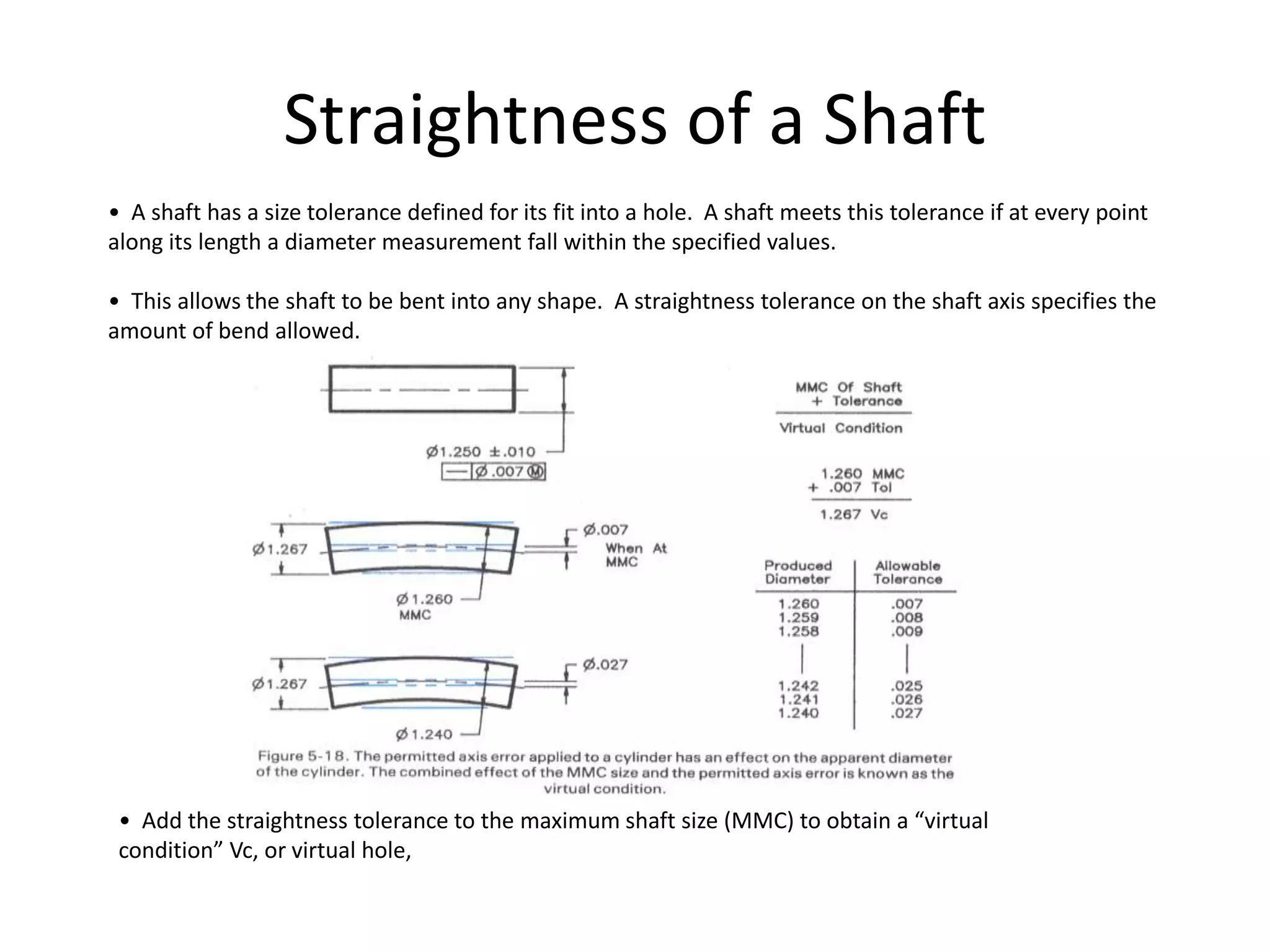
• A shaft has a size tolerance defined for its fit into a hole. A shaft meets this tolerance if at every point
along its length a diameter measurement fall within the specified values.
• This allows the shaft to be bent into any shape. A straightness tolerance on the shaft axis specifies the
amount of bend allowed.
• Add the straightness tolerance to the maximum shaft size (MMC) to obtain a “virtual
condition” Vc, or virtual hole,
Straightness of a Hole
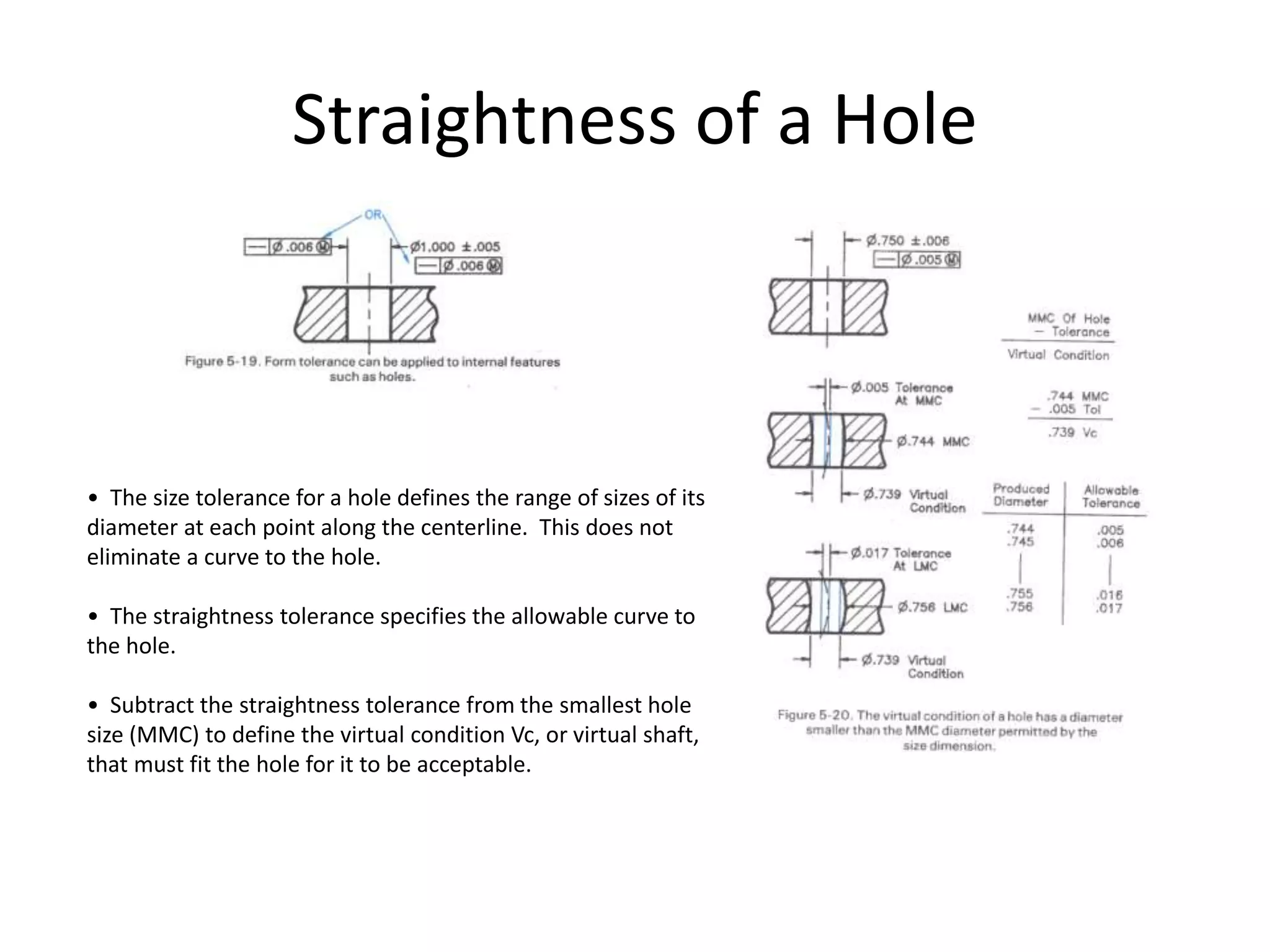
• The size tolerance for a hole defines the range of sizes of its
diameter at each point along the centerline. This does not
eliminate a curve to the hole.
• The straightness tolerance specifies the allowable curve to
the hole.
• Subtract the straightness tolerance from the smallest hole
size (MMC) to define the virtual condition Vc, or virtual shaft,
that must fit the hole for it to be acceptable.
Flatness, Circularity and Cylindricity
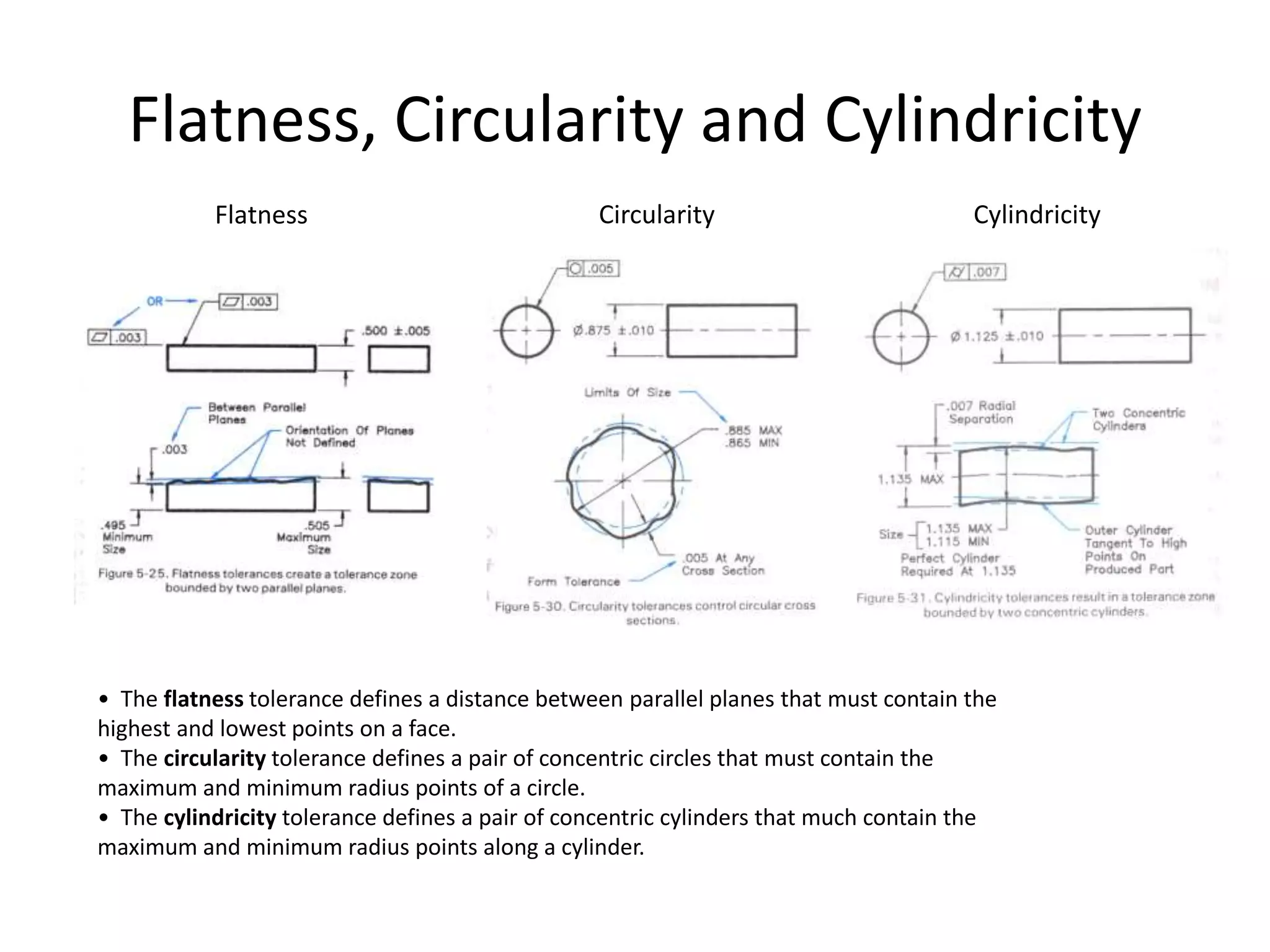
Flatness Circularity Cylindricity
• The flatness tolerance defines a distance between parallel planes that must contain the
highest and lowest points on a face.
• The circularity tolerance defines a pair of concentric circles that must contain the
maximum and minimum radius points of a circle.
• The cylindricity tolerance defines a pair of concentric cylinders that much contain the
maximum and minimum radius points along a cylinder.
Parallelism Tolerance
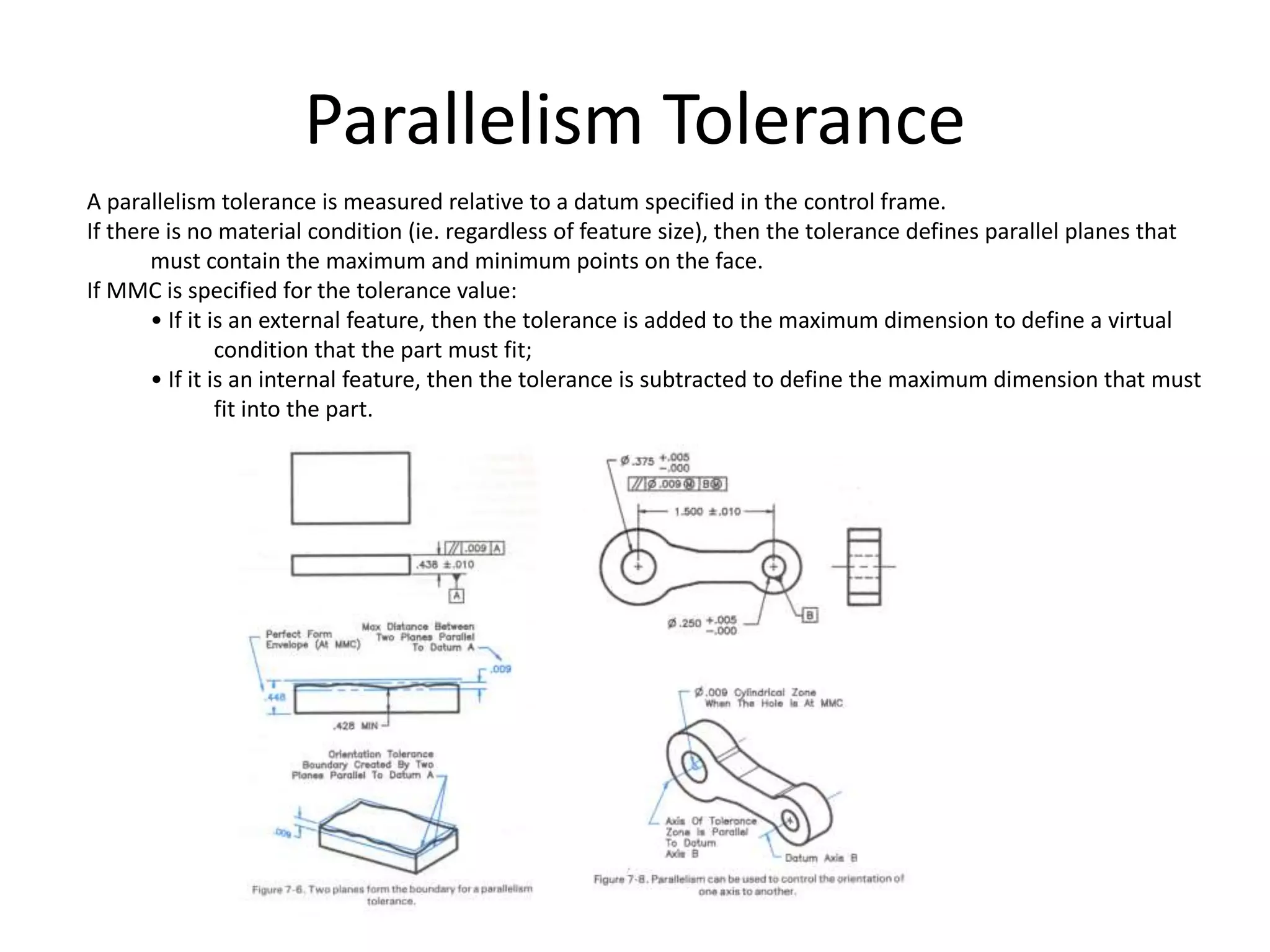
A parallelism tolerance is measured relative to a datum specified in the control frame.
If there is no material condition (ie. regardless of feature size), then the tolerance defines parallel planes that
must contain the maximum and minimum points on the face.
If MMC is specified for the tolerance value:
• If it is an external feature, then the tolerance is added to the maximum dimension to define a virtual
condition that the part must fit;
• If it is an internal feature, then the tolerance is subtracted to define the maximum dimension that must
fit into the part.
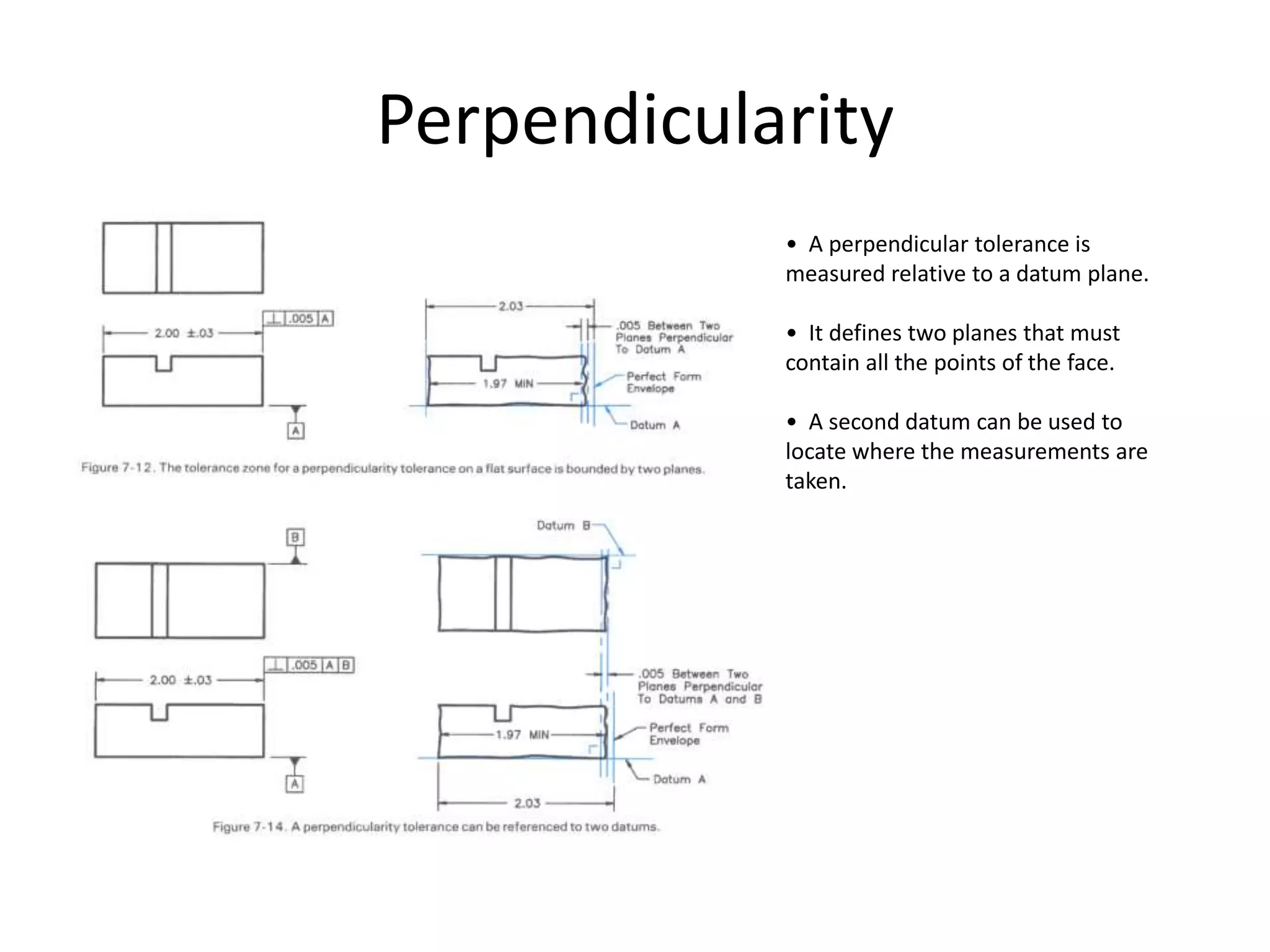
Perpendicularity
• A perpendicular tolerance is
measured relative to a datum plane.
• It defines two planes that must
contain all the points of the face.
• A second datum can be used to
locate where the measurements are
taken.
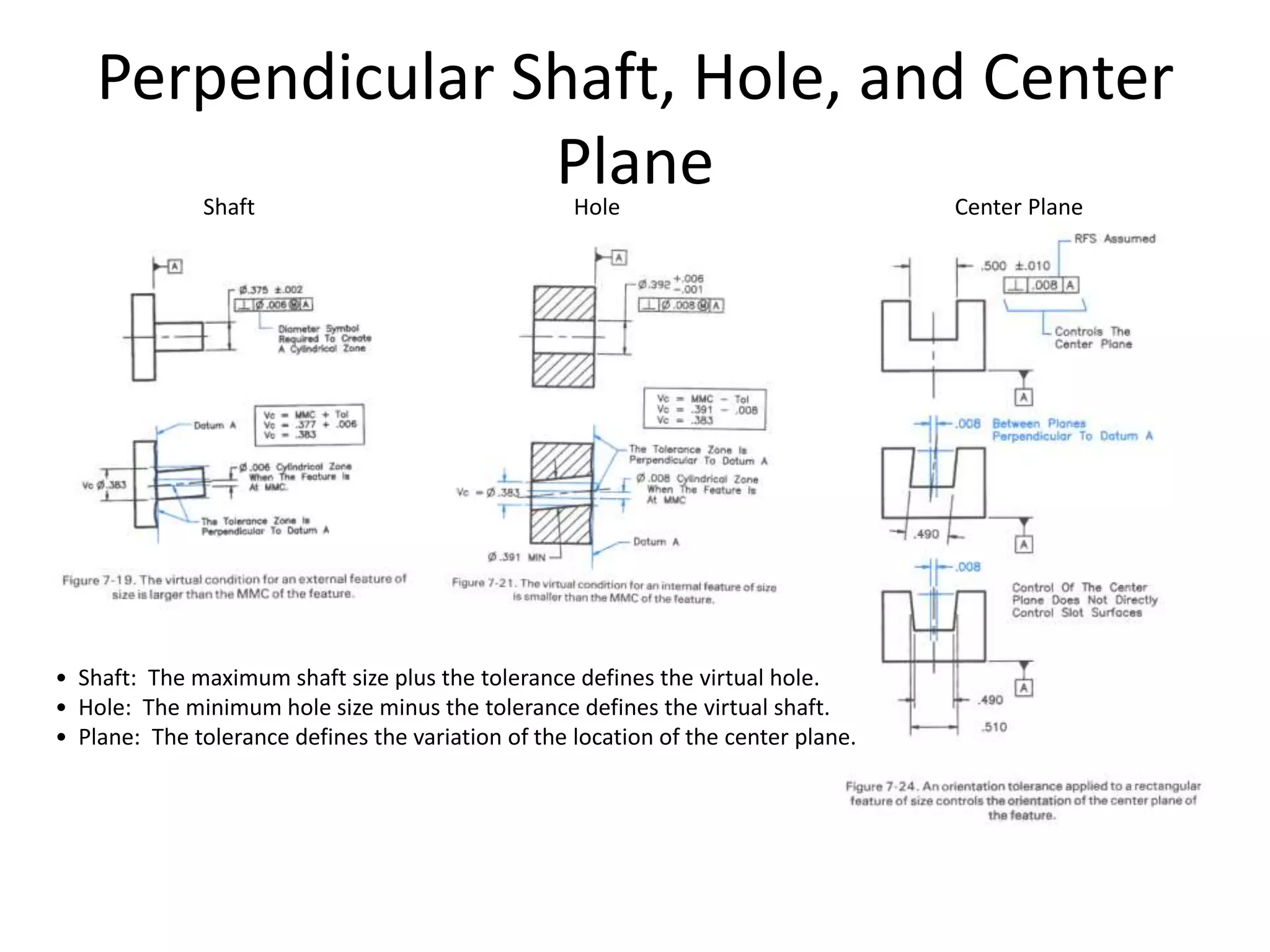
Perpendicular Shaft, Hole, and Center
PlaneShaft Hole Center Plane
• Shaft: The maximum shaft size plus the tolerance defines the virtual hole.
• Hole: The minimum hole size minus the tolerance defines the virtual shaft.
• Plane: The tolerance defines the variation of the location of the center plane.
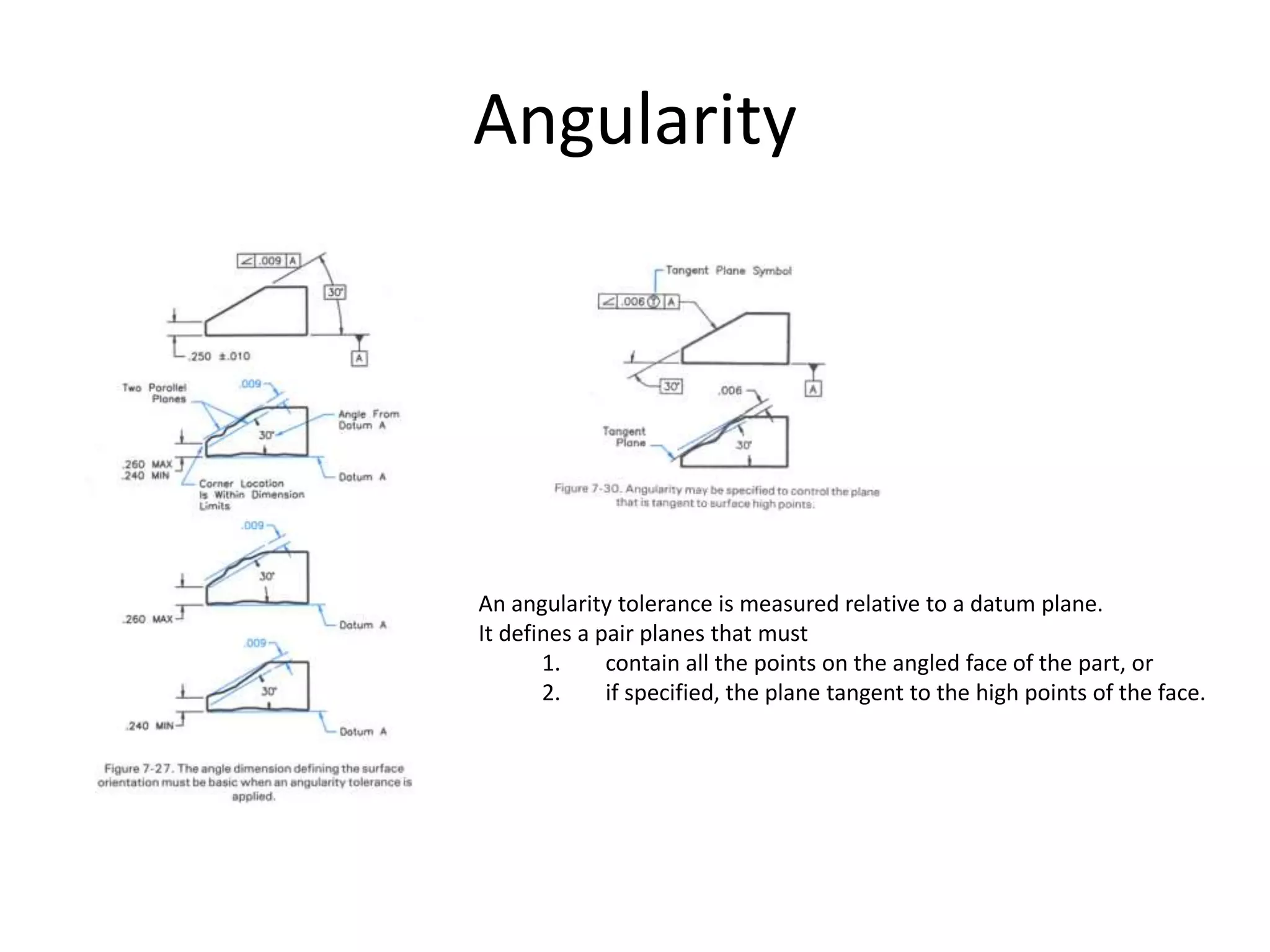
Angularity
An angularity tolerance is measured relative to a datum plane.
It defines a pair planes that must
1. contain all the points on the angled face of the part, or
2. if specified, the plane tangent to the high points of the face.
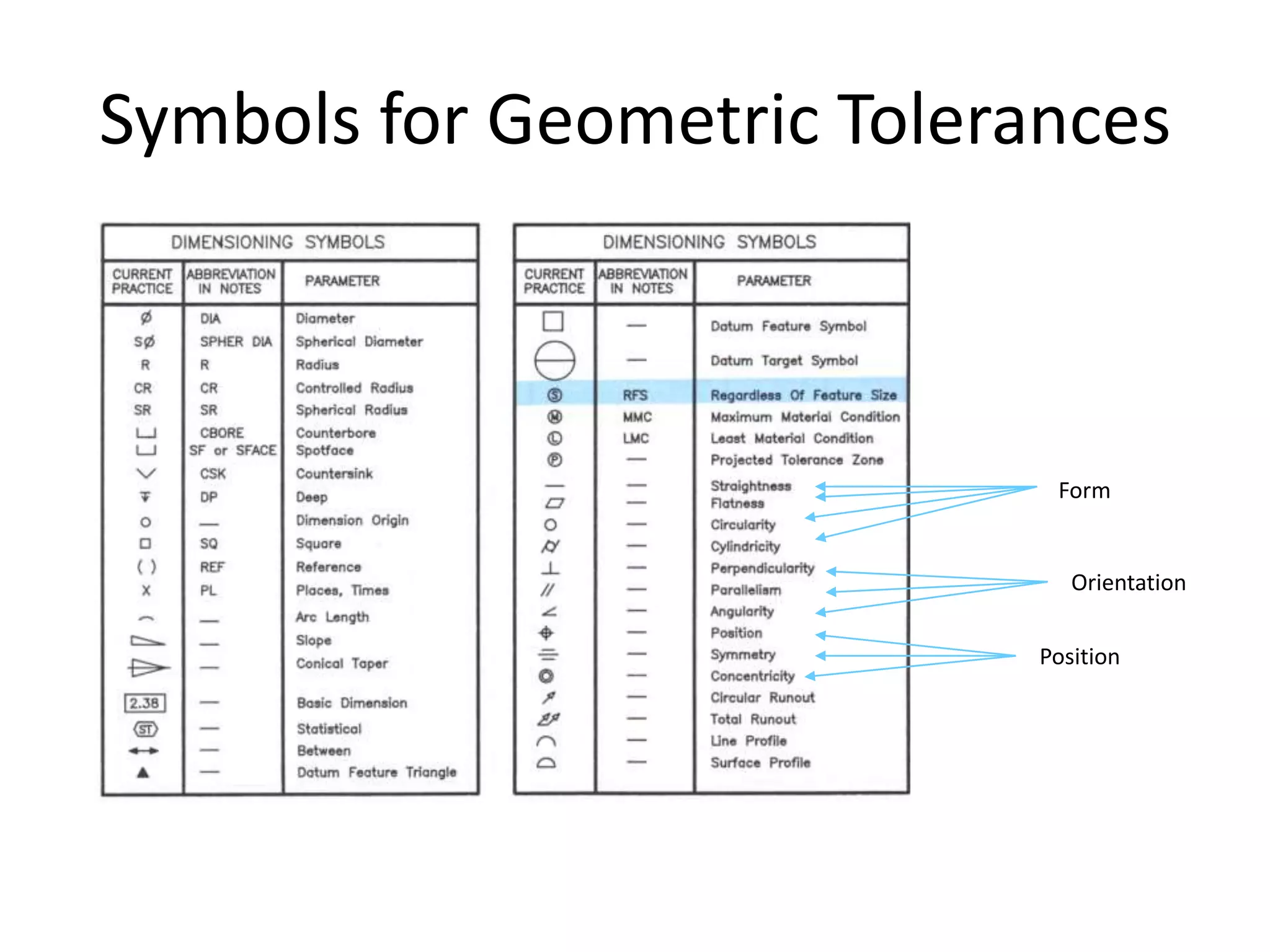
Symbols for Geometric Tolerances
Form
Orientation
Position

New microsoft office power point presentationgeometrical tolerance

  • 1.
    geometrical tolerance • Ageometrical tolerance is the maximum or minimum variation from true geometric form
  • 2.
    Overview of GeometricTolerances We will focus on three basic types of dimensional tolerances: 1. Form tolerances: straightness, circularity, flatness, cylindricity; 2. Orientation tolerances; perpendicularity, parallelism, angularity; and 3. Position tolerances: position, symmetry, concentricity.
  • 3.
    Feature Control Frame Ageometric tolerance is prescribed using a feature control frame. It has three components: 1. the tolerance symbol, 2. the tolerance value, 3. the datum labels for the reference frame.
  • 4.
    Material Conditions • MaximumMaterial Condition (MMC): The condition in which a feature contains the maximum amount of material within the stated limits. e.g. minimum hole diameter, maximum shaft diameter. • Least Material Condition (LMC): The condition in which a feature contains the least amount of material within the stated limits. e.g. maximum hole diameter, minimum shaft diameter RULE #1: A dimensioned feature must have perfect form at its maximum material condition. This means: • A hole is a perfect cylinder when it is at its smallest permissible diameter, • A shaft is a perfect cylinder when at its largest diameter. • Planes are perfectly parallel when at their maximum distance.
  • 5.
    Straightness of aShaft • A shaft has a size tolerance defined for its fit into a hole. A shaft meets this tolerance if at every point along its length a diameter measurement fall within the specified values. • This allows the shaft to be bent into any shape. A straightness tolerance on the shaft axis specifies the amount of bend allowed. • Add the straightness tolerance to the maximum shaft size (MMC) to obtain a “virtual condition” Vc, or virtual hole,
  • 6.
    Straightness of aHole • The size tolerance for a hole defines the range of sizes of its diameter at each point along the centerline. This does not eliminate a curve to the hole. • The straightness tolerance specifies the allowable curve to the hole. • Subtract the straightness tolerance from the smallest hole size (MMC) to define the virtual condition Vc, or virtual shaft, that must fit the hole for it to be acceptable.
  • 7.
    Flatness, Circularity andCylindricity Flatness Circularity Cylindricity • The flatness tolerance defines a distance between parallel planes that must contain the highest and lowest points on a face. • The circularity tolerance defines a pair of concentric circles that must contain the maximum and minimum radius points of a circle. • The cylindricity tolerance defines a pair of concentric cylinders that much contain the maximum and minimum radius points along a cylinder.
  • 8.
    Parallelism Tolerance A parallelismtolerance is measured relative to a datum specified in the control frame. If there is no material condition (ie. regardless of feature size), then the tolerance defines parallel planes that must contain the maximum and minimum points on the face. If MMC is specified for the tolerance value: • If it is an external feature, then the tolerance is added to the maximum dimension to define a virtual condition that the part must fit; • If it is an internal feature, then the tolerance is subtracted to define the maximum dimension that must fit into the part.
  • 9.
    Perpendicularity • A perpendiculartolerance is measured relative to a datum plane. • It defines two planes that must contain all the points of the face. • A second datum can be used to locate where the measurements are taken.
  • 10.
    Perpendicular Shaft, Hole,and Center PlaneShaft Hole Center Plane • Shaft: The maximum shaft size plus the tolerance defines the virtual hole. • Hole: The minimum hole size minus the tolerance defines the virtual shaft. • Plane: The tolerance defines the variation of the location of the center plane.
  • 11.
    Angularity An angularity toleranceis measured relative to a datum plane. It defines a pair planes that must 1. contain all the points on the angled face of the part, or 2. if specified, the plane tangent to the high points of the face.
  • 12.
    Symbols for GeometricTolerances Form Orientation Position