Cardiovascular System
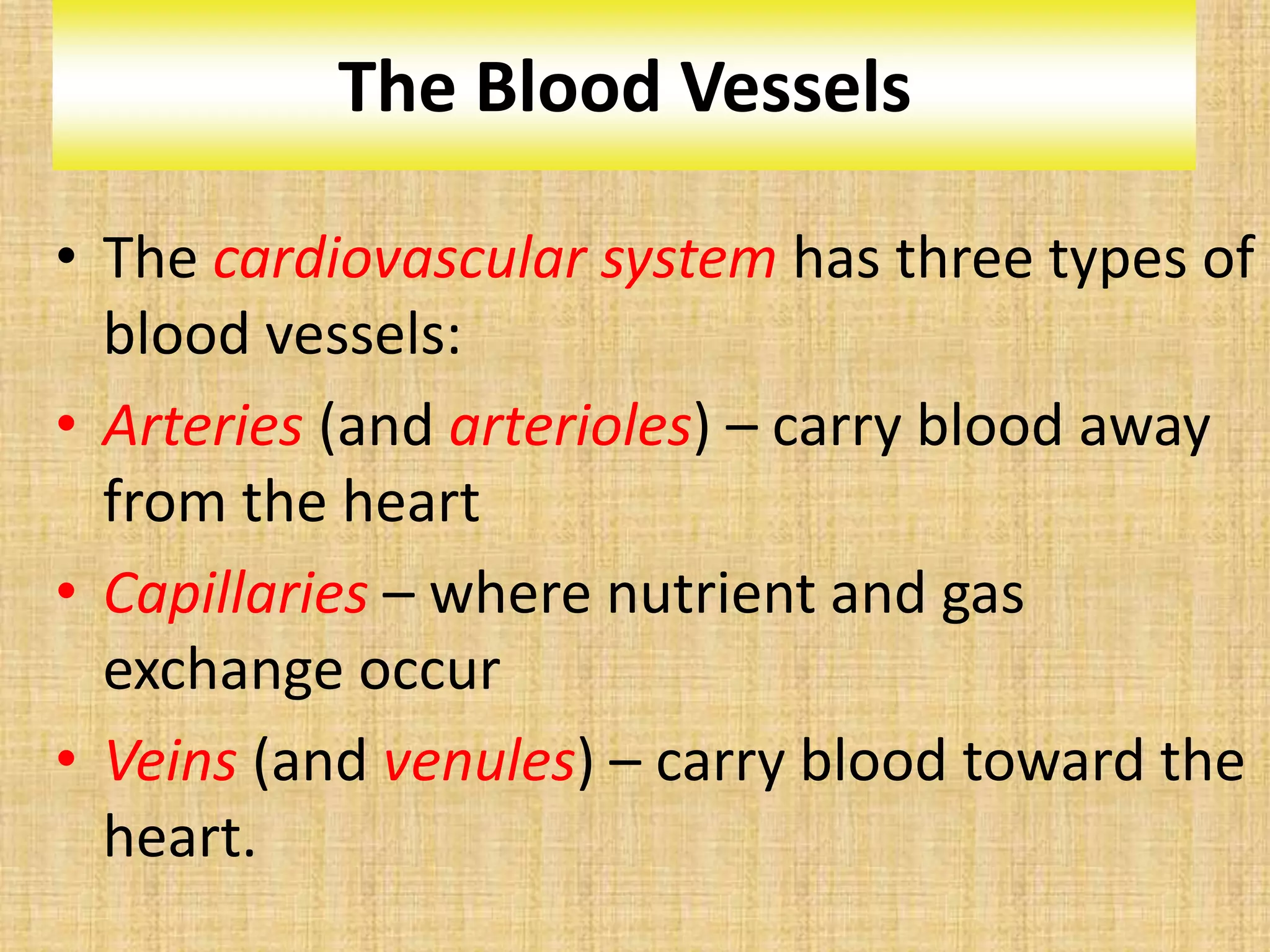
The Blood Vessels
• The cardiovascular system has three types of
blood vessels:
• Arteries (and arterioles) – carry blood away
from the heart
• Capillaries – where nutrient and gas
exchange occur
• Veins (and venules) – carry blood toward the
heart.
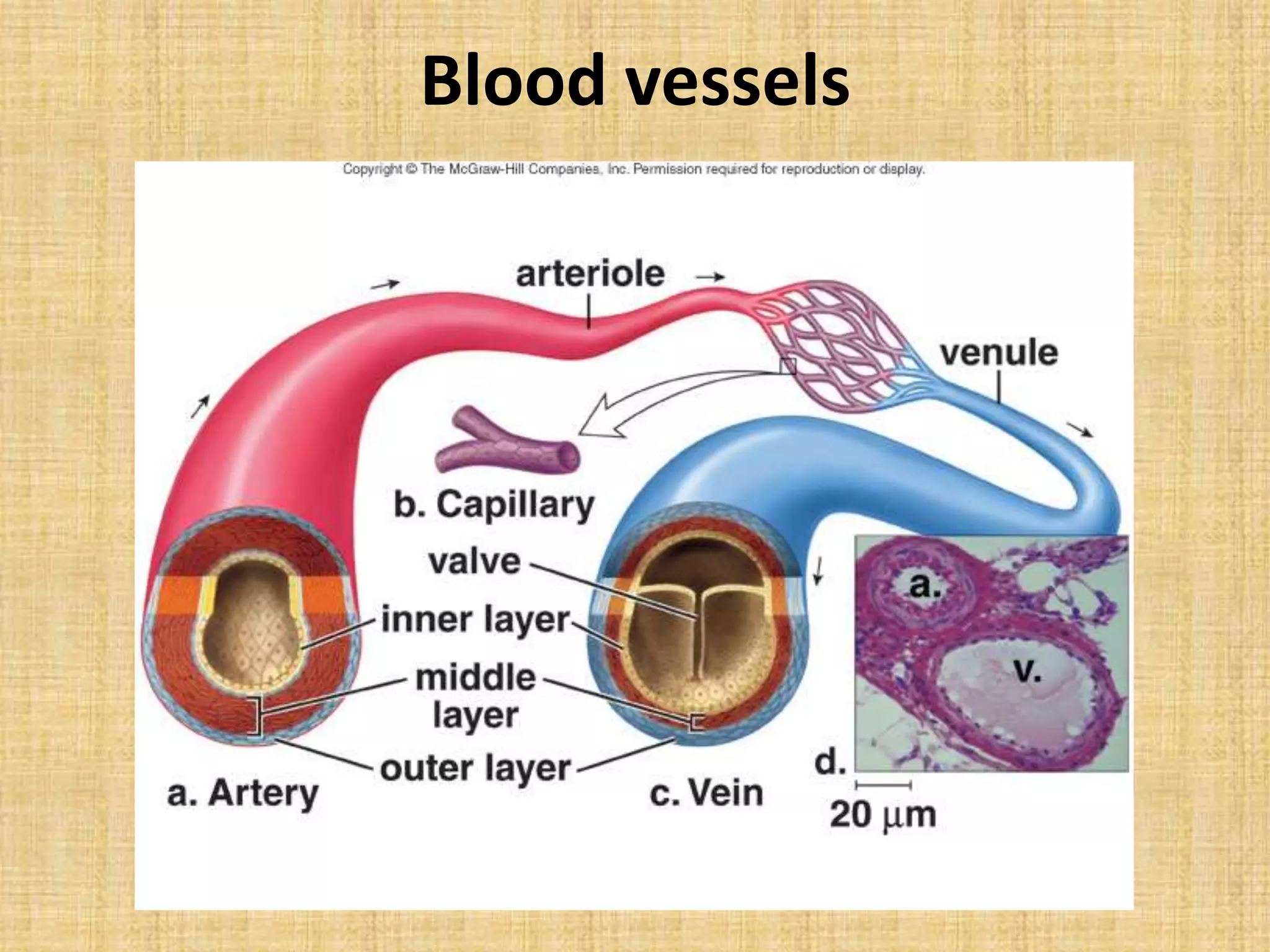
Blood vessels
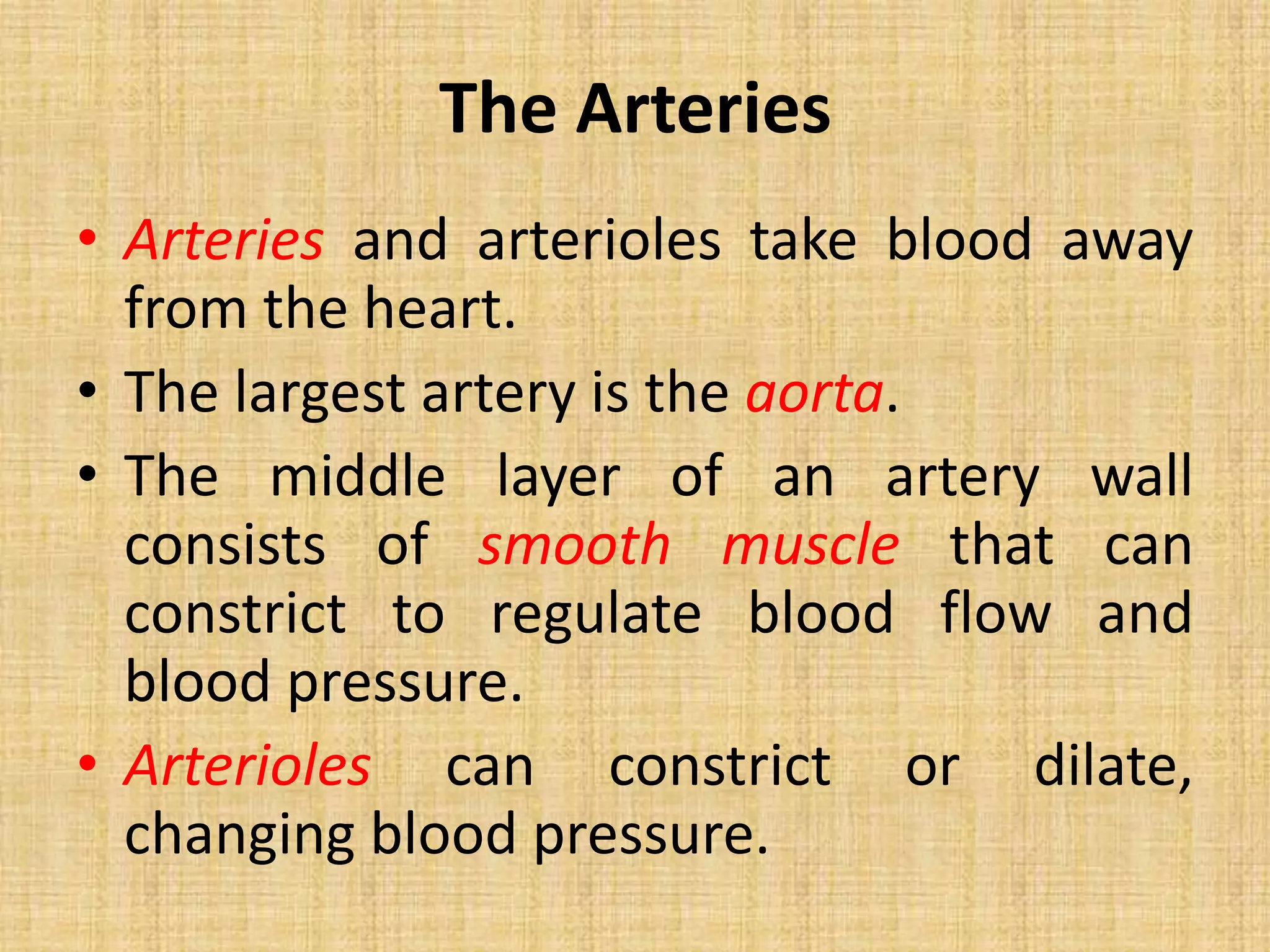
The Arteries
• Arteries and arterioles take blood away
from the heart.
• The largest artery is the aorta.
• The middle layer of an artery wall
consists of smooth muscle that can
constrict to regulate blood flow and
blood pressure.
• Arterioles can constrict or dilate,
changing blood pressure.
The Capillaries
• Capillaries have walls only one cell thick to
allow exchange of gases and nutrients with
tissue fluid.
• Capillary beds are present in all regions of the
body but not all capillary beds are open at the
same time.
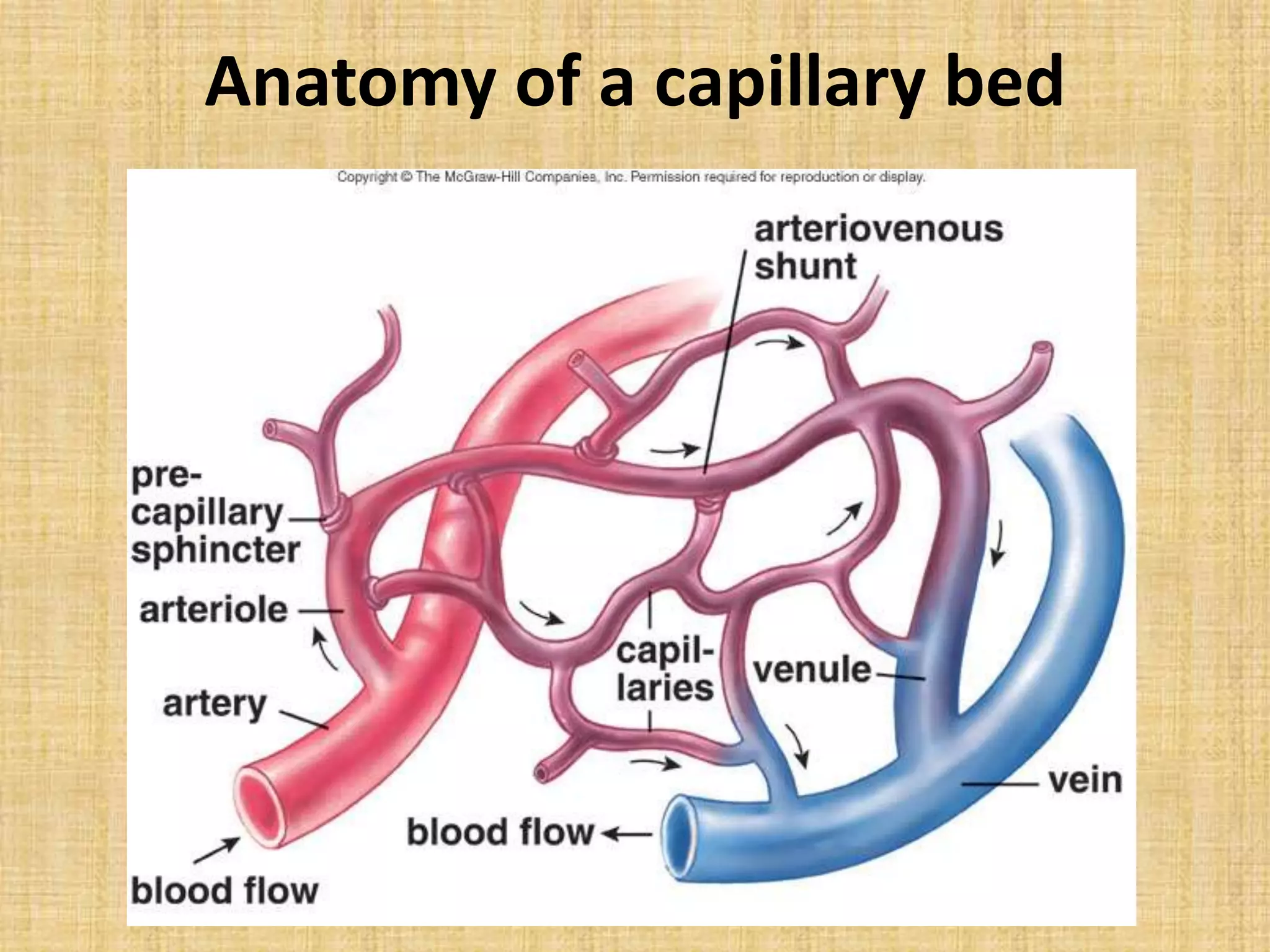
• Contraction of a sphincter muscle closes off a
bed and blood can flow through an
arteriovenous shunt that bypasses the
capillary bed.
Anatomy of a capillary bed
The Veins
• Venules drain blood from capillaries, then
join to form veins that take blood to the
heart.
• Veins have much less smooth muscle and
connective tissue than arteries.
• Veins often have valves that prevent the
backward flow of blood when closed.
• Veins carry about 70% of the body’s
blood and act as a reservoir during
hemorrhage.
• The heart is a cone-shaped, muscular
organ located between the lungs behind
the sternum.
• The heart muscle forms the
myocardium, with tightly interconnect
cells of cardiac muscle tissue.
• The pericardium is the outer membranous
sac with lubricating fluid.
The Heart
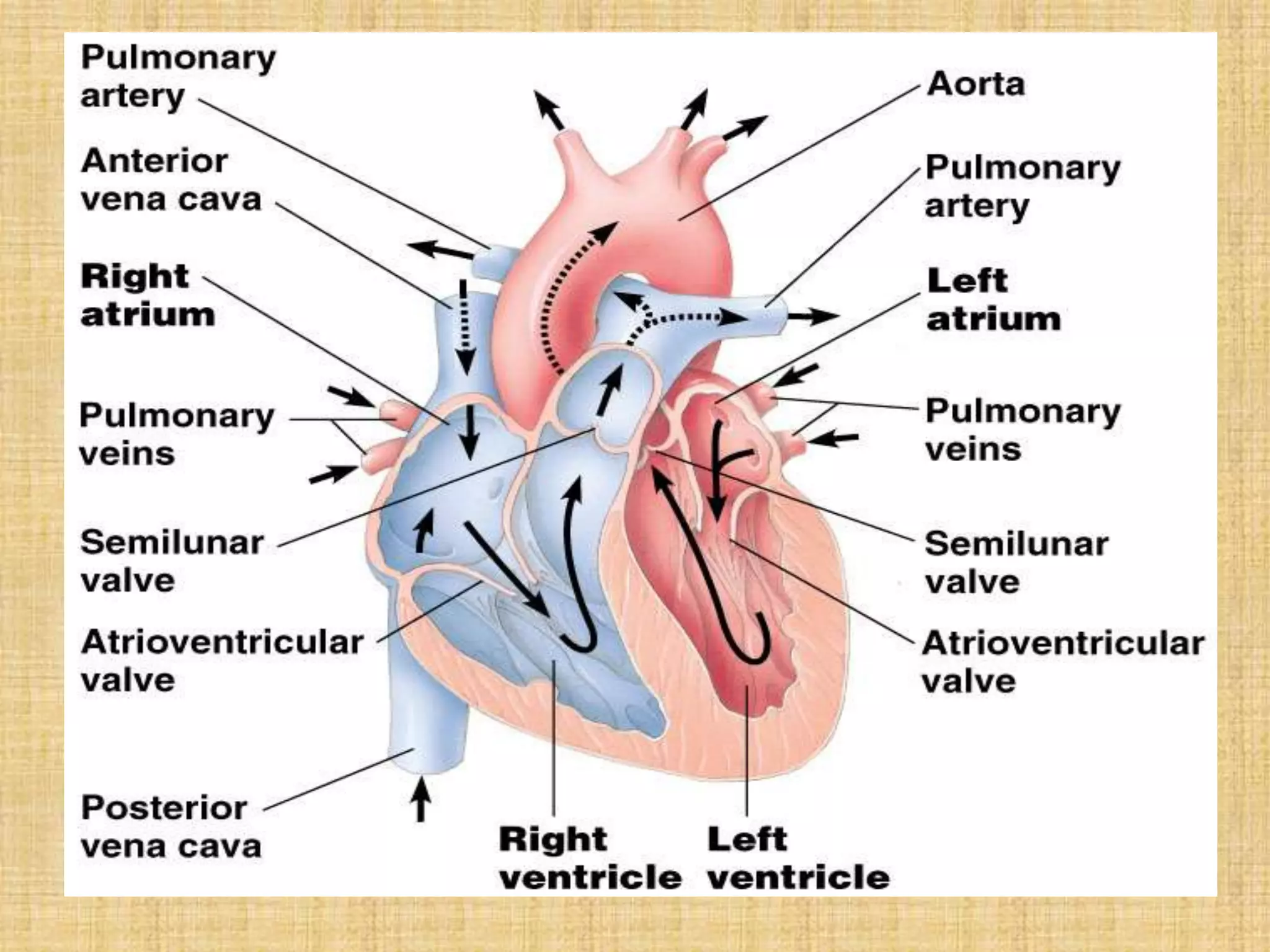
The heart has four chambers: two upper, thin-
walled atria, and two lower, thick-walled
ventricles.
The septum is a wall dividing the right and left
sides.
Atrioventricular valves occur between the atria
and ventricles – the tricuspid valve on the
right and the bicuspid valve on the left; both
valves are reenforced by chordae tendinae
attached to muscular projections within the
ventricles.
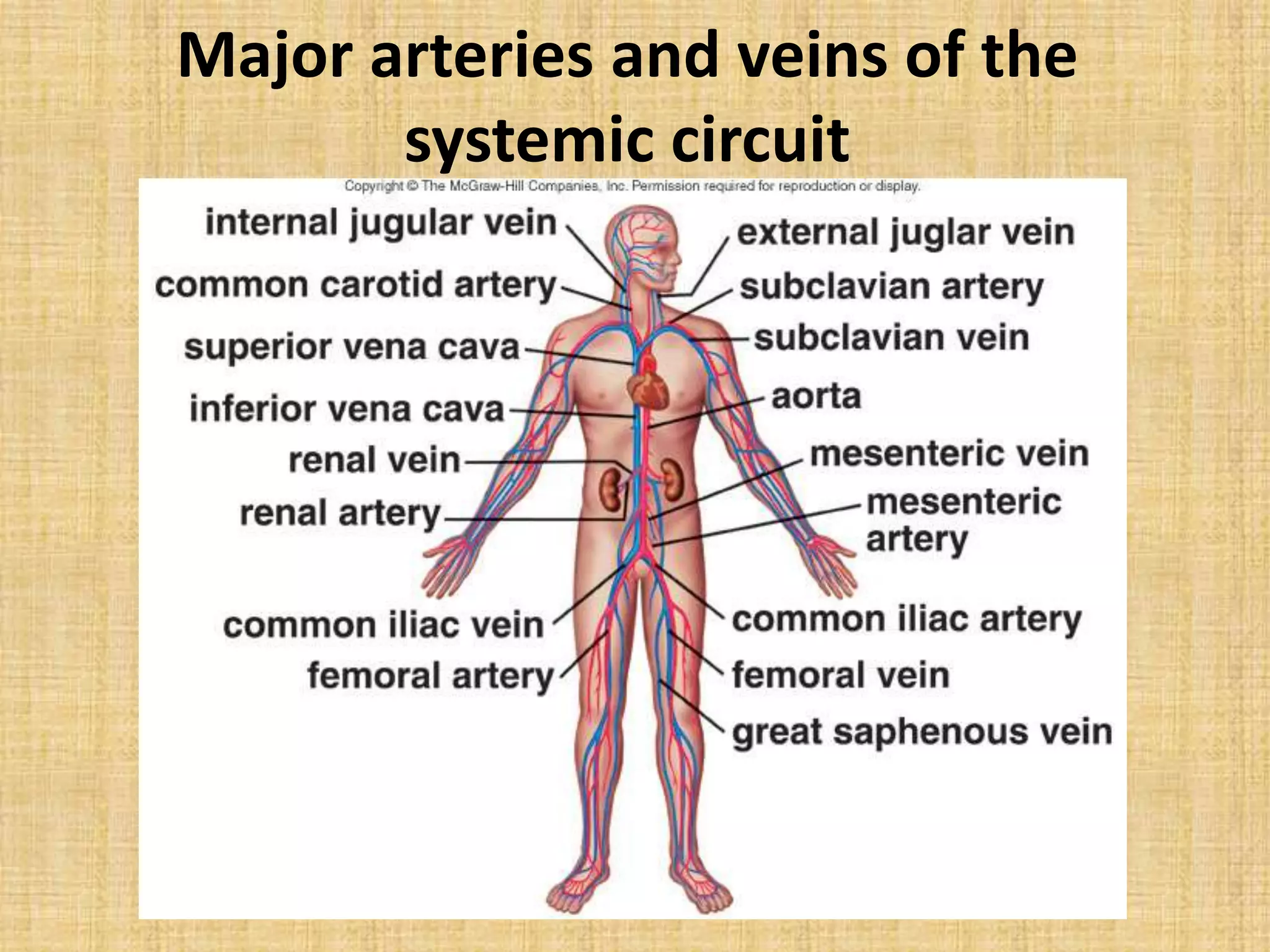
Major arteries and veins of the
systemic circuit

New microsoft office power point presentation (2)

  • 1.
  • 2.
    The Blood Vessels •The cardiovascular system has three types of blood vessels: • Arteries (and arterioles) – carry blood away from the heart • Capillaries – where nutrient and gas exchange occur • Veins (and venules) – carry blood toward the heart.
  • 3.
  • 4.
    The Arteries • Arteriesand arterioles take blood away from the heart. • The largest artery is the aorta. • The middle layer of an artery wall consists of smooth muscle that can constrict to regulate blood flow and blood pressure. • Arterioles can constrict or dilate, changing blood pressure.
  • 5.
    The Capillaries • Capillarieshave walls only one cell thick to allow exchange of gases and nutrients with tissue fluid. • Capillary beds are present in all regions of the body but not all capillary beds are open at the same time. • Contraction of a sphincter muscle closes off a bed and blood can flow through an arteriovenous shunt that bypasses the capillary bed.
  • 6.
    Anatomy of acapillary bed
  • 7.
    The Veins • Venulesdrain blood from capillaries, then join to form veins that take blood to the heart. • Veins have much less smooth muscle and connective tissue than arteries. • Veins often have valves that prevent the backward flow of blood when closed. • Veins carry about 70% of the body’s blood and act as a reservoir during hemorrhage.
  • 8.
    • The heartis a cone-shaped, muscular organ located between the lungs behind the sternum. • The heart muscle forms the myocardium, with tightly interconnect cells of cardiac muscle tissue. • The pericardium is the outer membranous sac with lubricating fluid. The Heart
  • 9.
    The heart hasfour chambers: two upper, thin- walled atria, and two lower, thick-walled ventricles. The septum is a wall dividing the right and left sides. Atrioventricular valves occur between the atria and ventricles – the tricuspid valve on the right and the bicuspid valve on the left; both valves are reenforced by chordae tendinae attached to muscular projections within the ventricles.
  • 11.
    Major arteries andveins of the systemic circuit